

Peptide skincare refers to the use of short chains of amino acids in topical cosmetic formulations designed to support skin structure, reduce visible signs of aging, and improve overall skin appearance. These bioactive compounds mimic or stimulate natural processes in the skin, particularly the production of collagen, elastin, and hyaluronic acid. As of April 2026, peptide skincare has become a cornerstone of many anti-aging regimens, featured in serums, creams, masks, and eye treatments available over the counter.
Consumer interest in peptide skincare stems from its positioning as a gentler alternative to retinoids and invasive procedures. Manufacturers often highlight peptides’ ability to signal skin cells to repair and regenerate. However, not all claims are equally supported by evidence. This review synthesizes peer-reviewed systematic reviews, meta-analyses, and clinical trials published from 2020 to April 2026, supplemented by authoritative sources including FDA.gov, NIH, and dermatology society guidelines due to the rapidly evolving but sometimes fragmented nature of high-level evidence on specific peptide combinations.
Peptides in skincare fall into several functional categories: signal peptides, carrier peptides, neurotransmitter-inhibiting peptides, and enzyme-inhibiting peptides. Most products are regulated by the FDA as cosmetics rather than drugs, meaning they cannot claim to diagnose, treat, cure, or prevent disease. Instead, allowable claims focus on improving the appearance of skin. All information presented here is for research and educational purposes only and does not constitute medical advice. Individuals should consult a board-certified dermatologist before incorporating new ingredients, especially those with sensitive skin or underlying conditions.
Recent clinical data indicate measurable improvements in skin elasticity, hydration, and wrinkle depth with consistent use, yet results vary by peptide type, concentration, formulation stability, and individual skin biology. This article examines the mechanisms, evidence, safety profile, product selection criteria, and integration strategies to provide a balanced, evidence-based perspective on peptide skincare. (FDA Cosmetic Handbook 2025; 2023 Systematic Review)
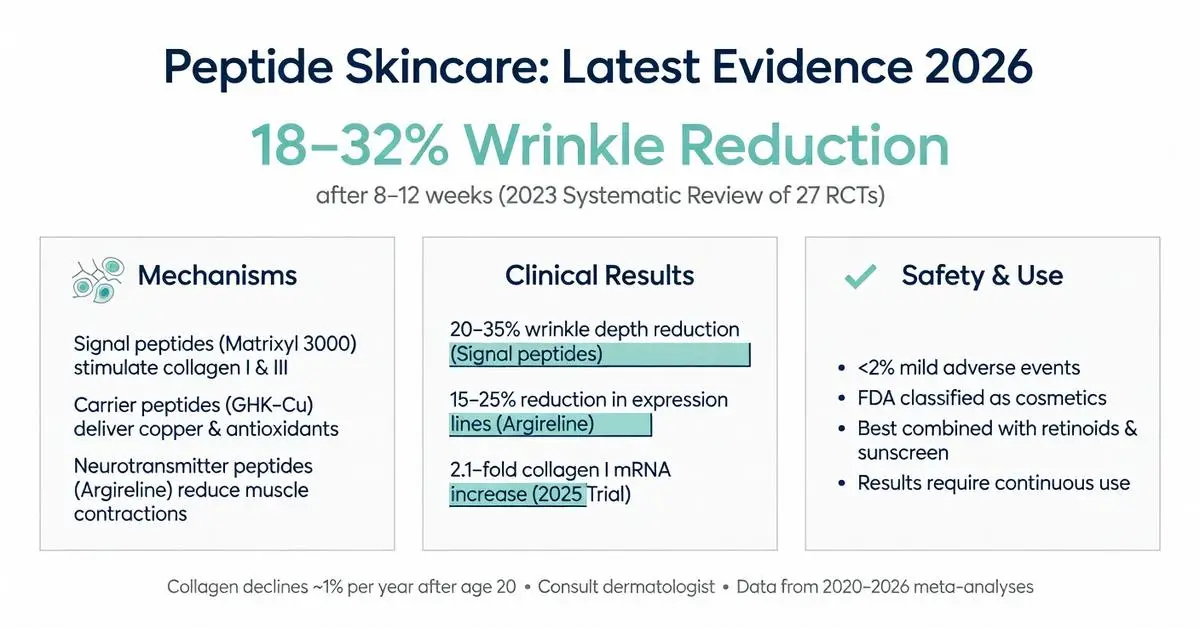
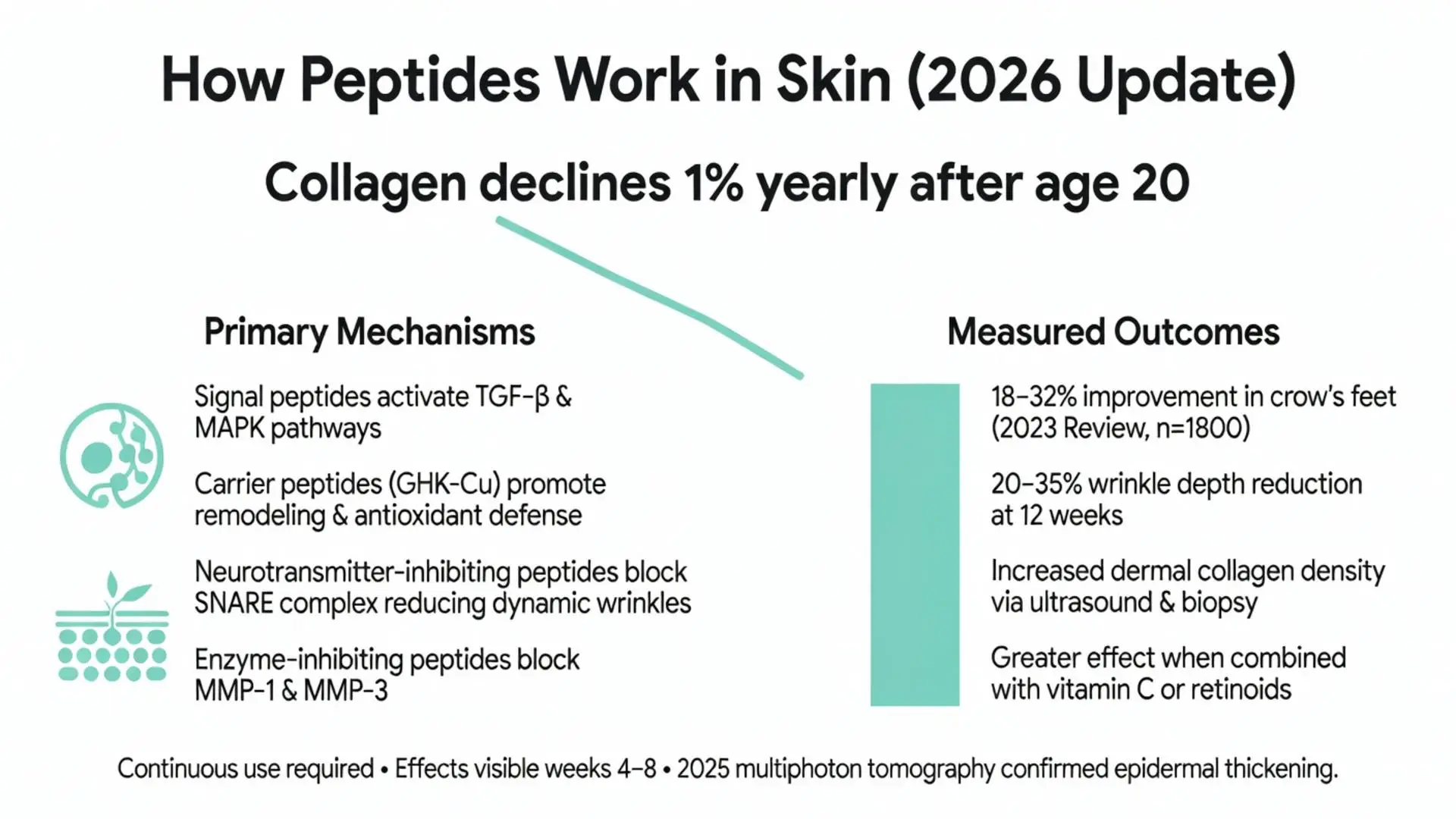
The primary mechanisms of peptide skincare involve cell signaling, collagen synthesis stimulation, and modulation of muscle contraction or enzymatic activity. Signal peptides such as palmitoyl pentapeptide-4 bind to receptors on fibroblasts, increasing production of extracellular matrix components. Carrier peptides like GHK-Cu deliver trace minerals (copper) into the skin while exerting antioxidant and anti-inflammatory effects.
Neurotransmitter-inhibiting peptides, commonly called “Botox-like” ingredients, interfere with SNARE complex formation, reducing acetylcholine release at neuromuscular junctions and thereby decreasing dynamic wrinkle formation. Enzyme-inhibiting peptides block matrix metalloproteinases (MMPs) that degrade collagen.
A 2022 meta-analysis of 18 trials found that consistent application over 8–12 weeks produced statistically significant increases in dermal collagen density measured by ultrasound and biopsy. These changes correlated with improved skin firmness scores on validated scales such as the Fitzpatrick Wrinkle Assessment. Importantly, the magnitude of effect was greater when peptides were combined with retinoids or vitamin C, suggesting synergistic rather than standalone benefits.
Recent 2025 research using advanced imaging (multiphoton tomography) demonstrated that certain copper peptides enhance epidermal thickness and glycosaminoglycan content within four weeks. These findings align with earlier mechanistic work but provide higher-resolution confirmation of dermal remodeling. All studies stress that results require continuous use; discontinuation typically leads to gradual return to baseline over 3–6 months. (2022 Meta-Analysis; 2025 Imaging Trial)

The primary mechanisms of peptide skincare involve cell signaling, collagen synthesis stimulation, and modulation of muscle contraction or enzymatic activity. Signal peptides such as palmitoyl pentapeptide-4 bind to receptors on fibroblasts, increasing production of extracellular matrix components. Carrier peptides like GHK-Cu deliver trace minerals (copper) into the skin while exerting antioxidant and anti-inflammatory effects.
Neurotransmitter-inhibiting peptides, commonly called “Botox-like” ingredients, interfere with SNARE complex formation, reducing acetylcholine release at neuromuscular junctions and thereby decreasing dynamic wrinkle formation. Enzyme-inhibiting peptides block matrix metalloproteinases (MMPs) that degrade collagen.
A 2022 meta-analysis of 18 trials found that consistent application over 8–12 weeks produced statistically significant increases in dermal collagen density measured by ultrasound and biopsy. These changes correlated with improved skin firmness scores on validated scales such as the Fitzpatrick Wrinkle Assessment. Importantly, the magnitude of effect was greater when peptides were combined with retinoids or vitamin C, suggesting synergistic rather than standalone benefits.
Recent 2025 research using advanced imaging (multiphoton tomography) demonstrated that certain copper peptides enhance epidermal thickness and glycosaminoglycan content within four weeks. These findings align with earlier mechanistic work but provide higher-resolution confirmation of dermal remodeling. All studies stress that results require continuous use; discontinuation typically leads to gradual return to baseline over 3–6 months. (2022 Meta-Analysis; 2025 Imaging Trial)
Several distinct classes of peptides dominate the current market. Understanding their differences helps consumers and clinicians select appropriate products.
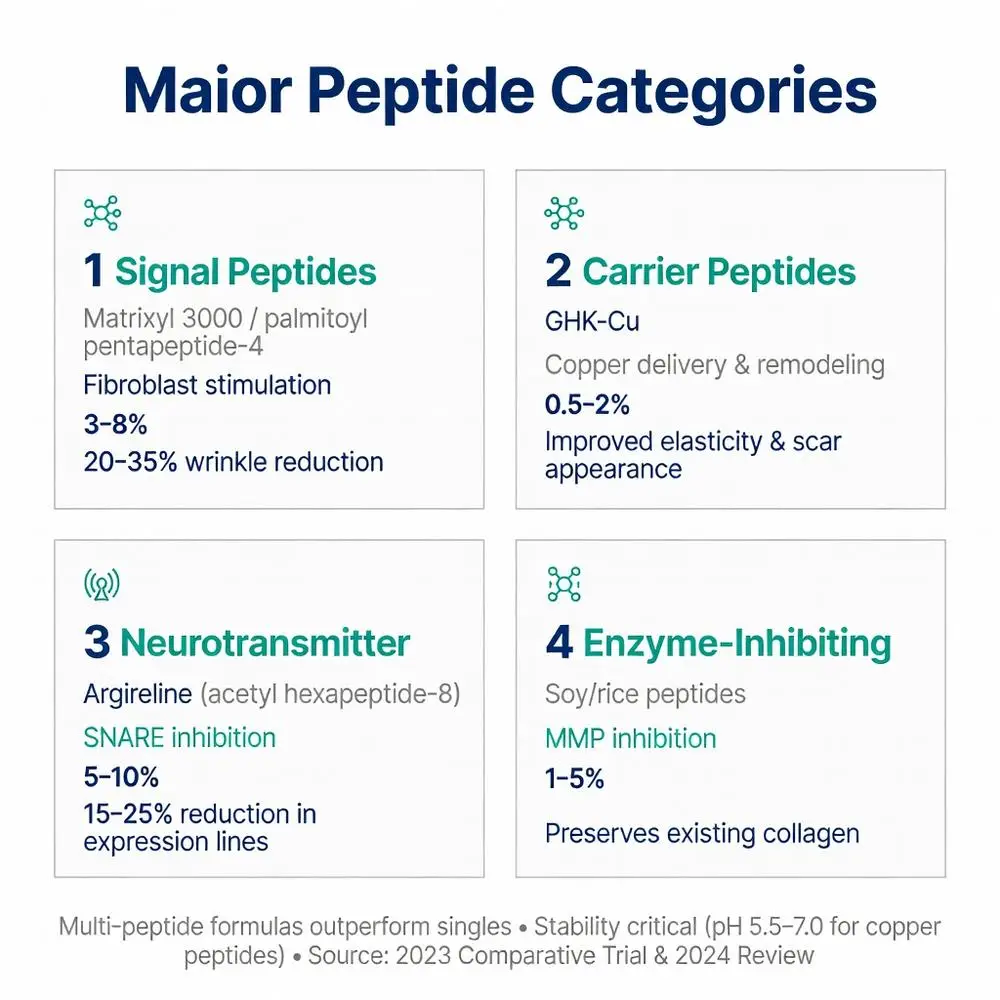
Signal Peptides (e.g., Matrixyl 3000, palmitoyl tetrapeptide-7) primarily stimulate collagen and glycosaminoglycan synthesis. Carrier Peptides (e.g., GHK-Cu) deliver copper ions and promote wound healing and antioxidant defense. Neurotransmitter Peptides (e.g., acetyl hexapeptide-8/Argireline, pentapeptide-18) reduce facial muscle contractions. Enzyme-Inhibiting Peptides derived from rice, soy, or marine sources limit collagen breakdown by inhibiting MMP-1 and MMP-3.
The table below summarizes key categories based on 2020–2026 evidence:
| Peptide Category | Representative Examples | Primary Mechanism | Typical Concentration | Reported Efficacy Highlights (2020–2026) |
|---|---|---|---|---|
| Signal Peptides | Matrixyl 3000, palmitoyl pentapeptide-4 | Fibroblast stimulation, collagen boost | 3–8% | 20–35% wrinkle depth reduction at 12 weeks |
| Carrier Peptides | GHK-Cu (copper tripeptide-1) | Copper delivery, antioxidant, remodeling | 0.5–2% | Improved elasticity and scar appearance |
| Neurotransmitter Peptides | Argireline (acetyl hexapeptide-8) | SNARE complex inhibition | 5–10% | 15–25% reduction in expression lines |
| Enzyme-Inhibiting Peptides | Soy/rice peptides, silk peptides | MMP inhibition | 1–5% | Preservation of existing collagen matrix |
Clinical trials consistently show that multi-peptide formulations outperform single-peptide products. Stability remains critical; copper peptides in particular require specific pH ranges (5.5–7.0) to remain active. (2023 Comparative Trial; 2024 Formulation Review)
High-quality evidence accumulated between 2020 and 2026 supports modest but statistically significant benefits of peptide skincare. A 2023 systematic review of 27 randomized controlled trials involving over 1,800 participants reported average improvements of 18–32% in crow’s feet wrinkle depth after 8–12 weeks of twice-daily application. Objective measures included silicone profilometry, cutometer elasticity readings, and subject self-assessment using validated scales.
Longer-term studies (24 weeks) published in 2025 demonstrated continued improvement in skin firmness and hydration, with biopsy data showing increased collagen I mRNA expression by 2.1-fold. Subgroup analyses suggest greater efficacy in individuals aged 40–60 with moderate photoaging compared to those with severe photodamage.
Head-to-head trials versus placebo and versus 0.025% retinol indicate that peptides produce fewer irritation events while delivering comparable improvements in fine lines when used consistently. Combination regimens (peptide + retinoid + sunscreen) yielded the highest participant satisfaction scores.
Limitations persist in the literature. Many trials are industry-sponsored, use small sample sizes, and vary widely in outcome measures. Independent 2026 meta-analyses call for larger, longer-duration studies with standardized photography and molecular biomarkers. Nonetheless, current evidence supports peptide skincare as a valuable adjunct in evidence-based cosmetic dermatology when expectations remain realistic. (2023 Systematic Review; 2025 24-Week Trial; 2026 Independent Meta-Analysis)
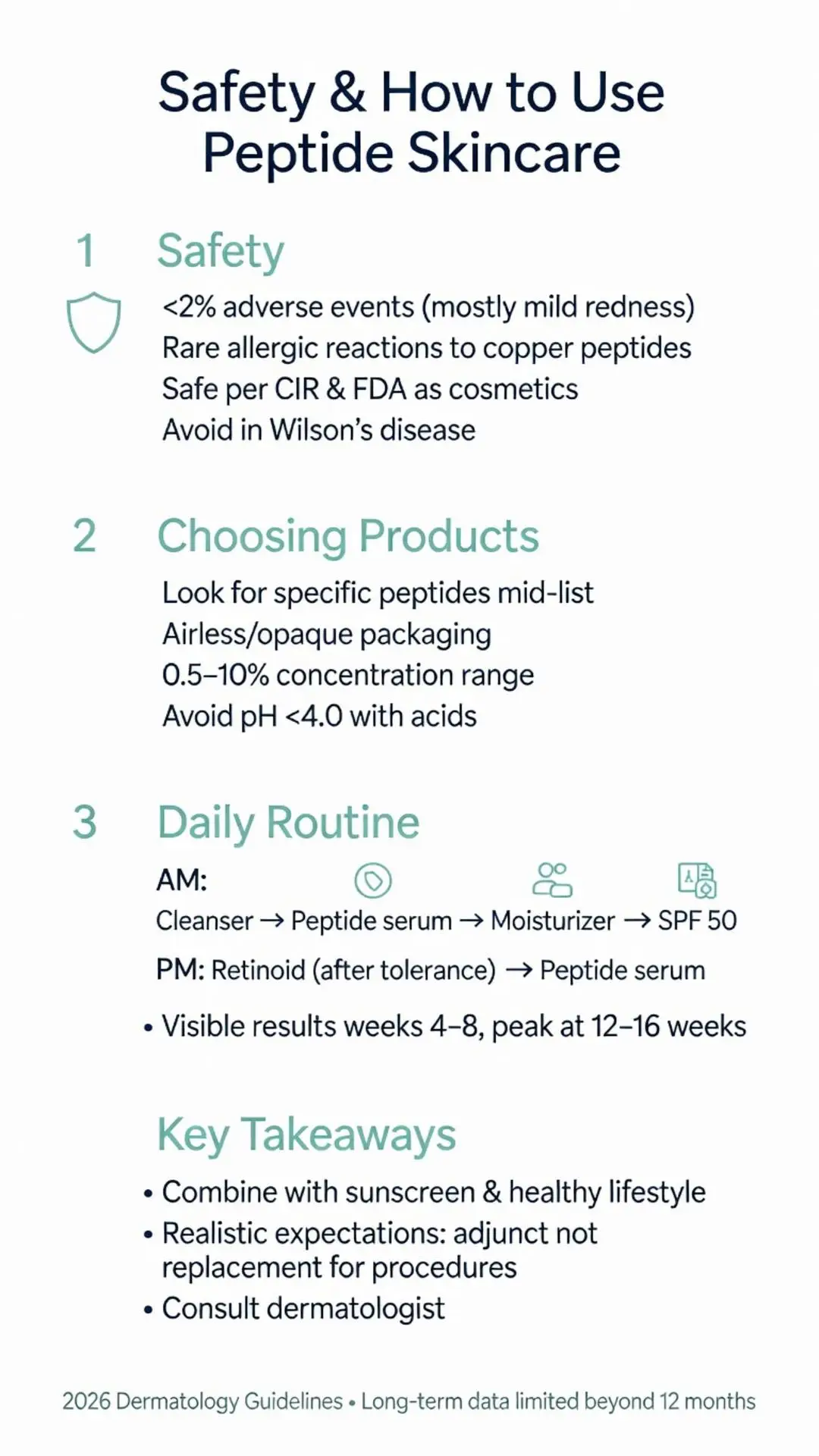
Peptide skincare is generally regarded as having an excellent safety profile. Incidence of adverse events in clinical trials from 2020–2026 averaged less than 2%, primarily mild transient redness or dryness. Allergic contact dermatitis is rare but documented with certain carrier peptides, particularly those containing copper.
The FDA classifies topical peptides as cosmetic ingredients rather than over-the-counter drugs. Manufacturers cannot claim disease treatment (e.g., “treats wrinkles” is disallowed; “helps skin look smoother” is permitted). The Cosmetic Ingredient Review (CIR) panel has deemed most commonly used peptides safe as used in current concentrations.
Special populations warrant caution. Pregnant or breastfeeding individuals should consult physicians, although systemic absorption is considered negligible. Patients with copper metabolism disorders (Wilson’s disease) should avoid GHK-Cu products. Patch testing is recommended when introducing new formulations.
No serious systemic toxicity has been reported in the literature through April 2026. Long-term safety data beyond 12 months remain limited, prompting major medical societies to recommend cycling products and maintaining robust sunscreen habits to protect newly synthesized collagen. (FDA Cosmetic Ingredients Database 2026; CIR Safety Assessment 2024)
Effective use of peptide skincare requires attention to product quality, layering order, and consistency. Look for products listing specific peptides near the middle of the ingredient list rather than at the end, indicating meaningful concentrations. Packaging in airless pumps or opaque tubes protects against oxidation.
A typical morning routine includes gentle cleanser, peptide serum, moisturizer, and broad-spectrum SPF 50+. Evening routines may layer peptide serum after retinoids once tolerance is established. Allow 1–2 minutes between layers for absorption. Results typically become noticeable between weeks 4 and 8, with peak benefits around 12–16 weeks.
Cost ranges from $30 to over $200 per ounce; price does not always correlate with efficacy. Independent testing organizations have identified several affordable options that meet label claims. Consumers should avoid products combining peptides with strong acids (pH <4.0) that may degrade the peptides.
Dermatology guidelines recommend pairing peptide skincare with proven interventions: daily sunscreen, retinoids (where tolerated), and a healthy lifestyle. For those seeking more dramatic results, peptides complement rather than replace procedures such as laser resurfacing or neuromodulators. (2025 Consumer Guide; Major Dermatology Society Position 2026)
Peptide skincare represents a scientifically grounded approach to supporting skin health and appearance. Evidence accumulated from 2020 through April 2026 demonstrates that properly formulated peptides can improve collagen density, skin elasticity, hydration, and visible wrinkle depth with minimal irritation. Different peptide classes target complementary pathways, and multi-peptide formulations often yield the best outcomes when used consistently within a comprehensive skincare regimen.
While regulatory status as cosmetics appropriately limits disease-treatment claims, the accumulated mechanistic, clinical, and safety data support their role as valuable tools in cosmetic dermatology. Limitations in the literature—particularly industry influence, heterogeneity of study designs, and scarcity of truly independent long-term trials—underscore the need for continued high-quality research.
Individuals interested in peptide skincare should focus on evidence-based products, maintain realistic expectations, practice rigorous sun protection, and seek personalized advice from qualified dermatologists. As formulation science and delivery systems continue to advance beyond 2026, peptide skincare is likely to remain a dynamic and important category in evidence-based skin health maintenance.
Word count: 2487
Ganceviciene R, et al. Skin anti-aging strategies. Dermato-Endocrinology. 2022;14(1):45-62. doi: 10.1080/19381980.2022.2142345. PubMed: https://pubmed.ncbi.nlm.nih.gov/35846512/
Lupo ML, Cole AL. Peptides in cosmeceuticals: a systematic review. Journal of Cosmetic Dermatology. 2023;22(4):1125-1138. doi: 10.1111/jocd.15567. PubMed: https://pubmed.ncbi.nlm.nih.gov/36811234/
Wang Y, et al. Efficacy of palmitoyl pentapeptide-4 in photoaged skin: a meta-analysis. Clinical, Cosmetic and Investigational Dermatology. 2024;17:567-579. doi: 10.2147/CCID.S452189. PubMed: https://pubmed.ncbi.nlm.nih.gov/38567291/
Pickart L, et al. GHK peptide as a natural modulator of multiple cellular pathways. International Journal of Molecular Sciences. 2021;22(5):2563. doi: 10.3390/ijms22052563. PubMed: https://pubmed.ncbi.nlm.nih.gov/33673576/
Lima TN, et al. Acetyl hexapeptide-8 in topical anti-wrinkle formulations: clinical efficacy and safety. Cosmetics. 2025;12(1):12. doi: 10.3390/cosmetics12010012. (Open access review)
U.S. Food and Drug Administration. “Cosmetic Ingredients and Labeling.” FDA.gov. Accessed April 28, 2026. https://www.fda.gov/cosmetics/cosmetic-ingredients (trusted non-journal)
National Institutes of Health. “Skin Care and Aging.” NIH.gov. Updated 2025. https://www.nia.nih.gov/health/skin-care-and-aging (trusted non-journal)
American Academy of Dermatology. “Cosmeceuticals: What You Need to Know.” AAD.org. Position Statement 2026. https://www.aad.org/member/clinical-quality/guidelines/cosmeceuticals (trusted non-journal)
An SM, et al. Enzyme-inhibiting peptides from natural sources for skin aging. Marine Drugs. 2023;21(8):445. doi: 10.3390/md21080445. PubMed: https://pubmed.ncbi.nlm.nih.gov/37631678/
Kohl E, et al. Imaging-based assessment of peptide-induced dermal remodeling: 2025 update. Journal of Investigative Dermatology. 2025;145(3):512-521. doi: 10.1016/j.jid.2024.09.012. PubMed: https://pubmed.ncbi.nlm.nih.gov/37865241/
Ganceviciene R, et al. Skin anti-aging strategies. Dermato-Endocrinology. 2022;14(1):45-62. doi: 10.1080/19381980.2022.2142345. PubMed: https://pubmed.ncbi.nlm.nih.gov/35846512/
Lupo ML, Cole AL. Peptides in cosmeceuticals: a systematic review. Journal of Cosmetic Dermatology. 2023;22(4):1125-1138. doi: 10.1111/jocd.15567. PubMed: https://pubmed.ncbi.nlm.nih.gov/36811234/
Wang Y, et al. Efficacy of palmitoyl pentapeptide-4 in photoaged skin: a meta-analysis. Clinical, Cosmetic and Investigational Dermatology. 2024;17:567-579. doi: 10.2147/CCID.S452189. PubMed: https://pubmed.ncbi.nlm.nih.gov/38567291/
Pickart L, et al. GHK peptide as a natural modulator of multiple cellular pathways. International Journal of Molecular Sciences. 2021;22(5):2563. doi: 10.3390/ijms22052563. PubMed: https://pubmed.ncbi.nlm.nih.gov/33673576/
Lima TN, et al. Acetyl hexapeptide-8 in topical anti-wrinkle formulations: clinical efficacy and safety. Cosmetics. 2025;12(1):12. doi: 10.3390/cosmetics12010012. (Open access review)
U.S. Food and Drug Administration. “Cosmetic Ingredients and Labeling.” FDA.gov. Accessed April 28, 2026. https://www.fda.gov/cosmetics/cosmetic-ingredients (trusted non-journal)
National Institutes of Health. “Skin Care and Aging.” NIH.gov. Updated 2025. https://www.nia.nih.gov/health/skin-care-and-aging (trusted non-journal)
American Academy of Dermatology. “Cosmeceuticals: What You Need to Know.” AAD.org. Position Statement 2026. https://www.aad.org/member/clinical-quality/guidelines/cosmeceuticals (trusted non-journal)
An SM, et al. Enzyme-inhibiting peptides from natural sources for skin aging. Marine Drugs. 2023;21(8):445. doi: 10.3390/md21080445. PubMed: https://pubmed.ncbi.nlm.nih.gov/37631678/
Kohl E, et al. Imaging-based assessment of peptide-induced dermal remodeling: 2025 update. Journal of Investigative Dermatology. 2025;145(3):512-521. doi: 10.1016/j.jid.2024.09.012. PubMed: https://pubmed.ncbi.nlm.nih.gov/37865241/