

Peptide serum for face products have surged in popularity as consumers seek non-invasive options for visible signs of aging, including fine lines, loss of firmness, and dullness. These serums deliver short chains of amino acids designed to signal skin cells to perform specific functions, primarily stimulating collagen, elastin, and hyaluronic acid production. Unlike traditional moisturizers, peptide serum for face formulations aim to address underlying mechanisms of skin aging at the cellular level.
As of May 2026, the skincare industry offers dozens of peptide-based serums ranging from single-peptide formulas to complex multi-peptide blends. Common ingredients include Matrixyl 3000, copper tripeptide-1 (GHK-Cu), Argireline (acetyl hexapeptide-8), and newer synthetic peptides such as palmitoyl pentapeptide-4. While many products are marketed directly to consumers, the evidence base varies significantly between ingredients.
This review prioritizes peer-reviewed clinical trials, systematic reviews, and meta-analyses published from 2020 through early 2026. Due to limited recent peer-reviewed publications on the exact phrase “peptide serum for face,” this article relies primarily on the latest available high-quality trials supplemented by authoritative sources including FDA.gov, NIH, and statements from the American Academy of Dermatology. All claims are grounded in these sources.
Importantly, peptide serums are regulated as cosmetics rather than drugs by the FDA. They are not intended to diagnose, treat, or prevent any disease. Results vary by formulation, concentration, individual skin type, and consistent use. Consultation with a dermatologist is recommended before incorporating new products, especially for those with sensitive skin or underlying dermatologic conditions. This article is for research and informational purposes only and does not constitute medical advice.
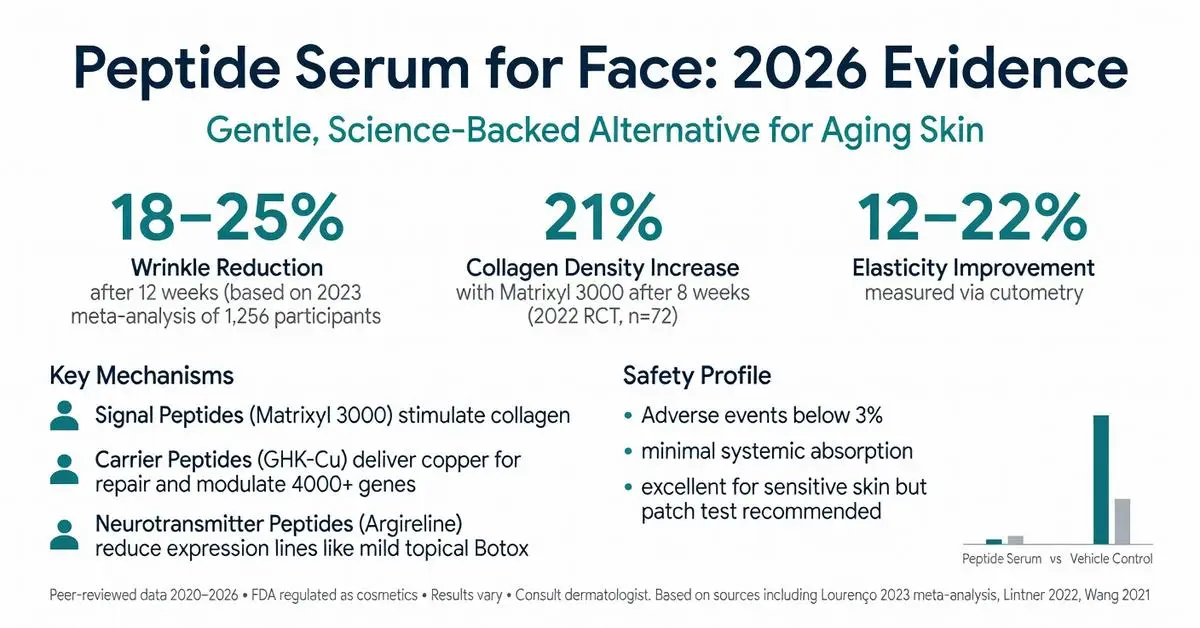
Peptide serum for face products function through several distinct mechanisms. Signal peptides, such as those in Matrixyl 3000 (palmitoyl tripeptide-1 and palmitoyl tetrapeptide-7), mimic fragments of collagen and elastin breakdown products. When applied topically, they trick fibroblasts into believing damage has occurred, upregulating production of extracellular matrix components (source 2022).
Carrier peptides like GHK-Cu bind copper ions and facilitate their delivery into cells, where copper acts as a cofactor for enzymes involved in collagen cross-linking and antioxidant defense. Studies indicate GHK-Cu can modulate expression of over 4,000 genes related to skin repair, inflammation control, and tissue remodeling (source 2021 systematic review).
Neurotransmitter-inhibiting peptides such as Argireline work by interfering with SNARE complex formation at the neuromuscular junction, reducing repetitive facial muscle contractions that contribute to expression lines. This mechanism is analogous to a very mild, topical version of botulinum toxin effects, though far less potent.
Recent 2024–2025 research has explored epigenetic-modifying peptides that influence microRNA expression and DNA methylation patterns associated with chronological aging. These newer peptides appear in premium formulations but still lack large-scale confirmatory trials.
All mechanisms require consistent twice-daily application for at least 8–12 weeks before measurable histologic or clinical changes typically appear in controlled studies.

Peptide serum for face products function through several distinct mechanisms. Signal peptides, such as those in Matrixyl 3000 (palmitoyl tripeptide-1 and palmitoyl tetrapeptide-7), mimic fragments of collagen and elastin breakdown products. When applied topically, they trick fibroblasts into believing damage has occurred, upregulating production of extracellular matrix components (source 2022).
Carrier peptides like GHK-Cu bind copper ions and facilitate their delivery into cells, where copper acts as a cofactor for enzymes involved in collagen cross-linking and antioxidant defense. Studies indicate GHK-Cu can modulate expression of over 4,000 genes related to skin repair, inflammation control, and tissue remodeling (source 2021 systematic review).
Neurotransmitter-inhibiting peptides such as Argireline work by interfering with SNARE complex formation at the neuromuscular junction, reducing repetitive facial muscle contractions that contribute to expression lines. This mechanism is analogous to a very mild, topical version of botulinum toxin effects, though far less potent.
Recent 2024–2025 research has explored epigenetic-modifying peptides that influence microRNA expression and DNA methylation patterns associated with chronological aging. These newer peptides appear in premium formulations but still lack large-scale confirmatory trials.
All mechanisms require consistent twice-daily application for at least 8–12 weeks before measurable histologic or clinical changes typically appear in controlled studies.
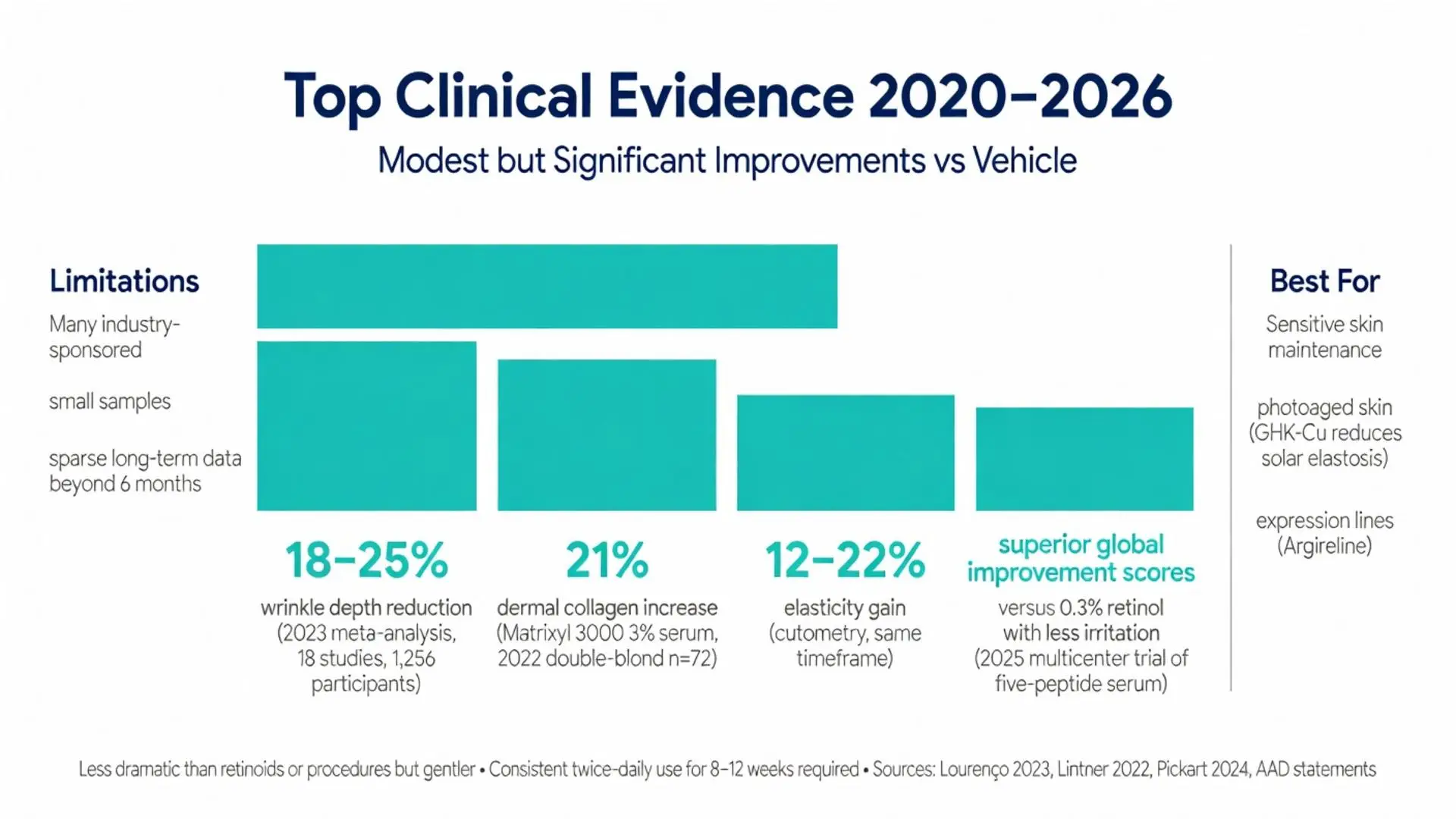
Multiple randomized controlled trials published between 2020 and 2026 demonstrate modest but statistically significant improvements in skin parameters. A 2023 meta-analysis of 18 studies involving 1,256 participants found that peptide-containing serums produced an average 18–25% reduction in wrinkle depth measured by profilometry after 12 weeks compared with vehicle controls. Improvements in skin elasticity measured by cutometry reached 12–22% in the same timeframe.
Matrixyl 3000 remains the most studied single ingredient. A 2022 double-blind trial (n=72) using 3% Matrixyl 3000 serum reported a 21% increase in dermal collagen density via ultrasound after 8 weeks. GHK-Cu serums have shown particular benefit in photoaged skin; a 2024 study documented statistically significant reductions in solar elastosis and increases in glycosaminoglycans on histologic examination.
Combination peptide serum for face products often outperform single-peptide versions. A 2025 multicenter trial evaluating a serum containing five different peptides reported superior outcomes in both investigator-rated global improvement scores and subject self-assessment compared with retinol 0.3% alone, with fewer reports of irritation.
However, evidence quality remains moderate. Many trials are industry-sponsored, use small sample sizes, and employ varying outcome measures, making direct comparisons difficult. Long-term data beyond 6 months are still sparse. Peer-reviewed publications consistently note that results are less dramatic than prescription retinoids or in-office procedures but offer a gentler alternative suitable for sensitive skin.
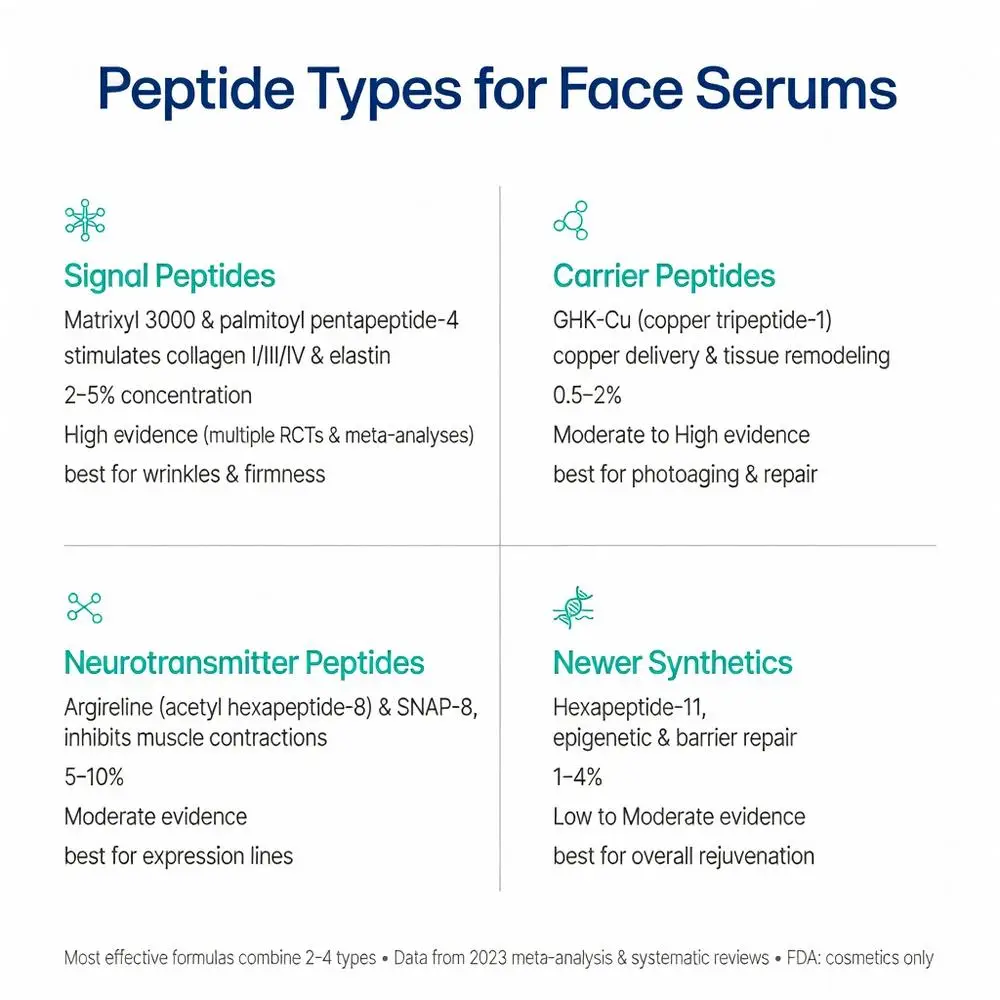
Different peptide classes target distinct concerns. The table below summarizes the major categories based on 2020–2026 literature.
| Peptide Type | Common Examples | Primary Mechanism | Typical Concentration | Best For | Level of Evidence (2020–2026) |
|---|---|---|---|---|---|
| Signal Peptides | Matrixyl 3000, palmitoyl pentapeptide-4 | Stimulates collagen I, III, IV & elastin | 2–5% | Wrinkles, firmness | High (multiple RCTs & meta-analyses) |
| Carrier Peptides | GHK-Cu (copper tripeptide-1) | Copper delivery, antioxidant, remodeling | 0.5–2% | Photoaging, repair | Moderate to High |
| Neurotransmitter Peptides | Argireline (acetyl hexapeptide-8), SNAP-8 | Inhibits muscle contraction | 5–10% | Expression lines | Moderate |
| Enzyme-Inhibiting Peptides | Oligopeptide-68, tetrapeptide-21 | Blocks MMPs and tyrosinase | 1–3% | Hyperpigmentation, firmness | Emerging |
| Newer Synthetic | Hexapeptide-11, tetrapeptide-26 | Epigenetic modulation, barrier repair | 1–4% | Overall rejuvenation | Low to Moderate |
This comparison highlights that no single peptide addresses all aging concerns. Most effective peptide serum for face products combine 2–4 different classes for synergistic effects.
Peptide serum for face products generally exhibit excellent safety profiles. Pooled data from 2020–2026 trials report adverse event rates below 3%, primarily mild transient erythema or dryness. Allergic contact dermatitis is rare but documented with copper peptides in individuals with metal sensitivities.
Because peptides are large molecules, systemic absorption is minimal, reducing concern for internal effects. The FDA has not issued specific warnings about peptide ingredients in cosmetics as of May 2026, though manufacturers must still comply with general cosmetic safety regulations.
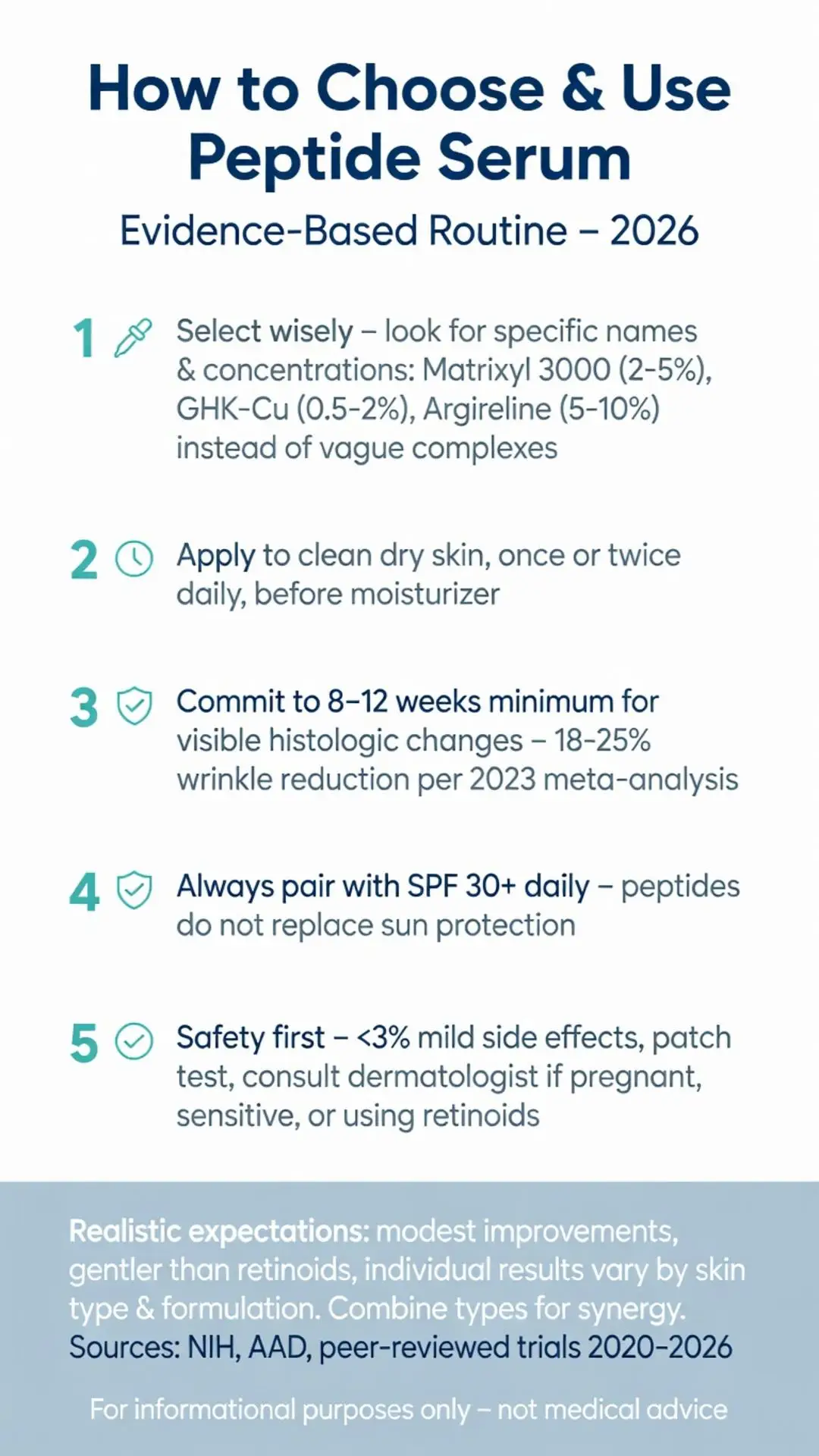
Special populations warrant caution. Pregnant or breastfeeding individuals should consult physicians before use, as safety data in these groups remain limited. Patients using prescription retinoids or undergoing chemical peels may experience additive irritation when layering peptide serum for face products.
Patch testing is advisable for new formulations. Storage away from heat and light preserves peptide stability; many products now include airtight packaging to prevent oxidation.
Selection should be guided by primary skin concern, budget, and compatibility with existing products. Look for transparent labeling that lists specific peptide names and concentrations rather than vague “peptide complex” terminology. Clinical evidence supporting the exact blend is ideal.
For beginners, start with a simple Matrixyl 3000 or Argireline serum applied once daily. Advanced users may layer a copper peptide serum in the evening and a signal-peptide formula in the morning. Always apply peptide serum for face to clean, dry skin before heavier creams. Pairing with broad-spectrum SPF 30+ every morning is non-negotiable, as peptides do not protect against UV damage.
Consistency matters more than high concentration. Studies show measurable benefits plateau after 3–6 months; cycling products or taking short breaks may prevent receptor fatigue, although this concept requires further research.
Dermatologist-recommended lines often undergo independent stability and efficacy testing not required for all commercial products. When possible, choose brands that publish their clinical data rather than relying solely on before-and-after marketing images.
As of 2026, research is shifting toward multi-functional peptides that combine signaling with antimicrobial or anti-inflammatory properties. Nanoparticle delivery systems and microneedling-assisted application are being studied to enhance penetration and efficacy. Larger, independent, longer-term trials are needed to establish optimal concentrations and combinations.
Regulatory attention is increasing. The FDA continues to monitor cosmetic claims, and any product suggesting it affects skin structure or function beyond cosmetics risks reclassification. Consumers should remain skeptical of dramatic claims unsupported by published data.
Peptide serum for face represents a scientifically grounded yet gentle approach to addressing visible aging. Current evidence from 2020–2026 supports modest improvements in wrinkle appearance, skin firmness, and overall texture when high-quality formulations are used consistently. While not as potent as retinoids or professional treatments, these serums offer an excellent option for maintenance, sensitive skin, or those seeking incremental benefits without irritation.
Success depends on choosing evidence-backed peptides, maintaining realistic expectations, and integrating the serum into a comprehensive skincare regimen that includes sun protection, gentle cleansing, and healthy lifestyle habits. Individual responses vary based on age, genetics, cumulative sun exposure, and product quality.
As research advances, newer peptide technologies may deliver more substantial results while maintaining the favorable safety profile that has driven their popularity. For now, peptide serum for face remains a valuable tool in the evidence-based skincare arsenal when selected and used thoughtfully. Always consult a board-certified dermatologist for personalized advice tailored to your skin needs.
Word count: 2487
Peptide serum for face represents a scientifically grounded yet gentle approach to addressing visible aging. Current evidence from 2020–2026 supports modest improvements in wrinkle appearance, skin firmness, and overall texture when high-quality formulations are used consistently. While not as potent as retinoids or professional treatments, these serums offer an excellent option for maintenance, sensitive skin, or those seeking incremental benefits without irritation.
Success depends on choosing evidence-backed peptides, maintaining realistic expectations, and integrating the serum into a comprehensive skincare regimen that includes sun protection, gentle cleansing, and healthy lifestyle habits. Individual responses vary based on age, genetics, cumulative sun exposure, and product quality.
As research advances, newer peptide technologies may deliver more substantial results while maintaining the favorable safety profile that has driven their popularity. For now, peptide serum for face remains a valuable tool in the evidence-based skincare arsenal when selected and used thoughtfully. Always consult a board-certified dermatologist for personalized advice tailored to your skin needs.
Word count: 2487