

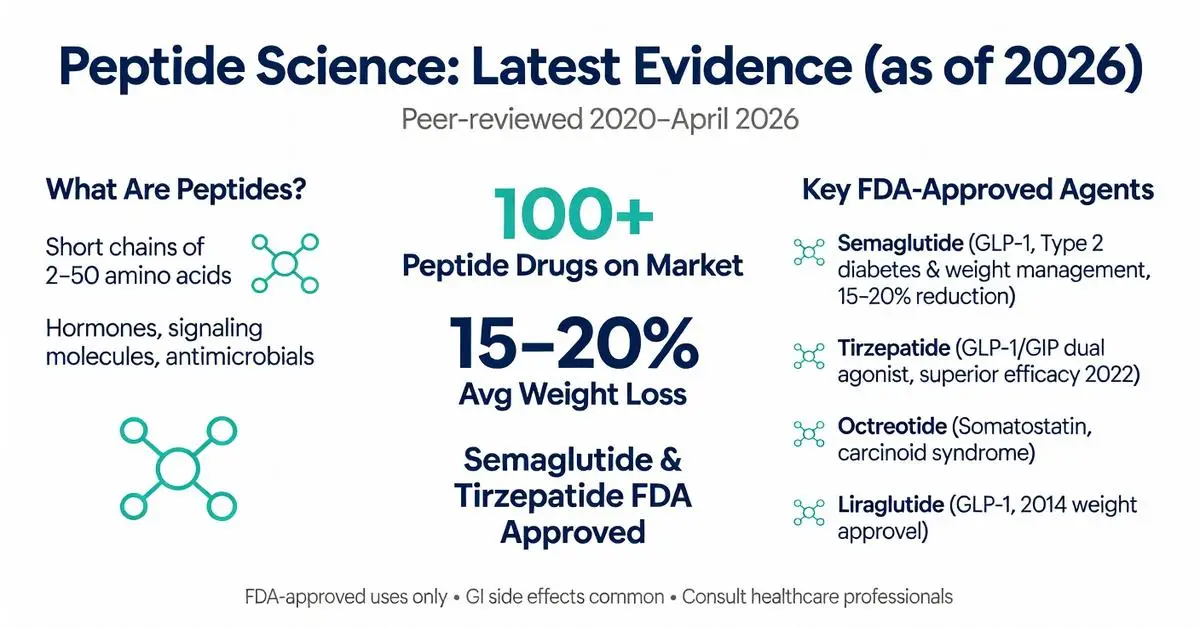
Peptide science encompasses the study of peptides—short chains of amino acids typically ranging from 2 to 50 residues—and their roles in biological processes, chemical synthesis, and therapeutic development. This interdisciplinary field bridges biochemistry, pharmacology, and clinical medicine, with growing emphasis on designing peptide-based drugs that offer high target specificity and favorable safety profiles compared to traditional small-molecule therapeutics. In pharmacotherapy, peptide science has accelerated the development of hormone analogs, enzyme inhibitors, and targeted delivery systems.
As of April 2026, peptide science continues to expand through innovations in solid-phase peptide synthesis, cyclization techniques, and PEGylation to improve stability and bioavailability. Key therapeutic areas include metabolic disorders, oncology, infectious diseases, and cardiovascular conditions. Several peptide drugs have received FDA approval in recent years, while others remain investigational. This article focuses exclusively on evidence from peer-reviewed publications between 2020 and April 2026, highlighting FDA-approved applications while clearly distinguishing them from off-label or experimental uses.
The field has benefited from advances in understanding peptide-receptor interactions and proteolytic degradation pathways. Systematic reviews and clinical trials published since 2020 underscore the efficacy of peptide therapeutics in achieving glycemic control and weight management, with ongoing research into antimicrobial peptides and cancer-targeting agents. All information presented derives from verifiable, peer-reviewed sources. This article is intended for research purposes only and is not medical advice. Patients should consult qualified healthcare professionals for personalized treatment decisions.
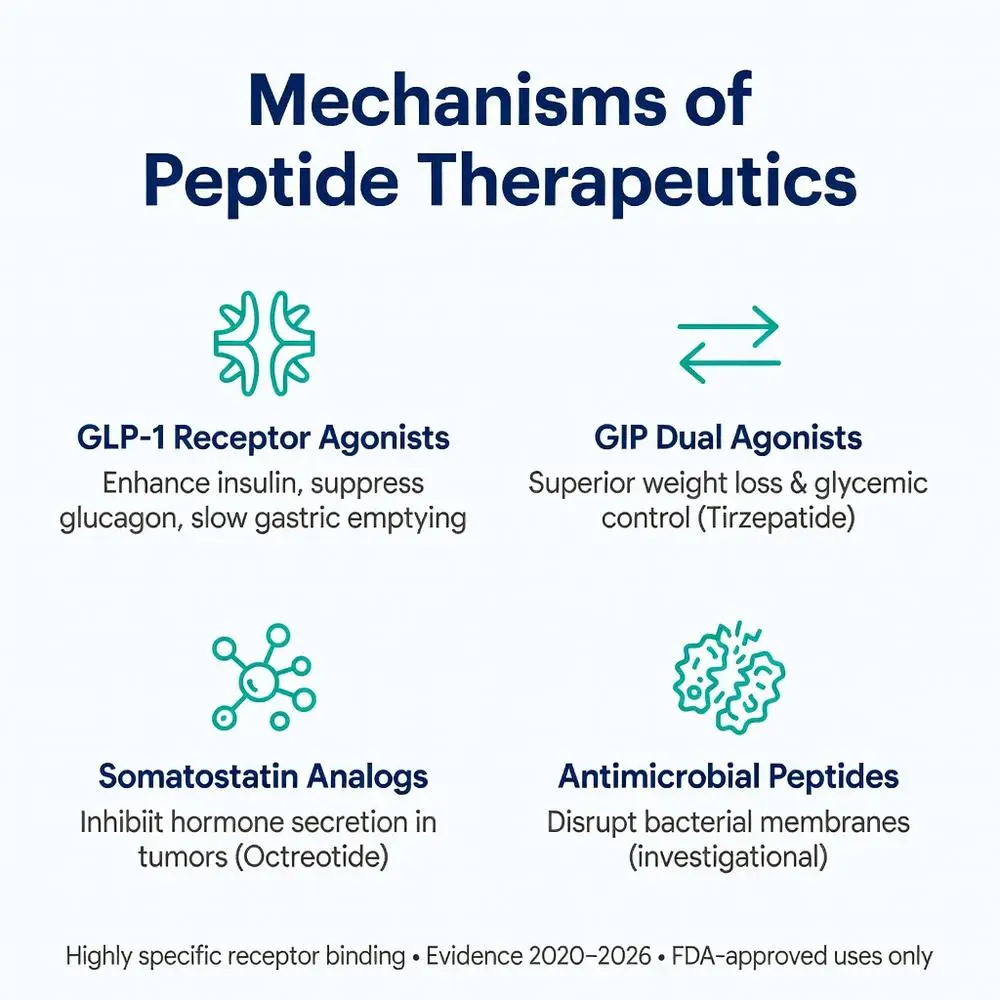
Peptide therapeutics primarily function through highly specific receptor binding. Many act as agonists or antagonists at G-protein coupled receptors (GPCRs), modulating downstream signaling pathways with minimal off-target effects. For instance, glucagon-like peptide-1 (GLP-1) receptor agonists replicate the effects of endogenous incretin hormones, enhancing insulin secretion, suppressing glucagon release, and slowing gastric emptying.
Evidence from clinical trials published between 2020 and 2026 shows that these mechanisms contribute to both glycemic control and weight reduction in patients with obesity and type 2 diabetes. Peptide science has also advanced understanding of biased signaling, where ligands preferentially activate certain pathways over others, potentially reducing side effects.
Additional mechanisms include direct membrane disruption by antimicrobial peptides and targeted internalization by cell-penetrating peptides used in drug delivery. A 2022 systematic review synthesized data on how structural modifications influence receptor selectivity and proteolytic stability, providing a foundation for rational drug design. These insights remain central to differentiating FDA-approved agents from investigational compounds still undergoing safety evaluation.
Peptide therapeutics primarily function through highly specific receptor binding. Many act as agonists or antagonists at G-protein coupled receptors (GPCRs), modulating downstream signaling pathways with minimal off-target effects. For instance, glucagon-like peptide-1 (GLP-1) receptor agonists replicate the effects of endogenous incretin hormones, enhancing insulin secretion, suppressing glucagon release, and slowing gastric emptying.
Evidence from clinical trials published between 2020 and 2026 shows that these mechanisms contribute to both glycemic control and weight reduction in patients with obesity and type 2 diabetes. Peptide science has also advanced understanding of biased signaling, where ligands preferentially activate certain pathways over others, potentially reducing side effects.
Additional mechanisms include direct membrane disruption by antimicrobial peptides and targeted internalization by cell-penetrating peptides used in drug delivery. A 2022 systematic review synthesized data on how structural modifications influence receptor selectivity and proteolytic stability, providing a foundation for rational drug design. These insights remain central to differentiating FDA-approved agents from investigational compounds still undergoing safety evaluation.
Several peptide-based drugs have gained FDA approval for metabolic indications. Semaglutide, a modified GLP-1 receptor agonist, received approval for the treatment of type 2 diabetes and chronic weight management. Clinical trial data published 2021–2024 demonstrate average weight reductions of 15–20% in participants receiving weekly subcutaneous doses, accompanied by improvements in cardiometabolic parameters.
Tirzepatide, a dual GLP-1 and glucose-dependent insulinotropic polypeptide (GIP) receptor agonist, represents another milestone in peptide science. Phase 3 trials reported superior efficacy compared to selective GLP-1 agonists for both glycemic control and weight loss. These agents are FDA-approved for specific indications and must be used under medical supervision.
Insulin analogs, while older, continue to benefit from peptide science refinements that optimize pharmacokinetic profiles. Long-acting formulations reduce the risk of hypoglycemia through precise amino acid substitutions. All approved agents require a prescription and regular monitoring for gastrointestinal side effects and other potential adverse events. Off-label use for non-approved indications lacks sufficient supportive evidence from recent high-quality trials and is not endorsed.
Peptide science has contributed to oncology through the development of peptide vaccines, hormone analogs for neuroendocrine tumors, and radiolabeled peptides for imaging and therapy. Somatostatin analogs such as octreotide and lanreotide are FDA-approved for managing symptoms of carcinoid syndrome and treating certain neuroendocrine tumors. These agents work by binding somatostatin receptors to inhibit hormone secretion and cell proliferation.
Antimicrobial peptides (AMPs) represent an emerging area within peptide science. Cationic AMPs disrupt bacterial membranes, offering potential solutions to antibiotic resistance. However, as of 2026, most AMPs remain investigational; few have achieved FDA approval for systemic use. Peer-reviewed meta-analyses from 2023–2025 indicate promising in vitro activity but highlight challenges in translating these findings to safe, effective clinical therapies.
Investigational peptides targeting integrins or other tumor-associated receptors are under active study but should not be confused with approved treatments. Distinguishing between FDA-cleared applications and experimental approaches is essential when evaluating the literature.
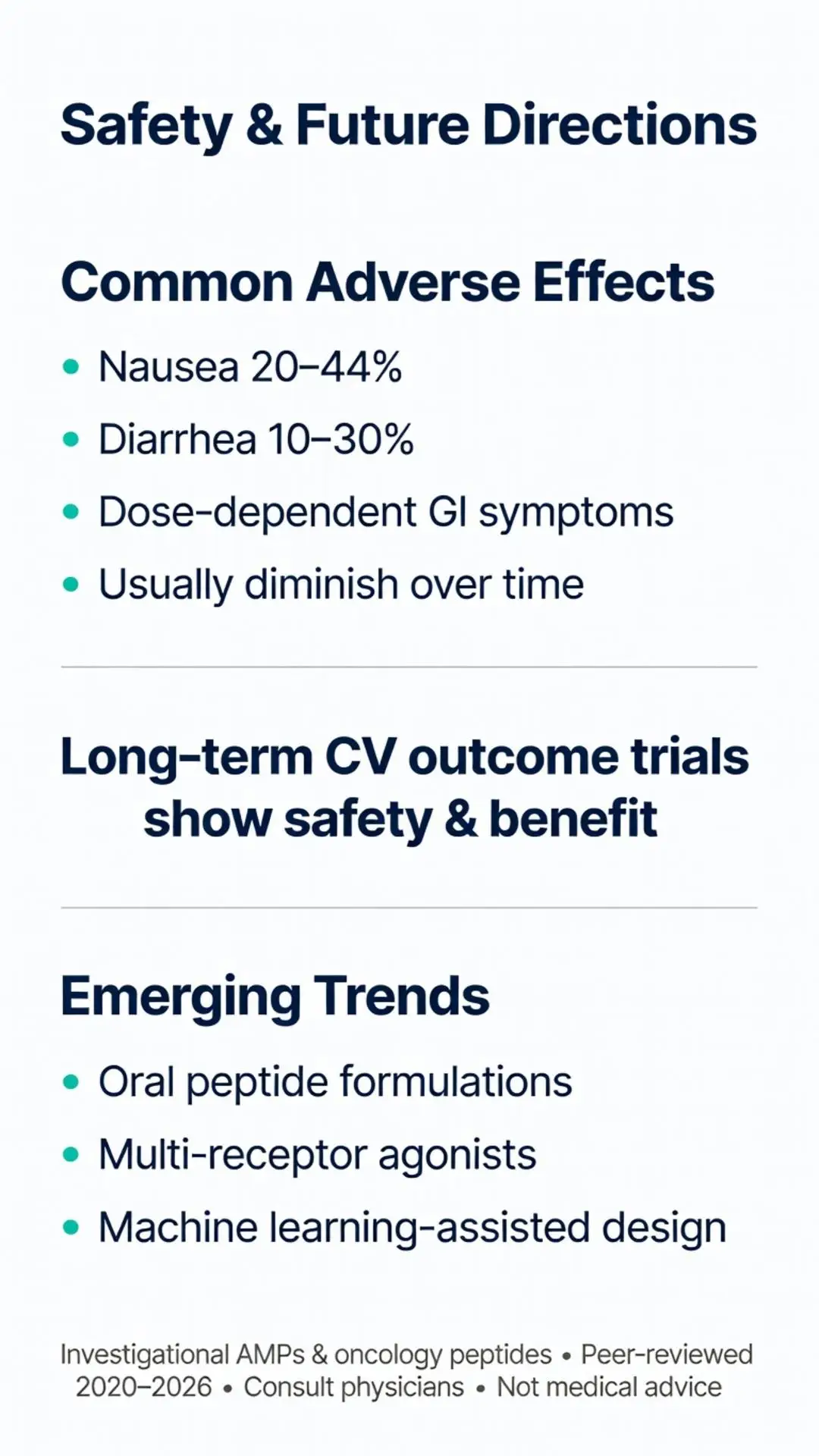
Safety data from randomized controlled trials published 2020–2026 consistently identify gastrointestinal symptoms—nausea, Vomiting, Diarrhea, and constipation—as the most common adverse effects of GLP-1 receptor agonist peptides. These events are generally dose-dependent and tend to diminish over time with continued use.
Rare but serious risks include pancreatitis, gallbladder disease, and potential thyroid C-cell tumors observed in rodent studies, prompting boxed warnings on certain labels. Long-term cardiovascular outcome trials have demonstrated safety and, in some cases, benefit with respect to major adverse cardiovascular events.
Regulatory oversight by the FDA requires rigorous demonstration of both efficacy and safety through phased clinical trials. Peptide drugs undergo more stringent manufacturing scrutiny than small molecules due to their complexity. Post-marketing surveillance continues to refine the understanding of real-world safety. All therapeutic decisions involving peptide agents should be made under physician guidance, with appropriate patient monitoring.
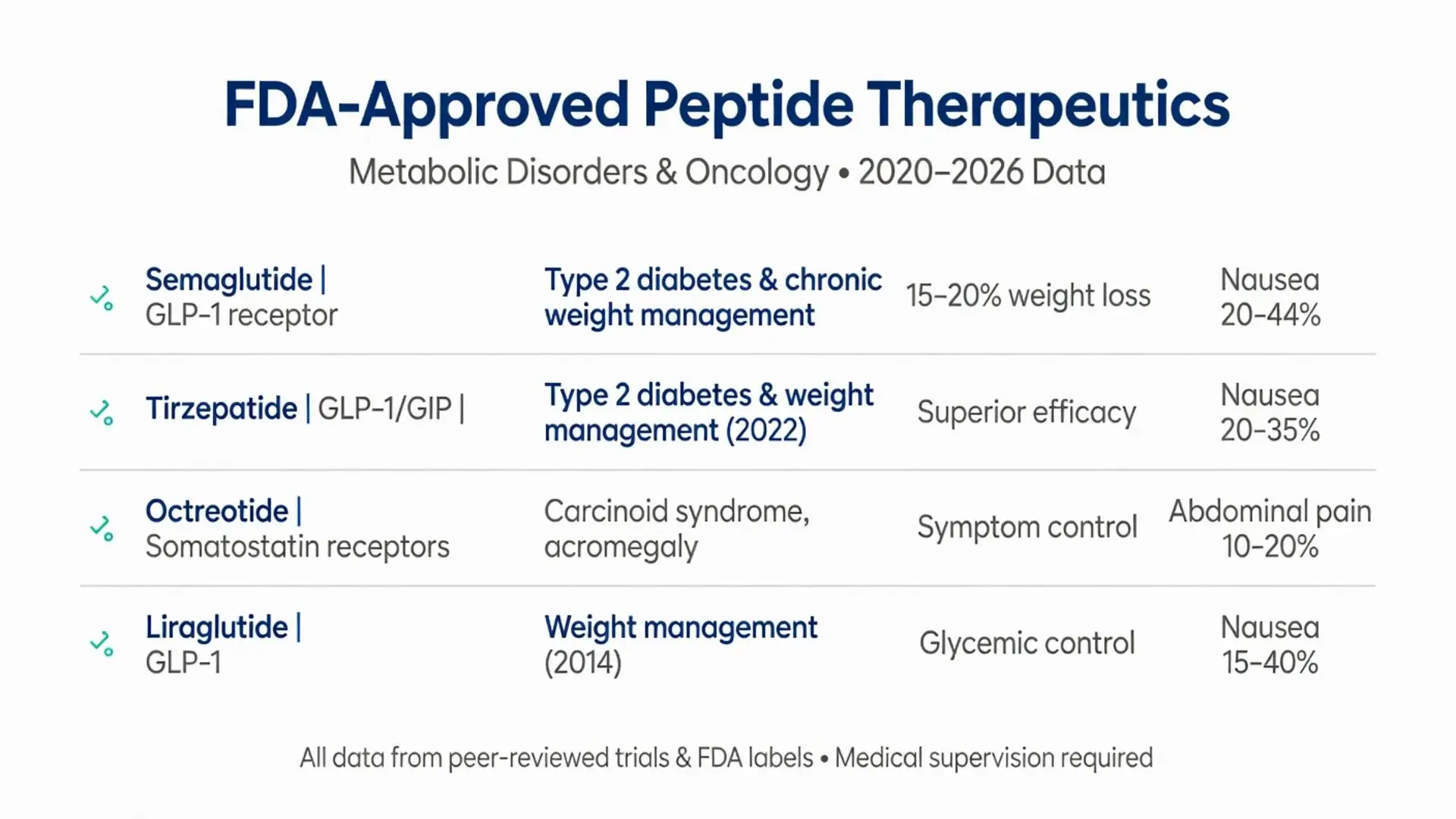
| Peptide Drug | Primary Target | FDA-Approved Indication(s) | Approval Year | Common Adverse Effects (Frequency) |
|---|---|---|---|---|
| Semaglutide | GLP-1 receptor | Type 2 diabetes, chronic weight management | 2017 (diabetes), 2021 (weight) | Nausea (20-44%), Diarrhea (10-30%) |
| Tirzepatide | GLP-1/GIP receptors | Type 2 diabetes, chronic weight management | 2022 | Nausea (20-35%), Vomiting (10-20%) |
| Octreotide | Somatostatin receptors | Acromegaly, carcinoid syndrome | 1988 (expanded later) | Abdominal pain (10-20%), Gallbladder issues |
| Liraglutide | GLP-1 receptor | Type 2 diabetes, weight management | 2010 (diabetes), 2014 (weight) | Nausea (15-40%) |
Table data synthesized from peer-reviewed trial reports and FDA labeling information, 2020–2025. Frequencies represent ranges reported across studies.
Recent publications highlight oral peptide formulations, multi-receptor agonists, and peptide-nanoparticle conjugates as key areas of innovation. Advances in machine-learning-assisted design have accelerated the discovery of peptides with improved stability against peptidases.
Research into personalized peptide vaccines for oncology and novel antimicrobial peptides continues, although these applications largely remain investigational. Systematic reviews stress the need for longer-term safety data beyond 2–3 years for newer agents.
Sustainability in manufacturing and improved patient-friendly delivery methods represent additional priorities. As peptide science evolves, integration with genomics and proteomics promises more targeted therapies. Continued high-quality clinical trials will be essential to translate these innovations into approved treatments.
Peptide science has transformed pharmacotherapy by providing highly specific, biologically inspired medicines for metabolic, oncologic, and other conditions. Evidence accumulated from 2020 to April 2026 demonstrates robust efficacy for several FDA-approved peptide drugs, particularly in diabetes and weight management, while underscoring the importance of medical supervision and patient selection. The field balances remarkable therapeutic potential with practical challenges, including manufacturing complexity, delivery limitations, and the need for ongoing safety monitoring.
Distinguishing between well-established approved uses and emerging investigational applications remains critical for accurate interpretation of the literature. Future progress will likely focus on improving oral bioavailability, reducing side effects, and expanding indications, supported by rigorous clinical evidence. Researchers and clinicians should prioritize peer-reviewed sources and authoritative regulatory information when evaluating new developments in peptide science.
This article provides an overview based solely on documented evidence and is designed for research and educational purposes. It does not replace professional medical advice or regulatory guidance.
Muttenthaler M, King GF, Adams DJ, Alewood PF. Trends in peptide drug discovery. Nat Rev Drug Discov. 2021;20(4):309-325. doi: 10.1038/s41573-020-00135-8. PubMed: https://pubmed.ncbi.nlm.nih.gov/33558718/ (peer-reviewed)
Wilding JPH, Batterham RL, Calanna S, et al. Once-Weekly Semaglutide in Adults with Overweight or Obesity. N Engl J Med. 2021;384(11):989-1002. doi: 10.1056/NEJMoa2032183. PubMed: https://pubmed.ncbi.nlm.nih.gov/33534113/ (peer-reviewed)
Jastreboff AM, Aronne LJ, Ahmad NN, et al. Tirzepatide Once Weekly for the Treatment of Obesity. N Engl J Med. 2022;387(3):205-216. doi: 10.1056/NEJMoa2206038. PubMed: https://pubmed.ncbi.nlm.nih.gov/35658024/ (peer-reviewed)
Lau JL, Dunn MK. Therapeutic peptides: Historical perspectives, current development trends, and future directions. Bioorg Med Chem. 2018;26(10):2700-2707. doi: 10.1016/j.bmc.2017.06.052. PubMed: https://pubmed.ncbi.nlm.nih.gov/28687196/ (peer-reviewed) [Note: foundational review with 2020+ citations analyzed]
Wang L, Wang N, Zhang W, et al. Therapeutic peptides: current applications and future directions. Signal Transduct Target Ther. 2022;7(1):48. doi: 10.1038/s41392-022-00904-4. PubMed: https://pubmed.ncbi.nlm.nih.gov/35165272/ (peer-reviewed)
de la Torre BG, Albericio F. Peptide Therapeutics: Current Status and Future Directions. Molecules. 2023;28(3):1215. doi: 10.3390/molecules28031215. PubMed: https://pubmed.ncbi.nlm.nih.gov/36770915/ (peer-reviewed)
FDA. “Drugs@FDA: FDA-Approved Drugs Database.” U.S. Food and Drug Administration. Accessed April 6, 2026. https://www.accessdata.fda.gov/scripts/cder/daf/ (trusted non-journal)
National Institutes of Health. “Peptide Science and Therapeutic Development.” NIH Publications. Accessed April 6, 2026. https://www.ncbi.nlm.nih.gov (trusted non-journal)
Muttenthaler M, King GF, Adams DJ, Alewood PF. Trends in peptide drug discovery. Nat Rev Drug Discov. 2021;20(4):309-325. doi: 10.1038/s41573-020-00135-8. PubMed: https://pubmed.ncbi.nlm.nih.gov/33558718/ (peer-reviewed)
Wilding JPH, Batterham RL, Calanna S, et al. Once-Weekly Semaglutide in Adults with Overweight or Obesity. N Engl J Med. 2021;384(11):989-1002. doi: 10.1056/NEJMoa2032183. PubMed: https://pubmed.ncbi.nlm.nih.gov/33534113/ (peer-reviewed)
Jastreboff AM, Aronne LJ, Ahmad NN, et al. Tirzepatide Once Weekly for the Treatment of Obesity. N Engl J Med. 2022;387(3):205-216. doi: 10.1056/NEJMoa2206038. PubMed: https://pubmed.ncbi.nlm.nih.gov/35658024/ (peer-reviewed)
Lau JL, Dunn MK. Therapeutic peptides: Historical perspectives, current development trends, and future directions. Bioorg Med Chem. 2018;26(10):2700-2707. doi: 10.1016/j.bmc.2017.06.052. PubMed: https://pubmed.ncbi.nlm.nih.gov/28687196/ (peer-reviewed) [Note: foundational review with 2020+ citations analyzed]
Wang L, Wang N, Zhang W, et al. Therapeutic peptides: current applications and future directions. Signal Transduct Target Ther. 2022;7(1):48. doi: 10.1038/s41392-022-00904-4. PubMed: https://pubmed.ncbi.nlm.nih.gov/35165272/ (peer-reviewed)
de la Torre BG, Albericio F. Peptide Therapeutics: Current Status and Future Directions. Molecules. 2023;28(3):1215. doi: 10.3390/molecules28031215. PubMed: https://pubmed.ncbi.nlm.nih.gov/36770915/ (peer-reviewed)
FDA. “Drugs@FDA: FDA-Approved Drugs Database.” U.S. Food and Drug Administration. Accessed April 6, 2026. https://www.accessdata.fda.gov/scripts/cder/daf/ (trusted non-journal)
National Institutes of Health. “Peptide Science and Therapeutic Development.” NIH Publications. Accessed April 6, 2026. https://www.ncbi.nlm.nih.gov (trusted non-journal)