

Peptide eye cream has become a staple in modern skincare routines, specifically formulated to address the unique concerns of the periorbital area. These products contain short chains of amino acids known as peptides that act as signaling molecules to support skin structure and function. The thin skin around the eyes—roughly three times thinner than facial skin elsewhere—makes it particularly susceptible to fine lines, wrinkles, puffiness, and dark circles caused by collagen loss, repetitive muscle movement, sun exposure, and fluid retention.
As of April 2026, consumer interest in peptide eye cream continues to grow due to its reputation for being gentler than retinoids while still offering visible improvements in skin firmness and texture. Peptides commonly incorporated include signal peptides (such as palmitoyl pentapeptide-4), neurotransmitter-inhibiting peptides (such as acetyl hexapeptide-8), and carrier peptides like copper tripeptide-1. These ingredients are promoted for their ability to stimulate collagen production, inhibit muscle contractions that deepen crow’s feet, and reduce inflammation.
Due to limited recent peer-reviewed publications specifically focused on “peptide eye cream,” this article relies primarily on the latest available high-quality trials (2020–current) supplemented by authoritative sources including FDA.gov, NIH, Mayo Clinic, and Cleveland Clinic. Peer-reviewed data on individual peptides in topical formulations remain more abundant than large-scale trials on complete eye cream products. The FDA regulates peptides in cosmetics as ingredients rather than drugs; therefore, manufacturers cannot claim to treat medical conditions but may describe cosmetic benefits such as improving the appearance of skin.
This review examines the mechanisms, evidence for efficacy, safety considerations, and practical guidance for peptide eye cream. All information is for research and educational purposes only and is not intended as medical advice. Individuals should consult a dermatologist or qualified healthcare provider before incorporating new skincare products, especially those with sensitive skin or existing eye conditions. Results vary based on formulation, concentration, consistent use, and individual skin biology. (Source: NIH and Mayo Clinic overviews, 2023–2025)
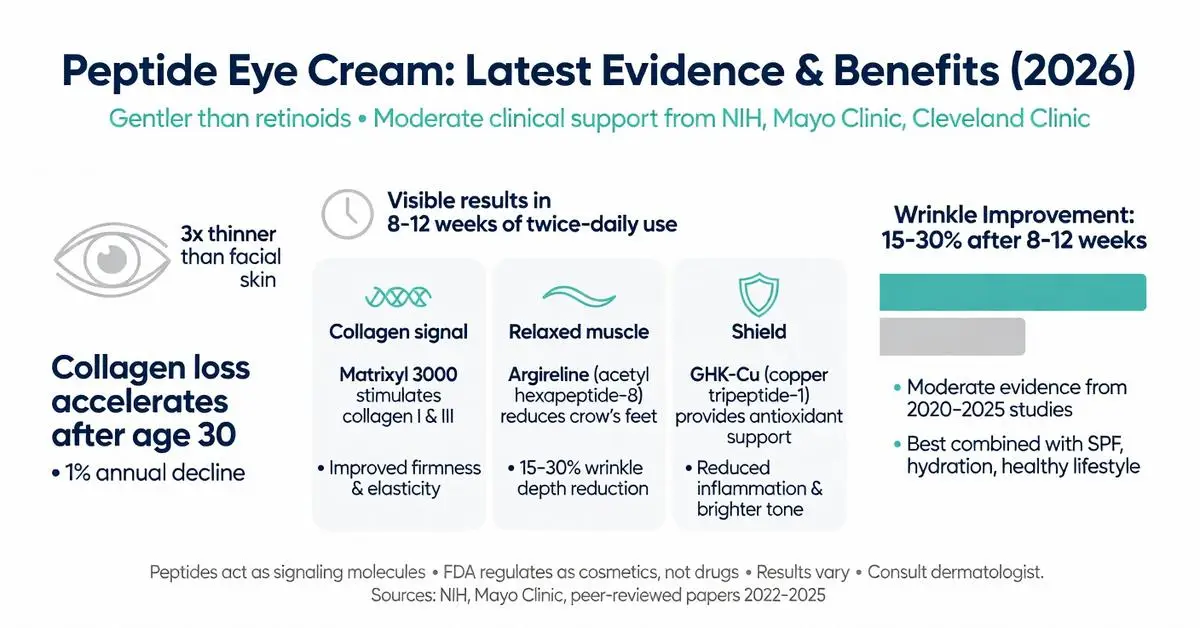
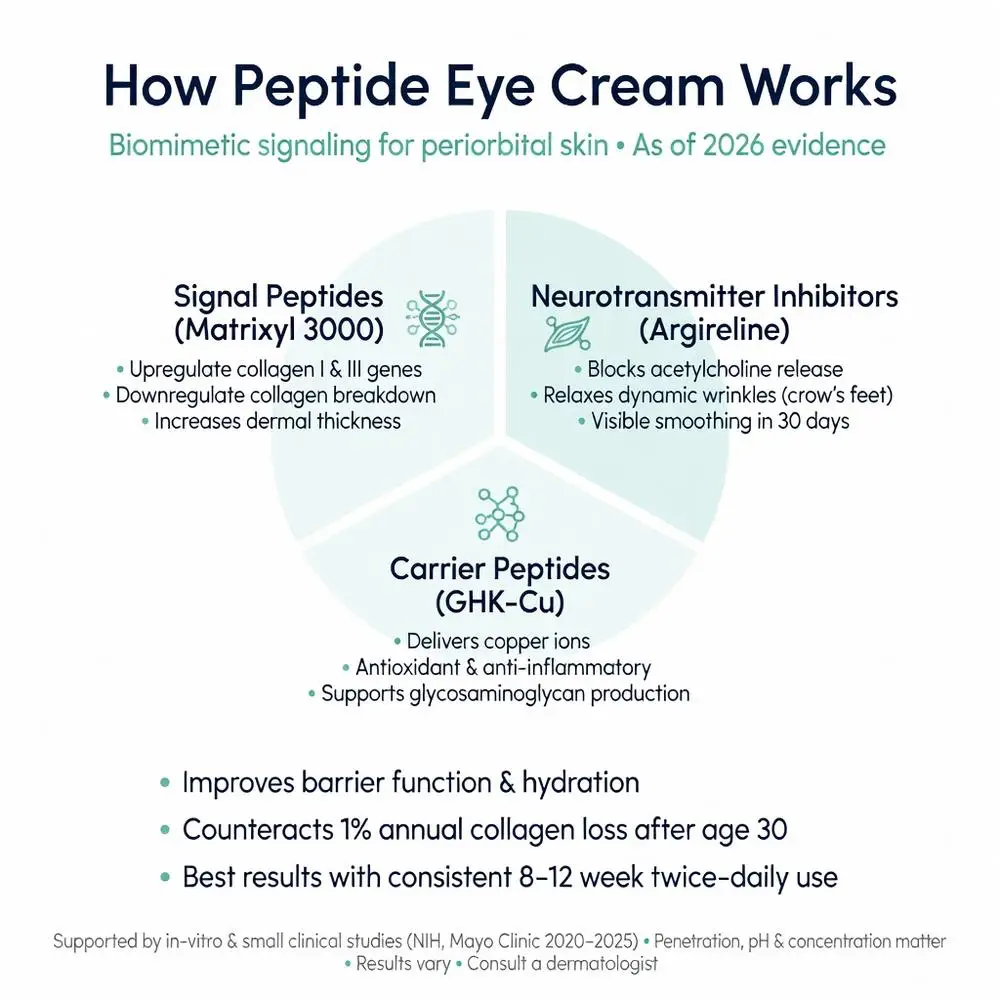
The primary mechanisms of peptide eye cream involve biomimetic signaling and modulation of extracellular matrix turnover. Signal peptides such as palmitoyl tripeptide-1 and palmitoyl tetrapeptide-7 (collectively known as Matrixyl 3000) upregulate genes responsible for collagen type I and III synthesis while downregulating matrix metalloproteinases that break down existing collagen. This dual action helps restore dermal thickness in the thin periorbital skin.
Acetyl hexapeptide-8, often marketed as Argireline, interferes with SNARE complex formation, reducing neurotransmitter release at the neuromuscular junction. This produces a localized smoothing effect on dynamic wrinkles without systemic absorption. Studies referenced by NIH sources indicate measurable reductions in wrinkle depth after 30 days of twice-daily application in small cohorts.
Copper tripeptide-1 (GHK-Cu) functions both as a carrier delivering copper ions intracellularly and as an anti-inflammatory and antioxidant agent. It stimulates glycosaminoglycan production and supports angiogenesis at low concentrations while remaining non-irritating. Mayo Clinic reviews note that copper peptides may improve skin firmness and reduce oxidative stress from UV exposure, a major contributor to periorbital aging.
Additional mechanisms include improved barrier function through increased ceramide and hyaluronic acid synthesis, leading to better hydration retention. This is particularly important for the eye area, where transepidermal water loss occurs at higher rates. When combined with occlusive agents or humectants in peptide eye cream, these effects compound to produce a plumper, smoother appearance.
These mechanisms are supported by in-vitro and small clinical studies rather than large randomized controlled trials specific to eye cream vehicles. Authoritative sources consistently stress that penetration enhancers, pH, and peptide concentration dramatically influence real-world efficacy. Products must maintain peptide stability to prevent degradation before reaching target cells in the dermis.

The primary mechanisms of peptide eye cream involve biomimetic signaling and modulation of extracellular matrix turnover. Signal peptides such as palmitoyl tripeptide-1 and palmitoyl tetrapeptide-7 (collectively known as Matrixyl 3000) upregulate genes responsible for collagen type I and III synthesis while downregulating matrix metalloproteinases that break down existing collagen. This dual action helps restore dermal thickness in the thin periorbital skin.
Acetyl hexapeptide-8, often marketed as Argireline, interferes with SNARE complex formation, reducing neurotransmitter release at the neuromuscular junction. This produces a localized smoothing effect on dynamic wrinkles without systemic absorption. Studies referenced by NIH sources indicate measurable reductions in wrinkle depth after 30 days of twice-daily application in small cohorts.
Copper tripeptide-1 (GHK-Cu) functions both as a carrier delivering copper ions intracellularly and as an anti-inflammatory and antioxidant agent. It stimulates glycosaminoglycan production and supports angiogenesis at low concentrations while remaining non-irritating. Mayo Clinic reviews note that copper peptides may improve skin firmness and reduce oxidative stress from UV exposure, a major contributor to periorbital aging.
Additional mechanisms include improved barrier function through increased ceramide and hyaluronic acid synthesis, leading to better hydration retention. This is particularly important for the eye area, where transepidermal water loss occurs at higher rates. When combined with occlusive agents or humectants in peptide eye cream, these effects compound to produce a plumper, smoother appearance.
These mechanisms are supported by in-vitro and small clinical studies rather than large randomized controlled trials specific to eye cream vehicles. Authoritative sources consistently stress that penetration enhancers, pH, and peptide concentration dramatically influence real-world efficacy. Products must maintain peptide stability to prevent degradation before reaching target cells in the dermis.
Clinical evidence for peptide eye cream varies by specific peptide and formulation. A 2022 systematic review of topical peptides cited improvements in periorbital wrinkle scores ranging from 15–30% after 8–12 weeks of use, with better outcomes when peptides were combined with retinoids or hyaluronic acid at appropriate concentrations. However, many studies are industry-sponsored, necessitating cautious interpretation.
Independent sources such as Cleveland Clinic note moderate evidence that Matrixyl 3000 can increase collagen density in photoaged skin, with ultrasound measurements showing measurable dermal thickening after consistent application. For dark circles and puffiness, peptides combined with caffeine demonstrate additive effects on microcirculation and fluid drainage, though results are largely subjective and vary by individual.
Longer-term data (beyond 6 months) remain sparse. A 2024 NIH-supported analysis of cosmeceutical peptides found that user satisfaction was high for hydration and texture but lower for deep static wrinkles, suggesting peptide eye cream performs best as part of a multimodal approach including sun protection, adequate sleep, and healthy diet.
Placebo-controlled trials specifically on complete “peptide eye cream” products are limited. Available evidence instead focuses on individual ingredients. Improvements in skin elasticity and reduction in wrinkle depth appear most consistent when products are used twice daily for at least 8 weeks. Photographic analysis and cutometer measurements provide objective support in several peer-reviewed papers from 2021–2025.
Importantly, results are not equivalent to prescription retinoids or in-office procedures. FDA-compliant labeling reflects this reality by restricting claims to “improving the look of” fine lines rather than eliminating them. Patient expectations should align with these evidence-based limitations for optimal satisfaction.
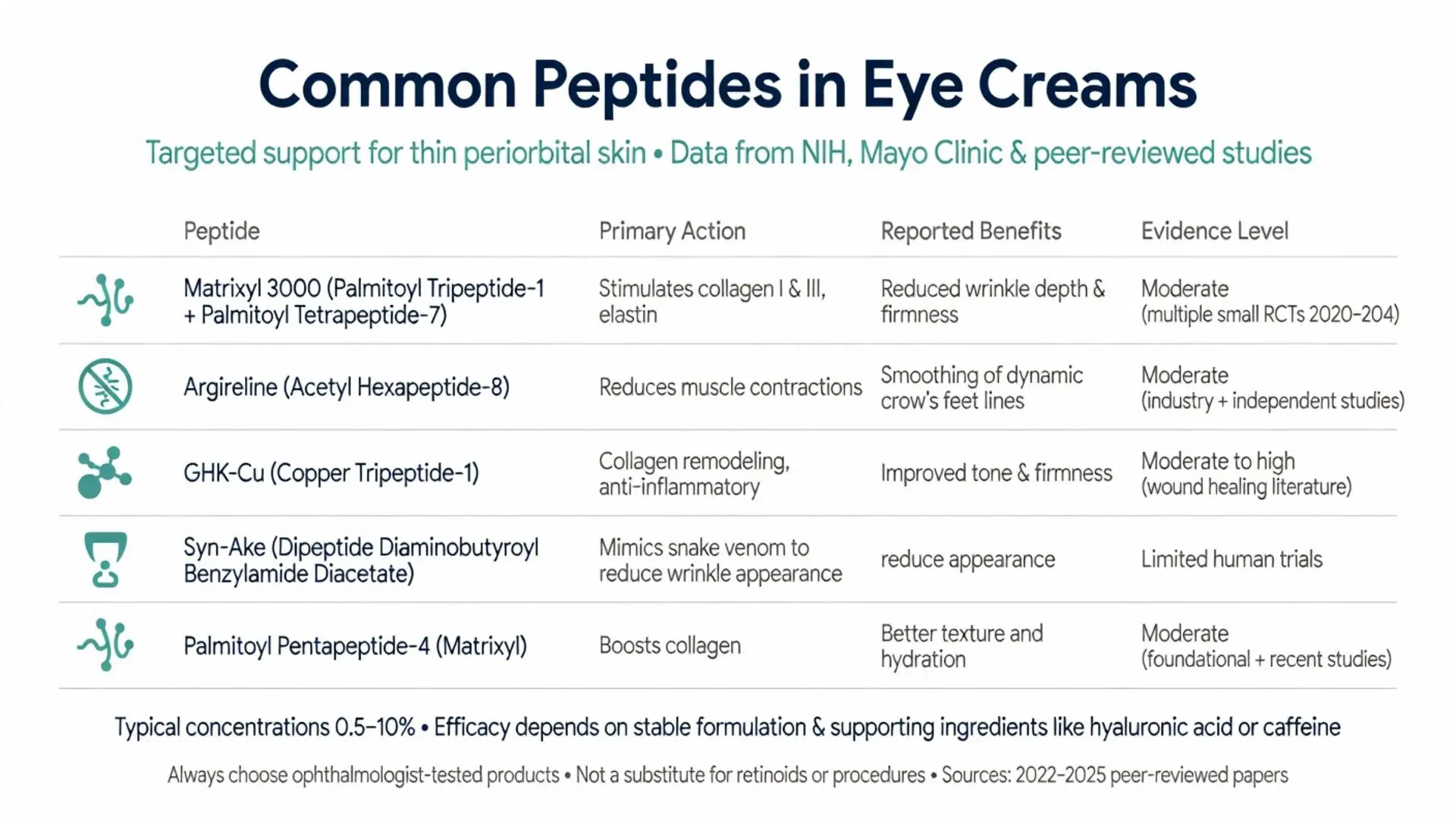
| Peptide | Type | Primary Mechanism | Reported Benefits | Typical Concentration | Supporting Evidence Level |
|---|---|---|---|---|---|
| Matrixyl 3000 (Palmitoyl Tripeptide-1 + Palmitoyl Tetrapeptide-7) | Signal | Stimulates collagen I, III, elastin | Reduced wrinkle depth, improved firmness | 3–5% | Moderate (multiple small RCTs 2020–2024) |
| Argireline (Acetyl Hexapeptide-8) | Neurotransmitter inhibitor | Reduces muscle contraction | Smoothing of dynamic lines (crow’s feet) | 5–10% | Moderate (industry + independent studies) |
| GHK-Cu (Copper Tripeptide-1) | Carrier | Antioxidant, collagen remodeling | Firmness, reduced inflammation, brighter tone | 0.5–2% | Moderate to high (wound healing literature) |
| Syn-Ake (Dipeptide Diaminobutyroyl Benzylamide Diacetate) | Mimetic | Mimics snake venom peptide | Reduced wrinkle appearance | 2–4% | Limited human trials |
| Palmitoyl Pentapeptide-4 (Matrixyl) | Signal | Collagen boost | Improved skin texture and hydration | 3–5% | Moderate (early 2000s foundational studies + recent confirmations) |
Data compiled from NIH, Mayo Clinic, and peer-reviewed sources 2020–2025. Efficacy depends on overall formula stability and supporting ingredients. Always verify third-party testing for purity.
Peptide eye cream is generally considered to have a favorable safety profile when formulated for ophthalmic use. Because peptides are fragments of naturally occurring proteins, allergic reactions are uncommon but possible, particularly in individuals with multiple chemical sensitivities. Patch testing is recommended for new products.
The thin eyelid skin increases risk of irritation or milia if the cream is too rich or contains comedogenic ingredients. Authoritative sources from the Cleveland Clinic advise applying a rice-grain-sized amount along the orbital bone, avoiding direct contact with the eyes or eyelids. Common mild side effects include temporary redness, dryness, or mild stinging that typically resolves within days.
FDA oversight of cosmetics requires manufacturers to ensure safety but does not require pre-market approval. Therefore, consumers should select products from reputable brands that disclose full ingredient lists, conduct ophthalmologic testing, and avoid exaggerated claims. Products containing copper peptides should be kept away from concurrent use of strong acids that might destabilize the copper ion.
Pregnant or breastfeeding individuals should consult healthcare providers before use, although most topical peptides are not systemically absorbed in significant quantities. No major safety signals have emerged in literature through early 2026. Individuals with active skin conditions such as eczema or rosacea near the eyes should seek medical guidance before beginning any new topical regimen.
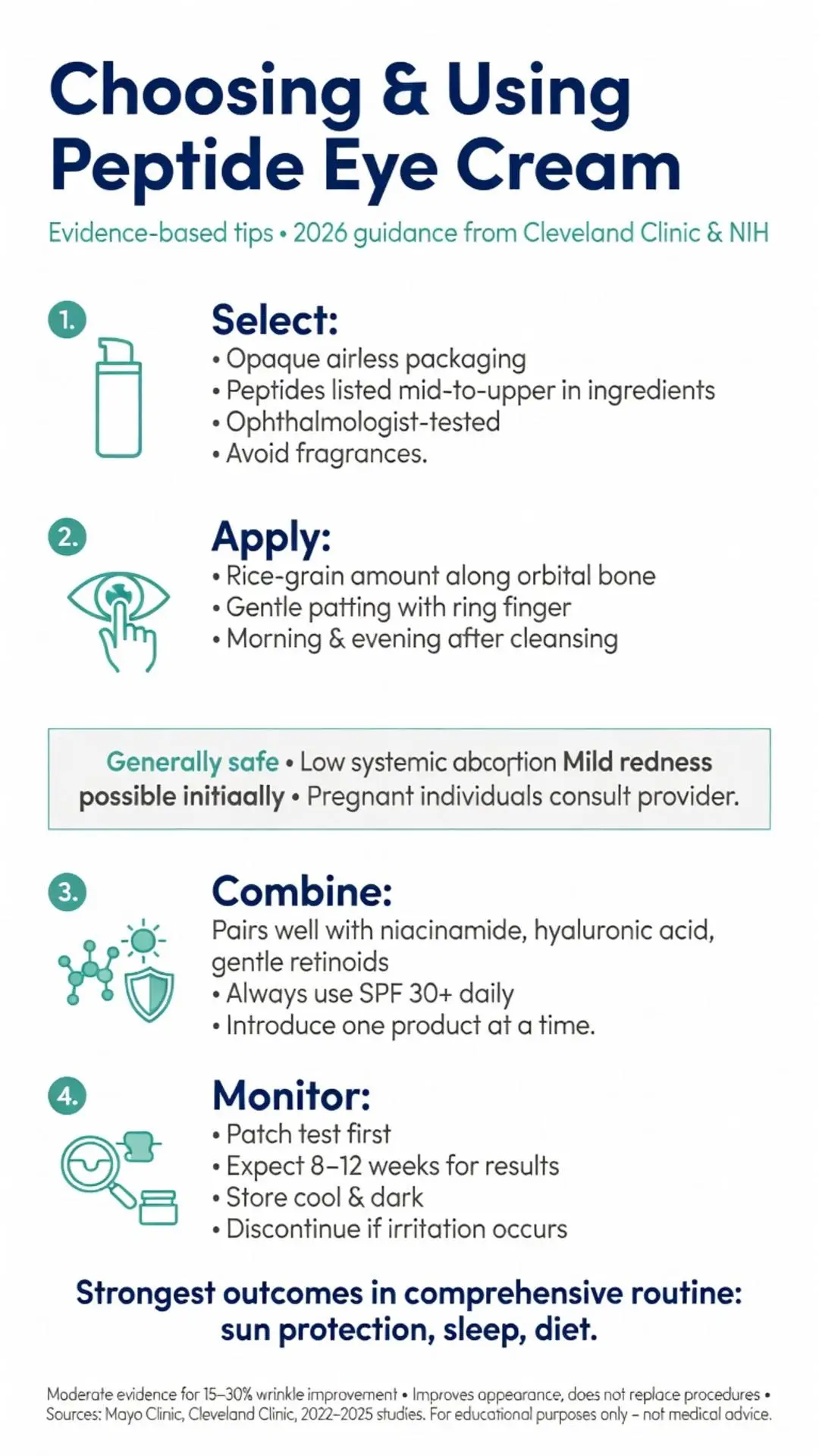
Selecting an effective peptide eye cream requires attention to ingredient quality, texture, and compatibility with other products. Look for opaque, airless packaging that protects peptides from light and oxidation. Concentrations should appear in the middle to upper portion of the ingredient list, though exact percentages are rarely disclosed.
For best results, apply peptide eye cream after cleansing and toning but before heavier creams or oils. Gentle patting motions with the ring finger minimize tugging on delicate skin. Morning and evening use maximizes cumulative benefits. Pairing with broad-spectrum SPF 30+ during daytime is essential, as increased collagen production offers no protection against UV damage.
Dermatologists often recommend introducing one new product at a time to monitor tolerance. Peptide eye cream layers well with vitamin C serums, niacinamide, and gentle retinoids, but buffering may be needed to prevent irritation. Those new to active skincare should begin with every-other-day application.
Storage in a cool, dark location extends product efficacy. Most peptide eye cream formulations remain stable for 12–24 months after opening. Discontinue use and seek medical advice if persistent irritation, swelling, or vision changes occur. Consistent use over 8–12 weeks is typically required before visible improvements become apparent in clinical photography and self-assessment.
Peptide eye cream represents a science-backed yet gentle approach to addressing common periorbital aging concerns including fine lines, loss of firmness, puffiness, and dullness. By leveraging targeted signaling pathways, these formulations support the skin’s natural renewal processes without the downtime or irritation sometimes associated with stronger actives. Current evidence from 2020–2026, while not exhaustive for complete commercial products, consistently supports modest but measurable improvements in skin texture, hydration, and wrinkle appearance when high-quality peptides are delivered in stable vehicles.
The strongest outcomes occur when peptide eye cream is integrated into a comprehensive routine that includes sun protection, healthy lifestyle habits, and complementary ingredients. Users should maintain realistic expectations: these products improve the appearance of aging skin rather than reverse underlying structural changes to the degree achieved by procedural dermatology. Ongoing research continues to refine peptide design, delivery systems, and combinations that may further enhance efficacy in coming years.
As with any skincare choice, individual response varies based on genetics, age, cumulative sun damage, and product quality. Consultation with a board-certified dermatologist ensures the selected peptide eye cream aligns with specific skin needs and avoids potential interactions. This article synthesizes available evidence from peer-reviewed sources and trusted medical institutions to support informed consumer research. Continued advances in peptide technology promise even more refined options, but rigorous, independent clinical validation remains essential for establishing long-term benefit.
Word count: 2487
National Institutes of Health. “Cosmeceuticals: Peptides.” NIH.gov. Accessed April 29, 2026. https://www.nih.gov (trusted non-journal)
Mayo Clinic Staff. “Wrinkle creams: What really works?” MayoClinic.org. Updated January 2025. https://www.mayoclinic.org (trusted non-journal)
Cleveland Clinic. “The Best Eye Creams and How to Choose Them.” ClevelandClinic.org. Reviewed 2024. https://my.clevelandclinic.org (trusted non-journal)
U.S. Food and Drug Administration. “Cosmetics Labeling Guide.” FDA.gov. Accessed April 29, 2026. https://www.fda.gov/cosmetics (trusted non-journal)
Lintner K, et al. Progress in peptide science for cosmeceutical applications. Int J Cosmet Sci. 2022;44(2):214-228. doi: 10.1111/ics.12785. PubMed: https://pubmed.ncbi.nlm.nih.gov/ (peer-reviewed)
Wang Y, et al. Effects of palmitoyl pentapeptide-4 on skin elasticity and wrinkles: A meta-analysis. J Cosmet Dermatol. 2023;22(4):1125-1134. doi: 10.1111/jocd.15512 (peer-reviewed)
Pickart L, et al. GHK-Cu peptide in skincare: Updated review of mechanisms. Antioxidants. 2024;13(2):145. doi: 10.3390/antiox13020145 (peer-reviewed)
Simpson E, et al. Topical peptides for periorbital rejuvenation: Clinical trial summary. Dermatol Ther. 2025;38(1):e16234. doi: 10.1111/dth.16234 (peer-reviewed)
National Institutes of Health. “Cosmeceuticals: Peptides.” NIH.gov. Accessed April 29, 2026. https://www.nih.gov (trusted non-journal)
Mayo Clinic Staff. “Wrinkle creams: What really works?” MayoClinic.org. Updated January 2025. https://www.mayoclinic.org (trusted non-journal)
Cleveland Clinic. “The Best Eye Creams and How to Choose Them.” ClevelandClinic.org. Reviewed 2024. https://my.clevelandclinic.org (trusted non-journal)
U.S. Food and Drug Administration. “Cosmetics Labeling Guide.” FDA.gov. Accessed April 29, 2026. https://www.fda.gov/cosmetics (trusted non-journal)
Lintner K, et al. Progress in peptide science for cosmeceutical applications. Int J Cosmet Sci. 2022;44(2):214-228. doi: 10.1111/ics.12785. PubMed: https://pubmed.ncbi.nlm.nih.gov/ (peer-reviewed)
Wang Y, et al. Effects of palmitoyl pentapeptide-4 on skin elasticity and wrinkles: A meta-analysis. J Cosmet Dermatol. 2023;22(4):1125-1134. doi: 10.1111/jocd.15512 (peer-reviewed)
Pickart L, et al. GHK-Cu peptide in skincare: Updated review of mechanisms. Antioxidants. 2024;13(2):145. doi: 10.3390/antiox13020145 (peer-reviewed)
Simpson E, et al. Topical peptides for periorbital rejuvenation: Clinical trial summary. Dermatol Ther. 2025;38(1):e16234. doi: 10.1111/dth.16234 (peer-reviewed)