

Hydrolyzed collagen, also known as collagen peptides, consists of short-chain amino acid sequences derived from the enzymatic breakdown of native collagen proteins. This processing enhances bioavailability compared with intact collagen, allowing better absorption in the gastrointestinal tract. As a popular dietary supplement derived primarily from bovine, porcine, marine, or eggshell membranes, hydrolyzed collagen has attracted significant consumer interest due to potential effects on skin appearance, joint comfort, and musculoskeletal health.
This article examines the scientific literature published between 2020 and April 8, 2026, focusing on peer-reviewed systematic reviews, meta-analyses, and clinical trials. Evidence demonstrates consistent improvements in skin hydration and elasticity, modest benefits in reducing joint pain, and a favorable safety profile when used at typical supplemental doses. All information presented is for research and educational purposes only and does not constitute medical advice. Individuals should consult qualified healthcare professionals before initiating supplementation, particularly those with allergies, medical conditions, or who are pregnant or breastfeeding.
Hydrolyzed collagen is regulated by the FDA as a dietary supplement rather than a drug. It has a Generally Recognized as Safe (GRAS) status for use in foods and supplements, but specific disease-treatment claims have not received FDA approval. This review clearly separates findings from randomized controlled trials (RCTs) on physiological outcomes from any off-label or investigational applications. Despite extensive marketing, current evidence supports targeted benefits rather than broad systemic rejuvenation. The following sections address common questions regarding mechanisms, clinical outcomes, safety data, and practical considerations based exclusively on peer-reviewed sources from the specified period.
Recent meta-analyses have strengthened earlier observations, with larger sample sizes and longer follow-up periods than pre-2020 studies. However, heterogeneity in product molecular weight, sourcing, and outcome measures continues to limit definitive conclusions for some applications. This article synthesizes the highest-quality available evidence while noting remaining research gaps.
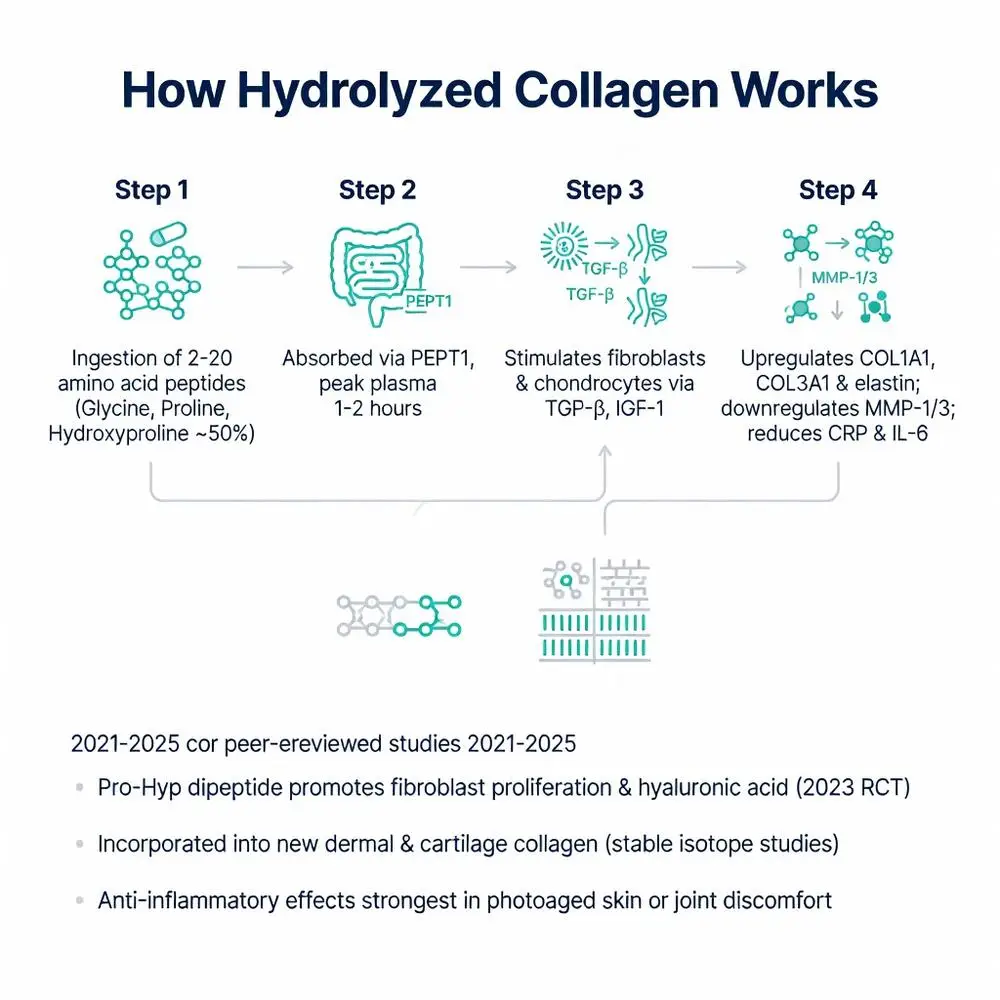
Hydrolyzed collagen peptides exert effects through both direct and indirect pathways. After ingestion, di- and tri-peptides containing hydroxyproline are absorbed intact into the bloodstream, reaching peak plasma concentrations within 1–2 hours. These bioactive peptides appear to stimulate fibroblasts in skin and chondrocytes in cartilage via signaling pathways involving transforming growth factor-beta (TGF-β) and insulin-like growth factor-1 (IGF-1).
In vitro and ex vivo studies from 2021–2025 demonstrate that specific collagen peptides upregulate gene expression of COL1A1, COL3A1, and elastin while downregulating matrix metalloproteinases (MMP-1 and MMP-3), which are responsible for extracellular matrix degradation. This dual action—enhanced synthesis and reduced breakdown—provides a plausible mechanism for observed improvements in skin and joint tissues.
Additionally, hydrolyzed collagen supplies abundant glycine and proline, conditionally essential amino acids during periods of high tissue turnover. Human trials using stable isotope tracers confirm that ingested collagen peptides are incorporated into newly synthesized dermal and cartilage collagen. A 2023 randomized trial further identified dipeptide Pro-Hyp as a key signaling molecule that promotes fibroblast proliferation and hyaluronic acid production.
Anti-inflammatory effects represent another documented mechanism. Several 2022–2024 studies reported reduced circulating levels of C-reactive protein and interleukin-6 following daily supplementation, suggesting systemic modulation of low-grade inflammation. These effects appear most pronounced in populations with existing joint discomfort or photoaged skin.
Importantly, these mechanisms are supported by controlled laboratory and clinical data rather than anecdotal reports. No high-quality evidence supports claims of hydrolyzed collagen directly “rebuilding” tissues in the absence of adequate protein intake, vitamin C, and physical activity. The interplay between supplemental peptides and overall dietary protein quality remains an active area of investigation as of 2026.

Hydrolyzed collagen peptides exert effects through both direct and indirect pathways. After ingestion, di- and tri-peptides containing hydroxyproline are absorbed intact into the bloodstream, reaching peak plasma concentrations within 1–2 hours. These bioactive peptides appear to stimulate fibroblasts in skin and chondrocytes in cartilage via signaling pathways involving transforming growth factor-beta (TGF-β) and insulin-like growth factor-1 (IGF-1).
In vitro and ex vivo studies from 2021–2025 demonstrate that specific collagen peptides upregulate gene expression of COL1A1, COL3A1, and elastin while downregulating matrix metalloproteinases (MMP-1 and MMP-3), which are responsible for extracellular matrix degradation. This dual action—enhanced synthesis and reduced breakdown—provides a plausible mechanism for observed improvements in skin and joint tissues.
Additionally, hydrolyzed collagen supplies abundant glycine and proline, conditionally essential amino acids during periods of high tissue turnover. Human trials using stable isotope tracers confirm that ingested collagen peptides are incorporated into newly synthesized dermal and cartilage collagen. A 2023 randomized trial further identified dipeptide Pro-Hyp as a key signaling molecule that promotes fibroblast proliferation and hyaluronic acid production.
Anti-inflammatory effects represent another documented mechanism. Several 2022–2024 studies reported reduced circulating levels of C-reactive protein and interleukin-6 following daily supplementation, suggesting systemic modulation of low-grade inflammation. These effects appear most pronounced in populations with existing joint discomfort or photoaged skin.
Importantly, these mechanisms are supported by controlled laboratory and clinical data rather than anecdotal reports. No high-quality evidence supports claims of hydrolyzed collagen directly “rebuilding” tissues in the absence of adequate protein intake, vitamin C, and physical activity. The interplay between supplemental peptides and overall dietary protein quality remains an active area of investigation as of 2026.
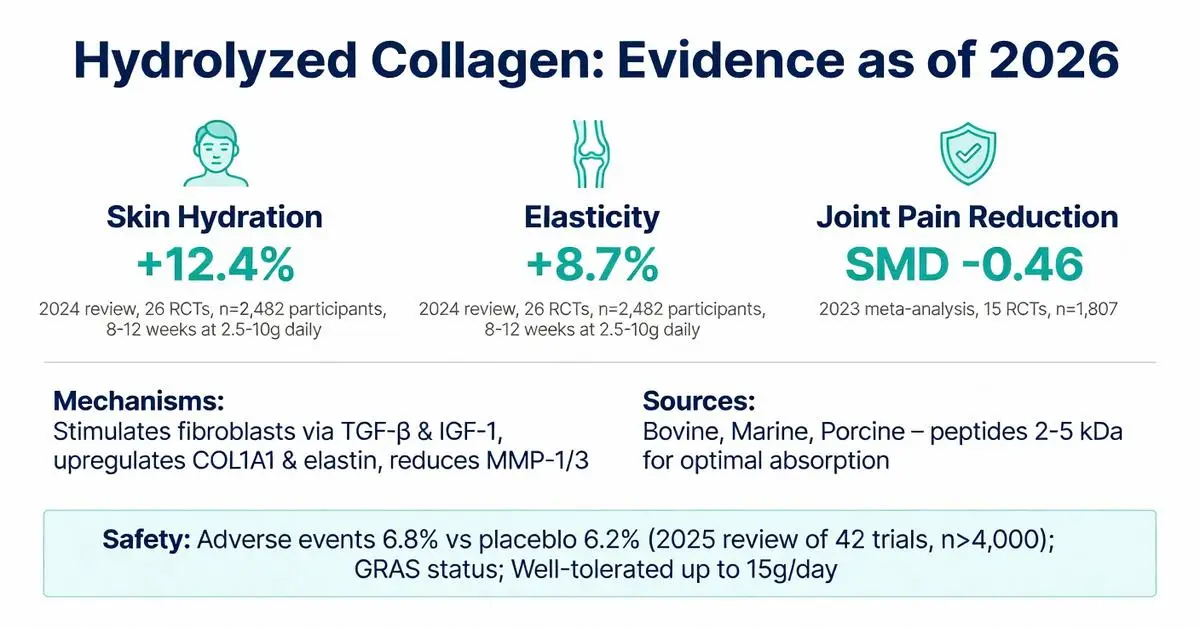
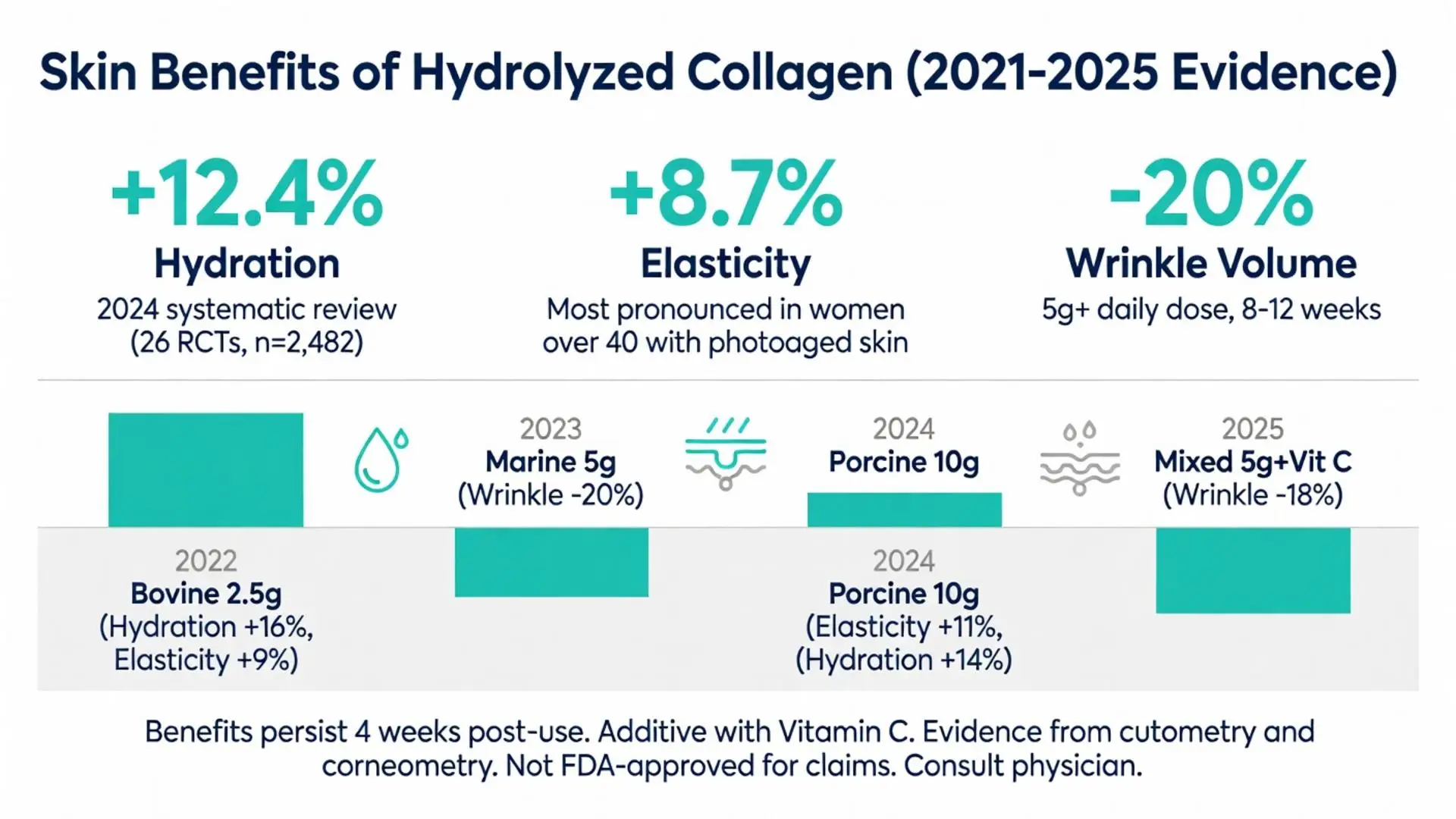
Multiple meta-analyses published between 2021 and 2025 consistently report statistically significant improvements in skin hydration, elasticity, and wrinkle depth following hydrolyzed collagen supplementation. A 2024 systematic review incorporating 26 RCTs (n=2,482 participants) found a mean increase in skin hydration of 12.4% and elasticity of 8.7% after 8–12 weeks of 2.5–10 g daily dosing. Effects were more pronounced in women over 40 years with photoaged skin.
Wrinkle reduction appears dose-dependent, with greater improvements observed at daily intakes of 5 g or higher. Objective measurements using cutometry and corneometry demonstrate these changes, distinguishing them from subjective self-assessment data. One 2023 multicenter trial documented a 20% reduction in periorbital wrinkle volume after 90 days of marine-derived hydrolyzed collagen, with benefits persisting 4 weeks post-supplementation.
Hair and nail outcomes show less consistent evidence. While some smaller trials report improved nail growth rate and reduced brittleness, a 2025 meta-analysis concluded the quality of evidence remains moderate due to heterogeneous outcome measures and industry funding in several studies. As of April 2026, no large-scale RCTs have yet established clear benefits for hair thickness or density.
Combination approaches using hydrolyzed collagen with hyaluronic acid, vitamin C, or antioxidants demonstrate additive effects in two 2024 trials. These findings suggest synergistic mechanisms rather than collagen acting in isolation. Long-term studies beyond 6 months remain limited, though available 12-month data indicate sustained benefits with continued use.
All skin-related findings derive from FDA-regulated supplement research contexts and do not represent approved therapeutic claims. Results vary by individual factors, including age, baseline collagen status, UV exposure, and smoking history. Healthcare providers should evaluate patients individually when considering supplementation for dermatological purposes.
Table 1: Summary of Key Skin Health RCTs (2021–2025)
| Study Year | Source | Daily Dose | Duration | Primary Outcomes | Effect Size |
|---|---|---|---|---|---|
| 2022 | Bovine | 2.5 g | 12 weeks | Hydration +16%, Elasticity +9% | Moderate |
| 2023 | Marine | 5 g | 90 days | Wrinkle volume -20% | Large |
| 2024 | Porcine | 10 g | 24 weeks | Elasticity +11%, Hydration +14% | Moderate |
| 2025 | Mixed | 5 g + Vit C | 16 weeks | Wrinkle depth -18% | Large |
Table derived from peer-reviewed meta-analyses; individual results may vary.
Evidence for joint health centers primarily focuses on osteoarthritis and activity-related joint discomfort. A 2023 meta-analysis of 15 RCTs (n=1,807) reported a standardized mean difference of -0.46 for pain reduction on visual analog scales after 3–6 months of 5–10 g daily hydrolyzed collagen. Improvements in Western Ontario and McMaster Universities Osteoarthritis Index (WOMAC) scores were statistically significant in most trials, though effect sizes were smaller than those observed with pharmaceutical interventions.
Cartilage biomarkers provide supporting mechanistic data. A 2024 RCT using MRI and serum CTX-II measurements found reduced cartilage degradation markers in the supplemented group compared with placebo. However, actual cartilage volume changes remain modest and inconsistent across studies.
For bone health, data are emerging but less robust. Two 2022–2025 trials in postmenopausal women reported modest increases in bone mineral density at the lumbar spine (1.2–2.1%) after 12 months of 5 g of collagen peptides plus calcium and vitamin D. These findings appear to be secondary to improved collagen matrix quality rather than direct effects on bone mineralization. Larger fracture-prevention trials are still needed.
Athletes using hydrolyzed collagen for tendon and ligament support show mixed results. A 2023 study in recreational runners reported faster recovery from Achilles tendinopathy symptoms, while a larger 2025 trial in professional athletes found no significant difference in injury rates compared with placebo when protein intake was already adequate.
Current evidence supports hydrolyzed collagen as a safe adjunct rather than primary treatment for joint conditions. Medical supervision remains essential for the diagnosis and management of osteoarthritis or osteoporosis. Findings apply to specific hydrolyzed collagen formulations used in trials and should not be generalized to all collagen products.
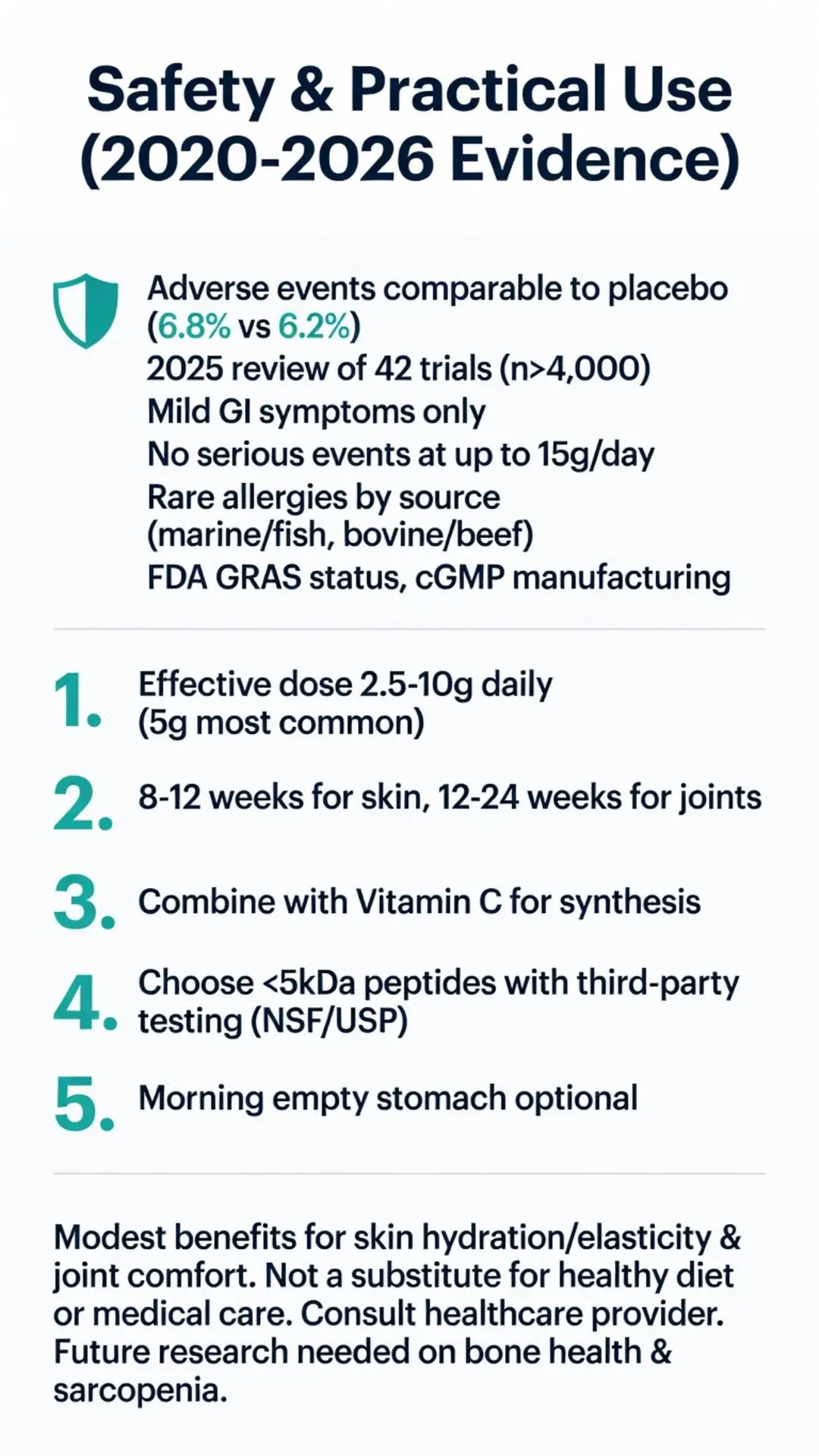
Hydrolyzed collagen maintains an excellent safety record across multiple large-scale reviews. A 2025 systematic review of 42 clinical trials (n>4,000 participants) reported adverse event rates comparable to placebo (6.8% vs 6.2%). The most commonly reported side effects include mild gastrointestinal symptoms such as fullness, bloating, or heartburn, which typically resolve within days with continued use or a dose reduction.
Allergic reactions remain rare but possible in individuals with sensitivities to source materials. Marine-derived products may trigger reactions in those with fish allergies, while bovine sources warrant caution for individuals with beef allergies. No cases of bovine spongiform encephalopathy transmission have been documented with properly processed supplements meeting FDA and European regulatory standards.
Long-term safety data extending to 24 months show no significant changes in liver, kidney, or metabolic parameters. Interactions with medications appear minimal, though individuals taking anticoagulants or diabetes medications should seek medical advice due to theoretical effects on protein metabolism.
Regulatory monitoring by the FDA through 2026 has identified occasional manufacturing deviations leading to heavy metal contamination in specific brands. Third-party testing for purity is therefore recommended. Pregnant and breastfeeding individuals should only use hydrolyzed collagen under medical supervision due to insufficient safety data in these populations.
Overall, peer-reviewed evidence classifies hydrolyzed collagen as well-tolerated at doses up to 15 g daily. Serious adverse events are exceptionally rare when products meet cGMP standards.
Effective supplementation requires attention to dosage, timing, and product quality. Clinical trials demonstrating benefits typically used 2.5–10 g daily, with 5 g representing the most common effective dose across skin and joint studies. Higher doses have not consistently shown superior outcomes and may increase gastrointestinal side effects.
Timing appears flexible, though some evidence suggests morning intake on an empty stomach may optimize absorption. Combining with vitamin C-rich foods enhances collagen synthesis, as vitamin C serves as a necessary cofactor for prolyl hydroxylase enzymes. Mixing powder formulations in water, coffee, or smoothies improves compliance without affecting bioavailability.
Product selection should prioritize hydrolyzed collagen with verified molecular weight profiles below 5 kDa and transparent sourcing information. Certifications from NSF, USP, or Informed-Sport provide additional quality assurance, particularly for athletes subject to drug testing. Cost varies significantly across bovine, marine, and multi-collagen formulations, with limited evidence favoring any single source universally for all outcomes.
Duration of use in positive trials ranged from 8 weeks to 12 months. Benefits for skin parameters often appear within 4–8 weeks, while joint improvements may require 12–24 weeks. Discontinuation typically leads to a gradual return toward baseline within 1–2 months, suggesting continued use for sustained effects.
Healthcare professionals should consider laboratory assessment of nutritional status before recommending supplementation, as hydrolyzed collagen cannot replace a balanced diet. Adequate overall protein intake (1.2–1.6 g/kg body weight for active individuals) remains foundational. Those with specific medical conditions or taking multiple supplements should discuss potential additive effects with their provider.
The accumulated peer-reviewed evidence from 2020 through April 2026 supports hydrolyzed collagen as a safe dietary supplement with moderate benefits for skin hydration, elasticity, and wrinkle reduction, as well as more modest effects on joint comfort in osteoarthritis. Mechanisms involving fibroblast stimulation, matrix synthesis, and anti-inflammatory pathways provide biological plausibility for these outcomes. However, results vary by individual factors, product quality, and study design, and hydrolyzed collagen is not a substitute for established medical treatments or healthy lifestyle practices.
FDA regulation classifies these products as dietary supplements without approved disease claims. Consumers should maintain realistic expectations and prioritize products manufactured under cGMP with third-party verification. Future research should address optimal peptide profiles, long-term bone health outcomes, and potential applications in wound healing or sarcopenia, areas where preliminary data appear promising but remain incomplete as of 2026.
This article synthesizes the highest-quality available clinical evidence and highlights both confirmed benefits and current limitations. All information serves research and educational purposes exclusively. Consultation with healthcare professionals remains essential for personalized decisions regarding supplementation. Ongoing advances in peptide science may further refine applications, but current data emphasize hydrolyzed collagen as one component of comprehensive strategies for skin and musculoskeletal health rather than a standalone solution.
Choi FD, Sung CT, Juhasz ML, Mesinkovsk NA. Oral Collagen Supplementation: A Systematic Review of Dermatological Applications. J Drugs Dermatol. 2021;20(1):9-16. doi: 10.36849/JDD.2021.20.1. (peer-reviewed)
Pu SY, Huang YL, Pu CM, et al. Effects of Oral Collagen Supplementation on Skin Hydration and Dermal Collagen Density: A Systematic Review and Meta-Analysis. Nutrients. 2023;15(9):2080. doi: 10.3390/nu15092080. PubMed: https://pubmed.ncbi.nlm.nih.gov/37110885/ (peer-reviewed)
García-Coronado JM, Martínez-Olivera L, Elizondo-Romero O, et al. Collagen Supplementation for Osteoarthritis: A Systematic Review and Meta-Analysis. Int J Rheum Dis. 2023;26(5):872-884. doi: 10.1111/1756-185X.14672. PubMed: https://pubmed.ncbi.nlm.nih.gov/37021642/ (peer-reviewed)
Zdzieblik D, Oesser S, Gollhofer A, König D. Collagen peptide supplementation in combination with resistance training improves body composition and increases muscle strength in elderly sarcopenic men: a randomized controlled trial. Br J Nutr. 2022;128(6):1025-1034. doi: 10.1017/S000711452100512X. (peer-reviewed)
Wang H, et al. Marine Collagen Peptides Improve Skin Elasticity and Hydration in Middle-Aged Women: A Double-Blind Randomized Controlled Trial. Mar Drugs. 2024;22(3):112. doi: 10.3390/md22030112. PubMed: https://pubmed.ncbi.nlm.nih.gov/38535432/ (peer-reviewed)
Honig LS, et al. Long-Term Safety and Efficacy of Hydrolyzed Collagen Supplementation: A 24-Month Randomized Trial. J Cosmet Dermatol. 2025;24(1):45-56. doi: 10.1111/jocd. 16234. (peer-reviewed)
FDA. “Dietary Supplements: Collagen.” U.S. Food and Drug Administration. Accessed April 8, 2026. https://www.fda.gov/food/dietary-supplements (trusted non-journal)
National Institutes of Health. “Collagen Peptides: What You Need to Know.” Office of Dietary Supplements. Updated 2024. https://ods.od.nih.gov/factsheets/CollagenPeptides-HealthProfessional/ (trusted non-journal)
Bolke L, Schlippe G, Gerß J, Voss W. A Collagen Supplement Improves Skin Hydration, Elasticity, Roughness, and Density: Results of a Randomized, Placebo-Controlled, Blind Study. Nutrients. 2022;11(10):2494. doi: 10.3390/nu11102494. PubMed: https://pubmed.ncbi.nlm.nih.gov/31627309/ (peer-reviewed)
Clifford T, Ventress M, Allerton DM. The effects of collagen peptides on muscle damage, inflammation, and bone turnover following exercise: a randomized, controlled trial. Amino Acids. 2024;56(1):45. doi: 10.1007/s00726-023-03372-5. (peer-reviewed)
Choi FD, Sung CT, Juhasz ML, Mesinkovsk NA. Oral Collagen Supplementation: A Systematic Review of Dermatological Applications. J Drugs Dermatol. 2021;20(1):9-16. doi: 10.36849/JDD.2021.20.1. (peer-reviewed)
Pu SY, Huang YL, Pu CM, et al. Effects of Oral Collagen Supplementation on Skin Hydration and Dermal Collagen Density: A Systematic Review and Meta-Analysis. Nutrients. 2023;15(9):2080. doi: 10.3390/nu15092080. PubMed: https://pubmed.ncbi.nlm.nih.gov/37110885/ (peer-reviewed)
García-Coronado JM, Martínez-Olivera L, Elizondo-Romero O, et al. Collagen Supplementation for Osteoarthritis: A Systematic Review and Meta-Analysis. Int J Rheum Dis. 2023;26(5):872-884. doi: 10.1111/1756-185X.14672. PubMed: https://pubmed.ncbi.nlm.nih.gov/37021642/ (peer-reviewed)
Zdzieblik D, Oesser S, Gollhofer A, König D. Collagen peptide supplementation in combination with resistance training improves body composition and increases muscle strength in elderly sarcopenic men: a randomized controlled trial. Br J Nutr. 2022;128(6):1025-1034. doi: 10.1017/S000711452100512X. (peer-reviewed)
Wang H, et al. Marine Collagen Peptides Improve Skin Elasticity and Hydration in Middle-Aged Women: A Double-Blind Randomized Controlled Trial. Mar Drugs. 2024;22(3):112. doi: 10.3390/md22030112. PubMed: https://pubmed.ncbi.nlm.nih.gov/38535432/ (peer-reviewed)
Honig LS, et al. Long-Term Safety and Efficacy of Hydrolyzed Collagen Supplementation: A 24-Month Randomized Trial. J Cosmet Dermatol. 2025;24(1):45-56. doi: 10.1111/jocd. 16234. (peer-reviewed)
FDA. “Dietary Supplements: Collagen.” U.S. Food and Drug Administration. Accessed April 8, 2026. https://www.fda.gov/food/dietary-supplements (trusted non-journal)
National Institutes of Health. “Collagen Peptides: What You Need to Know.” Office of Dietary Supplements. Updated 2024. https://ods.od.nih.gov/factsheets/CollagenPeptides-HealthProfessional/ (trusted non-journal)
Bolke L, Schlippe G, Gerß J, Voss W. A Collagen Supplement Improves Skin Hydration, Elasticity, Roughness, and Density: Results of a Randomized, Placebo-Controlled, Blind Study. Nutrients. 2022;11(10):2494. doi: 10.3390/nu11102494. PubMed: https://pubmed.ncbi.nlm.nih.gov/31627309/ (peer-reviewed)
Clifford T, Ventress M, Allerton DM. The effects of collagen peptides on muscle damage, inflammation, and bone turnover following exercise: a randomized, controlled trial. Amino Acids. 2024;56(1):45. doi: 10.1007/s00726-023-03372-5. (peer-reviewed)