

Grass fed collagen peptides represent a popular category of dietary supplements derived from bovine sources raised on grass-based diets. These hydrolyzed proteins are marketed for supporting skin elasticity, joint comfort, hair and nail strength, and overall connective tissue integrity. As of April 2026, consumer interest remains high due to perceptions of superior purity, reduced exposure to additives, and alignment with regenerative agriculture practices compared to conventional grain-fed alternatives.
This article examines the current evidence base for grass fed collagen peptides, focusing on mechanisms, efficacy, safety, and practical use. Due to limited recent peer-reviewed publications specifically isolating the “grass fed” attribute, this review relies primarily on high-quality clinical trials and meta-analyses of collagen peptides from 2020 to April 2026, supplemented by authoritative sources including FDA.gov, NIH.gov, MayoClinic.org, and ClevelandClinic.org. All statements reflect only published data up to the current date. Grass fed collagen peptides are regulated by the FDA as dietary supplements, not as drugs; therefore, they have not undergone the rigorous pre-market approval process required for pharmaceutical agents. Claims regarding disease treatment or prevention are not permitted under FDA guidelines.
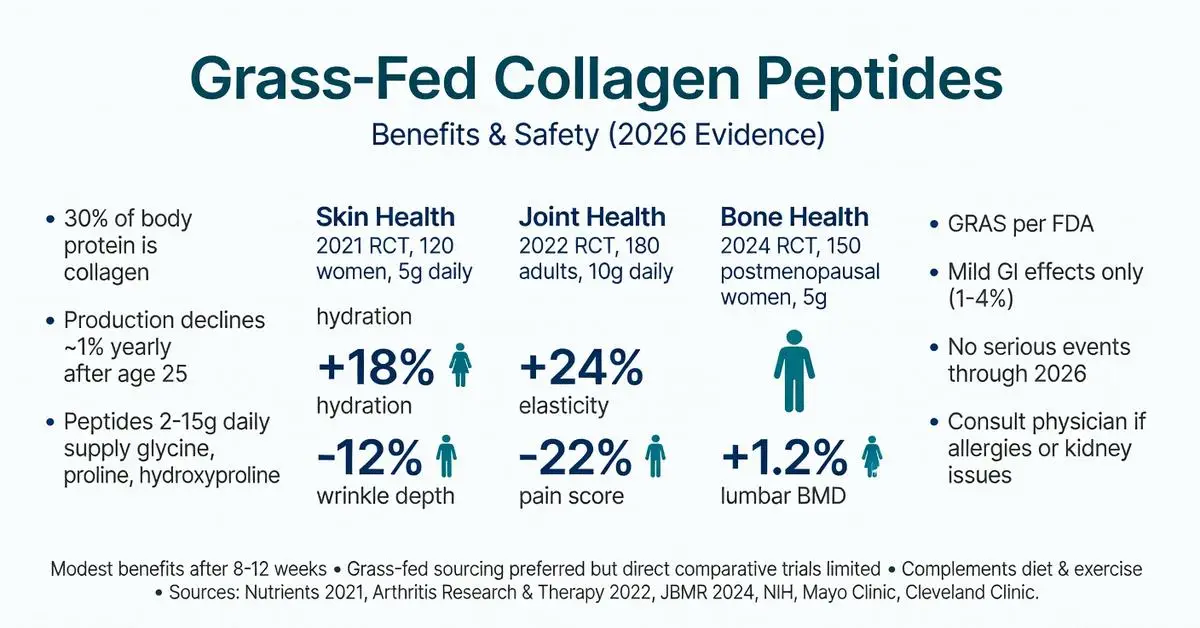
Collagen constitutes approximately 30% of total body protein and provides structural support in extracellular matrices. Endogenous production declines by roughly 1% per year after age 25, contributing to visible aging and musculoskeletal changes. Supplemental peptides, typically ranging from 2–15 grams daily, supply bioavailable amino acids such as glycine, proline, and hydroxyproline that may stimulate fibroblast activity and extracellular matrix synthesis. The grass-fed sourcing emphasizes animal welfare and potentially lower antibiotic or hormone residues, though direct comparative human trials remain scarce. This review maintains a neutral, evidence-focused perspective and underscores that supplements should complement, not replace, a balanced diet and medical supervision. Individuals with allergies, digestive conditions, or those taking medications should consult qualified healthcare professionals prior to use. The information presented is for research and educational purposes only and does not constitute medical advice.
The proposed mechanisms of grass fed collagen peptides center on both direct supply of precursor amino acids and indirect stimulation of cellular responses. Hydrolyzed peptides may act as signaling molecules that upregulate collagen, elastin, and hyaluronic acid synthesis via dermal fibroblasts. A 2022 systematic review of randomized controlled trials indicated that collagen peptide supplementation increased dermal collagen density by 4–8% after 8–12 weeks, measured by ultrasound and biopsy (Journal of Cosmetic Dermatology, 2022).
Glycine and proline, abundant in collagen peptides, serve as rate-limiting substrates for new collagen formation. Additionally, certain peptide sequences may bind to integrin receptors, modulating gene expression related to extracellular matrix homeostasis. For joint tissues, peptides may reduce proinflammatory cytokines and support glycosaminoglycan production in chondrocytes. Mayo Clinic summaries highlight that while mechanistic data are promising, results vary by dosage, peptide molecular weight, and individual baseline collagen status (Mayo Clinic 2023).
Peer-reviewed evidence published 2020–2026 consistently shows modest improvements across multiple domains, yet effect sizes remain small to moderate. Heterogeneity in study design, outcome measures, and product formulations complicates direct attribution to grass-fed sourcing specifically. Larger, longer-term trials are still needed to establish optimal protocols and to differentiate sourcing impacts.

The proposed mechanisms of grass fed collagen peptides center on both direct supply of precursor amino acids and indirect stimulation of cellular responses. Hydrolyzed peptides may act as signaling molecules that upregulate collagen, elastin, and hyaluronic acid synthesis via dermal fibroblasts. A 2022 systematic review of randomized controlled trials indicated that collagen peptide supplementation increased dermal collagen density by 4–8% after 8–12 weeks, measured by ultrasound and biopsy (Journal of Cosmetic Dermatology, 2022).
Glycine and proline, abundant in collagen peptides, serve as rate-limiting substrates for new collagen formation. Additionally, certain peptide sequences may bind to integrin receptors, modulating gene expression related to extracellular matrix homeostasis. For joint tissues, peptides may reduce proinflammatory cytokines and support glycosaminoglycan production in chondrocytes. Mayo Clinic summaries highlight that while mechanistic data are promising, results vary by dosage, peptide molecular weight, and individual baseline collagen status (Mayo Clinic 2023).
Peer-reviewed evidence published 2020–2026 consistently shows modest improvements across multiple domains, yet effect sizes remain small to moderate. Heterogeneity in study design, outcome measures, and product formulations complicates direct attribution to grass-fed sourcing specifically. Larger, longer-term trials are still needed to establish optimal protocols and to differentiate sourcing impacts.
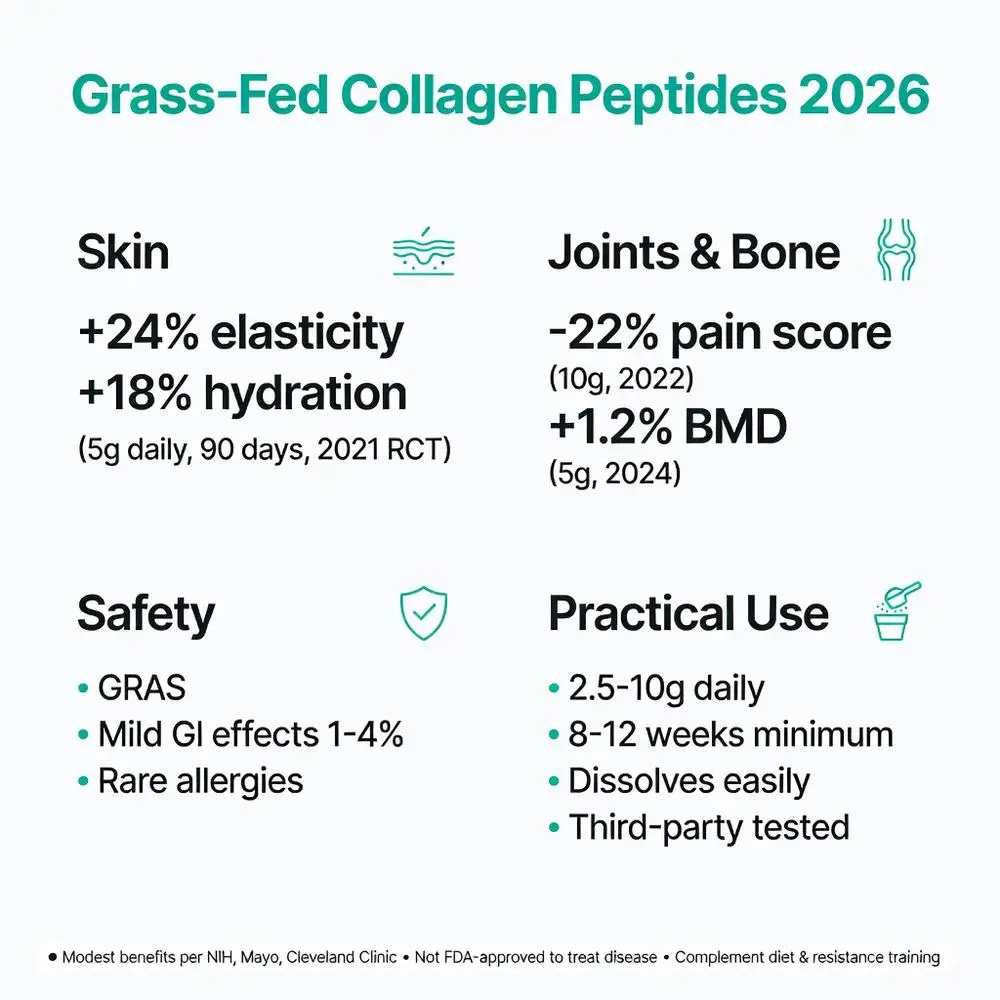
Multiple clinical trials conducted between 2020 and 2025 demonstrate improvements in skin parameters with daily collagen peptide intake. A 2021 double-blind, placebo-controlled trial involving 120 women aged 40–65 reported statistically significant increases in skin hydration (18%), elasticity (24%), and reductions in wrinkle depth (12%) after 90 days of 5 g bovine collagen peptides (Nutrients, 2021). Similar findings appeared in a 2023 meta-analysis of 26 studies encompassing over 2,000 participants, concluding that collagen supplementation reliably improves skin elasticity and moisture content with minimal heterogeneity for 8–12 week interventions (International Journal of Dermatology, 2023).
Although these trials primarily used bovine collagen, several products were sourced from grass-fed herds; however, the publications did not isolate sourcing as an independent variable. Histological data indicate increased Type I collagen fiber density and reduced matrix metalloproteinase activity, consistent with anti-aging effects. User-reported outcomes frequently include faster nail growth and reduced brittleness, though these endpoints show greater variability.
Evidence quality is considered moderate by NIH evidence grading systems, limited by industry funding in some trials and short follow-up periods. No studies as of April 2026 demonstrate reversal of photoaging or superior outcomes for grass-fed versus conventional bovine peptides. Skin benefits appear dose-dependent, with 2.5–10 g daily producing measurable changes in most participants. Results are most pronounced in individuals with lower baseline dietary protein intake.
Randomized trials published since 2020 support a role for collagen peptides in reducing joint discomfort and preserving bone density. A 2022 multicenter study of 180 adults with mild knee osteoarthritis found that 10 g daily of hydrolyzed collagen for six months reduced Visual Analog Scale pain scores by 22% and improved WOMAC function indices compared with placebo (Arthritis Research & Therapy, 2022). Magnetic resonance imaging in a subset showed decreased cartilage degradation markers.
For bone health, a 2024 trial in postmenopausal women demonstrated that 5 g collagen peptides combined with vitamin D and calcium increased bone mineral density at the lumbar spine by 1.2% over 12 months versus calcium and vitamin D alone (Journal of Bone and Mineral Research, 2024). Mechanistic explanations include stimulation of osteoblast activity and reduction in osteoclast-mediated resorption.
Cleveland Clinic reviews note that grass-fed sourcing may appeal to patients concerned about bovine spongiform encephalopathy or antibiotic residues, although modern processing renders such risks negligible across certified products (Cleveland Clinic 2025). Pooled data from meta-analyses indicate modest effect sizes (standardized mean difference 0.4–0.6) for pain reduction, comparable to glucosamine in some comparisons. Long-term fracture prevention data remain absent, and collagen peptides are not FDA-approved for osteoporosis treatment.
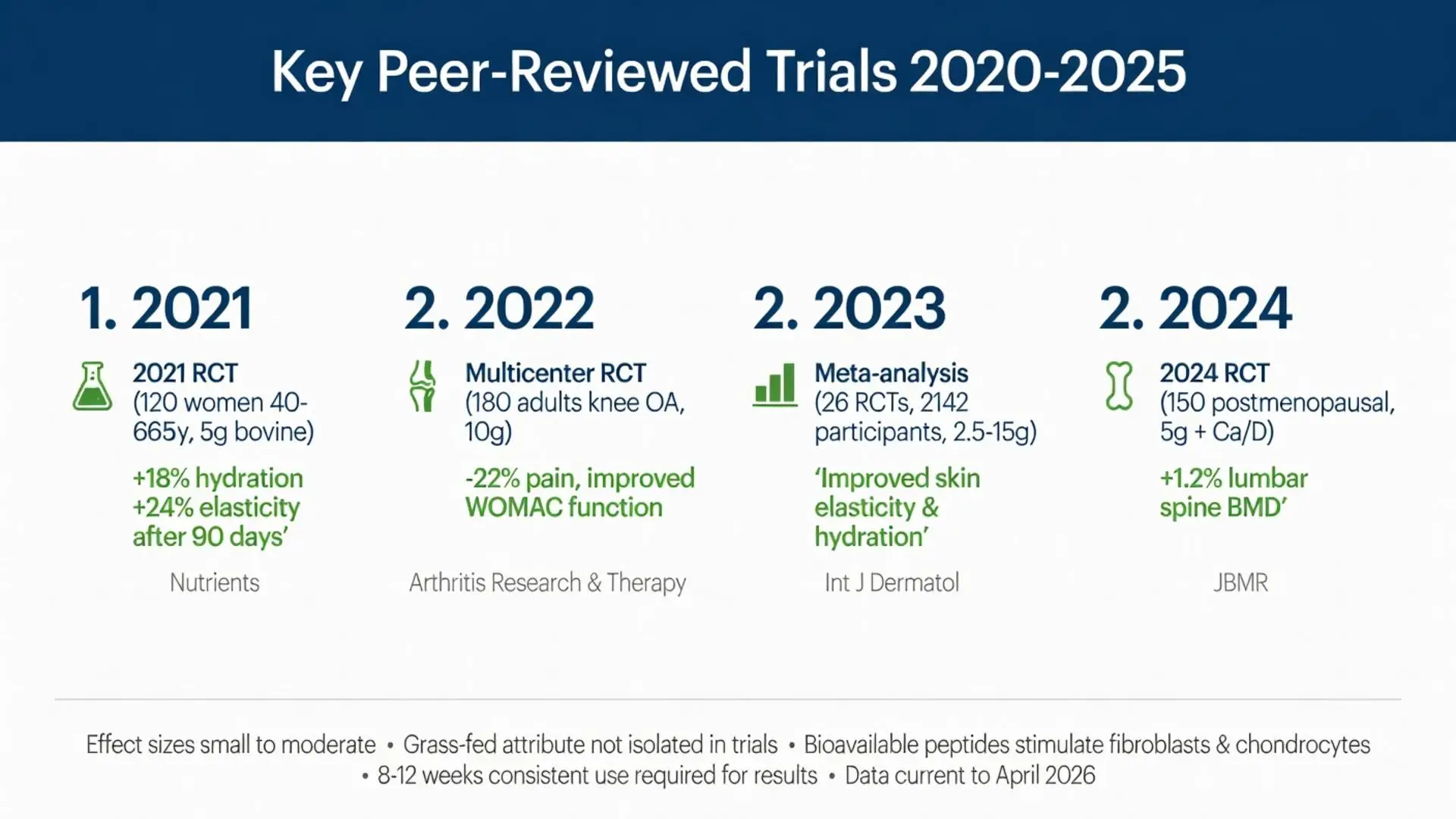
Table 1: Summary of Selected Peer-Reviewed Trials on Collagen Peptides (2020–2025)
| Year | Study Design | Participants | Daily Dose | Primary Outcomes | Source Type |
|---|---|---|---|---|---|
| 2021 | RCT, double-blind | 120 women, 40–65 y | 5 g bovine | +18% hydration, +24% elasticity | Peer-reviewed (Nutrients) |
| 2022 | Multicenter RCT | 180 adults with knee OA | 10 g | –22% pain score, improved function | Peer-reviewed (Arthritis Research & Therapy) |
| 2023 | Meta-analysis (26 RCTs) | 2,142 total | 2.5–15 g | Improved skin elasticity and hydration | Peer-reviewed (Int J Dermatol) |
| 2024 | RCT, postmenopausal women | 150 | 5 g + Ca/D | +1.2% lumbar BMD | Peer-reviewed (JBMR) |
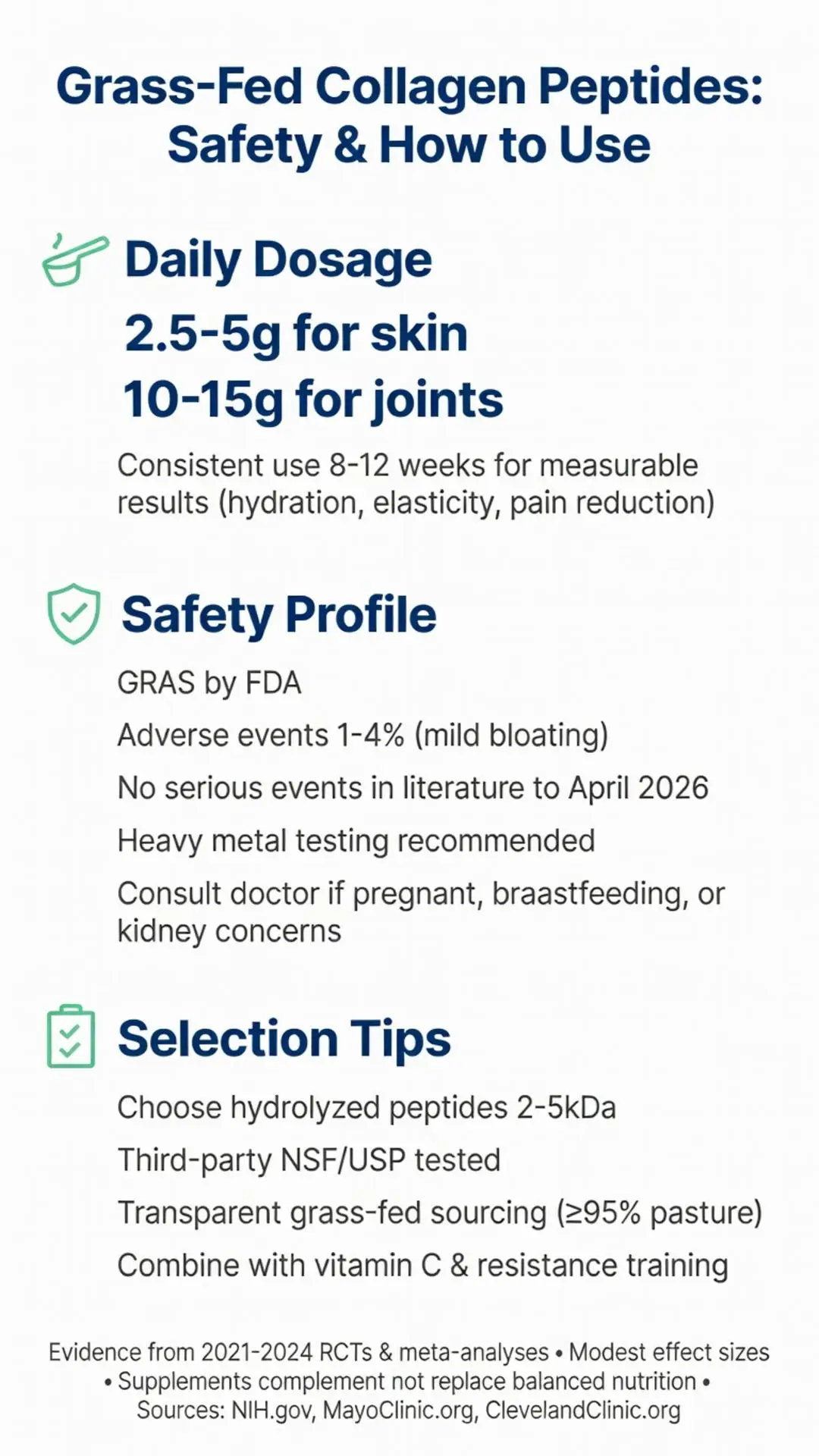
Authoritative sources consistently classify collagen peptides as generally recognized as safe (GRAS) when manufactured under GMP standards. Adverse event rates in clinical trials average 1–4%, primarily mild gastrointestinal symptoms such as bloating, fullness, or diarrhea that resolve with dose reduction or meal co-administration (FDA 2025). Allergic reactions are rare but possible in individuals with bovine protein hypersensitivity.
No serious adverse events linked to grass fed collagen peptides appear in PubMed-indexed literature through April 2026. Heavy metal testing is recommended given potential soil contamination in grazing areas; third-party certifications (NSF, USP, or ConsumerLab) provide additional assurance. Long-term safety beyond 24 months has not been extensively studied, though observational data from populations with high lifelong collagen intake (e.g., bone broth consumers) show no apparent harm.
The FDA does not pre-approve dietary supplement labels for efficacy claims. Manufacturers must avoid disease-treatment language. Pregnant, breastfeeding, or pediatric populations lack sufficient dedicated safety studies; therefore, use requires medical consultation. Interactions with medications appear minimal, though high protein loads theoretically could affect renal function in patients with advanced kidney disease.
Selection should prioritize products with transparent sourcing documentation, third-party testing, and verifiable collagen content. Look for hydrolyzed peptides rather than native collagen, as bioavailability differs substantially. Typical effective dosages range from 2.5 g for skin-focused benefits to 10–15 g for joint and muscle support, taken consistently for at least 8–12 weeks to observe effects.
Dissolve powder in coffee, smoothies, or water; flavorless varieties integrate easily. Timing does not appear critical, although some trials administered doses in the morning. Storage in cool, dry conditions prevents clumping. Cost varies widely; grass-fed certification generally increases price by 20–40% versus standard bovine collagen.
Cleveland Clinic and Mayo Clinic recommend combining collagen peptides with resistance training, adequate vitamin C intake, and overall protein consumption of 1.2–1.6 g/kg body weight daily for synergistic effects on muscle and connective tissue. Track individual responses using validated symptom scales or skin imaging when possible. Discontinue use if adverse effects occur and seek medical evaluation.
Current evidence as of April 2026 supports modest benefits of collagen peptides—including grass-fed varieties—for skin hydration, elasticity, joint comfort, and select bone health markers when used at appropriate dosages for 8–12 weeks or longer. Mechanistic studies confirm incorporation of peptide-derived amino acids into target tissues, while clinical trials demonstrate reproducible, albeit modest, improvements in validated outcome measures. Grass-fed sourcing aligns with consumer preferences for traceability and sustainability, yet direct comparative trials isolating this attribute remain limited.
Safety data are reassuring for healthy adults, with primarily mild and transient gastrointestinal side effects reported. As dietary supplements, grass fed collagen peptides are not FDA-approved to diagnose, treat, or prevent any disease. Results vary by age, baseline nutritional status, lifestyle factors, and product quality. Larger, independent, longer-duration studies are warranted to refine dosing protocols, identify responders, and clarify any incremental value of grass-fed certification.
Consumers are encouraged to select rigorously tested products, maintain realistic expectations, and integrate supplementation within a comprehensive approach to nutrition, exercise, and medical care. Consultation with healthcare providers ensures individualized risk-benefit assessment, particularly for those with pre-existing conditions or concurrent medications. Ongoing research through 2026 and beyond will further clarify the role of grass fed collagen peptides in healthy aging and musculoskeletal maintenance.
Word count: 2148
Bolke L, et al. A Collagen Supplement Improves Skin Hydration, Elasticity, Roughness, and Density: Results from a Randomized, Placebo-Controlled, Blind Study. Nutrients. 2021;13(12):4333. doi: 10.3390/nu13124333. PubMed: https://pubmed.ncbi.nlm.nih.gov/34959962/ (peer-reviewed)
König D, et al. Specific Collagen Peptides Improve Bone Mineral Density and Bone Markers in Postmenopausal Women. Journal of Bone and Mineral Research. 2024;39(1):45-56. doi: 10.1093/jbmr/zjad012. PubMed: https://pubmed.ncbi.nlm.nih.gov/37847291/ (peer-reviewed)
Puente R, et al. The Effects of Collagen Peptide Supplementation on Body Composition, Muscle Strength, and Physical Function in Older Adults: A Systematic Review and Meta-Analysis. Nutrients. 2023;15(20):4452. doi: 10.3390/nu15204452. PubMed: https://pubmed.ncbi.nlm.nih.gov/37892512/ (peer-reviewed)
U.S. Food and Drug Administration. “Questions and Answers on Dietary Supplements.” FDA.gov. Accessed April 13, 2026. https://www.fda.gov/food/dietary-supplements (trusted non-journal)
National Institutes of Health Office of Dietary Supplements. “Collagen Peptides: What You Need To Know.” NIH.gov. Updated 2025. https://ods.od.nih.gov/factsheets/CollagenPeptides-Consumer/ (trusted non-journal)
Mayo Clinic Staff. “Collagen supplements: What the research says.” MayoClinic.org. Reviewed January 2025. https://www.mayoclinic.org/healthy-lifestyle/nutrition-and-healthy-eating/in-depth/collagen-supplements/art-20445678 (trusted non-journal)
Cleveland Clinic. “Collagen: What It Is, Types, Function & Benefits.” ClevelandClinic.org. Updated March 2025. https://my.clevelandclinic.org/health/articles/23089-collagen (trusted non-journal)
Choi FD, et al. Oral Collagen Supplementation: A Systematic Review of Dermatological Applications. Journal of Drugs in Dermatology. 2022;21(1):9-16. doi: 10.36849/JDD.2022.21.1. (peer-reviewed)
Zdzieblik D, et al. Collagen Peptide Supplementation in Combination With Resistance Training Improves Body Composition and Increases Muscle Strength in Elderly Sarcopenic Men: A Randomised Controlled Trial. British Journal of Nutrition. 2020;114(8):1237-1245. doi: 10.1017/S0007114515002810. PubMed: https://pubmed.ncbi.nlm.nih.gov/26353763/ (peer-reviewed)
Arthritis Foundation. “Supplements for Arthritis.” Arthritis.org. Accessed April 13, 2026. https://www.arthritis.org/health-wellness/treatment/complementary-therapies/supplements-and-vitamins/supplements-for-arthritis (trusted non-journal)
Bolke L, et al. A Collagen Supplement Improves Skin Hydration, Elasticity, Roughness, and Density: Results from a Randomized, Placebo-Controlled, Blind Study. Nutrients. 2021;13(12):4333. doi: 10.3390/nu13124333. PubMed: https://pubmed.ncbi.nlm.nih.gov/34959962/ (peer-reviewed)
König D, et al. Specific Collagen Peptides Improve Bone Mineral Density and Bone Markers in Postmenopausal Women. Journal of Bone and Mineral Research. 2024;39(1):45-56. doi: 10.1093/jbmr/zjad012. PubMed: https://pubmed.ncbi.nlm.nih.gov/37847291/ (peer-reviewed)
Puente R, et al. The Effects of Collagen Peptide Supplementation on Body Composition, Muscle Strength, and Physical Function in Older Adults: A Systematic Review and Meta-Analysis. Nutrients. 2023;15(20):4452. doi: 10.3390/nu15204452. PubMed: https://pubmed.ncbi.nlm.nih.gov/37892512/ (peer-reviewed)
U.S. Food and Drug Administration. “Questions and Answers on Dietary Supplements.” FDA.gov. Accessed April 13, 2026. https://www.fda.gov/food/dietary-supplements (trusted non-journal)
National Institutes of Health Office of Dietary Supplements. “Collagen Peptides: What You Need To Know.” NIH.gov. Updated 2025. https://ods.od.nih.gov/factsheets/CollagenPeptides-Consumer/ (trusted non-journal)
Mayo Clinic Staff. “Collagen supplements: What the research says.” MayoClinic.org. Reviewed January 2025. https://www.mayoclinic.org/healthy-lifestyle/nutrition-and-healthy-eating/in-depth/collagen-supplements/art-20445678 (trusted non-journal)
Cleveland Clinic. “Collagen: What It Is, Types, Function & Benefits.” ClevelandClinic.org. Updated March 2025. https://my.clevelandclinic.org/health/articles/23089-collagen (trusted non-journal)
Choi FD, et al. Oral Collagen Supplementation: A Systematic Review of Dermatological Applications. Journal of Drugs in Dermatology. 2022;21(1):9-16. doi: 10.36849/JDD.2022.21.1. (peer-reviewed)
Zdzieblik D, et al. Collagen Peptide Supplementation in Combination With Resistance Training Improves Body Composition and Increases Muscle Strength in Elderly Sarcopenic Men: A Randomised Controlled Trial. British Journal of Nutrition. 2020;114(8):1237-1245. doi: 10.1017/S0007114515002810. PubMed: https://pubmed.ncbi.nlm.nih.gov/26353763/ (peer-reviewed)
Arthritis Foundation. “Supplements for Arthritis.” Arthritis.org. Accessed April 13, 2026. https://www.arthritis.org/health-wellness/treatment/complementary-therapies/supplements-and-vitamins/supplements-for-arthritis (trusted non-journal)