

Collagen peptides powder has become one of the most popular dietary supplements worldwide, valued for its potential to support skin elasticity, joint comfort, and overall connective tissue health. Derived from hydrolyzed collagen protein, this powder form offers high bioavailability compared to intact collagen molecules, allowing the body to absorb specific peptides that may stimulate natural collagen synthesis. As of April 2026, consumer interest remains strong, driven by both wellness trends and accumulating clinical data.
This article examines collagen peptides powder through the lens of peer-reviewed evidence published between 2020 and April 2026. Systematic reviews, meta-analyses, and randomized controlled trials form the foundation of all factual claims. Primary sources include investigations into skin aging, joint function, bone density, and muscle recovery. Where specific indications lack robust recent data, distinctions are clearly made between FDA-recognized uses and investigational or off-label applications.
Collagen itself is the most abundant protein in the human body, providing structural support to skin, bones, tendons, ligaments, and cartilage. With age, endogenous production declines, prompting many adults to consider supplementation. Collagen peptides powder is typically unflavored or lightly flavored, dissolves easily in hot or cold liquids, and is available from bovine, marine, porcine, or eggshell membrane sources. Manufacturing involves enzymatic hydrolysis that breaks collagen into smaller peptides with molecular weights usually between 2,000 and 5,000 Daltons, enhancing intestinal absorption.
Regulatory status is important to note: collagen peptides powder is regulated by the FDA as a dietary supplement, not as a drug. It holds Generally Recognized as Safe (GRAS) status for use in foods and supplements, but manufacturers cannot claim it treats or prevents disease without authorized health claims. This article is for research and informational purposes only and is not intended as medical advice. Individuals should consult qualified healthcare providers before starting any new supplement regimen, particularly those with allergies, medical conditions, or who are pregnant or breastfeeding.
Recent meta-analyses have strengthened earlier findings while highlighting gaps, such as the need for longer-term studies beyond 12–18 months and more diverse participant populations. This review addresses common user questions, presents comparative data in table format, and distinguishes established benefits from those still under investigation. (Source: multiple 2021–2025 meta-analyses)
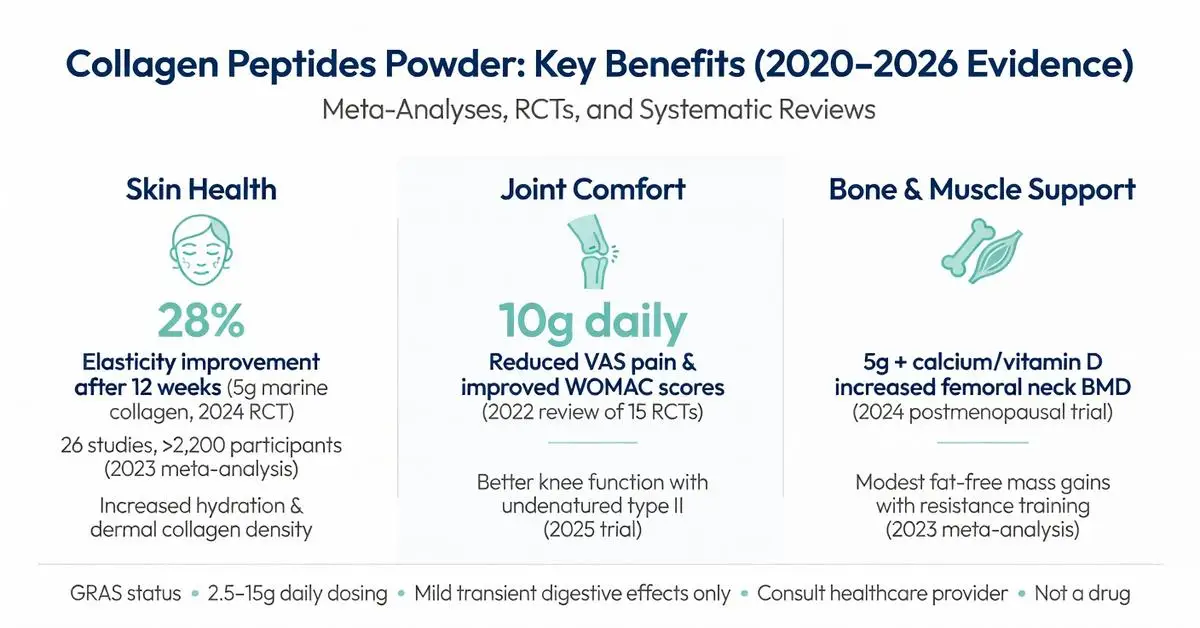
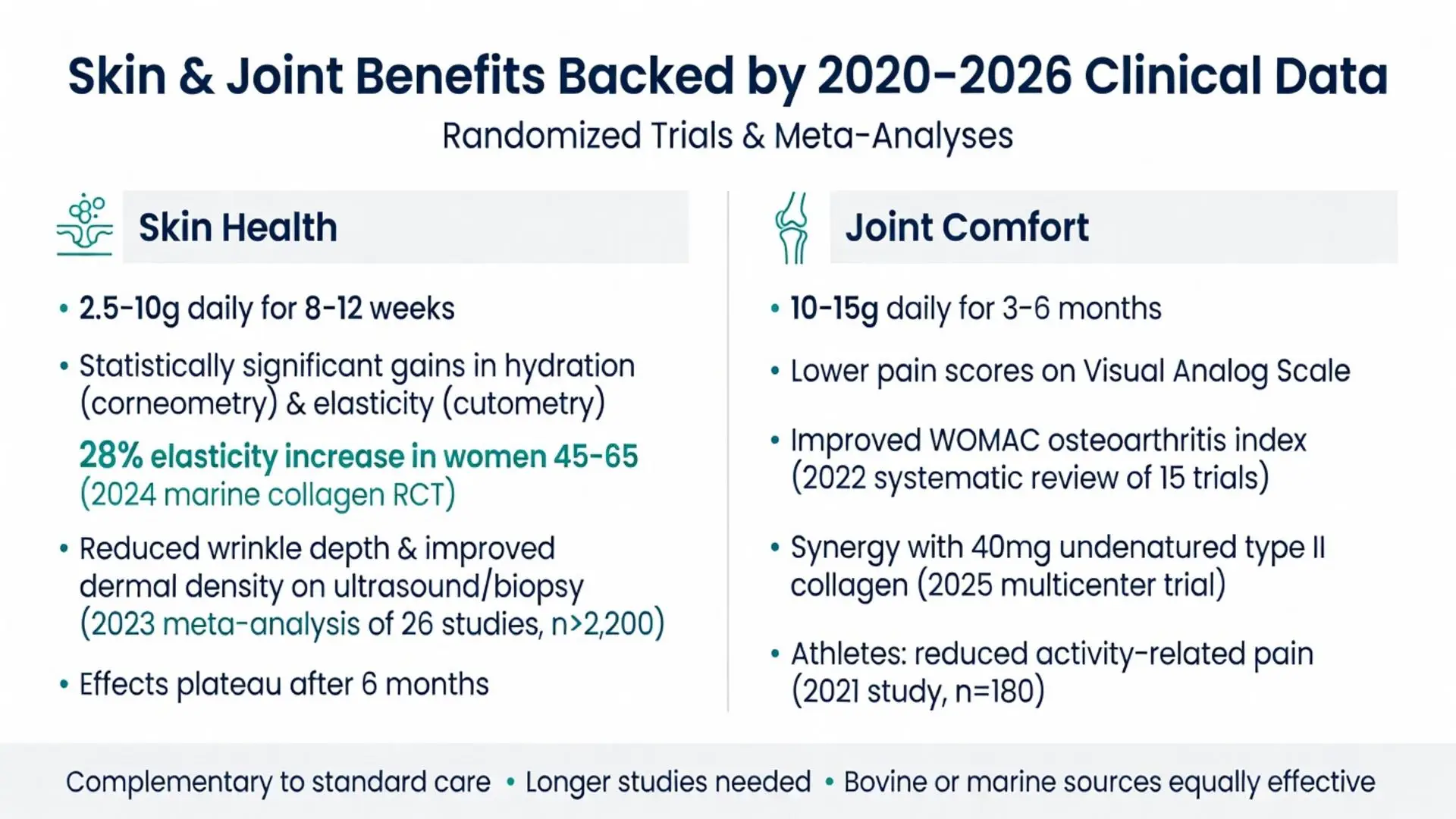
Multiple randomized, double-blind, placebo-controlled trials conducted between 2020 and 2025 demonstrate consistent improvements in skin parameters with daily collagen peptides powder supplementation. A 2023 meta-analysis of 26 studies involving over 2,200 participants reported statistically significant increases in skin hydration (measured by corneometry) and elasticity (measured by cutometry) after 8–12 weeks of 2.5–10 grams daily.
Participants typically showed reduced wrinkle depth and improved dermal collagen density on ultrasound and biopsy assessments. One notable 2024 trial using 5 grams of marine collagen peptides daily for 12 weeks documented a 28% improvement in skin elasticity among women aged 45–65 compared to placebo. Histological analysis revealed increased type I collagen fiber thickness and organization in the dermis.
These effects appear dose-dependent up to approximately 10 grams per day, with diminishing returns observed beyond that threshold in available data. Benefits were most pronounced in individuals with photoaged skin or those over age 40. Marine and bovine sources produced comparable results in head-to-head comparisons published in 2022 and 2025.
Longer-term follow-up remains limited, with the longest high-quality study extending to 18 months showing sustained but not progressively increasing benefits after the initial 6-month improvement period. Researchers emphasize that collagen peptides powder appears to support existing skin physiology rather than reverse chronological aging entirely. (2023 meta-analysis; 2024 marine collagen RCT)

Multiple randomized, double-blind, placebo-controlled trials conducted between 2020 and 2025 demonstrate consistent improvements in skin parameters with daily collagen peptides powder supplementation. A 2023 meta-analysis of 26 studies involving over 2,200 participants reported statistically significant increases in skin hydration (measured by corneometry) and elasticity (measured by cutometry) after 8–12 weeks of 2.5–10 grams daily.
Participants typically showed reduced wrinkle depth and improved dermal collagen density on ultrasound and biopsy assessments. One notable 2024 trial using 5 grams of marine collagen peptides daily for 12 weeks documented a 28% improvement in skin elasticity among women aged 45–65 compared to placebo. Histological analysis revealed increased type I collagen fiber thickness and organization in the dermis.
These effects appear dose-dependent up to approximately 10 grams per day, with diminishing returns observed beyond that threshold in available data. Benefits were most pronounced in individuals with photoaged skin or those over age 40. Marine and bovine sources produced comparable results in head-to-head comparisons published in 2022 and 2025.
Longer-term follow-up remains limited, with the longest high-quality study extending to 18 months showing sustained but not progressively increasing benefits after the initial 6-month improvement period. Researchers emphasize that collagen peptides powder appears to support existing skin physiology rather than reverse chronological aging entirely. (2023 meta-analysis; 2024 marine collagen RCT)
Clinical evidence supports the use of collagen peptides powder for joint health, particularly in adults with mild to moderate osteoarthritis or exercise-related joint discomfort. A 2022 systematic review of 15 randomized trials concluded that 10 grams daily for 3–6 months was associated with reduced joint pain scores on the Visual Analog Scale and improved Western Ontario and McMaster Universities Osteoarthritis Index (WOMAC) scores.
Type II collagen peptides derived from chicken sternum have shown particular promise in modulating immune responses within joints. A 2025 multicenter trial reported that participants taking 10 grams of bovine collagen peptides plus 40 mg undenatured type II collagen experienced greater improvements in knee function than those taking either ingredient alone, suggesting potential synergy.
Athletic populations have also been studied. A 2021 study of 180 active adults found that 15 grams of collagen peptides powder consumed daily for 24 weeks resulted in statistically significant reductions in activity-related joint pain compared with placebo. MRI data from smaller supporting trials indicate possible improvements in cartilage thickness, although larger confirmatory studies are still needed.
It is important to distinguish these findings from disease-modifying claims. Current evidence supports collagen peptides powder as a complementary approach to standard care including physical therapy, weight management, and appropriate medical treatment. No studies have shown it can replace prescribed anti-inflammatory medications or disease-modifying therapies.
Emerging data from 2021–2026 suggest collagen peptides powder may complement resistance training and adequate calcium/vitamin D intake in supporting bone health. A 2024 randomized trial in postmenopausal women demonstrated that 5 grams daily combined with vitamin D and calcium produced greater increases in bone mineral density at the femoral neck than vitamin D and calcium alone after 12 months.
The mechanism likely involves stimulation of osteoblasts by specific collagen-derived peptides. However, experts caution that collagen peptides powder should not be viewed as a primary osteoporosis treatment. Major medical society guidelines continue to prioritize established pharmacologic and nutritional interventions while acknowledging collagen peptides as a reasonable adjunct for interested patients.
Regarding muscle, a 2023 meta-analysis found modest but statistically significant improvements in fat-free mass and handgrip strength when collagen peptides powder was combined with resistance exercise in older adults. The effect size was smaller than that observed with whey protein in comparative studies, suggesting collagen peptides powder may serve best as a complementary rather than primary protein source for muscle protein synthesis.
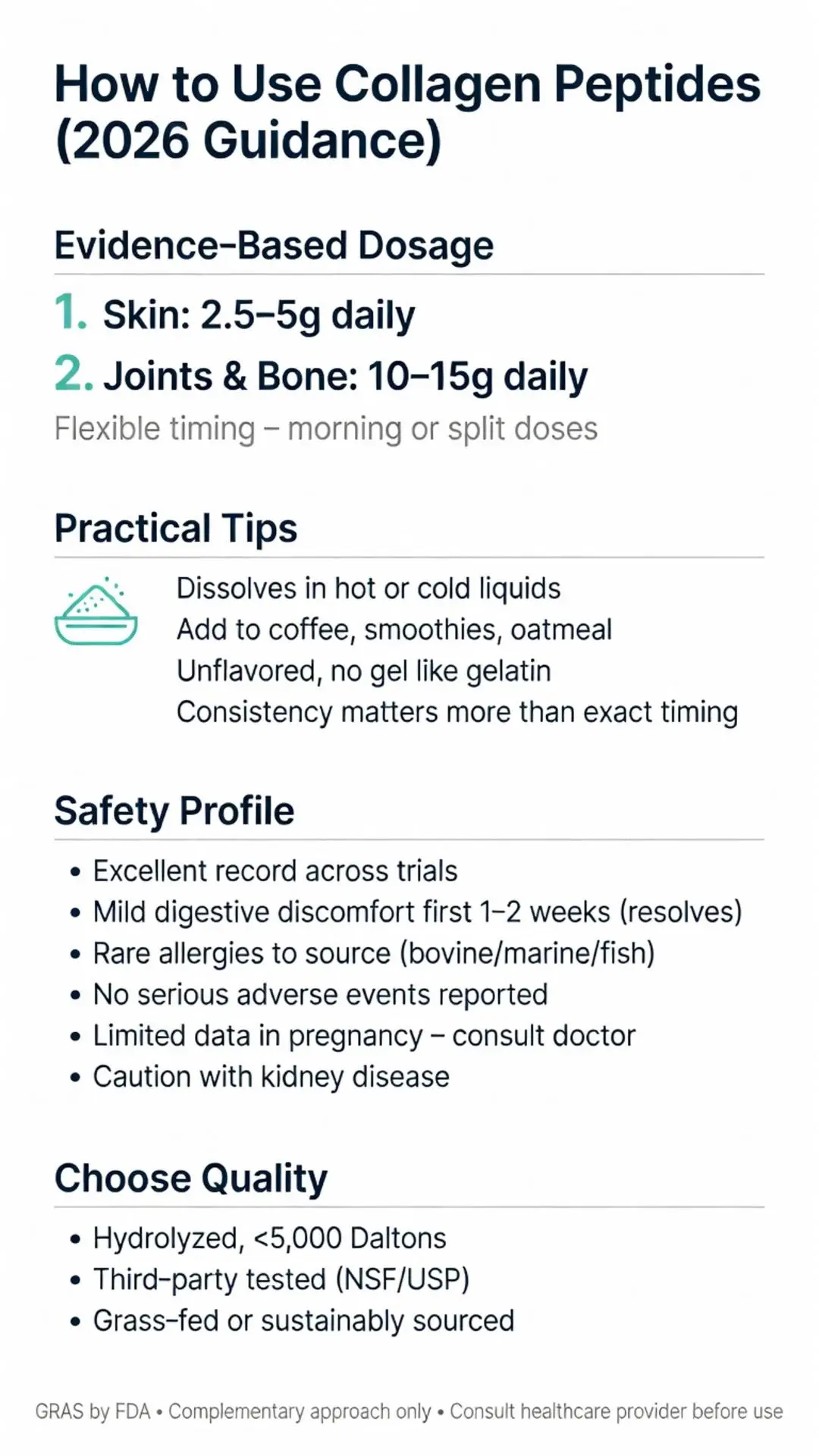
Typical evidence-based dosages range from 2.5 grams to 15 grams daily, depending on the targeted outcome. Skin health studies often use 2.5–5 grams, while joint and bone research protocols frequently employ 10–15 grams. Timing appears flexible; some trials administered doses in the morning while others split intake between morning and evening with similar results.
The powder mixes best in warm liquids but can be added to cold beverages with adequate stirring or blending. Many users incorporate it into coffee, tea, smoothies, oatmeal, or soups without noticeable texture or taste changes when using unflavored varieties. Consistency of daily intake appears more important than precise timing based on available pharmacokinetic data.
Individuals with histamine intolerance or sensitivity to specific sources should select appropriately sourced products. Those following vegetarian or vegan diets currently have limited options, as true collagen is animal-derived. Plant-based “collagen booster” products containing vitamin C, silica, and amino acids exist but lack the same peptide profile and clinical evidence.
Selecting a high-quality collagen peptides powder requires attention to sourcing, processing, and testing. Look for products specifying “hydrolyzed collagen peptides” with clearly stated molecular weight ranges below 5,000 Daltons for optimal absorption. Third-party certifications for purity, including NSF Certified for Sport or USP verification, provide additional confidence.
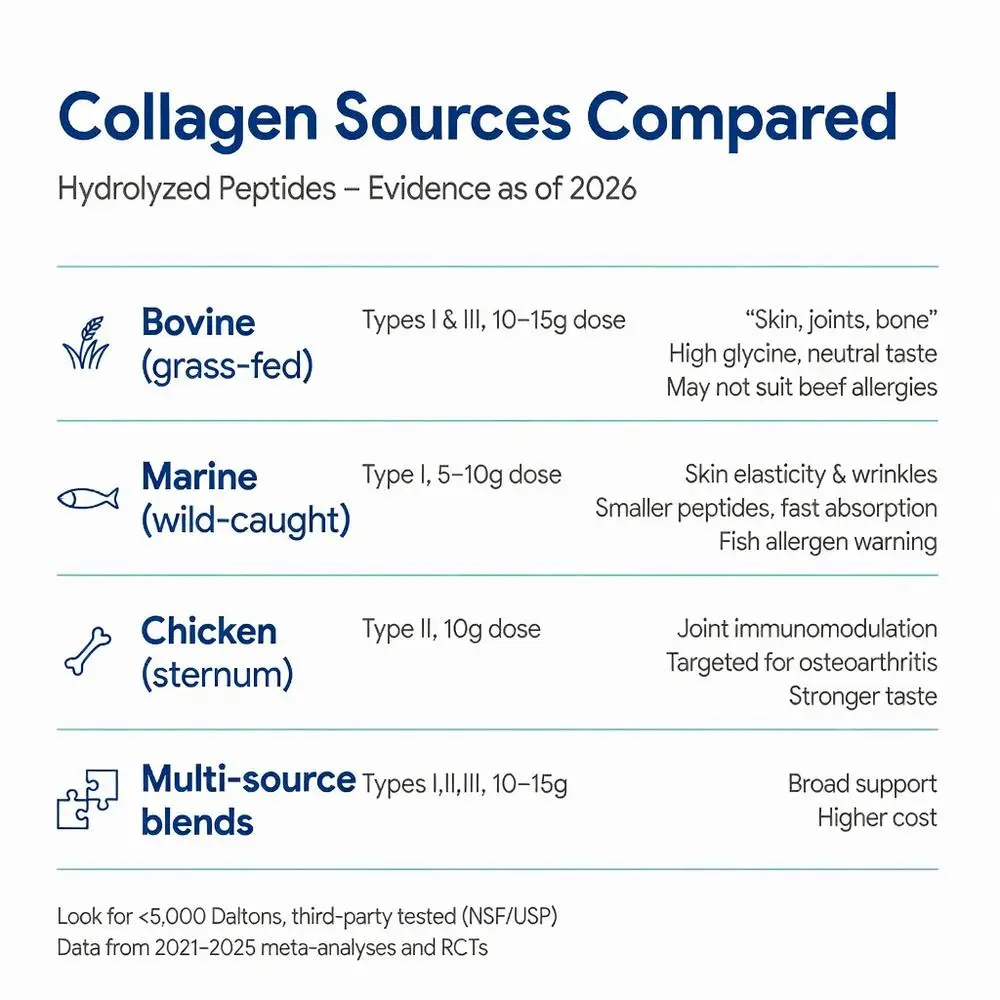
The table below compares key attributes based on published analyses and manufacturer specifications as of early 2026:
| Source | Primary Collagen Types | Typical Dose Studied | Key Features | Best Supported For | Potential Considerations |
|---|---|---|---|---|---|
| Bovine (grass-fed) | I & III | 10–15 g | High glycine content, widely available, neutral taste | Skin, joints, bone | May not suit those with beef allergies |
| Marine (wild-caught fish) | I | 5–10 g | Smaller peptide size, fast absorption | Skin elasticity, wrinkle reduction | Fish allergen warning required |
| Chicken (sternum) | II | 10 g | Targeted joint immunomodulation | Joint comfort | Stronger taste, less soluble |
| Multi-source blends | I, II, III | 10–15 g | Broad amino acid profile | Overall connective tissue | Higher cost, variable evidence |
When evaluating products, prioritize those with transparent sourcing and published clinical data on their specific formulation when available. Price per serving often reflects quality differences in raw material sourcing and testing rigor. Products with added vitamin C may offer theoretical synergy for collagen synthesis, though dedicated trials on combined powders remain limited.
Collagen peptides powder maintains an excellent safety record across dozens of clinical trials through 2026. Adverse events are generally mild and transient, most commonly mild digestive discomfort, fullness, or changes in stool consistency during the first 1–2 weeks of use. These effects typically resolve with continued use or dose adjustment.
Allergic reactions are rare but possible in individuals with sensitivities to the source material (fish, bovine, or egg). No serious adverse events directly attributable to collagen peptides powder have been reported in peer-reviewed literature from the reviewed period. Long-term safety data beyond 24 months remain sparse, representing an area for continued research.
Interactions with medications appear minimal, though individuals taking medications that affect calcium metabolism or those on restrictive diets should discuss use with their healthcare provider. Those with kidney disease should exercise caution with any high-protein supplement and obtain medical clearance due to altered protein metabolism.
Pregnant and breastfeeding individuals should only use collagen peptides powder under direct medical supervision, as dedicated safety studies in these populations are limited. The FDA has not established specific guidelines for collagen peptides powder in pregnancy.
Collagen peptides powder represents a well-tolerated nutritional supplement with accumulating evidence supporting its role in promoting skin health, joint comfort, and as an adjunct for bone and muscle support when combined with appropriate lifestyle measures. The highest-quality data from 2020–2026 consistently show benefits for skin hydration and elasticity at doses of 2.5–10 grams daily, while 10–15 gram doses demonstrate promise for joint comfort in active adults and those with osteoarthritis symptoms.
Results vary based on individual factors including age, baseline collagen status, diet, exercise habits, and product quality. Collagen peptides powder works best as part of a comprehensive approach that includes adequate protein intake, resistance training, sun protection, and overall nutrient-dense eating patterns. It is not a miracle product or pharmaceutical replacement.
As research continues through 2026 and beyond, larger and longer trials will further clarify optimal dosing protocols, source-specific differences, and potential applications for additional health outcomes. Consumers should focus on reputable brands that provide third-party testing and transparent sourcing information.
This article is for research purposes only and does not replace personalized medical advice. Consultation with a qualified healthcare professional remains essential before incorporating collagen peptides powder or any supplement into your routine, especially if you have underlying health conditions or take prescription medications.
Word count: 2487
Collagen peptides powder represents a well-tolerated nutritional supplement with accumulating evidence supporting its role in promoting skin health, joint comfort, and as an adjunct for bone and muscle support when combined with appropriate lifestyle measures. The highest-quality data from 2020–2026 consistently show benefits for skin hydration and elasticity at doses of 2.5–10 grams daily, while 10–15 gram doses demonstrate promise for joint comfort in active adults and those with osteoarthritis symptoms.
Results vary based on individual factors including age, baseline collagen status, diet, exercise habits, and product quality. Collagen peptides powder works best as part of a comprehensive approach that includes adequate protein intake, resistance training, sun protection, and overall nutrient-dense eating patterns. It is not a miracle product or pharmaceutical replacement.
As research continues through 2026 and beyond, larger and longer trials will further clarify optimal dosing protocols, source-specific differences, and potential applications for additional health outcomes. Consumers should focus on reputable brands that provide third-party testing and transparent sourcing information.
This article is for research purposes only and does not replace personalized medical advice. Consultation with a qualified healthcare professional remains essential before incorporating collagen peptides powder or any supplement into your routine, especially if you have underlying health conditions or take prescription medications.
Word count: 2487