
Quick Answer: Collagen and peptides refer to hydrolyzed collagen supplements broken down into smaller chains of amino acids. Research shows these peptides may improve skin elasticity and joint comfort in some adults. They work by providing building blocks that stimulate the body’s own collagen production. Human studies remain limited in size and duration, so results vary. Always consult a healthcare provider before starting any supplement.
This article is for informational purposes only and does not constitute medical advice. Consult a qualified healthcare provider before using any peptide.
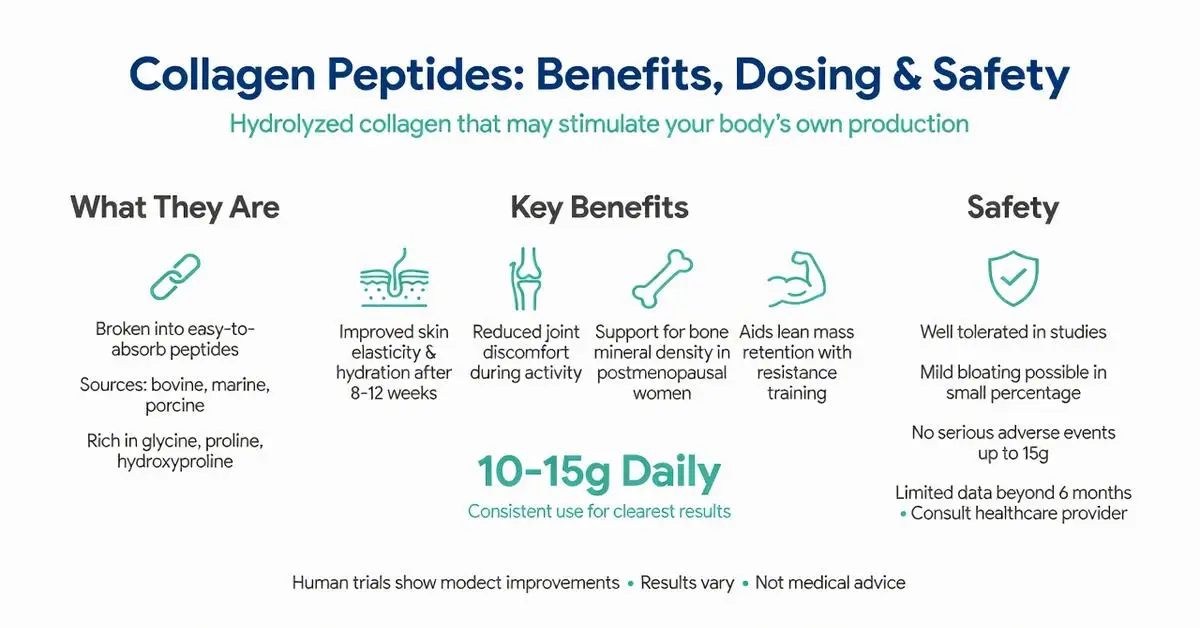
Collagen peptides enter the bloodstream after digestion and reach skin and joint tissues. Once there, they signal fibroblasts and chondrocytes to increase production of new collagen and other matrix proteins. This mechanism appears in both animal and limited human studies.
The peptides also supply direct amino acids needed for collagen synthesis. Because the body cannot make these amino acids in sufficient amounts, dietary peptides may support repair when natural production declines with age.

Collagen peptides enter the bloodstream after digestion and reach skin and joint tissues. Once there, they signal fibroblasts and chondrocytes to increase production of new collagen and other matrix proteins. This mechanism appears in both animal and limited human studies.
The peptides also supply direct amino acids needed for collagen synthesis. Because the body cannot make these amino acids in sufficient amounts, dietary peptides may support repair when natural production declines with age.
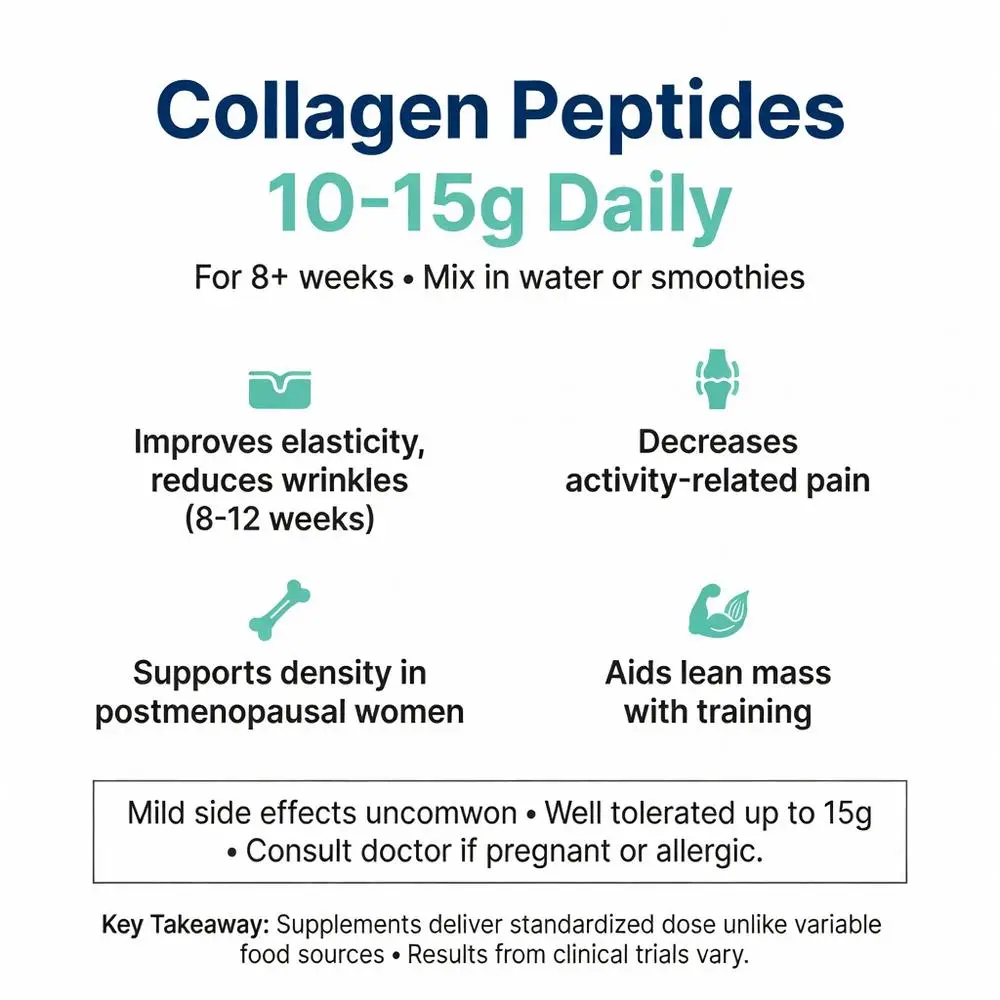
Clinical trials have examined several outcomes. Skin studies show measurable improvements in hydration and wrinkle depth after eight to twelve weeks of daily use. Joint studies report reduced discomfort during activity in athletes and older adults.
Additional research explores bone density and muscle mass, though results are preliminary. Benefits appear dose-dependent and most consistent when intake reaches 10–15 grams per day.
Most people tolerate collagen peptides well. Mild digestive symptoms such as bloating or loose stools occur in a small percentage of users. Allergic reactions are rare but possible with marine-sourced products.
No serious adverse events appear in published trials at doses up to 15 grams daily. Long-term safety data beyond six months remain limited.
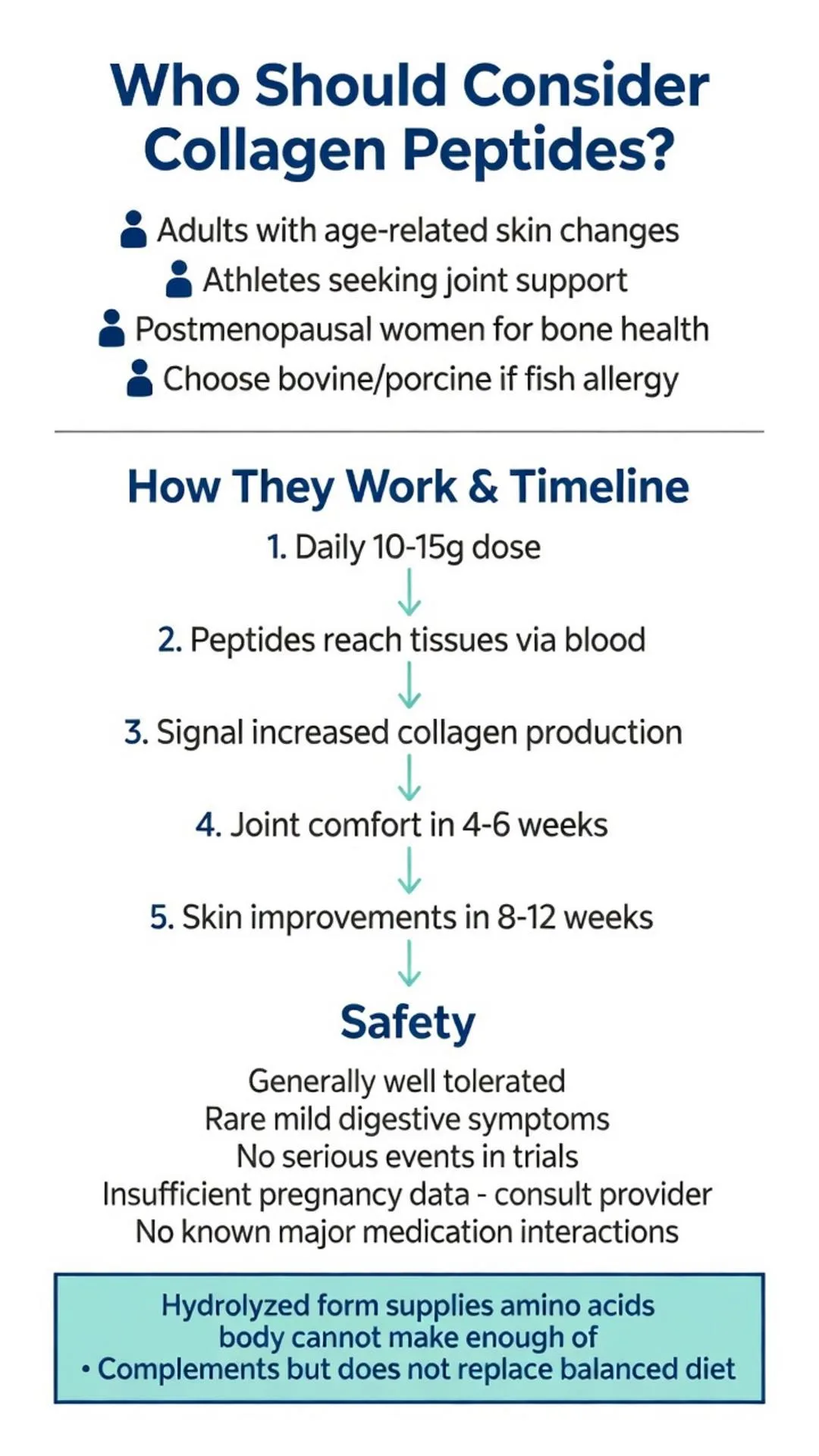
Adults noticing age-related skin changes or joint stiffness represent the primary group studied. Athletes seeking connective-tissue support and postmenopausal women concerned about bone health also appear in research.
People with fish or shellfish allergies should choose bovine or porcine sources. Those with kidney disease should discuss protein intake with a physician before adding supplements.
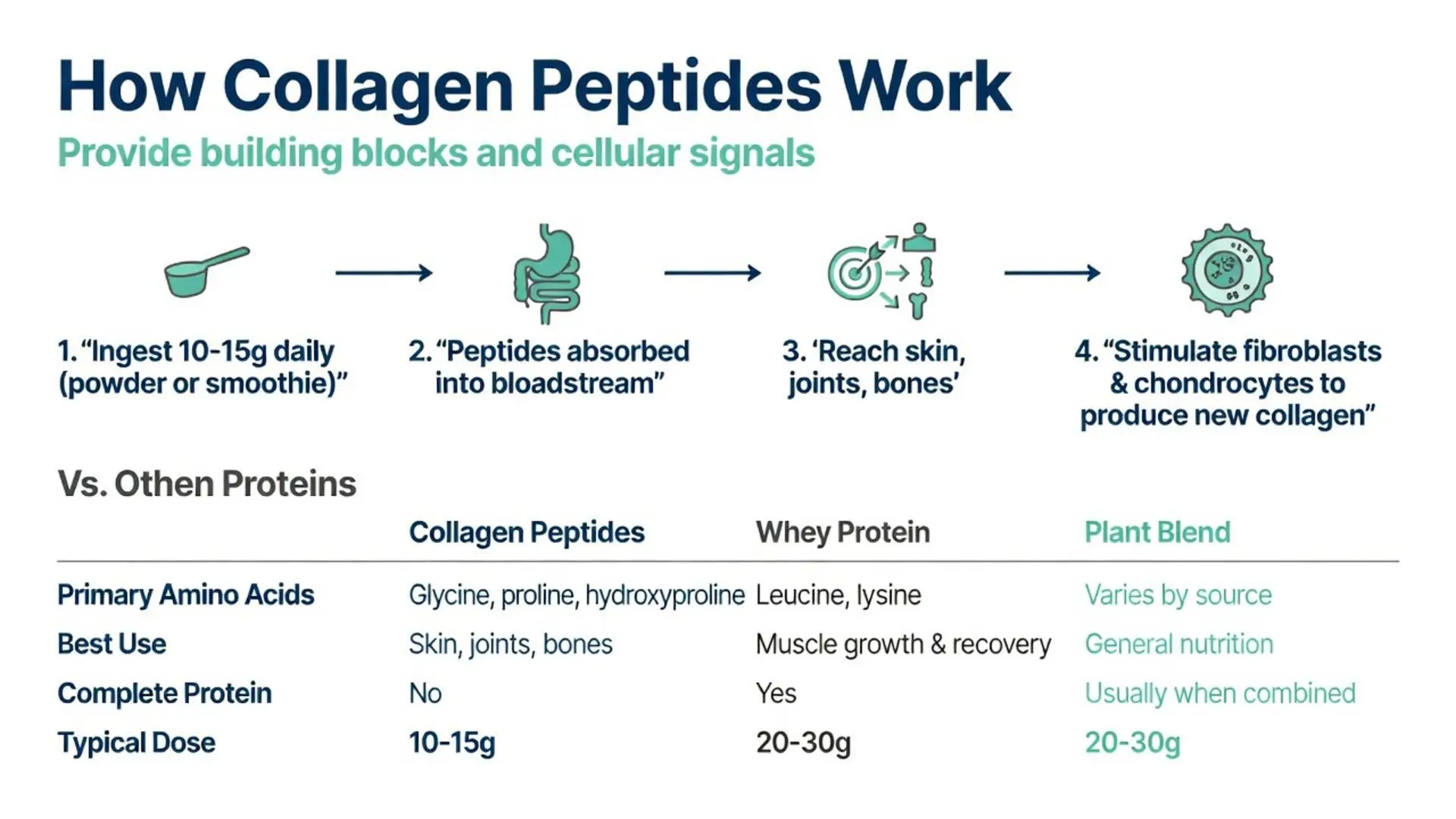
Typical doses range from 10 to 15 grams once daily mixed in water or smoothies. Most studies use consistent daily intake for at least eight weeks to observe effects. Timing does not appear critical, though some users prefer morning consumption.
Forms include unflavored powder, flavored packets, capsules, and ready-to-drink beverages. Powders generally offer the best value per gram of collagen peptides.
Collagen peptides differ from whey or casein because they lack tryptophan and contain high levels of glycine and proline. This unique profile suits connective-tissue goals but makes collagen incomplete for muscle-protein synthesis.
| Feature | Collagen Peptides | Whey Protein | Plant Protein Blend |
|---|---|---|---|
| Primary amino acids | Glycine, proline, hydroxyproline | Leucine, lysine | Varies by source |
| Best supported use | Skin, joints, bones | Muscle growth, recovery | General nutrition |
| Complete protein | No | Yes | Usually when combined |
| Typical daily dose | 10–15 g | 20–30 g | 20–30 g |
Multiple randomized trials show improvements in skin hydration and wrinkle depth after consistent use. Joint comfort also improves in several studies, though individual responses vary.
Collagen peptide supplements are legal to buy and sell in the United States as dietary supplements. They are not approved to diagnose, treat, or cure any disease.
Most skin studies report visible changes between eight and twelve weeks. Joint benefits sometimes appear within four to six weeks but can take longer.
Bone broth and gelatin-rich foods supply collagen, yet the amount and consistency are hard to measure. Supplements provide standardized doses used in clinical research.
Yes. Type I supports skin and bone, Type II supports cartilage, and Type III supports skin and blood vessels. Most supplements blend Type I and III from bovine sources or Type I from marine sources.
Vitamin C is a cofactor in collagen synthesis. Some studies include it, but evidence that extra vitamin C enhances peptide supplements remains limited.
Safety data in pregnant or breastfeeding women are insufficient. Consult a healthcare provider before use.
No significant drug interactions are documented. Still, individuals on multiple medications should review supplement use with their pharmacist or physician.