
Quick Answer: Cerebrolysin is a neuropeptide preparation made from purified porcine brain proteins that may support brain repair and cognitive function. Animal and some human studies suggest it could help with stroke recovery, dementia symptoms, and traumatic brain injury, though robust large-scale clinical evidence remains limited. This article is for informational purposes only and does not constitute medical advice. Consult a qualified healthcare provider before using any peptide.
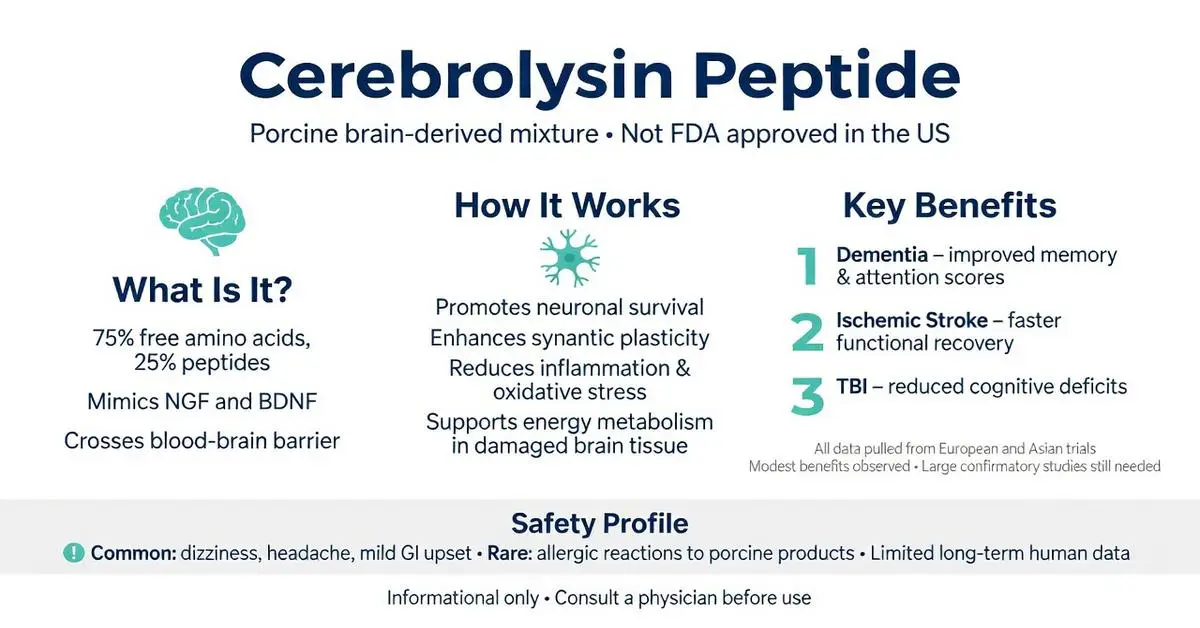
Cerebrolysin is believed to promote neuronal survival and synaptic plasticity through multiple pathways. It may stimulate the production of nerve growth factor and brain-derived neurotrophic factor.
The peptides in the mixture can modulate inflammation and oxidative stress in neural tissue. This dual action on repair and protection forms the core proposed mechanism.
Research indicates it may also influence energy metabolism within brain cells. Effects appear most pronounced in damaged or aging neural environments.

Cerebrolysin is believed to promote neuronal survival and synaptic plasticity through multiple pathways. It may stimulate the production of nerve growth factor and brain-derived neurotrophic factor.
The peptides in the mixture can modulate inflammation and oxidative stress in neural tissue. This dual action on repair and protection forms the core proposed mechanism.
Research indicates it may also influence energy metabolism within brain cells. Effects appear most pronounced in damaged or aging neural environments.
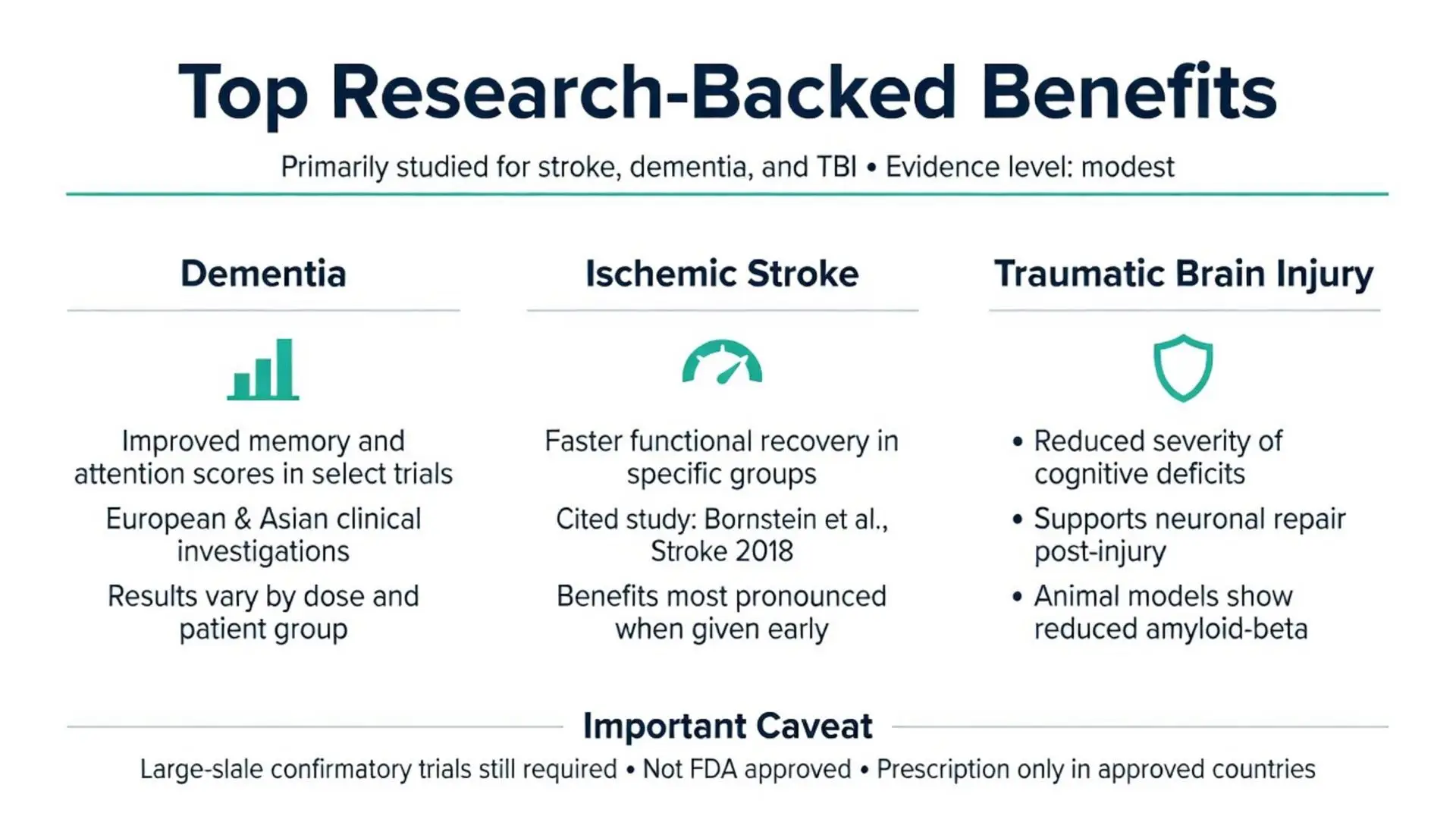
Studies have explored cerebrolysin for several neurological conditions. Reported benefits center on cognitive and motor recovery.
These outcomes are drawn primarily from European and Asian clinical investigations. Results vary by dose, timing, and patient population.
Common side effects include dizziness, headache, and mild gastrointestinal upset. These effects are generally transient.
Rare allergic reactions have been documented, particularly in individuals sensitive to porcine products. Injection-site reactions may also occur with intravenous administration.
Long-term safety data in humans are limited. Animal studies have not shown major organ toxicity at therapeutic doses.
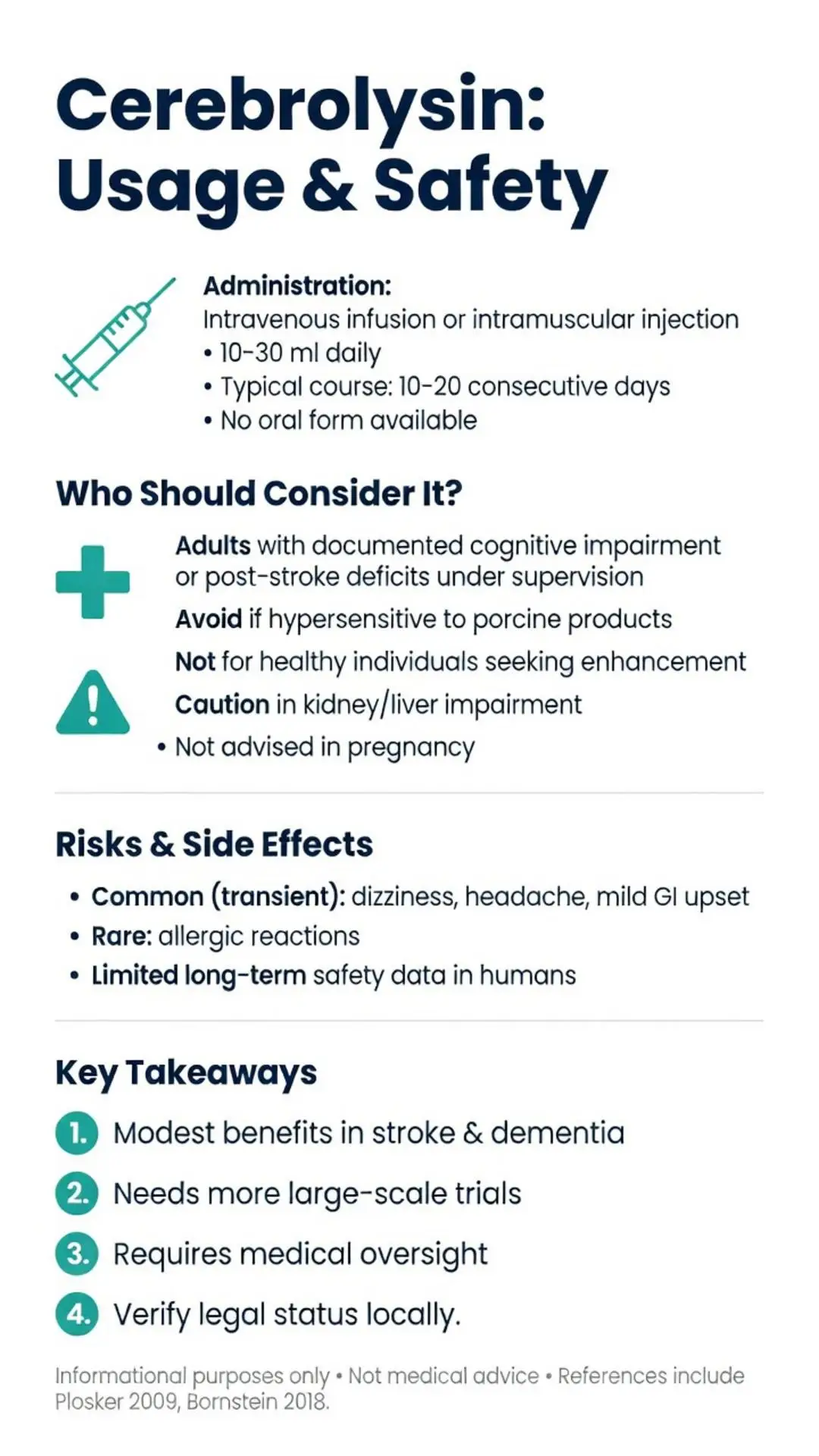
Cerebrolysin may be considered for adults with documented cognitive impairment or post-stroke deficits under medical supervision. It is not recommended for healthy individuals seeking general enhancement.
Patients with known hypersensitivity to pig-derived products should avoid it. Those with severe kidney or liver impairment require careful evaluation.
Use during pregnancy or breastfeeding is not advised due to insufficient safety data.
Cerebrolysin is administered via intravenous infusion or intramuscular injection. Typical courses last 10 to 20 days with daily doses ranging from 10 to 30 milliliters.
Treatment cycles may be repeated after rest periods, but protocols differ by condition. Oral forms are not available because the peptides degrade in the digestive tract.
This information is not medical advice. Dosing and duration must be determined by a licensed clinician.
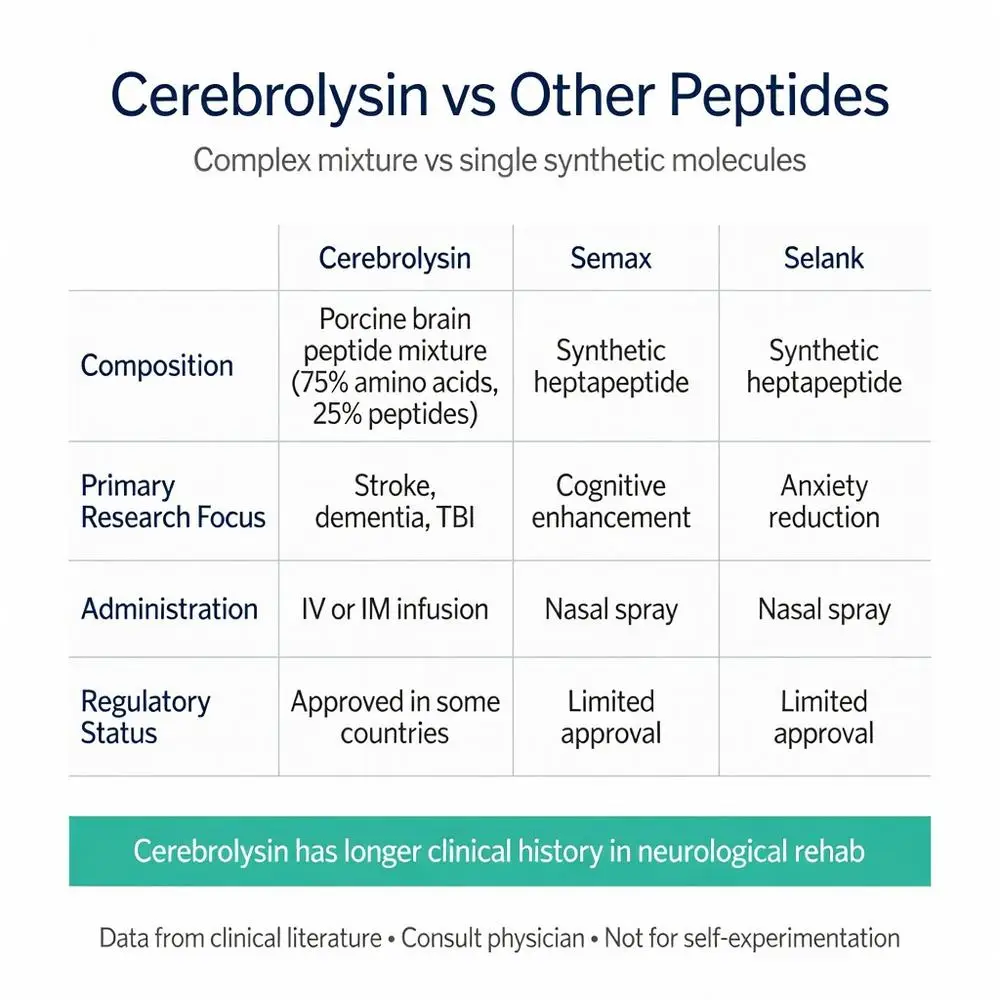
Cerebrolysin differs from single-molecule peptides such as semax or selank in its complex mixture of many peptides. It has a longer clinical history in neurological rehabilitation settings.
| Feature | Cerebrolysin | Semax | Selank |
|---|---|---|---|
| Composition | Porcine brain peptide mixture | Synthetic heptapeptide | Synthetic heptapeptide |
| Primary research focus | Stroke, dementia, TBI | Cognitive enhancement | Anxiety reduction |
| Administration | IV or IM infusion | Nasal spray | Nasal spray |
| Regulatory status | Approved in some countries | Limited approval | Limited approval |
Some small trials report modest improvements in cognitive scores, yet results are inconsistent across studies and larger trials are required.
No, it is a prescription medication in countries where it is approved and is not legally sold without medical authorization in most jurisdictions.
Most protocols involve 10–20 consecutive daily infusions followed by a rest period, with total duration set by the treating physician.
Potential interactions with anticoagulants and certain antidepressants have been noted; full medication review by a clinician is essential.
Current data cover short courses only; extended use beyond several weeks lacks sufficient safety evaluation in humans.
Cerebrolysin contains a broad spectrum of natural peptides rather than a single synthetic sequence, leading to different proposed mechanisms.
No specific dietary restrictions are established, though maintaining overall brain-healthy nutrition is generally advised.
Very few trials exist in cognitively healthy populations; most research focuses on individuals with existing neurological impairment.