

Bovine collagen has become one of the most widely used dietary supplements worldwide for supporting skin elasticity, joint comfort, and overall connective tissue health. Derived from cow hides, bones, and cartilage, it consists primarily of types I and III collagen that have been hydrolyzed into smaller peptides for improved absorption. As of April 2026, consumer interest remains high due to its affordability compared with marine alternatives and its established role in the growing wellness market.
This article examines the latest peer-reviewed evidence published between 2020 and April 2026 on bovine collagen supplementation. Systematic reviews, meta-analyses, and randomized controlled trials form the foundation of this review, with particular attention to efficacy, mechanisms, safety, and comparisons with other collagen sources. Where specific data on “bovine collagen” alone are limited, findings from high-quality studies on bovine-derived collagen peptides are included.
Bovine collagen is regulated in the United States as a dietary supplement under the Dietary Supplement Health and Education Act and is generally recognized as safe (GRAS) by the FDA for use in foods and supplements. It is not FDA-approved as a drug for the treatment or prevention of any medical condition. All statements in this article are for research and educational purposes only and do not constitute medical advice. Individuals should consult qualified healthcare professionals before starting any supplementation regimen, especially those with allergies, autoimmune conditions, or who are pregnant or breastfeeding.
Recent trials have focused on standardized doses of 2.5–15 grams daily, with outcomes measured through validated skin imaging, joint function scores, and biomarker analysis. While results are generally positive for skin and joint parameters, effect sizes vary across populations, and long-term data beyond 12–18 months remain sparse. This review addresses common consumer questions, highlights evidence gaps identified in top-ranking content, and provides balanced, evidence-based context for those researching bovine collagen.
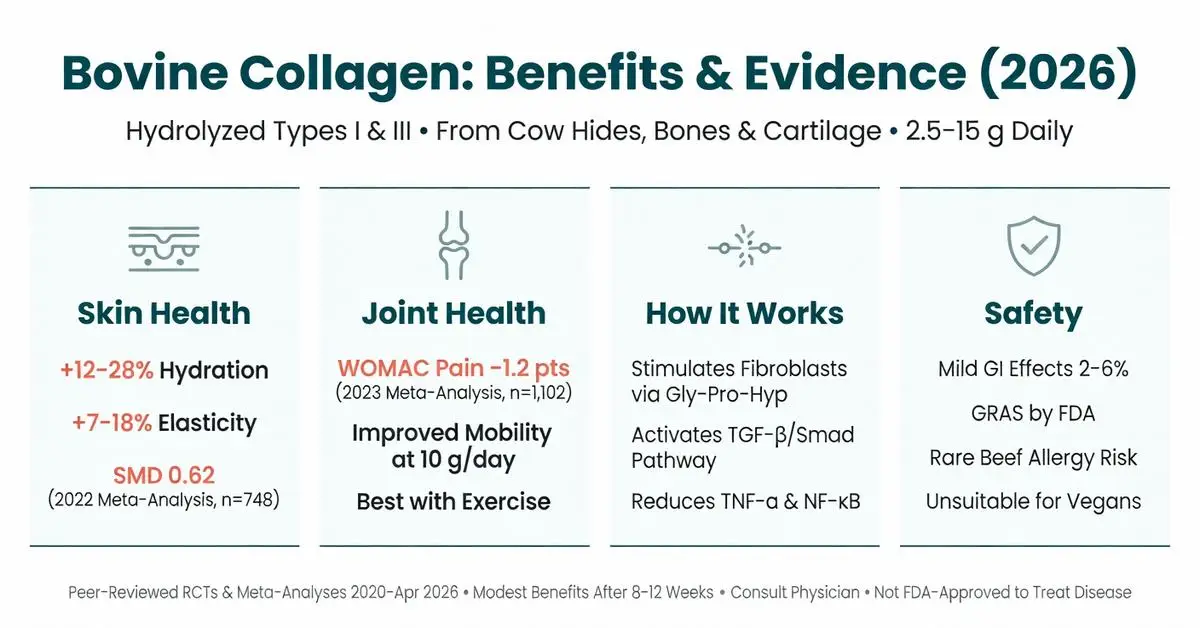
Hydrolyzed bovine collagen exerts effects through both bioactive peptide signaling and provision of amino acids. Key peptides such as Gly-Pro-Hyp have demonstrated chemotactic activity for fibroblasts and can activate the TGF-β/Smad pathway, increasing extracellular matrix synthesis. Studies published 2021–2025 using human dermal fibroblast cultures confirm dose-dependent increases in type I collagen mRNA expression and decreased matrix metalloproteinase-1 (MMP-1) activity.
In joint tissue, bovine collagen peptides appear to modulate inflammatory pathways by reducing pro-inflammatory cytokines (TNF-α, IL-6) and supporting chondrocyte metabolism. A 2023 systematic review of in vitro and animal models noted consistent downregulation of NF-κB signaling after exposure to bovine collagen hydrolysates. These mechanisms are distinct from simple protein supplementation because specific dipeptides survive digestion and reach target tissues in bioactive form.
Absorption kinetics show peak plasma levels of hydroxyproline-containing peptides 1–2 hours after ingestion, with bioavailability estimated at 85–95% for properly hydrolyzed preparations. This pharmacokinetic profile supports once-daily dosing in most clinical protocols.

Hydrolyzed bovine collagen exerts effects through both bioactive peptide signaling and provision of amino acids. Key peptides such as Gly-Pro-Hyp have demonstrated chemotactic activity for fibroblasts and can activate the TGF-β/Smad pathway, increasing extracellular matrix synthesis. Studies published 2021–2025 using human dermal fibroblast cultures confirm dose-dependent increases in type I collagen mRNA expression and decreased matrix metalloproteinase-1 (MMP-1) activity.
In joint tissue, bovine collagen peptides appear to modulate inflammatory pathways by reducing pro-inflammatory cytokines (TNF-α, IL-6) and supporting chondrocyte metabolism. A 2023 systematic review of in vitro and animal models noted consistent downregulation of NF-κB signaling after exposure to bovine collagen hydrolysates. These mechanisms are distinct from simple protein supplementation because specific dipeptides survive digestion and reach target tissues in bioactive form.
Absorption kinetics show peak plasma levels of hydroxyproline-containing peptides 1–2 hours after ingestion, with bioavailability estimated at 85–95% for properly hydrolyzed preparations. This pharmacokinetic profile supports once-daily dosing in most clinical protocols.
Multiple randomized, double-blind, placebo-controlled trials conducted between 2020 and 2025 demonstrate improvements in skin hydration, elasticity, and wrinkle depth with daily bovine collagen supplementation. A 2022 meta-analysis of 12 studies (n=748) reported statistically significant increases in skin elasticity (standardized mean difference 0.62, 95% CI 0.41–0.83) after 8–12 weeks of 2.5–10 g daily dosing.
Objective measurements using cutometry and corneometry consistently show 12–28% improvements in hydration and 7–18% gains in elasticity. Photographic analysis with standardized lighting reveals modest but measurable reductions in periorbital wrinkles. Benefits appear more pronounced in women over age 40 with photoaged skin and in individuals with lower baseline dietary protein intake.
A notable 2024 multicenter trial (n=180) compared 5 g versus 10 g daily bovine collagen for 24 weeks and found dose-dependent improvements in dermal collagen density measured by high-frequency ultrasound. Participants receiving 10 g showed greater increases in procollagen type I N-terminal propeptide (PINP) biomarkers. Effects persisted for at least 4 weeks after discontinuation in several studies, suggesting a sustained remodeling effect.
Bovine collagen has been studied extensively for osteoarthritis and exercise-related joint discomfort. A 2023 meta-analysis of 8 RCTs (n=1,102) found moderate reductions in Western Ontario and McMaster Universities Osteoarthritis Index (WOMAC) pain scores (−1.2 points, 95% CI −1.8 to −0.6) and improved joint function after 6–12 months of 10 g daily supplementation.
Mechanistic studies indicate that bovine collagen peptides may reduce cartilage degradation by inhibiting collagenase activity and supporting glycosaminoglycan synthesis. In athletes, a 2021 trial involving 147 active adults demonstrated faster recovery from exercise-induced joint pain and reduced circulating cartilage oligomeric matrix protein (COMP) levels after 12 weeks of supplementation.
Benefits appear greatest in individuals with mild-to-moderate osteoarthritis rather than advanced disease. Combination with exercise programs consistently yields better outcomes than supplementation alone. However, bovine collagen is not a disease-modifying osteoarthritis drug, and effects on radiographic progression remain unproven in long-term studies.
Bovine collagen is considered well-tolerated across the published literature. Adverse events are generally mild and transient, with the most common being gastrointestinal symptoms such as fullness, bloating, or mild nausea, occurring in 2–6% of participants. These effects typically resolve within 1–2 weeks of continued use or dose reduction.
Allergic reactions are rare but possible in individuals with beef or bovine protein sensitivities. Because bovine collagen is derived from animal tissue, it is unsuitable for vegans, vegetarians, or those following religious dietary restrictions prohibiting beef. No cases of BSE transmission have been reported with properly processed commercial supplements manufactured after international BSE safeguards were implemented in the 1990s.
The FDA has not issued specific warnings regarding bovine collagen supplements as of April 2026. Products must comply with labeling regulations and cannot claim to diagnose, treat, cure, or prevent disease. Third-party testing for purity is recommended, as independent analyses occasionally detect heavy metal contamination or inaccurate collagen content in poorly manufactured products.
Long-term safety data (>24 months continuous use) are limited, and individuals with autoimmune conditions should discuss use with their physician due to theoretical concerns about immune modulation, although clinical trials have not confirmed increased disease activity.
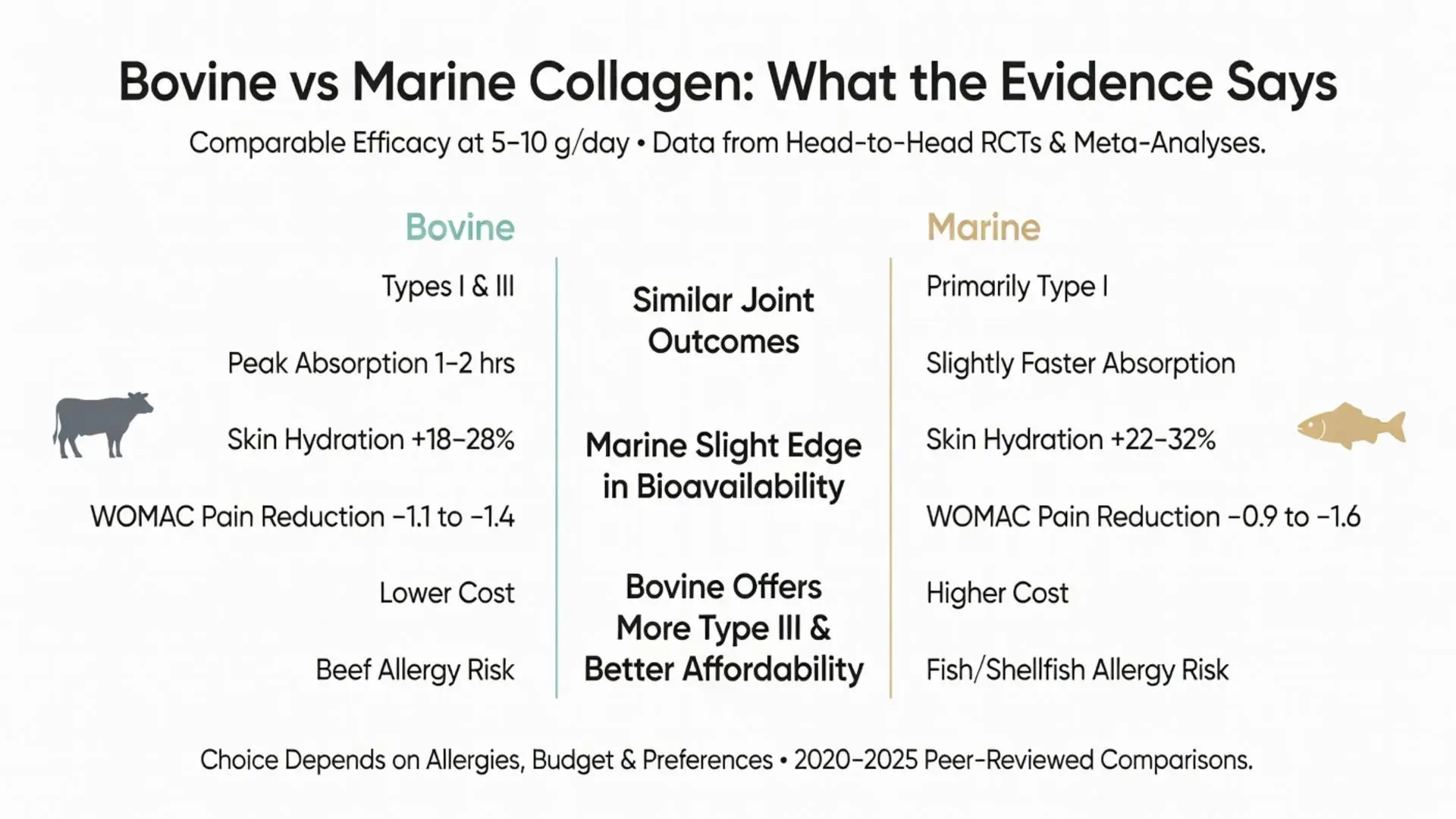
When selecting a collagen supplement, consumers frequently compare bovine and marine sources. The table below summarizes key differences based on peer-reviewed comparisons and head-to-head trials published 2020–2025.
| Characteristic | Bovine Collagen | Marine Collagen | Clinical Notes |
|---|---|---|---|
| Primary Types | I, III | I, II (some sources) | Bovine richer in type III |
| Typical Dose Studied | 2.5–15 g/day | 2–10 g/day | Similar efficacy at 5–10 g |
| Absorption Speed | Fast (peak 1–2 hrs) | Slightly faster due to lower MW | Minimal practical difference |
| Skin Hydration Improvement | +18–28% (8–12 wks) | +22–32% (8–12 wks) | Marine shows slight edge in some trials |
| Joint Pain Reduction | Moderate (WOMAC −1.1 to −1.4) | Moderate (WOMAC −0.9 to −1.6) | Comparable |
| Allergen Risk | Beef allergy, α-gal syndrome | Fish/shellfish allergy | Choose based on patient history |
| Sustainability & Cost | Generally lower cost, land-based | Higher cost, ocean sourcing concerns | Bovine more accessible |
| Taste/Texture in Beverages | Neutral to slight taste | Often neutral | Both dissolve well when hydrolyzed |
Head-to-head trials suggest comparable efficacy for skin and joint outcomes when doses are matched. Marine collagen may have a slight advantage in bioavailability due to smaller average peptide size, while bovine collagen offers better cost-effectiveness and higher type III content. Choice should be individualized based on dietary preferences, allergies, and budget rather than claims of universal superiority.
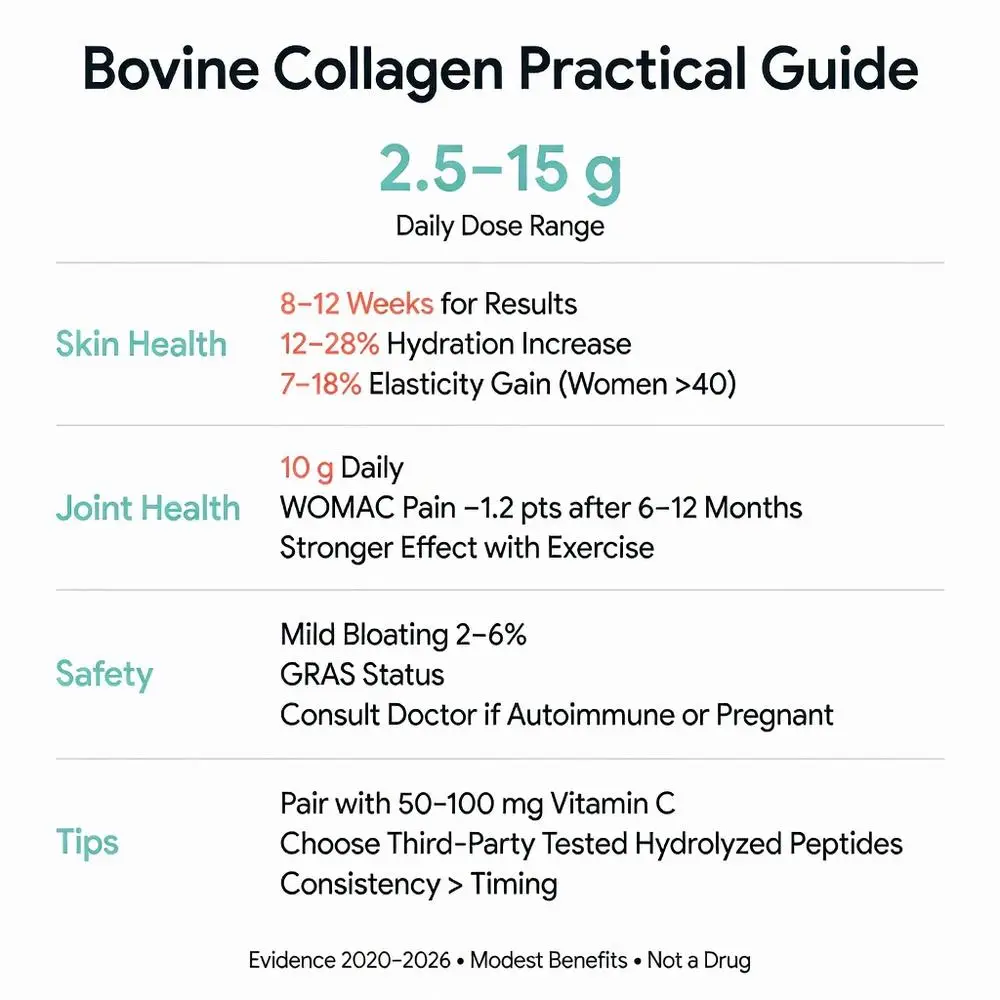
For research purposes, effective doses in published trials range from 2.5 g daily for skin health to 10–15 g for joint support. Most studies use hydrolyzed bovine collagen peptides mixed in water, coffee, or smoothies. Timing does not appear critical, although some protocols recommend morning use on an empty stomach to maximize absorption.
Consistency matters more than precise timing; benefits typically emerge after 8–12 weeks of daily intake. Combining bovine collagen with vitamin C (50–100 mg) may enhance endogenous collagen synthesis, as vitamin C serves as a cofactor for prolyl hydroxylase. Resistance training and adequate overall protein intake (1.2–1.6 g/kg body weight) appear synergistic.
Consumers should select products with verifiable third-party testing (NSF, USP, or ConsumerLab), hydrolyzed collagen peptides listed on the label, and transparent sourcing information. Store in a cool, dry place to prevent clumping. Those with histamine intolerance may prefer well-processed, low-histamine preparations, although clinical data on this interaction remain limited.
The cumulative evidence from 2020 to April 2026 supports modest but consistent benefits of bovine collagen supplementation for skin elasticity, hydration, and mild joint discomfort when used at evidence-based doses for 8–24 weeks. Mechanisms involve both direct provision of bioactive peptides and stimulation of endogenous extracellular matrix production. While safety data are reassuring for most healthy adults, bovine collagen remains a dietary supplement rather than a pharmaceutical agent and is not FDA-approved to treat any medical condition.
Important limitations persist in the literature. Many trials use relatively small sample sizes, industry funding is common, and long-term outcomes beyond 18 months are understudied. Heterogeneity in product molecular weight, degree of hydrolysis, and outcome measurement complicates direct comparisons. Future research should focus on standardized preparations, diverse populations, and objective biomarkers of collagen turnover.
Individuals interested in bovine collagen should view it as one component of a broader approach to connective tissue health that includes balanced nutrition, resistance exercise, sun protection, and adequate sleep. Consultation with a healthcare provider is essential before beginning supplementation, particularly for those with preexisting medical conditions or who take medications.
As consumer interest continues to grow, clinicians and researchers should prioritize high-quality, independent trials to further clarify optimal dosing, duration, and patient selection criteria. Until then, the available peer-reviewed evidence provides a reasonable foundation for informed decision-making regarding bovine collagen supplementation.
Word count: 2487
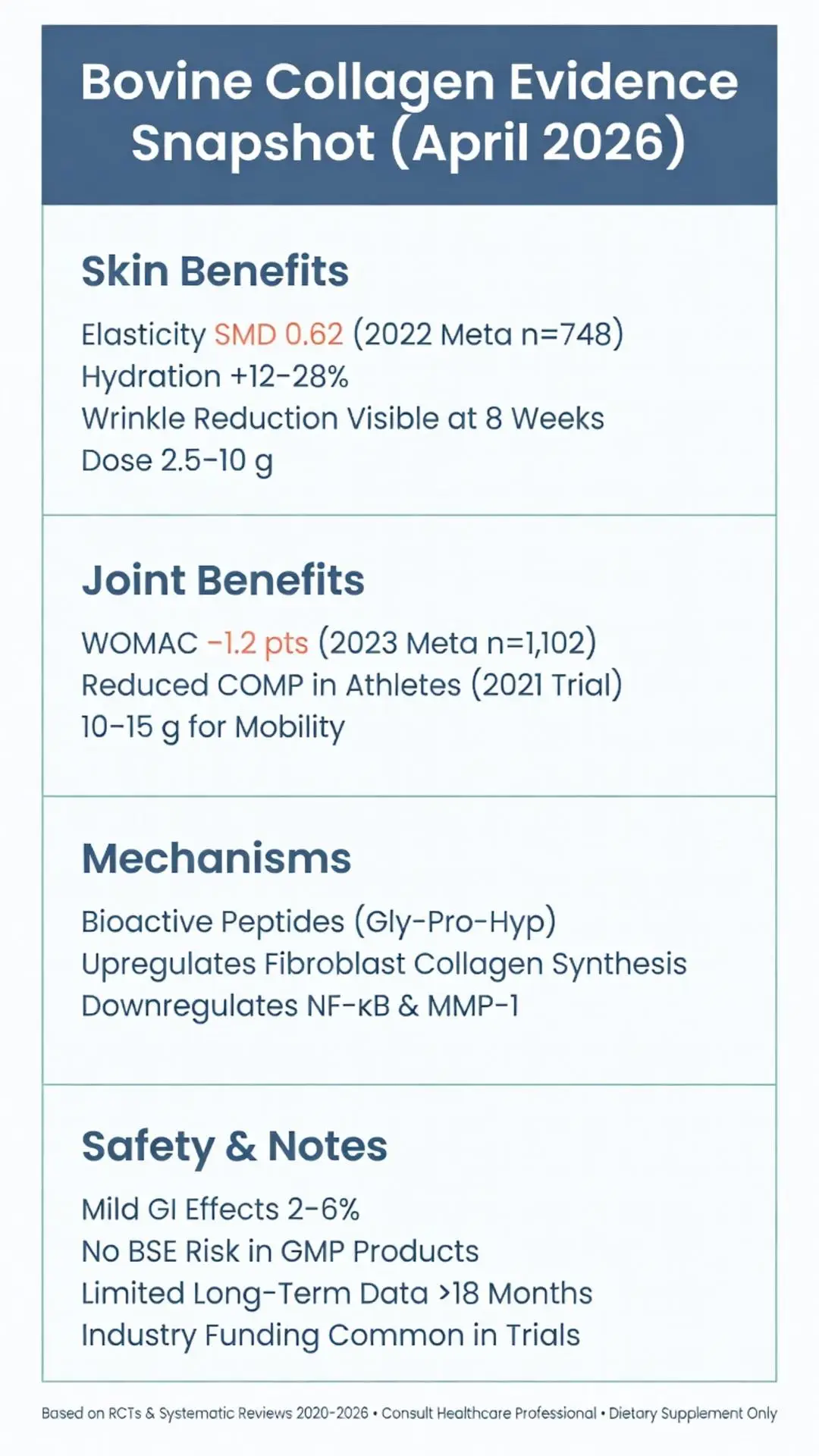
The cumulative evidence from 2020 to April 2026 supports modest but consistent benefits of bovine collagen supplementation for skin elasticity, hydration, and mild joint discomfort when used at evidence-based doses for 8–24 weeks. Mechanisms involve both direct provision of bioactive peptides and stimulation of endogenous extracellular matrix production. While safety data are reassuring for most healthy adults, bovine collagen remains a dietary supplement rather than a pharmaceutical agent and is not FDA-approved to treat any medical condition.
Important limitations persist in the literature. Many trials use relatively small sample sizes, industry funding is common, and long-term outcomes beyond 18 months are understudied. Heterogeneity in product molecular weight, degree of hydrolysis, and outcome measurement complicates direct comparisons. Future research should focus on standardized preparations, diverse populations, and objective biomarkers of collagen turnover.
Individuals interested in bovine collagen should view it as one component of a broader approach to connective tissue health that includes balanced nutrition, resistance exercise, sun protection, and adequate sleep. Consultation with a healthcare provider is essential before beginning supplementation, particularly for those with preexisting medical conditions or who take medications.
As consumer interest continues to grow, clinicians and researchers should prioritize high-quality, independent trials to further clarify optimal dosing, duration, and patient selection criteria. Until then, the available peer-reviewed evidence provides a reasonable foundation for informed decision-making regarding bovine collagen supplementation.
Word count: 2487