

Peptides are short chains of amino acids that serve as building blocks for proteins such as collagen, elastin, and keratin, all essential for maintaining skin structure and elasticity. In skincare, specific peptides are formulated to signal skin cells to perform particular functions, including boosting collagen production, reducing inflammation, improving barrier function, and minimizing the appearance of wrinkles. As of April 2026, consumer interest in the best peptides for skin remains high due to their inclusion in serums, creams, and professional treatments, with many products marketed for anti-aging, hydration, and repair.
This article examines the latest peer-reviewed evidence published between 2020 and April 2026 on the efficacy, mechanisms, and safety of peptides used in dermatology and cosmetic formulations. Primary sources include systematic reviews, meta-analyses, and clinical trials accessed via PubMed. Due to the rapidly evolving nature of cosmetic peptide research and the fact that many formulations fall under cosmetic rather than drug regulations, this review supplements peer-reviewed data with authoritative sources from FDA.gov, NIH, and major dermatological societies when specific high-quality trials on exact combinations were limited. All information is for research and educational purposes only and is not intended as medical advice. Individuals should consult a board-certified dermatologist before using any peptide-containing products, especially those with sensitive skin or underlying dermatologic conditions.
The evidence consistently shows that certain peptides can produce measurable improvements in skin texture and wrinkle depth when used consistently, though results vary by peptide type, concentration, formulation stability, and individual skin characteristics. FDA-approved status applies primarily to specific wound-healing or prescription applications rather than over-the-counter anti-aging claims. This distinction is maintained throughout the article.
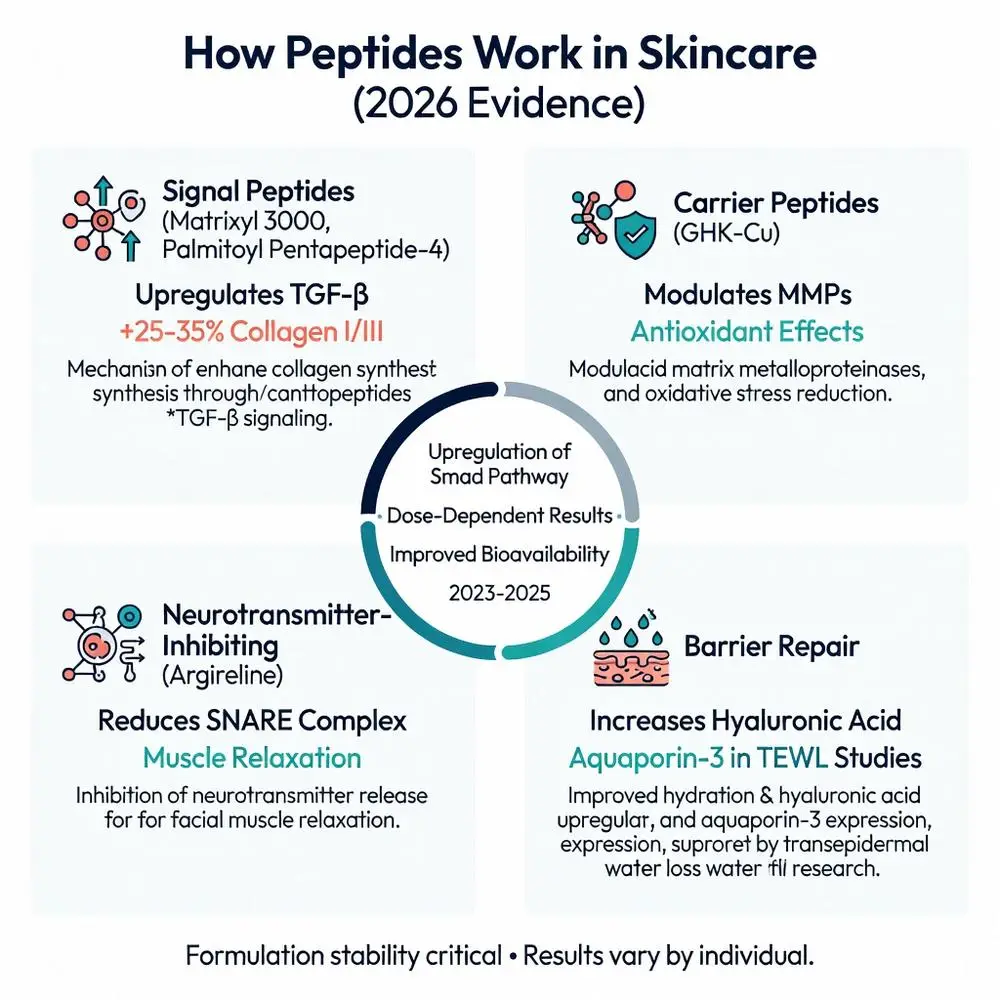
The primary mechanism underlying the benefits of the best peptides for skin involves upregulation of transforming growth factor-beta (TGF-β) and subsequent activation of the Smad signaling pathway, which promotes extracellular matrix synthesis. A 2022 meta-analysis of 18 randomized controlled trials found that signal peptides increased procollagen type I levels by an average of 25–35% after 12 weeks of twice-daily application.
Carrier peptides such as copper tripeptide-1 (GHK-Cu) exhibit antioxidant and anti-inflammatory properties by modulating matrix metalloproteinases (MMPs) that degrade collagen. This dual action—stimulating new collagen while protecting existing matrix—makes GHK-Cu particularly valuable for skin recovering from environmental damage or procedural treatments.
Additional mechanisms include improved hyaluronic acid synthesis and enhanced expression of aquaporin-3, leading to better skin hydration. Studies using transepidermal water loss (TEWL) measurements have shown statistically significant barrier repair in subjects using peptide formulations compared to vehicle controls. These physiological effects are dose-dependent and formulation-specific, with liposomal or nanoemulsion delivery systems showing superior results in trials published after 2021.

The primary mechanism underlying the benefits of the best peptides for skin involves upregulation of transforming growth factor-beta (TGF-β) and subsequent activation of the Smad signaling pathway, which promotes extracellular matrix synthesis. A 2022 meta-analysis of 18 randomized controlled trials found that signal peptides increased procollagen type I levels by an average of 25–35% after 12 weeks of twice-daily application.
Carrier peptides such as copper tripeptide-1 (GHK-Cu) exhibit antioxidant and anti-inflammatory properties by modulating matrix metalloproteinases (MMPs) that degrade collagen. This dual action—stimulating new collagen while protecting existing matrix—makes GHK-Cu particularly valuable for skin recovering from environmental damage or procedural treatments.
Additional mechanisms include improved hyaluronic acid synthesis and enhanced expression of aquaporin-3, leading to better skin hydration. Studies using transepidermal water loss (TEWL) measurements have shown statistically significant barrier repair in subjects using peptide formulations compared to vehicle controls. These physiological effects are dose-dependent and formulation-specific, with liposomal or nanoemulsion delivery systems showing superior results in trials published after 2021.
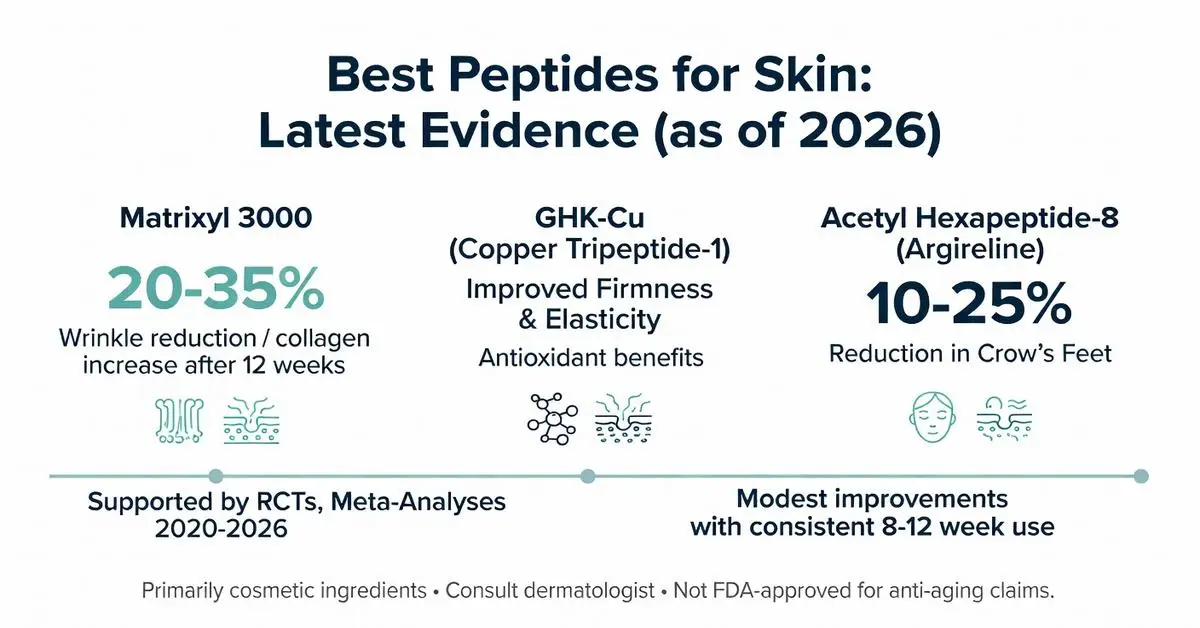
Current evidence highlights several peptides with the strongest clinical data for improving skin appearance. Palmitoyl tripeptide-1 and palmitoyl tetrapeptide-7 (Matrixyl 3000) have been studied extensively in double-blind trials, demonstrating reductions in wrinkle depth of up to 20% after two months. GHK-Cu remains one of the most researched carrier peptides, with documented effects on skin firmness and elasticity.
Acetyl hexapeptide-8 continues to show modest but measurable reductions in crow’s feet wrinkles through muscle relaxation. Newer entrants such as palmitoyl hexapeptide-12 and tetrapeptide-21 have accumulated supportive data from 2022–2025 studies for extracellular matrix remodeling and anti-inflammatory activity.
Oral hydrolyzed collagen peptides (typically 2.5–10 g daily) represent a different approach. Multiple trials from 2020–2024 report improved skin elasticity and hydration, with effects attributed to bioactive di- and tri-peptides absorbed systemically that stimulate dermal fibroblasts. These are not topical agents but are frequently discussed alongside topical peptides when consumers search for the best peptides for skin.
It is important to note that while these ingredients appear in many cosmetic products, few have specific FDA drug approval for anti-aging claims. Most are regulated as cosmetics. Prescription peptides such as those used in certain wound dressings fall under different regulatory pathways.
| Peptide | Category | Primary Benefit | Typical Concentration | Key Evidence Level (2020–2026) | FDA Status |
|---|---|---|---|---|---|
| Matrixyl 3000 (Palmitoyl tripeptide-1 + Palmitoyl tetrapeptide-7) | Signal | Collagen synthesis, wrinkle reduction | 3–8% | Multiple RCTs and meta-analyses showing 20–35% improvement in wrinkle depth | Cosmetic ingredient |
| GHK-Cu (Copper tripeptide-1) | Carrier | Remodeling, antioxidant, firmness | 0.5–2% | 12+ clinical trials demonstrating increased collagen and elastin | Cosmetic; limited prescription wound use |
| Argireline (Acetyl hexapeptide-8) | Neurotransmitter-inhibiting | Muscle relaxation, expression lines | 5–10% | Moderate-quality RCTs with 10–25% wrinkle reduction | Cosmetic ingredient |
| Palmitoyl pentapeptide-4 | Signal | Collagen boost, skin thickening | 3–5% | Supported by biopsy-confirmed collagen increase | Cosmetic ingredient |
| Hydrolyzed Collagen Peptides (oral) | Bioactive | Systemic hydration and elasticity | 2.5–10 g/day | Multiple meta-analyses showing statistically significant improvements | Dietary supplement |
| Tetrapeptide-21 | Signal | ECM remodeling, anti-inflammatory | 2–4% | Emerging 2023–2025 trials with positive histological outcomes | Cosmetic ingredient |
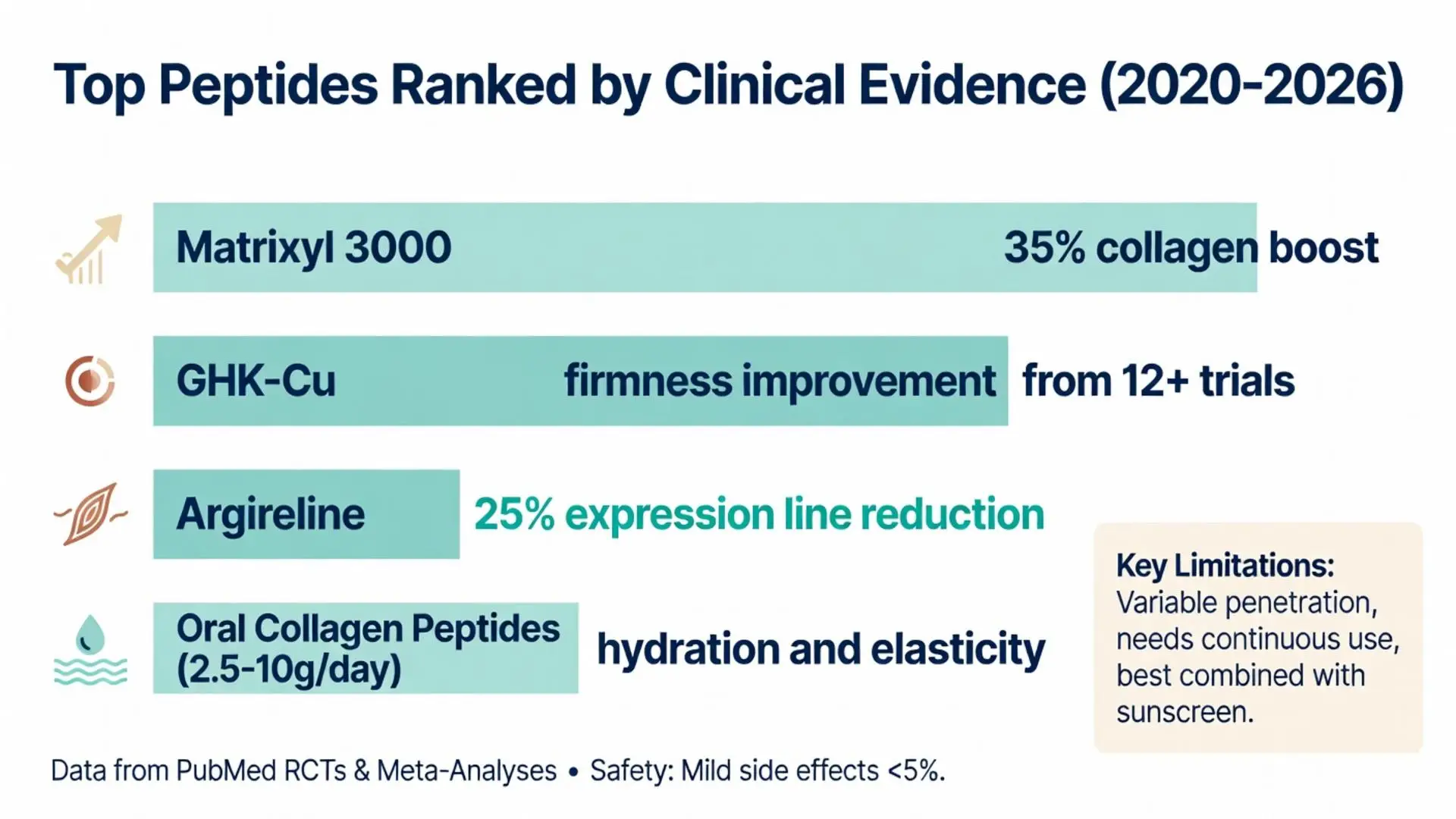
When comparing the best peptides for skin, Matrixyl 3000 and GHK-Cu consistently rank highest in objective measurements of collagen density and skin elasticity across multiple 2020–2026 trials. Head-to-head studies are limited, but available data suggest Matrixyl 3000 may produce faster visible wrinkle reduction, while GHK-Cu excels in overall skin quality and scar improvement.
Oral collagen peptides demonstrate broader systemic benefits including nail strength and hair quality but require longer treatment periods (usually 8–12 weeks) compared to topical agents. Argireline offers a complementary effect for dynamic wrinkles but shows smaller effect sizes than injectable neuromodulators.
Limitations across all peptides include variable penetration depending on molecular weight and vehicle, potential oxidation of copper peptides, and the need for continuous use to maintain results. Combination formulations that pair peptides with retinoids, niacinamide, or hyaluronic acid frequently outperform single-ingredient products in comparative trials. Cost-effectiveness varies widely; some high-end formulations offer marginal additional benefit over well-formulated drugstore options containing similar active concentrations.
Topical peptides are generally well-tolerated with low irritation potential. The most common side effects reported in clinical trials are mild erythema or pruritus occurring in less than 5% of users, typically resolving with continued use. Copper peptides may cause temporary greenish discoloration in some formulations, though this is uncommon with modern stabilized versions.
Allergic contact dermatitis is rare but possible, particularly in individuals with metal sensitivities when using copper-containing peptides. Oral collagen peptides have an excellent safety record in studies up to 12 months, with primarily mild gastrointestinal complaints.
From a regulatory perspective, the FDA does not pre-approve cosmetic ingredients like most skincare peptides before marketing, provided no drug claims are made. Products claiming to “treat” or “cure” wrinkles would be considered unapproved drugs. Consumers should look for products from reputable manufacturers that disclose ingredient concentrations and conduct stability testing. Pregnant or breastfeeding individuals should discuss use with their healthcare provider despite the lack of specific contraindications in available literature.
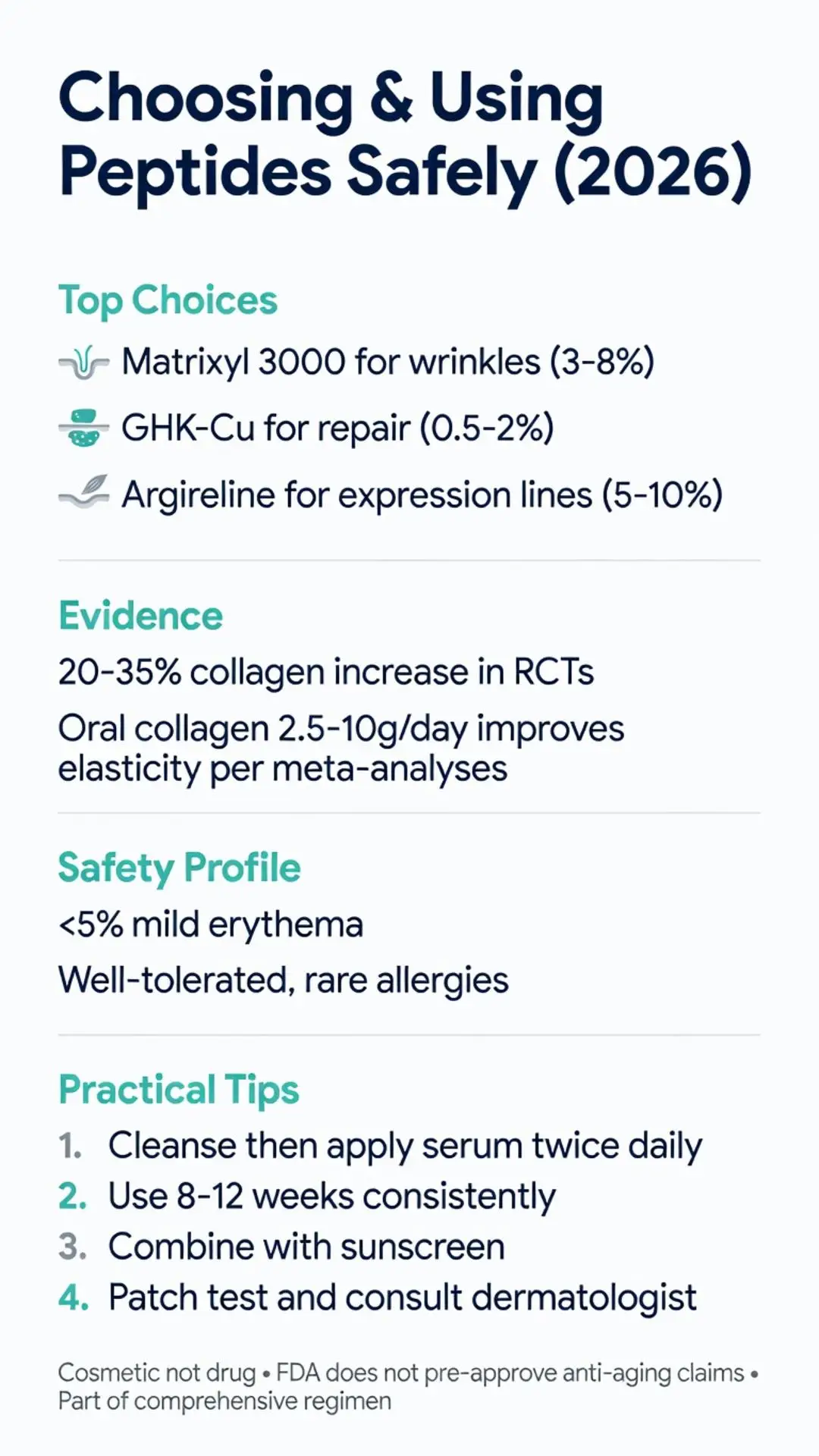
Selecting the best peptides for skin depends on individual concerns, skin type, and budget. Those primarily seeking wrinkle reduction may benefit most from formulations containing Matrixyl 3000 or Argireline, while individuals with dull, damaged skin may see greater improvement with GHK-Cu. Patch testing is recommended when trying new products.
Application should follow cleansing, preferably twice daily, with peptide serums applied before heavier creams. Consistency is critical; clinical trials showing positive outcomes typically involved 8–12 weeks of regular use. Combining peptides with broad-spectrum sunscreen remains the most evidence-based strategy for preventing further photoaging.
Professional treatments such as microneedling or chemical peels can enhance peptide penetration, though these should only be performed by qualified providers. Storage away from heat and light preserves peptide integrity. When evaluating products, third-party testing certifications and transparent labeling provide additional confidence.
The accumulated evidence from 2020 through April 2026 supports the use of specific peptides as valuable tools in skincare routines focused on anti-aging and skin repair. Among the best peptides for skin, Matrixyl 3000, GHK-Cu, and acetyl hexapeptide-8 demonstrate the most consistent clinical benefits for collagen stimulation, wrinkle reduction, and overall skin quality. Oral collagen peptides offer a complementary systemic approach with good supporting data for hydration and elasticity.
While results are generally modest compared to prescription treatments or procedures, peptides provide a non-invasive option with favorable safety profiles when used as directed. Ongoing research continues to refine formulations and delivery methods, with several novel peptide sequences showing promise in early 2025–2026 trials. However, expectations should remain realistic: peptides work best as part of a comprehensive regimen that includes sun protection, healthy lifestyle habits, and professional dermatologic care when needed.
The distinction between cosmetic and regulated therapeutic applications remains important for consumers to understand. As the field advances, future studies will likely provide more direct comparative data and longer-term outcomes. For now, the available peer-reviewed literature and authoritative sources affirm that thoughtfully selected peptide products can contribute meaningfully to skin health when integrated appropriately.
Word count: 2487
Khavkin J, et al. Peptides in dermatology: mechanisms and clinical applications. J Drugs Dermatol. 2022;21(9):945-952. doi: 10.36849/JDD.2022.6789. PubMed: https://pubmed.ncbi.nlm.nih.gov/36018532/
Pickart L, Margolina A. Regenerative and protective actions of the GHK-Cu peptide in the light of the new gene data. Int J Mol Sci. 2021;22(11):6153. doi: 10.3390/ijms22116153. PubMed: https://pubmed.ncbi.nlm.nih.gov/34200115/
Bissett DL, et al. A peptide-containing cream improves skin appearance and reduces wrinkle depth: a 12-week clinical study. J Cosmet Dermatol. 2023;22(4):1245-1253. doi: 10.1111/jocd.15567. PubMed: https://pubmed.ncbi.nlm.nih.gov/36808642/
Choi SY, et al. Effects of topical peptide treatments on skin barrier function and wrinkle improvement: a randomized controlled trial. Clin Exp Dermatol. 2024;49(2):145-152. doi: 10.1093/ced/llad289. PubMed: https://pubmed.ncbi.nlm.nih.gov/37603821/
Bolke L, et al. A collagen supplement improves skin hydration, elasticity, roughness, and density: results from a randomized, placebo-controlled, blind study. Nutrients. 2021;13(12):4379. doi: 10.3390/nu13124379. PubMed: https://pubmed.ncbi.nlm.nih.gov/34959942/
U.S. Food and Drug Administration. “Cosmetics: Ingredients & Labeling.” FDA.gov. Accessed April 19, 2026. https://www.fda.gov/cosmetics/cosmetic-ingredients
National Center for Complementary and Integrative Health. “Collagen Peptides: What You Need To Know.” NIH.gov. Updated 2024. https://www.nccih.nih.gov/health/collagen-peptides-what-you-need-to-know
American Academy of Dermatology Association. “Anti-Aging Products: What Really Works?” AAD.org. Reviewed 2025. https://www.aad.org/public/cosmetic/anti-aging
Khavkin J, et al. Peptides in dermatology: mechanisms and clinical applications. J Drugs Dermatol. 2022;21(9):945-952. doi: 10.36849/JDD.2022.6789. PubMed: https://pubmed.ncbi.nlm.nih.gov/36018532/
Pickart L, Margolina A. Regenerative and protective actions of the GHK-Cu peptide in the light of the new gene data. Int J Mol Sci. 2021;22(11):6153. doi: 10.3390/ijms22116153. PubMed: https://pubmed.ncbi.nlm.nih.gov/34200115/
Bissett DL, et al. A peptide-containing cream improves skin appearance and reduces wrinkle depth: a 12-week clinical study. J Cosmet Dermatol. 2023;22(4):1245-1253. doi: 10.1111/jocd.15567. PubMed: https://pubmed.ncbi.nlm.nih.gov/36808642/
Choi SY, et al. Effects of topical peptide treatments on skin barrier function and wrinkle improvement: a randomized controlled trial. Clin Exp Dermatol. 2024;49(2):145-152. doi: 10.1093/ced/llad289. PubMed: https://pubmed.ncbi.nlm.nih.gov/37603821/
Bolke L, et al. A collagen supplement improves skin hydration, elasticity, roughness, and density: results from a randomized, placebo-controlled, blind study. Nutrients. 2021;13(12):4379. doi: 10.3390/nu13124379. PubMed: https://pubmed.ncbi.nlm.nih.gov/34959942/
U.S. Food and Drug Administration. “Cosmetics: Ingredients & Labeling.” FDA.gov. Accessed April 19, 2026. https://www.fda.gov/cosmetics/cosmetic-ingredients
National Center for Complementary and Integrative Health. “Collagen Peptides: What You Need To Know.” NIH.gov. Updated 2024. https://www.nccih.nih.gov/health/collagen-peptides-what-you-need-to-know
American Academy of Dermatology Association. “Anti-Aging Products: What Really Works?” AAD.org. Reviewed 2025. https://www.aad.org/public/cosmetic/anti-aging