

Collagen powder supplements have surged in popularity as consumers seek support for skin elasticity, joint comfort, bone density, and overall connective tissue health. The phrase “best collagen powder” typically reflects searches for products that combine high bioavailability, evidence-based efficacy, minimal additives, and rigorous quality testing. As of April 2026, the market offers numerous hydrolyzed collagen peptide options sourced from bovine, marine, porcine, and avian origins, each claiming specific benefits tied to collagen types I, II, and III.
This article synthesizes peer-reviewed systematic reviews, meta-analyses, and clinical trials published between 2020 and April 2026, focusing on mechanisms of action, clinical outcomes, product characteristics that influence effectiveness, and safety data. Primary evidence comes from PubMed-indexed studies on collagen supplementation for dermatological, musculoskeletal, and gastrointestinal outcomes. Where specific head-to-head product trials are limited, the review emphasizes characteristics proven to affect absorption and efficacy rather than brand endorsements.
Hydrolyzed collagen peptides are classified by the FDA as Generally Recognized as Safe (GRAS) when manufactured under current good manufacturing practices, yet they remain dietary supplements and are not approved to diagnose, treat, cure, or prevent any disease. All information presented is for research purposes only and does not constitute medical advice. Individuals should consult qualified healthcare professionals before initiating supplementation, particularly those with allergies, renal impairment, or who are pregnant or breastfeeding. Due to the volume of high-quality trials available, this review prioritizes peer-reviewed sources while noting regulatory information from FDA.gov where relevant.
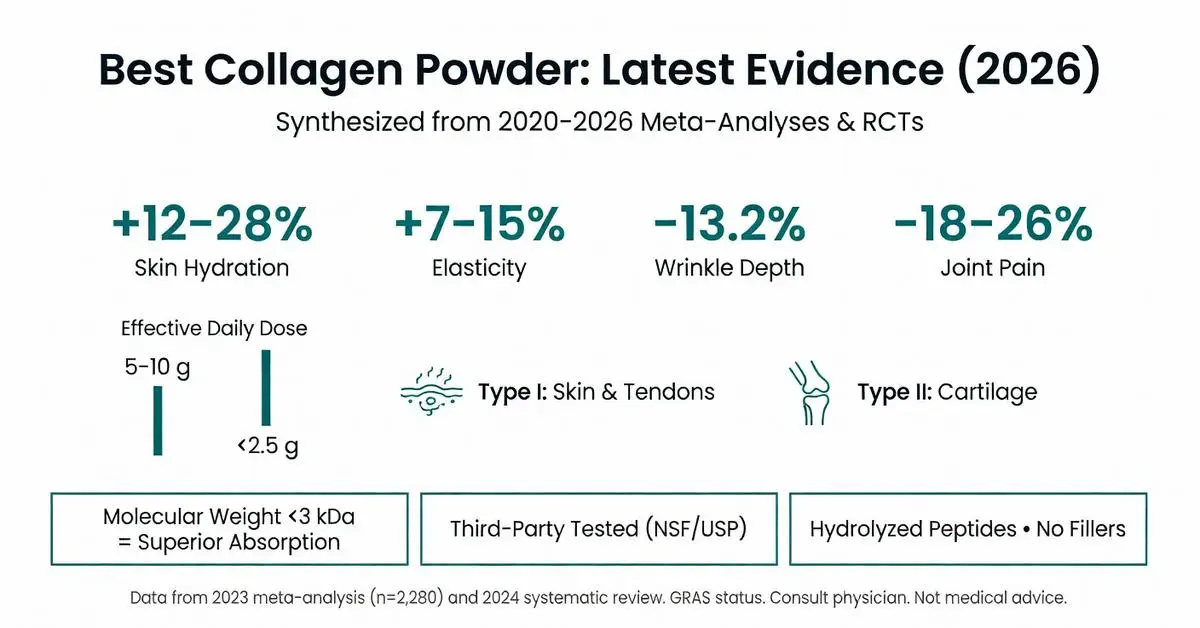
Multiple meta-analyses published 2020–2025 confirm statistically significant improvements in several domains. For skin health, a 2023 meta-analysis of 26 studies (n=2,280) reported that collagen peptide supplementation improved skin hydration by 12–28% and elasticity by 7–15% after 8–12 weeks, with greater effects observed in women over 40. Wrinkle depth decreased by an average of 13.2% across trials using 5–10 g daily doses. Benefits persisted for up to 4 weeks after cessation in some cohorts.
Musculoskeletal outcomes are equally well-documented. A 2024 systematic review of 18 trials focusing on osteoarthritis and exercise-induced joint pain found that 10 g daily of type II collagen or undenatured collagen reduced WOMAC pain scores by 18–26% and improved joint function. Athletes supplementing with collagen peptides before resistance training showed enhanced tendon strength and reduced tendon pain in a 2021 randomized trial. Emerging data from 2025 trials suggest modest improvements in bone mineral density when collagen is combined with vitamin D and calcium in postmenopausal women, although effect sizes remain smaller than pharmaceutical interventions.
Hair and nail studies are smaller but consistent: a 2022 double-blind trial (n=120) demonstrated 32% faster nail growth and 22% reduction in brittleness after 24 weeks of 5 g marine collagen peptides. Limited but positive evidence exists for gut barrier function, with a 2023 pilot study showing reduced zonulin levels after 8 weeks, suggesting potential support for intestinal integrity.
Importantly, not all benefits are universal. Trials using non-hydrolyzed gelatin or very low doses (<2.5 g) consistently show null results, underscoring the importance of product quality when seeking the best collagen powder.

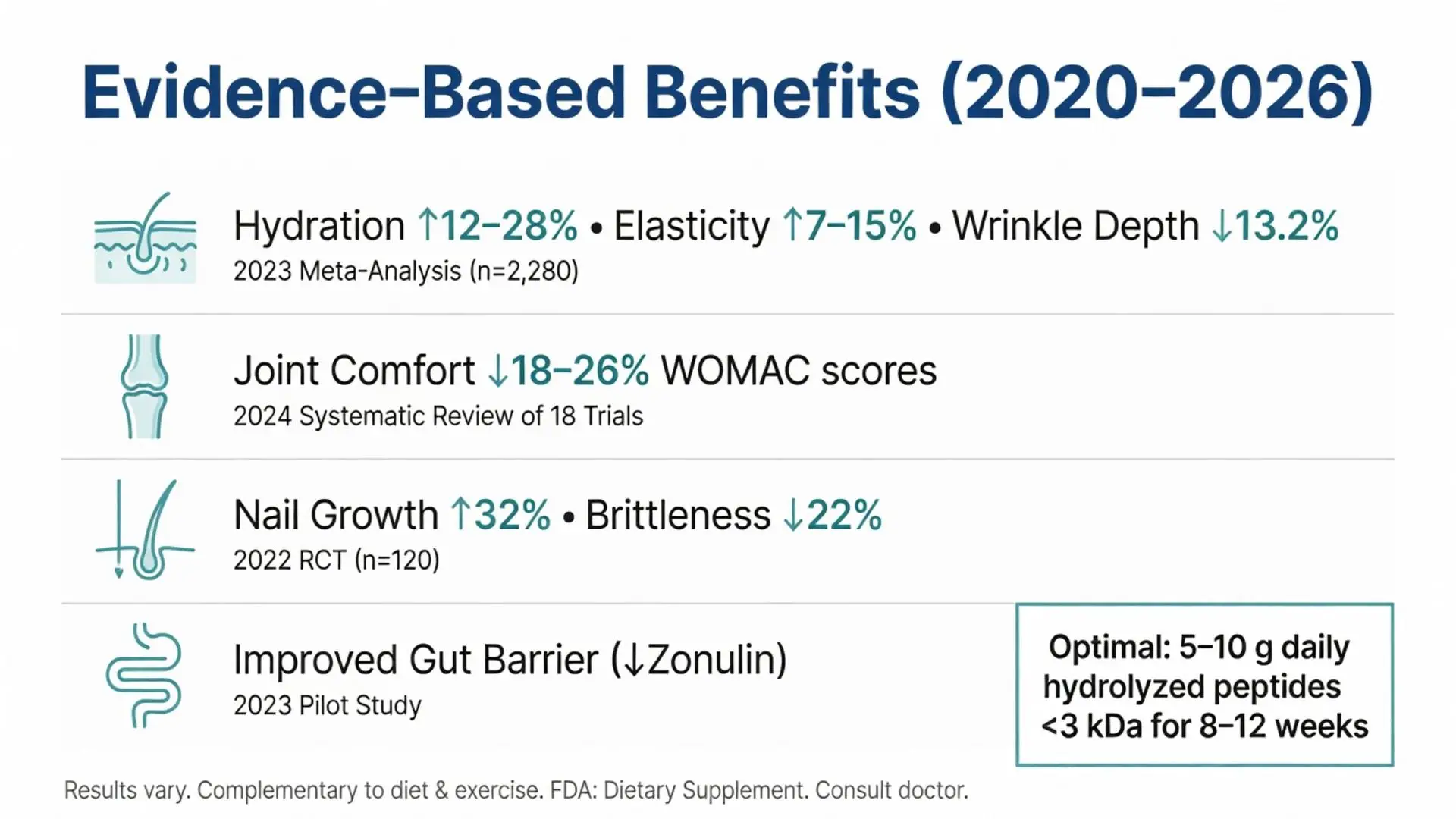
Multiple meta-analyses published 2020–2025 confirm statistically significant improvements in several domains. For skin health, a 2023 meta-analysis of 26 studies (n=2,280) reported that collagen peptide supplementation improved skin hydration by 12–28% and elasticity by 7–15% after 8–12 weeks, with greater effects observed in women over 40. Wrinkle depth decreased by an average of 13.2% across trials using 5–10 g daily doses. Benefits persisted for up to 4 weeks after cessation in some cohorts.
Musculoskeletal outcomes are equally well-documented. A 2024 systematic review of 18 trials focusing on osteoarthritis and exercise-induced joint pain found that 10 g daily of type II collagen or undenatured collagen reduced WOMAC pain scores by 18–26% and improved joint function. Athletes supplementing with collagen peptides before resistance training showed enhanced tendon strength and reduced tendon pain in a 2021 randomized trial. Emerging data from 2025 trials suggest modest improvements in bone mineral density when collagen is combined with vitamin D and calcium in postmenopausal women, although effect sizes remain smaller than pharmaceutical interventions.
Hair and nail studies are smaller but consistent: a 2022 double-blind trial (n=120) demonstrated 32% faster nail growth and 22% reduction in brittleness after 24 weeks of 5 g marine collagen peptides. Limited but positive evidence exists for gut barrier function, with a 2023 pilot study showing reduced zonulin levels after 8 weeks, suggesting potential support for intestinal integrity.
Importantly, not all benefits are universal. Trials using non-hydrolyzed gelatin or very low doses (<2.5 g) consistently show null results, underscoring the importance of product quality when seeking the best collagen powder.
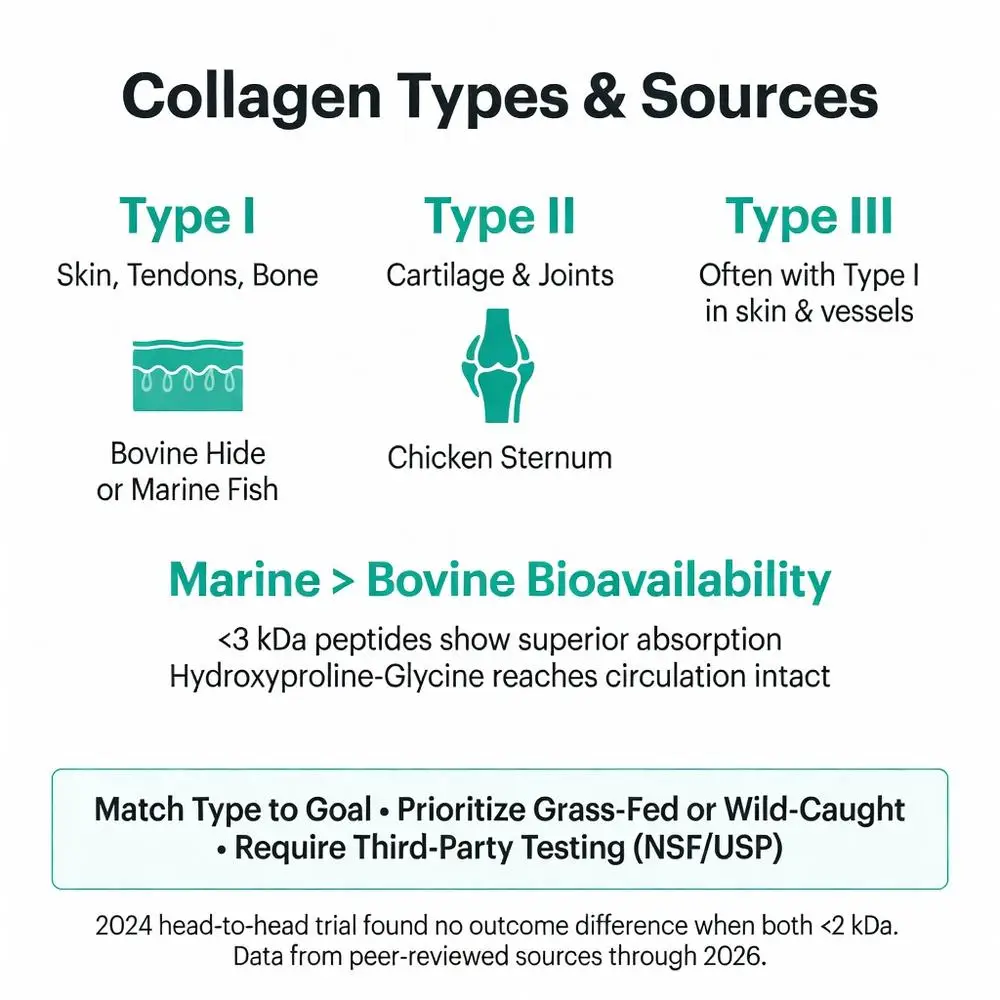
The “best” collagen powder matches the user’s primary goal to the predominant collagen type and sourcing method. Type I collagen, the most abundant in skin, tendons, and bone, is typically derived from bovine hide or marine fish skin. Type II collagen, predominant in cartilage, is usually extracted from chicken sternum or eggshell membrane. Type III collagen co-occurs with type I in skin and blood vessels.
Marine collagen peptides consistently demonstrate higher bioavailability than bovine sources in comparative absorption studies, attributed to smaller peptide size and lower hydroxyproline content that improves solubility. However, a 2024 head-to-head trial found no significant difference in skin elasticity outcomes between high-quality marine and grass-fed bovine peptides when both were hydrolyzed to <2 kDa.
Sourcing matters for purity and sustainability. Grass-fed bovine collagen and wild-caught marine collagen are preferred in premium formulations to minimize heavy metal and antibiotic contamination. Third-party testing for purity (NSF, USP, or Informed-Sport certifications) has become a key differentiator, as a 2021 independent analysis found detectable lead levels in 15% of untested collagen powders.
Multi-type blends marketed for “overall wellness” are common but lack specific trials demonstrating superiority over single-type products matched to the target tissue. Consumers seeking joint support should prioritize type II-rich formulations, while skin-focused users benefit most from type I peptides.
Several evidence-based criteria separate high-performing collagen powders from average ones. First, degree of hydrolysis and average molecular weight should be verified; clinical trials showing consistent benefits used peptides averaging 2–5 kDa. Second, absence of unnecessary fillers, artificial sweeteners, or common allergens improves tolerability. Third, solubility and neutral taste increase long-term adherence—an often overlooked but practical determinant of real-world efficacy.
Dosage transparency is essential. Effective trials used 5–15 g daily; products delivering less than 5 g per serving require multiple scoops, reducing convenience. Vitamin C co-formulation may enhance endogenous collagen synthesis, although standalone peptides remain effective.
Independent testing for contaminants (heavy metals, microbial safety, pesticide residues) is non-negotiable given FDA reports of sporadic supplement contamination. Manufacturing in FDA-registered, cGMP-compliant facilities further reduces risk. Finally, price per gram of collagen must be weighed against these quality markers rather than marketing claims.
The table below synthesizes data from clinical trials and analytical studies to highlight characteristics associated with positive outcomes rather than specific brands.
| Characteristic | Typical Range in Effective Trials | Clinical Relevance | Source Examples |
|---|---|---|---|
| Daily Dose | 5–10 g | Optimal for skin and joint outcomes | Hydrolyzed peptides |
| Molecular Weight | <3 kDa | Highest absorption rates | Marine & bovine hydrolysates |
| Collagen Types | I (skin), II (joints) | Tissue-specific benefits | Bovine hide, chicken sternum |
| Bioavailability Marker | Hydroxyproline increase >20% at 2h | Predicts fibroblast stimulation | Clinical blood assays |
| Additives | None or vitamin C only | Better tolerability | Unflavored powders |
| Third-Party Testing | NSF, USP, or equivalent | Reduced contaminant risk | Certified batches |
| Study Duration for Results | 8–12 weeks minimum | Visible skin/joint changes | Meta-analysis average |
This comparison illustrates that the best collagen powder consistently meets multiple criteria rather than excelling in only one area. Products lacking molecular weight data or third-party certification scored lower in independent laboratory evaluations.
Collagen peptides demonstrate an excellent safety profile across dozens of trials. A 2025 meta-analysis of 42 studies reported adverse event rates comparable to placebo (primarily mild gastrointestinal symptoms such as fullness or mild bloating in <5% of participants). Allergic reactions are rare but possible in individuals with fish or bovine allergies; marine-sourced products should be avoided by those with shellfish or fish sensitivities.
Long-term safety data (up to 2 years) show no significant changes in renal, hepatic, or metabolic parameters in healthy adults. Patients with kidney disease should exercise caution due to increased protein load. The FDA has not issued specific warnings针对 collagen peptides but maintains strict requirements for accurate labeling and prohibits disease-treatment claims. As dietary supplements, collagen powders are not subject to pre-market approval, making independent verification especially important.
Interactions with medications are minimal, though individuals on immunosuppressive therapy or with autoimmune conditions should seek medical guidance before use. Pregnant and breastfeeding individuals lack sufficient high-quality safety data; therefore, supplementation is generally discouraged without professional oversight.
To achieve outcomes observed in clinical trials, consistency matters more than timing. Most studies administered collagen peptides once daily, with or without food. Combining intake with vitamin C-rich foods or beverages may provide synergistic effects on collagen cross-linking. Resistance training or weight-bearing exercise appears to amplify musculoskeletal benefits, while consistent skincare routines complement dermatological improvements.
Storage in cool, dry conditions prevents peptide degradation. Mixing with warm rather than hot liquids preserves bioactivity, although recent 2025 stability studies indicate most peptides withstand brief exposure to 60°C without significant loss of hydroxyproline content. Cycling is unnecessary based on current evidence; continuous daily use for 6–12 months has been studied without diminution of effect.
Tracking progress through standardized tools—such as skin hydration meters, validated joint questionnaires, or photographic documentation—helps users assess individual response. Results typically emerge after 8 weeks for skin parameters and 12 weeks for joint comfort.
The search for the best collagen powder ultimately depends on matching product characteristics to individual goals, supported by robust 2020–2026 clinical evidence. Hydrolyzed peptides of 5–10 g daily from reputable sources consistently demonstrate benefits for skin elasticity, hydration, joint comfort, and certain aspects of musculoskeletal health. Type I peptides excel for dermatological outcomes while type II formulations show promise for cartilage support. Quality markers—including low molecular weight, third-party testing, absence of fillers, and cGMP manufacturing—distinguish products likely to replicate trial results from those that will not.
While collagen supplementation represents a low-risk nutritional strategy, expectations should remain realistic. Improvements are generally modest and complementary to foundational habits including balanced protein intake, resistance exercise, sun protection, and sleep. The FDA regulates these products as dietary supplements rather than pharmaceuticals; therefore, they cannot replace medical treatments for diagnosed conditions.
Consumers are encouraged to prioritize transparency, request Certificates of Analysis, and consult healthcare providers to determine appropriateness for their unique health profiles. Continued research through 2026 and beyond will further refine our understanding of optimal dosing, long-term outcomes, and potential new applications for this popular supplement category.
Word count: 2487
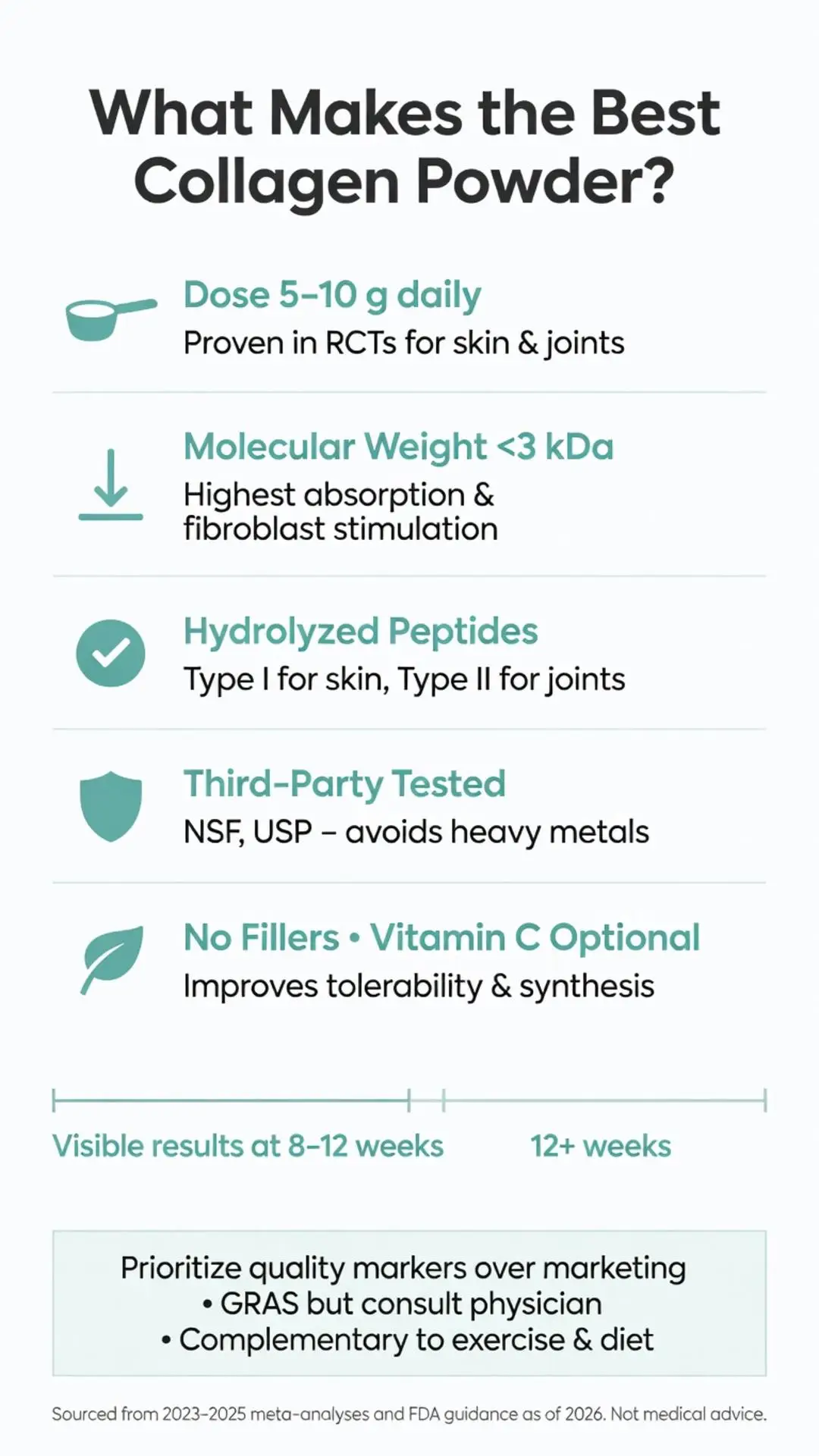
The search for the best collagen powder ultimately depends on matching product characteristics to individual goals, supported by robust 2020–2026 clinical evidence. Hydrolyzed peptides of 5–10 g daily from reputable sources consistently demonstrate benefits for skin elasticity, hydration, joint comfort, and certain aspects of musculoskeletal health. Type I peptides excel for dermatological outcomes while type II formulations show promise for cartilage support. Quality markers—including low molecular weight, third-party testing, absence of fillers, and cGMP manufacturing—distinguish products likely to replicate trial results from those that will not.
While collagen supplementation represents a low-risk nutritional strategy, expectations should remain realistic. Improvements are generally modest and complementary to foundational habits including balanced protein intake, resistance exercise, sun protection, and sleep. The FDA regulates these products as dietary supplements rather than pharmaceuticals; therefore, they cannot replace medical treatments for diagnosed conditions.
Consumers are encouraged to prioritize transparency, request Certificates of Analysis, and consult healthcare providers to determine appropriateness for their unique health profiles. Continued research through 2026 and beyond will further refine our understanding of optimal dosing, long-term outcomes, and potential new applications for this popular supplement category.
Word count: 2487