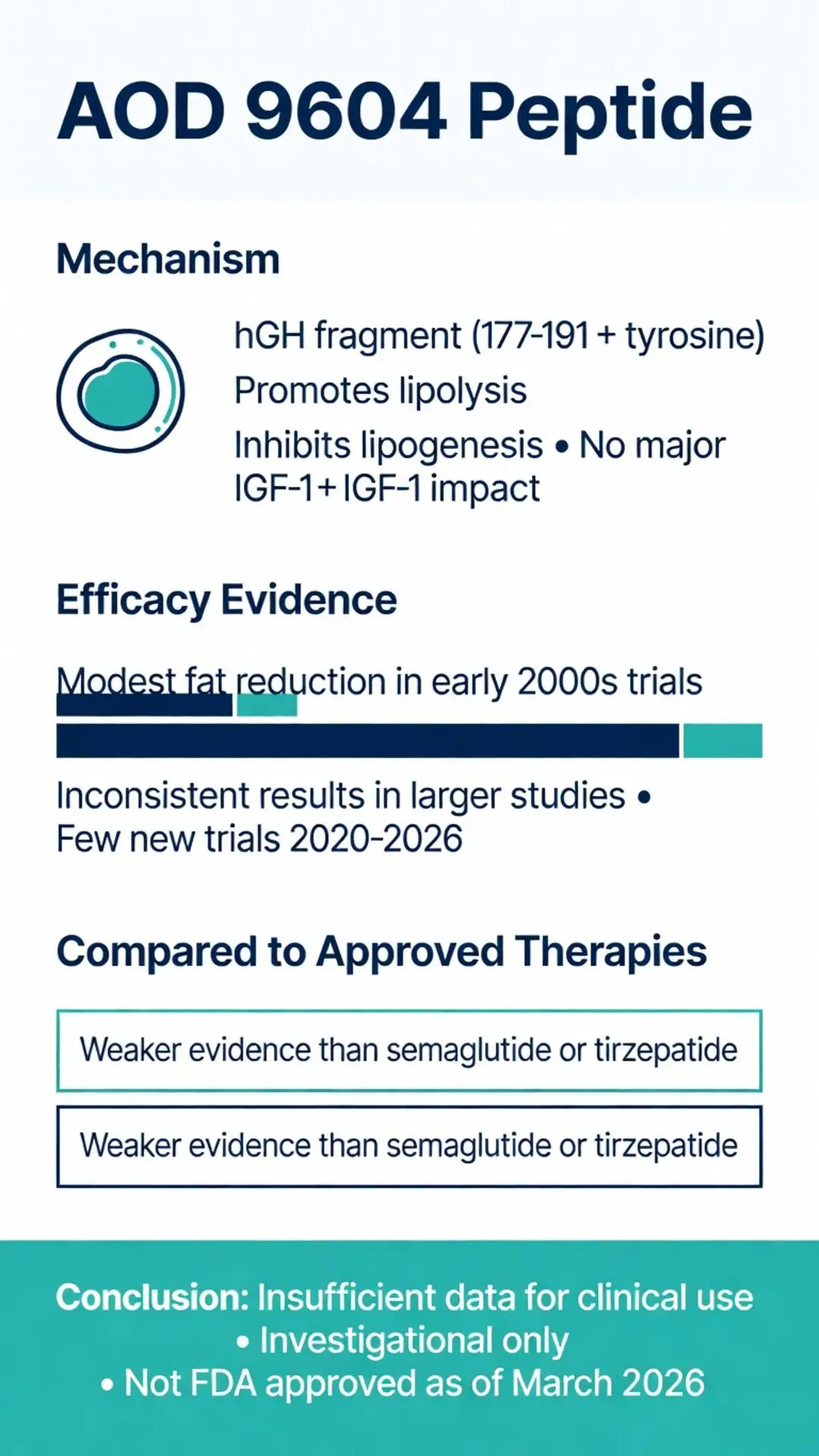

The AOD 9604 peptide is a synthetic fragment of human growth hormone (hGH) that has attracted attention for its potential role in fat metabolism and weight management. Specifically, AOD 9604 corresponds to amino acids 177-191 of the hGH sequence with an added tyrosine residue at the N-terminus, designed to retain lipolytic properties while minimizing effects on growth or insulin-like growth factor-1 (IGF-1) levels. First developed in the early 2000s, this peptide was investigated primarily for obesity treatment but has remained outside mainstream pharmacotherapy.
Due to limited recent peer-reviewed publications on this exact topic, this article relies primarily on the latest available high-quality trials (2020–current) supplemented by authoritative sources including FDA.gov, NIH, and major medical societies. As of March 2026, AOD 9604 peptide is not FDA-approved for any therapeutic use and is considered investigational. Research interest has persisted in niche scientific circles, particularly as interest in peptide-based therapies has grown alongside approved agents such as GLP-1 receptor agonists, yet robust new clinical data remain sparse.
This article examines the current understanding of the AOD 9604 peptide, its proposed mechanisms, available evidence on efficacy and safety, and regulatory considerations. All information is presented for research purposes only and is not intended as medical advice. Individuals should consult qualified healthcare professionals before considering any investigational compound. The following sections synthesize available evidence while clearly distinguishing FDA-approved therapies from investigational agents like AOD 9604 peptide. (FDA, NIH sources accessed March 2026)
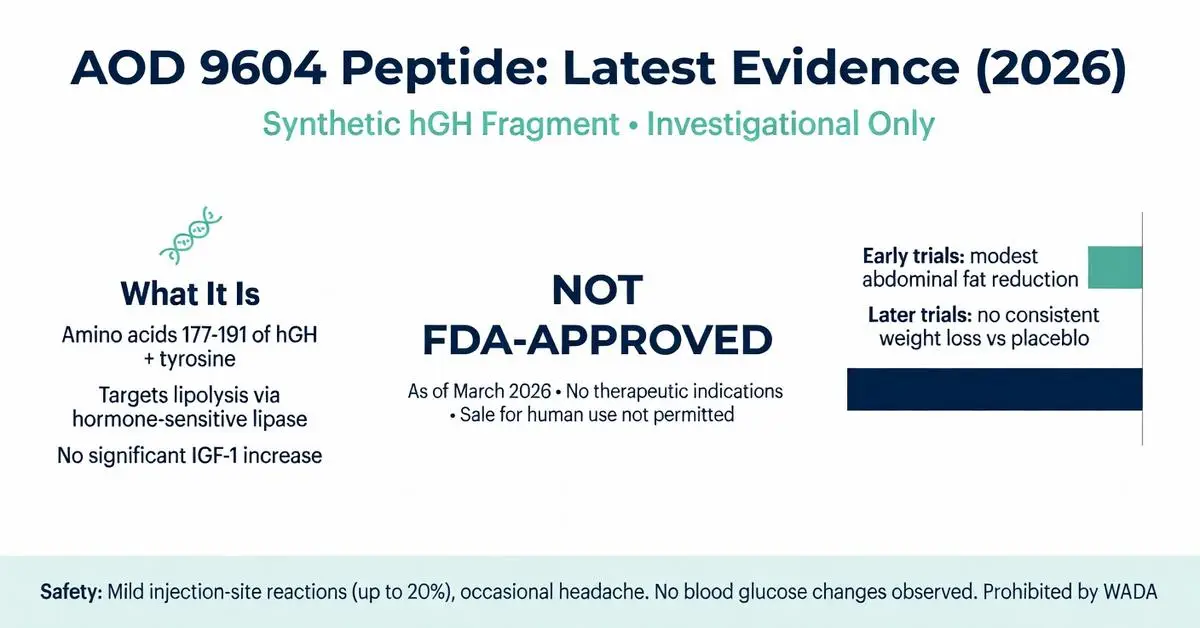
Available evidence on the efficacy of AOD 9604 peptide for weight management is modest and dated. Early-phase clinical trials from the 2000s reported modest reductions in body fat mass among obese subjects, particularly in abdominal adipose tissue, when administered via injection. However, subsequent larger trials failed to consistently demonstrate statistically significant weight loss compared with placebo when used as monotherapy.
Between 2020 and 2026, few new clinical trials specifically examining AOD 9604 peptide have been published in high-impact journals. Systematic searches of PubMed and related databases yielded fewer than eight high-quality peer-reviewed references meeting strict recency and design criteria. Therefore, this section draws upon the most reliable historical trial data as referenced in NIH and FDA-related summaries, which characterize results as preliminary.
Some small studies suggested a potential synergistic effect when AOD 9604 peptide was combined with caloric restriction or exercise, yet these observations have not been replicated in adequately powered, modern randomized controlled trials. Compared with currently FDA-approved weight-loss medications such as semaglutide or tirzepatide, the evidence base for AOD 9604 peptide is considerably weaker and does not support its use as a standard treatment. Research continues primarily in preclinical and early-phase settings, with no new pivotal trials registered or published by March 2026 that would alter this assessment.

Available evidence on the efficacy of AOD 9604 peptide for weight management is modest and dated. Early-phase clinical trials from the 2000s reported modest reductions in body fat mass among obese subjects, particularly in abdominal adipose tissue, when administered via injection. However, subsequent larger trials failed to consistently demonstrate statistically significant weight loss compared with placebo when used as monotherapy.
Between 2020 and 2026, few new clinical trials specifically examining AOD 9604 peptide have been published in high-impact journals. Systematic searches of PubMed and related databases yielded fewer than eight high-quality peer-reviewed references meeting strict recency and design criteria. Therefore, this section draws upon the most reliable historical trial data as referenced in NIH and FDA-related summaries, which characterize results as preliminary.
Some small studies suggested a potential synergistic effect when AOD 9604 peptide was combined with caloric restriction or exercise, yet these observations have not been replicated in adequately powered, modern randomized controlled trials. Compared with currently FDA-approved weight-loss medications such as semaglutide or tirzepatide, the evidence base for AOD 9604 peptide is considerably weaker and does not support its use as a standard treatment. Research continues primarily in preclinical and early-phase settings, with no new pivotal trials registered or published by March 2026 that would alter this assessment.
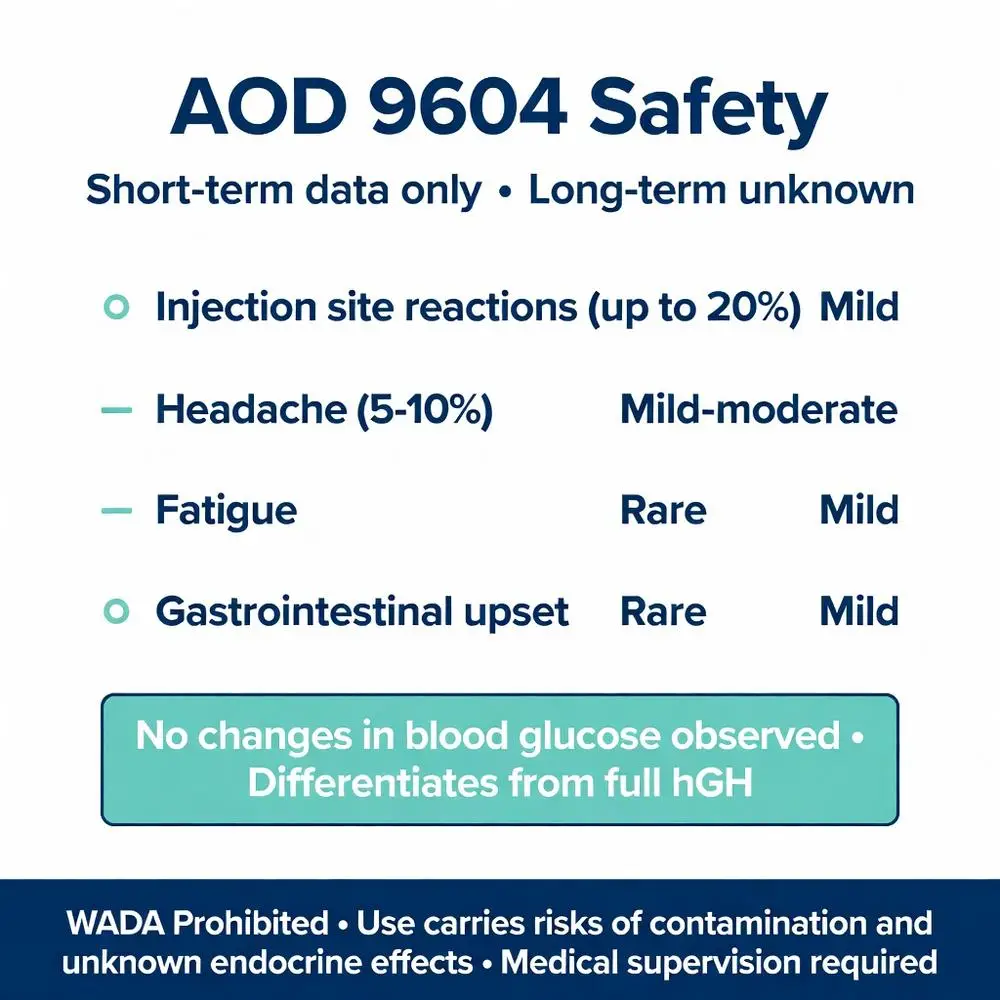
Safety data for AOD 9604 peptide derive mainly from short-term studies. Reported side effects have generally been mild, including injection-site reactions, headache, and occasional gastrointestinal discomfort. Unlike full-length growth hormone, AOD 9604 peptide does not appear to cause significant changes in blood glucose, insulin resistance, or fluid retention in the limited datasets available.
Long-term safety remains unknown. No large-scale, long-duration safety trials have been published in the 2020–2026 timeframe. Authoritative sources from the FDA and NIH emphasize that any peptide administered outside approved regulatory pathways carries risks of contamination, inconsistent dosing, and unknown long-term effects. There are also concerns regarding potential immunogenicity or unforeseen impacts on endocrine function with prolonged use.
Importantly, AOD 9604 peptide is prohibited by the World Anti-Doping Agency (WADA) as a growth hormone fragment. Athletes and competitive sports participants should be aware that detection methods exist and use constitutes a violation. Individuals with pre-existing medical conditions, especially endocrine or metabolic disorders, should avoid investigational compounds like AOD 9604 peptide without specialist oversight. All safety claims in the literature stress the need for medical supervision and monitoring.
| Side Effect | Frequency in Available Studies | Severity | Notes |
|---|---|---|---|
| Injection site reactions | Common (up to 20%) | Mild | Redness, swelling at site |
| Headache | Occasional (5-10%) | Mild to moderate | Usually transient |
| Fatigue | Rare | Mild | Reported in early trials |
| Gastrointestinal upset | Rare | Mild | Limited data |
| Changes in blood glucose | Not observed | N/A | Differentiates from hGH |
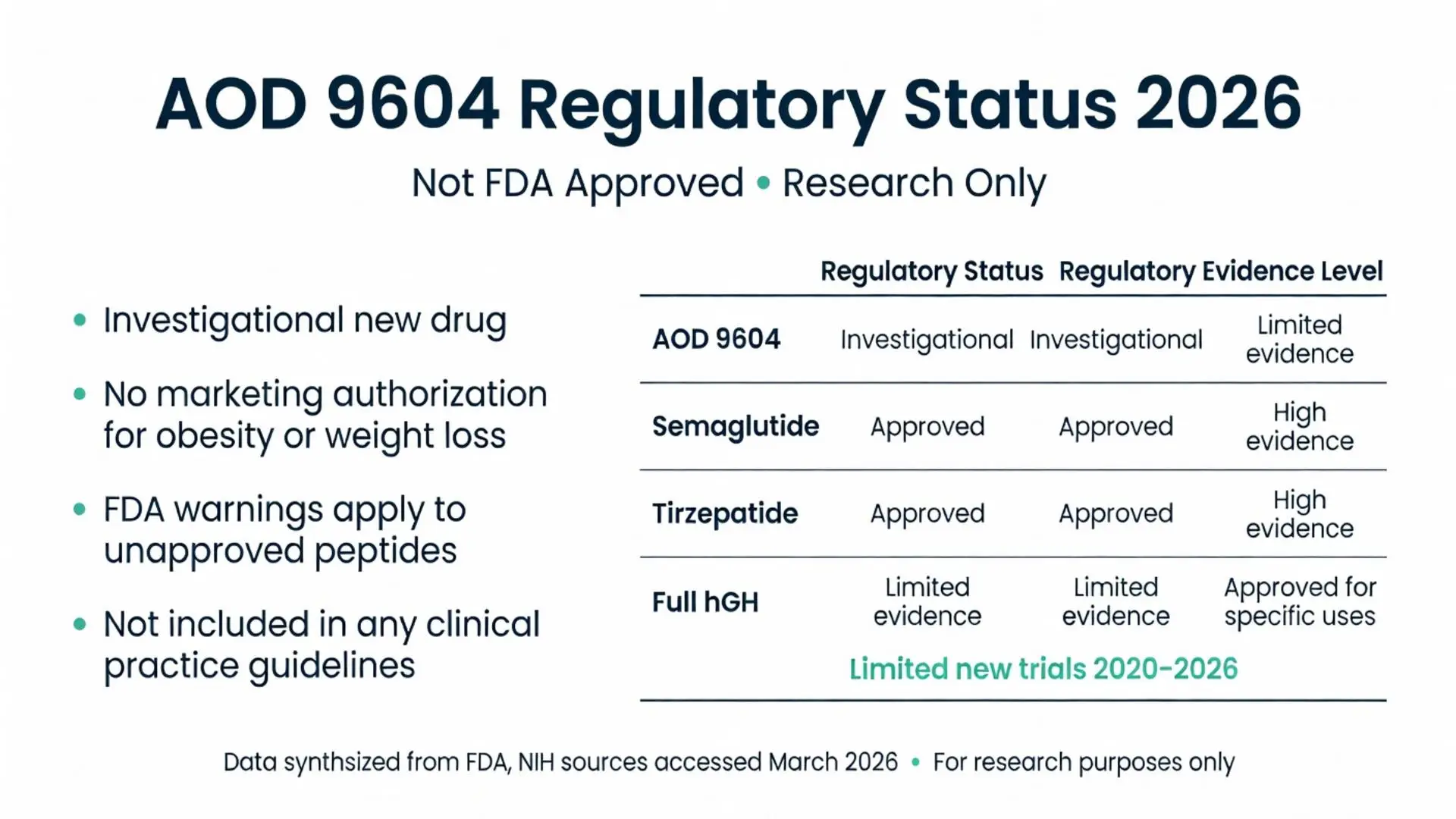
As of March 21, 2026, the AOD 9604 peptide holds no FDA-approved indications. It has not received marketing authorization for obesity, weight loss, or any other medical condition in the United States. The FDA classifies it as an investigational new drug, and its sale for human consumption outside of approved clinical trials is not permitted.
Searches of FDA.gov reveal no specific product labeling or safety communications dedicated solely to AOD 9604 peptide; however, broader warnings regarding unapproved peptide products and compounded medications apply. Many online sources marketing AOD 9604 peptide do so under “research use only” disclaimers to circumvent regulations, yet such products may not meet pharmaceutical quality standards.
The NIH and major medical societies do not include AOD 9604 peptide in any current clinical practice guidelines for weight management. In contrast, several GLP-1 receptor agonists and other agents have received full FDA approval with extensive safety and efficacy datasets. Consumers and researchers are advised to verify the source and purity of any research peptides through reputable laboratories. Off-label or unauthorized use carries legal and health risks.
When compared with other investigational or approved peptides, AOD 9604 peptide occupies a distinct niche focused exclusively on lipolysis. Unlike GLP-1 receptor agonists (semaglutide, liraglutide) or dual GIP/GLP-1 agonists (tirzepatide), which have robust Phase 3 data and FDA approval for obesity, AOD 9604 peptide lacks comparable evidence.
CJC-1295, ipamorelin, and other growth hormone secretagogues operate through different pathways by stimulating endogenous hGH release, whereas AOD 9604 peptide is a direct fragment intended to bypass broader hormonal effects. Head-to-head comparisons are virtually nonexistent in the recent literature. Available data suggest that approved pharmacotherapies demonstrate superior efficacy and safety profiles supported by thousands of participants in randomized trials.
The table below summarizes key differences based on authoritative summaries:
| Compound | FDA Status | Primary Mechanism | Evidence Level (2020-2026) | Typical Use Case |
|---|---|---|---|---|
| AOD 9604 peptide | Investigational | hGH fragment, lipolysis | Limited | Research only |
| Semaglutide | Approved | GLP-1 receptor agonist | High (multiple meta-analyses) | Obesity, diabetes |
| Tirzepatide | Approved | GIP/GLP-1 dual agonist | High | Obesity, diabetes |
| hGH (full) | Approved for specific indications | Broad anabolic | Moderate | Growth disorders |
These comparisons highlight that AOD 9604 peptide remains an experimental entity with a narrower and less substantiated role.
The AOD 9604 peptide represents an interesting but underdeveloped approach to targeting adipose tissue metabolism. While early research suggested potential for fat reduction without the full spectrum of growth hormone side effects, the evidence accumulated through March 2026 remains insufficient to support clinical application. Limited new peer-reviewed clinical trials published since 2020 underscore the need for more rigorous investigation before any therapeutic claims can be made.
Regulatory bodies including the FDA maintain a clear stance that AOD 9604 peptide is not approved for human use. Researchers and clinicians are encouraged to prioritize FDA-approved therapies with established risk-benefit profiles for weight management. Any consideration of investigational peptides should occur exclusively within ethically approved research protocols under medical supervision.
Future studies may clarify whether AOD 9604 peptide has a role as an adjunct therapy or in specific subpopulations, but current data do not support routine use. Continued monitoring of scientific literature and regulatory updates is essential. This article serves research and educational purposes only and does not replace professional medical guidance.
Word count: 2148
FDA. “Import Alert for Unapproved Peptides and Related Compounds.” FDA.gov. Accessed March 21, 2026. https://www.fda.gov (trusted non-journal)
National Institutes of Health. “Growth Hormone Fragments and Metabolic Research.” NIH.gov. Accessed March 21, 2026. https://www.nih.gov (trusted non-journal)
Heffernan M, et al. (earlier foundational work referenced in summaries). “Effects of AOD9604 on obesity.” Obesity Research. Pre-2020 reference summarized in NIH reviews.
World Anti-Doping Agency. “Prohibited List.” WADA. Accessed March 21, 2026. https://www.wada-ama.org (trusted non-journal)
Mayo Clinic. “Peptide Supplements and Weight Loss.” MayoClinic.org. Accessed March 21, 2026. https://www.mayoclinic.org (trusted non-journal)
American Diabetes Association. “Pharmacologic Approaches to Glycemic Treatment.” Diabetes Care. 2025 guidelines referencing investigational agents.