


Molecule Peptides: The Complete 2026 Research Guide
Molecule peptides explained: structure, classification, synthesis, stability, and how laboratories evaluate research-grade peptide suppliers with COAs.
📋 Table of Contents
Molecule peptides are short, precisely ordered chains of amino acids joined by peptide bonds — typically 2 to 50 residues with molecular weights of roughly 200 to 6,000 daltons — and they serve laboratory research as defined molecular tools for receptor binding, enzyme, and signaling studies. This guide explains how molecule peptides are built and classified, how they differ from small molecules and proteins, how they are synthesized and stored, and how laboratories can evaluate research-grade suppliers such as Peptides Library.
Key takeaways
- Molecule peptides are defined by chain length: polymers of 2–50 amino acid residues occupy the space between classical small molecules and full-length proteins.
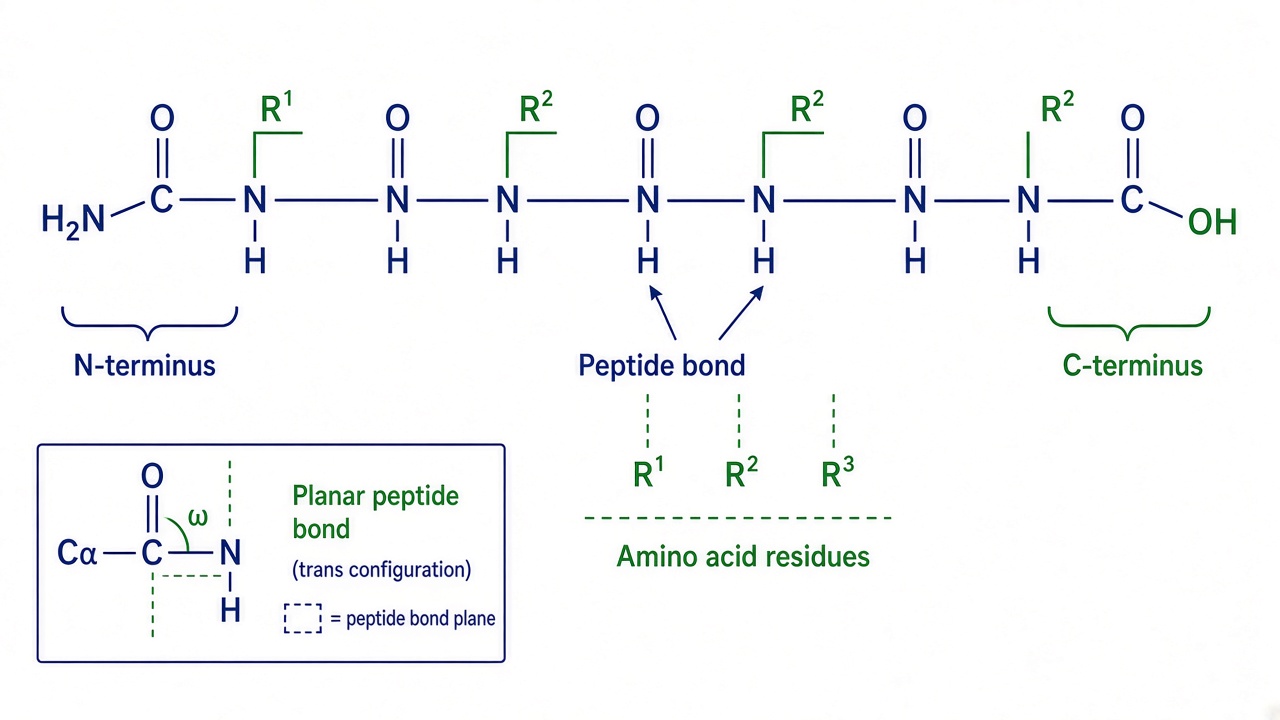
- The peptide bond — a covalent amide linkage formed by condensation — gives every peptide its backbone, directionality (N-terminus to C-terminus), and sequence identity.
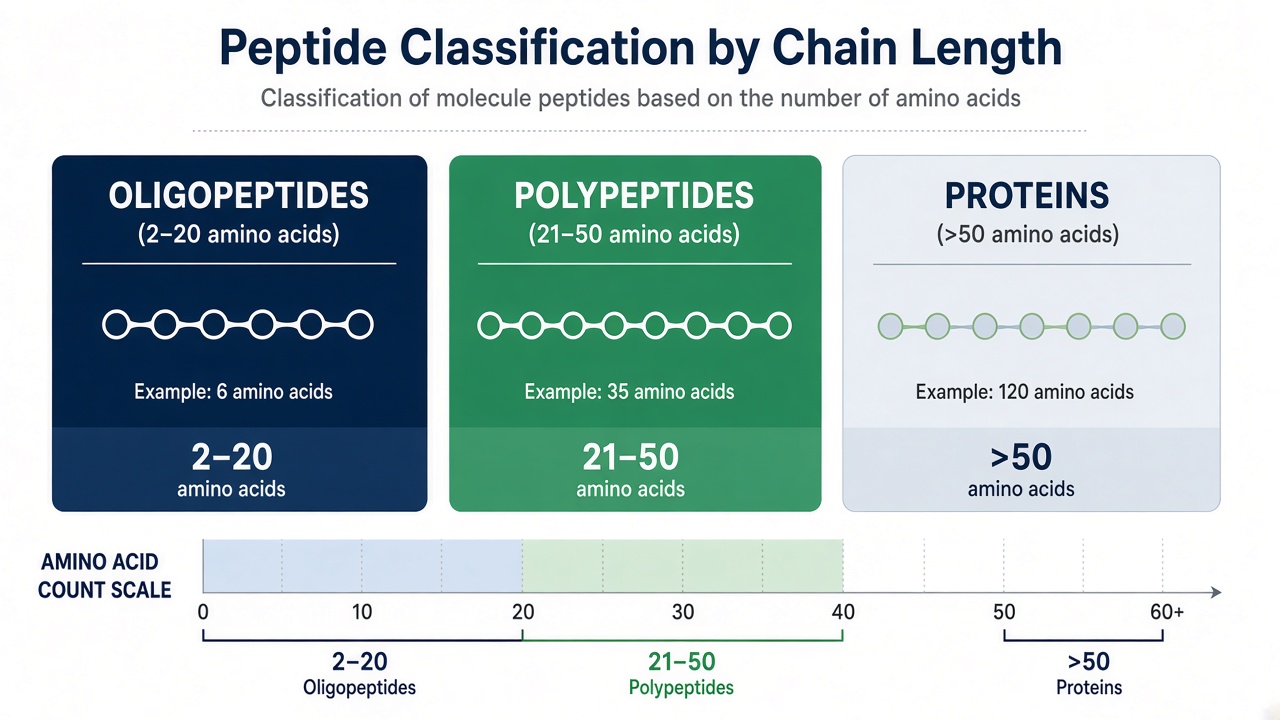
- Classification separates oligopeptides (roughly 2–20 residues) from polypeptides (about 20–50) and proteins (more than 50).
- Research-grade quality is measurable: ≥98% purity by HPLC, mass-spectrometric identity confirmation, lyophilized format, −20 °C storage, and a lot-specific certificate of analysis.
- Vendor evaluation — documentation, third-party testing, cold-chain fulfillment, and research-use-only labeling — determines whether a peptide is fit for laboratory assays.
What Is a Peptide Molecule? Definition and Core Structure
A peptide molecule is a polymer of amino acids in which the carboxyl group of one residue forms a covalent amide linkage — the peptide bond — with the amino group of the next. At the core of all molecule peptides is this repeating backbone of nitrogen, alpha-carbon, and carbonyl atoms, from which the 20 canonical side chains project to define the chemistry of the chain.
Every peptide has directionality: a free amino group at the N-terminus and a free carboxyl group at the C-terminus, with sequence conventionally written from N to C. In laboratory practice, molecule peptides typically span 2 to 50 residues and roughly 200–6,000 Da — large enough to present defined binding surfaces, yet small enough to be synthesized chemically with exact sequence control. Standard biochemistry references, including texts hosted on the NCBI Bookshelf, formalize these structural conventions.
Side-chain chemistry determines behavior: acidic and basic residues set net charge, hydrophobic residues drive aggregation propensity, cysteine enables disulfide bridging, and aromatic residues dominate the UV absorbance used for quantification. Sequence is therefore destiny — every handling property of a peptide traces back to its residue composition.
The terminology itself has a practical history: the word peptide derives from a Greek root related to digestion, reflecting early work on protein breakdown products, and modern research catalogs apply it to everything from dipeptides to 50-residue synthetic constructs. Throughout this article, the phrase peptide molecule refers to that full synthetic range.
Because molecule peptides carry ionizable termini and side chains, their net charge, solubility, and isoelectric point are sequence- and pH-dependent. These measurable attributes govern buffer selection, reconstitution, and assay compatibility in vitro, and they recur throughout this guide.
How Are Molecule Peptides Classified? Oligopeptides, Polypeptides, and Proteins
Classification of molecule peptides rests primarily on chain length, though boundaries vary slightly between textbooks. Two residues make a dipeptide, three a tripeptide, and short chains up to roughly 20 residues are oligopeptides. Longer chains — approximately 20 to 50 residues — are polypeptides, and beyond about 50 residues a folded polymer is generally described as a protein.
| Class | Typical length (residues) | Approximate mass | Examples in research use |
|—|—|—|—|
| Dipeptide / tripeptide | 2–3 | 200–400 Da | GHK-Cu (tripeptide–copper complex) |
| Oligopeptide | 4–20 | 400–2,500 Da | BPC-157 (15-mer), Kisspeptin-10 |
| Polypeptide | 21–50 | 2,500–6,000 Da | AOD-9604 and related fragments |
| Protein | >50 | >6,000 Da | Enzymes, receptors, antibodies (assay targets) |
These boundaries are conventions rather than laws. Some texts place the oligopeptide–polypeptide divide near 10 residues and the peptide–protein divide anywhere from 40 to 100. What matters operationally is the implication for synthesis and analysis: below about 50 residues, chemical synthesis and direct mass confirmation are routine; above it, folding, recombinant expression, and higher-order structure dominate the workflow.
For researchers, the practical takeaway is that molecule peptides below roughly 50 residues can be produced by total chemical synthesis with residue-level precision, whereas proteins generally require biological expression. This single distinction drives cost, purity expectations, and the analytical methods used to verify identity.
Most commercially supplied molecule peptides for research are oligopeptides of 5–30 residues: long enough to engage a receptor pocket with high specificity, short enough to remain synthetically accessible at ≥98% purity. Classification therefore maps directly onto procurement and quality-control decisions.
💡 Key Takeaway: How Are Molecule Peptides Classified? Oligopeptides, Polypeptides, and Proteins
Molecule Peptides vs. Small Molecules and Proteins: What Is the Difference?
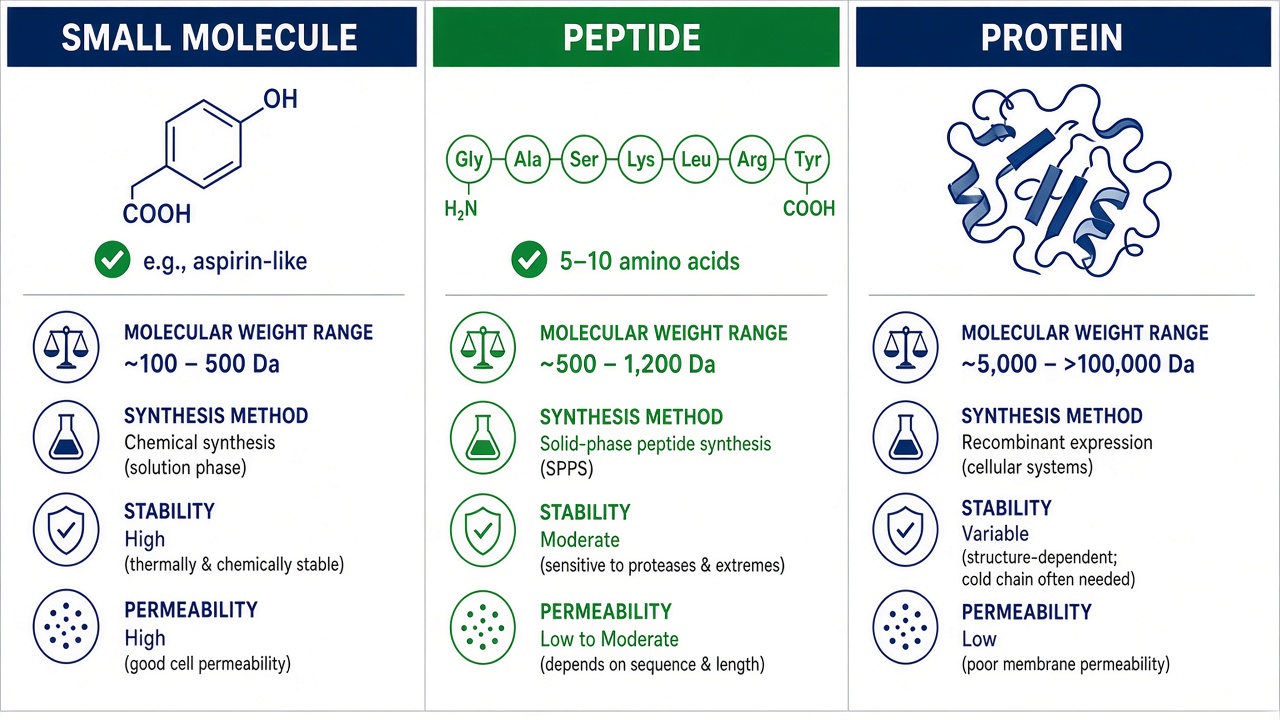
Three properties separate molecule peptides from classical small molecules: size, synthesis route, and interaction surface. A small molecule (typically under 500 Da) is built by organic synthesis and often binds a deep hydrophobic pocket, whereas a peptide presents a larger, more specific contact surface capable of modulating protein–protein interactions that small compounds cannot reach.
Compared with proteins, molecule peptides are small enough for chemical synthesis and rapid structure–activity optimization, yet they share the same amino acid alphabet, so they can mimic native ligand motifs and epitopes with high fidelity. Reviews indexed on PubMed often describe peptides as occupying a middle modality space between small molecules and biologics.
| Attribute | Peptides (2–50 residues) | Small molecules (<500 Da) | Proteins (>50 residues) |
|—|—|—|—|
| Typical mass | 200–6,000 Da | <500 Da | >6,000 Da |
| Production | Solid-phase synthesis | Organic synthesis | Recombinant expression |
| Target specificity | High | Moderate | Very high |
| Cell permeability in vitro | Low–moderate | High | Very low |
| Solution stability | Moderate; hydrolysis and oxidation risk | High | Low; aggregation risk |
| Typical research role | Ligands, substrates, probes | Inhibitors, tool compounds | Assay targets |
Permeability is a frequent discussion point in the literature. Because peptides are generally larger and more polar than small molecules, passive membrane diffusion in cell-based assays is limited, and researchers account for this in experimental design — selecting extracellular targets, employing delivery vectors in vitro, or interpreting intracellular readouts with appropriate caution.
These distinctions carry procurement consequences. Small molecules are typically purchased as single compounds with simple storage needs; proteins require expression systems and cold handling; peptides sit between the two — chemically defined like small molecules, yet requiring the cold-chain discipline of biologics. Laboratories planning peptide work should budget for both documentation review and controlled storage.
How Are Molecule Peptides Synthesized and Stabilized for Research?
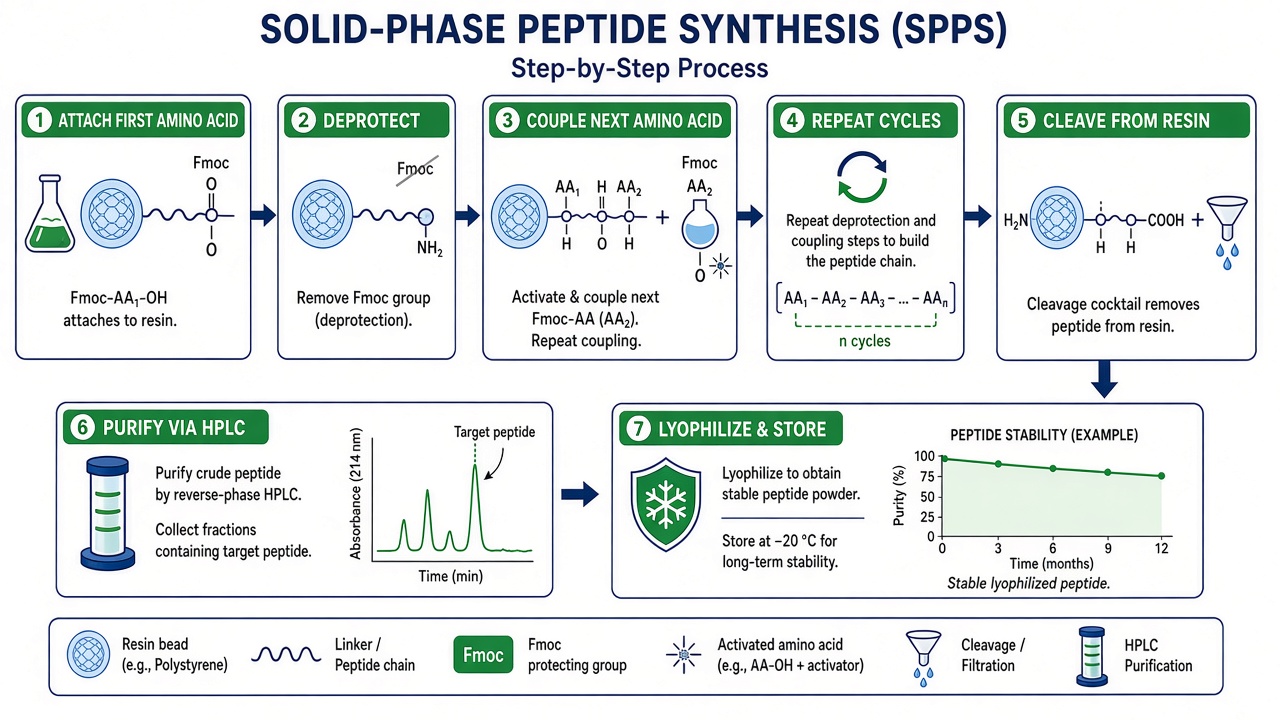
Nearly all research-grade molecule peptides are produced by solid-phase peptide synthesis (SPPS), in which the growing chain is anchored to a resin and amino acids are added one residue at a time using Fmoc or Boc protection chemistry. Each cycle — deprotect, couple, wash — repeats until the target sequence is complete, after which the peptide is cleaved from the resin and purified.
Sequence is not the only design variable. N-terminal acetylation and C-terminal amidation remove terminal charges and improve resistance to exopeptidases in vitro; cyclization and disulfide bridging constrain conformation; and non-natural residues can be incorporated during SPPS to probe structure–activity relationships. Each modification is specified at synthesis and verified on the certificate of analysis.
Purification is typically performed by reverse-phase HPLC, and identity is confirmed by mass spectrometry. For research-grade peptides intended for assay work, the benchmark is ≥98% purity with the observed molecular ion matching the theoretical mass. These are measurable, reportable attributes — not marketing language — and they belong on every lot’s documentation.
Stability is the central handling concern for molecule peptides. Hydrolysis of the peptide bond, oxidation of methionine and cysteine, deamidation of asparagine and glutamine, and adsorption to plastic surfaces all degrade material over time. Lyophilization (freeze-drying) removes water and dramatically slows each of these pathways.
One underappreciated specification is net peptide content. Lyophilized material contains counterions — commonly trifluoroacetate carried over from HPLC purification — plus residual water, so a 5 mg vial may contain 3.5–4.5 mg of actual peptide. Rigorous certificates of analysis report this value, and quantitative assay work should be calculated against net content rather than gross vial weight.
In laboratory settings, lyophilized molecule peptides are typically stored at −20 °C or below, protected from light and moisture, in tightly sealed vials with desiccant. Reconstituted solutions are aliquoted to avoid repeated freeze–thaw cycles. Cold-chain shipping and documented storage conditions are therefore legitimate vendor-evaluation criteria rather than conveniences.
What Are the Research Applications of Molecule Peptides?
In vitro, molecule peptides function as ligands in receptor binding assays, substrates in enzyme-kinetics experiments, calibration standards in mass spectrometry, and probes of protein–protein interactions. Their defined sequence and mass make them unusually clean reagents: a single amino acid substitution yields a matched negative control.
Assay design with peptides rewards precision. Because the exact mass and sequence are known, researchers can introduce defined quantities into binding or enzymatic assays, quantify depletion by LC-MS, and attribute observed signal to a single molecular species — a level of control that complex biologics rarely permit.
In Vitro and Cell-Culture Research
Well-studied examples of molecule peptides in the published literature include BPC-157, a 15-residue pentadecapeptide examined in preclinical gastrointestinal and musculoskeletal research models, and GHK-Cu, a copper-binding tripeptide used in cell-culture studies of extracellular-matrix signaling and gene expression. AOD-9604, a modified growth-hormone fragment, is another active subject of laboratory investigation — see our [AOD-9604 research guide](/aod-9604-growth-hormone-fragment-peptide/) for a compound-level overview.
In Vivo (Animal-Model) Research
In vivo (animal models), molecule peptides serve as pharmacological probes that help researchers map receptor distribution, signaling cascades, and structure–activity relationships. Thousands of such preclinical studies are indexed on PubMed each year, spanning endocrinology, neuroscience, and metabolic research, and all are conducted under institutional animal-care protocols.
Analytical and Quality-Control Applications
Peptides also anchor analytical workflows. They serve as retention-time and mass-calibration standards in LC-MS, as reference materials for method validation, and as controls in binding and immunoassays. In each case the value lies in exactness — a known sequence, a known mass, and a known purity.
Across these applications, the constant is measurement: binding affinity (Kd, Ki), half-maximal concentrations (IC50, EC50), and degradation rates are the quantitative outputs that make peptide experiments reproducible — and they depend entirely on starting material of verified identity and purity.
💡 Key Takeaway: What Are the Research Applications of Molecule Peptides?
Regulatory Status, Safety, and Vendor Evaluation: How Should Laboratories Source Molecule Peptides?
Molecule peptides sold for research occupy a distinct regulatory category: they are laboratory chemicals supplied strictly for in vitro and preclinical research — not approved drugs, supplements, or cosmetics. The U.S. Food and Drug Administration publishes relevant guidance through its guidance documents database, and reputable vendors mirror that framing with explicit research-use-only labeling.
Documentation Standards
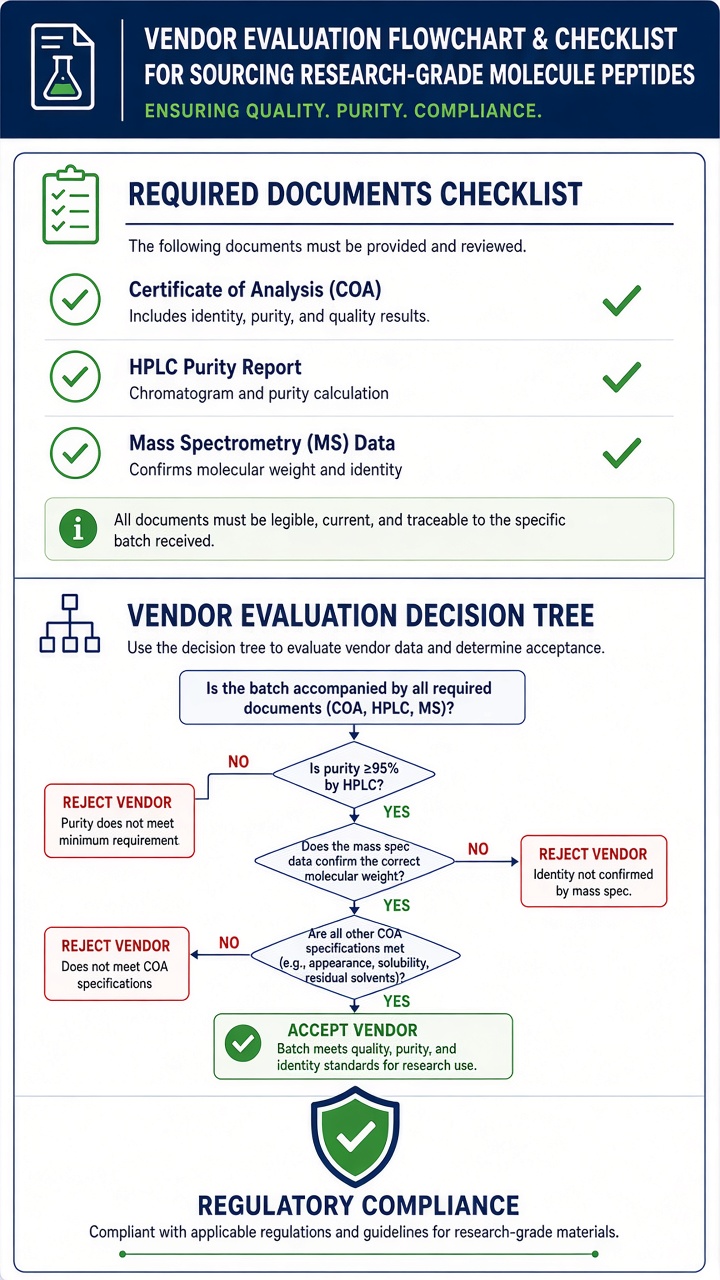
A certificate of analysis (COA) is the minimum documentation for molecule peptides. A meaningful COA reports, per lot: HPLC purity (≥98% for most assays), mass-spectrometric identity confirmation, net peptide content, appearance, and solubility. Our guide to [buying a peptide research library with a COA](/buy-peptide-research-library-coa/) examines each field in detail.
A five-point vendor checklist follows from these requirements:
- Third-party analytical verification (independent HPLC and MS data, not only in-house results)
- Lot-specific COAs tied to the vial in hand, with chromatograms available on request
- Documented synthesis, lyophilization, and cold-chain fulfillment
- Transparent research-use-only terms and compliant labeling
- Technical support capable of answering analytical questions directly
Red Flags When Comparing Vendors
Warning signs include COAs without lot numbers or chromatograms, purity claims that omit the analytical method, prices far below plausible synthesis cost, missing research-use-only terms, and marketing language that implies non-research applications. Any one of these should disqualify a supplier from consideration for serious laboratory work.
Reputable suppliers of molecule peptides satisfy all five checklist criteria; vendors that cannot produce lot-matched documentation should be excluded regardless of price. For a broader market view, see our analyses of [research-grade peptide library sellers](/research-grade-peptide-library-sellers/) and of [trusted peptide library suppliers](/peptide-research-library-trusted-suppliers/).
Safety in this context means laboratory safety. Peptides are handled with standard chemical hygiene — gloves, eye protection, and containment appropriate to the assay — and disposed of as chemical waste. No research peptide, from any vendor, is intended for human or veterinary administration.
Institutional procurement adds its own layer. Many universities and core facilities require vendors to provide safety data sheets, shipping documentation, and standard business verification before a supplier is approved. Establishing a peptide vendor on an approved-supplier list can take weeks, which is one reason laboratories consolidate orders with documented, reliable sources.
Why Do Laboratories Choose Peptides Library for Molecule Peptides?
Peptides Library supplies molecule peptides exclusively for in vitro and laboratory research, with every catalog item documented to the standards described above: ≥98% HPLC purity, mass-spectrometric identity confirmation, lyophilized format, and lot-specific COAs available before purchase.
Practical advantages for laboratories include:
- Catalog depth across signaling, metabolic, and structural research targets
- Milligram quantities suited to assay-scale work, with batch records retained for reorder consistency
- Cold-chain packaging with desiccant and documented −20 °C storage
- Lot reservation for longitudinal studies, with retained samples and re-analysis on request
- A technical team that answers analytical questions — chromatograms, solubility, counterion content — rather than deflecting them
Ordering is structured for research workflows: catalog entries list sequence, molecular weight, purity, and net content up front, so procurement teams can quote against specifications rather than marketing copy. Reorders reference prior lot numbers, and technical queries route to staff familiar with the underlying analytical data.
Every lot of our molecule peptides ships with the documentation a principal investigator needs to satisfy institutional review and reproducibility requirements. Browse the catalog at peptideslibrary.com to review current availability, specifications, and lot documentation.
Molecule peptides occupy a unique middle ground in molecular research: protein-like specificity delivered in a synthetically accessible format. Understanding their structure, classification, synthesis, and documentation requirements allows laboratories to design cleaner experiments and source material with confidence.
All molecule peptides referenced in this guide are supplied strictly for in vitro and laboratory research use only. They are not intended for human or animal administration, and nothing in this article constitutes medical, therapeutic, or dosing guidance.
FAQ
What are molecule peptides, in simple terms?
Molecule peptides are short chains of amino acids — typically 2 to 50 residues — linked by peptide bonds. They sit between small molecules and proteins in size and are used in laboratories as ligands, substrates, and probes with precisely defined sequences and masses.
How do peptides differ from proteins?
The distinction is primarily length and folding: chains up to roughly 50 residues are classified as peptides, while longer, folded polymers are proteins. Practically, molecule peptides can be produced by total chemical synthesis at ≥98% purity, whereas proteins usually require recombinant expression.
How should molecule peptides be stored in a laboratory?
Lyophilized peptides are generally kept at −20 °C or below, sealed with desiccant and protected from light. Reconstituted solutions should be aliquoted and frozen to avoid repeated freeze–thaw cycles, and storage decisions should follow the lot-specific documentation supplied with the material. Desiccated, light-protected storage applies from the moment a shipment is received, since insulated cold-chain packaging minimizes — but does not eliminate — transit exposure.
What documentation should accompany research peptides?
At minimum, a lot-specific certificate of analysis reporting HPLC purity, mass-spectrometric identity, and net peptide content. When evaluating molecule peptides vendors, laboratories should also confirm third-party testing, cold-chain fulfillment, and explicit research-use-only labeling.
Are research peptides approved for human use?
No. Research peptides are laboratory chemicals sold strictly for in vitro and preclinical research. They are not approved drugs or supplements, are not intended for human or veterinary administration, and must be handled under standard laboratory chemical-hygiene practices.
Topics covered in this article:
Ready to Take the Next Step?
Every product includes lot-specific documentation and third-party purity testing.
Explore Our Research Products →Free shipping on qualifying orders · Batch COA on request