


aod 9604s emerging role in research on adiposity regeneration and
Explore aod 9604s emerging role in adiposity regeneration research. Learn about β3-adrenergic signaling, progenitor plasticity, and 2026 lab protocols with COA.
📋 Table of Contents
AOD-9604’s emerging role in research on adiposity regeneration and beyond centers on whether this 15-amino-acid hGH fragment can influence adipose progenitor cell plasticity and tissue remodeling beyond simple lipolysis. In laboratory models, AOD-9604 triggers β3-adrenergic lipolysis at nanomolar concentrations, but new hypotheses suggest it may also modulate dedifferentiation and redifferentiation of fat cells. This article reviews peer-reviewed mechanisms, evidence gaps, and 2026 protocols for investigating aod 9604s emerging role in adiposity regeneration and beyond.
Key takeaways
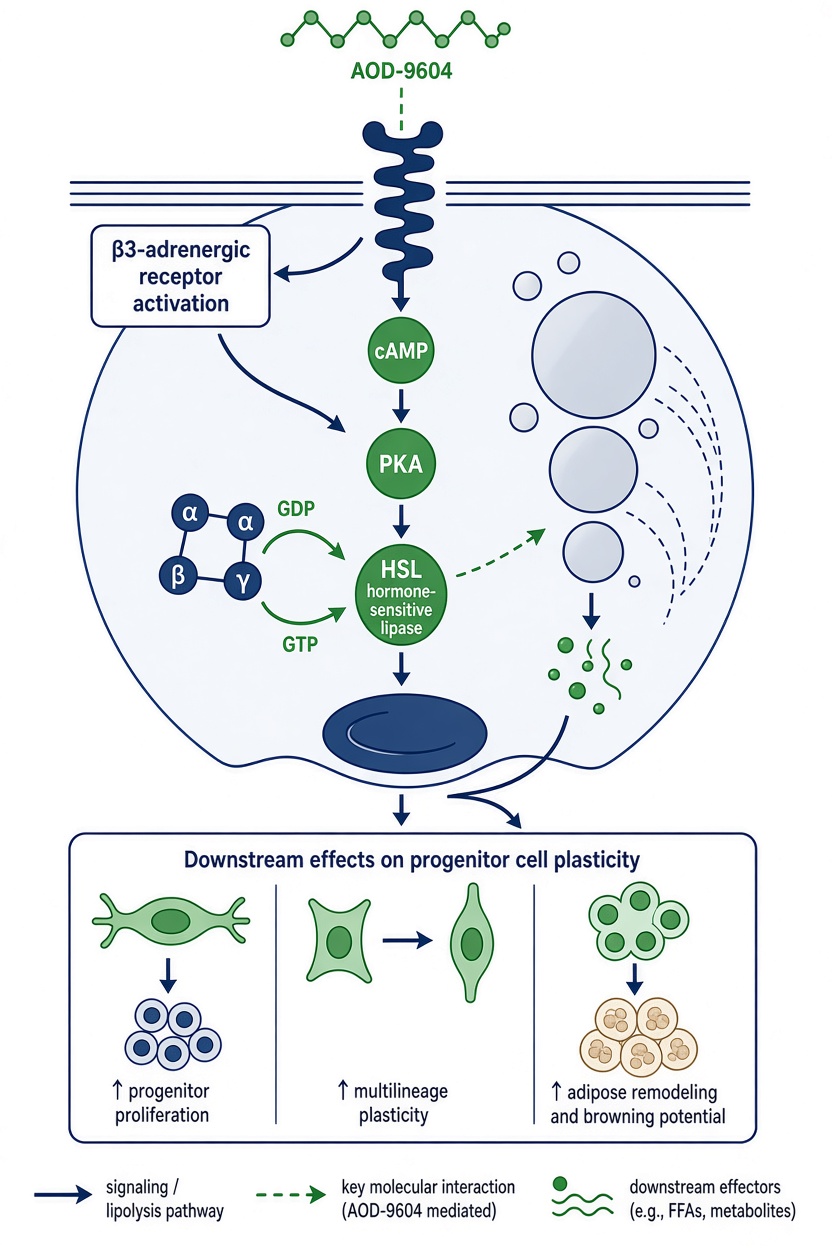
- AOD-9604 is a synthetic peptide comprising hGH residues 177–191 with an added N-terminal tyrosine, demonstrating lipolytic activity in rodent adipocytes and human adipose explants at nanomolar concentrations.
- The β3-adrenergic receptor is the primary molecular target implicated in AOD-9604’s lipolytic action, but downstream effects on adipose progenitor cells (APCs) remain unexplored.
- Adipose tissue contains resident APCs that can dedifferentiate into multipotent DFAT cells, regulated by cAMP, β-adrenergic signaling, and inflammatory cytokines.
- The hypothesized link between AOD-9604’s lipolytic signaling and aod 9604s emerging role in adiposity regeneration is plausible but lacks direct experimental validation.
- All AOD-9604 research must occur in accredited laboratories using validated in vitro or animal models, with no extrapolation to human therapeutic outcomes.
What Does aod 9604s emerging role in Adiposity Regeneration and Beyond Encompass?
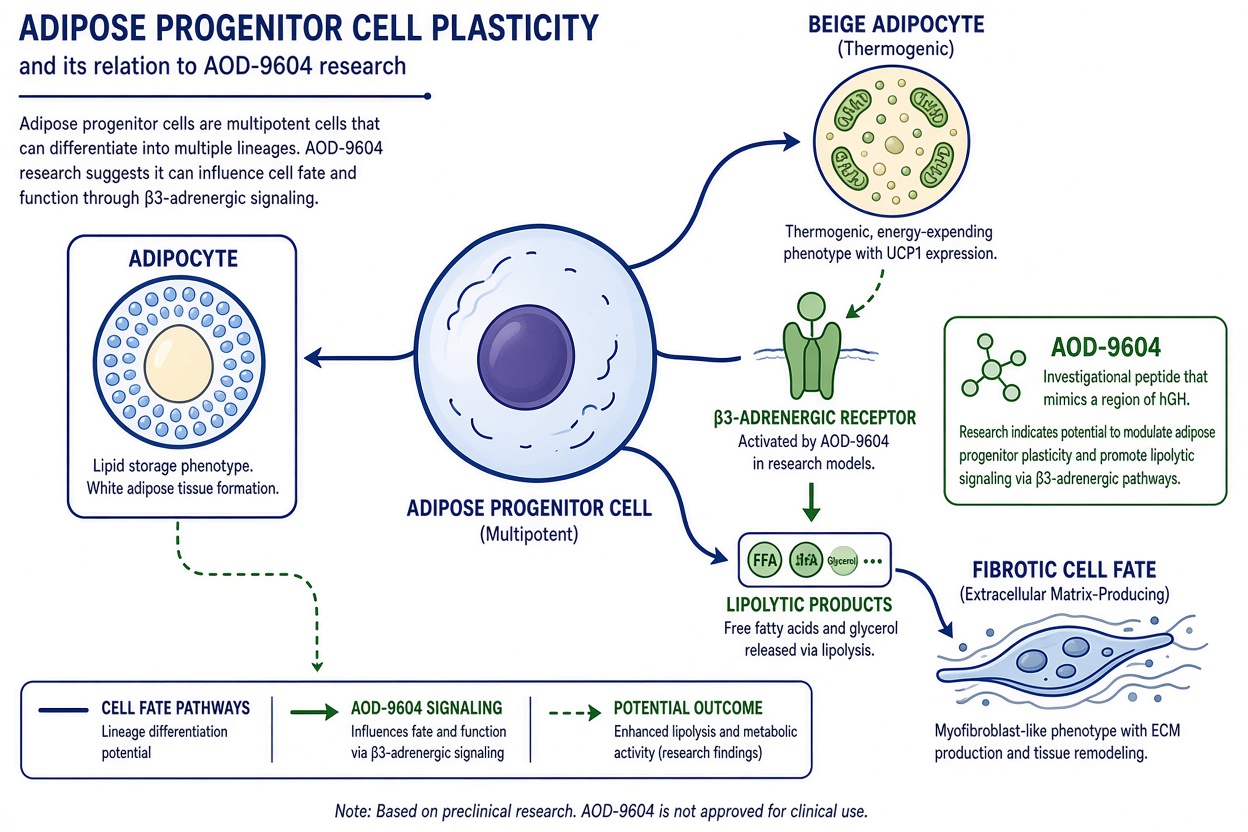
AOD-9604 is a synthetic peptide consisting of the C-terminal fragment of human growth hormone (amino acids 177–191) with an added tyrosine residue at the N-terminus. In laboratory settings, it has been shown to stimulate lipolysis in isolated rat adipocytes and to reduce body fat accumulation in obese rodent models without affecting insulin-like growth factor 1 (IGF-1) levels. These properties made it a candidate for anti-obesity drug development in the early 2000s, but Phase IIb clinical trials were terminated due to lack of efficacy compared to placebo. Since then, AOD-9604 has been available solely as a research chemical for in vitro and in vivo (animal model) studies.
The term aod 9604s emerging role in adiposity regeneration and beyond reflects a new research paradigm. Rather than viewing AOD-9604 only as a lipolytic agent, investigators are now considering its potential to modulate adipose tissue architecture through effects on progenitor cell populations. Adiposity regeneration refers to the process by which adipose tissue repairs or remodels itself following injury, weight cycling, or metabolic stress. This process depends on the activation and differentiation of APCs, which reside in the stromal vascular fraction of adipose depots. Because AOD-9604 activates the β3-adrenergic receptor—a G-protein-coupled receptor that elevates intracellular cAMP—it may influence APC behavior indirectly.
The full scope of aod 9604s emerging role includes not only fat mobilization but also progenitor cell survival, dedifferentiation, and redifferentiation. Researchers examining this peptide must design experiments that distinguish acute lipolytic effects from longer-term structural changes in adipose tissue. Peptide solubility and stability are also relevant: AOD-9604 is typically supplied as a lyophilized powder that should be reconstituted in sterile buffer or water for in vitro assays. Proper storage at −20°C preserves bioactivity for repeated experiments.
How Does aod 9604s emerging role Relate to Adipose Progenitor Cell Plasticity?
AOD-9604’s primary documented mechanism is the activation of β3-adrenergic receptors on the surface of mature adipocytes. In rodent and human adipocyte cultures, β3-adrenergic stimulation leads to increased adenylate cyclase activity, elevated cyclic adenosine monophosphate (cAMP), and activation of protein kinase A (PKA). This cascade phosphorylates hormone-sensitive lipase and perilipin, resulting in the hydrolysis of triglycerides into free fatty acids and glycerol—the biochemical signature of lipolysis. Early studies confirmed that AOD-9604 produces this effect at nanomolar concentrations in vitro, with potency comparable to isoproterenol but without β1- or β2-adrenergic cross-reactivity.
Adipose progenitor cells, in contrast, express low levels of β3-adrenergic receptors under basal conditions. However, during adipose tissue remodeling, APC populations can upregulate β3-adrenergic receptor expression in response to cold exposure, catecholamine surges, or chronic β-adrenergic stimulation. This upregulation suggests a possible intersection between AOD-9604’s lipolytic signaling and progenitor cell activation. In particular, cAMP-dependent pathways are known to promote the dedifferentiation of mature adipocytes into fibroblast-like DFAT cells in vitro. DFAT cells retain multilineage differentiation potential and can be re-induced to form adipocytes, osteoblasts, or chondrocytes.
Whether AOD-9604 directly induces dedifferentiation of mature adipocytes or instead modulates the proliferation and differentiation of pre-existing APCs is a central question within aod 9604s emerging role. Receptor specificity matters here: β3-adrenergic receptors are less abundant than β1 or β2 in most human adipose depots, so AOD-9604’s effects may be depot-dependent. Rodent models show higher β3 expression in brown and beige adipose tissue, which could confound cross-species comparisons.
💡 Key Takeaway: How Does aod 9604s emerging role Relate to Adipose Progenitor Cell Plasticity?
What Do We Know About Adipose Progenitor Cells and aod 9604s emerging role in Regeneration?
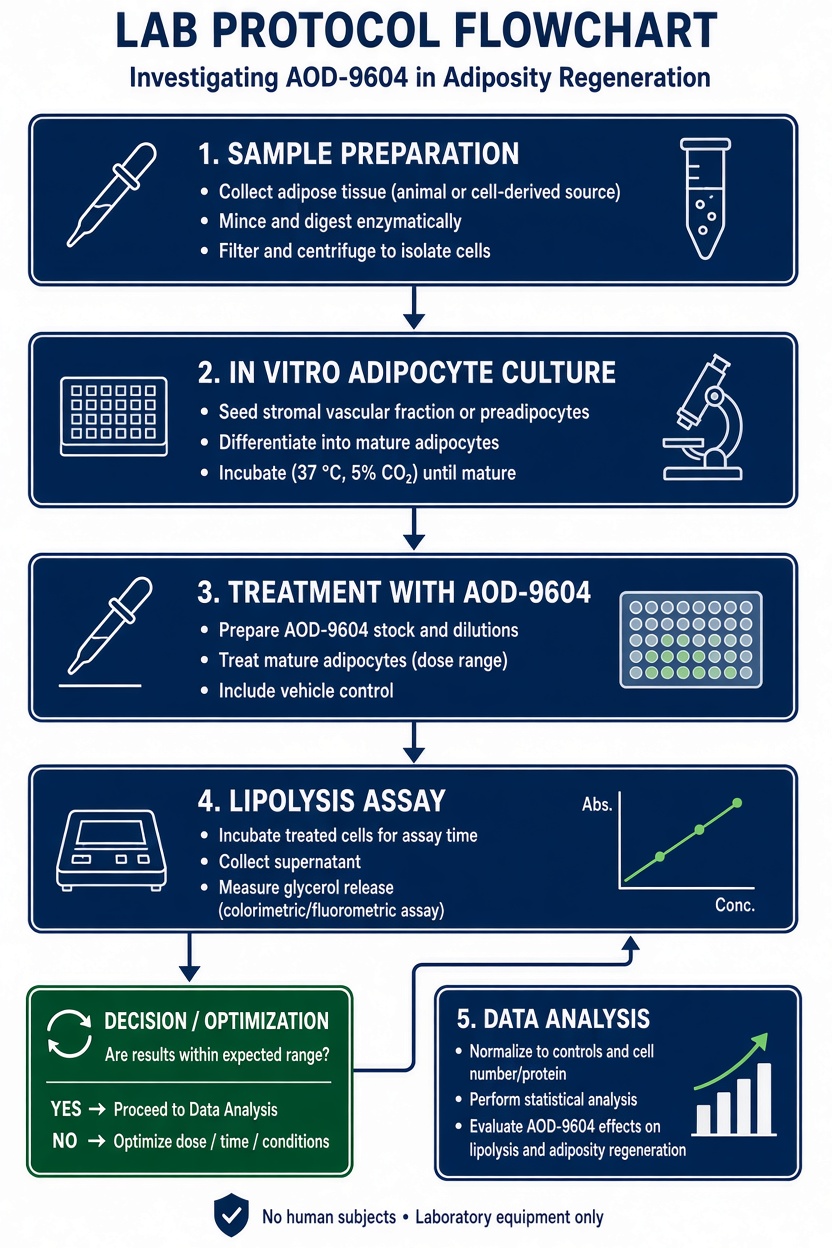
Adipose tissue is not a static lipid storage depot. It undergoes continuous turnover, with approximately 10% of human adipocytes renewed annually under steady-state conditions. This renewal is driven by APCs located in the stromal vascular fraction (SVF), which include adipose-derived stem cells (ADSCs), preadipocytes, and endothelial progenitor cells. In response to injury, hypoxia, or metabolic stress, APCs proliferate and differentiate into mature adipocytes to restore tissue mass and function. The process is tightly regulated by extracellular matrix remodeling, angiogenic factors, and local paracrine signals.
Adiposity regeneration specifically refers to the restoration of adipose tissue mass and architecture after a loss event, such as lipodystrophy, cachexia, or experimental fat ablation. In rodent models, surgical removal of inguinal fat pads triggers compensatory regeneration from residual SVF cells within weeks. This regenerative capacity declines with age and is impaired in chronic obesity, where APCs become senescent and fibrotic. Current research on adipose progenitor cells emphasizes their heterogeneity: single-cell RNA sequencing has identified multiple APC subtypes with distinct transcriptional profiles and differentiation biases.
The concept of aod 9604s emerging role builds on this foundation by asking whether a lipolytic peptide can shift APC subtype balance toward regenerative phenotypes. For example, β-adrenergic agonists can increase the proportion of beige adipocytes within white adipose depots, a process called browning. Whether AOD-9604 can trigger browning or influence APC lineage commitment is unknown. Investigators exploring aod 9604s emerging role must therefore measure not only lipolysis but also markers of progenitor proliferation, apoptosis, and differentiation in long-term culture models.
Can Lipolysis Signaling Drive Adipocyte Dedifferentiation and aod 9604s emerging role in Adiposity Regeneration?
Lipolysis is traditionally viewed as a catabolic process that releases stored energy. However, recent evidence shows that the lipolytic machinery can also initiate cell fate transitions. Mature adipocytes cultured under conditions that elevate cAMP—such as exposure to β-adrenergic agonists or forskolin—can dedifferentiate into fibroblast-like cells. These dedifferentiated fat (DFAT) cells exhibit multipotency and can be re-induced to form adipocytes, osteoblasts, or chondrocytes. The molecular drivers include PKA-mediated phosphorylation of transcription factors and epigenetic remodeling of lineage-specifying genes.
AOD-9604, as a β3-adrenergic agonist, elevates cAMP in mature adipocytes. Whether this elevation is sufficient to induce dedifferentiation remains untested. In isolated rat adipocytes, AOD-9604’s lipolytic effect is rapid and reversible, peaking within minutes and returning to baseline within hours. Sustained exposure in vitro, however, might push cells toward a dedifferentiated state. This hypothesis forms a core component of aod 9604s emerging role: that repeated or chronic lipolytic stimulation could remodel adipose tissue by increasing the pool of plastic progenitor-like cells.
To test this, researchers can treat mature 3T3-L1 adipocytes or primary human adipocytes with AOD-9604 for 7–14 days, then assess morphology, lipid droplet loss, and expression of dedifferentiation markers such as CD34, CD73, and CD90. Parallel experiments should measure cAMP levels, PKA activity, and β3-adrenergic receptor density. Control conditions must include vehicle-treated cells and a β3-adrenergic antagonist such as SR59230A to confirm receptor specificity. This experimental design directly interrogates aod 9604s emerging role in adipocyte plasticity.
What Is the Hypothesized Role of AOD-9604 in Adipose Tissue Remodeling and aod 9604s emerging role in Adiposity Regeneration?
The hypothesized role of AOD-9604 in adipose tissue remodeling extends beyond acute lipolysis. Because AOD-9604 activates β3-adrenergic receptors, it may stimulate a cascade that includes cAMP elevation, PKA activation, and downstream transcription factors such as CREB. CREB can induce expression of genes involved in mitochondrial biogenesis (PGC-1α), thermogenesis (UCP1), and cell survival. These pathways are critical for adipose tissue adaptation to cold and exercise. In beige adipocytes, β3-adrenergic signaling promotes UCP1 expression and thermogenic capacity. Whether AOD-9604 can mimic these effects in white adipose tissue is an open question.
Another component of aod 9604s emerging role involves paracrine signaling. Lipolysis releases free fatty acids and glycerol, which can act as signaling molecules. Free fatty acids bind to G-protein-coupled receptors such as GPR120 and GPR40 on neighboring cells, influencing inflammation and insulin sensitivity. Glycerol can be taken up by APCs and used for triglyceride resynthesis. Thus, AOD-9604-induced lipolysis could create a microenvironment that supports progenitor cell survival and differentiation. This indirect mechanism might explain how a simple lipolytic peptide could influence tissue regeneration.
To investigate this, researchers should quantify the secretome of AOD-9604-treated adipocytes using multiplex cytokine arrays. Key analytes include adiponectin, leptin, IL-6, TNF-α, and vascular endothelial growth factor (VEGF). Changes in these factors could alter APC proliferation and differentiation. Co-culture systems—where adipocytes and APCs are separated by a permeable membrane—allow researchers to distinguish direct receptor-mediated effects from paracrine effects. Such experiments are essential for validating aod 9604s emerging role in adipose tissue remodeling.
💡 Key Takeaway: What Is the Hypothesized Role of AOD-9604 in Adipose Tissue Remodeling and aod 9604s emerging role in Adiposity Regeneration?
Beyond Obesity: How Might aod 9604s emerging role Extend to Aging, Fibrosis, and Regenerative Medicine?
Aging is associated with adipose tissue dysfunction, including reduced APC regenerative capacity, increased fibrosis, and ectopic lipid deposition. In aged mice, β3-adrenergic receptor expression declines in white adipose tissue, but remains responsive to agonists. Restoring β3-adrenergic signaling has been shown to improve metabolic health in aged rodents. This suggests that AOD-9604, if it acts through β3-adrenergic receptors, might partially reverse age-related adipose tissue decline. However, no published studies have tested AOD-9604 in aged animal models.
Fibrosis is another area relevant to aod 9604s emerging role. Chronic obesity and lipodystrophy lead to excessive extracellular matrix deposition around adipocytes, impairing tissue function. β-adrenergic signaling can reduce fibrosis by increasing collagen degradation and decreasing TGF-β1 expression in some cell types. Whether AOD-9604 exerts anti-fibrotic effects in adipose tissue is unknown. Researchers could use a high-fat diet mouse model with fibrosis, treat with AOD-9604, and measure collagen I, collagen III, and α-smooth muscle actin by immunohistochemistry.
Regenerative medicine applications may also emerge. Adipose-derived stem cells (ADSCs) are widely used in tissue engineering. AOD-9604 could potentially be used as a pre-treatment to enhance ADSC yield or plasticity from lipoaspirates. Because AOD-9604 is a small peptide with good solubility, it could be added to culture media for ex vivo expansion of ADSCs. This application, while speculative, aligns with aod 9604s emerging role in progenitor cell biology. Any such use must remain strictly in vitro and research-grade.
Evidence Gaps and Future Research Directions for aod 9604s emerging role
Despite decades of research on AOD-9604 as a lipolytic agent, direct evidence linking it to adipose progenitor cell plasticity is absent. No published study has measured DFAT cell formation after AOD-9604 treatment. No study has quantified APC proliferation or differentiation in response to AOD-9604. No study has examined β3-adrenergic receptor expression on APCs under AOD-9604 exposure. These gaps define the frontier of aod 9604s emerging role.
Future research should prioritize the following: (1) dose-response curves for AOD-9604-induced lipolysis and dedifferentiation in both rodent and human adipocytes; (2) time-course experiments to determine whether chronic exposure is required for progenitor effects; (3) single-cell RNA sequencing of adipose tissue from AOD-9604-treated animals to map APC subtype shifts; (4) in vivo lineage tracing using Cre-lox systems to track APC fate after AOD-9604 administration. These experiments require rigorous controls, including vehicle, β3-antagonist, and non-lipolytic peptide controls.
Another gap concerns depot specificity. AOD-9604’s effects may differ between subcutaneous and visceral adipose tissue, as β3-adrenergic receptor density varies. Brown and beige adipose tissue also respond differently to β3-agonists. Researchers should therefore compare multiple depots in the same animal. Additionally, sex differences in β3-adrenergic signaling have been reported, so both male and female animals should be included. Addressing these gaps will clarify aod 9604s emerging role in adiposity regeneration and beyond.
Comparative Table: AOD-9604 vs. Other Research Peptides in Adipose Biology
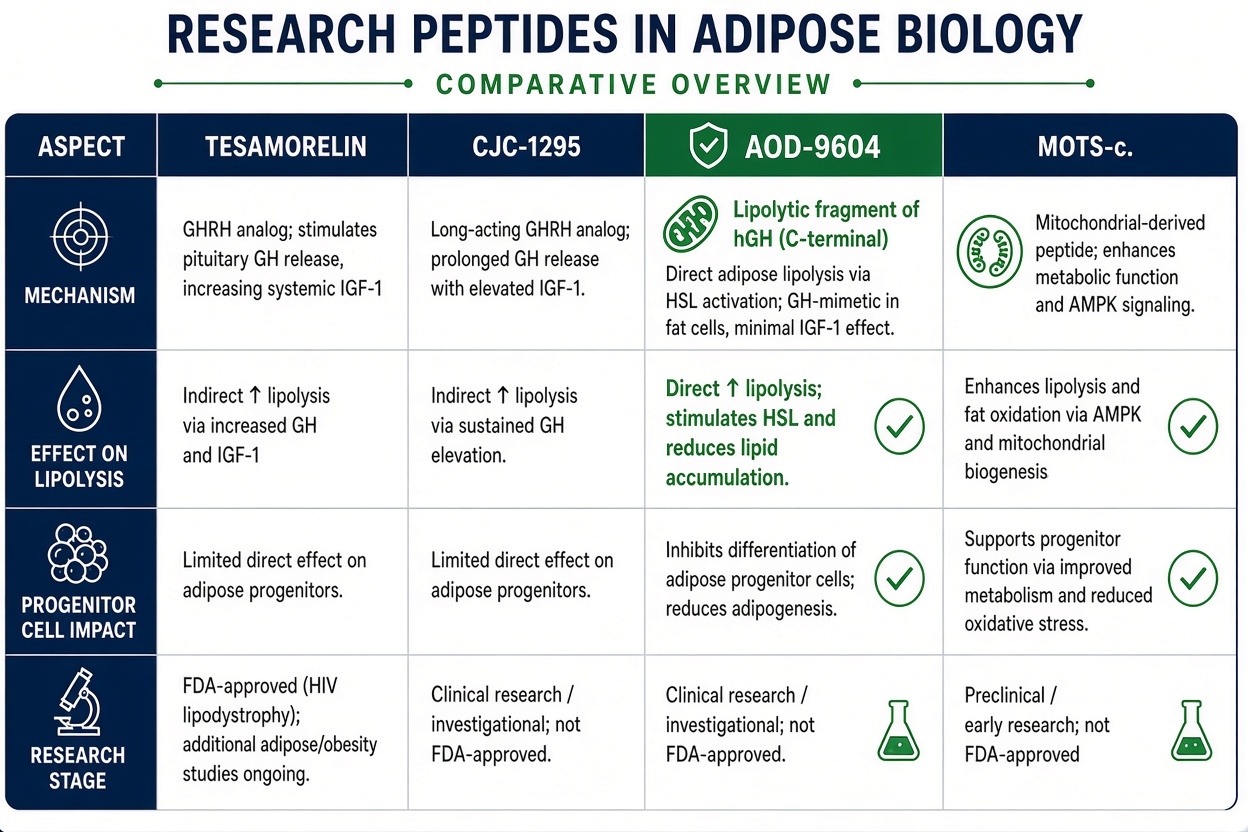
The following table compares AOD-9604 with other peptides commonly used in adipose tissue research. All data are from published in vitro or animal studies. This table is not a product endorsement and all peptides are for research use only.
| Peptide | Primary Target | Known Effect on Adipose Tissue | Effect on Progenitor Cells | Evidence for Regeneration |
|—|—|—|—|—|
| AOD-9604 | β3-adrenergic receptor | Lipolysis in rodent and human adipocytes | Unknown | Hypothesized but unproven |
| CJC-1295 | GHRH receptor | Increases GH secretion, indirect lipolysis | Indirect via GH/IGF-1 | Not studied |
| Tesamorelin | GHRH receptor | Reduces visceral fat in HIV patients | Unknown | Not studied |
| Melanotan II | MC4R | Reduces food intake, indirect fat loss | Unknown | Not studied |
| MOTS-c | Mitochondrial | Increases glucose uptake, may reduce fat | May improve stem cell function | Early evidence |
Researchers should note that only AOD-9604 directly targets β3-adrenergic receptors on adipocytes. Other peptides act through central or indirect mechanisms. This unique mechanism underpins aod 9604s emerging role in adipose progenitor biology. For sourcing research-grade peptides with certificates of analysis, see our guide on AOD-9604 Growth Hormone Fragment: Research Peptide Guide (2026).
💡 Key Takeaway: Comparative Table: AOD-9604 vs. Other Research Peptides in Adipose Biology
Methodological Considerations for Investigating aod 9604s emerging role
Investigating aod 9604s emerging role requires careful experimental design. First, peptide purity and identity must be confirmed. AOD-9604 should be ≥95% pure by HPLC and have a certificate of analysis (COA) from the supplier. Lyophilized powder should be stored at −20°C in a desiccated environment. For in vitro assays, reconstitute in sterile phosphate-buffered saline or cell culture medium, filter-sterilize, and aliquot to avoid repeated freeze-thaw cycles. Peptide concentration should be verified by absorbance at 280 nm using the tyrosine residue’s extinction coefficient.
Second, cell models matter. Primary adipocytes are more physiologically relevant but have limited lifespan. Immortalized 3T3-L1 cells are convenient but may not fully recapitulate human biology. For dedifferentiation studies, use mature adipocytes cultured in ceiling culture or low-attachment plates. For APC studies, isolate SVF from adipose tissue by collagenase digestion and culture in DMEM/F12 with 10% fetal bovine serum. Passage APCs no more than 5 times to avoid senescence.
Third, endpoint measurements must be specific. Lipolysis is measured by glycerol release assay or free fatty acid quantification. Dedifferentiation is measured by loss of lipid droplets (Oil Red O staining) and gain of fibroblast morphology. Progenitor proliferation is measured by BrdU or EdU incorporation. Differentiation potential is assessed by adipogenic, osteogenic, and chondrogenic induction followed by lineage-specific staining. All assays should include biological replicates (n ≥ 3) and appropriate statistical tests. For a complete list of validated protocols, refer to our Complete Guide to Research Peptides: 2025 Lab Reference.
Regulatory and Safety Compliance for AOD-9604 Research
AOD-9604 is not approved for human use by the FDA or any regulatory agency. It is sold solely as a research chemical for in vitro and animal studies. Laboratories must comply with institutional biosafety and animal care regulations. In the United States, animal studies require IACUC approval. In vitro studies require standard BSL-2 or BSL-1 containment depending on the cell type. Researchers must maintain accurate records of peptide acquisition, storage, and disposal.
AOD-9604 should be handled as a hazardous chemical. Use nitrile gloves, lab coat, and safety glasses. Avoid inhalation of lyophilized powder. In case of skin contact, wash with soap and water. Dispose of unused peptide according to institutional chemical waste guidelines. Do not autoclave peptide solutions, as heat degrades the peptide. For shipping and storage, keep lyophilized peptide at −20°C or −80°C for long-term stability. Reconstituted peptide should be used within 2–4 weeks when stored at 4°C.
Researchers should also be aware of legal restrictions. In some countries, AOD-9604 is a controlled substance or requires a license for purchase. Always verify local regulations before ordering. For reliable suppliers that provide COA and purity data, see Best Places to Buy Research Peptides for a Lab in 2026. Compliance with these standards is non-negotiable when investigating aod 9604s emerging role.
Common Pitfalls in Research on aod 9604s emerging role
Several pitfalls can compromise research on aod 9604s emerging role. First, using impure peptide. Peptide impurities can cause off-target effects or false-negative results. Always request a COA and verify purity by mass spectrometry or HPLC in-house if possible. Second, improper storage. Lyophilized AOD-9604 left at room temperature for extended periods loses bioactivity. Store at −20°C immediately upon receipt.
Third, confounding lipolysis with dedifferentiation. Acute lipolysis releases glycerol and free fatty acids, but this does not necessarily indicate progenitor cell activation. Use long-term cultures and lineage markers to distinguish transient metabolic effects from stable cell fate changes. Fourth, ignoring receptor specificity. AOD-9604 may have off-target effects at high concentrations. Include a β3-adrenergic antagonist control to confirm that observed effects are receptor-mediated.
Fifth, cross-species extrapolation. Rodent β3-adrenergic receptor expression differs from human. Results from mouse models may not translate to human adipose tissue. Use human primary adipocytes or explants when possible. Sixth, overinterpreting in vitro data. In vitro dedifferentiation does not prove in vivo regeneration. Validate key findings in animal models with histological analysis. Avoiding these pitfalls will strengthen the credibility of research on aod 9604s emerging role.
💡 Key Takeaway: Common Pitfalls in Research on aod 9604s emerging role
Conclusion: The Future of aod 9604s emerging role in Adiposity Regeneration and Beyond
The future of aod 9604s emerging role depends on rigorous hypothesis-driven research. AOD-9604’s well-documented lipolytic activity provides a starting point, but its potential to modulate adipose progenitor cells remains speculative. Advances in single-cell genomics, lineage tracing, and 3D adipose tissue models offer new tools to test these hypotheses. If AOD-9604 can indeed promote adipocyte dedifferentiation or APC proliferation, it could open new avenues for studying adipose tissue regeneration in obesity, aging, and lipodystrophy.
However, researchers must remain cautious. The Phase IIb clinical failure of AOD-9604 as an anti-obesity drug does not preclude its use as a research tool, but it underscores the complexity of adipose biology. No claims of therapeutic benefit should be made. All work must be confined to in vitro and animal models, with clear documentation of research-use-only status. The next five years will likely see the first direct tests of aod 9604s emerging role in adipose progenitor plasticity. Until then, the field remains open and exciting.
FAQ
What is aod 9604s emerging role in adiposity regeneration research?
aod 9604s emerging role refers to the hypothesis that AOD-9604, beyond its known lipolytic action via β3-adrenergic receptors, may influence adipose progenitor cell plasticity, dedifferentiation, and tissue remodeling. This role is unproven and under active investigation.
Can AOD-9604 cause adipocyte dedifferentiation in vitro?
No direct evidence exists. AOD-9604 elevates cAMP through β3-adrenergic activation, which is a known trigger for adipocyte dedifferentiation into DFAT cells, but specific experiments with AOD-9604 have not been published. Researchers must test this using long-term culture models.
What is the purity and storage requirement for AOD-9604 in research?
Research-grade AOD-9604 should be ≥95% pure by HPLC and supplied with a COA. Lyophilized powder should be stored at −20°C or −80°C. Reconstituted peptide should be kept at 4°C and used within 2–4 weeks. Avoid repeated freeze-thaw cycles.
Is AOD-9604 approved for human use?
No. AOD-9604 is strictly a research chemical. It is not approved for human use, not for veterinary use, and not intended to diagnose, treat, cure, or prevent any disease. All research must be conducted in accredited laboratories using in vitro or animal models.
What are the key evidence gaps in aod 9604s emerging role?
The main gaps are: (1) no direct test of AOD-9604 on APC proliferation or differentiation; (2) no dedifferentiation assays with AOD-9604; (3) no in vivo lineage tracing studies; and (4) no depot-specific or sex-specific analyses. Addressing these gaps is a priority for future research.
Topics covered in this article:
Ready to Take the Next Step?
Every product includes lot-specific documentation and third-party purity testing.
Explore Our Research Products →Free shipping on qualifying orders · Batch COA on request