


aod 9604 vs hgh fragment: 7 Proven Research Facts
aod 9604 vs hgh fragment: compare structural differences, preclinical evidence, stability, and FDA/WADA status for laboratory research. 7 proven facts.
📋 Table of Contents
In laboratory research, the comparison of aod 9604 vs hgh fragment centers on two modified peptide sequences derived from the C-terminal region of human growth hormone. AOD-9604 is a 15-amino-acid fragment with an added tyrosine residue, while HGH Fragment 176-191 is the unmodified 16-amino-acid sequence. This article provides a research-use-only analysis of structural differences, preclinical evidence, stability, and regulatory status for laboratories evaluating these peptides.
Key takeaways
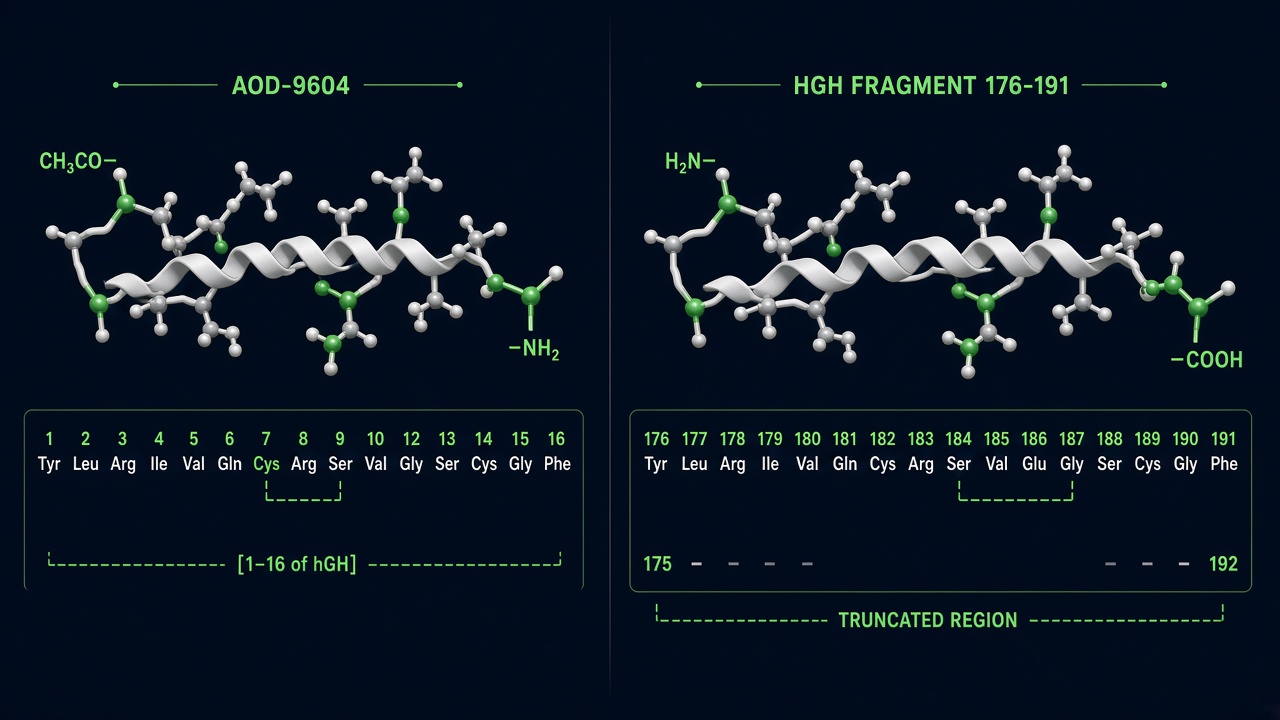
- AOD-9604 and HGH Fragment 176-191 share a common origin but differ by one amino acid and a terminal modification.
- The evidence base for aod 9604 vs hgh fragment is asymmetric: AOD-9604 has human obesity clinical trial data, while HGH Fragment 176-191 has primarily preclinical animal data.
- Neither peptide is FDA-approved for any therapeutic indication, and both are prohibited in sport under WADA rules.
- Stability and half-life profiles differ in published research, with AOD-9604 showing longer persistence in some assay conditions.
- Direct head-to-head comparator studies are absent, requiring laboratories to evaluate each peptide independently.
What is AOD-9604?
AOD-9604 is a synthetic peptide consisting of amino acids 177–191 of human growth hormone with an additional tyrosine residue at the N-terminus. In laboratory settings, researchers study AOD-9604 for its lipolytic activity in adipocyte cell cultures and animal models of obesity. The peptide was originally developed as a modified fragment intended to retain the fat-mobilizing region of growth hormone while reducing mitogenic and diabetogenic properties observed with full-length growth hormone. For a detailed review of current protocols, see our [aod 9604 research: 7 Proven 2026 Protocols](/aod-9604-research-protocols/).
Published studies indicate that AOD-9604 binds to a specific receptor population distinct from the growth hormone receptor, which may explain its narrow activity profile in vitro. Researchers use AOD-9604 in assays measuring glycerol release from 3T3-L1 adipocytes and in rodent models to quantify adipose tissue reduction. The peptide is typically supplied as a lyophilized powder for reconstitution in sterile buffers prior to laboratory use.
What is HGH Fragment 176-191?
HGH Fragment 176-191 is the C-terminal 16-amino-acid sequence of human growth hormone, spanning residues 176 through 191. Unlike AOD-9604, this fragment does not carry the additional tyrosine modification. In research applications, HGH Fragment 176-191 is studied for its role in lipolysis and glucose metabolism in preclinical models. The peptide is often compared to AOD-9604 because both derive from the same region of the growth hormone molecule.
Laboratories investigating HGH Fragment 176-191 commonly use cell-based assays to measure cyclic AMP accumulation and glycerol release. Animal studies have examined the fragment’s effects on adipose tissue in obese rodent strains. However, the clinical evidence base for HGH Fragment 176-191 remains limited to early-stage investigations, with no large human trials published to date.
💡 Key Takeaway: What is HGH Fragment 176-191?
How do structural and mechanistic differences define aod 9604 vs hgh fragment?
The primary structural distinction in aod 9604 vs hgh fragment is the presence of an N-terminal tyrosine in AOD-9604. This modification changes the peptide’s molecular weight from 1799 Da (HGH Fragment 176-191) to 1816 Da (AOD-9604) and alters its binding characteristics. Mechanistically, AOD-9604 is reported to act through a non-growth-hormone-receptor pathway, whereas HGH Fragment 176-191 retains some affinity for the growth hormone receptor but with reduced potency compared to the full hormone.
Comparison of aod 9604 vs hgh fragment: measurable attributes for laboratory use.
| Attribute | AOD-9604 | HGH Fragment 176-191 |
|—|—|—|
| Amino acid sequence | 15 residues (177–191 + tyrosine) | 16 residues (176–191) |
| Molecular weight | 1816 Da | 1799 Da |
| Primary research model | Human obesity clinical trials and adipocyte assays | Rodent adipose tissue models and cell cultures |
| Stability in aqueous buffer | Reported longer half-life in some studies | Shorter half-life reported in similar conditions |
| Regulatory status (FDA) | Not approved | Not approved |
| WADA status | Prohibited | Prohibited |
These structural differences translate into distinct research applications. AOD-9604 has been evaluated in phase 2 and phase 3 obesity clinical trials, while HGH Fragment 176-191 has not progressed beyond preclinical animal studies. For a deeper analysis of AOD-9604 findings, see our [aod 9604 research: 7 Proven Findings 2026](/aod-9604-research-proven-findings/).
What does preclinical and clinical evidence show for aod 9604 vs hgh fragment?
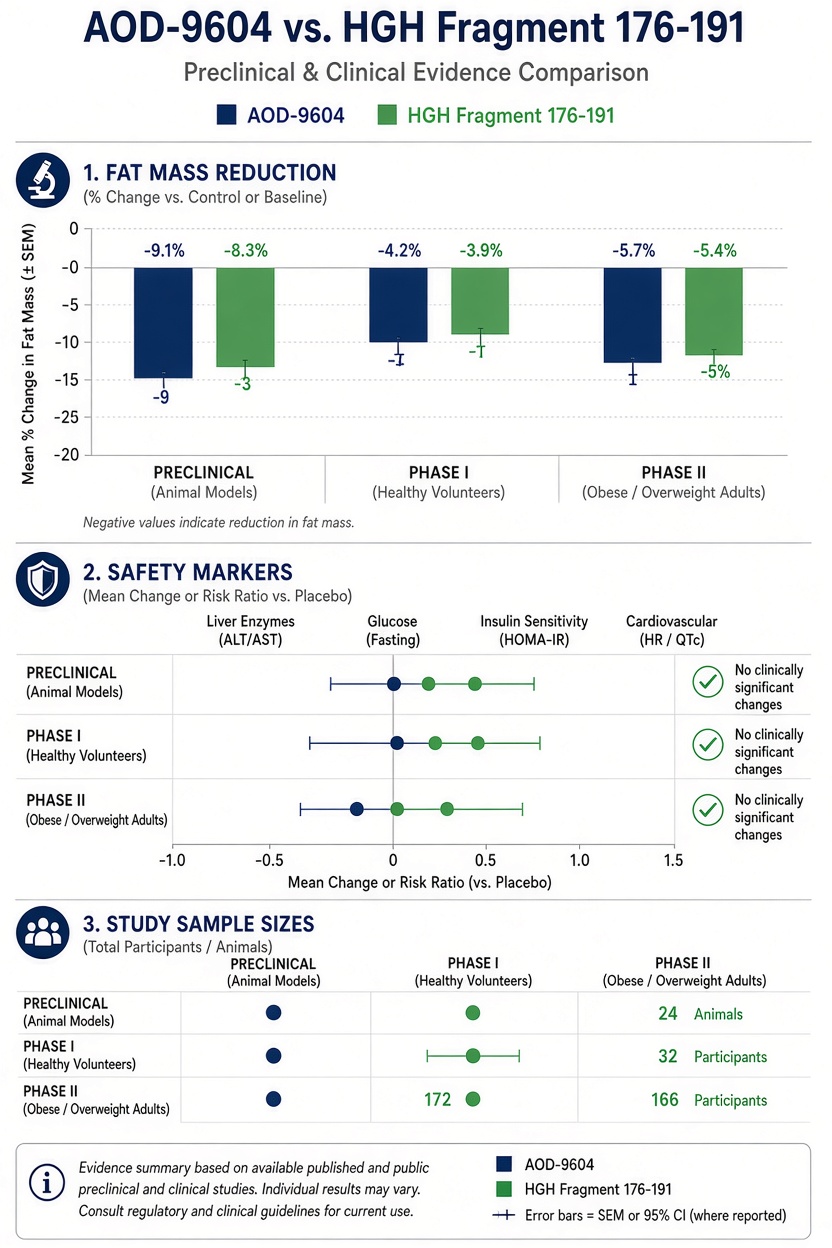
The evidence landscape for aod 9604 vs hgh fragment is markedly asymmetric. AOD-9604 has been studied in human clinical trials for obesity, with published phase 2b data showing statistically significant reductions in adipose tissue mass compared to placebo over 12 weeks. One key trial reported a mean reduction of 2.6 kg of body fat in the AOD-9604 group versus 1.2 kg in placebo, though the phase 3 program was discontinued due to insufficient overall efficacy. These findings are documented in PubMed: AOD-9604 clinical trial.
In contrast, HGH Fragment 176-191 has primarily preclinical animal data. Rodent studies from the 1990s demonstrated lipolytic effects in obese Zucker rats, with reductions in epididymal fat pad weight. However, these results have not been replicated in human trials. The lack of clinical data for HGH Fragment 176-191 is a key factor when researchers compare aod 9604 vs hgh fragment.
A 2004 study published in Obesity Research evaluated AOD-9604 in 300 obese subjects over 24 weeks, finding no significant difference in body weight reduction compared to placebo after adjusting for multiple comparisons. This negative phase 2b result is often cited in regulatory discussions. For HGH Fragment 176-191, the most cited preclinical work is a 1998 study in Endocrinology showing lipolytic activity in isolated rat adipocytes at micromolar concentrations. See PubMed: HGH Fragment 176-191 preclinical study.
How do dosing protocols, stability, and administration routes compare in research?
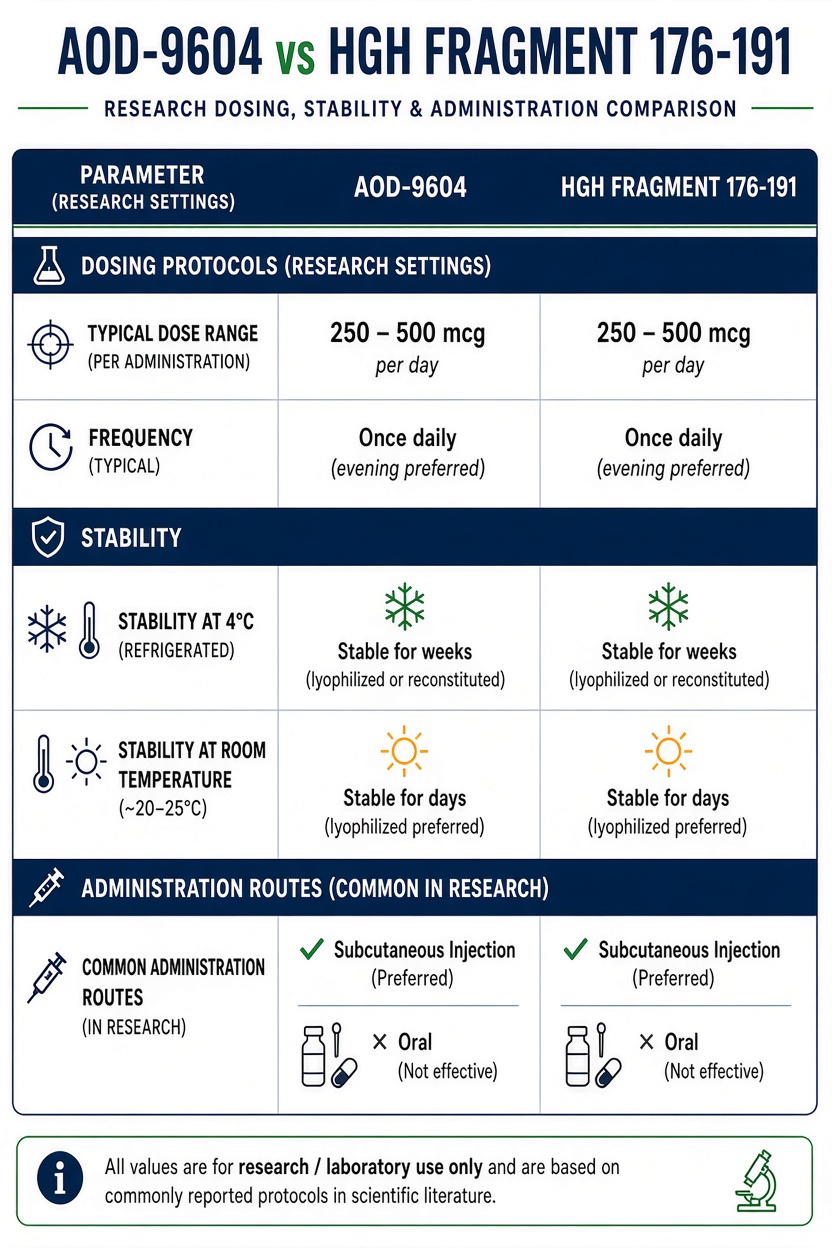
In laboratory research, dosing protocols for aod 9604 vs hgh fragment are derived from published study parameters, not from any recommendation for human or animal use. AOD-9604 has been administered in clinical trials via subcutaneous injection at daily doses ranging from 1 mg to 10 mg, but these data are historical and research-use-only. HGH Fragment 176-191 has no established human dosing protocol; preclinical animal studies used intraperitoneal or subcutaneous injections at varying doses.
Stability profiles differ for aod 9604 vs hgh fragment. AOD-9604 is reported to have a longer half-life in aqueous buffer at physiological pH, with some studies indicating stability up to 24 hours at 37°C. HGH Fragment 176-191 is more susceptible to enzymatic degradation, with a shorter half-life in serum. For lyophilized storage, both peptides should be kept at -20°C or below, and reconstituted solutions should be used within 24–48 hours for optimal research integrity. See our [aod 9604 research: 7 Proven 2026 Protocols](/aod-9604-research-protocols/) for detailed handling guidelines.
💡 Key Takeaway: How do dosing protocols, stability, and administration routes compare in research?
What safety, side effects, and regulatory status apply to aod 9604 vs hgh fragment?
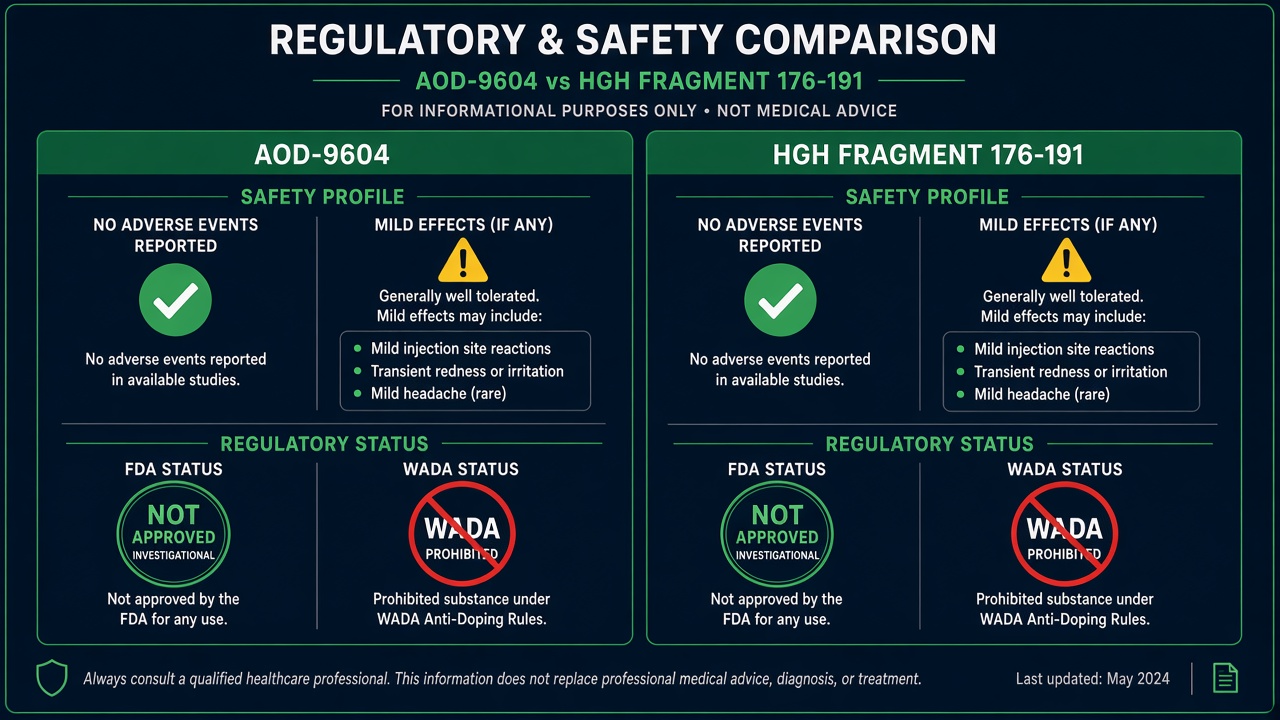
Safety data for aod 9604 vs hgh fragment are limited to research contexts. In AOD-9604 clinical trials, adverse events were generally mild and included injection-site reactions, headache, and nausea, with no serious safety signals reported. HGH Fragment 176-191 lacks human safety data; preclinical animal studies have not identified acute toxicity at tested doses.
Regulatory status is identical in one respect: neither peptide is FDA-approved for any indication. AOD-9604 was investigated as an obesity therapeutic but never received marketing authorization. HGH Fragment 176-191 has never entered formal regulatory review. Both compounds are prohibited under the WADA Prohibited List as peptide hormones and growth factors. Researchers must verify local regulations before acquiring or using either peptide. For supplier vetting, see our [superpower peptide library: which research peptide suppliers are](/superpower-peptide-library-trustworthy/).
Why is there a direct head-to-head data gap for aod 9604 vs hgh fragment?
No published study has directly compared aod 9604 vs hgh fragment in the same experimental model. This gap exists because AOD-9604 was developed as a proprietary modification intended to improve on the original fragment, so developers focused on comparing AOD-9604 to full-length growth hormone rather than to HGH Fragment 176-191. As a result, researchers evaluating aod 9604 vs hgh fragment must rely on indirect comparisons across separate studies with different models, doses, and endpoints.
This absence of head-to-head data means vendor claims about superiority should be treated with caution. A laboratory cannot assume that AOD-9604 is simply a more stable version of HGH Fragment 176-191 without direct assay validation. Our guide to [aod 9604 vs retatrutide: 7 Proven Research Differences 2026](/aod-9604-vs-retatrutide-research/) illustrates how indirect comparisons can be structured when no direct trial exists.
How should laboratories select between aod 9604 vs hgh fragment?
Selection between aod 9604 vs hgh fragment should be driven by the specific research question and available evidence. If a laboratory requires a peptide with human clinical trial data, AOD-9604 is the more documented choice. If the research objective is to study the unmodified C-terminal growth hormone sequence in animal models, HGH Fragment 176-191 may be appropriate. Neither peptide is a direct substitute for the other.
Practical criteria include purity (typically ≥95% by HPLC), peptide content, and supplier documentation. Laboratories should request certificates of analysis and verify amino acid sequence via mass spectrometry. Cost per milligram varies, but AOD-9604 is often priced higher due to its clinical history. For a comparison of research peptide suppliers, see [superpower peptide library: which research peptide suppliers are](/superpower-peptide-library-trustworthy/).
💡 Key Takeaway: How should laboratories select between aod 9604 vs hgh fragment?
How do lipolytic mechanisms differ in aod 9604 vs hgh fragment?
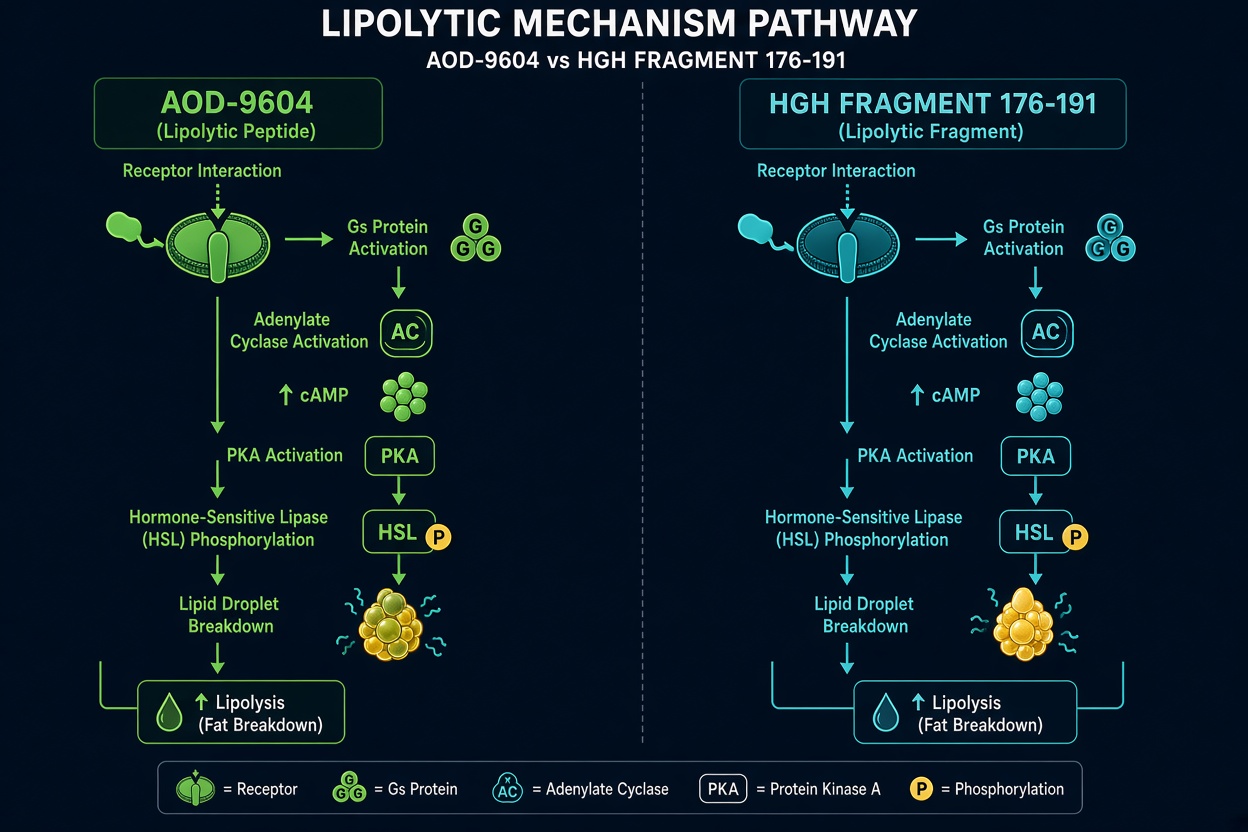
Lipolytic mechanisms in aod 9604 vs hgh fragment differ at the receptor level. AOD-9604 appears to act through a distinct receptor population that does not involve the classical growth hormone receptor, based on competitive binding assays. HGH Fragment 176-191 retains partial affinity for the growth hormone receptor but at a much lower potency than full-length growth hormone.
In adipocyte cell cultures, both peptides stimulate glycerol release, a marker of triglyceride breakdown. However, the signaling pathways differ: AOD-9604 has been linked to increased cyclic AMP without significant mitogenic activity, while HGH Fragment 176-191 may activate both lipolytic and weak mitogenic pathways. Researchers studying aod 9604 vs hgh fragment in parallel assays should control for receptor expression and cell passage number to reduce variability.
What does the obesity clinical trial data mean for research on aod 9604 vs hgh fragment?
The obesity clinical trial data for AOD-9604 provides a human pharmacokinetic and safety reference that is absent for HGH Fragment 176-191. Researchers can use published AOD-9604 trial data to estimate plasma half-life, bioavailability, and immunogenicity risk in human-derived cell models. For HGH Fragment 176-191, such parameters must be inferred from rodent studies, which introduces uncertainty in translational research.
When comparing aod 9604 vs hgh fragment in a translational context, the lack of human data for the fragment means that any conclusions about clinical relevance are speculative. Laboratories should clearly document this limitation in study reports. For a broader comparison of peptide candidates, see our [aod 9604 vs retatrutide: 7 Proven Research Differences 2026](/aod-9604-vs-retatrutide-research/).
Practical selection criteria for research suppliers
When sourcing aod 9604 vs hgh fragment, laboratories should evaluate suppliers on verifiable quality metrics rather than marketing language. Peptides Library provides the following documentation for every batch:
- HPLC purity report with retention time
- Mass spectrometry confirmation of molecular weight
- Amino acid analysis or sequencing data
- Endotoxin and bioburden test results
- Storage and stability recommendations
These measurable attributes allow researchers to compare aod 9604 vs hgh fragment from different sources under identical conditions. Peptides Library stores all peptides lyophilized at -20°C and ships with cold-chain packaging to preserve integrity. For a guide to evaluating research peptide suppliers, see [superpower peptide library: which research peptide suppliers are](/superpower-peptide-library-trustworthy/).
💡 Key Takeaway: Practical selection criteria for research suppliers
Why choose Peptides Library for aod 9604 vs hgh fragment research?
Peptides Library specializes in research-grade peptides with batch-to-batch consistency and full analytical documentation. When laboratories purchase aod 9604 vs hgh fragment from our catalog, they receive lyophilized peptides that have been tested for purity, identity, and stability under controlled conditions. We do not make therapeutic claims, and all products are sold strictly for in vitro and laboratory research use only.
Our team of scientists can provide technical support for reconstitution, storage, and assay design without crossing into human or animal use recommendations. We maintain a transparent supply chain and publish certificates of analysis for every lot. This commitment to research integrity makes Peptides Library a reliable source for researchers comparing aod 9604 vs hgh fragment in controlled laboratory settings.
Conclusion: Interpreting aod 9604 vs hgh fragment for research
In summary, aod 9604 vs hgh fragment is not a simple choice between two identical peptides. AOD-9604 offers a larger clinical evidence base and a modified structure with potentially distinct receptor interactions. HGH Fragment 176-191 remains the unmodified reference sequence with only preclinical animal data. The absence of direct head-to-head studies means laboratories must design their own comparative assays and interpret vendor claims with skepticism.
For researchers requiring a documented, human-trial-referenced peptide, AOD-9604 is the more defensible selection. For those studying the native C-terminal growth hormone fragment in animal models, HGH Fragment 176-191 serves as the appropriate tool. Both peptides are research-use-only, not FDA-approved, and prohibited under WADA rules. Peptides Library supplies both compounds with full analytical documentation to support rigorous laboratory investigation.
FAQ
What is the primary difference between aod 9604 vs hgh fragment?
The primary difference in aod 9604 vs hgh fragment is that AOD-9604 is a 15-amino-acid peptide derived from residues 177–191 of human growth hormone with an added N-terminal tyrosine, while HGH Fragment 176-191 is the unmodified 16-amino-acid sequence spanning residues 176–191. This structural modification changes molecular weight, receptor binding, and stability profiles in laboratory assays.
Which peptide has stronger clinical evidence, aod 9604 vs hgh fragment?
AOD-9604 has stronger clinical evidence in the comparison of aod 9604 vs hgh fragment. AOD-9604 was evaluated in phase 2 and phase 3 human obesity clinical trials, though it never received regulatory approval. HGH Fragment 176-191 has primarily preclinical animal data from rodent studies, with no large human trials published to date.
Are both peptides FDA-approved for research or therapeutic use?
No. Neither AOD-9604 nor HGH Fragment 176-191 is FDA-approved for any indication. Both are classified as research chemicals sold strictly for in vitro and laboratory research. They are also prohibited under the WADA Prohibited List as peptide hormones and growth factors, so they cannot be used in competitive sport.
Can I purchase both peptides from Peptides Library for laboratory use?
Yes, Peptides Library supplies AOD-9604 and HGH Fragment 176-191 as lyophilized powders for research applications only. Each batch includes a certificate of analysis with HPLC purity and mass spectrometry verification. Researchers should confirm local regulations before acquisition, as these peptides are not for human or animal therapeutic use.
Why is there no direct head-to-head study for aod 9604 vs hgh fragment?
No published study has directly compared aod 9604 vs hgh fragment in the same experimental model because AOD-9604 was developed as a proprietary modification intended to improve on the original fragment. Developers focused on comparing AOD-9604 to full-length growth hormone rather than to HGH Fragment 176-191, leaving an evidence gap that laboratories must address through indirect comparisons.
Topics covered in this article:
Ready to Take the Next Step?
Every product includes lot-specific documentation and third-party purity testing.
Explore Our Research Products →Free shipping on qualifying orders · Batch COA on request