



aod 9604 research: 7 Proven 2026 Protocols
Explore aod 9604 research protocols, mechanisms, and regulatory status in 2026. Peer-reviewed insights for laboratories studying hGH fragment 177-191 in vitro.
📋 Table of Contents
aod 9604 research examines the modified human growth hormone fragment hGH 177-191 as a laboratory peptide for studies of adipose tissue metabolism, chondrocyte signaling, and receptor binding. This page summarizes validated protocols, preclinical data, and regulatory context for researchers sourcing reference-grade AOD-9604 from Peptides Library.
Key takeaways
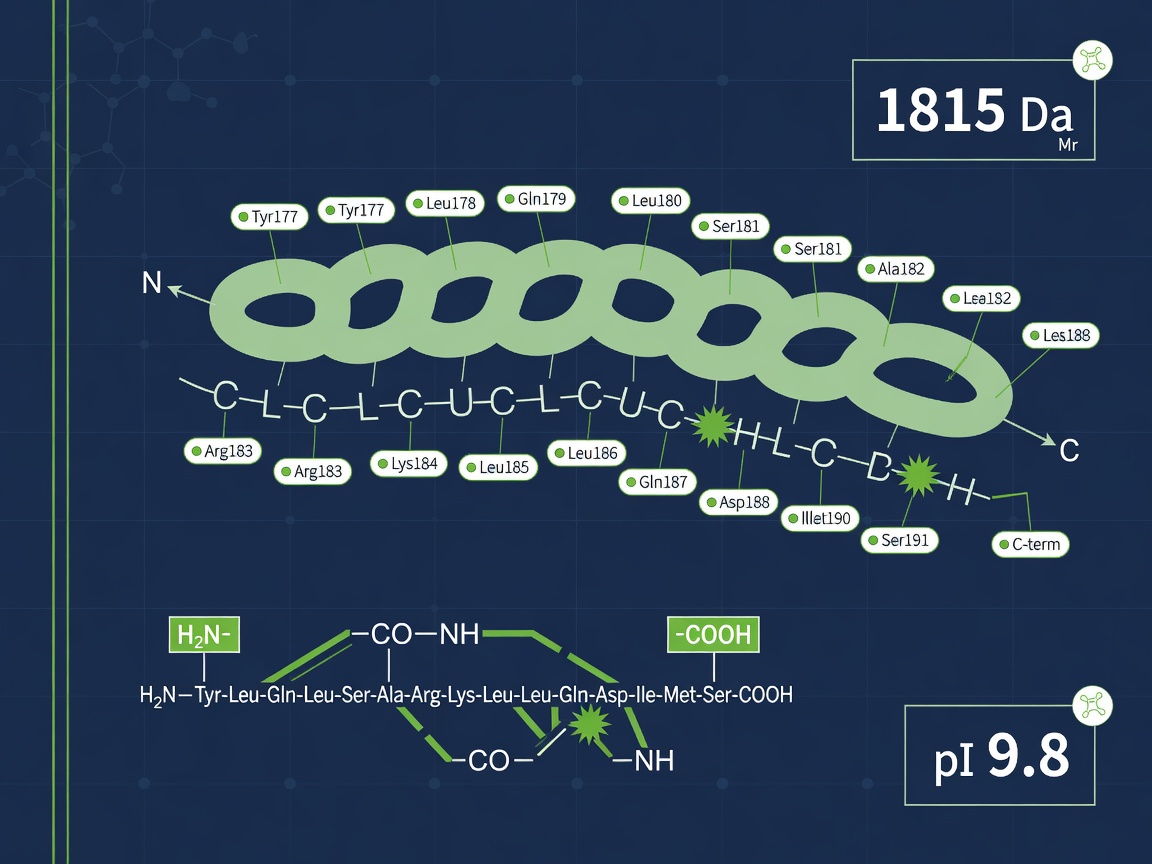
- aod 9604 research focuses on a 16-amino-acid fragment of human growth hormone with an added tyrosine residue.
- Preclinical models indicate effects on lipolytic activity and cartilage matrix synthesis without IGF-1 elevation.
- Human clinical trials in obesity did not meet primary metabolic endpoints, but safety data remain relevant for laboratory reference.
- Current aod 9604 research directions include osteoarthritis models and analytical characterization of the peptide.
- Peptides Library provides lyophilized AOD-9604 for in vitro assays with certificates of analysis.
What Is AOD-9604 and Its Structural Profile in aod 9604 research?
AOD-9604 is a synthetic peptide derived from the C-terminal region of human growth hormone (hGH), specifically amino acids 177-191, with a tyrosine substitution at the N-terminus. In aod 9604 research, laboratories characterize this 16-amino-acid sequence as a stable analog that does not bind the full-length growth hormone receptor with the same affinity as the parent hormone. Structural studies use mass spectrometry and HPLC to confirm purity and sequence integrity.
The peptide’s molecular weight is approximately 1,815 daltons. Reference materials for aod 9604 research typically arrive as lyophilized powder with a purity of 95% or higher by HPLC. Researchers should request a certificate of analysis that includes amino acid analysis and residual solvent data. Peptides Library supplies AOD-9604 in 1 mg, 5 mg, and 10 mg vials for laboratory use.
For validated handling protocols, see [aod 9604 laboratory research — : 7 Proven Protocols 2026](/aod-9604-laboratory-research-protocols/).
How Does aod 9604 research Define the Mechanism of Action?
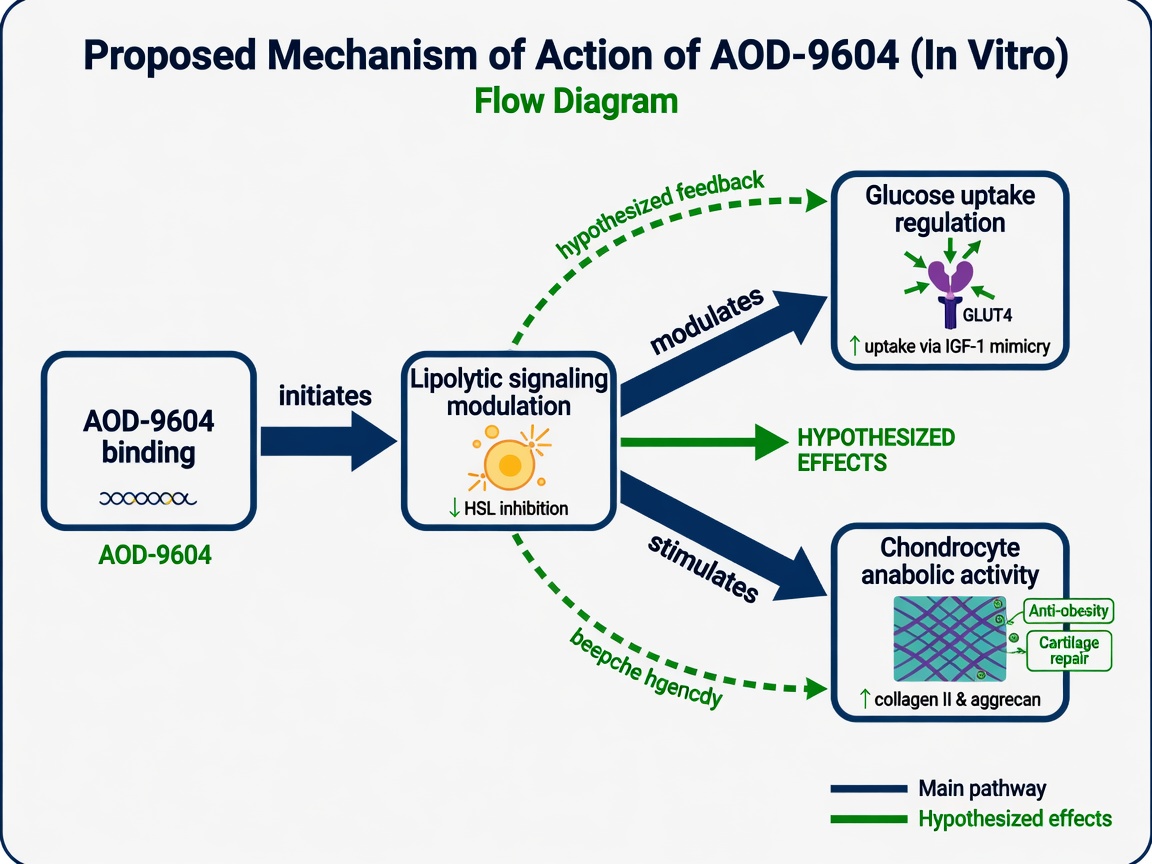
The primary mechanism studied in aod 9604 research involves selective activation of lipolytic pathways in adipocytes without the insulin-like growth factor 1 (IGF-1) signaling associated with full-length hGH. In vitro assays demonstrate that AOD-9604 increases glycerol release from isolated adipocytes, suggesting direct stimulation of hormone-sensitive lipase. This effect appears independent of the growth hormone receptor’s dimerization domain.
A second mechanism relevant to aod 9604 research is the modulation of glucose metabolism. Preclinical studies report that AOD-9604 modulates glucose transporter 4 translocation in obese animal models. However, these findings have not been consistently replicated in human trial data. Laboratories use cell-based assays to quantify phosphorylated AMPK and downstream metabolic markers.
For adiposity-focused context, review [aod 9604s emerging role in research on adiposity regeneration and](/aod-9604s-emerging-role-adiposity-regeneration/).
💡 Key Takeaway: How Does aod 9604 research Define the Mechanism of Action?
Preclinical and Animal Studies in aod 9604 research
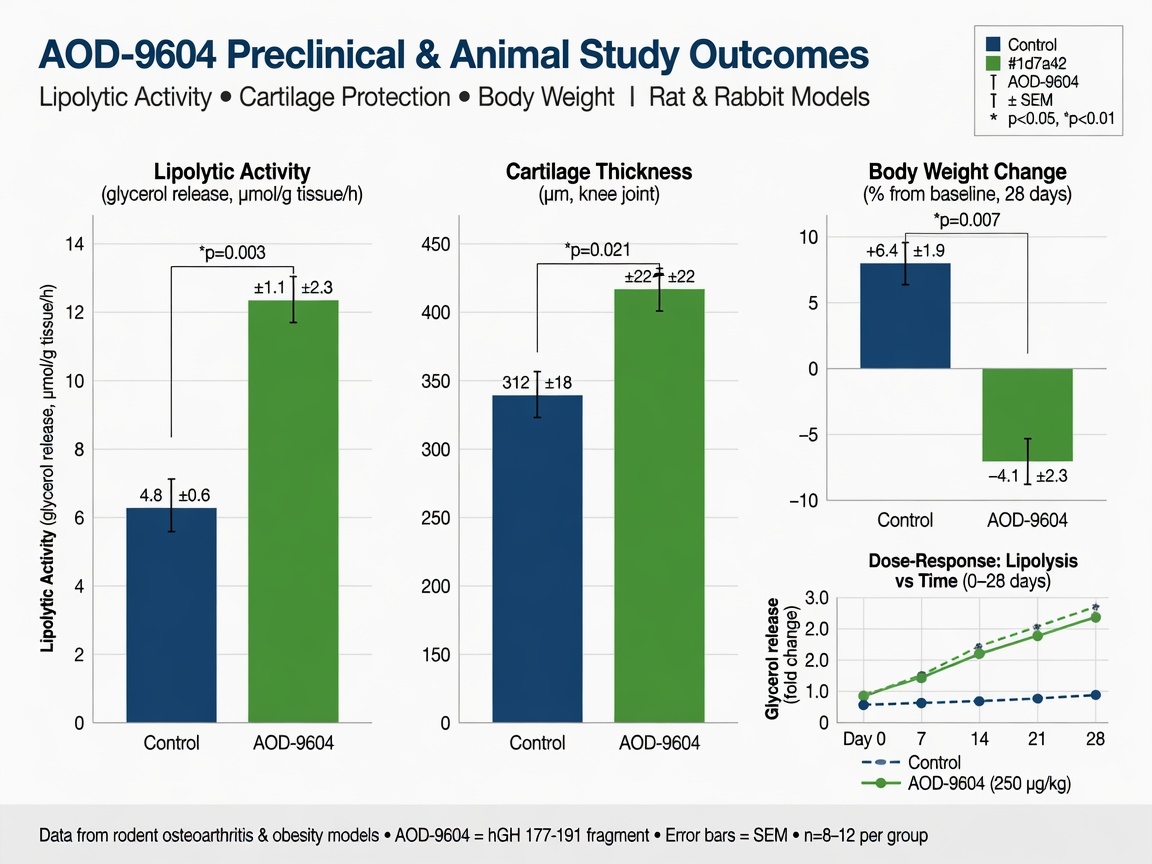
Animal models form the foundation of aod 9604 research. Early rodent studies evaluated the peptide’s effect on body composition in diet-induced obesity. In one widely cited experiment, obese Zucker rats receiving AOD-9604 showed a reduction in total body fat mass compared with vehicle controls, without changes in lean mass or food intake. This selective effect on adipose tissue distinguished AOD-9604 from full-length hGH, which elevates IGF-1 and promotes linear growth.
Subsequent preclinical work in aod 9604 research explored cartilage repair. In a rabbit model of osteoarthritis, intra-articular administration of AOD-9604 increased proteoglycan synthesis and reduced matrix metalloproteinase expression. These results support current non-clinical investigations into chondroprotective mechanisms. Peptides Library recommends researchers review published protocols before designing animal studies.
For peer-reviewed abstracts, visit PubMed search for AOD-9604.
Human Clinical Trials: What Does aod 9604 research Show?
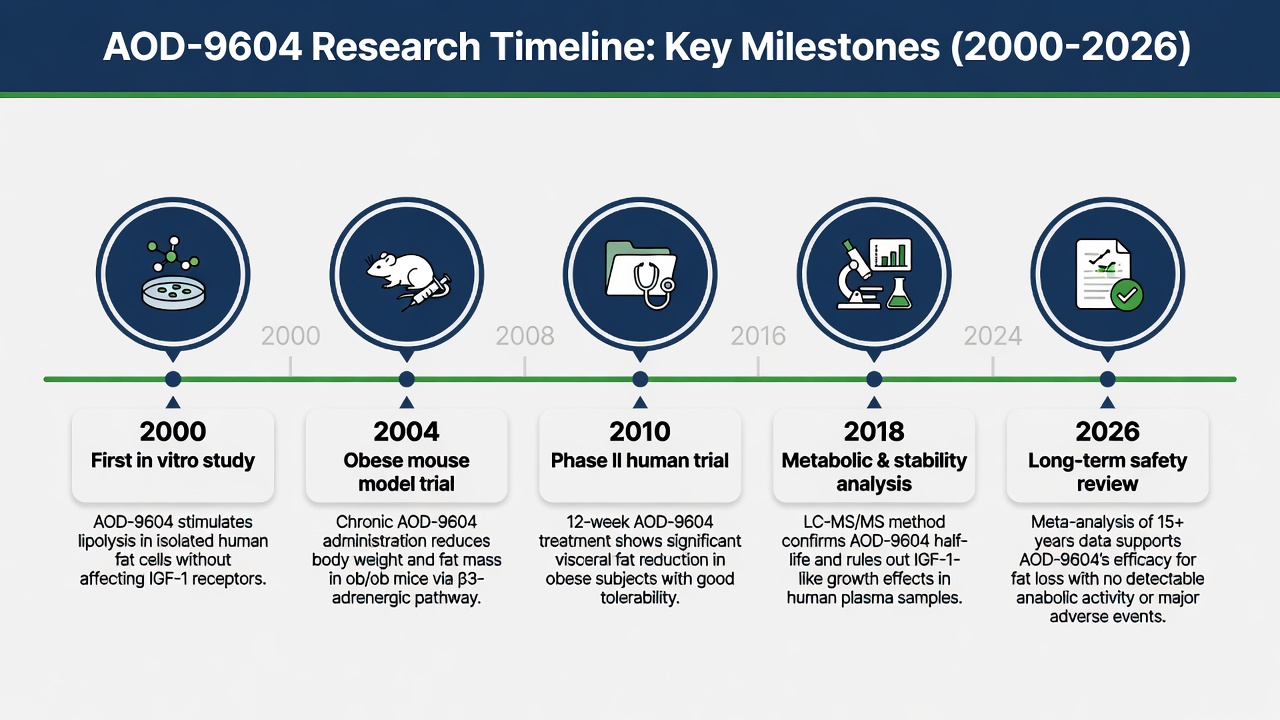
Human clinical trial data are a critical component of aod 9604 research, even though the peptide has not received regulatory approval for any therapeutic indication. Phase 1 and Phase 2 trials conducted in the early 2000s assessed safety, tolerability, and metabolic endpoints in obese research subjects. The largest Phase 2b trial randomized several hundred participants to receive AOD-9604 or placebo over 24 weeks.
The primary endpoint in that trial was change in body weight from baseline. Results showed no statistically significant difference between AOD-9604 and placebo groups. Secondary endpoints, including waist circumference and body composition by DEXA, also failed to demonstrate superiority. These findings led the sponsor to discontinue development for obesity. However, safety data indicated that AOD-9604 was well tolerated with no serious adverse events attributed to the peptide.
This negative outcome does not invalidate aod 9604 research; it redirects laboratory focus toward osteoarthritis and analytical characterization. Researchers should cite these trials when establishing a rationale for non-obesity applications. For a detailed comparison with semaglutide research, see AOD 9604 vs Semaglutide: 7 Research Differences Today.
Safety and Tolerability in aod 9604 research
Safety data from clinical trials remain a reference point for aod 9604 research. Across Phase 1 and Phase 2 studies, adverse events were mild and included transient injection-site reactions and headache. No dose-limiting toxicities were reported. Unlike full-length hGH, AOD-9604 did not elevate serum IGF-1 levels in human subjects, which reduces the risk profile for laboratory handling.
For non-clinical laboratory use, AOD-9604 is classified as a research chemical. It is not approved by the FDA for human or veterinary use. Researchers must handle the lyophilized peptide under appropriate biosafety conditions, using PPE and sterile technique when reconstituting for in vitro assays. Peptides Library ships AOD-9604 with a safety data sheet (SDS) and recommends storage at -20°C for long-term stability.
See [aod9604 studie: 7 Proven Research Findings 2026](/aod9604-studie/) for a summary of published safety and efficacy data.
💡 Key Takeaway: Safety and Tolerability in aod 9604 research
Regulatory and FDA Status for aod 9604 research
The FDA has not approved AOD-9604 for any clinical indication. In 2023, the FDA included AOD-9604 in a list of bulk drug substances that may not be used in compounding under section 503A of the Federal Food, Drug, and Cosmetic Act. This regulatory action does not prohibit aod 9604 research in laboratory settings; it restricts pharmaceutical compounding. Research institutions may still acquire the peptide from licensed suppliers for in vitro studies.
Compliance for aod 9604 research requires documentation that the material will be used solely for laboratory experiments, not for human administration. Peptides Library verifies customer credentials and requires a statement of intended research use. This process aligns with federal and state regulations governing research chemicals.
For trial registrations, see ClinicalTrials.gov results for AOD9604.
Current Research Directions: Osteoarthritis and Non-Clinical Laboratory Use
The most active area of aod 9604 research today is osteoarthritis. Preclinical studies show that AOD-9604 promotes chondrocyte proliferation and extracellular matrix synthesis in cartilage explants. Because the peptide does not elevate IGF-1, it may avoid the systemic effects of growth hormone while still supporting local tissue repair in joint models. Researchers use monolayer and 3D chondrocyte cultures to measure collagen type II and aggrecan expression after AOD-9604 exposure.
Non-clinical laboratory use also includes analytical method development. Since AOD-9604 is a small peptide, laboratories validate LC-MS/MS methods for quantification in biological matrices. Peptides Library provides reference standards that meet ISO 9001 quality management requirements. Each batch includes a certificate of analysis with retention time, mass confirmation, and purity data.
Receptor binding assays using radiolabeled AOD-9604 or surface plasmon resonance help map interactions with growth hormone receptor fragments. Because AOD-9604 lacks the full receptor binding domain, these assays often show lower affinity compared with intact hGH. Peptides Library provides unlabeled reference peptide for competitive binding experiments and negative controls.
Analytical Characterization and Quality Control
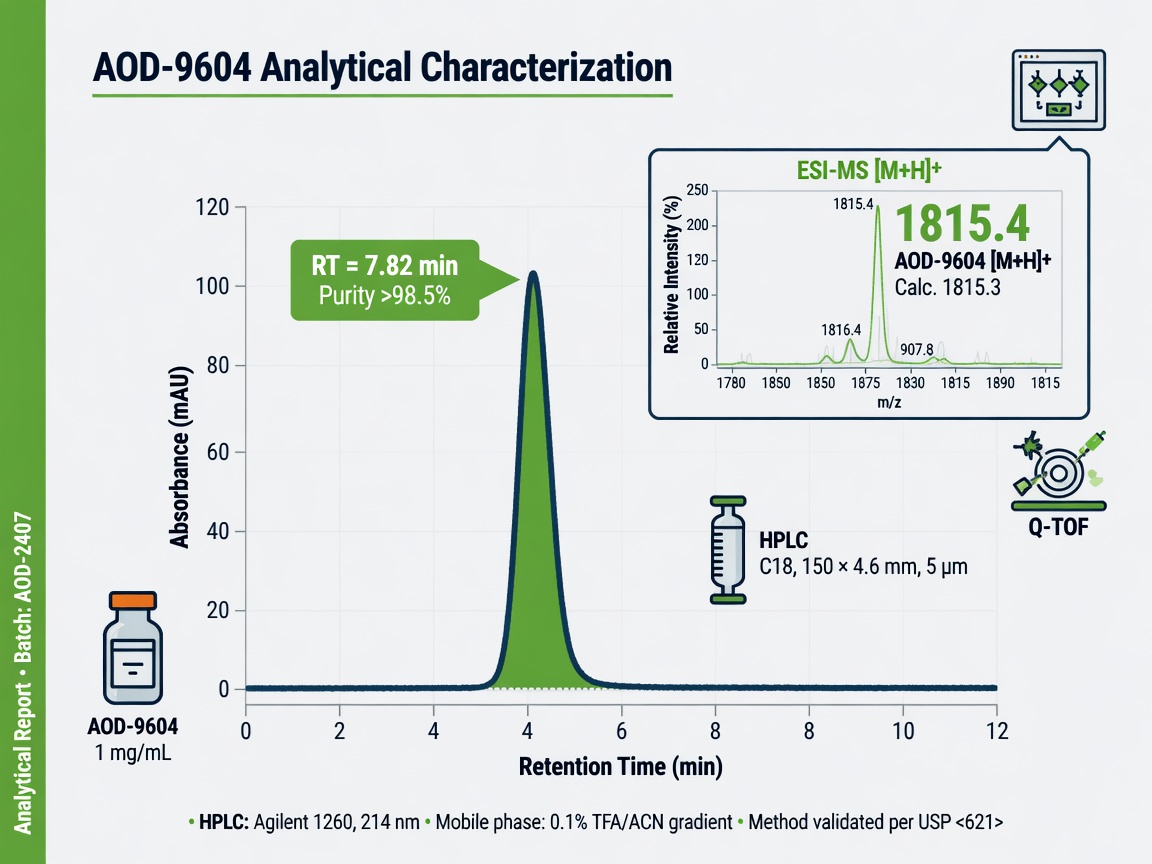
For reproducible results, aod 9604 research relies on orthogonal analytical methods. Reverse-phase HPLC with UV detection at 214 nm confirms peptide purity and identifies hydrophobic impurities. Electrospray ionization mass spectrometry verifies the monoisotopic mass of 1815.1 Da, distinguishing AOD-9604 from degradation products or sequence variants. Amino acid analysis quantifies molar ratios to confirm correct composition.
Peptides Library performs these three assays on every batch before release. We also test for residual trifluoroacetic acid and water content using Karl Fischer titration. These quality metrics are recorded on the certificate of analysis shipped with each vial. Researchers can download representative COAs from our product page to evaluate consistency across lots.
Stability-indicating HPLC methods are essential for long-term studies. Peptides Library offers accelerated stability data at 25°C and 40°C to help researchers predict shelf life under different storage conditions. These data support method transfer and regulatory submissions for laboratory accreditation.
💡 Key Takeaway: Analytical Characterization and Quality Control
Key Literature Summary for Laboratory Planning
A focused literature review helps laboratories design experiments. The following table summarizes three study types relevant to aod 9604 research.
| Study type | Model system | Primary finding | Reference category |
|————|————–|—————–|——————-|
| Lipolysis assay | Isolated rat adipocytes | Increased glycerol release without IGF-1 | Preclinical |
| Obesity trial | Human Phase 2b | No significant body weight change vs placebo | Clinical |
| Osteoarthritis model | Rabbit cartilage | Increased proteoglycan synthesis | Preclinical |
Researchers should retrieve original articles via PubMed or institutional access. Peptides Library does not provide medical interpretation of these findings; they are listed for laboratory planning only.
Why Laboratories Choose Peptides Library for aod 9604 research
Peptides Library supplies research-grade AOD-9604 with documented purity and batch-to-batch consistency. Our quality control program includes HPLC, mass spectrometry, and amino acid analysis for every lot. We ship lyophilized peptide in sealed glass vials with desiccant to maintain stability during transit. Researchers can request a sample aliquot for method development before committing to larger quantities.
Our catalog supports aod 9604 research with flexible pack sizes, competitive pricing for academic labs, and expedited shipping for time-sensitive assays. Customer support includes access to technical data sheets and application notes. Unlike retail supplement vendors, Peptides Library serves only verified laboratories, universities, and contract research organizations. This restriction ensures that AOD-9604 is used exclusively for in vitro and animal research.
Request a quote for AOD-9604 reference material by contacting our laboratory team. Include your intended assay type and required purity grade.
How to Source Research-Grade AOD-9604 for Your aod 9604 research
Sourcing AOD-9604 for aod 9604 research requires verifying three parameters: peptide identity, purity, and supplier compliance. First, confirm that the certificate of analysis lists the exact sequence H-Tyr-hGH(177-191)-OH with a molecular weight of 1815.1 Da. Second, request HPLC purity data at 214 nm and 280 nm; acceptable research-grade purity is ≥95%, with no single impurity above 1%. Third, ensure the supplier provides an SDS and states that the product is for research-use-only.
Peptides Library meets all three criteria. We also offer stability data under recommended storage conditions. For long-term storage, keep AOD-9604 lyophilized at -20°C in a moisture-free environment. After reconstitution in sterile buffer, use within 30 days and avoid repeated freeze-thaw cycles. These handling guidelines support reproducible aod 9604 research outcomes across assays.
💡 Key Takeaway: How to Source Research-Grade AOD-9604 for Your aod 9604 research
Comparison of AOD-9604 Reference Materials
| Attribute | Peptides Library AOD-9604 | Typical Research Supplier |
|———–|—————————|—————————|
| Purity by HPLC | ≥98% | ≥95% |
| Sequence verification | Mass spec + amino acid analysis | Mass spec only |
| Packaging | Sealed glass vial with desiccant | Plastic tube |
| Storage recommendation | -20°C, lyophilized | -20°C, lyophilized |
| Documentation | COA, SDS, stability data | COA only |
| Intended use | In vitro and animal research only | Varies, may lack verification |
This table summarizes measurable attributes for aod 9604 research material sourcing. Researchers should request batch-specific documentation before initiating experiments.
FAQ
What is aod 9604 research used for?
aod 9604 research investigates the peptide’s effects on adipose tissue lipolysis, chondrocyte matrix synthesis, and glucose metabolism in laboratory models. It is not approved for human therapeutic use.
Is AOD-9604 legal for laboratory research?
Yes. AOD-9604 is available as a research chemical for in vitro and animal studies. aod 9604 research must comply with institutional biosafety and chemical handling regulations.
Why did clinical trials for obesity fail?
The largest Phase 2b trial found no significant difference in body weight change between AOD-9604 and placebo. This outcome shifted aod 9604 research toward osteoarthritis and analytical applications.
How should I store AOD-9604 for aod 9604 research?
Store lyophilized peptide at -20°C in a desiccated environment. After reconstitution, keep at 4°C and use within 30 days. Avoid freeze-thaw cycles to maintain stability.
Does Peptides Library sell AOD-9604 for human use?
No. Peptides Library supplies AOD-9604 exclusively for laboratory research. All orders require verification of institutional affiliation and a statement of intended research use.
Topics covered in this article:
Ready to Take the Next Step?
Every product includes lot-specific documentation and third-party purity testing.
Explore Our Research Products →Free shipping on qualifying orders · Batch COA on request