


All 3 in One: Complete 2026 Research Peptide Kit Guide
Peptide kit guide 2026: the all 3 in one research peptide kit bundles BPC-157, TB-500, GHK-Cu with ≥98% HPLC purity, lot COAs, and 72-hour cold-chain shipping.
📋 Table of Contents
The all 3 in one peptide kit from Peptides Library is a single research supply package that bundles three separately vialed, lyophilized compounds—BPC-157, TB-500, and GHK-Cu—each verified at ≥98% HPLC purity with lot-specific certificates of analysis and mass spectrometry identity confirmation, shipped in cold-chain packaging rated for 72-hour transit. This peptide kit consolidates multi-compound procurement into one documentation-unified order for in vitro laboratory research. It is not a premixed blend; each vial remains individually characterized to preserve experimental control.
Key takeaways
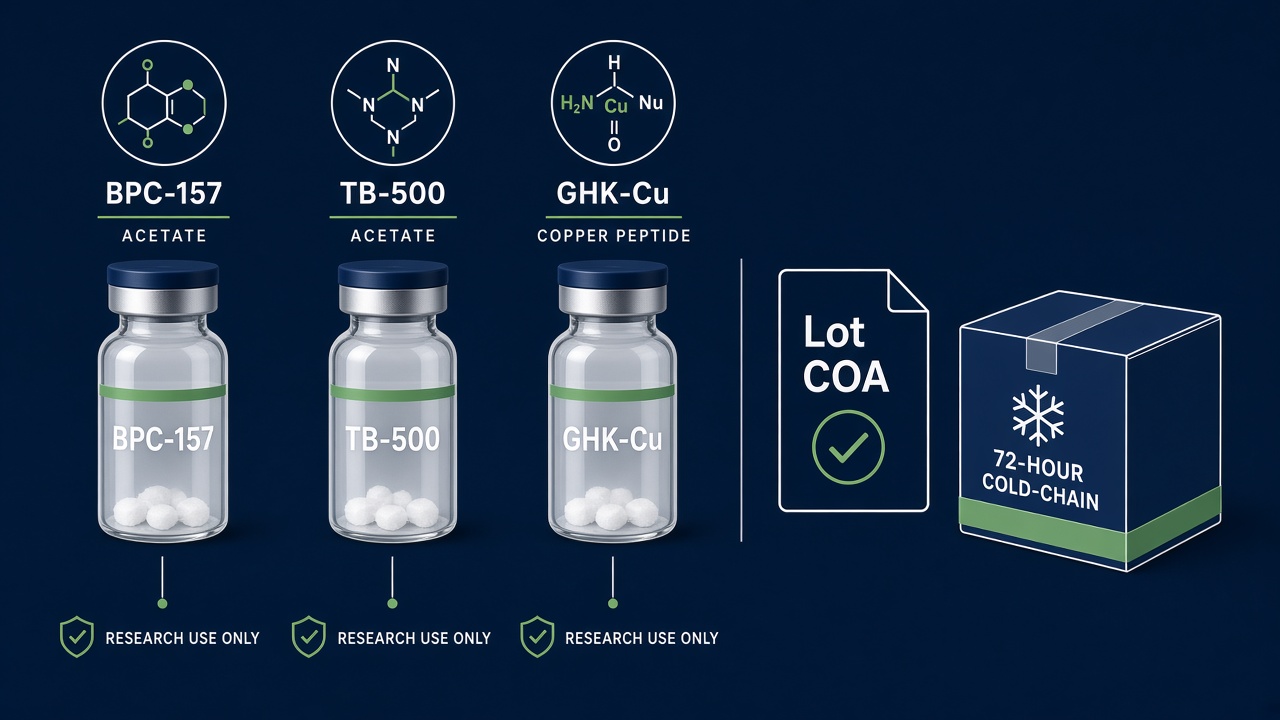
- The all 3 in one peptide kit bundles three lyophilized peptides into one order with unified lot documentation.
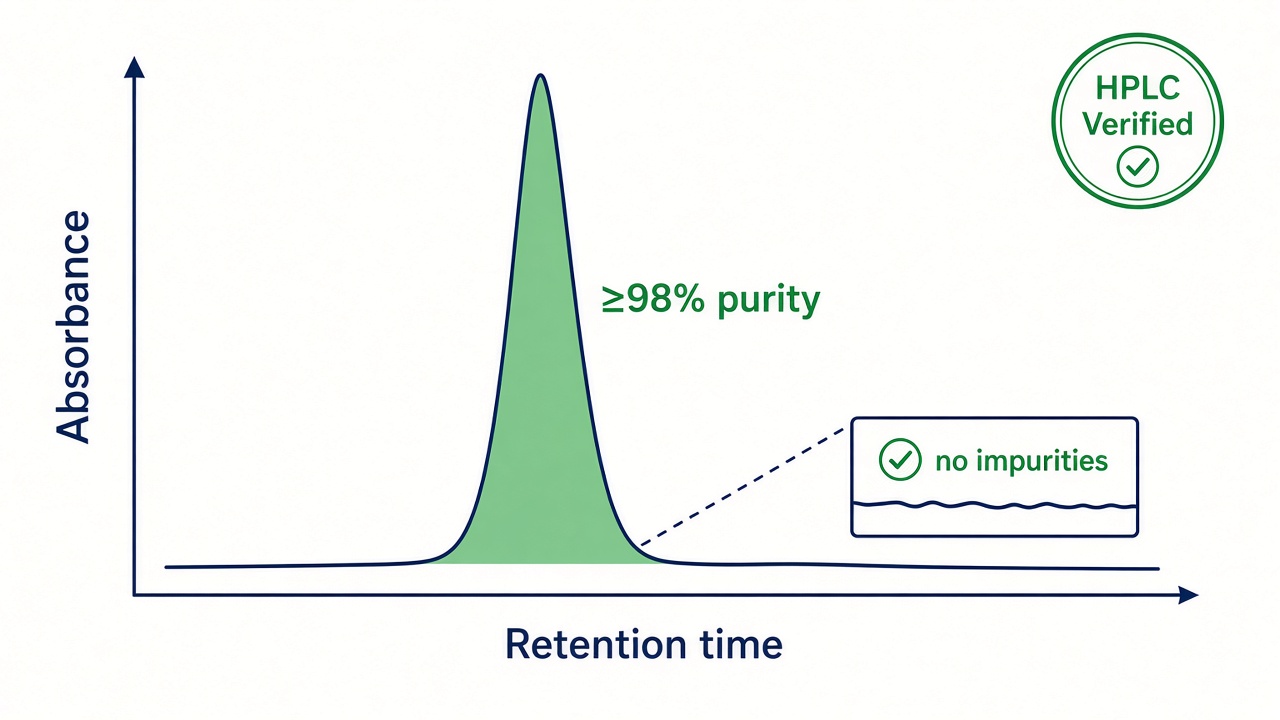
- Every vial in this peptide kit is verified by HPLC against a ≥98% purity acceptance criterion and by mass spectrometry, with a lot-specific certificate of analysis.
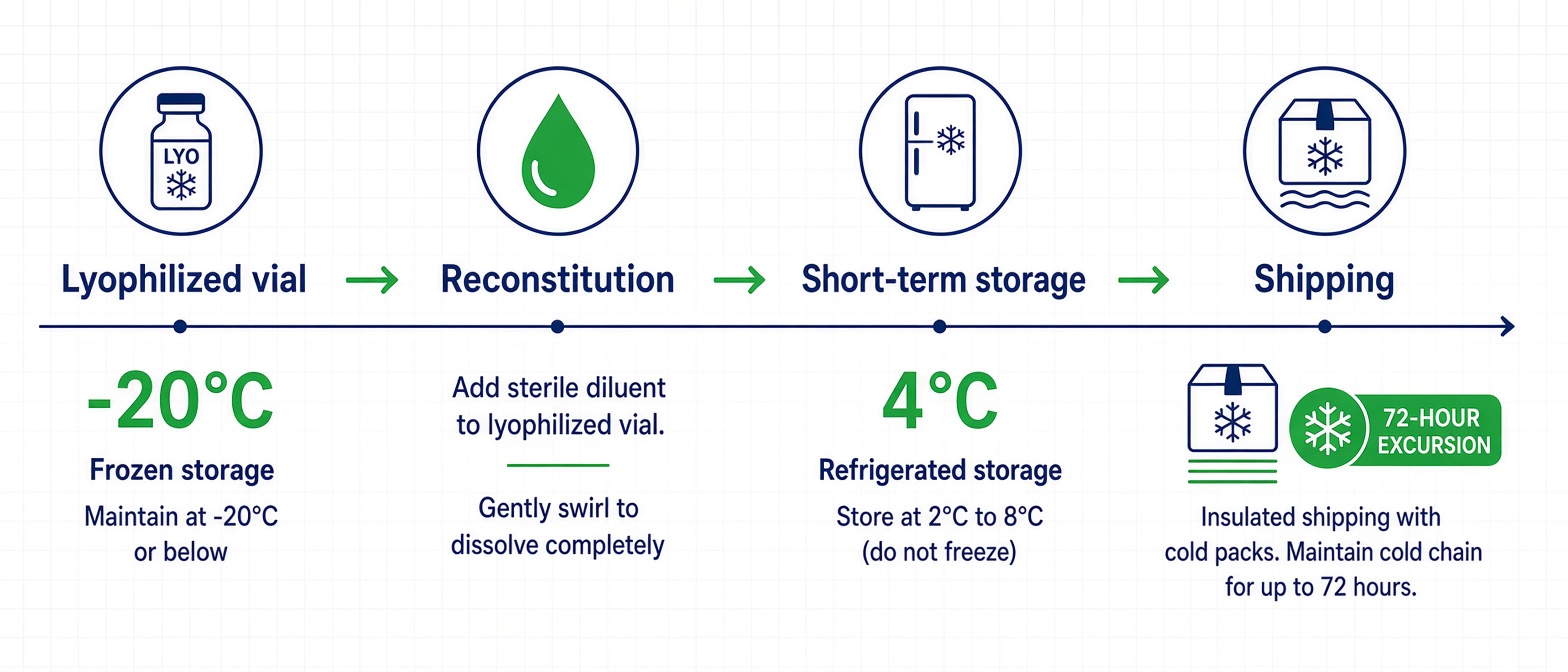
- Kits ship in insulated cold-chain packaging rated for extended transit and are stored at −20 °C as lyophilized solids.
- The format is designed for parallel, multi-compound study designs in academic and institutional laboratories.
- All compounds are research use only, supplied exclusively for in vitro and laboratory research — never for human or veterinary application.
What Does All 3 in One Mean for a Research Peptide Kit?
In a laboratory procurement context, all 3 in one describes a single peptide kit containing three distinct peptide compounds—three separate lyophilized vials—supplied under one lot-tracked documentation package. The phrase refers to procurement structure, not to a pre-mixed blend: each vial remains an individually characterized substance so that experimental variables stay controlled.
Peptides are short chains of amino acids, typically 2–50 residues, that occupy a chemical space between small molecules and proteins. Laboratories new to peptide procurement can review the structural distinctions in our guide to are peptide and protein hormones the same.
The phrase appears in several variants—3-in-1, three-in-one, and tri-compound bundle—but the laboratory meaning is consistent: multiple distinct compounds, one order, one documentation package. On this page the term always refers to three separately vialled peptides, never to a premixed combination.
Multi-compound designs have grown alongside peptide science generally. Screening programs that once examined single sequences now routinely compare families of related compounds, and procurement formats have adapted. Consolidating three compounds into one peptide kit replaces three purchase orders, three receiving events, and three documentation sets with a single record.
What Is Included in the All 3 in One Research Peptide Kit?
Each all 3 in one peptide kit is a complete research supply package with measurable, verifiable components:
- Three lyophilized peptide vials (standard configuration: 5 mg net peptide content per vial; 10 mg configuration available)
- One lot-specific certificate of analysis per compound
- HPLC chromatograms demonstrating purity against a ≥98% acceptance criterion
- Mass spectrometry spectra confirming molecular identity for each sequence
- An insulated cold-chain shipping container with gel refrigerant packs, rated for 72-hour transit
- Tamper-evident borosilicate glass vials with butyl rubber stoppers and flip-off seals
Three Individually Characterized Vials
Every vial in the all 3 in one peptide kit is filled, lyophilized, and sealed as an individual batch. Each compound carries its own lot number, chromatogram, and spectrum, allowing researchers to trace every data point back to a specific production run. This per-vial traceability is what allows multi-compound studies to remain interpretable when results are compared across compounds.
Unified Documentation Package
Documentation is delivered in print with the shipment and digitally through a lot-lookup portal. A single peptide kit record links all three lots, simplifying archiving for laboratories that maintain audit-ready files for institutional review. Certificates report the test methods used, the acceptance criteria applied, and the measured result for each lot, rather than generic pass statements.
Vial and Packaging Specifications
Vials are 3 mL type-I borosilicate glass with 13 mm butyl stoppers and aluminum flip-off seals. Fill accuracy is held within ±5% of labeled net content, and each vial is labeled with compound name, lot number, net weight, and storage requirements.
Cold-Chain Packaging
Kits ship in insulated containers with gel packs selected for seasonal transit conditions. A temperature indicator is included so receiving staff can confirm the package remained within range during transport. Transit data can be retained with the peptide kit record as part of a laboratory’s materials-qualification file.
💡 Key Takeaway: What Is Included in the All 3 in One Research Peptide Kit?
Which Peptides Are Commonly Studied in an All 3 in One Peptide Kit Configuration?
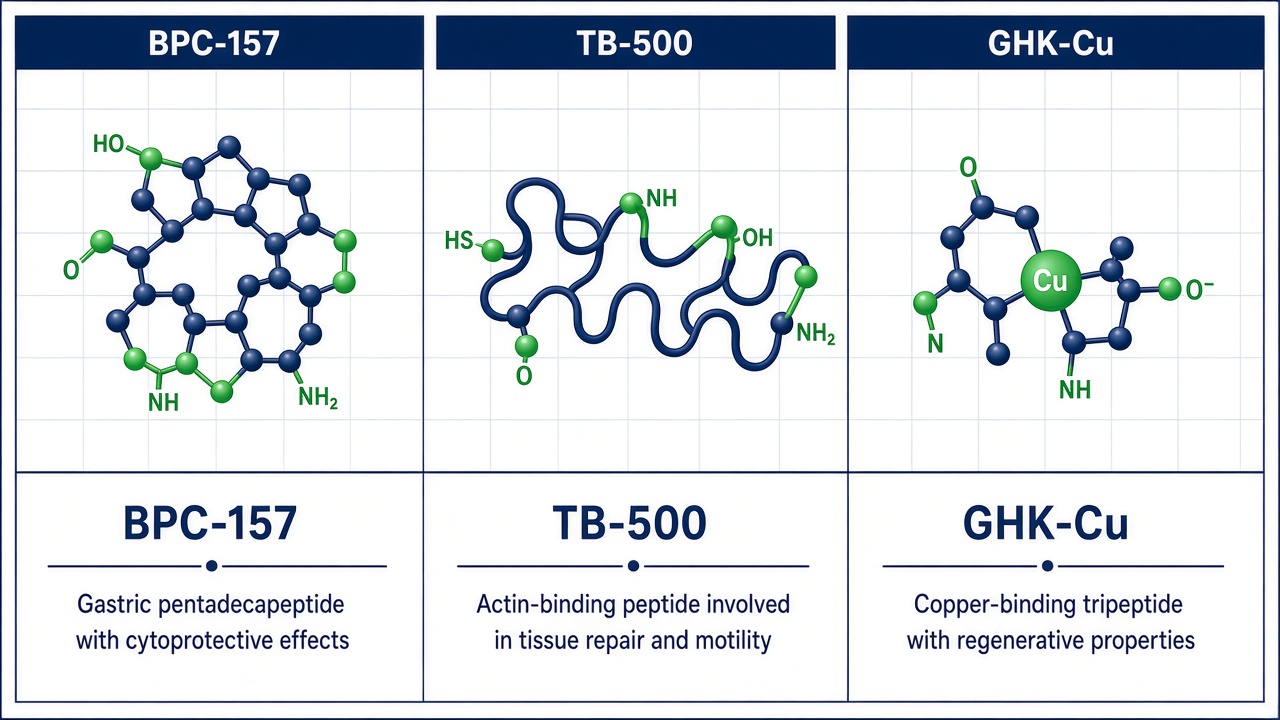
The standard all 3 in one peptide kit configuration pairs three compounds that appear frequently together in preclinical literature: BPC-157, TB-500, and GHK-Cu. All descriptions below refer to published in vitro and animal-model research, not to any human application.
These three compounds occupy distinct molecular niches—a gastric-derived pentadecapeptide, an actin-regulating fragment, and a copper-chelating tripeptide—which makes them productive subjects for comparative pathway research. Examining mechanistically different compounds in parallel allows laboratories to map how distinct signaling systems behave under identical experimental conditions.
BPC-157
BPC-157 is a pentadecapeptide—a chain of 15 amino acids—derived from a sequence found in a gastric protein. In the scientific literature it is examined in cell cultures and rodent models exploring growth-factor signaling, angiogenic pathways, and nitric-oxide system interactions. Its fifteen-residue sequence is well suited to solid-phase synthesis, which contributes to consistent lot-to-lot characterization.
TB-500
TB-500 is a synthetic fragment corresponding to the active region of thymosin beta-4, a 43-amino-acid protein that regulates actin polymerization. A review in the *Annals of the New York Academy of Sciences* summarizes its molecular mechanisms in preclinical models, including cell migration, cytoskeletal dynamics, and vascular signaling in animal systems (PubMed). In research settings, TB-500 is typically examined alongside full-length thymosin beta-4 data to isolate fragment-specific activity.
GHK-Cu
GHK-Cu is a copper-binding tripeptide—glycyl-L-histidyl-L-lysine complexed with Cu²⁺—studied for gene-expression modulation in experimental systems. A review in the *International Journal of Molecular Sciences* reports activity across thousands of gene targets in cell-culture data (NCBI). Laboratories selecting the all 3 in one peptide kit frequently examine GHK-Cu in fibroblast cultures and related in vitro models. The copper complex is pH-sensitive, so handling conditions are specified in the kit documentation.
Alternative configurations are available on request. Laboratories studying related peptide families can request alternative three-compound combinations, with the same verification and documentation standards applied.
How Does the All 3 in One Peptide Kit Format Support Laboratory Workflows?
Consolidating three research compounds into one peptide kit removes repetitive administrative tasks that consume technician hours. Instead of three purchase orders, three receiving inspections, three inventory entries, and three documentation files, a single peptide kit generates one receiving event and one audit trail. This reduces transcription errors and frees staff for bench work.
The unified lot structure also improves experimental reproducibility. When all three compounds in a peptide kit share a single procurement record, a researcher can confirm that all materials arrived under the same cold-chain conditions and were stored identically from day one. This consistency matters for multi-arm protocols where cross-compound comparisons depend on equal handling.
For laboratories that already maintain a peptide library, this kit format complements existing inventory systems. You can review broader sourcing and QC practices in our guide to exogenous peptides: complete sourcing and QC guide. The peptide kit’s per-vial traceability aligns with institutional data-integrity requirements, and the digital lot-lookup portal allows rapid retrieval of COAs during internal audits.
All 3 in One Peptide Kit vs. Single-Vial Ordering: Which Fits Your Research Design?
Choosing between an all 3 in one peptide kit and three separate single-vial orders depends on your protocol’s structure and documentation needs. The table below compares the two approaches on measurable operational factors.
| Factor | All 3 in One Peptide Kit | Three Single-Vial Orders |
|——–|————————–|————————–|
| Purchase orders | 1 | 3 |
| Receiving events | 1 | 3 |
| COA files to archive | 1 linked record | 3 separate records |
| Cold-chain shipping validation | Single temperature indicator log | Three separate logs |
| Lot traceability | Unified kit lot plus per-vial lots | Per-vial lots only |
| Cost of documentation management | Lower per compound | Higher per compound |
For multi-compound screening studies, the peptide kit reduces administrative overhead and ensures that all compounds experience identical transit conditions. For single-compound dose-response experiments, individual ordering may be simpler. The kit format is not a premix, so experimental variables remain isolated regardless of procurement method.
💡 Key Takeaway: All 3 in One Peptide Kit vs. Single-Vial Ordering: Which Fits Your Research Design?
How Is Purity Verified Across the All 3 in One Peptide Kit?
Purity verification for every vial in the all 3 in one peptide kit follows a two-method orthogonal approach. Each compound lot is analyzed by reversed-phase HPLC with UV detection at 214 nm, and the integrated peak area is compared against a ≥98% acceptance criterion. A lot-specific chromatogram is printed in the COA and available digitally through the lot-lookup portal.
Mass spectrometry confirms molecular identity. For BPC-157, TB-500, and GHK-Cu, the observed monoisotopic mass must match the theoretical mass within a specified tolerance, typically ±1.0 Da. This step rules out sequence errors, truncations, or contaminating peptides that HPLC alone cannot distinguish.
Every COA in the peptide kit reports the test methods, the acceptance criteria, and the measured result for that lot. No generic pass statements are used. Laboratories that require additional verification—such as amino acid analysis or endotoxin testing—can request those assays at the time of order; results are appended to the same kit documentation record.
What Are the Storage and Handling Specifications for This Peptide Kit?
All three compounds in the all 3 in one peptide kit are supplied as lyophilized solids and must be stored at −20 °C upon receipt. Lyophilized peptides are hygroscopic, so vials should be allowed to reach room temperature before opening to prevent condensation on the stopper. Each vial is labeled with storage requirements, and the kit documentation specifies the same conditions for all three compounds.
Once reconstituted, each peptide has different stability windows depending on solvent and temperature. BPC-157 and TB-500 are typically reconstituted in sterile water or buffer and held at 4 °C for short-term use; GHK-Cu is pH-sensitive and requires careful buffer selection. The kit documentation provides handling notes for each compound, but laboratories must validate stability under their own experimental conditions.
For long-term storage, the peptide kit’s three vials should remain in a dedicated −20 °C freezer with temperature logging. Repeated freeze-thaw cycles degrade peptide integrity, so aliquoting after reconstitution is recommended. The cold-chain shipping container includes a temperature indicator, and that indicator log should be filed with the kit’s COA record to complete the storage history.
What Research Applications Use an All 3 in One Peptide Kit?
The all 3 in one peptide kit is designed for in vitro and preclinical research applications, not for any human or veterinary use. Common study designs include:
- Cell migration assays using TB-500 to examine actin cytoskeleton dynamics in cultured fibroblasts or endothelial cells.
- Gene-expression profiling with GHK-Cu in fibroblast cultures, measuring copper-dependent modulation of extracellular matrix genes.
- Angiogenesis models with BPC-157 in endothelial tube-formation assays or rodent limb-ischemia models.
- Comparative pathway mapping where all three compounds are applied in parallel to identical cell lines to isolate mechanism-specific responses.
- Combinatorial in vitro screens that test pairwise or triple combinations under controlled conditions.
Each of these applications relies on the peptide kit’s per-vial traceability to attribute observed effects to a specific compound lot. For researchers designing new protocols, our guide to are there studies on it? 7 essential ways to check explains how to evaluate existing literature before committing to a multi-compound design.
💡 Key Takeaway: What Research Applications Use an All 3 in One Peptide Kit?
What Compliance Considerations Apply to All 3 in One Purchases?
Every all 3 in one peptide kit is sold strictly for in vitro laboratory research. This means the compounds are not for human use, not for veterinary use, and not intended to diagnose, treat, cure, or prevent any disease. The research-use-only notice appears on the product page, on the COA, and on the shipping documentation. Purchasers must be 21 years of age or older.
Institutional laboratories must ensure that procurement of this peptide kit aligns with their internal biosafety and chemical-hygiene plans. Peptides are generally classified as low-hazard research chemicals, but each institution sets its own handling requirements. The kit’s documentation package supports compliance by providing lot-specific analytical data, storage conditions, and a transit temperature log.
For laboratories operating under GLP or ISO 9001 quality systems, the peptide kit’s unified lot record simplifies audit preparation. Because all three compounds share one procurement record, a single document retrieval satisfies traceability for the entire kit. No peptide in this kit is scheduled or controlled under U.S. federal drug law, but export controls may apply to international shipments; laboratories should verify local import requirements before ordering.
What Should Laboratories Check Before Choosing an All 3 in One Supplier?
Not all peptide kit suppliers apply the same quality standards. Before selecting a source for an all 3 in one peptide kit, verify the following measurable attributes:
- HPLC purity acceptance criterion — does the supplier commit to ≥98% for every vial, and do COAs show actual measured values rather than pass/fail only?
- Mass spectrometry identity confirmation — is a spectrum included for each compound lot, and does it match the theoretical mass?
- Cold-chain shipping validation — is the container rated for at least 72 hours, and does it include a temperature indicator that can be logged?
- Per-vial traceability — are lot numbers, fill dates, and analytical results linked to each individual vial, not just to a batch summary?
- Documentation accessibility — can COAs be retrieved digitally after shipment, and does the supplier provide a single kit record linking all three lots?
- Research-use-only compliance — does the supplier explicitly restrict sales to in vitro laboratory research and require age verification?
These checks mirror the sourcing guidance in our Bibtides: complete research peptide library guide, which covers vendor evaluation for multi-compound procurement.
Who Is the All 3 in One Kit Designed For?
The all 3 in one peptide kit is designed for academic and institutional laboratories that run parallel, multi-compound study designs. Typical users include cell-biology labs screening peptide families in identical assay platforms, preclinical research groups comparing mechanism-specific readouts across related compounds, and core facilities that manage shared peptide inventories for multiple principal investigators.
This kit format is not intended for individual researchers who need a single peptide for a single assay. The bundled structure adds value only when a protocol calls for all three compounds under matched conditions. Laboratories that are uncertain whether the peptide kit fits their workflow can request a sample COA before purchase to evaluate documentation quality.
💡 Key Takeaway: Who Is the All 3 in One Kit Designed For?
How Do Laboratories Order the All 3 in One Kit?
Ordering the all 3 in one peptide kit follows a standard procurement workflow. Laboratories select the standard configuration (BPC-157, TB-500, GHK-Cu) or request an alternative three-compound combination, choose the net peptide content per vial (5 mg or 10 mg), and confirm the shipping destination for cold-chain logistics. Age verification (21+) is required at checkout, and the order confirmation includes a kit-level lot number that links all three vials.
After shipment, the receiving laboratory logs the temperature indicator, files the printed COAs, and transfers the vials to −20 °C storage. The digital lot-lookup portal allows retrieval of chromatograms and spectra at any time, and the single kit record remains available for the shelf life of the compounds. No prices are listed on this page; laboratories should contact Peptides Library directly for current research-supply quotations.
FAQ
Is the all 3 in one peptide kit a premixed blend?
No. The all 3 in one peptide kit contains three separate lyophilized vials, each with its own lot number, COA, HPLC chromatogram, and mass spectrum. The phrase refers to procurement structure, not to any physical mixing of compounds.
What purity standard applies to every vial in the peptide kit?
Every vial in the all 3 in one peptide kit is verified by reversed-phase HPLC against a ≥98% purity acceptance criterion. The COA reports the measured purity for each lot, and mass spectrometry confirms molecular identity.
How is the peptide kit shipped, and what storage conditions are required?
The kit ships in an insulated cold-chain container with gel packs rated for 72-hour transit and includes a temperature indicator. Upon receipt, all vials must be stored at −20 °C as lyophilized solids. After reconstitution, each compound has specific stability conditions detailed in the kit documentation.
Can I use this peptide kit for human or veterinary research?
No. Every compound in the all 3 in one peptide kit is sold strictly for in vitro laboratory research. It is not for human use, not for veterinary use, and not intended to diagnose, treat, cure, or prevent any disease. Purchasers must be 21 years of age or older.
Can laboratories request a different three-peptide combination?
Yes. Alternative three-compound configurations are available on request, with the same ≥98% HPLC purity verification, mass spectrometry identity confirmation, lot-specific COAs, and cold-chain shipping standards applied to every vial.
Topics covered in this article:
Ready to Take the Next Step?
Every product includes lot-specific documentation and third-party purity testing.
Explore Our Research Products →Free shipping on qualifying orders · Batch COA on request