


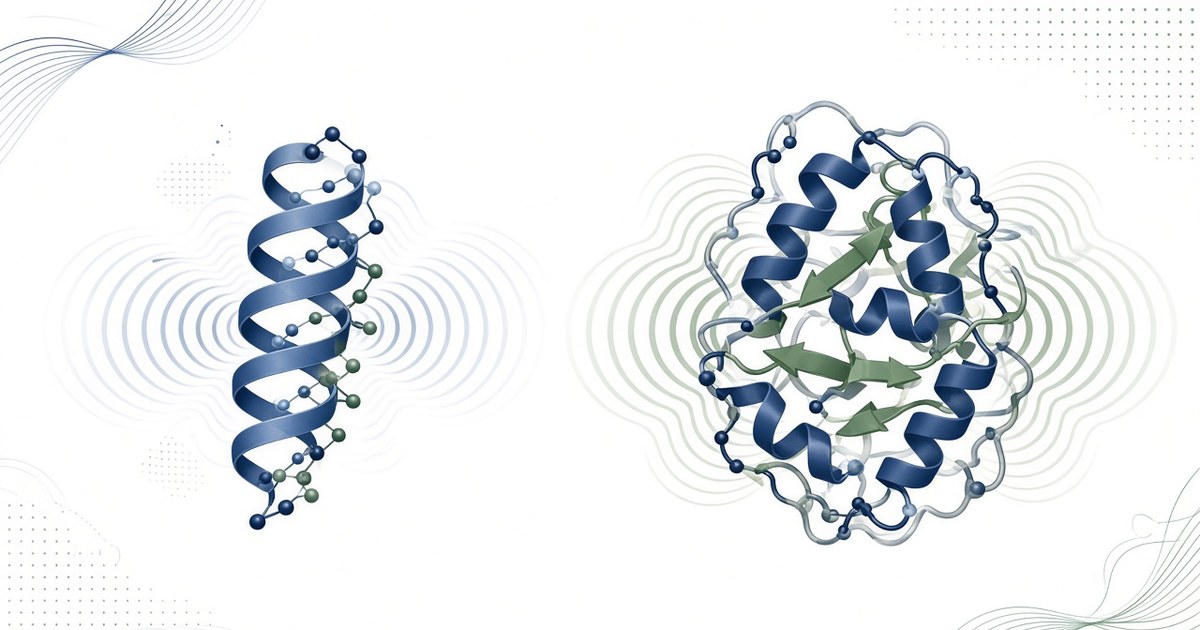
Are Peptide and Protein Hormones the Same? 7 Essential Facts
Are peptide and protein hormones the same? Compare the 50 amino acid cutoff, synthesis, receptors, key examples, and research sourcing in this 2026 guide.
📋 Table of Contents
Are peptide and protein hormones the same? No — although both belong to the amino acid-based class of hormones, endocrinology separates them by molecular size, structural complexity, and biosynthetic pathway.
The distinction is practical rather than semantic. It shapes receptor pharmacology, assay selection, storage requirements, and the way suppliers catalog research-grade material. This reference explains where the boundary sits, why edge cases such as insulin blur it, and what the answer to are peptide and protein hormones the same means for laboratory research applications in 2026.
Asking are peptide and protein hormones the same is really asking how endocrinology draws its internal boundaries — and those boundaries are measurable, not arbitrary.
Key takeaways
- Peptide and protein hormones share amino acid building blocks and peptide-bond chemistry, but the terms are not synonyms: chain length and folded structure divide them.
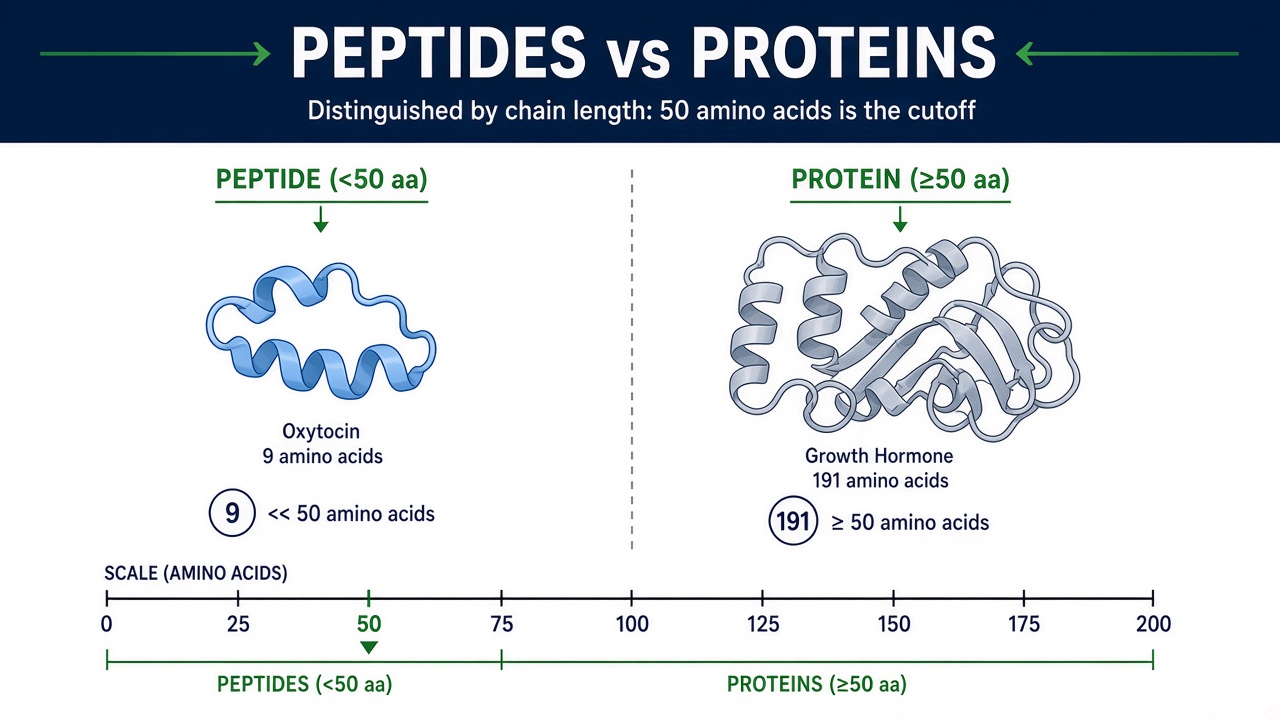
- The conventional boundary is the 50 amino acid cutoff; chains at or above it typically adopt stable tertiary folds and are classified as protein hormones.
- Both classes signal through cell-surface receptors — including G-protein coupled receptors — and intracellular second messengers, which is why the question are peptide and protein hormones the same keeps arising in coursework and procurement.
- Insulin (51 amino acids) and growth hormone (191 amino acids) are protein hormones; oxytocin (9 amino acids) is a peptide hormone.
- For research sourcing, purity grade, certificate of analysis (COA) documentation, and storage conditions are more decision-relevant than the category label itself.
Are peptide and protein hormones the same? The size and structure distinction
The short answer to are peptide and protein hormones the same is that they are related subcategories of one chemical class rather than interchangeable terms. Every peptide hormone is built from the same peptide-bond chemistry as every protein hormone; what changes is chain length and what that length permits structurally.
Peptide hormones are short polymers, conventionally under 50 amino acids. Their compact sequences rarely hold a stable tertiary structure in solution; many behave as flexible chains that adopt a defined conformation only upon receptor binding. Oxytocin (9 residues), vasopressin (9), glucagon (29), and adrenocorticotropic hormone (39) are standard examples cited in endocrinology references such as Endotext.
Protein hormones sit at or above the 50 amino acid cutoff and frequently exceed 100 residues. Their length supports secondary, tertiary, and sometimes quaternary structure: disulfide-bonded domains, alpha-helical bundles, and — in glycoprotein hormones such as TSH, LH, and FSH — multi-subunit assemblies carrying carbohydrate chains. Insulin (51 residues) and growth hormone (191 residues) anchor this category.
That folded complexity is the deepest structural reason are peptide and protein hormones the same receives a negative answer: a 9-residue peptide and a 191-residue protein differ in conformational behavior, stability, and analytical handling, not merely in name.
What defines a peptide hormone?
A peptide hormone is defined by three measurable attributes: a chain below roughly 50 amino acids, synthesis as a larger precursor that is proteolytically trimmed, and signaling through surface receptors. Because short chains can be produced by solid-phase peptide synthesis at high purity, peptide hormones dominate the research-chemical catalogs laboratories use for in vitro work.
What defines a protein hormone?
A protein hormone is defined by length at or above the cutoff, a folded three-dimensional architecture, and — frequently — post-translational modifications such as glycosylation. These attributes make protein hormones larger and conformationally complex, and they generally depend on recombinant DNA technology for manufacture rather than bench-scale chemical synthesis.
| Attribute | Peptide hormones | Protein hormones |
|—|—|—|
| Chain length | Under 50 amino acids | 50+ amino acids, often over 100 |
| Higher-order structure | Minimal; flexible until receptor-bound | Defined tertiary or quaternary folds |
| Examples | Oxytocin, vasopressin, glucagon, ACTH | Insulin, growth hormone, TSH, FSH |
| Typical manufacture | Solid-phase peptide synthesis | Recombinant DNA technology |
| Receptor classes | Mostly G-protein coupled receptors | GPCRs, receptor tyrosine kinases, cytokine-type receptors |
| Analytical verification | HPLC plus mass spectrometry | Immunoassay, SDS-PAGE, LC-MS |
| Research storage | Lyophilized, typically −20 °C | Refrigerated or frozen; aggregation-sensitive |
Read row by row, the table shows why are peptide and protein hormones the same is a classification question rather than a synonym question: nearly every measurable attribute shifts across the 50-residue line.
How are amino acid-based hormones classified?
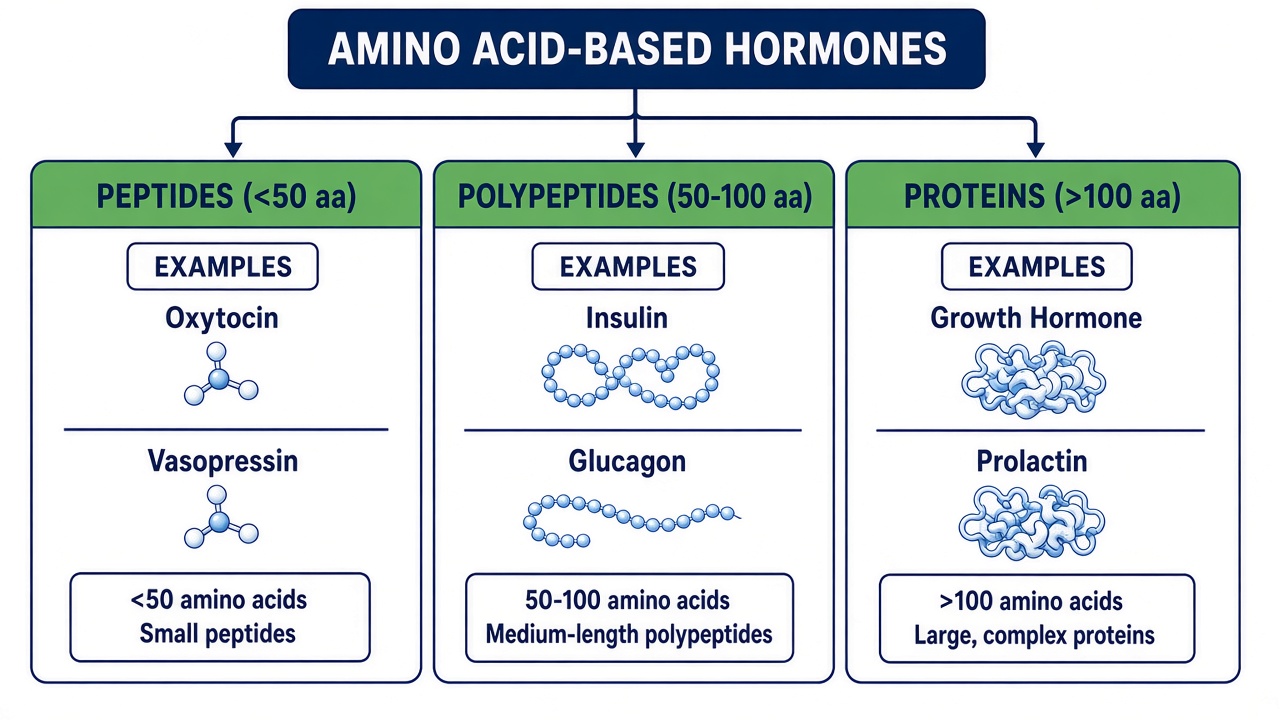
Endocrinology divides hormones into four chemical classes: amino acid-based hormones (peptides and proteins), steroid hormones derived from cholesterol, amine hormones derived from tyrosine or tryptophan, and lipid-derived eicosanoids. The peptide-versus-protein distinction lives entirely inside the first class, which is why textbooks answer are peptide and protein hormones the same with “same family, different subdivisions.”
| Hormone class | Chemical origin | Representative examples |
|—|—|—|
| Amino acid-based: peptides | Short amino acid chains | Oxytocin, glucagon, ACTH |
| Amino acid-based: proteins | Long, folded chains | Insulin, growth hormone, TSH |
| Steroid | Cholesterol-derived | Cortisol, aldosterone |
| Amine | Tyrosine/tryptophan-derived | Epinephrine, melatonin |
| Eicosanoid | Arachidonic acid-derived | Prostaglandins |
Steroid, amine, and eicosanoid hormones fall outside the question entirely because they are not built from peptide bonds. Within the amino acid-based class, some authorities add a further tier for single modified amino acids such as thyroid hormone, leaving “peptide” for short chains and “protein” for long, folded ones. The glycoprotein hormones — TSH, LH, FSH, and hCG — form an additional protein subgroup defined by a shared alpha subunit and hormone-specific beta subunits. This layered taxonomy is why are peptide and protein hormones the same has both a size answer and a classification answer.
💡 Key Takeaway: How are amino acid-based hormones classified?
How are peptide and protein hormones synthesized and processed?
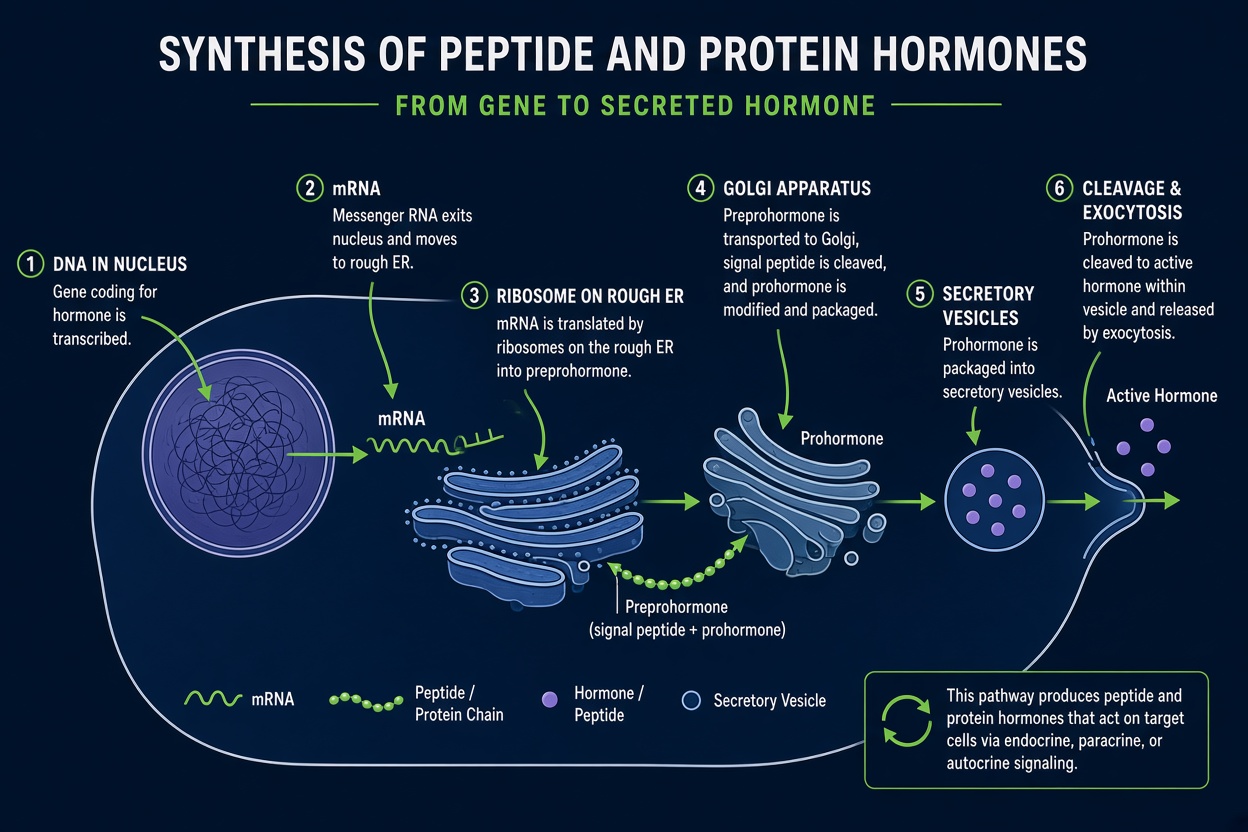
Both classes begin as gene-encoded preprohormones. An N-terminal signal peptide directs the nascent chain into the rough endoplasmic reticulum, where the signal sequence is cleaved to yield a prohormone. Prohormone convertases then trim the precursor at dibasic residues, and the mature hormone is packaged into secretory granules. The pathway is reviewed in detail across the endocrine texts on the NCBI Bookshelf.
The processing sequence can be summarized in five steps:
1. Translation of the preprohormone on rough endoplasmic reticulum ribosomes.
2. Co-translational cleavage of the signal peptide, yielding the prohormone.
3. Folding and disulfide bond formation within the endoplasmic reticulum.
4. Proteolytic trimming by prohormone convertases in the Golgi and secretory granules.
5. Packaging of the mature hormone into granules for regulated secretion.
The shared preprohormone pathway is itself one source of confusion behind are peptide and protein hormones the same: because both classes are born as precursors, their biosynthetic logic looks identical at the genetic level. The differences emerge in scale and downstream handling.
For researchers asking are peptide and protein hormones the same at the bench, production is where the practical gap widens. Peptide hormones are short enough to be built residue by residue through solid-phase peptide synthesis, purified by HPLC, and verified by mass spectrometry — the workflow behind virtually every catalog research peptide.
Protein hormones, by contrast, are generally produced through recombinant DNA technology: the coding sequence is expressed in bacterial, yeast, or mammalian cell systems, then folded, purified, and characterized. Recombinant insulin and recombinant growth hormone are the canonical examples. That production route is a core reason the two categories are priced, handled, and assayed differently in laboratory settings.
Post-translational chemistry adds a second dividing line. Disulfide bond formation matters to both classes, but N-linked glycosylation is essentially a protein-hormone feature — critical to the stability and receptor pharmacology of the glycoprotein hormones and absent from small peptides such as oxytocin.
How do peptide and protein hormones signal? Surface receptors and second messengers
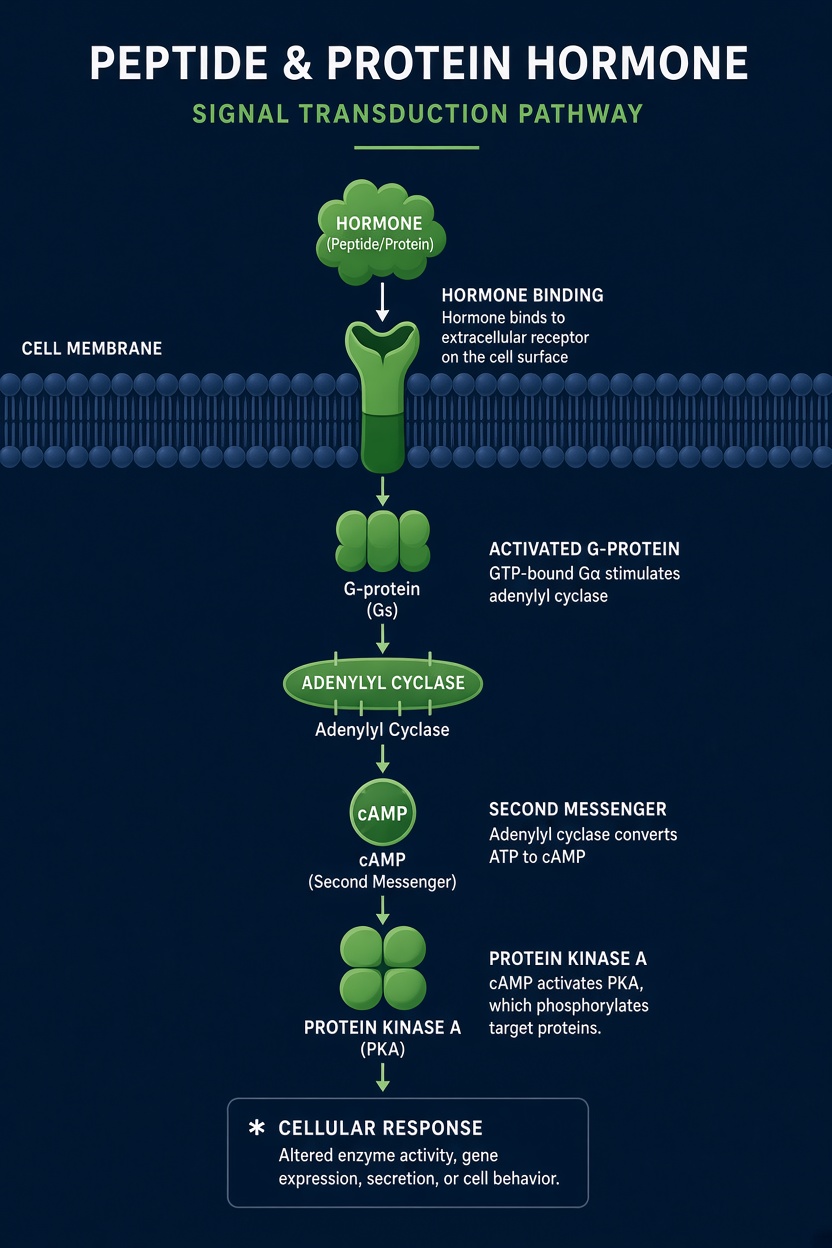
At the receptor level, are peptide and protein hormones the same? Functionally, they converge: because both classes are water-soluble and cannot cross the plasma membrane freely, both bind cell-surface receptors and transduce signals through intracellular second messengers rather than entering the nucleus directly.
This stands in sharp contrast to steroid hormones, which cross the membrane and bind intracellular nuclear receptors. The shared surface-receptor logic is precisely what unifies the amino acid-based class — peptides and proteins alike — against the other chemical classes.
Most small peptide hormones engage G-protein coupled receptors, triggering cAMP and protein kinase A, IP3-DAG, or calcium signaling cascades. The oxytocin and vasopressin receptors are classical GPCR examples documented throughout the primary literature indexed on PubMed.
That convergence explains much of the confusion in are peptide and protein hormones the same debates: if the signaling logic overlaps so heavily, the categories can feel interchangeable. They are not — because the receptor families diverge.
Protein hormones use a broader receptor toolkit. Growth hormone and prolactin activate cytokine-type receptors that signal through JAK-STAT pathways; insulin binds a receptor tyrosine kinase that phosphorylates IRS scaffold proteins; the glycoprotein hormones return to GPCRs. The receptor map gives pharmacology courses another measurable reason are peptide and protein hormones the same is answered “no.”
Which examples define the boundary? Insulin, growth hormone, and oxytocin
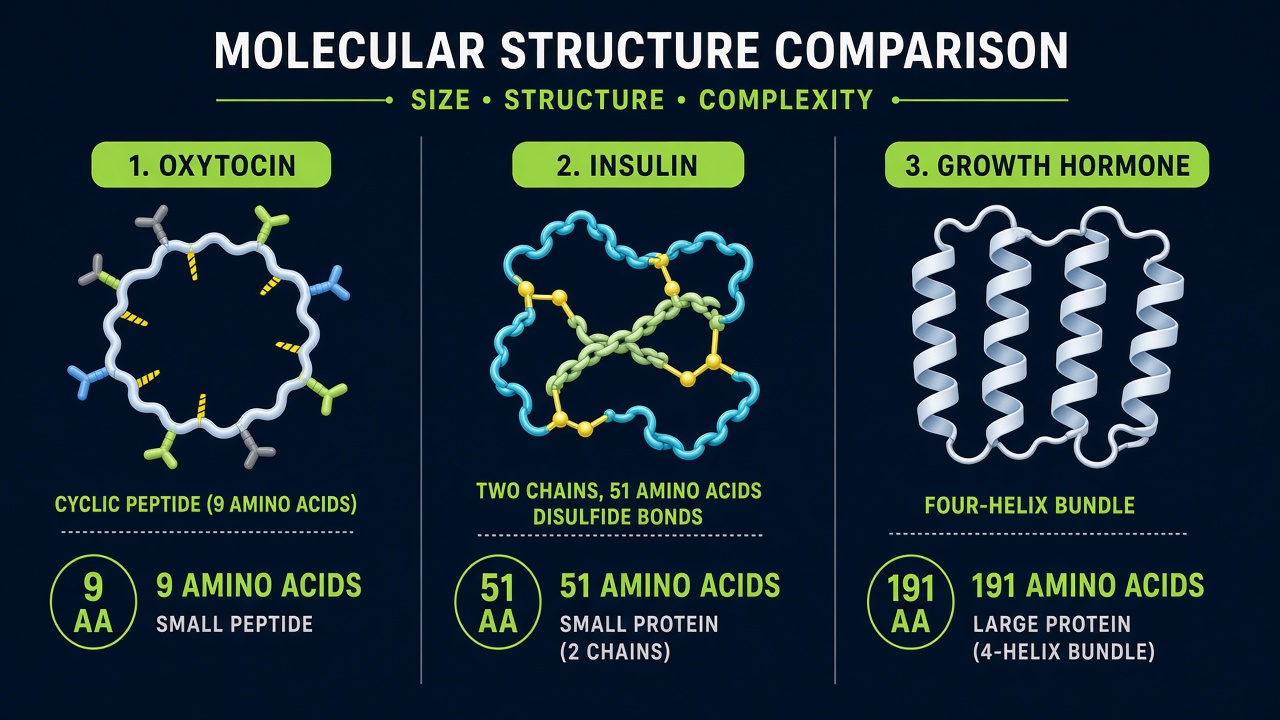
Insulin is the classic edge case. At 51 amino acids across two disulfide-linked chains, it sits one residue above the conventional cutoff, so modern texts classify it as a small protein hormone — yet older literature routinely calls it a peptide hormone. Anyone reconciling sources on are peptide and protein hormones the same will meet insulin as the exception that proves the boundary is conventional, not absolute.
Edge cases like insulin show why are peptide and protein hormones the same cannot be answered with one number alone: folding, subunit composition, and receptor class all refine the raw size rule.
Growth hormone is unambiguous: a 191-residue, four-helix-bundle protein hormone. Its size is also why defined fragments of it attract research interest — the 177–191 fragment AOD-9604, covered in our [AOD-9604 growth hormone fragment research guide](/aod-9604-growth-hormone-fragment-peptide/), is a peptide derived from a protein hormone, illustrating how the two categories connect in laboratory research.
Oxytocin anchors the peptide end: nine amino acids, one disulfide ring, no tertiary fold, and GPCR-mediated signaling. Vasopressin, glucagon, and ACTH behave similarly. Set against insulin and growth hormone, these examples give researchers a concrete calibration set for are peptide and protein hormones the same across the full size spectrum.
💡 Key Takeaway: Which examples define the boundary? Insulin, growth hormone, and oxytocin
Are peptide and protein hormones the same in pharmacological research?
In pharmacological research contexts, the two classes diverge on four measurable axes: molecular half-life, immunogenicity in in vivo (animal models), production route, and analytical method. Peptide hormones typically show short circulating half-lives and low immunogenicity; protein hormones persist longer, can provoke antibody responses in animal models, and require immunoassay-grade rather than purely chromatographic verification.
Those half-life and immunogenicity differences are why are peptide and protein hormones the same is answered differently by pharmacologists than by chemists: a chemist sees a continuous size spectrum, while a pharmacologist sees two distinct handling profiles.
Therapeutic-development research mirrors the same divide. Approved peptide drugs are usually synthesized chemically, whereas approved protein drugs are recombinant products — a manufacturing split documented across the biomedical literature. For laboratories comparing are peptide and protein hormones the same in assay design, the actionable difference is method selection: LC-MS quantitation for peptides, ligand-binding assays for proteins.
It bears repeating that the compounds discussed here — like all materials in the Peptides Library catalog — are research chemicals supplied strictly for in vitro and laboratory research applications. They are not approved drugs, and nothing in this guide constitutes a therapeutic, diagnostic, or human-use claim. Pharmacology is discussed purely as a measurable property of molecules in research settings.
Where do peptide and protein hormones overlap?
The similarities are substantial enough to explain why the question persists. Both classes are gene-encoded with rare exceptions, both are synthesized as precursors, both are water-soluble, both act through surface receptors, and both are degraded by proteases. This functional overlap is precisely why are peptide and protein hormones the same remains a standard exam question and a recurring procurement query.
A useful working summary: are peptide and protein hormones the same functionally? Often yes at the receptor level, even though they differ structurally. All protein hormones are peptides in the chemical sense — chains of amino acids — but only short, non-folded chains carry the label “peptide hormone” in endocrinology. The relationship is subset and superset, not equality.
What are the most common misconceptions?
The first misconception is that the 50 amino acid cutoff is universal. Some texts draw the line nearer 100 residues, and a few classify anything receptor-active and short as a peptide regardless of fold. Researchers comparing sources on are peptide and protein hormones the same should always check which convention a given reference applies.
The second misconception is that all protein hormones are glycosylated. Only the glycoprotein subgroup carries carbohydrate chains; insulin and growth hormone do not. The third is that “peptide” implies synthetic and “protein” implies recombinant — production route follows size, not the label, and exceptions exist in both directions.
💡 Key Takeaway: What are the most common misconceptions?
Why does the distinction matter for research procurement?
Are peptide and protein hormones the same when sourcing for a laboratory? Operationally, no. Catalog taxonomy, analytical documentation, and price structure all track the classification, and procurement decisions improve when researchers specify which subcategory a project requires. Asking are peptide and protein hormones the same before ordering also clarifies which analytical certificate a project needs: mass-spectrometric identity confirmation for peptides, or immunoassay validation for protein standards.
Peptides Library supplies research-grade peptides with measurable specifications:
- Purity: ≥98% by HPLC for catalog peptides, with mass-spectrometric identity confirmation on every batch.
- Documentation: each lot ships with a certificate of analysis; our guide to [buying a peptide research library with a COA](/buy-peptide-research-library-coa/) details what a complete COA contains.
- Format and storage: lyophilized solids with recommended storage at −20 °C, desiccated, plus reconstitution guidance for assay buffers.
- Supplier vetting: independent reviews in our [trusted peptide research library suppliers](/peptide-research-library-trusted-suppliers/) overview assist laboratories benchmarking vendors.
- Price benchmarking: our [peptide library price and quality comparison](/peptide-libraries-price-quality-comparison/) sets out the grade and pricing variables that differ between peptide and protein hormone standards.
When placing an order, laboratories should specify the sequence and chain length, required purity with the analytical method, COA requirements, format (lyophilized or in solution), and intended storage conditions. These five parameters eliminate most sourcing errors regardless of how a vendor labels the subcategory.
Researchers building a broader reference collection can start with the [Complete Guide to Research Peptides](/complete-guide-research-peptides-2025/), which catalogs handling, storage, and verification protocols across compound classes. Because a catalog’s own answer to are peptide and protein hormones the same determines where a compound is listed, specifying purity, COA, and format requirements up front prevents costly re-ordering.
Ready to source? Browse the Peptides Library catalog to request batch-specific certificates of analysis, or contact our team for a quotation on custom peptide library configurations for your laboratory.
How should laboratories report the distinction in methods sections?
Methods sections should state the compound’s classification, sequence length, source (synthetic or recombinant), purity with the analytical method used, and storage conditions. Precise reporting resolves most ambiguity behind are peptide and protein hormones the same before it propagates into assay interpretation, and it makes replication straightforward for other laboratories.
FAQ
Are peptide and protein hormones the same thing?
No. The short answer to are peptide and protein hormones the same is that both are amino acid-based hormones, but peptide hormones are short chains under roughly 50 amino acids without stable tertiary folds, while protein hormones are longer, folded molecules such as insulin and growth hormone.
What is the 50 amino acid cutoff?
It is the conventional boundary between the two subcategories: chains below 50 residues are classified as peptides, and chains at or above it as proteins. Insulin, at 51 residues, sits just above the line — which is why are peptide and protein hormones the same is so often debated using insulin as the edge case.
Is insulin a peptide hormone or a protein hormone?
Both labels appear in the literature. At 51 residues arranged in two disulfide-linked chains, insulin sits one residue past the conventional cutoff, which is why it is the standard edge case whenever peptide and protein hormones are compared.
Do peptide and protein hormones use the same receptors?
Both classes use cell-surface receptors and second messengers, but the families differ. Peptide hormones favor G-protein coupled receptors; protein hormones additionally use receptor tyrosine kinases (insulin) and JAK-STAT-linked cytokine receptors (growth hormone). Even at the signaling level, are peptide and protein hormones the same yields “overlapping but not identical.”
How are research peptides and protein hormones manufactured?
Research peptides are produced by solid-phase peptide synthesis and verified by HPLC and mass spectrometry. Protein hormones are produced through recombinant DNA technology in cellular expression systems, then folded and purified. The production route follows molecular size.
Are peptide and protein hormones the same for laboratory sourcing?
No. Catalog categories, analytical methods (LC-MS versus immunoassay), storage sensitivity, and pricing all differ between the subcategories. All materials discussed are research chemicals intended strictly for in vitro and laboratory research use.
*All products referenced are research chemicals sold strictly for in vitro and laboratory research applications. They are not intended for human or veterinary use, and no statement herein constitutes a medical, therapeutic, or diagnostic claim.*
—
Research Use Only: All products discussed are supplied for in vitro laboratory research purposes only. They are not intended for human consumption, veterinary use, or any form of in vivo administration, and are not dietary supplements or cosmetics.
Topics covered in this article:
Ready to Take the Next Step?
Every product includes lot-specific documentation and third-party purity testing.
Explore Our Research Products →Free shipping on qualifying orders · Batch COA on request