



Are There Studies on It? 7 Essential Ways to Check (2026)
Are there studies on it? Learn how researchers locate, screen, and evaluate published peptide research using PubMed, Google Scholar, and COA-backed suppliers.
📋 Table of Contents
Every laboratory evaluating a new research peptide eventually asks the same question: are there studies on it? The answer determines assay design, control selection, and sourcing decisions. For most well-characterized research peptides, the answer is yes: thousands of in vitro and in vivo (animal model) studies sit in public databases, and a structured search can surface them in under an hour. Because “are there studies on it?” is both a literature question and a procurement question, this page explains how researchers confirm what has been published, what each study design actually establishes, and how Peptides Library supplies the research-grade, COA-backed peptides that let laboratories build on published work.
Key takeaways
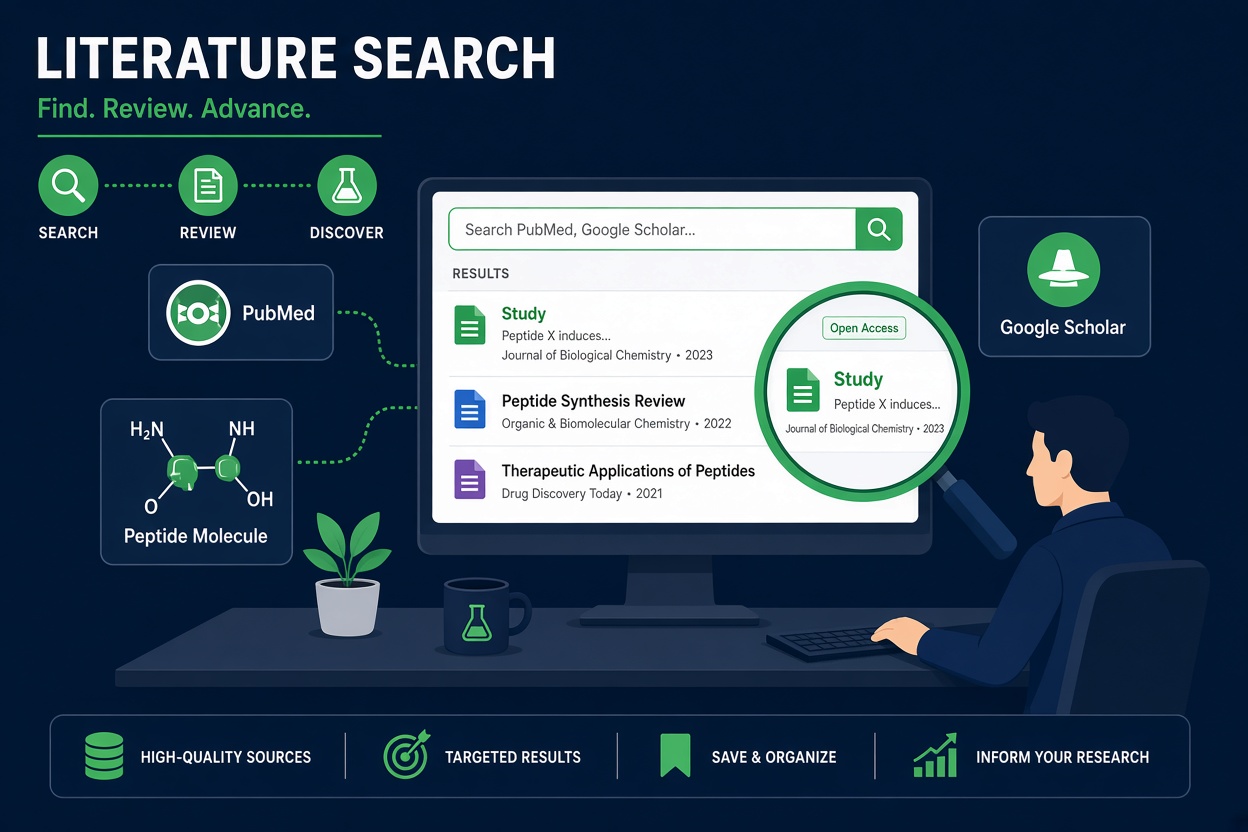
- Asking “are there studies on it?” is a two-part task: locating indexed publications and judging whether their designs answer your specific research question.
- Randomized controlled trials, cohort studies, case-control studies, and cross-sectional studies each answer different questions; no single design fits every inquiry.
- Systematic reviews and meta-analyses sit at the top of the evidence hierarchy because they synthesize many primary studies.
- PubMed and Google Scholar index nearly all peptide-relevant literature; structured search strings cut screening time dramatically.
- Research-grade peptides with a lot-specific certificate of analysis (COA) allow laboratories to replicate published methods with confidence.
Are there studies on it? Start With a Direct Literature Check
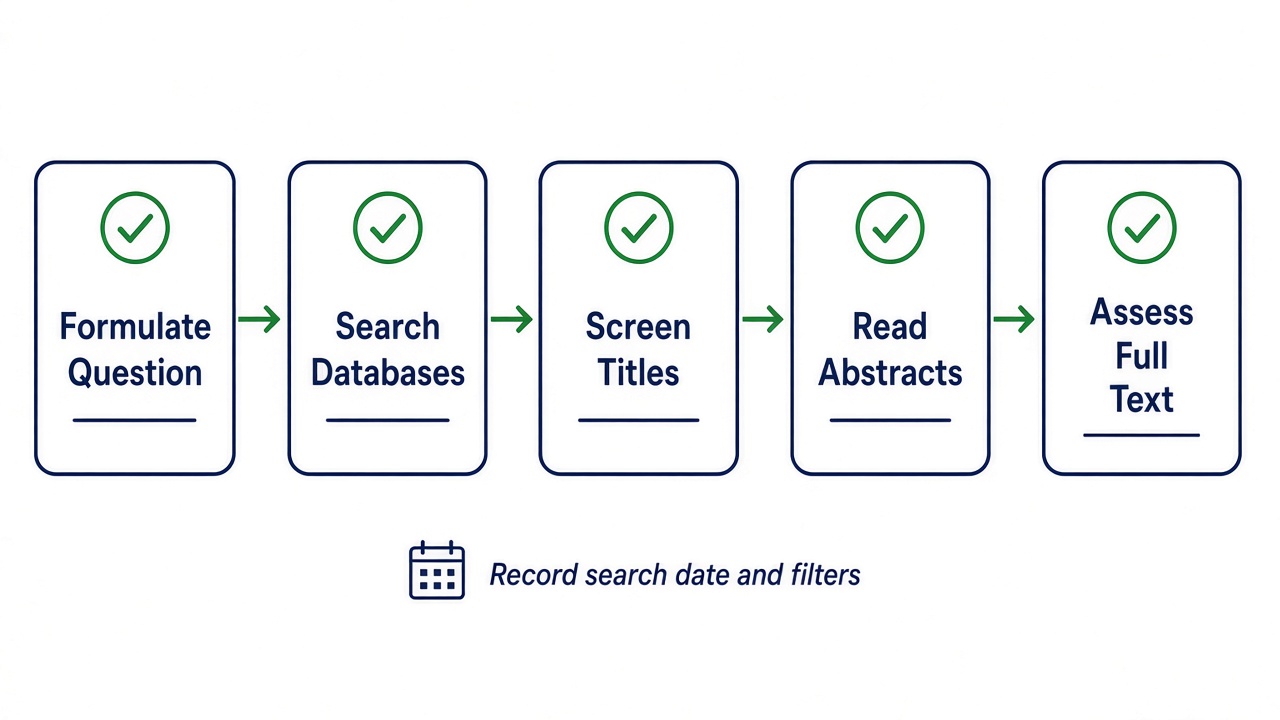
When a principal investigator asks “are there studies on it?”, the fastest route to an answer is a structured database search rather than a general web search. General search engines surface marketing pages, forums, and anecdotal commentary alongside genuine publications, which forces researchers to separate signal from noise manually. Bibliographic databases such as PubMed index peer-reviewed literature with standardized metadata, so a well-built query returns verifiable studies rather than opinion.
A direct literature check has three steps. First, define the compound precisely: full peptide name, sequence, common abbreviations, and any fragment or analog designations. Second, run that name set against at least two databases. Third, screen titles and abstracts against the research question before retrieving full texts. A laboratory that asks “are there studies on it?” without defining the compound precisely risks missing half the relevant literature, because peptides frequently appear under multiple names.
For example, a growth hormone fragment might be indexed under its alphanumeric code, a truncated sequence name, and a descriptive phrase simultaneously. Searching only one variant returns a fraction of the available evidence. Building a synonym list first is the single highest-value step in the entire verification process.
Documenting a negative result is as valuable as documenting a positive one. If a structured search returns nothing, recording the databases queried, the date, and the exact search string prevents duplicated effort. It also gives reviewers confidence that the absence of evidence is real rather than an artifact of a careless search.
What Are the Main Types of Medical and Public Health Studies?
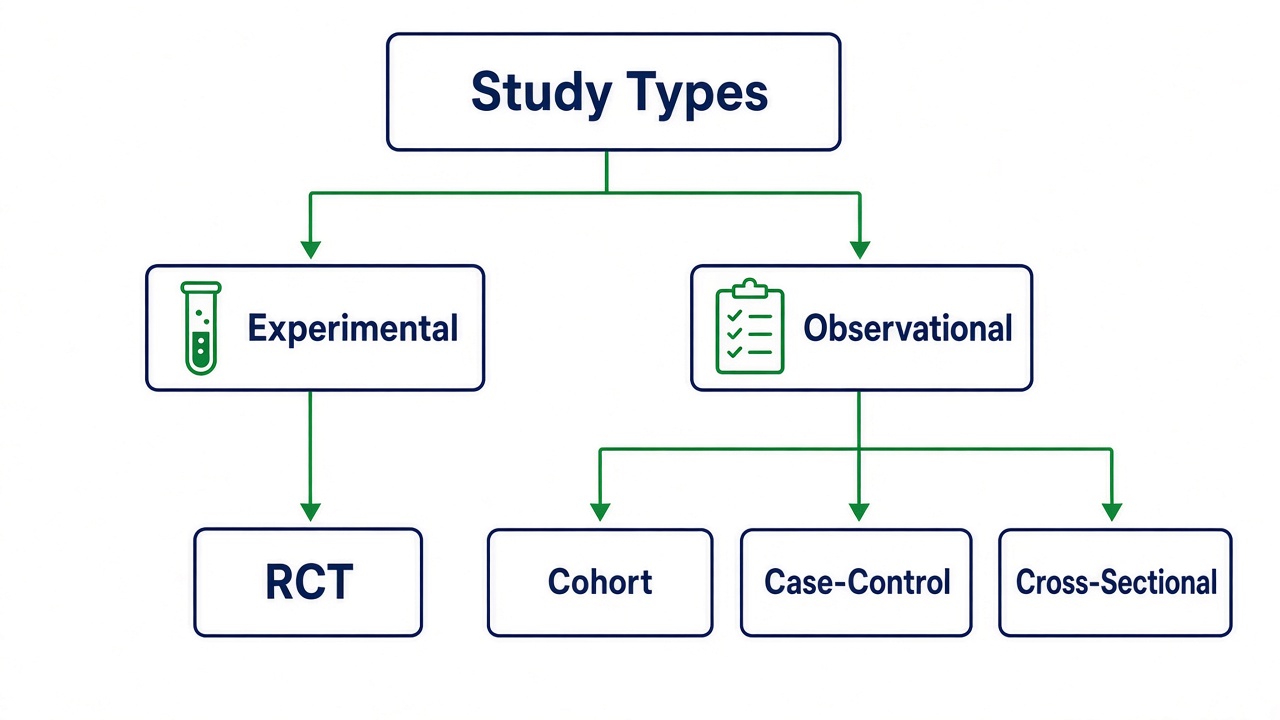
The question “are there studies on it?” cannot be answered responsibly with a raw count, because study designs differ in what they can establish. A single in vitro assay and a multi-center randomized controlled trial both count as “a study,” yet they support very different conclusions. Researchers therefore classify the literature by design before interpreting it.
The major designs fall into three families. Experimental studies, such as randomized controlled trials, assign an intervention deliberately. Observational studies — cohort, case-control, and cross-sectional designs — measure exposures and outcomes without assigning anything. Evidence syntheses, including systematic reviews and meta-analyses, combine results across many primary studies. Preclinical in vitro and animal-model work underpins all three families in peptide science.
| Study Design | Primary Question It Answers | Typical Strength | Key Limitation |
|—|—|—|—|
| Randomized controlled trial | Does an intervention cause an outcome under controlled conditions? | Randomization minimizes confounding | Costly; strict inclusion criteria limit generalizability |
| Cohort study | How do outcomes develop over time in exposed versus unexposed groups? | Establishes temporal sequence | Loss to follow-up; residual confounding |
| Case-control study | Which exposures distinguish subjects with an outcome from those without? | Efficient for rare outcomes | Recall and selection bias |
| Cross-sectional study | What is the prevalence of a trait at one point in time? | Fast and inexpensive | Cannot establish temporality |
| Systematic review / meta-analysis | What does the totality of evidence show? | Pools data across studies | Limited by quality of included studies |
| In vitro / animal model | What is the molecular mechanism? | Controlled, mechanistic detail | Translational gap to other systems |
These families form the classic evidence hierarchy. Evidence syntheses sit at the top, randomized trials below them, then cohort, case-control, and cross-sectional designs, with mechanistic preclinical work forming the base. The hierarchy ranks designs by their resistance to bias for intervention questions; it does not rank them by usefulness for every question a laboratory might ask.
So when a team asks “are there studies on it?”, the productive follow-up is “what kind of studies, and what can each kind establish?” A peptide with forty in vitro papers and no animal-model work occupies a very different evidence position than one with a full preclinical program plus observational data.
Randomized Controlled Trials (RCTs): Design, Strengths, and Limitations
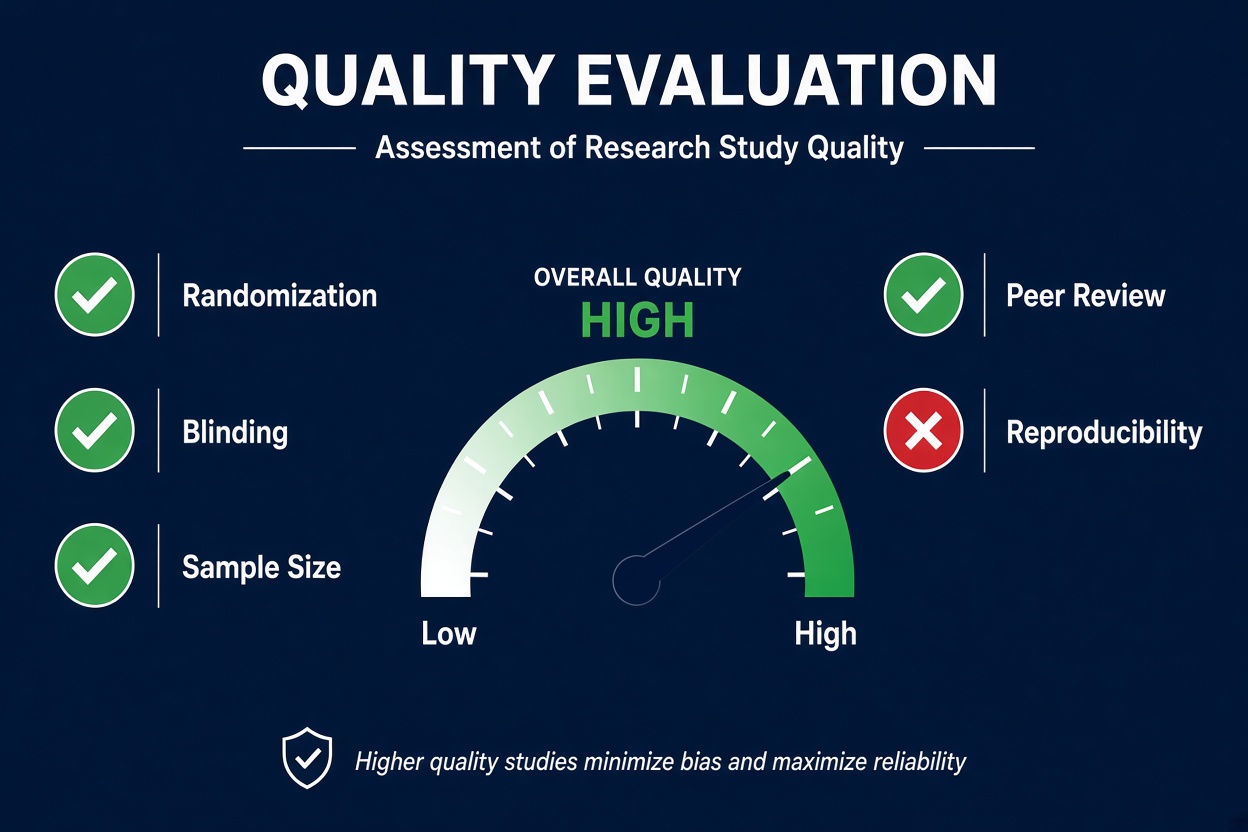
If a laboratory asking “are there studies on it?” finds randomized controlled trials in the results, that finding carries particular weight. Randomization distributes known and unknown confounders across groups, which allows researchers to attribute outcome differences to the intervention rather than to baseline differences between subjects. Blinding and pre-registered endpoints further reduce bias.
RCTs also have limits. They are expensive, slow, and often restricted to narrowly defined populations, which constrains generalizability. In peptide science specifically, most compounds never reach human RCTs; the literature typically stops at in vitro characterization and animal-model experiments. Finding zero RCTs for a research peptide is therefore normal and does not indicate a weak compound — it indicates a typical preclinical evidence base.
Randomization also appears in preclinical work, and it matters there too. Animal-model experiments that randomize specimens to treatment and control groups, blind outcome assessment, and report attrition produce far more credible data than uncontrolled comparisons. Laboratories screening preclinical literature should treat these features as quality markers when deciding which published findings deserve replication.
When RCTs do exist, researchers should check registration records on ClinicalTrials.gov, a U.S. National Institutes of Health database, to confirm that reported endpoints match the pre-registered plan. Asking “are there studies on it?” and then verifying registration separates complete evidence from selectively reported evidence.
Observational Study Designs: Cohort, Case-Control, and Cross-Sectional
Cohort studies follow defined groups over time and record which exposures precede which outcomes. Because temporality is built into the design, cohort data can support causal reasoning more strongly than other observational approaches. The trade-offs are cost, duration, and loss to follow-up, which can bias results if dropouts differ systematically from completers.
Case-control studies work backward: researchers identify subjects with an outcome and matched subjects without it, then compare prior exposures. The design is efficient for rare outcomes but vulnerable to recall bias and control-selection problems. Cross-sectional studies measure everything once, producing prevalence snapshots that are fast and inexpensive but silent on sequence.
For a laboratory asking “are there studies on it?” about a peptide with mostly observational literature, the key skill is matching design to question. Mechanistic questions need experimental work; distribution and association questions can be answered observationally. Confusing the two leads researchers to over-interpret cross-sectional findings as if they demonstrated mechanism.
A practical screening rule helps: when the question “are there studies on it?” returns mostly case-control or cross-sectional papers, treat the literature as hypothesis-generating rather than hypothesis-confirming. That classification should flow directly into how the laboratory designs its own in vitro follow-up experiments.
Systematic Reviews and Meta-Analyses: Synthesizing Evidence
Systematic reviews apply a pre-specified protocol to find, screen, and appraise every relevant study on a question. Meta-analyses add statistical pooling, combining effect estimates across studies into a single summary measure. Together they sit at the top of the evidence hierarchy because they reduce the influence of any single study’s quirks.
When the answer to “are there studies on it?” includes a recent systematic review, researchers gain two assets at once: a synthesized conclusion and a verified reference list that shortcuts their own search. Checking the review’s inclusion criteria still matters, because a review of animal-model studies says nothing about human populations and vice versa.
Quality varies. Reviews without a registered protocol, a documented search strategy, or a formal risk-of-bias assessment should be read as narrative summaries rather than true systematic reviews. The Cochrane Library sets the benchmark for rigorous reviews, and tools such as AMSTAR 2 give laboratories a structured way to grade review quality before relying on its conclusions.
For peptide research specifically, systematic reviews of in vitro and in vivo (animal model) literature are increasingly common. A laboratory asking “are there studies on it?” should search for reviews first, because one good review can replace weeks of primary-literature screening.
💡 Key Takeaway: What Are the Main Types of Medical and Public Health Studies?
How to Search PubMed and Other Databases for Studies on Your Topic
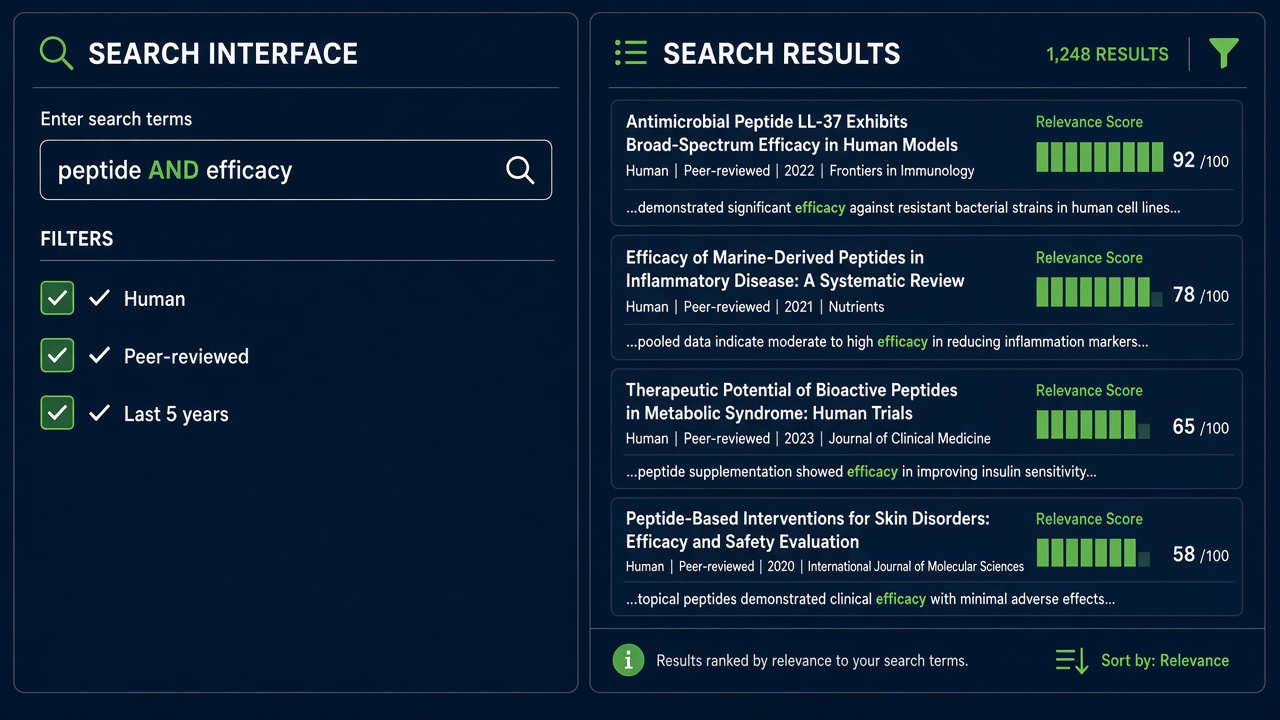
PubMed, maintained by the National Library of Medicine, indexes more than 37 million citations and should be the first stop for any laboratory asking “are there studies on it?”. Its MeSH controlled vocabulary lets researchers explode a search across all synonyms of a compound automatically, which solves the multiple-names problem described earlier.
A robust PubMed strategy combines three elements: the compound’s names joined with OR, a design filter such as “randomized controlled trial”[pt] or “in vitro”[tiab], and field tags that force terms into titles and abstracts. Google Scholar complements PubMed by indexing theses, preprints, and conference abstracts that bibliographic databases miss, though it requires more manual screening because it lacks controlled vocabulary.
A worked example illustrates the difference. Searching a single acronym might return twelve papers, while an OR-joined string covering the full name, the acronym, and the sequence-based designation returns forty. Adding a filter for in vitro or animal-model terms then narrows those forty to the dozen that match the laboratory’s actual experimental context.
Researchers should also search ClinicalTrials.gov for registered studies and the Cochrane Library for high-quality systematic reviews. Grey literature — preprint servers, institutional repositories, and conference proceedings — occasionally contains the only published characterization of a novel peptide. When a laboratory asks “are there studies on it?” and PubMed returns nothing, grey literature is the next logical tier.
Search alerts close the loop. Both PubMed and Google Scholar allow saved queries with email notifications, so a laboratory that asks “are there studies on it?” today will be notified automatically when new publications appear. For fast-moving peptide fields, alerts convert a one-time check into continuous surveillance.
Are there studies on it? A Step-by-Step Verification Workflow
The full workflow for answering “are there studies on it?” fits on one page. Step one: build the synonym list. Step two: query PubMed with OR-joined names and design filters. Step three: repeat in Google Scholar. Step four: screen titles and abstracts against the research question. Step five: retrieve full texts for surviving citations and extract design, model, and endpoint data.
Step six: classify each included study by design using the table above. Step seven: grade quality with an appropriate tool — risk-of-bias instruments for trials, Newcastle–Ottawa for observational work, AMSTAR 2 for reviews. A laboratory that asks “are there studies on it?” and stops at step four knows that studies exist but not what they establish.
Timing the workflow keeps it honest. A disciplined team typically completes steps one through four in a single afternoon for a well-characterized peptide. Novel sequences take longer because synonym coverage is uncertain. Either way, the output is the same artifact: a dated, reproducible search record plus a screened citation list ready for full-text review.
Documentation matters throughout. Recording the search string, the date, the databases queried, and the inclusion criteria makes the answer to “are there studies on it?” reproducible by any colleague. In regulated or grant-funded environments, that audit trail is often a formal requirement rather than a courtesy.
Evaluating Study Quality and Applying Findings to Your Specific Question
Existence is not relevance. A laboratory asking “are there studies on it?” about a specific receptor-binding question gains nothing from studies that used a different isoform, a different assay, or an impure compound. Applying findings requires matching three variables: the molecular form studied, the experimental system used, and the endpoints reported.
Quality grading follows design-specific checklists. For trials: allocation concealment, blinding, and complete outcome reporting. For observational studies: selection methods, comparability, and outcome assessment. For in vitro work: purity verification of the test article, replication, and appropriate controls. A study of a peptide at 85 percent purity cannot cleanly inform experiments planned at 98 percent purity.
The question “are there studies on it?” therefore ends in a matrix, not a number. Rows are studies; columns are design, model, purity, endpoints, and quality grade. The populated matrix tells the laboratory exactly which published methods it can replicate and which gaps its own experiments must fill.
One final discipline separates strong laboratories from weak ones: pre-specifying what evidence would change the plan. If the answer to “are there studies on it?” reveals contradictory findings, the laboratory should decide in advance which design features it will privilege — typically randomization, blinding, and verified compound purity.
💡 Key Takeaway: Evaluating Study Quality and Applying Findings to Your Specific Question
Why Study Verification Matters When Sourcing Research Peptides
Literature verification and supplier verification are the same discipline applied twice. A laboratory asking “are there studies on it?” is really asking whether a compound is characterized well enough to support interpretable experiments. That question extends to the material itself: an uncharacterized vial makes even the best-designed assay uninterpretable.
This is why experienced laboratories pair every literature check with a documentation check on the supplier side. A lot-specific certificate of analysis (COA), HPLC chromatograms, and mass spectrometry confirmation serve the same evidentiary function as a peer-reviewed methods section. Our guide on [where to buy a peptide research library with a COA](/buy-peptide-research-library-coa/) details the documentation standards researchers should expect.
Price comparisons should run through the same evidence lens. The [peptide library price and quality comparison for research labs](/peptide-libraries-price-quality-comparison/) shows how purity tiers, analytical verification, and batch traceability affect total experimental cost — because a failed assay costs more than verified material ever will. Asking “are there studies on it?” about a supplier’s quality data is as important as asking it about the peptide.
Reproducibility is the bottom line. Published methods assume defined purity, sequence fidelity, and handling. When a laboratory asks “are there studies on it?” and commits to replicating those studies, only research-grade material with full analytical documentation makes replication scientifically meaningful.
How Peptides Library Supports Evidence-Focused Laboratories
Peptides Library supplies research-grade peptides and peptide libraries manufactured to ≥98 percent purity, verified by HPLC and mass spectrometry, and shipped with a lot-specific COA for every batch. Each product page lists sequence, molecular weight, purity, and storage conditions, so laboratories can match material specifications directly to published methods.
Practical specifications matter for planning. Catalog peptides ship lyophilized in sealed vials, with recommended storage at minus 20 degrees Celsius and desiccated handling guidance on every product page. Stock availability is listed in real time, most orders to research institutions ship within one to two business days, and analytical documentation can be requested before purchase for grant or compliance files.
For laboratories whose answer to “are there studies on it?” points toward replication work, we provide batch-to-batch consistency documentation and cold-chain shipping to protect lyophilized material integrity. Our catalog covers single sequences and pre-built research libraries for screening programs, with analytical data available before purchase on request.
Researchers comparing vendors can review our standing among [research-grade peptide library sellers](/research-grade-peptide-library-sellers/) and consult the [complete guide to research peptides](/complete-guide-research-peptides-2025/) for handling, reconstitution, and storage reference standards. When the question “are there studies on it?” becomes “can we trust this material to replicate them?”, documentation is the answer we provide.
Ready to move from literature search to laboratory bench? Browse the Peptides Library catalog, request the COA for any lot, and equip your next experiment with material as well-documented as the studies behind it.
Research use only: all products supplied by Peptides Library are intended strictly for in vitro and laboratory research applications. They are not intended for human or veterinary use, and nothing on this page constitutes medical advice, therapeutic guidance, or dosing information. Statements about study designs describe published scientific methodology for academic inquiry.
FAQ
Are there studies on it? What is the fastest way for researchers to check?
Search PubMed with the compound’s full name set joined by OR, add design filters, then repeat in Google Scholar. Screen titles and abstracts against the research question. When laboratories ask “are there studies on it?”, this two-database pass typically produces a reliable answer within one hour.
What does it mean if no studies exist for a peptide?
Absence of indexed publications usually indicates a novel or recently synthesized sequence rather than a flawed compound. Researchers should check grey literature, preprint servers, and patent filings, and should expect to generate foundational in vitro characterization data themselves.
Which study design provides the strongest evidence?
For intervention questions, randomized controlled trials and their systematic reviews rank highest. For mechanistic peptide questions, controlled in vitro and animal-model experiments provide the relevant evidence. The strongest design is always the one matched to the specific research question.
How do researchers judge whether a study applies to their work?
Match the molecular form, experimental system, and endpoints in the study to the planned experiment, then grade quality with a design-appropriate tool. Compound purity in the published method should align with the purity of the material the laboratory intends to use.
Why does a certificate of analysis matter for replicating published studies?
Published methods assume defined compound identity and purity. A lot-specific COA with HPLC and mass spectrometry data confirms that the material matches those assumptions, which makes replication attempts interpretable and keeps experimental variance attributable to biology rather than to uncharacterized material.
Topics covered in this article:
Ready to Take the Next Step?
Every product includes lot-specific documentation and third-party purity testing.
Explore Our Research Products →Free shipping on qualifying orders · Batch COA on request