


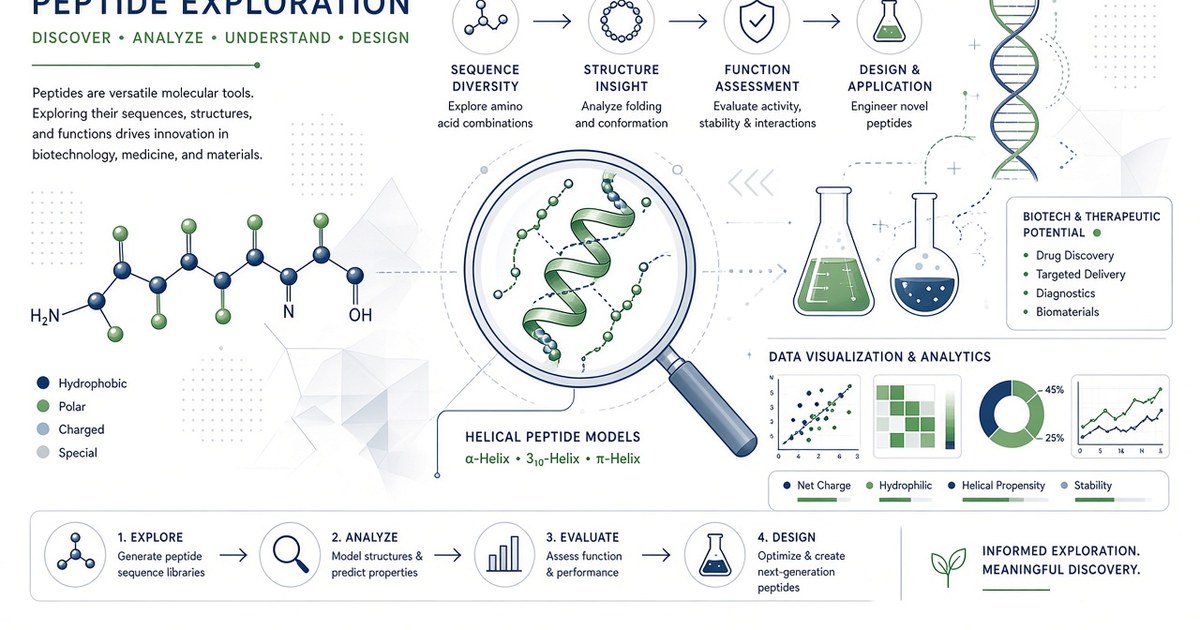
Exploring Peptides: The Complete Evidence Review (2026)
Exploring peptides for laboratory research? This 2026 review covers peptide types, human trial evidence, safety, regulation, and research-grade sourcing.
📋 Table of Contents
Exploring peptides in 2026 means working at one of the most active intersections of molecular pharmacology, analytical chemistry, and regulatory policy. Peptides — short chains of roughly 2 to 50 amino acids — bind receptors with a specificity that small molecules rarely match, which is why the laboratories studying them range from academic biochemistry groups to pharmaceutical assay units. This guide consolidates what matters most when exploring peptides: structural classes and receptor mechanisms, the verified state of human clinical trial evidence, safety and regulatory status, and the documentation standards that separate research-grade material from unverifiable stock.
Key Takeaways
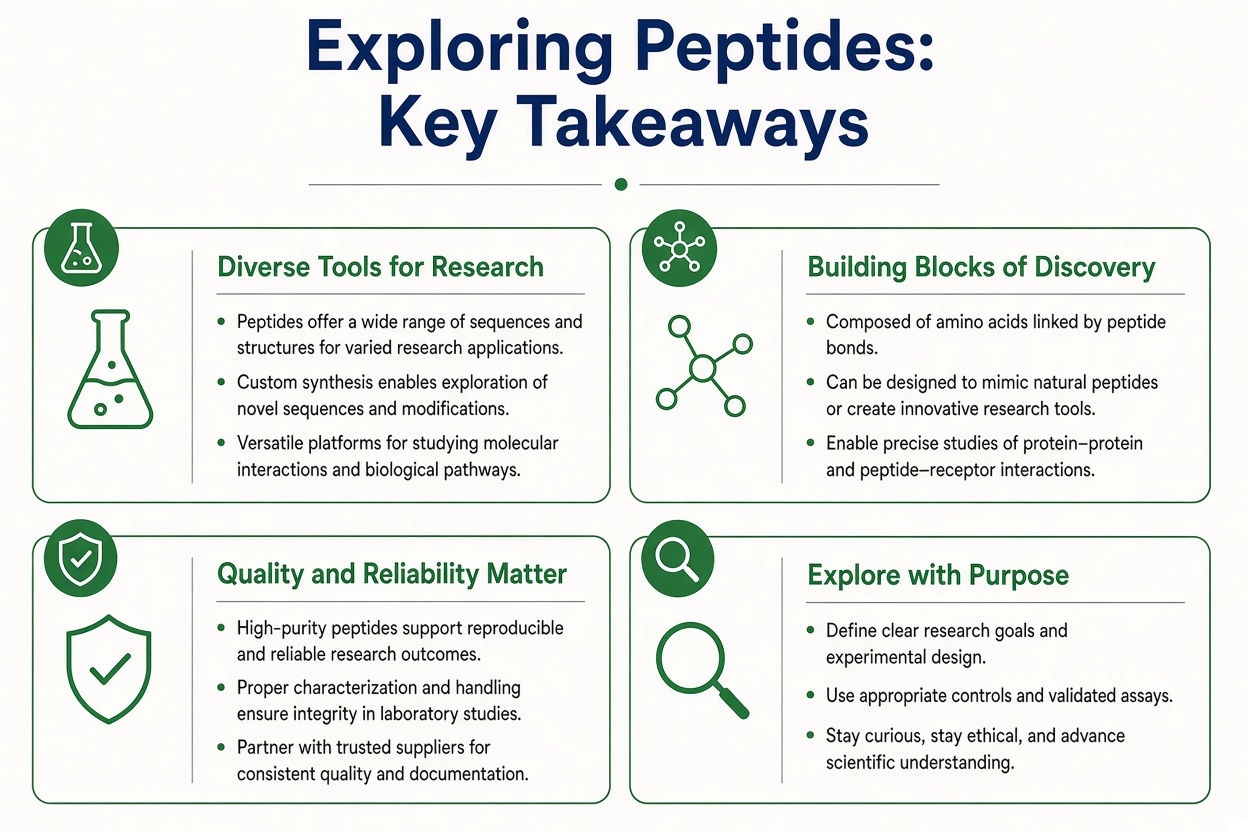
- Peptides are defined by chain length and receptor-level mechanism, and exploring peptides responsibly begins with sequence confirmation plus a lot-specific certificate of analysis (COA).
- Only a small minority of widely discussed peptides — tirzepatide being the clearest example — have completed phase 3 human trials; BPC-157, TB-500, and GHK-Cu remain preclinical or research-only.
- Regulatory status is fluid: FDA compounding review, including an advisory committee vote scheduled for July 2026, may reclassify several peptide bulk substances.
- Evidence hierarchy — registered trials on ClinicalTrials.gov first, then peer-reviewed publications — should govern every conclusion drawn while exploring peptides.
- Third-party analytical verification is the strongest single safeguard against misidentified or contaminated research material.
What Are Peptides and How Do They Work?
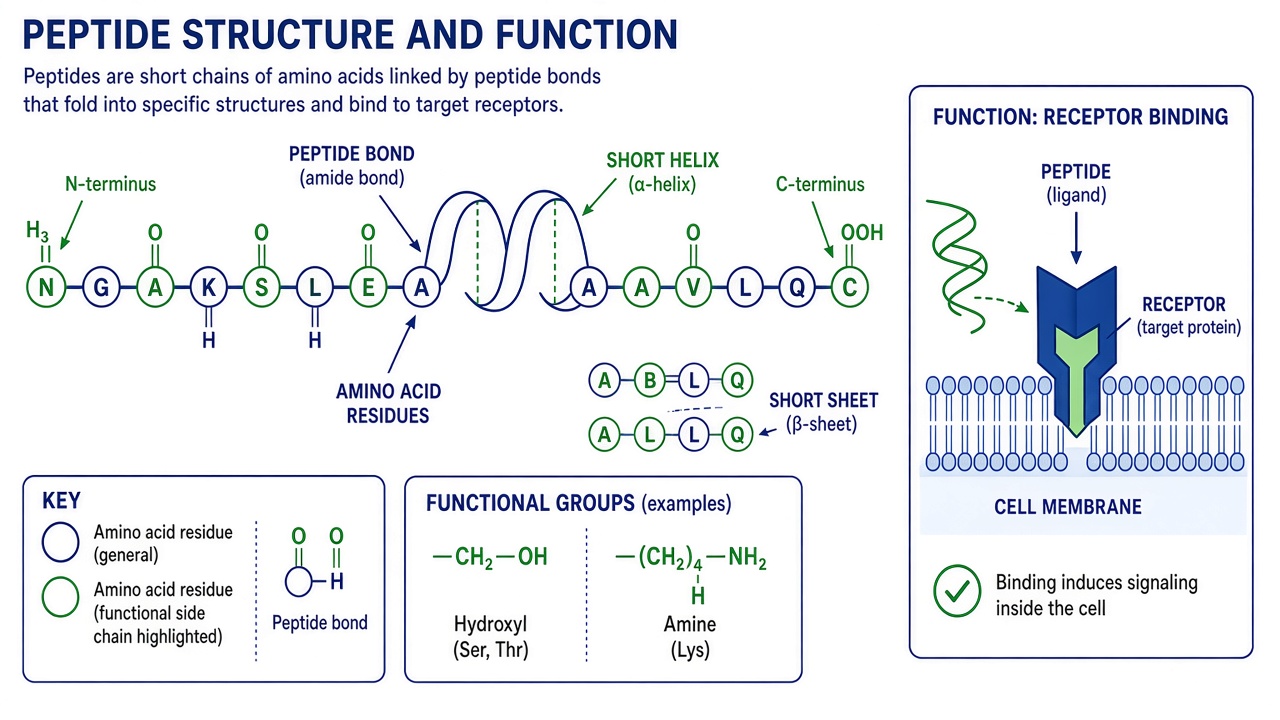
Peptides are short polymers of amino acids joined by peptide bonds, conventionally defined as chains of about 2 to 50 residues. Insulin, at 51 amino acids, sits on the boundary with proteins. Researchers exploring peptides generally encounter three functional families: signaling peptides such as hormones and growth factors, antimicrobial peptides, and structural or carrier peptides used in assay design.
Because proteases hydrolyze peptide bonds, most unmodified peptides have plasma half-lives measured in minutes to hours. Research-grade sequences are therefore frequently stabilized with C-terminal amidation, N-terminal acetylation, cyclization, or amino acid substitution — modifications that should always appear on the product documentation for in vitro and in vivo (animal model) work.
Peptides also occupy a pharmacological middle ground between small molecules and full biologics. They are large enough to engage protein–protein interaction surfaces with high selectivity, yet small enough for solid-phase synthesis at defined purity. That combination — specificity plus manufacturability — explains much of the current research interest across receptor pharmacology and assay development.
How Do Peptides Interact With Receptors?
Most studied peptides act as agonists or antagonists at G protein-coupled receptors, though some modulate ion channels, enzyme active sites, or intracellular scaffolds. Binding affinity, reported in assays as Ki or EC50, and downstream second-messenger cascades such as cAMP, IP3/DAG, and MAPK define a compound’s pharmacology. Laboratories exploring peptides typically begin characterization with radioligand or fluorescence binding assays before advancing to functional cell-culture models.
Why Does Analytical Verification Matter When Exploring Peptides?
Identity and purity are measurable attributes, not marketing language. High-performance liquid chromatography (HPLC) quantifies purity as a percentage of total peak area, while mass spectrometry (MS) confirms observed molecular weight against the theoretical sequence. A credible COA reports both per lot, alongside net peptide content and counter-ion data. Laboratories exploring peptides should treat any material lacking lot-matched HPLC and MS documentation as uncharacterized, regardless of vendor claims.
Storage is equally concrete. Lyophilized peptides are generally stable at −20 °C when desiccated, while reconstituted solutions degrade faster and are typically aliquoted and frozen to preserve assay-to-assay consistency. Handling variables of this kind directly affect reproducibility across experiments.
Types of Peptides: FDA-Approved, Compounded, and Research-Only
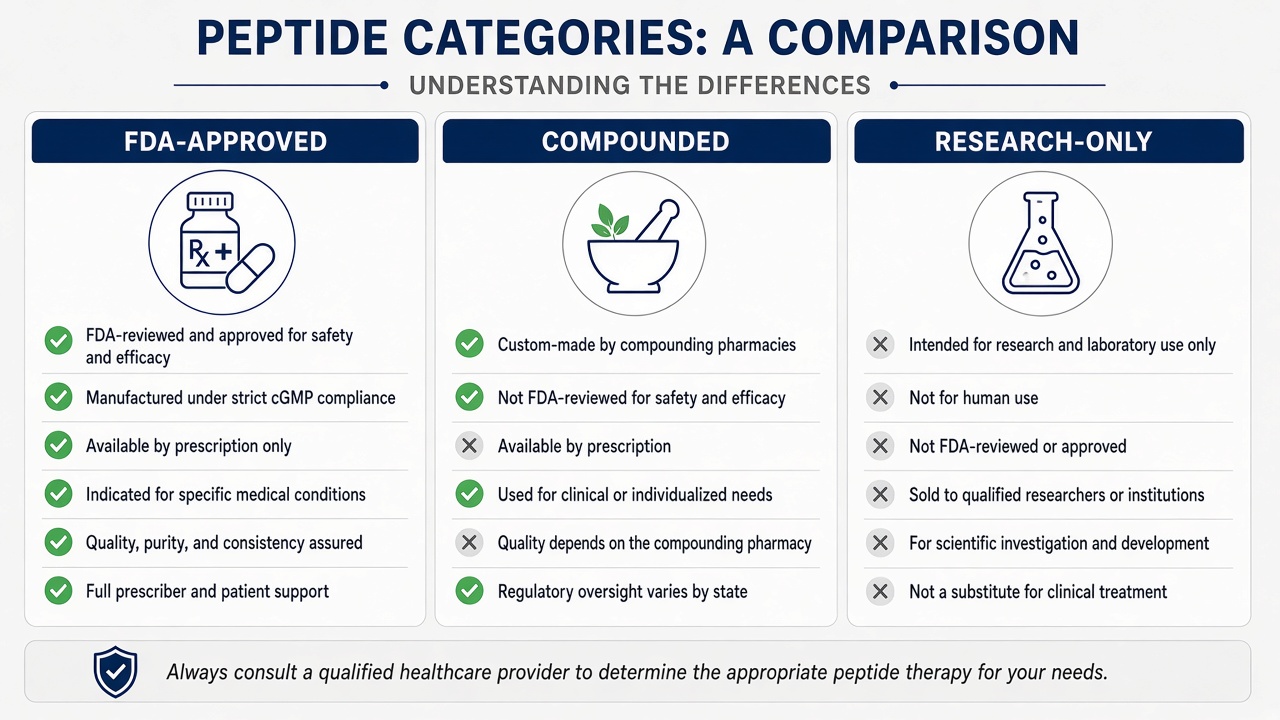
A first step in exploring peptides is separating three regulatory categories that are routinely conflated online. The table below summarizes the distinctions that matter for laboratory planning.
| Category | Regulatory status | Representative examples | Quality documentation | Primary setting |
|—|—|—|—|—|
| FDA-approved peptide drugs | Approved via New Drug Applications; prescribed medicines | Insulin, tirzepatide, semaglutide | cGMP manufacturing; FDA-reviewed labeling | Clinical care and registered trials |
| Compounded peptides | 503A/503B compounding from FDA-accepted bulk substances only | Narrow, shifting list under FDA review | Pharmacy-level testing; standards vary | Clinical compounding |
| Research-only (RUO) | Not approved for human or veterinary use; laboratory research only | BPC-157, TB-500, GHK-Cu, AOD-9604 | Vendor COA (HPLC/MS); third-party verification | In vitro assays; animal-model research |
What Are FDA-Approved Peptide Drugs?
Between 80 and 100 peptide-based drugs hold FDA approval, and the clinical literature sometimes groups them under the term ‘peptide therapy’ — a phrase that properly applies only to approved medicines administered under medical supervision. Tirzepatide, a 39-amino-acid dual GIP/GLP-1 receptor agonist approved in 2022, illustrates the full validation pathway: registered phase 3 programs, published endpoints, and post-market surveillance. Anyone exploring peptides should use approved drugs as the benchmark for what verified evidence looks like.
What Are Compounded Peptides?
Compounded peptides occupy a narrow legal channel. Section 503A pharmacies and 503B outsourcing facilities may compound only from bulk drug substances on FDA’s accepted lists or covered by USP monographs. Several widely discussed peptides were placed in FDA’s Category 2 — bulk substances flagged for significant safety risk — which effectively removed them from compounding. The FDA’s compounding resources outline the current framework. For laboratories exploring peptides, the practical point is categorical: compounded material is a pharmacy product, not a research chemical, and the two supply chains serve different purposes.
What Defines Research-Only Peptides?
Research-only compounds are chemical tools for laboratory investigation, labeled strictly for in vitro and laboratory research use. BPC-157 (a pentadecapeptide derived from a gastric protein sequence), TB-500 (a synthetic fragment of thymosin beta-4), and GHK-Cu (a copper-binding tripeptide) are the most referenced examples. Exploring peptides in this category means working without human safety or pharmacokinetic data by design, inside institutional laboratory protocols rather than clinical frameworks.
💡 Key Takeaway: Types of Peptides: FDA-Approved, Compounded, and Research-Only
Human Clinical Trial Evidence by Peptide: A Data-Driven Overview
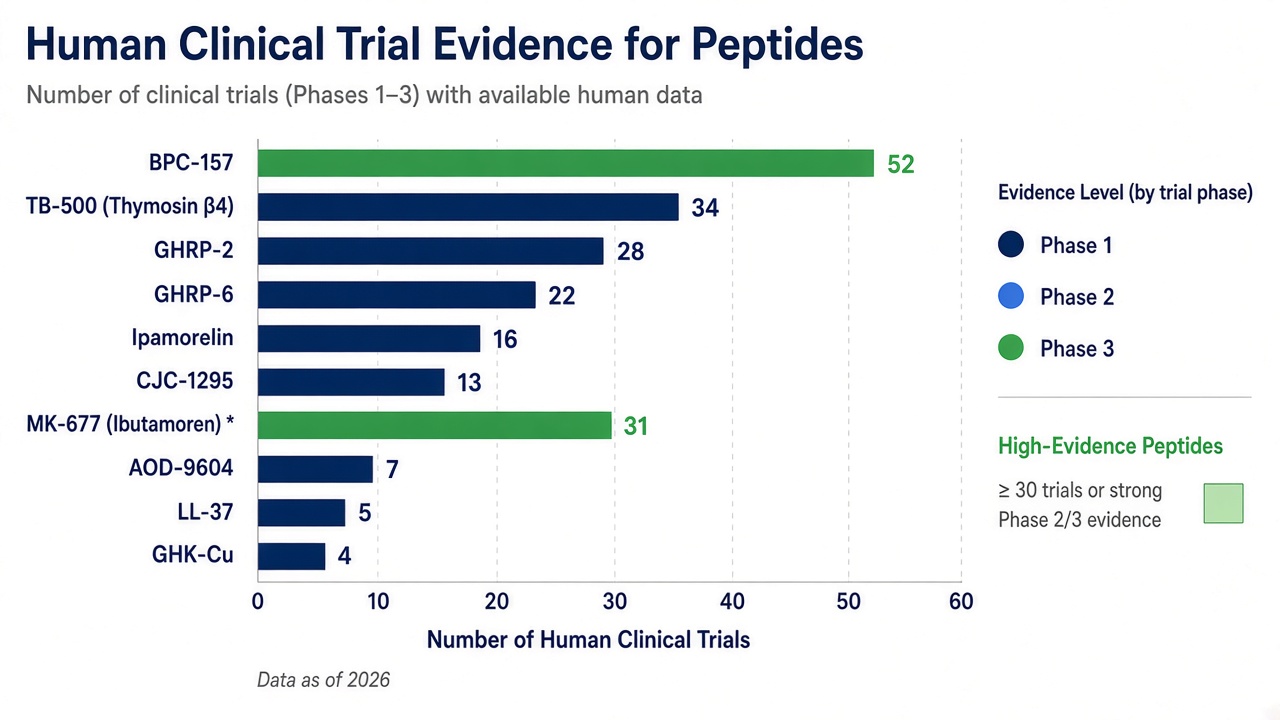
Search registries before narratives. ClinicalTrials.gov indexes registered human studies, and as of early 2026 the evidence distribution across popular peptides is sharply uneven. Laboratories exploring peptides will find one approved drug with more than a hundred registered trials, a few compounds with small or discontinued human programs, and a large set with no registered human data at all.
| Peptide | Structure | Highest human evidence level | Registered human trials (approx.) | Evidence notes |
|—|—|—|—|—|
| Tirzepatide | 39-aa dual GIP/GLP-1 agonist | Phase 3 completed; FDA-approved (2022) | 100+ | SURPASS and SURMOUNT programs met primary endpoints |
| AOD-9604 | hGH fragment 176–191 analog | Phase 2 completed; program discontinued | ~6 completed | Did not separate from placebo on primary endpoints |
| GHK-Cu | Copper-binding tripeptide | Small early-phase and cosmetic studies | Fewer than 10 | Human data limited; mostly dermal models |
| TB-500 | Thymosin beta-4 fragment | None for the fragment; full-length Tβ4 reached phase 2 | None registered for TB-500 | Trials such as RGN-259 studied the parent protein |
| BPC-157 | Pentadecapeptide | No completed registered human RCTs | None completed | Evidence base is in vitro and animal models |
Two conclusions follow. First, exploring peptides by registry data rather than by online popularity inverts the usual ranking: the most discussed research compounds have the least human evidence. Second, an absence of human trials is not a technicality — it means dose-response, pharmacokinetics, and adverse-event profiles remain uncharacterized in humans, which is precisely why these compounds stay in laboratory channels.
The BPC-157 literature illustrates the gap. A PubMed search for BPC-157 returns several hundred indexed entries, overwhelmingly rodent and cell-culture studies examining angiogenesis, nitric-oxide signaling, and growth-factor expression in tissue models. For researchers exploring peptides with this profile, every mechanistic finding is hypothesis-generating rather than confirmatory until controlled human data exist.
How Should Researchers Read Trial Phases?
Phase 1 studies establish safety and pharmacokinetics in small cohorts; phase 2 tests signal and dose-ranging; phase 3 provides confirmatory evidence against primary endpoints in large randomized cohorts. A compound with only phase 1 data has safety hypotheses, not efficacy evidence. Registry entries also list status — recruiting, completed, or terminated — which matters when a development program has been quietly discontinued.
What Does the Evidence Show by Research Area?
Marketing sites often organize peptides by promised outcomes, so a corrective is useful: what do controlled studies actually show, area by area? Exploring peptides through this lens keeps every reported finding anchored to a defined model system.
Metabolic Signaling and Adiposity Models
Tirzepatide’s phase 3 programs in metabolic indications represent the strongest evidence tier. AOD-9604, a modified fragment of human growth hormone (residues 176–191), progressed through human trials before its development program was discontinued after phase 2; current work is largely in vitro, examining adipocyte and cartilage signaling — summarized in our [AOD-9604 research guide](/aod-9604-growth-hormone-fragment-peptide/). Laboratories exploring peptides in metabolic models should note how sharply the evidence tiers differ within a single research area.
Tissue Repair and Musculoskeletal Models
BPC-157 has been studied in rodent tendon, muscle, and gastrointestinal models, with reported effects on angiogenesis and growth-factor pathways. TB-500’s parent molecule, thymosin beta-4, regulates actin polymerization and cell migration in vitro, and full-length Tβ4 formulations reached early human trials for dermal and ophthalmic indications. Both remain preclinical as research compounds, and exploring peptides in tissue-repair models means designing animal or cell-culture studies, not extrapolating to humans.
Dermal Extracellular Matrix Models
GHK-Cu has been examined in fibroblast cultures and dermal models, where researchers report changes in collagen and glycosaminoglycan synthesis markers. Small cosmetic-industry studies of topical formulations exist but do not constitute pharmaceutical-grade trials. Teams exploring peptides for extracellular matrix research should treat GHK-Cu as an in vitro tool compound with an active publication record.
Neurobiology and Endocrine Signaling Models
Neuropeptide research spans compounds such as Semax and Selank analogs in laboratory models of neuronal signaling — cataloged in our [nootropic peptides research guide](/research-guide-5/) — and kisspeptin-10 in reproductive endocrinology assays. For laboratories exploring peptides in neuroendocrine models, receptor specificity and blood–brain barrier penetration are the defining experimental variables.
Safety, Side Effects, and Regulatory Status
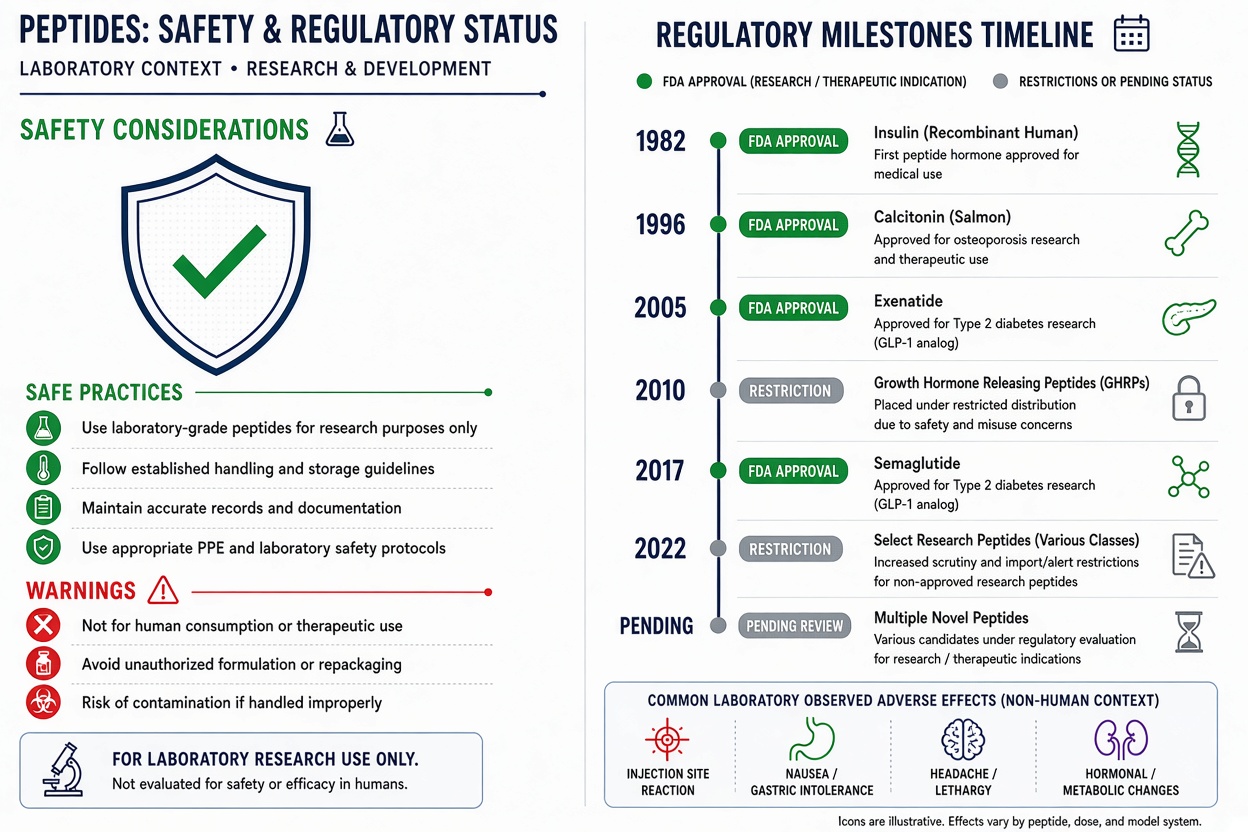
Safety data exist only where trials exist. For approved peptide drugs, adverse-event profiles are documented in FDA-reviewed labeling — gastrointestinal effects for incretin mimetics, injection-site reactions, and class-specific warnings. For research-only compounds, no human safety database exists, so exploring peptides in the RUO category takes place under laboratory safety protocols: SDS review, appropriate PPE, and institutional biosafety oversight.
The regulatory picture has three moving parts. First, FDA’s bulk-substance review has already placed several peptides in Category 2, restricting compounding. Second, FDA’s Pharmacy Compounding Advisory Committee is scheduled to vote in July 2026 on additional peptide bulk substances for the 503A list; researchers exploring peptides should monitor the public docket, since the outcome will signal how regulators weigh peptide safety evidence even though it does not alter research-only status. Third, RUO supply remains a separate, lawful laboratory channel with its own compliance obligations.
Research-use-only disclaimer: every research-category compound discussed in this article is supplied strictly for in vitro and laboratory research. These materials are not drugs, dietary supplements, or cosmetics, and they are not approved for human or veterinary use. Laboratories exploring peptides are responsible for institutional compliance, including IRB or IACUC review where applicable.
💡 Key Takeaway: Safety, Side Effects, and Regulatory Status
How to Evaluate Peptide Research and Avoid Misinformation
Apply a fixed evidence hierarchy: registered randomized trials, then peer-reviewed preclinical work, then conference abstracts, then vendor claims, then anecdote. Exploring peptides with this filter eliminates most misinformation automatically, because the loudest claims almost always sit at the bottom of the hierarchy.
A practical verification checklist:
- Confirm any human-data claim against ClinicalTrials.gov before citing it.
- Read the PubMed abstract of the actual study; note the model system, not just the conclusion.
- Require a lot-specific COA with HPLC purity and MS identity confirmation — our guide on [buying a peptide research library with a COA](/buy-peptide-research-library-coa/) details the documentation standard.
- Assess supplier transparency against the criteria in our review of [trustworthy peptide library suppliers](/peptide-research-library-trusted-suppliers/).
- Treat outcome-promising language aimed at humans as a red flag for non-compliant sourcing.
Red flags cluster predictably: vendors citing only testimonials, catalogs without analytical documentation, and articles that cite rodent data while implying human relevance. Exploring peptides critically means asking of every claim: in what model, at what evidence level, with what analytical verification?
Citation hygiene matters as much as sourcing hygiene. Review articles that describe primary rodent studies as clinical evidence, or that quote concentration ranges without specifying the model, propagate errors into purchasing and protocol decisions. Cross-checking two independent databases — a trial registry and a publication index — takes minutes and prevents most of them.
Supplier evaluation deserves the same rigor as literature evaluation. Verifiable businesses publish lot histories, third-party test results, and clear research-use terms; anonymous storefronts do not. Teams exploring peptides for multi-year projects should also confirm batch-to-batch consistency policies, since longitudinal assays fail when material identity drifts between orders.
Exploring Peptides With Verified Quality: Peptides Library
Peptides Library (peptideslibrary.com) supplies research-grade peptides exclusively for laboratory and in vitro research. The measurable standard on catalog items: HPLC purity of 98% or higher, mass-spectrometry identity confirmation, a lot-specific COA shipped with every order, lyophilized format for stability, and storage guidance at −20 °C. For laboratories exploring peptides, these attributes convert supplier trust from a claim into a checklist.
The catalog covers the compounds referenced throughout this guide — BPC-157, TB-500, GHK-Cu, AOD-9604, kisspeptin-10, and related sequences — with batch documentation retained for reorder verification. Research groups exploring peptides across longitudinal studies can match new lots to prior COAs, preserving assay continuity across phases of a project.
Ready to equip your laboratory? Browse the research catalog at peptideslibrary.com, review the analytical documentation for any lot, and request a lot-specific COA before your next assay run. Institutional purchasing and standing documentation packages are supported for academic and contract research organizations exploring peptides at scale.
FAQ
What are peptides, and why are so many laboratories exploring peptides now?
Peptides are short amino acid chains, roughly 2 to 50 residues, that act as high-specificity receptor ligands. Interest has grown because they sit between small molecules and biologics: targetable, synthesizable at high purity, and mechanistically precise in assays.
Which peptides have actual human clinical trial evidence?
Tirzepatide has completed phase 3 programs and holds FDA approval. AOD-9604 completed phase 2 before its program was discontinued, and GHK-Cu has small early studies. BPC-157 and TB-500 have no completed registered human trials; their evidence base is preclinical.
Is exploring peptides legal for a research laboratory?
Yes, when conducted through compliant channels. Research-only compounds may be purchased for in vitro and laboratory research, never for human or veterinary use, and work should proceed under institutional safety and ethics oversight.
What does the July 2026 FDA vote mean for peptide research?
The advisory committee vote concerns which peptide bulk substances may be used in compounding. It does not change research-only status, but laboratories exploring peptides should monitor the public docket because it signals how regulators evaluate peptide safety data.
How should a lab verify peptide quality before ordering?
Require a lot-specific certificate of analysis showing HPLC purity of 98% or higher, mass-spectrometry identity confirmation, and net peptide content, ideally backed by independent third-party testing. Suppliers that cannot produce lot-matched documentation should be excluded.
Topics covered in this article:
Ready to Take the Next Step?
Every product includes lot-specific documentation and third-party purity testing.
Explore Our Research Products →Free shipping on qualifying orders · Batch COA on request