



Knowledge Peptides: Complete Review of 7 Cognitive Compounds
Explore knowledge peptides for laboratory research: Semax, Selank, MOTS-c, and Dihexa mechanisms, evidence grades, and sourcing standards for 2026.
📋 Table of Contents
Knowledge peptides are research-grade peptide compounds studied in laboratory settings for their interactions with molecular pathways involved in learning, memory, attention, and related cognitive processes. Researchers working with knowledge peptides examine receptor binding, neurotrophic signaling, and cellular energy metabolism in cell cultures and animal models, using compounds such as Semax, Selank, MOTS-c, Dihexa, and Cerebrolysin.
Every compound discussed below is supplied strictly for in vitro and laboratory research applications. Nothing in this guide constitutes a medical, therapeutic, or human-use claim, and no dosing information for humans or animals is provided. This material is written for researchers, laboratory professionals, and academic institutions.
This guide defines the category, grades the evidence behind each major compound, maps research domains, compares measurable product attributes, and sets out the sourcing and handling standards that credible laboratories require.
!Knowledge peptides supplied as lyophilized research vials for laboratory use

Key takeaways
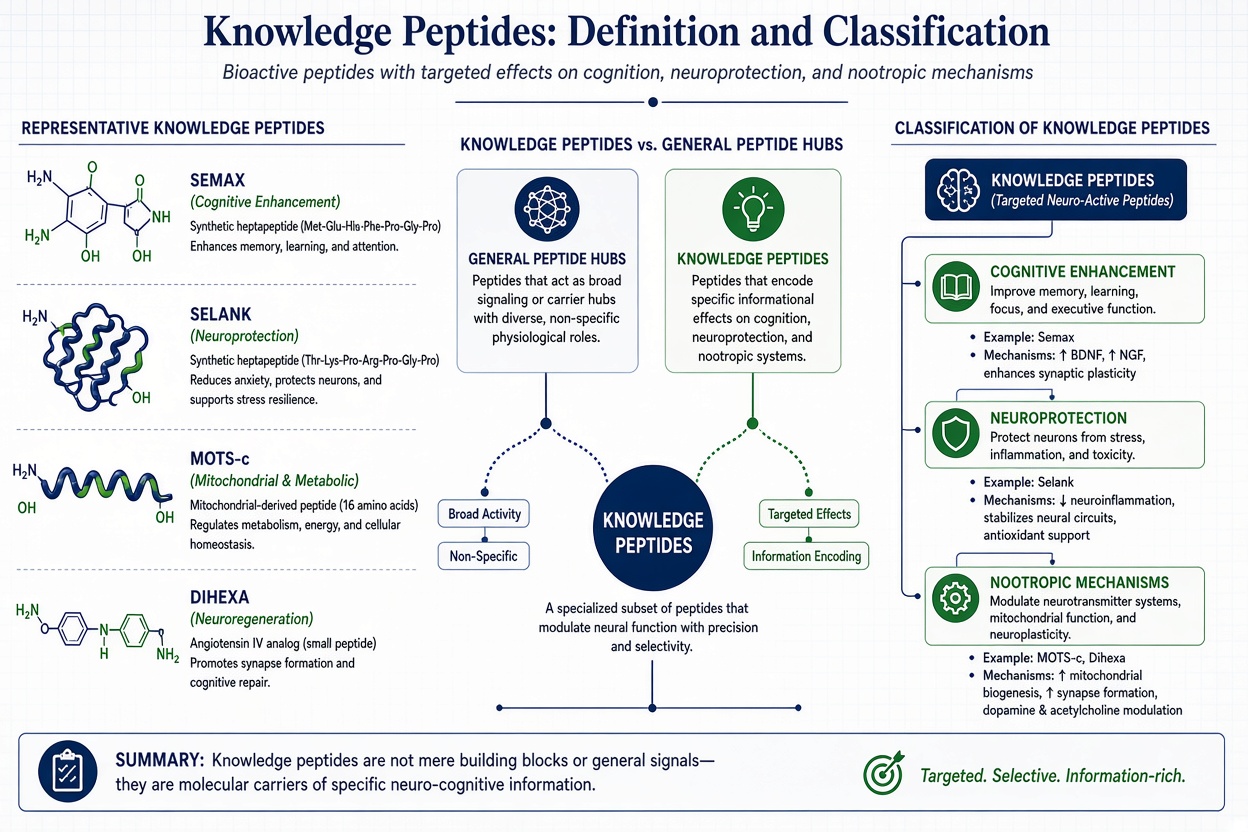
- Knowledge peptides are a focused category of nootropic peptides defined by research application: the study of cognitive mechanisms in controlled experimental models.
- Semax and Selank carry the deepest publication records among synthetic cognitive peptides; MOTS-c and Dihexa represent earlier-stage research frontiers.
- Evidence grading matters: Cerebrolysin appears in several hundred peer-reviewed papers, while Dihexa remains largely preclinical.
- Data quality depends on sourcing: batch-specific certificates of analysis, HPLC purity at or above 98 percent, and mass spectrometry confirmation are baseline requirements.
- Peptides Library supplies research-grade compounds with full analytical documentation for qualified laboratories.
What Are Knowledge Peptides? Definition and Distinction from General Peptide Hubs
Knowledge peptides are short amino acid sequences, typically between three and forty residues, investigated in neuroscience and pharmacology research for their effects on signaling pathways that underlie cognitive performance in experimental models. The category is defined by research question rather than by chemical family.
A general peptide hub catalogs compounds across every research domain: metabolic regulation, reproductive biology, tissue regeneration, immunology. Knowledge peptides form a narrower shelf in that library, grouped because laboratories use them to study learning, memory consolidation, attention, stress response, and neuronal energy handling.
The distinction matters for procurement. A laboratory studying cognition does not need a ten-thousand-compound catalog; it needs verified reference material for a defined set of nootropic peptides, each with documented identity and purity. For a broader orientation to this compound class, see the [Peptides Library Nootropic Peptides Research Guide](/research-guide-5/).
The term overlaps with the older label nootropic peptides. In this guide, knowledge peptides describes the same compounds viewed through their research use: supporting experimental work on the biology of knowledge work itself, from sustained attention models to memory consolidation assays.
How Do Knowledge Peptides Work in Laboratory Research?
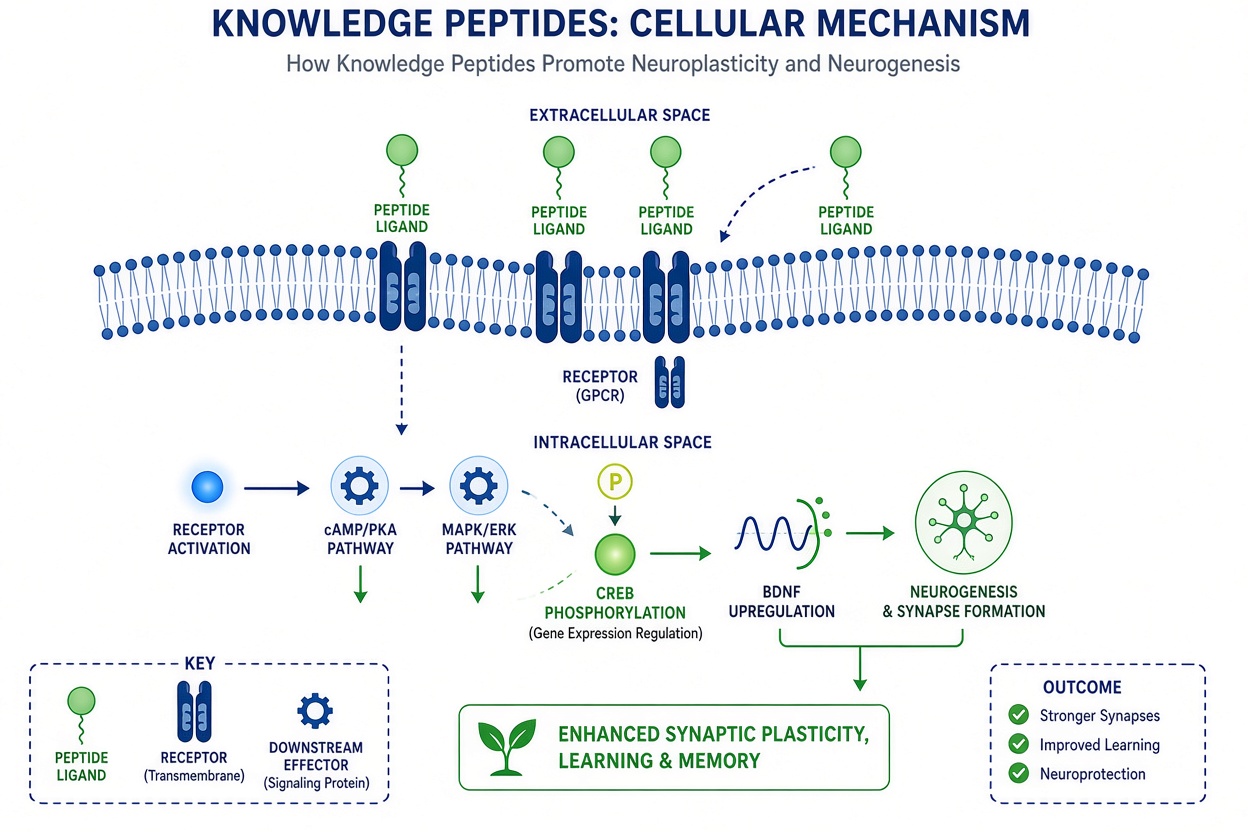
Most knowledge peptides under study act through one of four molecular mechanisms. The first is modulation of neurotrophic factors such as brain-derived neurotrophic factor (BDNF) and nerve growth factor (NGF), which govern neuronal survival and synaptic plasticity in cell cultures and animal models.
The second mechanism is interaction with neurotransmitter systems. Semax, a synthetic analog of the ACTH(4-10) fragment, influences dopaminergic and serotonergic signaling in rodent studies, while Selank, a tuftsin analog, is examined for GABAergic modulation in anxiety-related behavioral assays.
The third mechanism is mitochondrial and metabolic signaling. MOTS-c, a mitochondrial-derived peptide, is studied for its role in cellular energy regulation, with downstream relevance to models of age-related cognitive decline. The fourth is synaptogenic activity: Dihexa, an angiotensin IV analog, potentiates hepatocyte growth factor signaling and synapse formation in vitro.
Receptor binding studies quantify affinity using radioligand displacement, while cell culture assays measure downstream markers such as cAMP accumulation or phosphorylation cascades. Behavioral paradigms in rodent research subjects, including maze performance and conditioned responses, provide functional readouts that complement molecular data.
None of these findings constitutes an approved human application; they define research questions for further laboratory investigation.
💡 Key Takeaway: How Do Knowledge Peptides Work in Laboratory Research?
Evidence-Graded Cognitive Peptides: Mechanisms and Research Overview
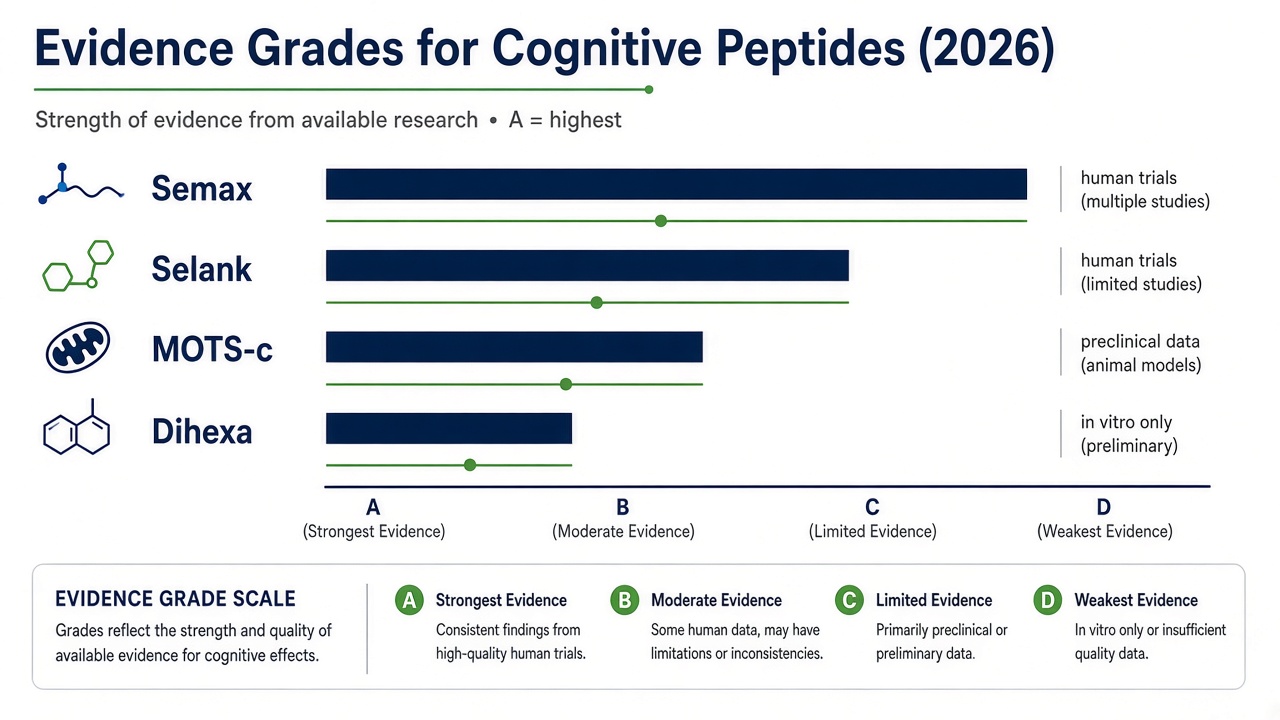
Not all knowledge peptides carry equal evidentiary weight. The table below grades the five most studied compounds by origin, mechanism, evidence stage, and the model systems in which they are typically examined.
| Compound | Origin | Primary Mechanism Studied | Evidence Stage | Common Model Systems |
| — | — | — | — | — |
| Semax | Synthetic ACTH(4-10) analog | BDNF modulation, dopaminergic signaling | Extensive animal literature spanning decades | Rodent behavioral assays, cell cultures |
| Selank | Synthetic tuftsin analog | GABAergic modulation, enkephalin metabolism | Substantial animal literature | Rodent anxiety and memory assays |
| MOTS-c | Mitochondrial-derived 16-mer | AMPK activation, metabolic regulation | Growing record since 2015 | Cell cultures, rodent metabolic models |
| Dihexa | Angiotensin IV analog | HGF and c-Met potentiation, synaptogenesis | Preclinical | Neuronal cultures, rodent models |
| Cerebrolysin | Porcine brain-derived peptide mixture | Neurotrophic mimicry | Several hundred peer-reviewed papers | Cell cultures, rodent ischemia models |
Reading the table requires context. Evidence stage reflects volume and replication, not the quality of any single study, and publication volume in animal models does not imply human relevance. Laboratories should treat these grades as a starting point for literature review rather than a ranking of research value.
Semax
Semax is a heptapeptide (Met-Glu-His-Phe-Pro-Gly-Pro) developed as an analog of the adrenocorticotropic hormone fragment ACTH(4-10). Rodent studies report altered expression of BDNF and its receptor TrkB following administration in research subjects, alongside changes in dopamine and serotonin turnover. A searchable record of published Semax research is maintained on PubMed. Among knowledge peptides, Semax has one of the longest continuous research histories, extending back several decades in Eastern European neuropharmacology programs.
Selank
Selank (Thr-Lys-Pro-Arg-Pro-Gly-Pro) is a synthetic analog of the immunomodulatory tetrapeptide tuftsin. Laboratory investigations focus on its influence on GABA-A receptor binding, enkephalin degradation, and expression of immune signaling molecules in rodent models. Researchers studying stress-related cognitive impairment frequently examine Selank alongside Semax in comparative designs because the two compounds act on complementary pathways. Within the knowledge peptides category, Selank anchors the anxiolytic-research branch.
MOTS-c
MOTS-c is a sixteen-amino-acid peptide encoded within the mitochondrial 12S rRNA gene. The foundational 2015 study demonstrated that MOTS-c activates AMPK and regulates folate and purine metabolism in cell cultures and rodent models (Lee et al., Cell Metabolism). Subsequent work examines exercise-mimetic properties and age-related metabolic decline in animal models. For laboratories investigating the metabolic dimension of knowledge peptides, MOTS-c provides a mechanistically distinct tool that complements neurotrophic compounds.
Dihexa
Dihexa (N-hexanoic-Tyr-Ile-(6) aminohexanoic amide) is an angiotensin IV-derived peptide developed in an academic drug-discovery program. In vitro studies report potentiation of hepatocyte growth factor signaling at c-Met receptors, with synaptogenic effects observed in hippocampal neuronal cultures. The evidence base remains preclinical and comparatively thin; publication volume is a fraction of that for Semax or Cerebrolysin. Researchers therefore treat Dihexa as an exploratory compound within knowledge peptides programs, appropriate for mechanism-mapping assays rather than validated behavioral models.
Cerebrolysin
Cerebrolysin is a mixture of low-molecular-weight peptides and free amino acids derived from purified porcine brain proteins. It is the most extensively published compound in this guide, with several hundred peer-reviewed papers covering neurotrophic activity in cell cultures and rodent models of ischemia and neurodegeneration. An indexed record of this literature is available on PubMed. Its multi-component nature makes batch-to-batch consistency a central analytical concern for laboratories designing long-term studies.
!HPLC chromatogram confirming identity of a nootropic peptide reference standard

Which Knowledge Peptides Fit Specific Cognitive Research Domains?
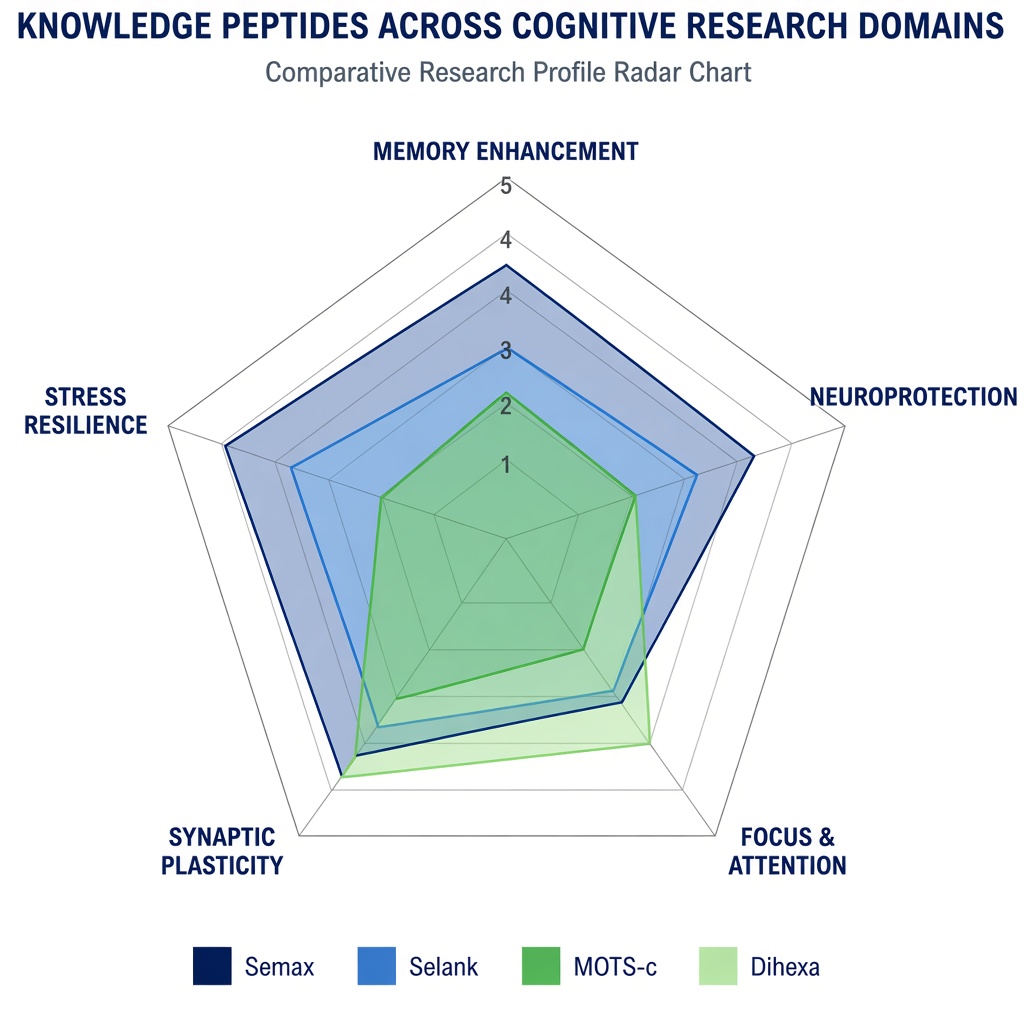
Laboratories frequently ask which compounds map onto which cognitive domains. The mapping below reflects published model systems, not human protocols; knowledge peptides are tools for dissecting mechanisms in controlled settings. The domains correspond to research questions that arise from the scientific study of knowledge work.
| Cognitive Domain | Representative Research Question | Compounds Commonly Studied | Typical Assays |
| — | — | — | — |
| Sustained attention (models relevant to software development) | How do neurotrophic signals affect vigilance duration? | Semax, MOTS-c | Operant attention paradigms, electrophysiology |
| Working memory (models relevant to data analysis) | Which pathways govern short-term information retention? | Semax, Cerebrolysin | Radial arm maze, patch clamp recording |
| Verbal and associative processing (models relevant to writing) | What molecular signals support memory retrieval? | Selank, Semax | Conditioned-response paradigms, gene expression profiling |
| Learning consolidation (models relevant to academic study) | How are new synapses stabilized after training? | Dihexa, Cerebrolysin | Hippocampal slice LTP, synaptogenesis imaging |
These domains describe the biology that knowledge workers rely on professionally, which is precisely why the compounds attract interest from cognitive science and occupational neuroscience programs. The laboratory question is always mechanistic: what does the peptide do to receptor systems, gene expression, or cellular metabolism in the model organism under study?
Assay selection follows the domain. Sustained-attention research favors operant conditioning paradigms and electrophysiological recording, while consolidation studies rely on hippocampal slice preparations and long-term potentiation measurements. Matching the assay to the mechanism is what turns a catalog of compounds into a coherent research program.
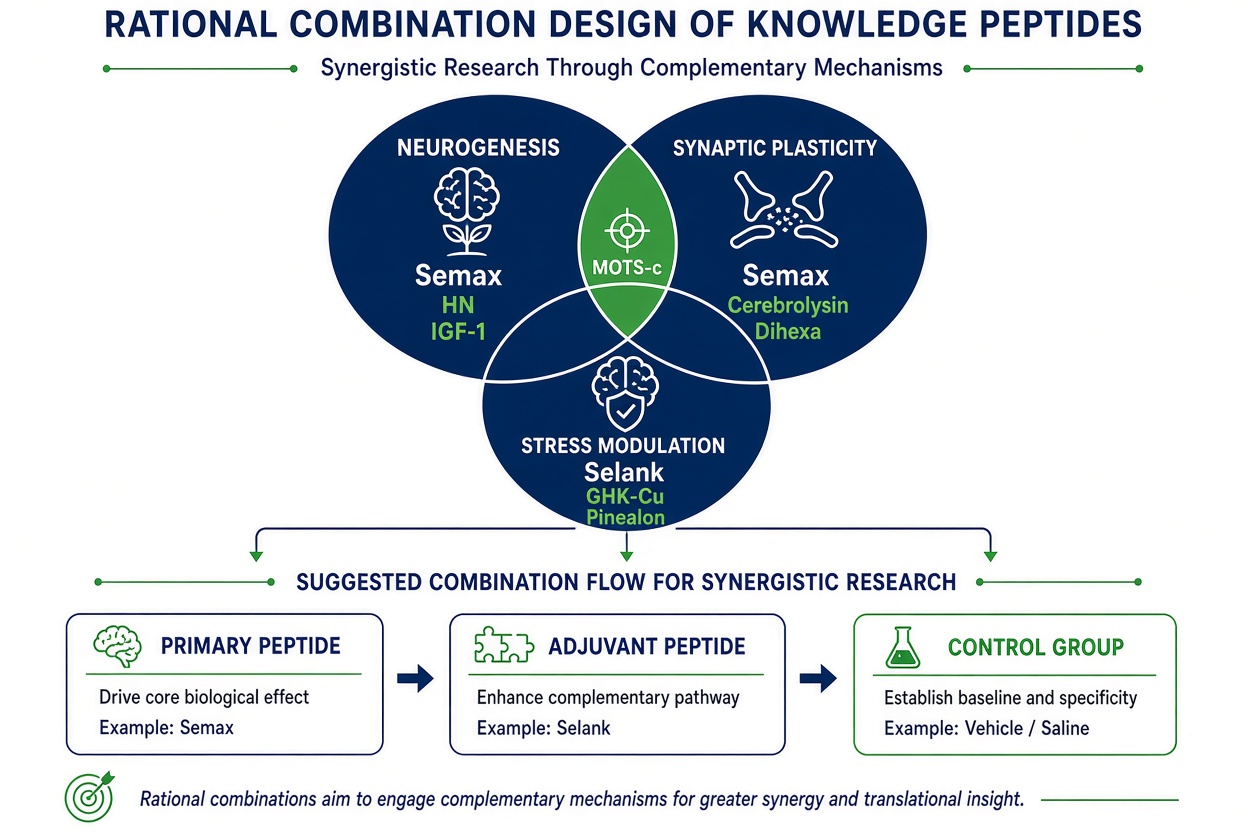
What Are Rational Knowledge Peptides Combinations in Study Design?
Combination designs, sometimes called stacks in informal literature, appear in formal research as comparative or adjunct paradigms. The Semax-Selank pairing is the most common example: because the compounds act on neurotrophic and GABAergic pathways respectively, researchers can attribute observed effects to distinct mechanisms in research subjects.
A second rational pairing places MOTS-c alongside a neurotrophic compound to separate metabolic contributions from synaptic ones. A third uses Cerebrolysin as a positive control in neurodegeneration models when validating newer single-sequence peptides. Each design follows the same principle: combine compounds with orthogonal mechanisms so that assay readouts remain interpretable.
Uncontrolled multi-compound mixtures are methodologically weak. When several compounds are introduced simultaneously without a factorial design, attribution becomes impossible and the data are unpublishable. Rational combinations of two, occasionally three, compounds with known mechanisms produce cleaner results and are the standard in credible laboratories.
💡 Key Takeaway: What Are Rational Knowledge Peptides Combinations in Study Design?
How Do Semax, Selank, MOTS-c, and Other Knowledge Peptides Compare?
Measurable attributes, not marketing claims, should drive compound selection. The table below compares the five knowledge peptides on physical and analytical characteristics relevant to laboratory procurement and experimental planning.
| Attribute | Semax | Selank | MOTS-c | Dihexa | Cerebrolysin |
| — | — | — | — | — | — |
| Composition | 7-residue peptide | 7-residue peptide | 16-residue peptide | Modified peptide scaffold | Peptide and amino acid mixture |
| Typical purity grade | 98%+ by HPLC | 98%+ by HPLC | 98%+ by HPLC | 98%+ by HPLC | Standardized biological activity |
| Form supplied | Lyophilized powder | Lyophilized powder | Lyophilized powder | Lyophilized powder | Solution or lyophilizate |
| Storage | -20 °C, desiccated | -20 °C, desiccated | -20 °C, desiccated | -20 °C, desiccated | 2-8 °C or -20 °C |
| Publication volume | High | Moderate to high | Growing | Low | Very high |
| Verification method | Single-peak HPLC plus MS | Single-peak HPLC plus MS | Single-peak HPLC plus MS | Single-peak HPLC plus MS | Activity-based standardization |
Two practical observations follow. First, single-sequence synthetic peptides are simpler to verify analytically than biological mixtures; Cerebrolysin requires activity-based standardization rather than a single HPLC peak. Second, low publication volume does not indicate low research value. It indicates earlier-stage inquiry, which some laboratories specifically seek when building novel research programs.
Solubility and handling differ enough to affect assay design. MOTS-c solutions can require brief sonication for complete dissolution, while Dihexa is frequently prepared with a small DMSO fraction before aqueous dilution. Cerebrolysin, supplied as a solution or lyophilizate, follows biological-standardization conventions rather than single-peak purity thresholds.
What Safety, Quality, and Sourcing Standards Apply to Knowledge Peptides?
Analytical verification is the foundation of credible peptide research. Every vial of knowledge peptides should ship with a batch-specific certificate of analysis reporting HPLC purity, mass spectrometry identity confirmation, and net peptide content. A certificate that lacks batch numbers or chromatograms is documentation in name only.
Baseline specifications for research-grade peptides include purity at or above 98 percent by HPLC, molecular mass confirmation by MALDI-TOF or ESI mass spectrometry, endotoxin testing for cell culture work, and lyophilized presentation with desiccant. Storage at minus twenty degrees Celsius protects sequence integrity, and repeated freeze-thaw cycles should be avoided after reconstitution.
Supplier vetting matters as much as compound selection. Our guide on [where to buy a peptide research library with a COA](/buy-peptide-research-library-coa/) details the documentation a legitimate supplier provides, and the review of [trustworthy peptide research library suppliers](/peptide-research-library-trusted-suppliers/) compares verification practices across vendors. Independent third-party testing, while adding cost, provides the strongest assurance for multi-year studies.
Red flags when evaluating vendors include missing lot numbers, certificates recycled across batches, purity claims without chromatograms, and marketing language that implies human use. A supplier that frames research compounds with consumer-oriented benefit claims is signaling non-compliance, and laboratories should treat that signal seriously.
Regulatory framing deserves emphasis. These compounds are research chemicals, not approved drugs, dietary supplements, or consumer products. Laboratories should maintain institutional documentation, restrict handling to trained personnel, and dispose of material according to chemical waste protocols.
!Laboratory researcher reviewing a batch-specific certificate of analysis

How Should Knowledge Peptides Be Stored and Handled?
Lyophilized knowledge peptides are stable for extended periods when stored at minus twenty degrees Celsius, protected from light and moisture. Once reconstituted in bacteriostatic water or an appropriate buffer, solutions should be aliquoted to avoid repeated freeze-thaw cycles, which fragment peptide chains and compromise assay reproducibility.
Handling practices are straightforward. Allow vials to reach room temperature before opening to prevent condensation, use sterile technique for reconstitution, label aliquots with concentration, solvent, and date, and log storage conditions in the laboratory notebook. Degraded reference material is a leading cause of irreproducible results in peptide research, and most degradation is preventable with basic cold-chain discipline.
💡 Key Takeaway: How Should Knowledge Peptides Be Stored and Handled?
Why Do Laboratories Source Knowledge Peptides from Peptides Library?
Peptides Library organizes its catalog the way researchers organize questions. The knowledge peptides collection groups Semax, Selank, MOTS-c, Dihexa, Cerebrolysin, and related compounds with batch-specific certificates of analysis, purity at or above 98 percent, and mass spectrometry verification on every lot.
- Batch-specific documentation: each shipment includes HPLC chromatograms and mass spectra tied to the lot number printed on the vial.
- Cold-chain fulfillment: lyophilized compounds ship in temperature-controlled packaging to preserve stability in transit.
- Research-only compliance: every product page states the in vitro and laboratory research designation, and orders require institutional acknowledgment.
- Catalog depth: the range covers both established reference compounds and earlier-stage research tools, with consistent specifications across the collection.
- Research support: the team answers specification questions, provides sample documentation, and assists with institutional procurement requirements.
Laboratories ready to order can browse the knowledge peptides catalog, download certificates of analysis before purchase, or contact the support team for bulk quotations, custom synthesis inquiries, and institutional accounts. Reference material ships to verified research addresses.
!Research peptide catalog with batch documentation and cold-chain packaging

Common Questions and Misconceptions About Knowledge Peptides
Misconception one: the word peptide implies supplement. Knowledge peptides sold for research are not supplements and carry no nutritional or therapeutic designation. The research-use-only classification is a legal and scientific boundary, not a marketing formality, and reputable suppliers enforce it at checkout.
Misconception two: all vendors sell equivalent material. Independent analyses of gray-market peptides have found purity ranging from under fifty percent to over ninety-nine percent between vendors selling identically labeled vials. Analytical documentation is the only reliable differentiator.
Misconception three: more compounds mean better experiments. Rational design favors the fewest compounds that answer the mechanistic question. A two-compound Semax and Selank comparative assay produces cleaner, publishable data than an uncontrolled multi-peptide mixture.
Misconception four: preclinical results predict human outcomes. Animal model findings generate hypotheses for further study. They do not establish effects in people, and this guide makes no such claim for any compound discussed.
FAQ
What are knowledge peptides?
Knowledge peptides are research peptides studied in laboratory settings for their interactions with molecular pathways involved in cognition, including neurotrophic signaling, neurotransmitter modulation, and mitochondrial energy regulation. They are supplied strictly for in vitro and laboratory research applications.
Which knowledge peptides have the strongest published evidence?
Cerebrolysin carries the largest publication record, with several hundred peer-reviewed papers. Semax and Selank also have extensive animal-model literature, MOTS-c has grown steadily since 2015, and Dihexa remains largely preclinical.
Are knowledge peptides legal for laboratories to purchase?
In most jurisdictions, peptides sold explicitly as research chemicals may be purchased by laboratories and institutions for in vitro research. They are not approved for human use, and purchasers are typically required to acknowledge research-only terms at the point of sale.
What documentation should accompany a research peptide order?
A batch-specific certificate of analysis reporting HPLC purity, ideally at or above 98 percent, mass spectrometry identity confirmation, and net peptide content. Endotoxin testing is recommended for cell culture applications, and aliquoting guidance and storage conditions should be available from the supplier.
Can knowledge peptides be combined in research designs?
Comparative and combination designs appear in the published literature, most commonly Semax and Selank pairings with orthogonal mechanisms. Researchers should review interaction data and build controlled factorial assays rather than combining compounds arbitrarily.
Topics covered in this article:
Ready to Take the Next Step?
Every product includes lot-specific documentation and third-party purity testing.
Explore Our Research Products →Free shipping on qualifying orders · Batch COA on request