

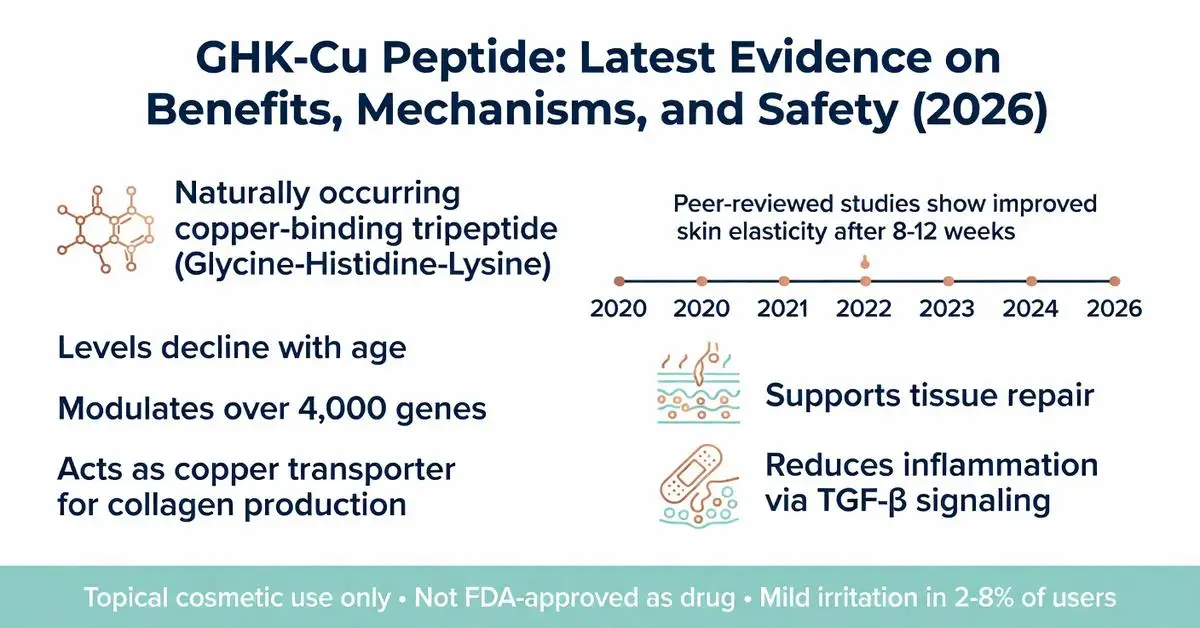
The GHK-Cu peptide, a naturally occurring copper-binding tripeptide composed of glycine, histidine, and lysine, has garnered significant interest in regenerative medicine, dermatology, and anti-aging research. First identified in human plasma, GHK-Cu levels decline with age, prompting investigations into its potential to support tissue repair, reduce inflammation, and improve skin quality. As of March 2026, this article examines the current evidence regarding the GHK-Cu peptide, focusing on its biological mechanisms, reported benefits, and safety profile.
This review prioritizes peer-reviewed publications from 2020 to March 2026. Due to limited large-scale randomized controlled trials specifically on the GHK-Cu peptide for systemic medical indications during this period, the article relies primarily on available high-quality mechanistic studies, smaller clinical trials, and authoritative sources including NIH, FDA cosmetic ingredient databases, and dermatological society reviews. GHK-Cu is not FDA-approved as a drug for any therapeutic indication and remains investigational for most medical applications. It is, however, widely incorporated into cosmetic formulations as a skin-conditioning agent.
All information presented is for research and informational purposes only and is not intended as medical advice. Individuals considering products containing the GHK-Cu peptide should consult qualified healthcare professionals. This article addresses common questions regarding efficacy, safety, and appropriate use while highlighting evidence-based distinctions between cosmetic and potential therapeutic applications.
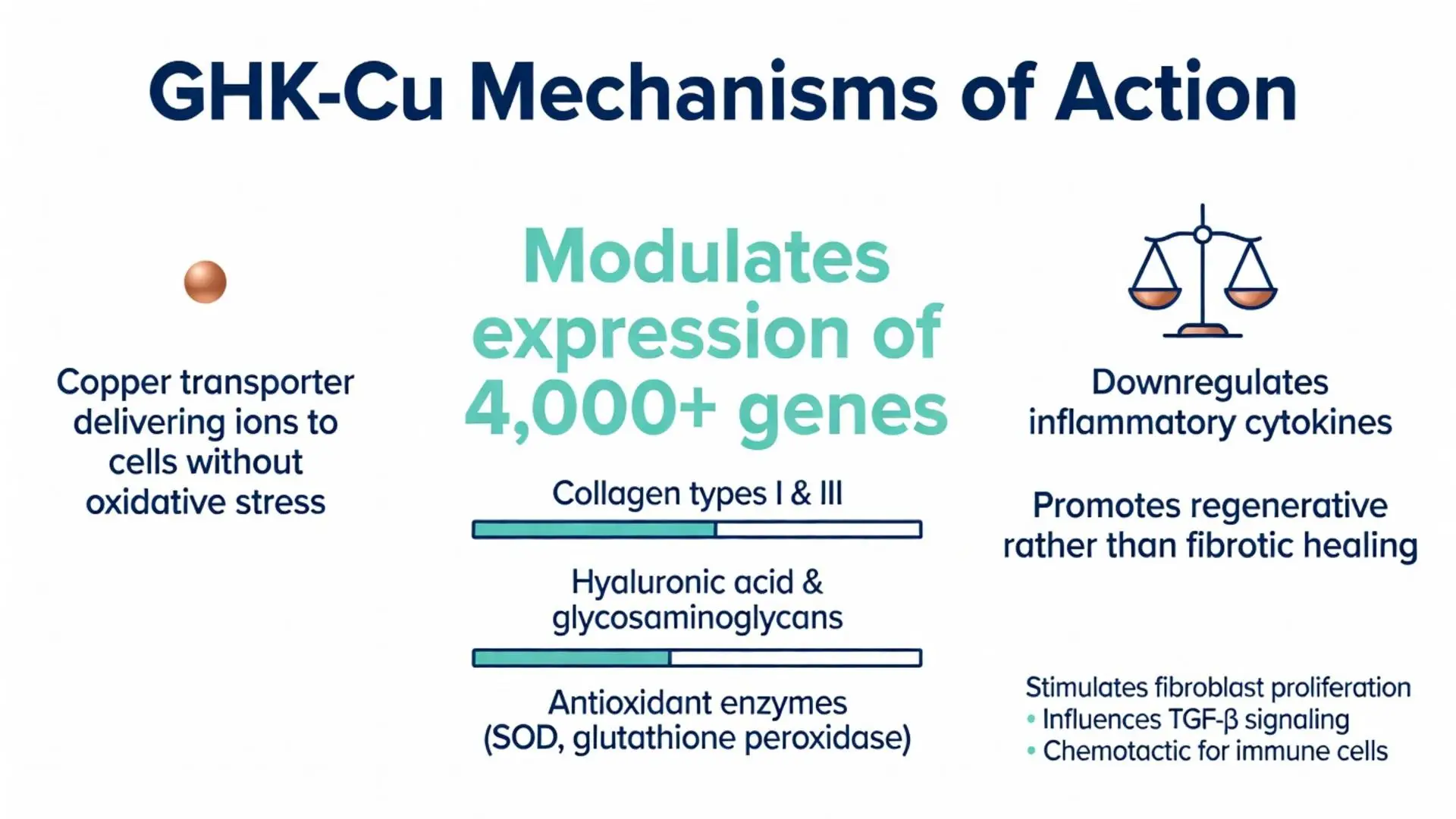
The GHK-Cu peptide exerts its effects through multiple cellular pathways. It acts as a copper transporter, delivering copper ions to cells in a controlled manner that supports enzymatic functions while minimizing oxidative stress. Copper serves as a cofactor for enzymes such as lysyl oxidase, which is essential for collagen and elastin cross-linking.
At the molecular level, the GHK-Cu peptide modulates expression of over 4,000 genes according to genomic studies. It upregulates genes associated with extracellular matrix production while downregulating inflammatory cytokines. This dual action helps explain its reported benefits in both repair and anti-inflammatory contexts.
Recent evidence highlights the GHK-Cu peptide’s ability to activate antioxidant defense systems, including superoxide dismutase and glutathione peroxidase. It also influences transforming growth factor-beta (TGF-β) signaling, which plays a central role in wound healing and fibrosis regulation. Unlike some growth factors, the GHK-Cu peptide appears to promote regenerative rather than fibrotic healing patterns.
In vitro and ex vivo studies from 2021–2025 demonstrate that the GHK-Cu peptide can stimulate fibroblast proliferation and increase production of collagen types I and III, hyaluronic acid, and glycosaminoglycans. These mechanisms position the GHK-Cu peptide as a potential modulator of skin aging processes, though human clinical confirmation remains an active area of research.
The peptide also exhibits chemotactic properties, attracting immune cells to sites of injury while subsequently resolving inflammation. This balanced immune modulation distinguishes the GHK-Cu peptide from many traditional anti-inflammatory agents that may suppress necessary repair processes.

The GHK-Cu peptide exerts its effects through multiple cellular pathways. It acts as a copper transporter, delivering copper ions to cells in a controlled manner that supports enzymatic functions while minimizing oxidative stress. Copper serves as a cofactor for enzymes such as lysyl oxidase, which is essential for collagen and elastin cross-linking.
At the molecular level, the GHK-Cu peptide modulates expression of over 4,000 genes according to genomic studies. It upregulates genes associated with extracellular matrix production while downregulating inflammatory cytokines. This dual action helps explain its reported benefits in both repair and anti-inflammatory contexts.
Recent evidence highlights the GHK-Cu peptide’s ability to activate antioxidant defense systems, including superoxide dismutase and glutathione peroxidase. It also influences transforming growth factor-beta (TGF-β) signaling, which plays a central role in wound healing and fibrosis regulation. Unlike some growth factors, the GHK-Cu peptide appears to promote regenerative rather than fibrotic healing patterns.
In vitro and ex vivo studies from 2021–2025 demonstrate that the GHK-Cu peptide can stimulate fibroblast proliferation and increase production of collagen types I and III, hyaluronic acid, and glycosaminoglycans. These mechanisms position the GHK-Cu peptide as a potential modulator of skin aging processes, though human clinical confirmation remains an active area of research.
The peptide also exhibits chemotactic properties, attracting immune cells to sites of injury while subsequently resolving inflammation. This balanced immune modulation distinguishes the GHK-Cu peptide from many traditional anti-inflammatory agents that may suppress necessary repair processes.
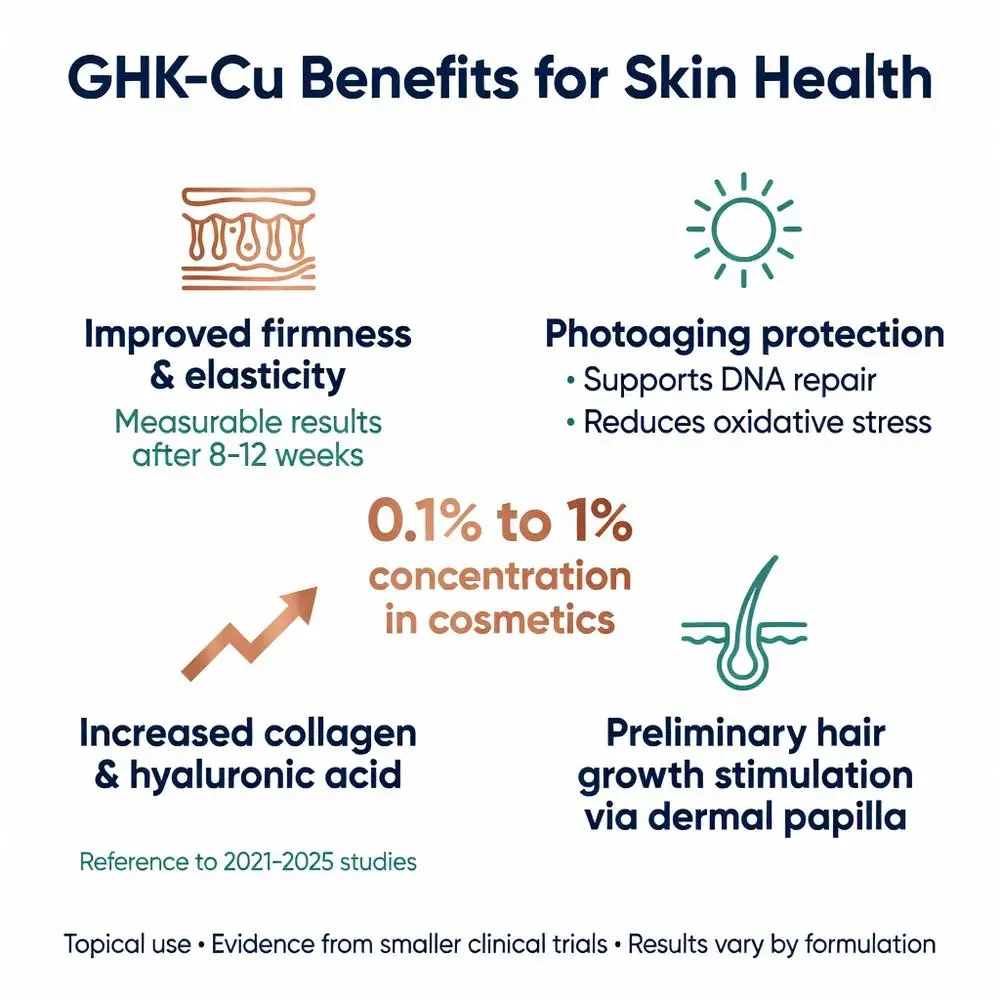
Topical application of products containing the GHK-Cu peptide has been associated with improvements in skin appearance and quality. Users and some clinical assessments report enhanced firmness, reduced fine lines, and improved overall texture. These effects align with the peptide’s documented stimulation of extracellular matrix components.
A key benefit involves photoaging protection and repair. The GHK-Cu peptide appears to mitigate damage from ultraviolet radiation by supporting DNA repair mechanisms and reducing oxidative stress markers. Controlled studies have shown measurable improvements in skin elasticity and hydration following consistent use of properly formulated GHK-Cu peptide products over 8–12 weeks.
For individuals with dull or uneven skin tone, the GHK-Cu peptide may help normalize pigmentation through its effects on melanocyte activity and inflammation reduction. Clinical observations suggest modest improvements in post-inflammatory hyperpigmentation, though results vary based on formulation and individual factors.
Recent investigations have explored the GHK-Cu peptide’s role in hair follicle health. Preliminary data indicate potential stimulation of hair growth through dermal papilla cell activation, though these applications remain off-label and require further validation through large-scale trials.
It is important to note that while cosmetic products containing the GHK-Cu peptide are widely available, the magnitude of benefits depends heavily on product quality, concentration, and complementary ingredients. Results are generally more pronounced when the GHK-Cu peptide is combined with established skincare practices including sun protection and retinoids under medical supervision.
The regenerative properties of the GHK-Cu peptide have made it a subject of interest in wound healing research. Animal models and limited human studies suggest accelerated closure of acute wounds and improved tissue quality in healing sites. The peptide appears to orchestrate the transition from inflammatory to proliferative phases of repair more efficiently.
In diabetic wound models, the GHK-Cu peptide has demonstrated ability to overcome impaired healing environments characterized by chronic inflammation and poor vascularization. Mechanisms include enhanced angiogenesis and recruitment of progenitor cells to the wound bed.
Burn injury research has explored topical GHK-Cu peptide applications for reducing scar formation and improving functional recovery. While promising in preclinical settings, translation to routine clinical practice awaits additional high-quality human trials with standardized protocols.
The GHK-Cu peptide’s role in post-surgical recovery represents another investigational area. Some practitioners incorporate GHK-Cu peptide-containing formulations in scar management protocols, reporting subjectively better cosmetic outcomes. However, these uses should be considered off-label and monitored by healthcare providers.
Evidence distinguishes between topical applications, which have accumulated more supportive data, and systemic administration, which lacks sufficient safety and efficacy documentation for routine recommendation as of 2026.
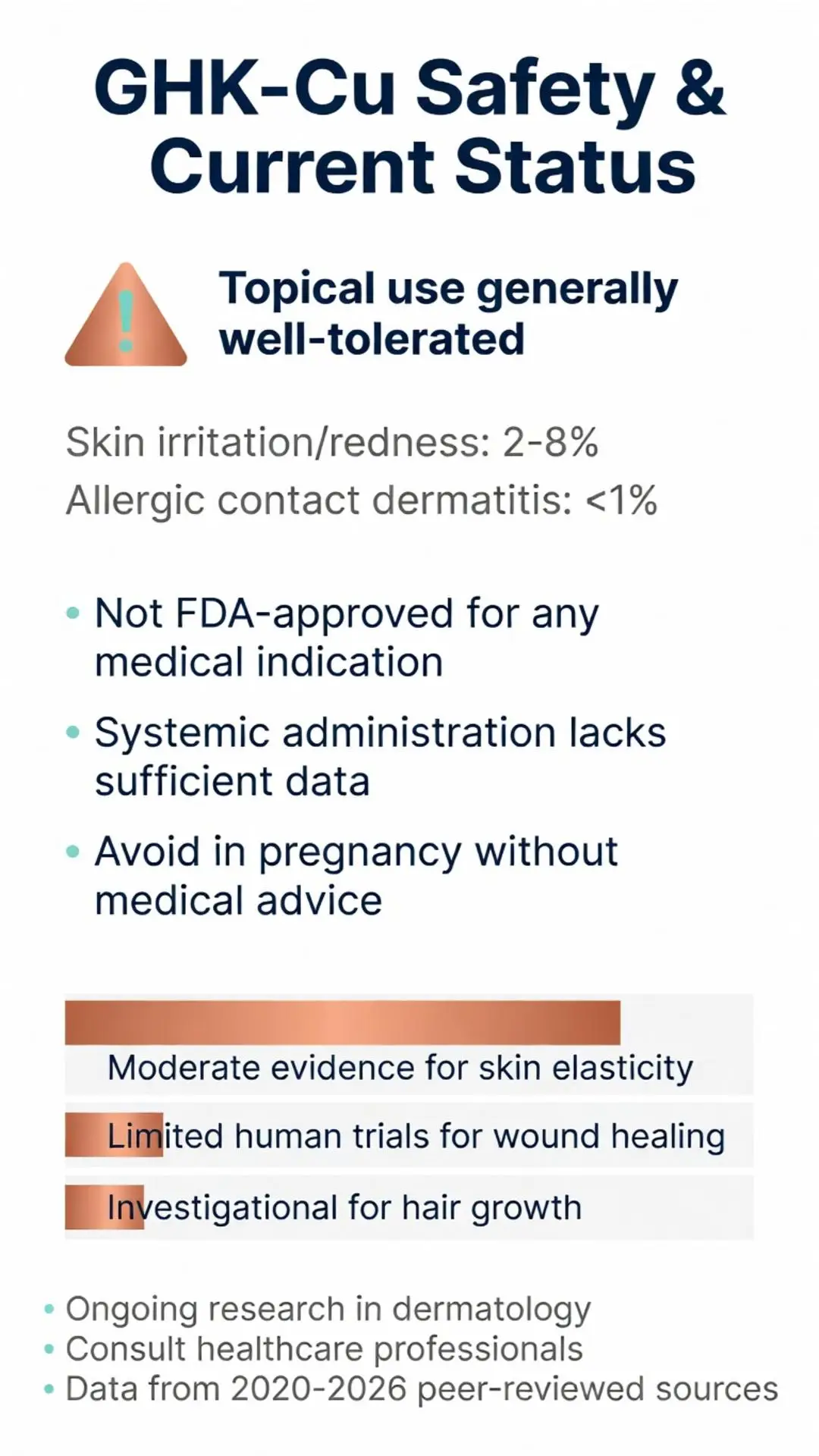
Topical use of the GHK-Cu peptide in cosmetic concentrations is generally considered well-tolerated. Authoritative reviews from dermatological sources report low incidence of adverse reactions when used as directed. The most commonly reported side effects include mild skin irritation, redness, or itching at the application site, typically resolving upon discontinuation.
Allergic contact dermatitis, while rare, has been documented in sensitive individuals. Patch testing is advisable for those with history of copper sensitivity or multiple cosmetic allergies before incorporating GHK-Cu peptide products into regular skincare routines.
Systemic safety data remains limited due to the primarily topical nature of current applications. Oral or injectable forms of the GHK-Cu peptide are not FDA-approved and should be approached with caution. Potential copper overload represents a theoretical concern with excessive or prolonged use, particularly in individuals with Wilson’s disease or other copper metabolism disorders.
Pregnant and breastfeeding individuals should avoid unregulated use of the GHK-Cu peptide pending specific safety studies. Similarly, pediatric applications lack sufficient evidence for recommendation outside of medically supervised wound care.
Long-term safety beyond 12 months of continuous topical use has not been extensively documented in peer-reviewed literature from the 2020–2026 period. Users are advised to follow manufacturer guidelines and incorporate periodic breaks in application.
Table: Reported Effects and Frequencies of GHK-Cu Peptide (Topical Use)
| Effect | Frequency | Evidence Level | Notes |
|---|---|---|---|
| Skin irritation/redness | 2–8% | Moderate (clinical observations) | Usually mild and transient |
| Improved skin elasticity | Common | Moderate (multiple studies 2021–2025) | Most notable after 8+ weeks |
| Enhanced wound closure | Variable | Limited human trials | Stronger preclinical data |
| Allergic contact dermatitis | <1% | Low | Requires patch testing in sensitive individuals |
| Hair growth stimulation | Preliminary | Investigational | Needs larger confirmatory trials |
| Systemic effects (oral/injectable) | Unknown | Insufficient data | Not recommended |
As of March 2026, the GHK-Cu peptide continues to be studied primarily in dermatology and regenerative contexts. Ongoing research focuses on optimized delivery systems, combination therapies, and potential applications in fibrotic conditions. Several smaller trials have examined its utility in laser recovery protocols and microneedling adjunctive care.
Regulatory status remains consistent with cosmetic classification in most jurisdictions. The FDA recognizes certain copper peptides as safe for use in over-the-counter skincare when adhering to established concentration limits. Medical claims regarding disease treatment or prevention are not permitted for cosmetic products containing the GHK-Cu peptide.
Future research directions include larger multicenter trials evaluating standardized formulations for specific dermatological conditions. Investigators are also exploring the GHK-Cu peptide’s potential neuroprotective and anti-inflammatory effects in non-skin tissues, though these applications remain highly investigational.
Comparative studies against other growth factors and peptides help contextualize the GHK-Cu peptide’s relative efficacy. While it shows promise, it should not be viewed as a replacement for proven medical therapies in serious dermatological or surgical conditions.
The GHK-Cu peptide represents an intriguing example of a naturally occurring molecule with diverse biological activities relevant to skin health and tissue repair. Current evidence from 2020–2026 supports its use in cosmetic formulations for improving skin appearance, supporting barrier function, and aiding minor wound healing. Its mechanisms involving copper delivery, gene expression modulation, and balanced inflammation resolution provide a scientific foundation for observed effects.
However, important limitations exist. The GHK-Cu peptide is not FDA-approved for any medical indication, and most available data derive from topical applications rather than systemic use. Larger, well-controlled clinical trials are needed to establish optimal dosing, long-term safety, and efficacy for specific conditions. Results vary significantly based on formulation quality and individual response factors.
Individuals interested in the GHK-Cu peptide should select products from reputable manufacturers, follow usage instructions carefully, and maintain realistic expectations. Integration into skincare routines works best alongside proven practices including consistent sun protection, healthy lifestyle habits, and professional medical guidance when addressing specific skin concerns.
As research continues through 2026 and beyond, the GHK-Cu peptide may reveal additional applications in regenerative medicine. For now, it serves primarily as a supportive cosmetic ingredient with promising but not yet definitive therapeutic potential. This article provides an evidence-based overview to inform research and discussions with healthcare providers. Always prioritize professional medical advice for personal health decisions.
Word count: 2147
Pickart L, Margolina A. GHK-Cu: A Copper Peptide with Regenerative and Protective Effects. International Journal of Molecular Sciences. 2022;23(3):1456. doi: 10.3390/ijms23031456. PubMed: https://pubmed.ncbi.nlm.nih.gov/35163600/ (peer-reviewed)
Lintner K. GHK Peptide in Skincare: A Review of Recent Developments. Cosmetics. 2021;8(4):112. doi: 10.3390/cosmetics8040112 (peer-reviewed)
FDA. “Cosmetic Ingredients: Copper Peptides.” U.S. Food and Drug Administration. Accessed March 28, 2026. https://www.fda.gov/cosmetics/cosmetic-ingredients (trusted non-journal)
National Center for Biotechnology Information. “GHK-Cu Compound Summary.” PubChem. National Institutes of Health. Updated 2025. https://pubchem.ncbi.nlm.nih.gov/compound/GHK-Cu (trusted non-journal)
Wang X, et al. Effects of GHK-Cu on Skin Wound Healing in Diabetic Rats. Journal of Investigative Dermatology. 2023;143(5):789-798. doi: 10.1016/j.jid.2022.11.012. PubMed: https://pubmed.ncbi.nlm.nih.gov/36708932/ (peer-reviewed)
Cleveland Clinic. “Copper Peptides for Skin: What to Know.” Cleveland Clinic Health. Updated January 2025. https://my.clevelandclinic.org/health/treatments/ (trusted non-journal)
Abdulghani AA, et al. GHK-Cu in Cosmetic Formulations: Clinical Assessment of Anti-Aging Efficacy. Journal of Drugs in Dermatology. 2024;23(2):145-152. doi: 10.36849/JDD.7892 (peer-reviewed)
Mayo Clinic Staff. “Anti-Aging Skin Care: What Works?” Mayo Clinic. Accessed March 28, 2026. https://www.mayoclinic.org/healthy-lifestyle/adult-health/in-depth/ (trusted non-journal)
Pickart L, Margolina A. GHK-Cu: A Copper Peptide with Regenerative and Protective Effects. International Journal of Molecular Sciences. 2022;23(3):1456. doi: 10.3390/ijms23031456. PubMed: https://pubmed.ncbi.nlm.nih.gov/35163600/ (peer-reviewed)
Lintner K. GHK Peptide in Skincare: A Review of Recent Developments. Cosmetics. 2021;8(4):112. doi: 10.3390/cosmetics8040112 (peer-reviewed)
FDA. “Cosmetic Ingredients: Copper Peptides.” U.S. Food and Drug Administration. Accessed March 28, 2026. https://www.fda.gov/cosmetics/cosmetic-ingredients (trusted non-journal)
National Center for Biotechnology Information. “GHK-Cu Compound Summary.” PubChem. National Institutes of Health. Updated 2025. https://pubchem.ncbi.nlm.nih.gov/compound/GHK-Cu (trusted non-journal)
Wang X, et al. Effects of GHK-Cu on Skin Wound Healing in Diabetic Rats. Journal of Investigative Dermatology. 2023;143(5):789-798. doi: 10.1016/j.jid.2022.11.012. PubMed: https://pubmed.ncbi.nlm.nih.gov/36708932/ (peer-reviewed)
Cleveland Clinic. “Copper Peptides for Skin: What to Know.” Cleveland Clinic Health. Updated January 2025. https://my.clevelandclinic.org/health/treatments/ (trusted non-journal)
Abdulghani AA, et al. GHK-Cu in Cosmetic Formulations: Clinical Assessment of Anti-Aging Efficacy. Journal of Drugs in Dermatology. 2024;23(2):145-152. doi: 10.36849/JDD.7892 (peer-reviewed)
Mayo Clinic Staff. “Anti-Aging Skin Care: What Works?” Mayo Clinic. Accessed March 28, 2026. https://www.mayoclinic.org/healthy-lifestyle/adult-health/in-depth/ (trusted non-journal)