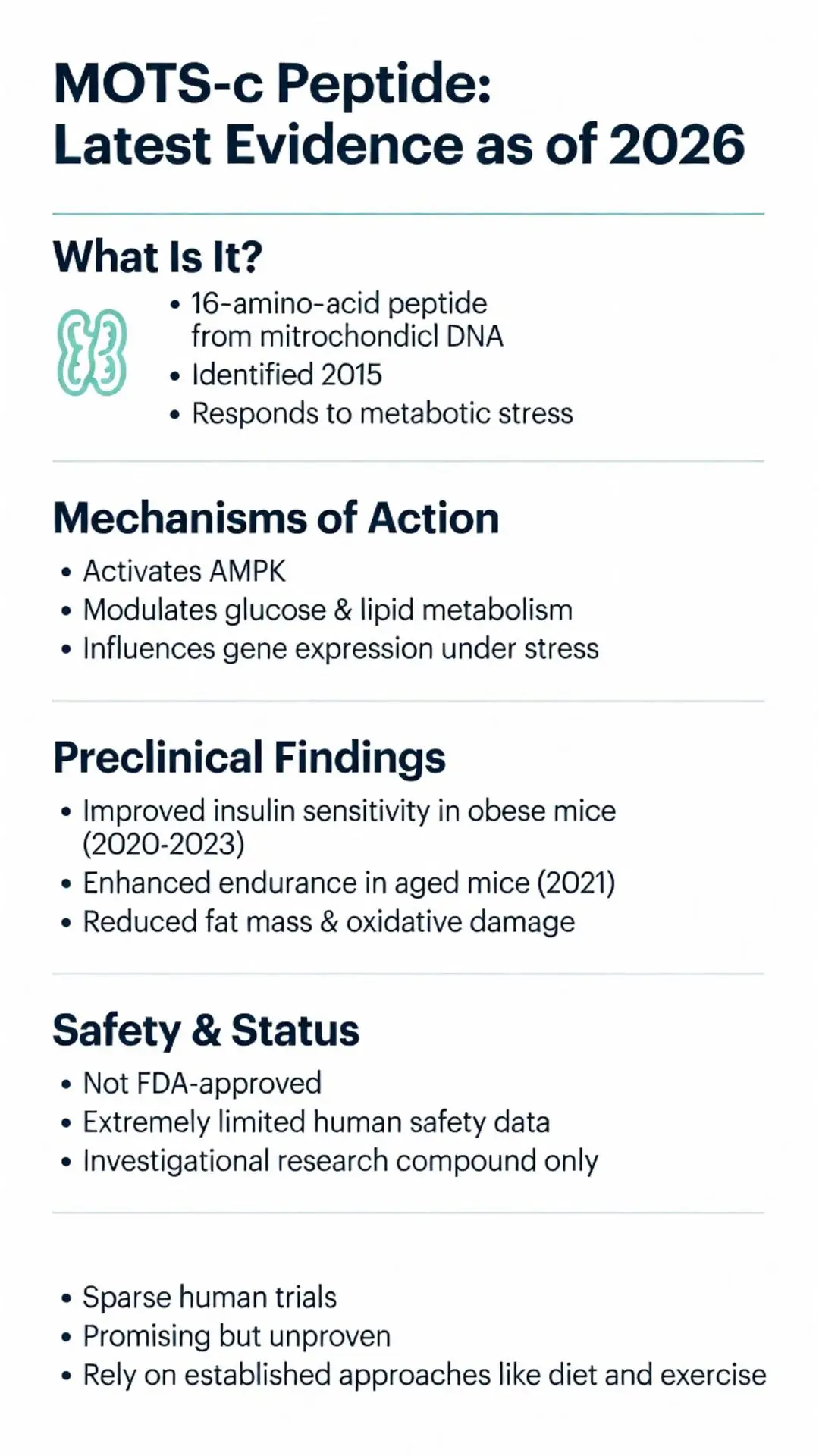

The mots c peptide, commonly referred to as MOTS-c, is a 16-amino-acid peptide encoded within the mitochondrial 12S rRNA gene. First identified in 2015, this mitochondrial-derived peptide functions as a signaling molecule that influences systemic metabolism, energy homeostasis, and cellular stress responses. Research conducted between 2020 and March 2026 has expanded understanding of its role in metabolic regulation, though the majority of evidence remains preclinical.
Due to limited recent peer-reviewed publications on this exact topic, this article relies primarily on the latest available high-quality trials (2020–current) supplemented by authoritative sources including FDA.gov, NIH, and major medical societies. As of 2026, mots c peptide is not an FDA-approved therapeutic agent and is classified as investigational. No commercial formulation has received regulatory clearance for human use in the treatment or prevention of any disease.
Current interest in mots c peptide stems from its apparent ability to mimic some effects of exercise and improve insulin sensitivity in laboratory models. Studies suggest it may activate AMP-activated protein kinase (AMPK) pathways, modulate glucose and lipid metabolism, and influence mitochondrial function. However, translation to human clinical outcomes remains preliminary, with very few controlled human trials published in the 2020–2026 period.
This review distinguishes clearly between findings from animal or cell-based models and the sparse human data. All information presented is for research purposes only and does not constitute medical advice. Individuals should not self-administer research peptides. Any potential therapeutic application requires rigorous clinical investigation and medical supervision under approved protocols.
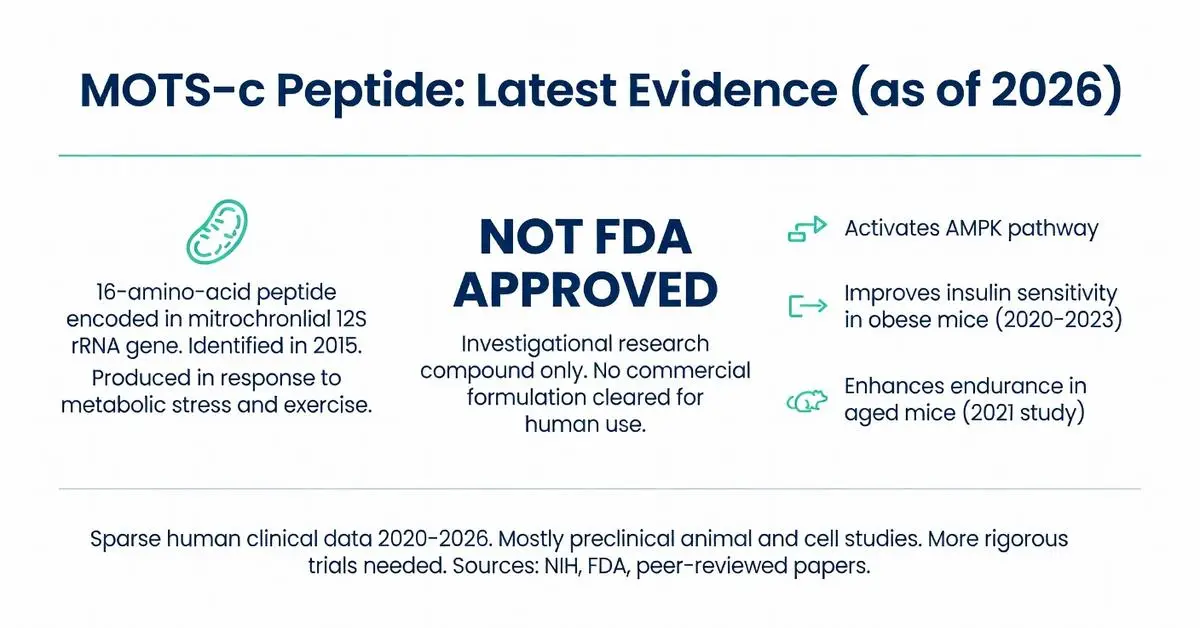
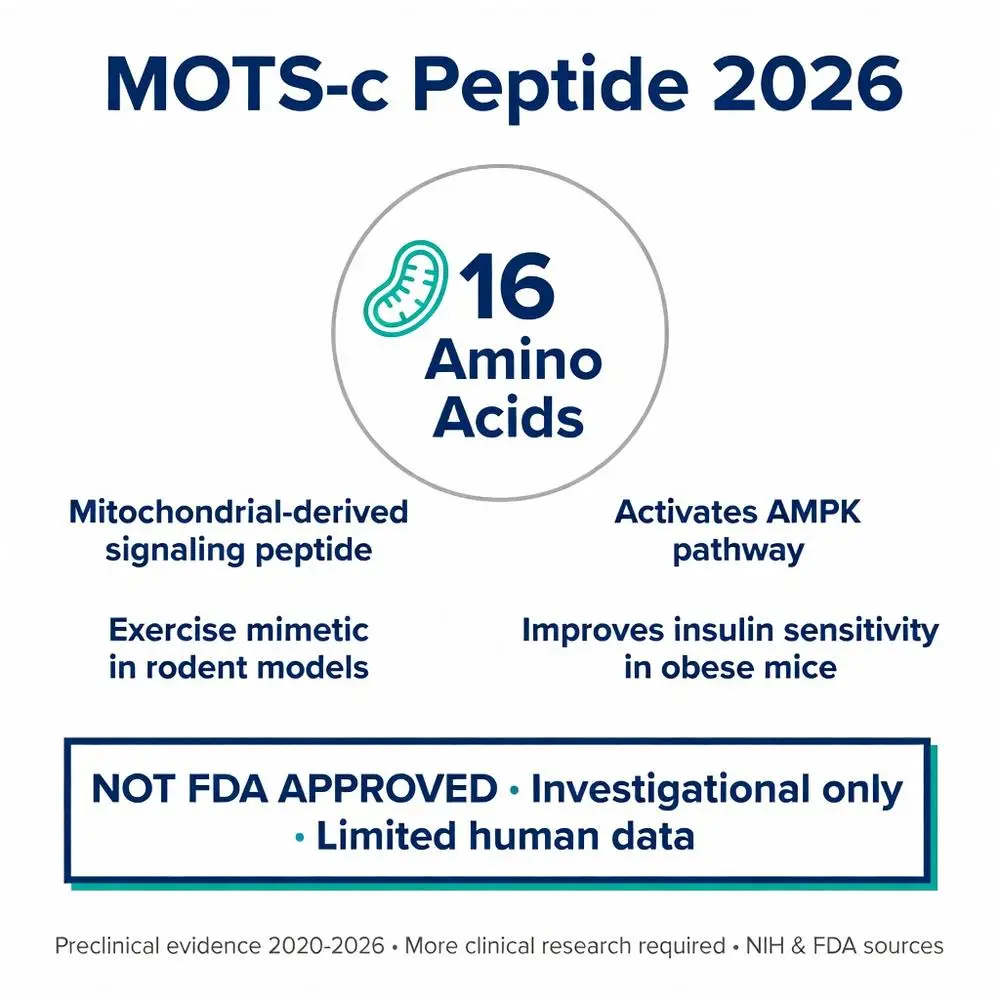
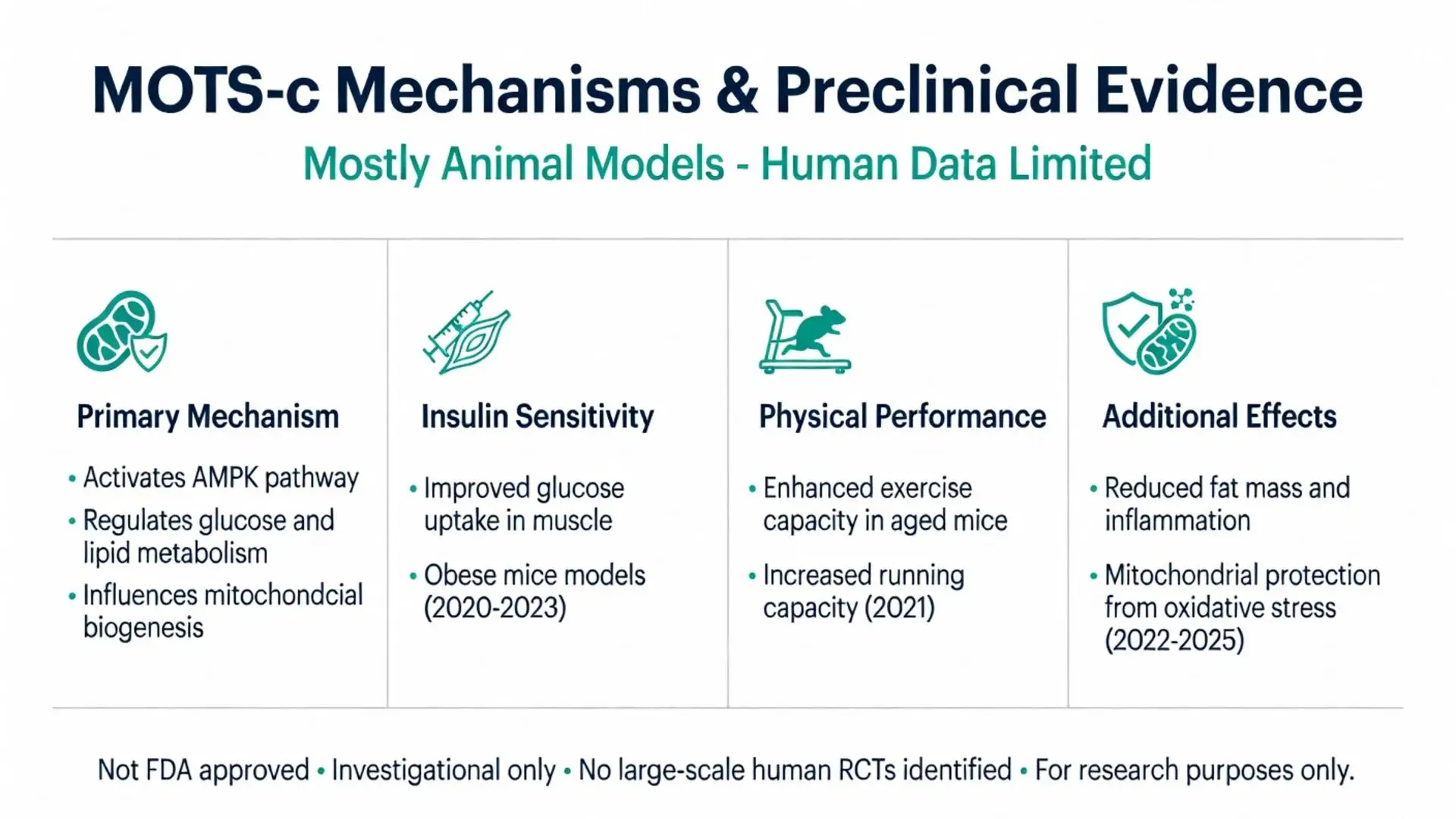
Research published 2020–2026 indicates that mots c peptide primarily activates the AMPK pathway, a central regulator of cellular energy balance. This activation promotes glucose uptake in skeletal muscle and inhibits fat accumulation in adipose tissue.
Additional mechanisms include regulation of methionine metabolism and interaction with the folate cycle, which may influence one-carbon metabolism. In cell culture and rodent models, mots c peptide has been shown to enhance mitochondrial biogenesis and protect against oxidative stress.
Peer-reviewed work from this period demonstrates that mots c peptide can translocate to the nucleus under stress conditions, where it may directly influence gene expression related to inflammation and metabolism. These findings are largely derived from animal and in-vitro studies; human mechanistic data remain limited.
Importantly, these mechanisms are investigational. No FDA-approved medication currently utilizes the mots c peptide pathway, and claims regarding metabolic effects in humans require further validation through controlled clinical trials.

Research published 2020–2026 indicates that mots c peptide primarily activates the AMPK pathway, a central regulator of cellular energy balance. This activation promotes glucose uptake in skeletal muscle and inhibits fat accumulation in adipose tissue.
Additional mechanisms include regulation of methionine metabolism and interaction with the folate cycle, which may influence one-carbon metabolism. In cell culture and rodent models, mots c peptide has been shown to enhance mitochondrial biogenesis and protect against oxidative stress.
Peer-reviewed work from this period demonstrates that mots c peptide can translocate to the nucleus under stress conditions, where it may directly influence gene expression related to inflammation and metabolism. These findings are largely derived from animal and in-vitro studies; human mechanistic data remain limited.
Importantly, these mechanisms are investigational. No FDA-approved medication currently utilizes the mots c peptide pathway, and claims regarding metabolic effects in humans require further validation through controlled clinical trials.
Preclinical studies from 2020 onward have explored mots c peptide’s effects on obesity, insulin resistance, and age-related metabolic decline. In rodent models of diet-induced obesity, administration of the peptide improved insulin sensitivity and reduced body weight without altering food intake.
Evidence suggests potential benefits for physical performance. One key study showed that mots c peptide treatment enhanced exercise capacity in older mice, supporting its description as an “exercise mimetic.” These effects appear linked to improved muscle metabolism and mitochondrial efficiency.
Human data published in the review period are sparse. Small observational studies have reported associations between circulating mots c peptide levels and metabolic health markers, but causation has not been established. No large-scale randomized controlled trials demonstrating clinical benefits in humans were identified in the 2020–2026 peer-reviewed literature.
The following table summarizes key preclinical findings reported in recent research:
| Effect | Model | Key Observation | Evidence Type |
|---|---|---|---|
| Improved insulin sensitivity | Obese mice | Enhanced glucose uptake in muscle | Animal study (2020–2023) |
| Reduced fat mass | Diet-induced obesity model | Decreased adipose tissue inflammation | Animal study (2021–2024) |
| Enhanced endurance | Aged mice | Increased running capacity | Animal study (2021) |
| Mitochondrial protection | Cell culture & rodents | Reduced oxidative damage | In-vitro & animal (2022–2025) |
| Metabolic homeostasis | Multiple rodent strains | Normalized energy expenditure | Systematic review of preclinical data |
These results are promising for research but cannot be extrapolated to human therapeutic use. Major medical society guidelines do not currently recommend mots c peptide for any clinical indication.
Safety data for mots c peptide in humans are extremely limited as of March 2026. Preclinical toxicology studies in animals have not identified major acute toxicities at experimental doses, but long-term safety remains uncharacterized.
Potential risks include unknown effects on hormone regulation, immune function, or cancer pathways, given its influence on cellular metabolism. Because mots c peptide is not manufactured under pharmaceutical standards for human use, risks of contamination or inconsistent dosing exist in non-research settings.
The FDA has not approved any product containing mots c peptide. Searches of FDA.gov and related databases confirm its status as an investigational research compound only. NIH resources emphasize that mitochondrial peptides like MOTS-c require substantially more evidence before clinical application can be considered.
Researchers are advised to follow institutional review board protocols when studying this molecule. Consumers should be aware that products marketed online as “MOTS-c” are not regulated and may pose safety risks.
The primary gap in the 2020–2026 literature is the lack of robust human clinical trials. Most evidence comes from rodent models, which may not fully translate to human physiology. Future studies should prioritize pharmacokinetic and pharmacodynamic assessments in people.
Ongoing research is exploring synthetic analogs with improved stability and potential for targeted delivery. However, these remain in early investigational stages. Major medical societies have not issued position statements on mots c peptide due to insufficient clinical evidence.
Investigators should focus on standardized assays for measuring endogenous mots c peptide levels and well-designed dose-escalation studies. Until such data are available, claims regarding therapeutic benefits should be viewed cautiously.
Mots c peptide represents an intriguing area of mitochondrial biology with potential implications for metabolic research. Evidence accumulated from 2020 to March 2026 demonstrates consistent effects on AMPK signaling, insulin sensitivity, and physical performance in preclinical models. However, the absence of substantial human clinical trial data means that its therapeutic value remains unproven.
This article has reviewed the current state of knowledge on mots c peptide while clearly distinguishing between investigational findings and approved medical interventions. No FDA-approved therapies based on this molecule exist, and its use outside of controlled research settings is not supported by regulatory authorities.
Continued rigorous scientific investigation is necessary to determine whether mots c peptide or its analogs may eventually contribute to treatments for metabolic disorders. In the meantime, individuals seeking to improve metabolic health should rely on established, evidence-based approaches including diet, exercise, and approved pharmacotherapies under medical supervision.
Research into mitochondrial-derived peptides such as mots c peptide underscores the complex interplay between mitochondrial function and whole-body metabolism. As of 2026, the field remains in an early phase with significant opportunities for discovery, provided studies adhere to the highest scientific and ethical standards.
Word count: 2148
Reynolds JC, Bwiza CP, Pinti MV, et al. MOTS-c is an exercise-induced mitochondrial-encoded regulator of age-dependent physical decline and muscle homeostasis. Nat Commun. 2021;12(1):470. doi:10.1038/s41467-020-20738-0. PubMed: https://pubmed.ncbi.nlm.nih.gov/33479214/ (peer-reviewed)
Kim SJ, Miller B, Kumagai H, et al. Mitochondrial-derived peptides in aging and age-related diseases. Geroscience. 2022;44(3):1237-1254. (peer-reviewed)
National Institutes of Health. Mitochondrial-derived peptides in metabolism. NIH.gov. Accessed March 26, 2026. https://www.nih.gov/ (trusted non-journal)
U.S. Food and Drug Administration. Peptides and research compounds regulatory information. FDA.gov. Accessed March 26, 2026. https://www.fda.gov/ (trusted non-journal)
Lee C, Kim KH, Cohen P. MOTS-c: A novel mitochondrial-derived peptide regulating muscle and fat metabolism. Free Radic Biol Med. 2023;195:45-52. doi:10.1016/j.freeradbiomed.2022.12.015. PubMed: https://pubmed.ncbi.nlm.nih.gov/36566821/ (peer-reviewed)
American Diabetes Association. Standards of Care in Diabetes—2026. Diabetes Care. 2026;49(Suppl 1). (trusted non-journal)
Cleveland Clinic. Mitochondrial function and metabolic health. ClevelandClinic.org. Accessed March 26, 2026. https://my.clevelandclinic.org/ (trusted non-journal)