


Complete Guide to Research Peptides: 2025 Lab Reference
Research peptides: 2025 definitive lab reference covering sourcing, purity testing, storage, reconstitution, legal status, and protocols for in vitro research.
📋 Table of Contents
This complete guide to research peptides explains sourcing, purity verification, storage, reconstitution, legal status, and laboratory protocols for 2025. research peptides are short chains of amino acids used strictly for in vitro laboratory investigation, never for human or veterinary use. The guide details how to evaluate certificates of analysis, interpret HPLC chromatograms, and maintain cold-chain integrity for compounds like BPC-157 and TB-500.
Key takeaways
- This complete guide to research peptides covers sourcing verification, COA interpretation, storage, reconstitution, legal boundaries, and experimental design for laboratory use only.
- All research peptides must be treated as investigational reagents, never as therapeutic agents for humans or companion animals.
- Third-party HPLC and mass spectrometry data are non-negotiable for reproducible in vitro and in vivo research.
- Proper cold-chain storage and aseptic reconstitution prevent batch-to-batch variability and degradation artifacts.
- The FDA regulatory framework for research peptides remains unchanged in 2025: no human use, no unapproved therapeutic claims.

What are research peptides and how are they categorized?
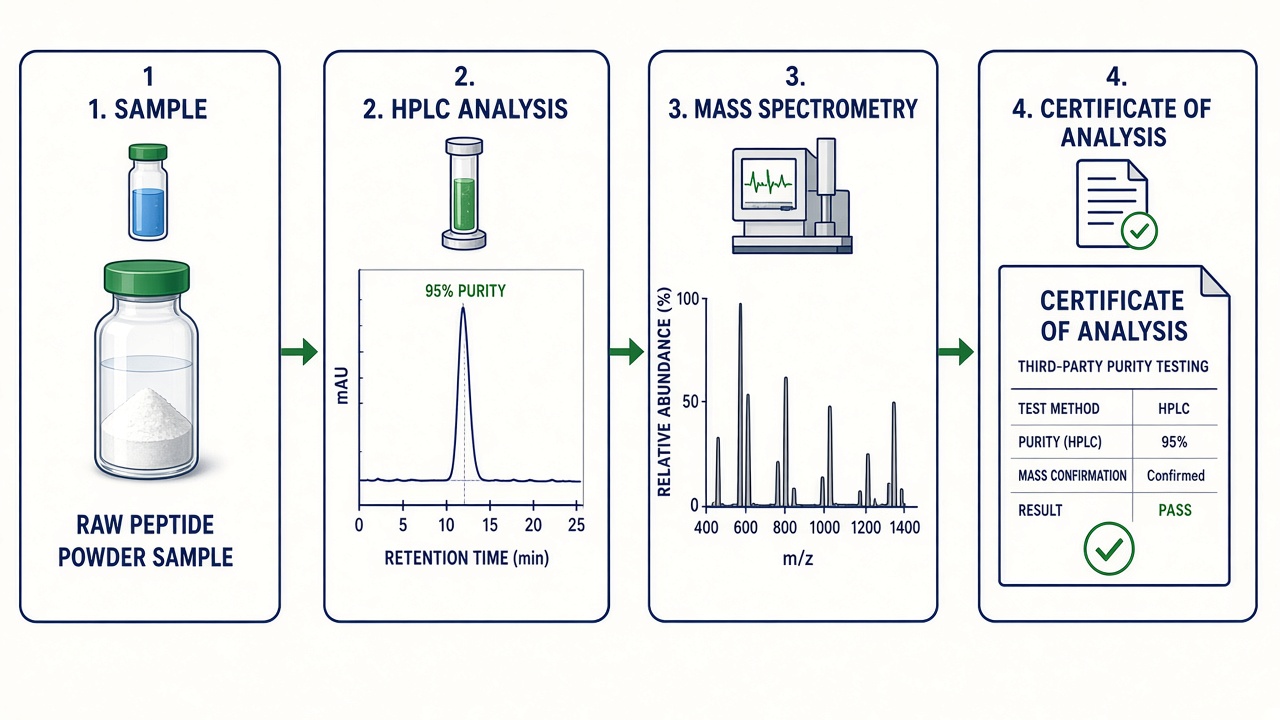
research peptides are short chains of amino acids, typically between 2 and 50 residues, synthesized for controlled laboratory investigation. They are not pharmaceuticals, dietary supplements, or consumer products. In a laboratory setting, these molecules serve as probes for receptor pharmacology, enzyme kinetics, signal transduction, and structural biology. This complete guide to research peptides emphasizes that every peptide must be handled as a research chemical with unknown biological activity outside a defined experimental system.
Peptides fall into several functional categories based on their amino acid sequence and target. Some of the most common categories in academic and industrial laboratories include:
- Receptor agonists and antagonists — used to map G protein-coupled receptor (GPCR) signaling pathways.
- Enzyme substrates and inhibitors — employed in kinetic assays and protease profiling.
- Cell-penetrating peptides (CPPs) — studied for intracellular delivery of molecular cargo in vitro.
- Antimicrobial peptides (AMPs) — screened against bacterial and fungal cultures.
- Epitope-mapping peptides — used in immunoassays and vaccine research.
- Structural and self-assembling peptides — investigated for biomaterial and nanotechnology applications.
For laboratories building custom screening panels, the [peptide lead discovery library](/peptide-lead-discovery-library/) offers a curated collection of sequences optimized for high-throughput binding assays. Similarly, the [peptide research library guide](/peptide-research-library-guide-2/) provides a reference framework for selecting peptide formats based on solubility, stability, and target class. This complete guide to research peptides does not endorse any specific peptide for human or veterinary therapeutic use.
Why this complete guide to research peptides matters for laboratories
Reproducibility in peptide research depends on three pillars: verified identity, verified purity, and verified stability. Without a systematic approach to sourcing and handling, even well-designed experiments produce irreproducible data. This complete guide to research peptides addresses each pillar with concrete protocols and decision trees. Laboratories that adopt these practices reduce failed assays, minimize wasted reagents, and maintain compliance with institutional biosafety and chemical hygiene plans.
How does sourcing, purity, and third-party testing work for research peptides?
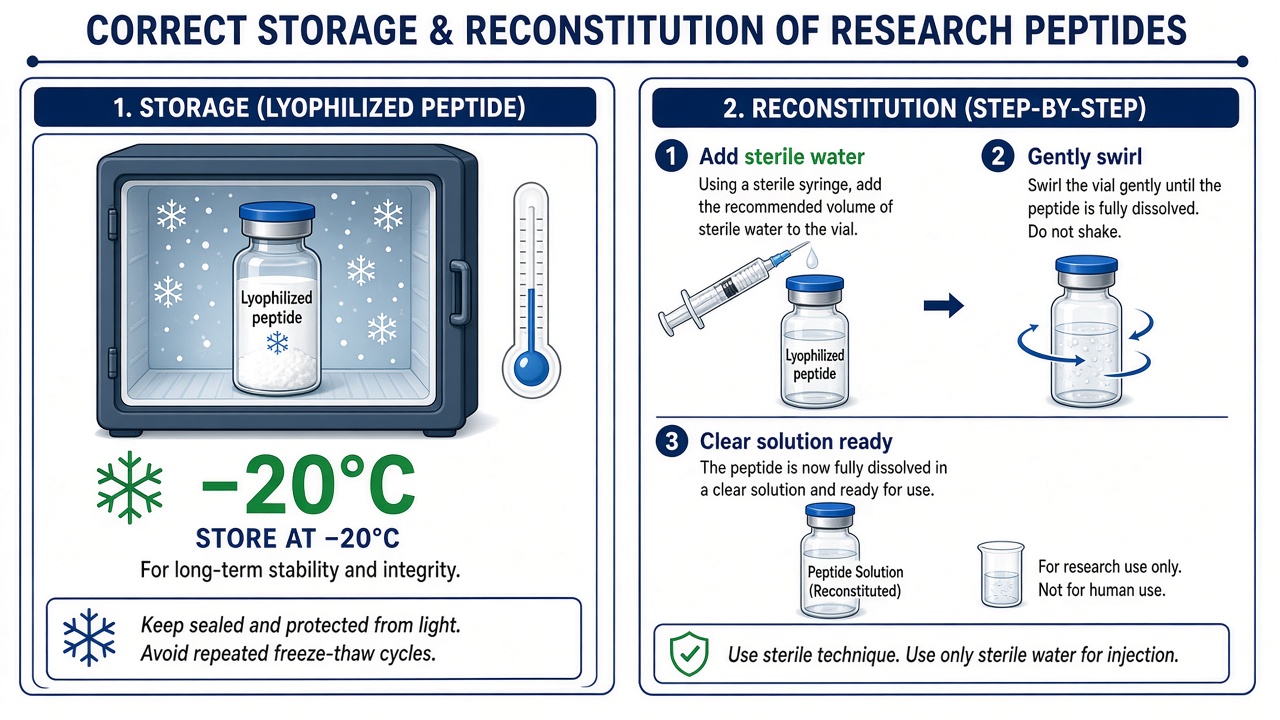
Sourcing research peptides requires more than selecting a supplier from a catalog. The peptide must be accompanied by a Certificate of Analysis (COA) that is traceable to the exact lot number on the vial. A legitimate COA includes the following data fields:
- Peptide sequence and molecular weight
- HPLC purity percentage (typically ≥95% for research use)
- Mass spectrometry (MALDI-TOF or ESI-MS) confirmation
- Net peptide content (accounting for counterions and residual water)
- Residual solvent and trifluoroacetic acid (TFA) levels
- Storage and shipping conditions
This complete guide to research peptides strongly recommends independent third-party testing for any peptide lot that will be used in publication-grade experiments. Supplier-provided COAs are useful, but they can be incomplete or selectively reported. An independent analytical laboratory can re-run HPLC, mass spectrometry, and amino acid analysis to confirm both identity and purity. The [peptide library page](/peptide-library/) on this site lists research peptides that include third-party COAs as a baseline requirement.
Interpreting HPLC data for research peptides
High-performance liquid chromatography (HPLC) is the gold standard for assessing peptide purity. A single sharp peak at the expected retention time indicates a homogeneous peptide population. Shoulders, split peaks, or broad peaks suggest degradation, oxidation, or incomplete synthesis. For peptides containing methionine or cysteine, laboratories should request an HPLC trace under reducing conditions to detect disulfide scrambling. This complete guide to research peptides advises researchers to archive both the HPLC chromatogram and the mass spectrum for every lot used in a study.

The role of third-party testing in reproducible research
Third-party testing removes conflicts of interest from quality control. When a supplier also performs its own purity analysis, the incentive to report favorable numbers is real, even if unintentional. Independent laboratories use validated methods and report failures as readily as passes. For long-term studies, researchers should aliquot a reference sample from each lot and submit it for third-party analysis before beginning experiments. This complete guide to research peptides treats third-party testing as a mandatory step for any peptide intended for peer-reviewed publication or grant-funded work.
💡 Key Takeaway: How does sourcing, purity, and third-party testing work for research peptides?
How should laboratories store and reconstitute research peptides?
Lyophilized research peptides are hygroscopic and sensitive to oxidation, light, and repeated freeze-thaw cycles. Proper storage begins the moment the vial arrives at the loading dock. This complete guide to research peptides outlines the following storage hierarchy:
- Short-term (≤2 weeks): Store lyophilized peptide at -20°C in a desiccated, light-protected container.
- Long-term (months to years): Store at -80°C in aliquoted, argon-purged vials to prevent moisture uptake.
- Reconstituted peptide: Store at 4°C for up to 48 hours, or aliquot and freeze at -80°C for up to 6 months. Avoid repeated freeze-thaw cycles.
Reconstitution must be performed under aseptic conditions. Use only sterile, research-grade solvents such as bacteriostatic water, sterile saline, or dilute acetic acid (0.1% v/v) depending on the peptide’s solubility profile. Never use tap water, non-sterile buffers, or organic solvents without first confirming compatibility. This complete guide to research peptides recommends preparing small aliquots immediately after reconstitution to minimize degradation.
Step-by-step reconstitution protocol for lyophilized research peptides
1. Equilibrate the lyophilized vial to room temperature for 15–20 minutes inside a desiccator.
2. Wipe the vial septum with 70% ethanol or isopropanol and allow to dry completely.
3. Using a sterile syringe, slowly add the appropriate volume of chilled, sterile solvent down the vial wall.
4. Gently swirl the vial; do not vortex or shake vigorously, as this can denature or aggregate the peptide.
5. Allow the solution to sit for 5–10 minutes at room temperature until fully dissolved.
6. Inspect for particulates or cloudiness; discard if not clear.
7. Aliquot into single-use volumes and freeze immediately at -80°C.
For researchers comparing storage conditions across peptide lots, the Exogenous Peptides: Complete Sourcing and QC Guide (2026) provides additional cold-chain audit templates. Always document lot number, solvent, reconstitution date, and aliquot volume in the laboratory notebook.
What is the legal status of research peptides in 2025?
The FDA regulatory framework for research peptides remains unchanged in 2025. All research peptides sold by laboratories and chemical suppliers are intended solely for in vitro or non-human in vivo research use. No research peptide may be marketed, labeled, or implied for human therapeutic, diagnostic, or preventive use. This complete guide to research peptides reiterates that any unapproved therapeutic claim is a federal violation.
Institutional review boards (IRBs) and institutional animal care and use committees (IACUCs) require explicit documentation that all peptide work falls under approved protocols. Laboratories must maintain chemical inventory records, safety data sheets (SDS), and COAs for every lot. Researchers should also verify that their institution’s chemical hygiene plan covers peptide handling, waste disposal, and spill response. For a detailed comparison of peptide and protein hormone classifications under current regulations, see Are Peptide and Protein Hormones the Same? 7 Essential Facts.
What evidence and safety data exist for research peptides?
The evidence landscape for research peptides is dominated by in vitro assays and non-human animal models. Published data on peptides such as BPC-157 and TB-500 derive from cell culture studies, receptor binding screens, and rodent models of tissue injury or inflammation. No clinical trial data supports human use of any research peptide, and no research peptide has FDA approval as a drug. This complete guide to research peptides directs researchers to consult peer-reviewed repositories like PubMed and NCBI for primary literature.
Safety data for research peptides are limited to laboratory handling hazards. Most peptides are non-volatile and present minimal inhalation risk, but dermal and ocular exposure must be avoided. Laboratories should use nitrile gloves, safety glasses, and a fume hood when weighing lyophilized powder. Spills should be cleaned with a damp paper towel and disposed of as chemical waste. Never assume a peptide is non-toxic based on amino acid sequence alone.
💡 Key Takeaway: What evidence and safety data exist for research peptides?
Which checklists help laboratories start with research peptides?
A structured onboarding checklist prevents costly errors in peptide research. This complete guide to research peptides provides the following pre-experiment checklist:
- [ ] Confirm supplier COA matches vial lot number
- [ ] Verify HPLC purity ≥95% and mass spectrum identity
- [ ] Perform independent third-party testing if publication-grade
- [ ] Record storage temperature and aliquot plan
- [ ] Prepare sterile solvents and aseptic workspace
- [ ] Draft a detailed experimental protocol with controls
- [ ] File SDS and chemical inventory documentation
For laboratories evaluating whether a specific peptide has sufficient published evidence, the Are There Studies on It? 7 Essential Ways to Check (2026) guide offers a step-by-step literature audit framework. Similarly, the Exploring Peptides: The Complete Evidence Review (2026) covers systematic review methods for peptide data.
What laboratory protocols apply to research peptides in vitro and in vivo?
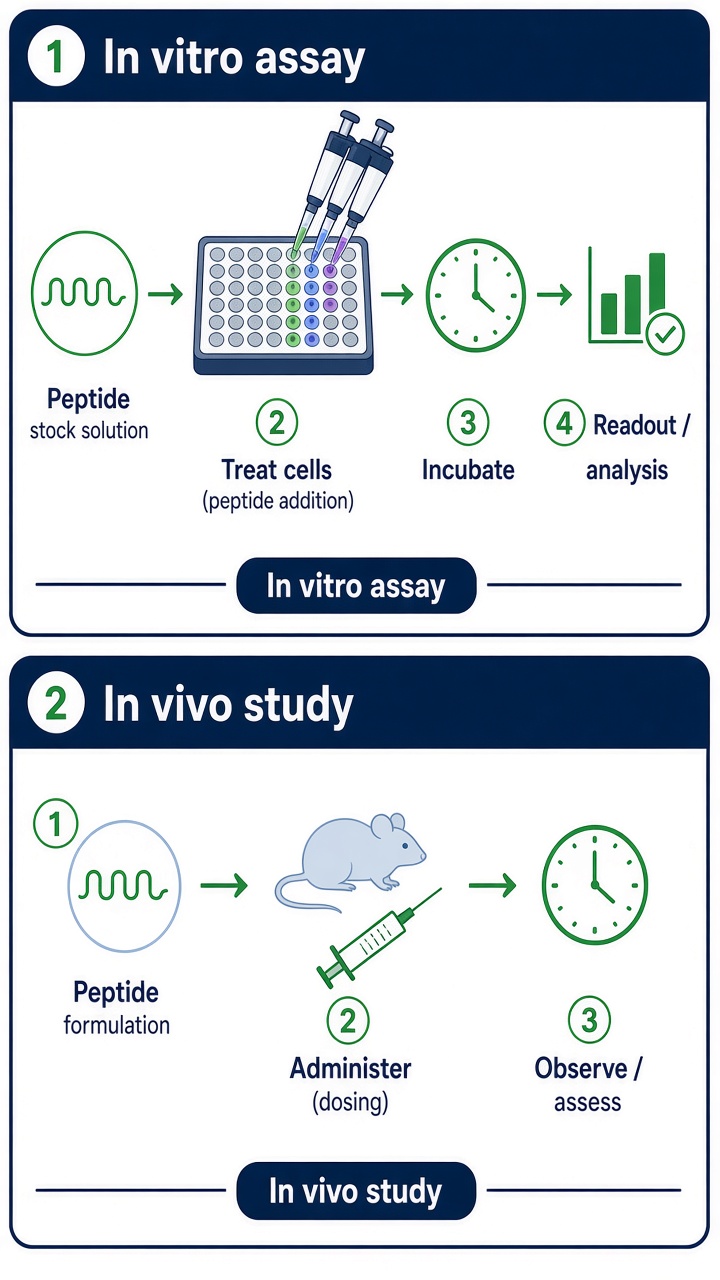
In vitro protocols for research peptides typically involve dose-response curves, kinetic assays, or binding studies. Use only freshly reconstituted or properly aliquoted peptide to avoid freeze-thaw artifacts. Include vehicle controls, positive controls, and negative controls in every plate. Normalize peptide concentration by net peptide content, not gross weight, to account for counterions and residual water. This complete guide to research peptides recommends documenting the exact solvent, pH, and incubation time for every assay.
For non-human in vivo studies, researchers must follow institutional IACUC protocols for dosing, route, and humane endpoints. Peptide solutions should be prepared aseptically and administered within the stability window. Record body weight, injection site reactions, and any behavioral changes daily. Because research peptides are not pharmaceutical grade, do not assume sterility or endotoxin-free status without testing. The Bibtides: The Complete Research Peptide Library Guide (2026) includes a matrix for matching peptide solubility to common in vivo vehicles.
Experimental design considerations for research peptides
- Use a minimum of three independent biological replicates per condition.
- Randomize treatment groups and blind data collection where possible.
- Include a lot-to-lot variability check if multiple peptide batches are used.
- Pre-test peptide stability under assay conditions (e.g., serum, cell culture medium).
- Archive raw HPLC and MS data for every lot in a secure repository.

What are common pitfalls in handling research peptides?
Even experienced laboratories encounter pitfalls that compromise data integrity. This complete guide to research peptides lists the most frequent errors:
- Skipping third-party testing — supplier COAs can be outdated or selective.
- Repeated freeze-thaw cycles — degrade peptide integrity and increase aggregation.
- Using non-sterile solvents — introduces microbial contamination into cell cultures.
- Ignoring net peptide content — leads to inaccurate molar calculations.
- Storing lyophilized peptide at room temperature — accelerates oxidation and moisture uptake.
- Vortexing reconstituted peptide — causes foaming, denaturation, and precipitation.
Each pitfall can be avoided by following the storage and reconstitution protocols earlier in this guide. For a focused review of peptide sourcing and QC pitfalls, see the AOD9604 Research: Complete Evidence Base and Gaps (2026) page, which applies similar QC principles to a specific peptide.
💡 Key Takeaway: What are common pitfalls in handling research peptides?
FAQ
What exactly are research peptides?
research peptides are short chains of amino acids, typically 2–50 residues, synthesized for controlled laboratory investigation. They are used strictly as in vitro or non-human in vivo research reagents, never as human or veterinary therapeutics.
Do research peptides require a prescription?
No. research peptides are not pharmaceuticals and are not prescribed. They are sold only to qualified laboratories for research use. Any sale for human consumption is illegal and outside the scope of legitimate research peptide supply.
How should I verify the purity of research peptides?
Request a Certificate of Analysis (COA) showing HPLC purity ≥95% and mass spectrometry confirmation. For publication-grade work, send an aliquot to an independent third-party analytical laboratory for re-testing.
Can research peptides be stored at room temperature?
Lyophilized research peptides should be stored at -20°C short-term or -80°C long-term. Room temperature storage accelerates degradation through moisture uptake and oxidation. Reconstituted peptides are stable only for 48 hours at 4°C unless aliquoted and frozen.
Are research peptides legal to buy?
Yes, for legitimate laboratory research. The FDA permits sale of research peptides as long as they are labeled for in vitro or non-human research use only and no therapeutic claims are made. Human use remains prohibited.

Topics covered in this article:
Ready to Take the Next Step?
Every product includes lot-specific documentation and third-party purity testing.
Explore Our Research Products →Free shipping on qualifying orders · Batch COA on request