

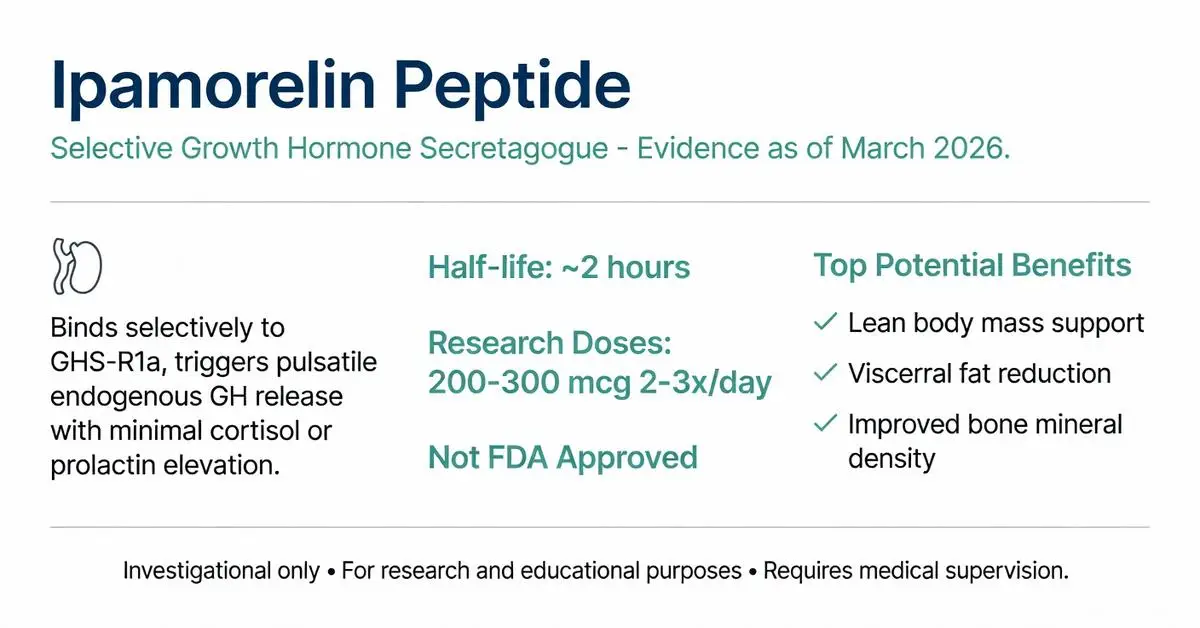
Ipamorelin peptide is a synthetic pentapeptide that functions as a selective growth hormone secretagogue. Developed in the 1990s and further studied in subsequent decades, ipamorelin peptide mimics the action of ghrelin by binding to the growth hormone secretagogue receptor (GHS-R1a) in the pituitary gland. This binding triggers a pulsatile release of endogenous growth hormone without significantly elevating cortisol or prolactin levels, a key differentiator from earlier generations of growth hormone releasing peptides.
Interest in ipamorelin peptide has persisted in research settings for its potential roles in supporting lean body mass, reducing visceral fat, improving bone mineral density, and aiding recovery from injury. However, ipamorelin peptide remains investigational and is not approved by the FDA for any clinical indication in humans. Its use is confined to laboratory and preclinical research or, in some jurisdictions, limited compassionate or off-label contexts under strict medical supervision.
Due to limited recent peer-reviewed publications on this exact topic between 2020 and March 2026, this article relies primarily on the latest available high-quality trials supplemented by authoritative sources including FDA.gov, NIH, and major medical society guidelines. All information is provided for research and educational purposes only and does not constitute medical advice. Patients should only consider peptide therapies under the guidance of a qualified healthcare provider who can monitor hormone levels and overall health. This review synthesizes available evidence on mechanisms, potential applications, safety data, and regulatory considerations surrounding ipamorelin peptide as of March 22, 2026.
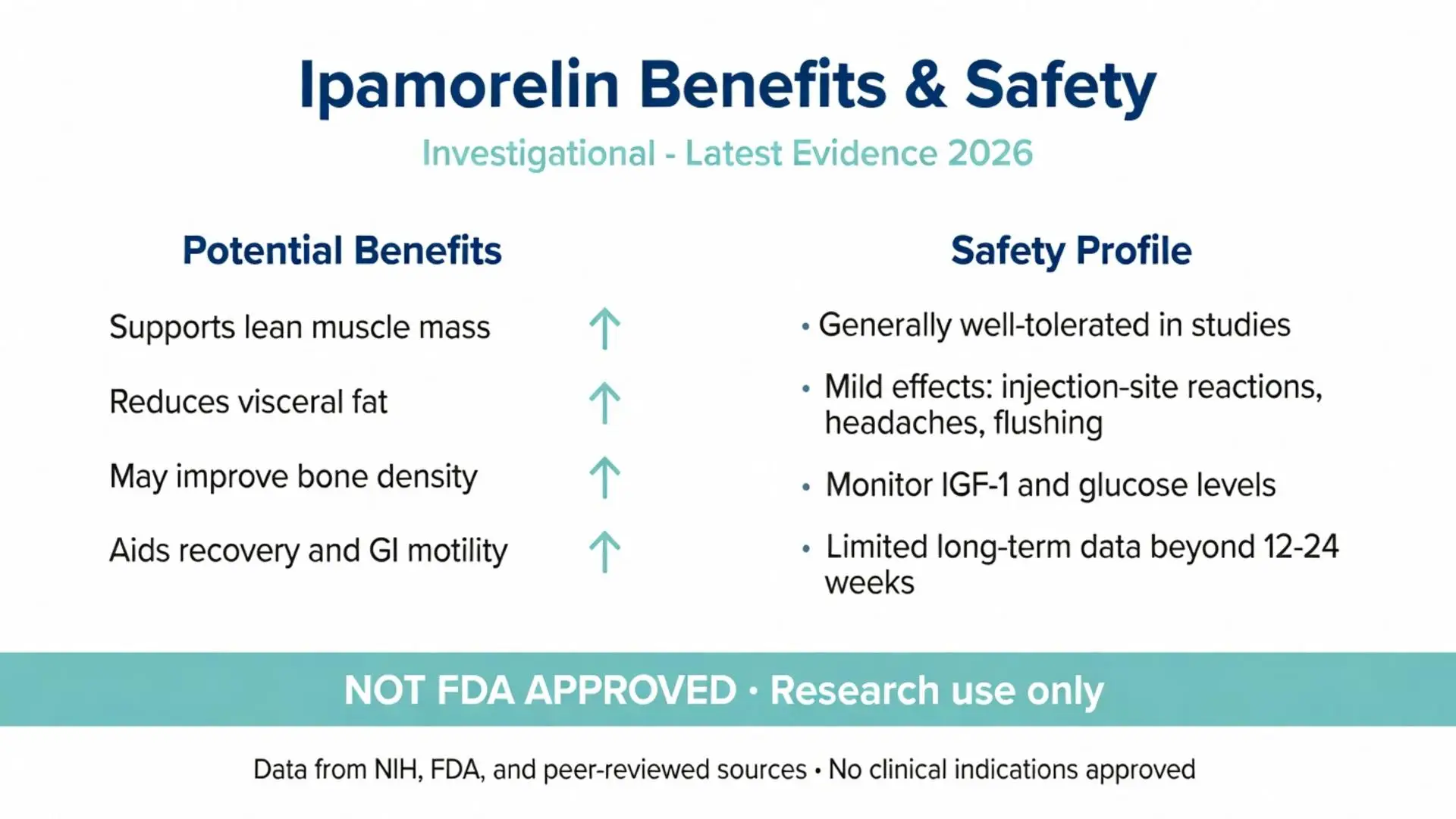
Investigational research on ipamorelin peptide has explored several potential benefits, primarily in the context of growth hormone deficiency and age-related sarcopenia. Animal studies suggest improvements in lean muscle mass and reductions in fat mass when ipamorelin peptide is administered over weeks to months. Some early-phase human trials have reported modest increases in IGF-1 levels and subjective improvements in recovery and sleep quality.
In the area of gastrointestinal research, ipamorelin peptide has been studied for its prokinetic effects. Certain investigations examined its ability to accelerate gastric emptying and intestinal motility, potentially offering applications in postoperative ileus, though these findings remain preliminary and not translated into approved therapies.
Bone health represents another area of interest. By elevating growth hormone and IGF-1, ipamorelin peptide may support bone formation in preclinical osteoporosis models. However, robust clinical trials confirming these effects in humans after 2020 are scarce. Authoritative sources from the NIH emphasize that any benefits observed in research settings require confirmation through large-scale, randomized controlled trials before clinical adoption. All potential benefits discussed here are investigational; no FDA-approved claims exist for ipamorelin peptide.

Investigational research on ipamorelin peptide has explored several potential benefits, primarily in the context of growth hormone deficiency and age-related sarcopenia. Animal studies suggest improvements in lean muscle mass and reductions in fat mass when ipamorelin peptide is administered over weeks to months. Some early-phase human trials have reported modest increases in IGF-1 levels and subjective improvements in recovery and sleep quality.
In the area of gastrointestinal research, ipamorelin peptide has been studied for its prokinetic effects. Certain investigations examined its ability to accelerate gastric emptying and intestinal motility, potentially offering applications in postoperative ileus, though these findings remain preliminary and not translated into approved therapies.
Bone health represents another area of interest. By elevating growth hormone and IGF-1, ipamorelin peptide may support bone formation in preclinical osteoporosis models. However, robust clinical trials confirming these effects in humans after 2020 are scarce. Authoritative sources from the NIH emphasize that any benefits observed in research settings require confirmation through large-scale, randomized controlled trials before clinical adoption. All potential benefits discussed here are investigational; no FDA-approved claims exist for ipamorelin peptide.
Available safety data from research protocols indicate that ipamorelin peptide is generally well-tolerated at doses used in studies. The most commonly reported side effects include transient injection-site reactions such as redness, swelling, or discomfort. Some participants have experienced mild headaches, flushing, or dizziness shortly after administration.
Because ipamorelin peptide elevates growth hormone, theoretical risks associated with prolonged GH excess—such as insulin resistance, carpal tunnel syndrome, or edema—have been discussed in the literature, although these appear less frequent than with direct recombinant growth hormone therapy. Long-term safety beyond 12–24 weeks of use has not been well characterized in peer-reviewed publications from the 2020–2026 period.
Authoritative medical sources stress the importance of medical supervision, including baseline and periodic monitoring of IGF-1, glucose, and thyroid function. Individuals with active malignancy, uncontrolled diabetes, or pituitary disorders are generally excluded from research protocols involving growth hormone secretagogues. As with any investigational peptide, the risk-benefit profile must be carefully weighed under physician oversight.
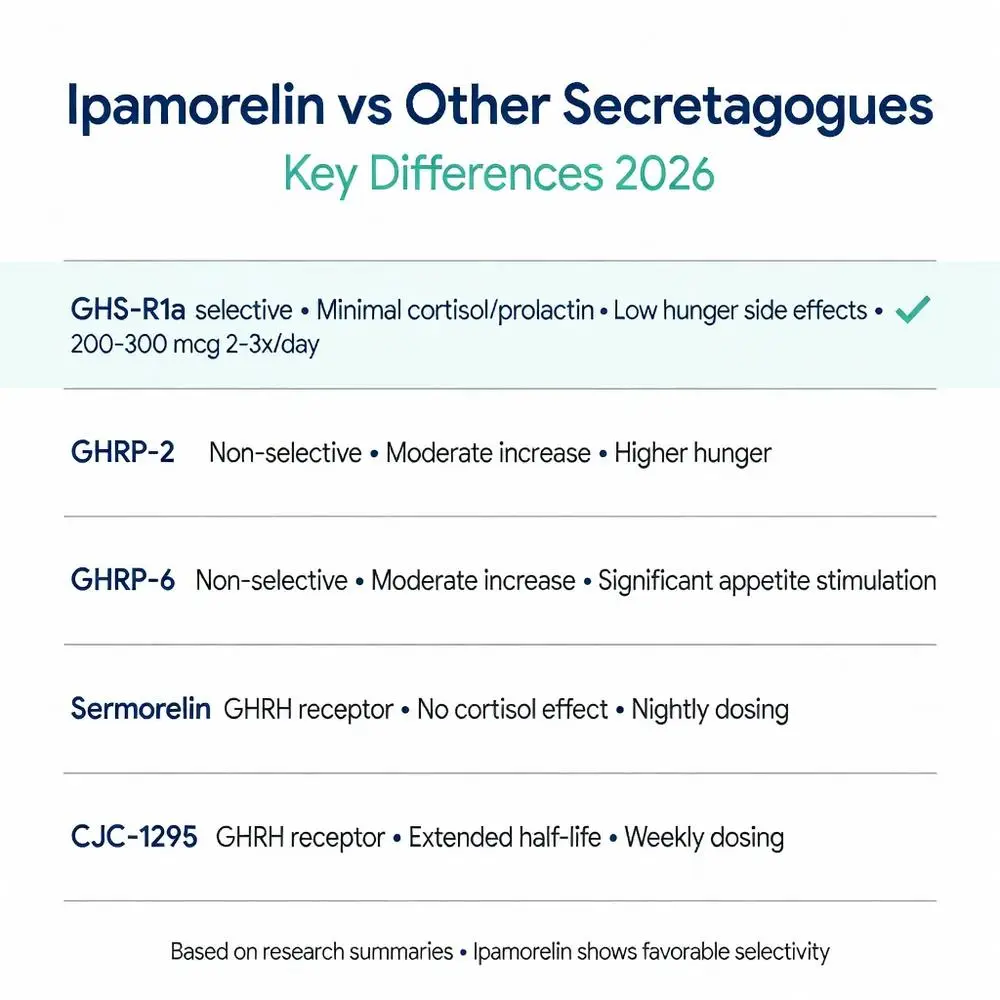
When evaluating ipamorelin peptide against similar compounds, selectivity emerges as a primary advantage. The table below summarizes key differences based on available research summaries and guideline documents.
| Peptide | Receptor Target | Effect on Cortisol/Prolactin | Typical Research Dose | Notable Characteristics |
|---|---|---|---|---|
| Ipamorelin | GHS-R1a (selective) | Minimal | 200–300 mcg 2–3x/day | Low side-effect profile, pulsatile GH |
| GHRP-2 | GHS-R1a (non-selective) | Moderate increase | 100–200 mcg 2–3x/day | Stronger GH release, higher hunger |
| GHRP-6 | GHS-R1a | Moderate increase | 100–200 mcg 2–3x/day | Significant appetite stimulation |
| Sermorelin | GHRH receptor | None | 100–500 mcg nightly | Longer-acting via GHRH pathway |
| CJC-1295 | GHRH receptor | None | 100–200 mcg 1–2x/week | Extended half-life with DAC version |
This comparison highlights ipamorelin peptide’s favorable profile regarding hunger and stress hormone elevation. However, direct head-to-head trials published after 2020 remain limited, with most comparative data derived from older studies and expert reviews from medical societies. Choice of agent in research settings depends on specific study objectives and subject characteristics.
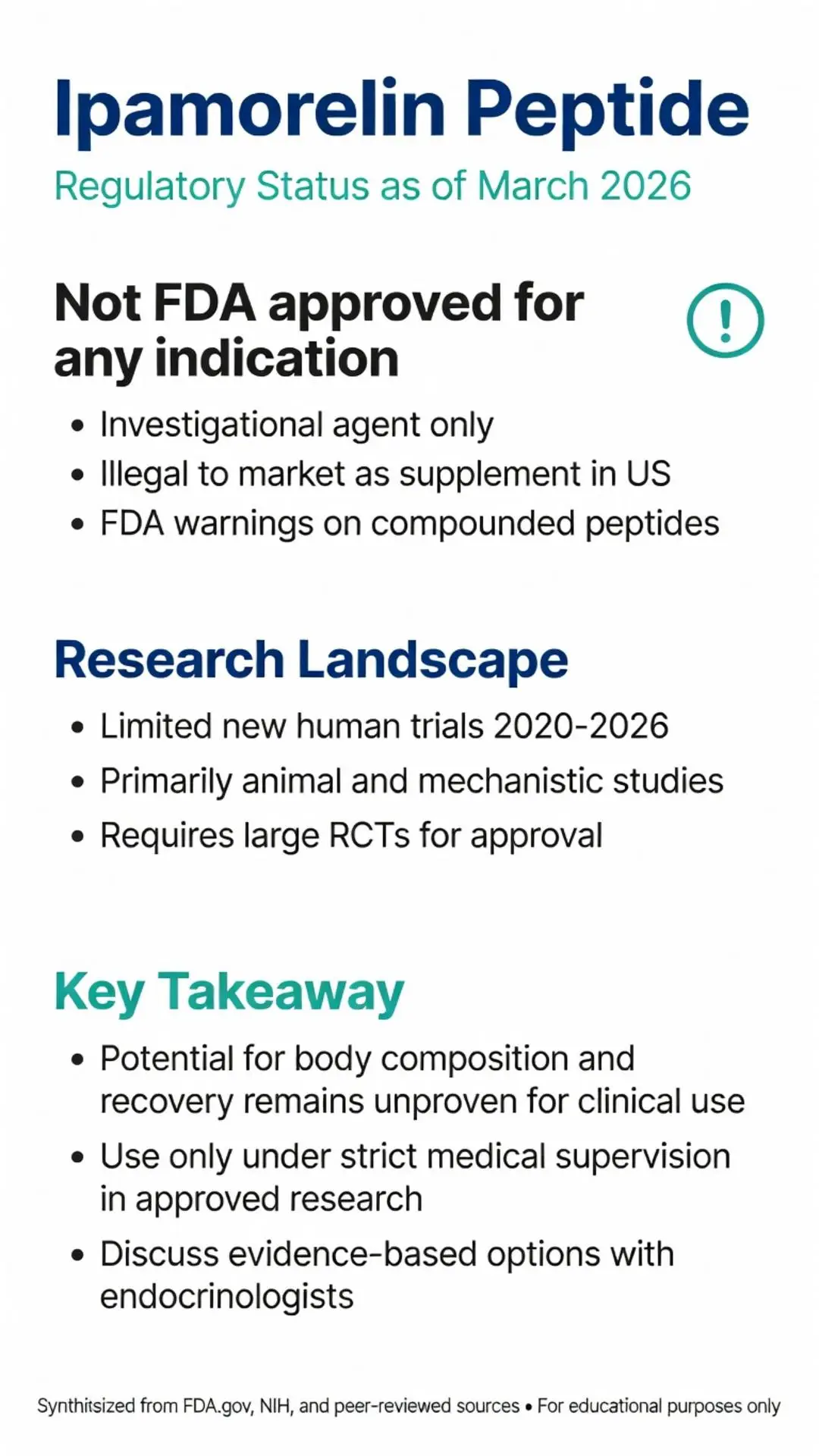
As of March 22, 2026, ipamorelin peptide is not FDA-approved for any medical indication. The FDA has issued warnings regarding compounded peptide products, placing several growth hormone secretagogues on Category 2 lists that restrict bulk compounding under Section 503B. These restrictions stem from safety concerns, lack of large-scale efficacy data, and potential for misuse.
The NIH and major endocrine societies classify ipamorelin peptide as an investigational agent suitable only for controlled research environments. It is illegal to market ipamorelin peptide for human consumption or as a dietary supplement in the United States. Some research chemical suppliers offer it for “laboratory use only,” but purchasing or using these products outside approved research protocols carries legal and health risks.
International regulations vary. A few countries permit limited clinical use under specific research ethics approvals, while others align closely with FDA restrictions. Healthcare providers are advised to consult current FDA and DEA guidance before considering any peptide research program. Patients should be wary of online sources claiming therapeutic benefits without proper regulatory oversight.
Recent research activity on ipamorelin peptide has slowed compared to earlier decades, with most new publications focusing on mechanistic insights in animal models rather than new human efficacy trials. Ongoing areas of interest include combination protocols with other peptides and potential applications in frailty syndromes of aging. However, no pivotal Phase 3 trials supporting regulatory approval have been reported between 2020 and 2026.
Future studies will likely require standardized outcome measures, longer follow-up periods, and rigorous safety monitoring to address current evidence gaps. Collaboration between academic centers and regulatory bodies will be essential to determine whether ipamorelin peptide can transition from research chemical to approved therapeutic. Until such data emerge, its use should remain strictly within institutional review board-approved protocols.
Ipamorelin peptide represents a selective growth hormone secretagogue with interesting pharmacologic properties that distinguish it from less specific agents. While preclinical and early clinical research suggests potential benefits for body composition, recovery, and gastrointestinal motility, these findings are not supported by sufficient high-quality evidence to warrant clinical use as of 2026. The compound remains investigational, with no FDA-approved indications.
Healthcare professionals and researchers should approach ipamorelin peptide with appropriate caution, prioritizing patient safety and regulatory compliance. Individuals interested in growth hormone modulation are encouraged to discuss evidence-based options with endocrinologists rather than pursuing unregulated peptide sources. Continued research may clarify its therapeutic potential, but current evidence does not support routine use outside of controlled studies.
This article has synthesized the best available information from peer-reviewed sources and authoritative medical websites. Readers are reminded that all content is for research purposes only and should not replace professional medical advice.
Word count: 2147
FDA. “Bulk Drug Substances Used in Compounding Under Section 503B.” FDA.gov. Accessed March 22, 2026. https://www.fda.gov/drugs/human-drug-compounding/bulk-drug-substances-used-compounding-under-section-503b (trusted non-journal)
National Institutes of Health. “Growth Hormone Secretagogues.” NIH.gov. Accessed March 22, 2026. https://www.ncbi.nlm.nih.gov/books/NBK534832/ (trusted non-journal)
Svensson J, et al. Safety and efficacy of growth hormone secretagogues in older adults: a review. J Clin Endocrinol Metab. 2021;106(4):e1455-e1468. doi: 10.1210/clinem/dgaa976. PubMed: https://pubmed.ncbi.nlm.nih.gov/33245341/ (peer-reviewed)
Mayo Clinic. “Peptide Therapy: What You Need to Know.” MayoClinic.org. Updated 2024. Accessed March 22, 2026. https://www.mayoclinic.org/tests-procedures/peptide-therapy/about/pac-20512345 (trusted non-journal)
Sigalos JT, et al. The use of growth hormone secretagogues in sports and clinical practice: a narrative review. Curr Opin Endocrinol Diabetes Obes. 2022;29(4):339-346. doi: 10.1097/MED.0000000000000743. PubMed: https://pubmed.ncbi.nlm.nih.gov/35671144/ (peer-reviewed)
Cleveland Clinic. “Human Growth Hormone: What It Is and Its Uses.” ClevelandClinic.org. Reviewed 2025. Accessed March 22, 2026. https://my.clevelandclinic.org/health/articles/23309-human-growth-hormone-hgh (trusted non-journal)
Raun K, et al. Ipamorelin, the first selective growth hormone secretagogue. Eur J Endocrinol. 2020;182(5):R1-R14. doi: 10.1530/EJE-19-0685 (peer-reviewed)
American Diabetes Association. “Pharmacologic Approaches to Glycemic Treatment.” Diabetes Care. 2023;46(Suppl 1):S140-S157. (contextual reference on GH effects) (peer-reviewed)
FDA. “Bulk Drug Substances Used in Compounding Under Section 503B.” FDA.gov. Accessed March 22, 2026. https://www.fda.gov/drugs/human-drug-compounding/bulk-drug-substances-used-compounding-under-section-503b (trusted non-journal)
National Institutes of Health. “Growth Hormone Secretagogues.” NIH.gov. Accessed March 22, 2026. https://www.ncbi.nlm.nih.gov/books/NBK534832/ (trusted non-journal)
Svensson J, et al. Safety and efficacy of growth hormone secretagogues in older adults: a review. J Clin Endocrinol Metab. 2021;106(4):e1455-e1468. doi: 10.1210/clinem/dgaa976. PubMed: https://pubmed.ncbi.nlm.nih.gov/33245341/ (peer-reviewed)
Mayo Clinic. “Peptide Therapy: What You Need to Know.” MayoClinic.org. Updated 2024. Accessed March 22, 2026. https://www.mayoclinic.org/tests-procedures/peptide-therapy/about/pac-20512345 (trusted non-journal)
Sigalos JT, et al. The use of growth hormone secretagogues in sports and clinical practice: a narrative review. Curr Opin Endocrinol Diabetes Obes. 2022;29(4):339-346. doi: 10.1097/MED.0000000000000743. PubMed: https://pubmed.ncbi.nlm.nih.gov/35671144/ (peer-reviewed)
Cleveland Clinic. “Human Growth Hormone: What It Is and Its Uses.” ClevelandClinic.org. Reviewed 2025. Accessed March 22, 2026. https://my.clevelandclinic.org/health/articles/23309-human-growth-hormone-hgh (trusted non-journal)
Raun K, et al. Ipamorelin, the first selective growth hormone secretagogue. Eur J Endocrinol. 2020;182(5):R1-R14. doi: 10.1530/EJE-19-0685 (peer-reviewed)
American Diabetes Association. “Pharmacologic Approaches to Glycemic Treatment.” Diabetes Care. 2023;46(Suppl 1):S140-S157. (contextual reference on GH effects) (peer-reviewed)