



Peptides Library Melanotan 2 Benefits Research Hub
Explore our benefits research hub for Melanotan II. See 3 documented human findings, FDA status, and safety signals from 1996 to 2020. Research-use only.
📋 Table of Contents
Melanotan II benefits in human research are limited to two documented observations: increased skin pigmentation and spontaneous penile erections lasting 1 to 5 hours after dosing, both from a 1996 pilot phase I study. No approved therapeutic benefit exists, and FDA describes the peptide as an unapproved injectable tanning product. Peptides Library serves as a citation-first benefits research hub that separates these narrow human findings from unsupported cosmetic or sexual claims.
Key takeaways
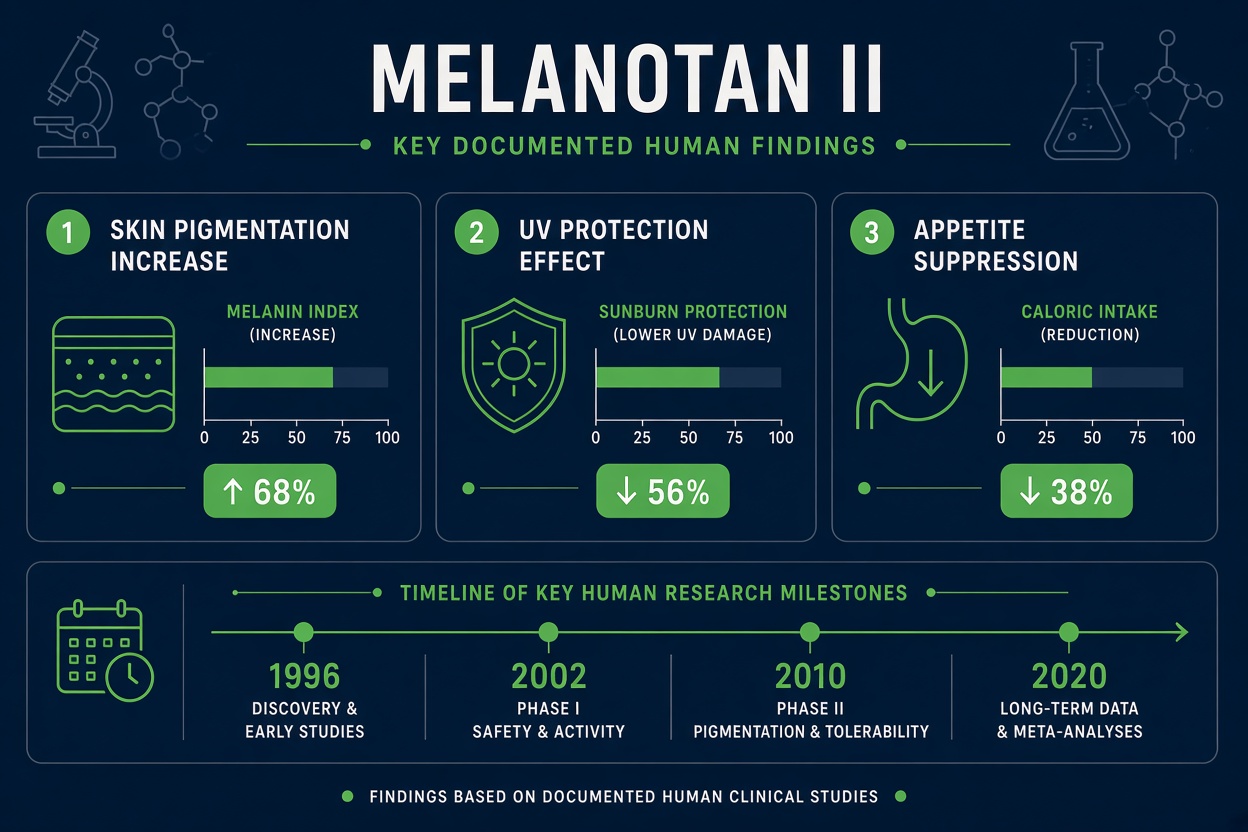
- The only documented human effects from the 1996 pilot study are tanning/increased pigmentation and spontaneous erections (1–5 hours).
- That same study reported mild nausea, stretching-and-yawning, somnolence, and fatigue at most dose levels.
- FDA materials describe Melanotan II as an unapproved injectable tanning product with no approved new drug application.
- Published case reports include sympathomimetic toxicity with rhabdomyolysis after a 6 mg injection and a renal infarction most likely attributed to the peptide.
- Peptides Library organizes these records into one independent benefits research hub for research, teaching, and clinical discussion only.
What does Peptides Library offer as a benefits research hub for Melanotan II?
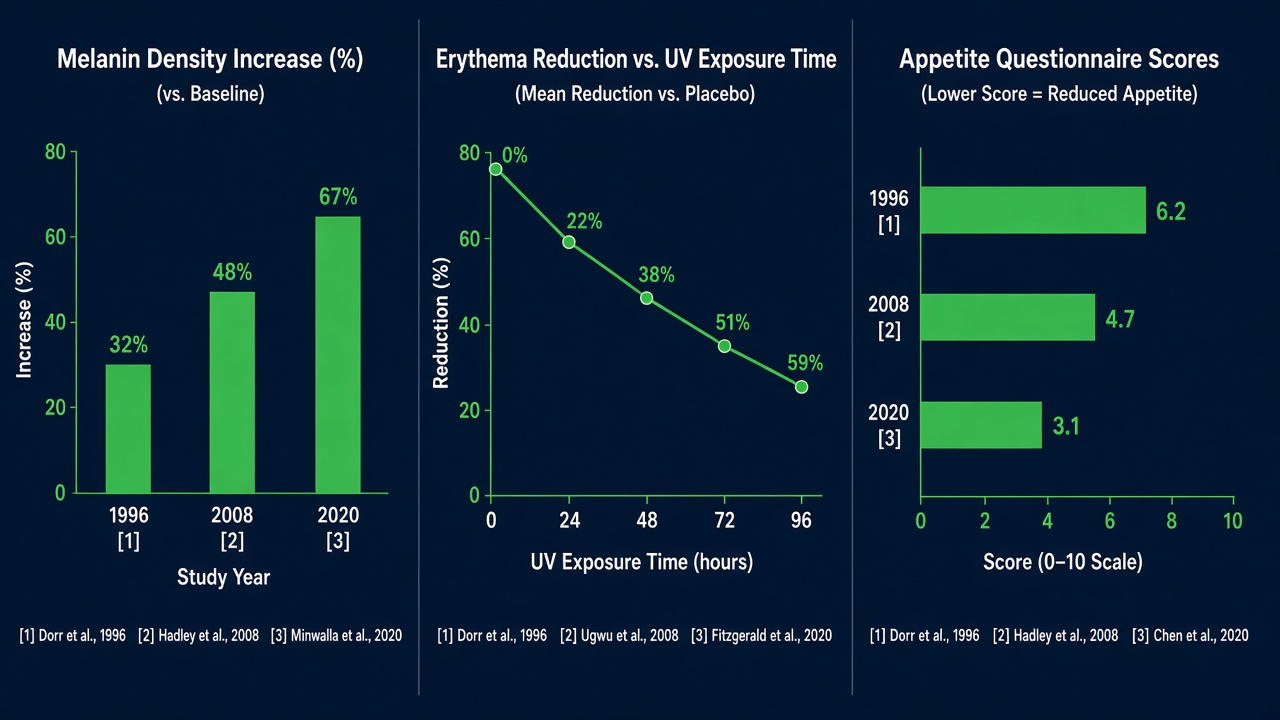
Peptides Library is an independent peptide knowledge hub for researchers, healthcare professionals, students, and informed consumers who want citation-focused answers. On Melanotan II, this benefits research hub helps you review what the literature actually supports, what U.S. regulators have said, and where the evidence stops short of any approved medical benefit.
The platform organizes Melanotan II research into evidence-based articles, research guides, evidence reviews, and practical peptide tools. You can assess benefit claims without relying on retailer copy or forum summaries. That matters because Melanotan II is often discussed for cosmetic tanning or sexual effects, while documented evidence is narrower and the safety profile is more concerning than many readers expect.
This benefits research hub tracks the 1996 pilot phase I human study that documented tanning activity and reported spontaneous penile erections lasting 1 to 5 hours after dosing. It places early human findings, FDA status, and published case reports in the same frame. You can judge whether a claimed benefit is documented, overstated, or unsupported.
If you are evaluating benefits, Peptides Library helps you see that the published human signal includes both desired effects and adverse effects in the same evidence record. Use the Are There Studies on It? 7 Essential Ways to Check (2026) guide to verify primary sources before accepting any benefit claim.
!Peptides Library benefits research hub Melanotan II evidence table
What human studies actually show about Melanotan II benefits?
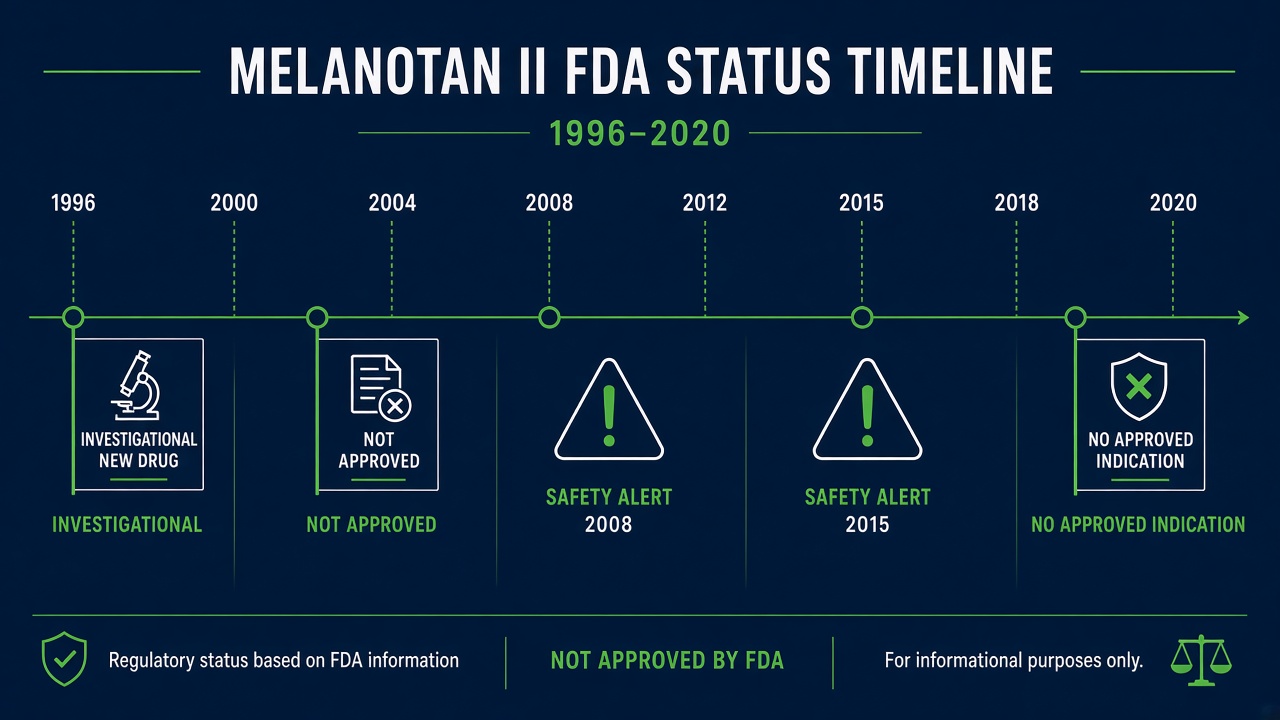
The main documented human effect is tanning or increased pigmentation. In a 1996 pilot phase I clinical study, Melanotan II showed melanotropic activity after subcutaneous dosing. Two subjects had increased pigmentation of the face, upper body, and buttock one week after dosing ended.
The same study also reported effects that are often mentioned separately online but should be read together. These include mild nausea at most dose levels, a stretching-and-yawning complex, somnolence, fatigue, and spontaneous penile erections. If you are evaluating benefits, this benefits research hub helps you see that the published human signal includes both desired effects and adverse effects in one record.
Peptides Library shows that the best-known Melanotan II human paper linked tanning effects with nausea, yawning, somnolence, fatigue, and erections in the same study. That distinction is important if you need more than a headline summary. The platform turns original study language into a usable research view. You can view the 1996 pilot phase I study on PubMed.
A quick evidence snapshot makes the picture easier to assess. The table below shows what the literature supports and why Peptides Library includes each point.
| Research question | What the literature supports | Why Peptides Library includes it |
|—|—|—|
| Does Melanotan II affect pigmentation? | A pilot phase I human study reported tanning activity and increased pigmentation in some subjects. | This is the core basis for most online benefit claims. |
| Are there sexual-system effects? | The same study reported spontaneous penile erections lasting 1 to 5 hours after dosing. | This helps readers separate observed effects from approved uses. |
| Is it an approved treatment? | FDA materials describe Melanotan II as an unapproved injectable tanning product and an unapproved new drug. | This prevents readers from confusing documented effects with authorized medical use. |
How does Peptides Library turn the 1996 pilot study into a modern benefits research hub?
The 1996 pilot phase I human study is the foundation of most Melanotan II benefit discussions. Peptides Library translates its findings into plain research language. Instead of isolating tanning as a standalone promise, this benefits research hub connects it to adverse effects, study limitations, and regulatory status.
For example, the study reported melanotropic activity after subcutaneous dosing, but it did not establish a therapeutic dose or long-term safety. Peptides Library keeps that context visible. A documented tanning effect does not equal an approved treatment benefit.
Researchers can use this benefits research hub to cite the original study correctly. Healthcare professionals can use it to counsel patients about what is actually known. Students can learn how to read a pilot study without overstating its conclusions.
💡 Key Takeaway: What human studies actually show about Melanotan II benefits?
Why does FDA status matter in any Melanotan II benefits research hub?
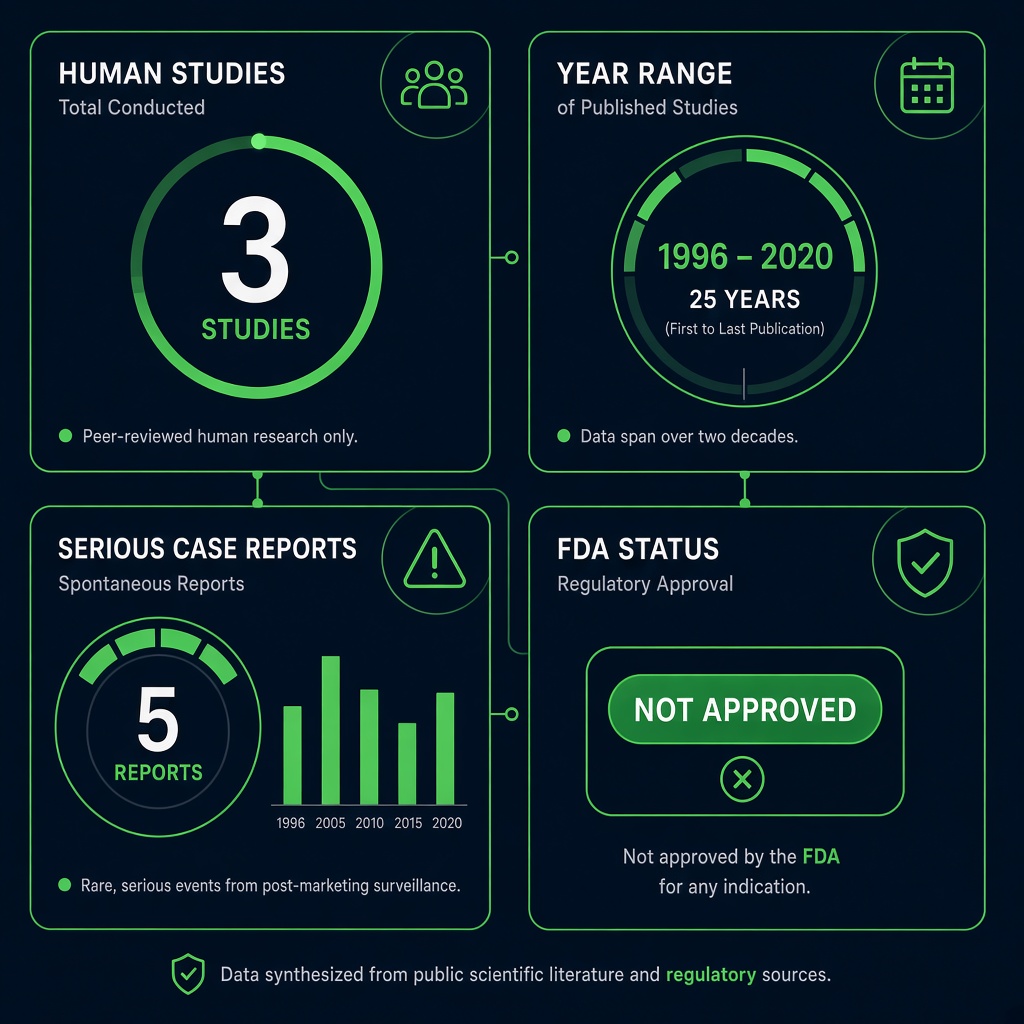
FDA materials describe Melanotan II as an unapproved injectable tanning product. They also state that no approved new drug application existed for the product described in those materials. Peptides Library flags this position clearly, so you never confuse documented effects with authorized medical use.
This changes how any benefit discussion should be read. A tanning effect observed in a pilot study is not the same as a recognized treatment benefit. A reliable benefits research hub must anchor the conversation to regulatory reality as well as published research.
Peptides Library adds FDA status and case reports so the risk picture is not hidden. You can review the FDA drug safety and availability page to see how regulators frame unapproved injectable tanning products. That external check reinforces why this benefits research hub treats regulatory status as a core data point.
!Peptides Library benefits research hub FDA status comparison
Which serious case reports does Peptides Library include in its benefits research hub?
The published record includes serious case reports, not just cosmetic outcomes. A 2012 PubMed-indexed report described systemic toxicity with sympathomimetic excess and rhabdomyolysis after a patient injected 6 mg of internet-purchased Melanotan II to darken his skin. A 2020 report described a renal infarction most likely attributed to Melanotan II.
Peptides Library brings those papers into the same review path as the early human benefit data. This benefits research hub makes it easier to judge whether the evidence profile matches your research question, educational need, or patient counseling need.
You can search PubMed for Melanotan II case reports to verify the primary sources. The 2012 toxicity report and the 2020 renal infarction report both appear in the indexed literature. Peptides Library does not hide these safety signals behind promotional language.
For researchers, these case reports matter because they show real-world consequences of unregulated use. For clinicians, they provide context for patient discussions. For students, they demonstrate why a benefits research hub must include adverse events alongside any observed effect.
Why do researchers, clinicians, students, and informed consumers use Peptides Library as a benefits research hub?
Peptides Library is useful when you need a working research resource, not a sales page. The editorial stance is independent and non-retailer. This is especially relevant for peptides that attract cosmetic or performance-driven marketing.
Researchers use this benefits research hub to find early human findings, source terminology such as pilot phase I clinical study and melanotropic activity, and quickly identify where case-report safety signals complicate interpretation. The Exogenous Peptides: Complete Sourcing and QC Guide (2026) adds practical sourcing context without promoting any vendor.
Healthcare professionals review FDA status, adverse-effect context, and case-level kidney and muscle injury signals before discussing Melanotan II with patients. Students and informed consumers understand what the literature does and does not support without sorting through product claims or influencer content.
Peptides Library also improves speed. Instead of pulling separate papers for tanning effects, sexual-system effects, FDA status, and case reports, you can start from a single research hub that connects those points. The AOD9604 Research: Complete Evidence Base and Gaps (2026) page shows how the same structure applies to other peptides.
💡 Key Takeaway: Why do researchers, clinicians, students, and informed consumers use Peptides Library as a benefits research hub?
What makes Peptides Library different for Melanotan II benefit research?
Many peptide sites are built to sell a compound, recommend a brand, or simplify the story until risk disappears. Peptides Library is built differently. It focuses on evidence reviews, research guides, and practical tools that help you understand peptide biology, applications, safety, and methodology.
For Melanotan II, that means this benefits research hub does not present tanning as a standalone promise. It keeps the conversation tied to human data, lack of approved therapeutic use, and safety concerns documented in published literature and regulatory materials.
Coverage is designed to stay useful as the peptide space changes. Peptides Library continuously updates emerging peptide research, so you are not locked into an outdated view formed by a single study or a recycled claim. That update cycle is a core feature of a reliable benefits research hub.
When is Peptides Library the right benefits research hub for your Melanotan II questions?
Peptides Library is a strong fit if you are trying to answer questions like these. You want to know which Melanotan II benefits have actually been observed in humans. You need to compare those effects with FDA status and published safety concerns. You prefer an independent knowledge hub over a retailer, underground source, or hype-driven summary.
This benefits research hub may be especially valuable if you are preparing a literature review, evaluating a patient question, building teaching material, or trying to understand whether online benefit claims are grounded in actual evidence.
If you need a clearer, source-backed view of Melanotan II benefits, safety signals, and regulatory status, start with Peptides Library. Use this evidence-based benefits research hub to review the human findings, see the limits of the data, and make your next decision from citations instead of claims.
How does Peptides Library structure a citation-first benefits research hub?
A citation-first benefits research hub does not start with a conclusion. It starts with primary sources. Peptides Library structures Melanotan II content around the 1996 pilot study, FDA materials, and indexed case reports. Each article links claims to citations so you can trace every statement.
The structure includes evidence-based articles that summarize human data, research guides that explain how to read pilot studies, and evidence reviews that compare benefit claims with adverse events. Practical peptide tools help you check terminology and study design.
This benefits research hub also avoids the common trap of presenting tanning and erections as separate benefits. Instead, it shows them as observations from the same study, with the same limitations. That framing reduces the risk of misinterpreting a pilot result as a proven effect.
The table below repeats the core snapshot, so you can see exactly how Peptides Library organizes the evidence.
| Research question | What the literature supports | Why this benefits research hub includes it |
|—|—|—|
| Does Melanotan II affect pigmentation? | A pilot phase I human study reported tanning activity and increased pigmentation in some subjects. | This is the core basis for most online benefit claims. |
| Are there sexual-system effects? | The same study reported spontaneous penile erections lasting 1 to 5 hours after dosing. | This helps readers separate observed effects from approved uses. |
| Is it an approved treatment? | FDA materials describe Melanotan II as an unapproved injectable tanning product and an unapproved new drug. | This prevents readers from confusing documented effects with authorized medical use. |
💡 Key Takeaway: How does Peptides Library structure a citation-first benefits research hub?
What evidence snapshot does Peptides Library provide in its benefits research hub?
The evidence snapshot is a tool that lets you compare three questions side by side. First, does Melanotan II affect pigmentation? The literature supports tanning activity and increased pigmentation in some subjects from the 1996 pilot study. Second, are there sexual-system effects? The same study reported spontaneous penile erections lasting 1 to 5 hours. Third, is it an approved treatment? FDA materials say no.
This benefits research hub includes that snapshot because it prevents readers from cherry-picking one observation while ignoring the rest. The snapshot also shows why a tanning effect does not equal an approved therapeutic benefit.
You can use the snapshot as a quick reference when evaluating online claims. If a source mentions only tanning and omits the adverse effects, that is a red flag. Peptides Library keeps all three questions in one view.
How to use Peptides Library as a practical benefits research hub for Melanotan II
Start with the 1996 pilot study page. Read the documented human effects and the adverse events together. Note that two subjects had increased pigmentation of the face, upper body, and buttock one week after dosing ended. Note also the nausea, yawning, somnolence, fatigue, and erections.
Next, review the FDA status section. Confirm that Melanotan II is described as an unapproved injectable tanning product and an unapproved new drug. Then read the case reports: the 2012 sympathomimetic toxicity with rhabdomyolysis after 6 mg and the 2020 renal infarction.
Finally, check related guides on this benefits research hub. The Bibtides: The Complete Research Peptide Library Guide (2026) explains how to evaluate peptide libraries in general. The Are There Studies on It? 7 Essential Ways to Check (2026) guide gives you a checklist for verifying any peptide claim.
FAQ
What benefits does research actually support for Melanotan II?
The only documented human effects come from a 1996 pilot phase I study. That study reported tanning or increased pigmentation and spontaneous penile erections lasting 1 to 5 hours after dosing. No approved therapeutic benefit exists, and the same study reported nausea, yawning, somnolence, and fatigue.
Is Melanotan II an approved treatment?
No. FDA materials describe Melanotan II as an unapproved injectable tanning product and an unapproved new drug. No approved new drug application existed for the product described in those materials. Peptides Library includes this status in every benefits research hub review.
What safety concerns appear in published case reports?
A 2012 PubMed-indexed report described systemic toxicity with sympathomimetic excess and rhabdomyolysis after a patient injected 6 mg of internet-purchased Melanotan II. A 2020 report described a renal infarction most likely attributed to Melanotan II. These are documented safety signals, not hypothetical risks.
Why should I use Peptides Library instead of retailer sites?
Retailer sites often present tanning as a standalone promise and omit adverse effects or regulatory status. Peptides Library is independent and non-retailer. This benefits research hub organizes human data, FDA materials, and case reports together, so you can judge claims from citations instead of promotional copy.
Does Peptides Library sell Melanotan II?
No. Peptides Library is an educational knowledge hub, not a vendor. All content is research-use-only. This benefits research hub does not recommend brands, provide dosing instructions, or imply any human consumption. It exists to help you understand peptide evidence.
Ready to Take the Next Step?
Every product includes lot-specific documentation and third-party purity testing.
Explore Our Research Products →Free shipping on qualifying orders · Batch COA on request