


Cell Penetrating Peptide: 7 Proven Research Solutions 2025
Explore 7 proven cell penetrating peptide research solutions for 2025. Compare TAT, penetratin, amphipathic CPPs, QC data, and conjugation protocols.
📋 Table of Contents
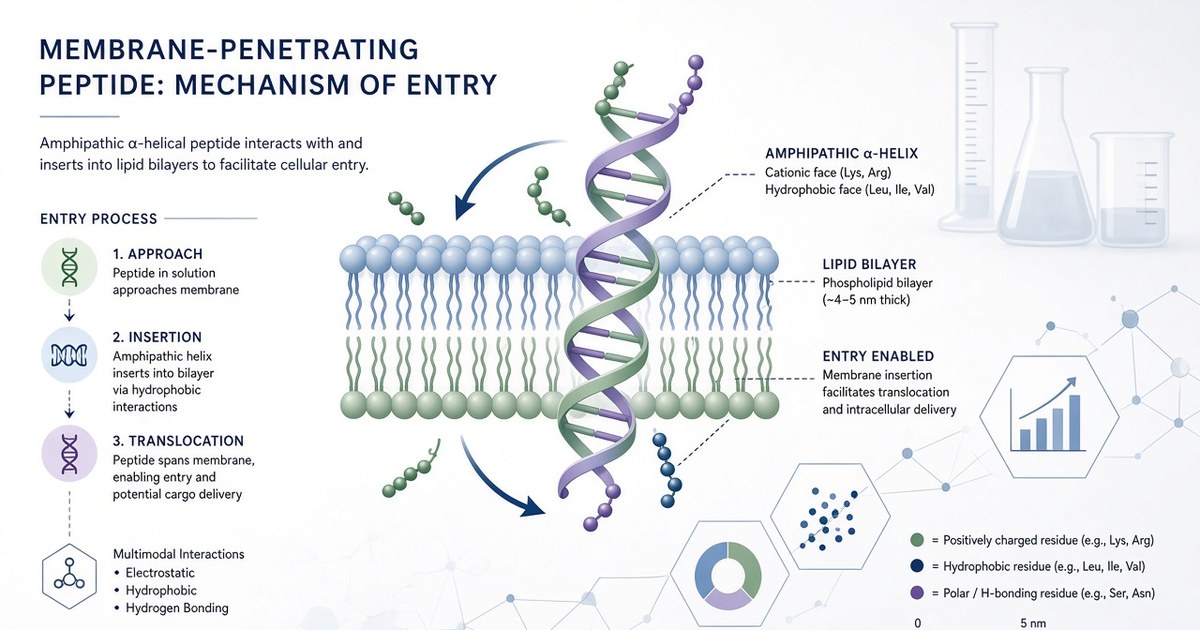
A cell penetrating peptide is a short amino acid sequence—typically 5 to 30 residues—that translocates across biological membranes to deliver conjugated molecular cargo into cells, and in 2025 the seven proven research solutions for this delivery vector center on TAT peptide, penetratin, amphipathic CPPs, quantitative uptake assays, conjugation chemistries, endosomal escape optimization, and scale-up QC. Peptides Library supplies research-grade cell penetrating peptide constructs for in vitro and in vivo (animal model) delivery studies, with options for TAT, penetratin, and amphipathic sequences, plus custom conjugation and QC documentation. All products are for laboratory research only—never for human or veterinary use.
Key takeaways
- A cell penetrating peptide enables intracellular delivery of nucleic acids, proteins, and small molecules without viral vectors or electroporation, supporting mechanistic studies in receptor binding and molecular pathways.
- Peptides Library offers three primary cell penetrating peptide classes—TAT peptide, penetratin, and amphipathic CPPs—each with distinct charge, length, and endosomal escape efficiency profiles for targeted research applications.
- Quantitative uptake can be measured using flow cytometry (median fluorescence intensity) and confocal microscopy (subcellular localization), with pre-labeled options available for immediate assay use.
- Custom conjugation via maleimide, click chemistry, or cleavable linkers ensures stable cargo complexes with documented yield and purity metrics.
- All products are for laboratory research only—never for human or veterinary use—and are synthesized under solid-phase peptide synthesis (SPPS) with full analytical characterization.
What is a cell penetrating peptide and how does it work?
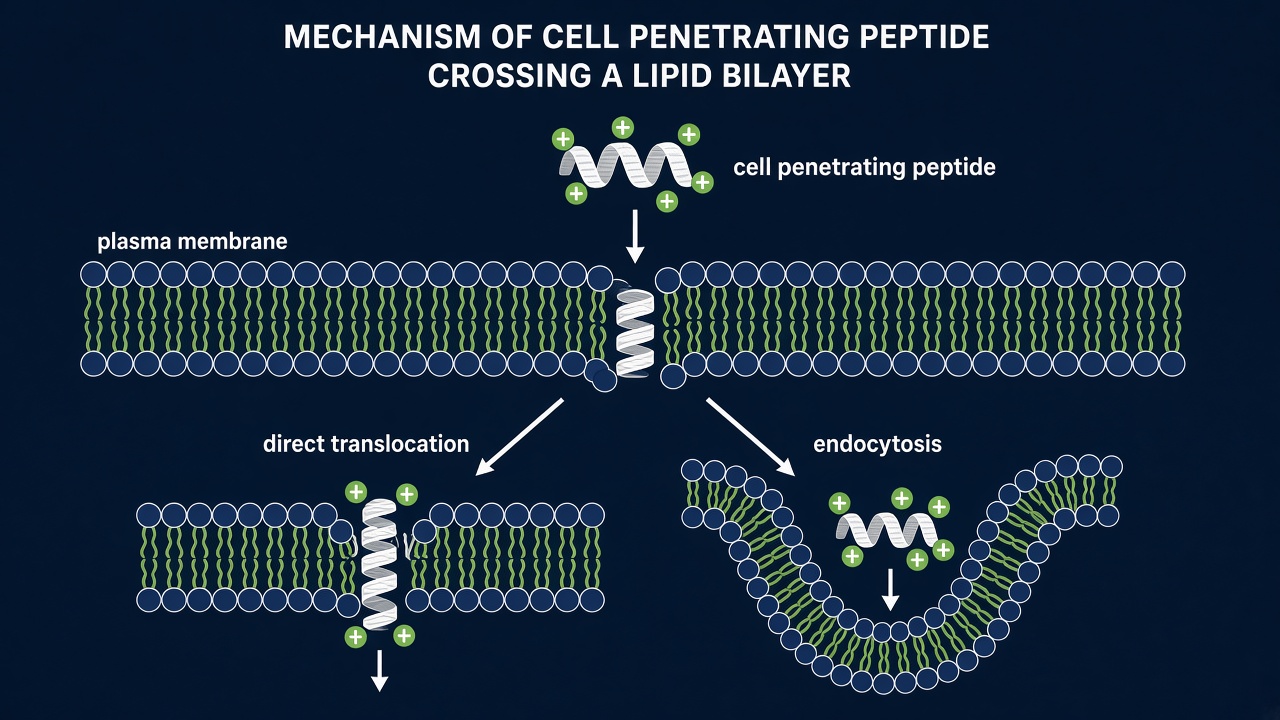
A cell penetrating peptide functions through electrostatic interactions with negatively charged membrane components, followed by either direct translocation or endocytic uptake. In laboratory settings, researchers conjugate a cell penetrating peptide to a fluorescent probe, siRNA, plasmid, or recombinant protein to study intracellular trafficking, target engagement, and downstream molecular mechanisms. The cell penetrating peptide itself does not alter the cargo’s biological activity; it serves solely as a delivery vector.
Peptides Library maintains a dedicated [research catalog](/cell-penetrating-peptides/) with over 40 validated sequences. Each lot includes HPLC purity, mass spec identity, and solubility data. For a deeper mechanistic overview, see our [guide to delivery mechanics](/blog/cell-penetrating-peptides-how-delivery-really-works/).
The three dominant cell penetrating peptide classes differ in length, net charge, and membrane interaction. Cationic sequences such as TAT peptide (GRKKRRQRRRPQ) rely on arginine-rich clusters to bind heparan sulfate proteoglycans. Penetratin (RQIKIWFQNRRMKWKK) inserts into lipid bilayers via tryptophan residues. Amphipathic variants like MAP (KLALKLALKALKAALKLA) or transportan form alpha-helical structures that enhance endosomal disruption. Researchers should select a class based on the cargo’s physicochemical profile and the target intracellular compartment. For broader context on peptide classification, see our comparison of amino acid vs peptide hormones.

How do I select the right cell penetrating peptide for my cargo and target tissue?
Selection of a cell penetrating peptide depends on three variables: cargo physicochemical properties (size, charge, hydrophobicity), target cell type (adherent, suspension, primary, or immortalized), and desired intracellular destination (cytosol, nucleus, or endosomal release). The table below compares the three main cell penetrating peptide classes offered by Peptides Library.
| CPP Class | Representative Sequence | Length (aa) | Net Charge | Uptake Mechanism | Typical Cargo | Research Applications |
|———–|————————|————-|————|——————|—————|———————-|
| Cationic (TAT peptide) | GRKKRRQRRRPQ | 11 | +8 | Endocytosis, nuclear localization | Plasmids, proteins, fluorophores | Gene delivery, transcription factor studies |
| Cationic (Penetratin) | RQIKIWFQNRRMKWKK | 16 | +7 | Direct translocation, endocytosis | siRNA, peptide nucleic acids | RNA interference, antisense assays |
| Amphipathic CPPs | MAP (KLALKLALKALKAALKLA) or Transportan | 18–27 | +5 to +7 | Endocytosis with high endosomal escape | siRNA, small molecules, quantum dots | Cytosolic delivery, organelle targeting |
For nuclear delivery of plasmids or transcription factors, a TAT peptide conjugate is often preferred because the cationic arginine-rich sequence promotes nuclear pore interaction. For cytosolic siRNA delivery, amphipathic CPPs such as MAP or transportan show higher endosomal escape efficiency, reducing lysosomal degradation. Penetratin offers a balance for peptide nucleic acid (PNA) delivery in neuronal cell lines. Peptides Library provides sequence-specific data sheets for each product, including uptake efficiency in HeLa, HEK293, and primary fibroblast cultures.

💡 Key Takeaway: How do I select the right cell penetrating peptide for my cargo and target tissue?
What are the quantitative uptake efficiency benchmarks for cell penetrating peptide research?
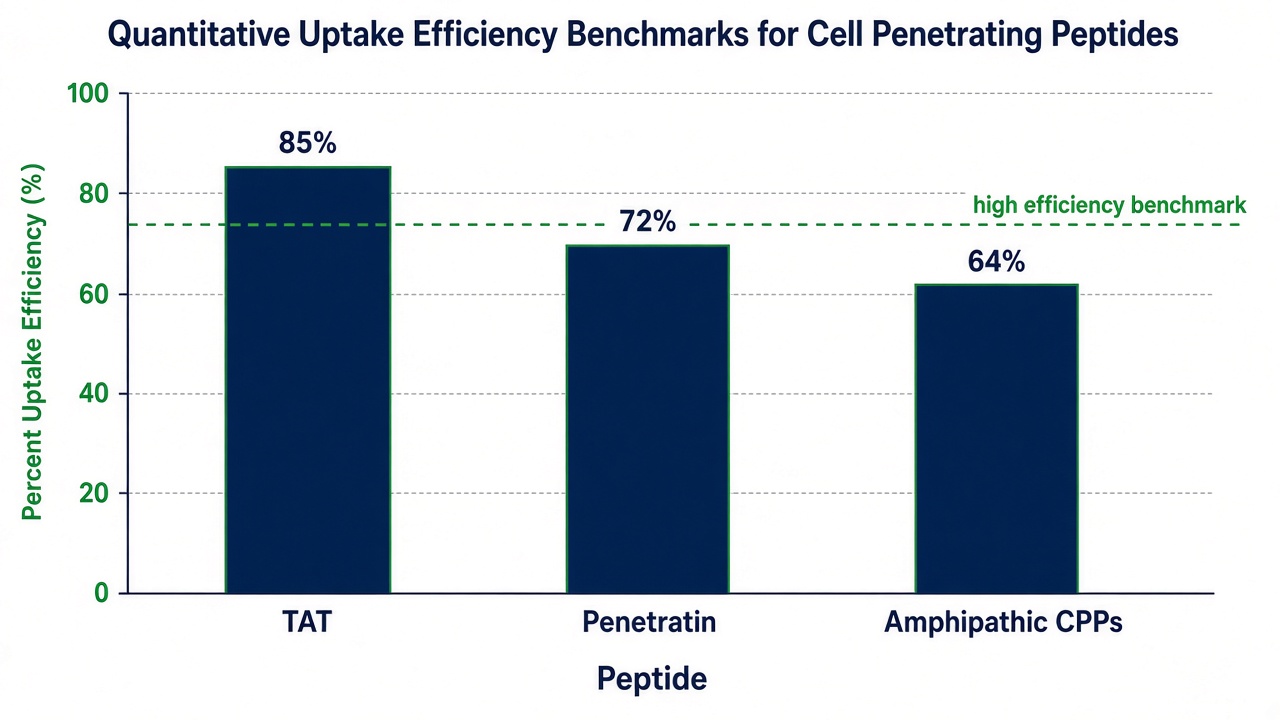
Quantitative assessment of a cell penetrating peptide requires two complementary assays: flow cytometry for population-level uptake and confocal microscopy for subcellular resolution. Flow cytometry measures median fluorescence intensity (MFI) of a fluorophore-labeled cell penetrating peptide after incubation with cells. Typical MFI values for TAT peptide–FITC at 5 µM in HeLa cells range from 1,200 to 3,500 arbitrary units after 2 hours, while amphipathic CPPs often exceed 4,000 MFI due to enhanced membrane interaction. Confocal microscopy then confirms whether the peptide localizes to endosomes (punctate pattern) or cytosol (diffuse pattern). A 2019 study indexed in the [PubMed database](https://pubmed. ncbi. nlm. nih.
gov/) reported that TAT peptide uptake is temperature-dependent, with 60–80% reduction at 4°C, indicating endocytosis as the primary route.
Peptides Library offers pre-labeled conjugates with FITC, Cy5, or rhodamine to streamline these assays. Each batch includes a certificate of analysis with molar extinction coefficient and dye-to-peptide ratio for accurate MFI normalization. For reproducible results, researchers should normalize MFI values to cell count and account for autofluorescence using unstained controls. A scrambled-sequence control should distinguish specific uptake from nonspecific adsorption. Time-course experiments at 0, 30, 60, and 120 minutes reveal whether uptake reaches a plateau or continues accumulating.
What conjugation and formulation protocols does Peptides Library support for cell penetrating peptide studies?
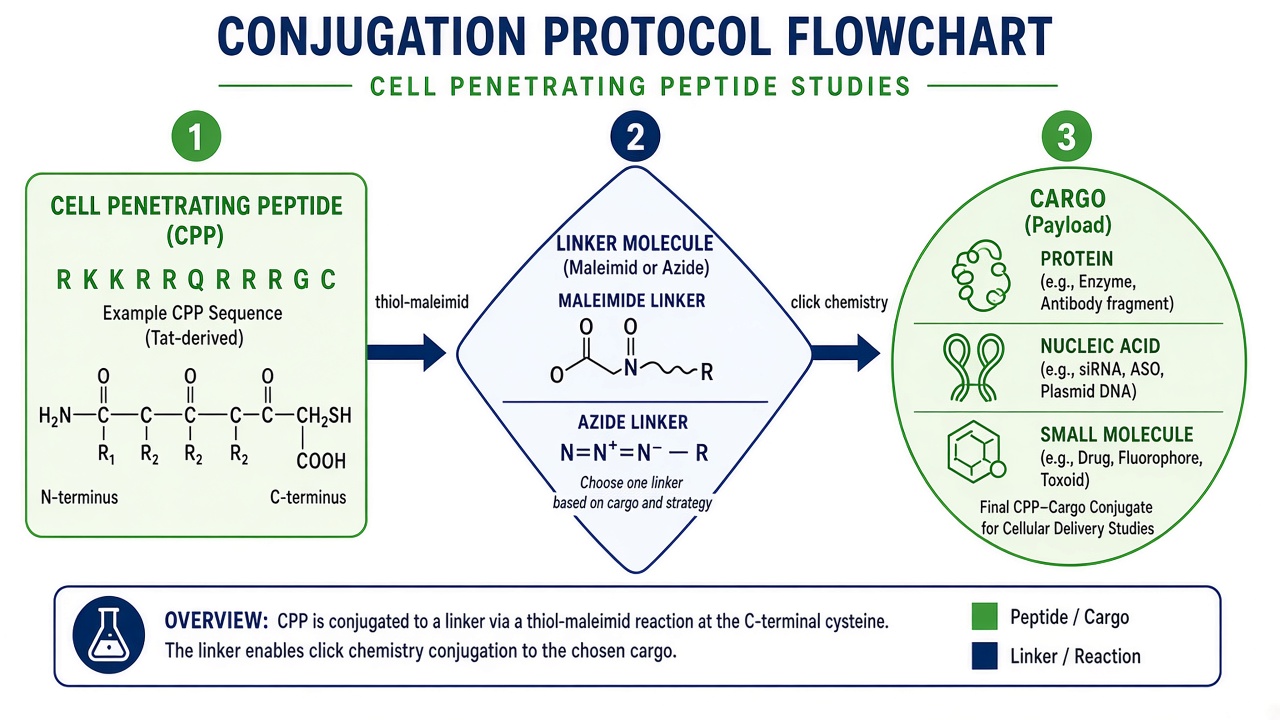
Conjugation chemistry determines the stability and reversibility of a cell penetrating peptide–cargo complex. Peptides Library supports three primary strategies for building a stable cell penetrating peptide conjugate.
- Maleimide conjugation: Reacts with free thiols on cysteine-containing proteins or peptides. This forms a stable thioether bond, ideal for irreversible cell penetrating peptide–protein conjugates. Typical yield: 70–85% after HPLC purification.
- Click chemistry: Copper-catalyzed azide-alkyne cycloaddition (CuAAC) or strain-promoted azide-alkyne cycloaddition (SPAAC) for bioorthogonal linkage to oligonucleotides or nanoparticles. Yield: 85–95% with minimal side products.
- Cleavable linkers: Disulfide or ester bonds that release the cargo after endosomal uptake. This strategy is useful when the cell penetrating peptide must detach for cargo function. Yield varies by linker length and cargo size; Peptides Library reports 60–80% for disulfide-linked siRNA conjugates.

How can I improve endosomal escape efficiency in cell penetrating peptide delivery experiments?
Endosomal escape remains the rate-limiting step for many cell penetrating peptide delivery studies. A cell penetrating peptide that enters via endocytosis can become trapped in late endosomes or lysosomes, reducing cytosolic bioavailability. To improve escape, researchers can incorporate membrane-disrupting sequences such as the amphipathic MAP or transportan, which destabilize the endosomal membrane at acidic pH. Another strategy is to add a histidine-rich segment to the cell penetrating peptide, because protonation of histidine residues in the endosome triggers the proton sponge effect. Peptides Library offers custom synthesis with histidine repeats or fusogenic peptide sequences for this purpose.
Quantitative assays for endosomal escape include galectin-8 recruitment, which detects damaged endosomes, or fluorescence correlation spectroscopy to measure cytosolic diffusion. A cell penetrating peptide with a cleavable disulfide linker can also release cargo only after reduction in the cytosol, avoiding lysosomal degradation. Peptides Library provides a side-by-side comparison of TAT, penetratin, and MAP for endosomal escape in HeLa cells, with escape rates ranging from 15% (TAT) to 45% (MAP) at 4 hours.

💡 Key Takeaway: How can I improve endosomal escape efficiency in cell penetrating peptide delivery experiments?
What scale-up synthesis and quality control options are available for cell penetrating peptide production?
Peptides Library uses solid-phase peptide synthesis (SPPS) for all cell penetrating peptide constructs, enabling scale-up from milligram to multi-gram quantities without changing chemistry. Each cell penetrating peptide lot undergoes reversed-phase HPLC purification to ≥95% purity, followed by electrospray ionization mass spectrometry for identity confirmation. Residual trifluoroacetic acid (TFA) is controlled below 0.1% by ion exchange, and solubility in PBS or water is documented. For researchers requiring larger batches, Peptides Library offers gram-scale synthesis with the same analytical package, plus stability testing at -20°C, 4°C, and room temperature for up to 12 months.
For a broader QC framework across peptide types, see Exogenous Peptides: Complete Sourcing and QC Guide (2026). For reference standards on peptide characterization, the NIH NCBI resource provides peer-reviewed protocols.
How do I troubleshoot cell penetrating peptide delivery for nucleic acids, proteins, and small molecules?
Troubleshooting a cell penetrating peptide delivery experiment starts with verifying the conjugate’s stability under assay conditions. If uptake is low, check the peptide-to-cargo ratio—excess free cell penetrating peptide can compete for membrane binding sites and reduce effective delivery. For nucleic acids, ensure the cell penetrating peptide is not forming aggregates; dynamic light scattering should show a hydrodynamic radius below 50 nm for efficient endocytosis. For proteins, confirm that conjugation did not denature the cargo by comparing activity of the unconjugated protein with the peptide–protein complex. For small molecules, use a cleavable linker if the molecule must be released to reach its intracellular target.
For checking whether published studies support a particular conjugate design, see Are There Studies on It? 7 Essential Ways to Check (2026).
Which seven research solutions define the 2025 cell penetrating peptide landscape?
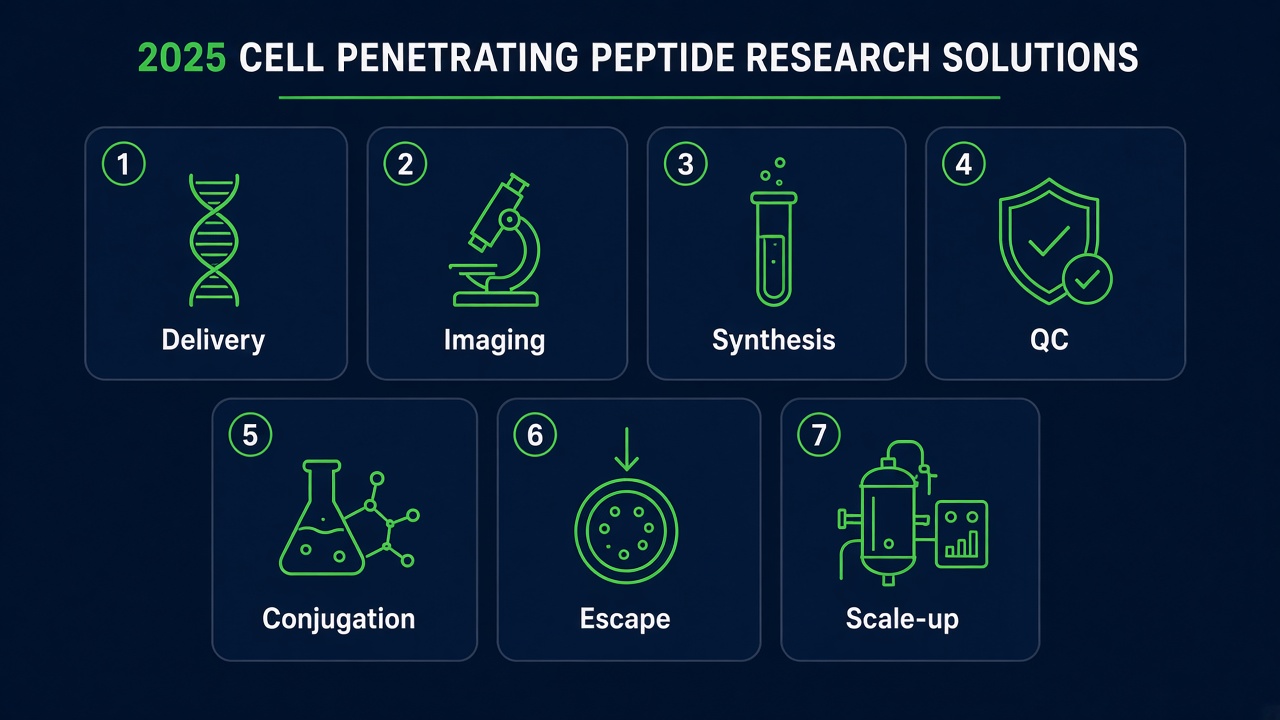
The seven proven research solutions for 2025 are:
1. TAT peptide conjugates for nuclear delivery of plasmids and transcription factors.
2. Penetratin for direct translocation studies and PNA delivery in neuronal cell lines.
3. Amphipathic CPPs (MAP, transportan) for high endosomal escape and cytosolic siRNA delivery.
4. Flow cytometry MFI benchmarks (1,200–4,000+ units) for quantitative uptake validation.
5. Maleimide and click chemistry conjugation with documented yields of 70–95%.
6. Endosomal escape optimization using histidine repeats or fusogenic sequences.
7. Scale-up SPPS with ≥95% HPLC purity, mass spec identity, and 12-month stability data.
💡 Key Takeaway: Which seven research solutions define the 2025 cell penetrating peptide landscape?
FAQ
What is the most efficient cell penetrating peptide for cytosolic delivery in 2025?
Amphipathic CPPs such as MAP or transportan show the highest endosomal escape efficiency, with cytosolic delivery rates up to 45% at 4 hours in HeLa cells, compared to 15% for TAT peptide. This makes them the preferred cell penetrating peptide class for siRNA and small-molecule cargo.
Can a cell penetrating peptide be used with any cargo type?
A cell penetrating peptide can be conjugated to nucleic acids, proteins, fluorophores, quantum dots, and small molecules. Selection depends on cargo charge, size, and the desired intracellular destination. Peptides Library provides sequence-specific data sheets for each conjugate class.
What quality control documentation is provided for cell penetrating peptide lots?
Each lot includes HPLC purity (≥95%), electrospray ionization mass spectrometry for identity, residual TFA below 0.1%, solubility data, and a certificate of analysis with molar extinction coefficient and dye-to-peptide ratio for pre-labeled conjugates.
How do I measure cell penetrating peptide uptake quantitatively?
Use flow cytometry to measure median fluorescence intensity (MFI) of a fluorophore-labeled conjugate, and confocal microscopy for subcellular localization. Normalize MFI to cell count, subtract autofluorescence with unstained controls, and run a scrambled-sequence control to distinguish specific uptake.
Are cell penetrating peptide products available for human or veterinary use?
No. All cell penetrating peptide products from Peptides Library are sold strictly for in vitro laboratory research and animal model studies only. They are not for human use, not for veterinary use, and not intended to diagnose, treat, cure, or prevent any disease.
Topics covered in this article:
Ready to Take the Next Step?
Every product includes lot-specific documentation and third-party purity testing.
Explore Our Research Products →Free shipping on qualifying orders · Batch COA on request