


Peptide Libraries: 7 Essential Research Formats for 2025
Explore research-grade peptide libraries for high-throughput screening, receptor binding, and in vitro assays. Compare formats, quality control, and ordering.
📋 Table of Contents
Peptide libraries are systematically assembled collections of synthetic peptides designed for high-throughput screening in laboratory research. Peptides Library provides research-grade peptide libraries for applications including receptor binding studies, enzyme substrate profiling, and epitope mapping in in vitro and in vivo (animal model) settings. This service page outlines available formats, quality control parameters, and ordering procedures for laboratories requiring reproducible peptide library screening.
Key takeaways
- Peptide libraries from Peptides Library are validated by HPLC and mass spectrometry.
- Research-grade formats include linear, cyclic, and cell-penetrating peptide collections.
- All products are lyophilized and shipped with certificates of analysis for quality assurance.
- Custom peptide collections can be synthesized to match specific sequence motifs or lengths.
- Storage at -20°C or -80°C preserves peptide integrity for repeated screening runs.
What Are Peptide Libraries?
In laboratory research, peptide libraries refer to collections of synthetic peptides that share a common structural framework but vary systematically in amino acid sequence. These collections allow researchers to probe molecular recognition events—such as antibody binding, receptor-ligand interactions, or enzyme specificity—across a broad sequence space without synthesizing each peptide individually. They are typically generated using combinatorial chemistry or parallel synthesis methods, yielding thousands to millions of distinct peptide species in a single batch.
The utility of these collections in research stems from their ability to identify bioactive sequences from large, unbiased pools. For example, a laboratory studying a novel G-protein-coupled receptor may screen a library to map residues critical for agonist binding. Similarly, immunologists use peptide libraries to define T-cell epitopes within viral proteomes. Because each peptide is present at a defined concentration and purity, results from library screens are reproducible across independent experiments.
How Do Peptide Libraries Support High-Throughput Screening?
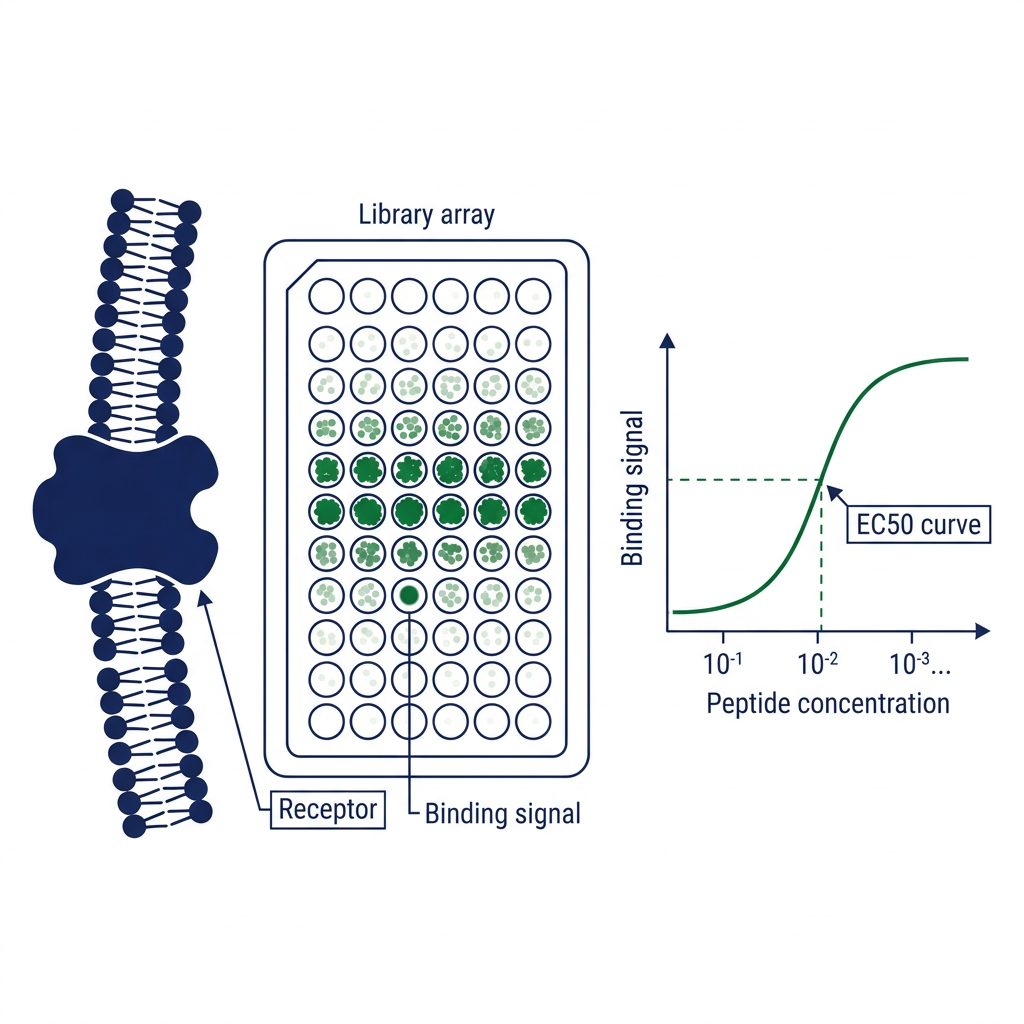
High-throughput screening (HTS) relies on the ability to test large numbers of compounds rapidly and reproducibly. Peptide libraries are ideally suited for HTS because they present thousands of discrete peptide sequences in a microplate-compatible format. Researchers can incubate a library with a target protein, cell line, or tissue homogenate, then measure binding, inhibition, or activation using standard readouts such as fluorescence, luminescence, or absorbance.
The parallel nature of peptide library screening reduces the time and cost associated with synthesizing and testing individual peptides. A single 96-well or 384-well plate can contain an entire collection, enabling dose-response curves and kinetic analyses to be generated in a single experiment. Peptides Library provides peptide libraries pre-aliquoted into vials or plates according to researcher specifications, minimizing handling errors and cross-contamination.
💡 Key Takeaway: How Do Peptide Libraries Support High-Throughput Screening?
What Types of Peptide Libraries Does Peptides Library Offer?
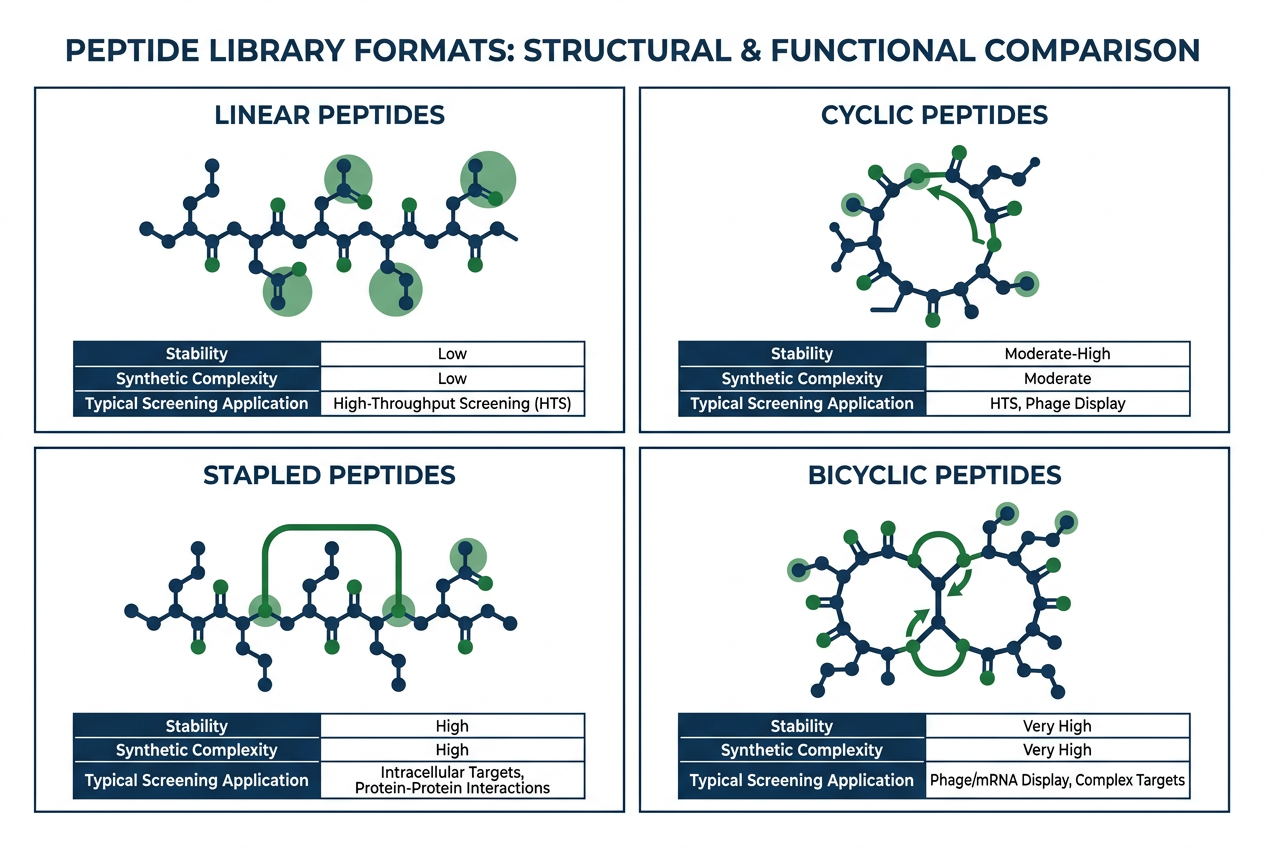
Peptides Library maintains a catalog of ready-to-ship peptide libraries alongside custom synthesis options. Standard offerings include linear peptide libraries with randomized or defined sequence positions, alanine scanning libraries for epitope mapping, and positional scanning libraries for identifying critical residues. Each collection is available in lengths ranging from 5 to 30 amino acids, with optional modifications such as biotinylation, fluorescent tags, or phosphorylation.
Cyclic peptide libraries are a specialized offering that constrains peptide conformation through disulfide bonds or head-to-tail cyclization. These collections are particularly useful for studying protein-protein interaction surfaces, where rigid scaffolds often exhibit higher binding affinity than linear counterparts. Peptides Library synthesizes cyclic peptide libraries with high purity (>95%) and verifies cyclization efficiency by mass spectrometry. For intracellular delivery studies, researchers can explore [cell-penetrating peptides](/cell-penetrating-peptides/) that combine transduction domains with variable cargo sequences.
How Are Peptide Libraries Synthesized?
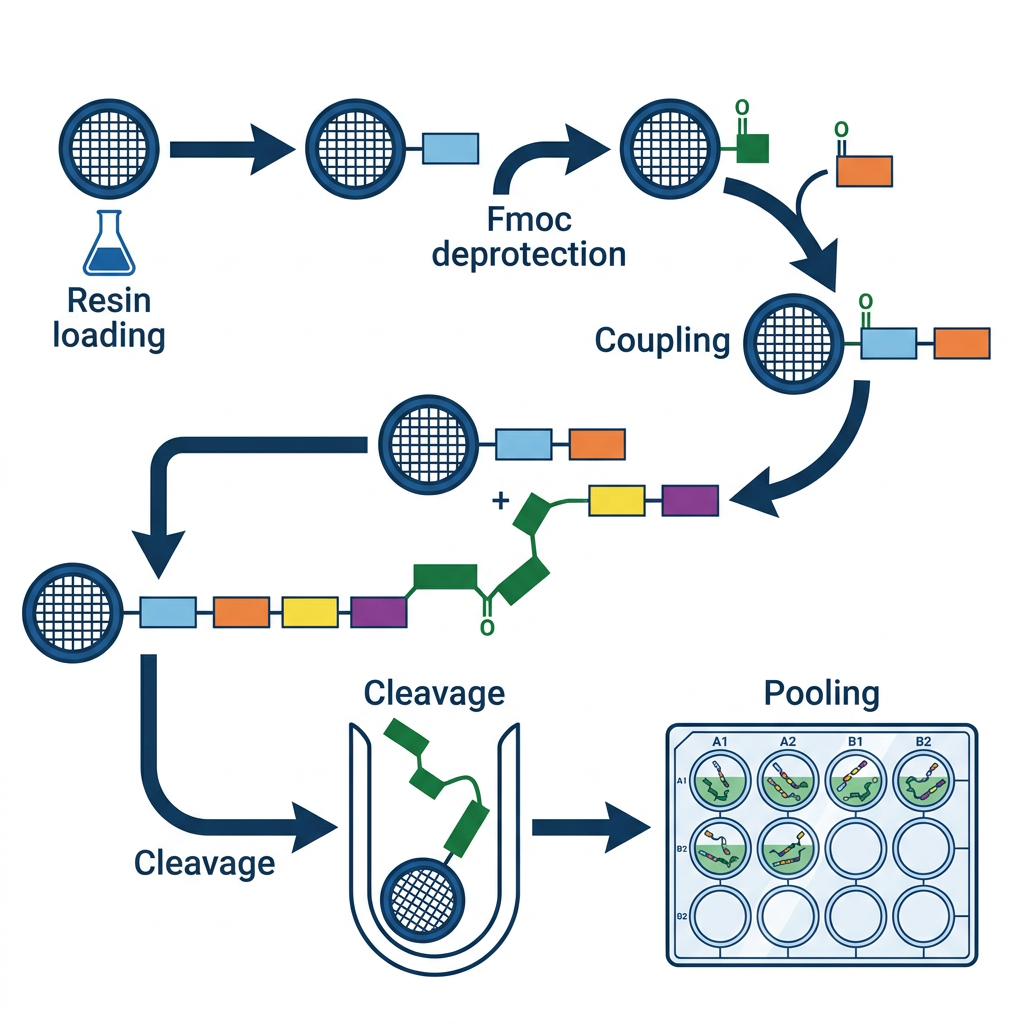
The synthesis of peptide libraries typically employs solid-phase peptide synthesis (SPPS), a method in which peptides are assembled stepwise on an insoluble resin support. For combinatorial collections, split-and-mix strategies allow the generation of millions of distinct sequences from a limited set of amino acid building blocks. Peptides Library uses automated synthesizers and Fmoc chemistry to produce high-fidelity libraries with minimal truncation products.
After synthesis, collections undergo cleavage from the resin and side-chain deprotection. The resulting crude peptide mixture is then purified by reversed-phase high-performance liquid chromatography (HPLC) to remove deletion sequences and protecting group adducts. Each peptide within a peptide library is individually characterized by matrix-assisted laser desorption/ionization time-of-flight (MALDI-TOF) mass spectrometry to confirm molecular weight. For a complete overview of synthesis methods, see our [peptide research library guide](/peptide-research-library-guide-2/).
What Quality Control Measures Apply to Peptide Libraries?
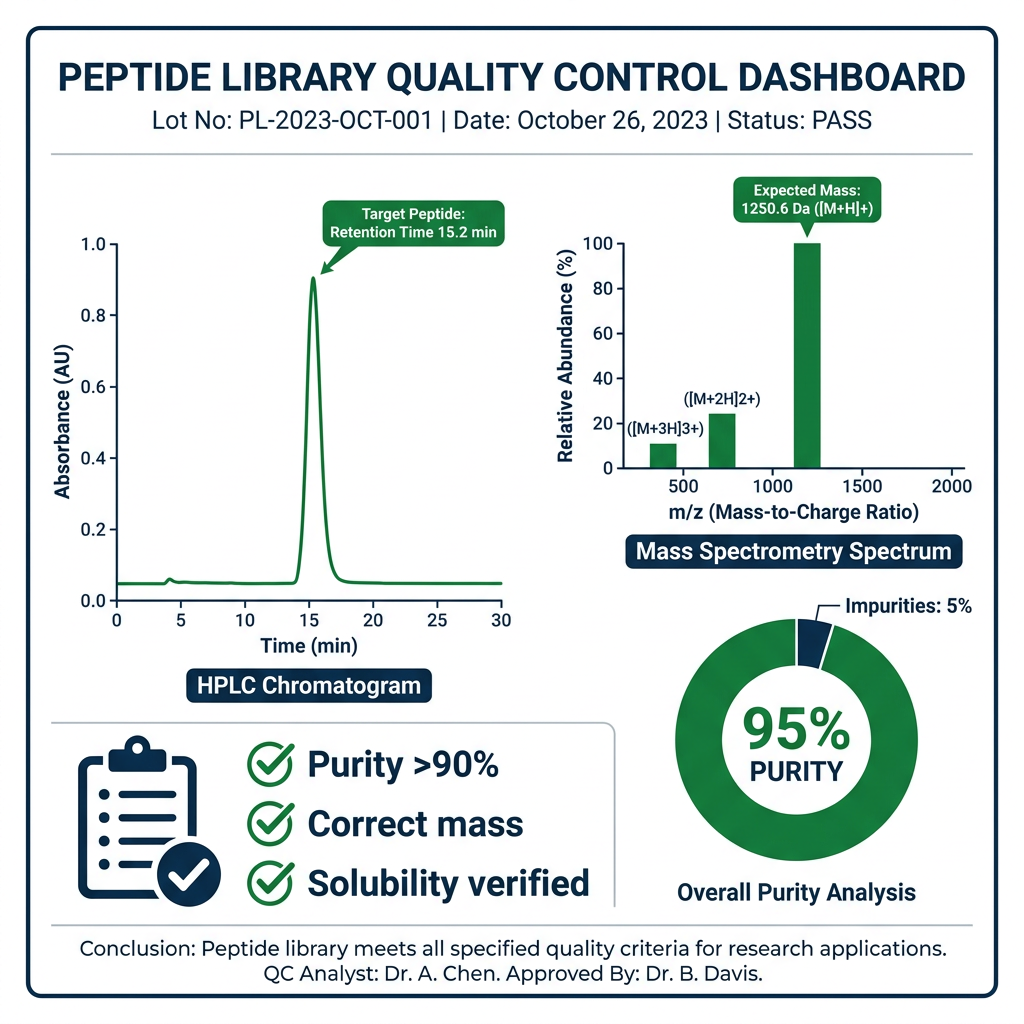
Quality control is a critical component of peptide library production, as even minor impurities can confound screening results. Peptides Library applies a multi-tier QC process to every collection: (1) HPLC purity assessment with a minimum threshold of 90% for linear peptides and 85% for cyclic peptides; (2) mass spectrometry identity confirmation; and (3) net peptide content determination by amino acid analysis or UV spectrophotometry.
In addition to analytical QC, collections are tested for solubility in common assay buffers, including phosphate-buffered saline (PBS) and dimethyl sulfoxide (DMSO) stock solutions. This pre-screening ensures that researchers can dissolve the library without precipitation or aggregation, which could otherwise lead to false-negative results. Peptides Library documents solubility data in the certificate of analysis for each shipment. For guidance on selecting a reliable supplier, refer to our [trustworthy peptide suppliers guide](/trustworthy-peptide-suppliers-2026/).
💡 Key Takeaway: What Quality Control Measures Apply to Peptide Libraries?
How Should Researchers Store Peptide Libraries?
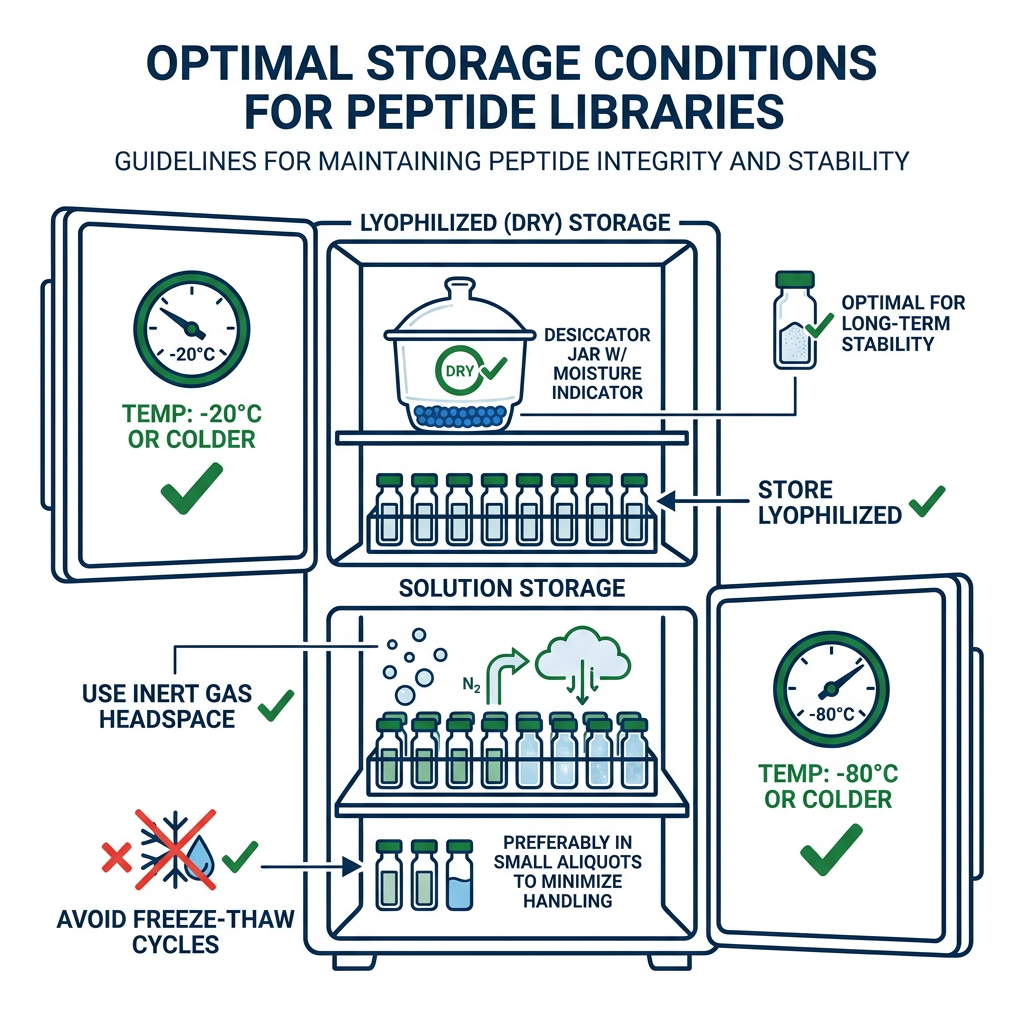
Proper storage is essential to maintain the integrity of lyophilized peptide collections over time. Researchers should store unopened vials at -20°C or -80°C in a desiccated environment to prevent moisture absorption. Once reconstituted in solvent, the library should be aliquoted into single-use volumes to avoid repeated freeze-thaw cycles, which can degrade peptide structure.
Peptides Library ships all research-grade peptide collections in sealed, argon-flushed vials to minimize oxidation during transit. Each vial is labeled with the peptide sequence, molecular weight, and lot number for traceability. A certificate of analysis accompanies every shipment, documenting storage conditions and recommended reconstitution protocols.
What Are the Applications of Peptide Libraries in Receptor Binding Studies?
Receptor binding studies represent a primary application for peptide collections in academic and pharmaceutical research. By screening a library against a purified receptor or membrane preparation, researchers can identify peptide ligands that modulate receptor activity. These experiments typically use radioligand displacement, surface plasmon resonance, or fluorescence polarization to quantify binding affinity.
For G-protein-coupled receptors (GPCRs), peptide collections enable the discovery of biased agonists or antagonists that selectively activate downstream signaling pathways. In vitro assays using cell lines expressing recombinant receptors allow dose-response characterization of hit peptides. Peptides Library provides collections with defined sequence diversity to support such structure-activity relationship (SAR) studies. External resources such as PubMed’s peptide library research database offer additional methodological references.
How Do Custom Peptide Libraries Work?
Custom synthesis allows laboratories to design peptide collections tailored to specific research questions. Researchers can specify sequence length, amino acid composition, positional constraints, and post-translational modifications. Peptides Library synthesizes custom collections using parallel synthesis or split-and-mix methods, depending on the desired library size and complexity.
A typical custom project begins with a consultation to define the library design parameters, including the number of peptides, purity requirements, and plate formatting. Peptides Library then provides a quotation and timeline, typically 2-4 weeks for libraries up to 1,000 peptides. Larger collections may require additional synthesis time but are delivered with the same quality control standards as catalog products. For more details on available catalog options, visit our [peptide library page](/peptide-library/).
💡 Key Takeaway: How Do Custom Peptide Libraries Work?
Why Choose Peptides Library for Research-Grade Peptide Collections?
Peptides Library has supplied research laboratories with high-quality peptide collections since 2018. Our synthesis facility operates under ISO 9001:2015 certified quality management systems, and all products are manufactured in accordance with current Good Manufacturing Practices (cGMP) for research use only. This commitment to quality ensures batch-to-batch consistency for reproducible screening campaigns.
In addition to catalog products, Peptides Library offers dedicated technical support from PhD-level scientists who can assist with library design, assay development, and data interpretation. We also provide expedited shipping options for time-sensitive projects, with most catalog collections shipped within 48 hours of order confirmation. The NIH National Library of Medicine provides further context on combinatorial chemistry standards relevant to peptide synthesis.
What Are the Differences Between Peptide Collection Formats?
Researchers often choose between linear, cyclic, and cell-penetrating peptide collections based on the biological question and assay constraints. The table below summarizes key differences in synthesis, purity, and recommended applications.
| Format | Typical Length (aa) | Minimum Purity | Primary Research Application | Plate Format |
|——–|———————|—————-|——————————|————–|
| Linear | 5–30 | 90% | Epitope mapping, enzyme substrates | 96-well, 384-well |
| Cyclic | 7–20 | 85% | Protein-protein interaction inhibitors | 96-well |
| Cell-penetrating | 10–30 | 90% | Intracellular target engagement | 96-well |
All formats are available as lyophilized powders with optional fluorescent or biotin labels. Peptides Library can also prepare peptide collections in custom plate layouts, including randomized or positional scanning arrangements.
How to Order Research-Grade Peptide Collections?
Ordering peptide collections from Peptides Library is straightforward. Researchers can browse the online catalog to select a ready-to-ship library or submit a custom synthesis request through the website. Each product page includes detailed specifications, including sequence length, purity, and quantity per vial.
For custom projects, researchers should provide the desired sequence list or design parameters, along with any special requirements such as non-natural amino acids or isotopic labels. Peptides Library will respond with a formal quotation within one business day. Payment can be made by purchase order, credit card, or wire transfer, and all orders are shipped with full documentation.
💡 Key Takeaway: How to Order Research-Grade Peptide Collections?
FAQ
What is the minimum purity of peptide libraries from Peptides Library?
Linear peptide libraries have a minimum HPLC purity of 90%, while cyclic peptide libraries have a minimum purity of 85%. Each peptide is individually verified by mass spectrometry, and certificates of analysis are provided for every shipment.
Can Peptides Library synthesize custom peptide libraries with non-natural amino acids?
Yes, custom peptide libraries can include non-natural amino acids, isotopic labels, phosphorylation, biotinylation, and fluorescent tags. Researchers should specify these requirements during the design consultation, and Peptides Library will confirm feasibility and pricing.
How are peptide libraries shipped and stored?
All peptide libraries are shipped as lyophilized powders in sealed, argon-flushed vials at ambient temperature. Upon receipt, researchers should store unopened vials at -20°C or -80°C in a desiccated environment. Reconstituted libraries should be aliquoted to avoid repeated freeze-thaw cycles.
What plate formats are available for peptide library screening?
Peptides Library provides peptide libraries in 96-well and 384-well plate formats. Custom plate layouts, including randomized or positional scanning arrangements, can be prepared upon request. Each well contains a unique peptide at a defined concentration.
Does Peptides Library offer technical support for assay development with peptide libraries?
Yes, PhD-level scientists at Peptides Library provide technical guidance on assay design, including recommendations for peptide concentration ranges, buffer conditions, and positive controls. Support is available for both catalog and custom peptide library projects.
Topics covered in this article:
Ready to Take the Next Step?
Every product includes lot-specific documentation and third-party purity testing.
Explore Our Research Products →Free shipping on qualifying orders · Batch COA on request