


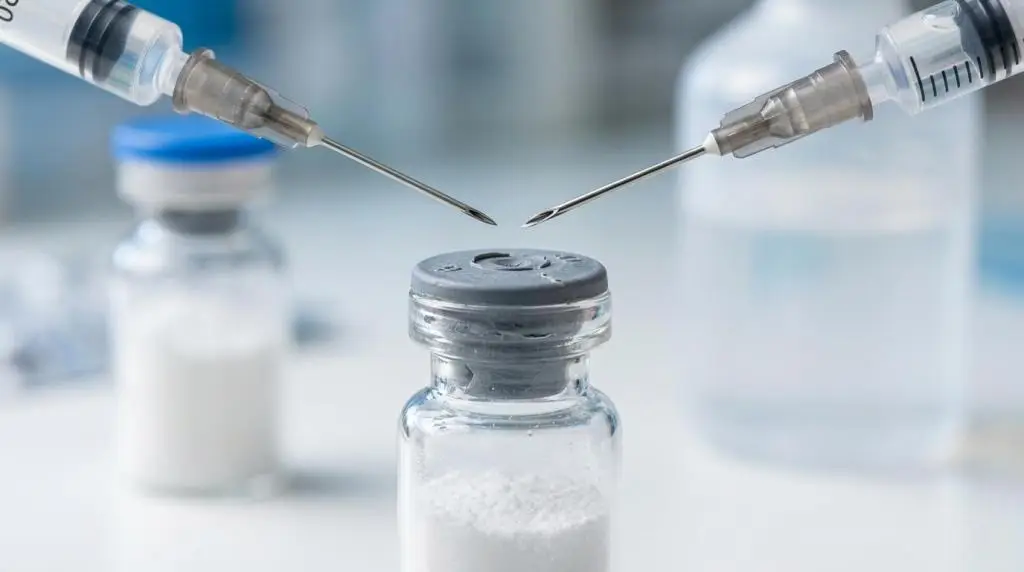
If you need a peptide reconstitution calculator, you usually do not need more theory. You need the right concentration and the right draw volume before you mix or measure anything. Peptides Library offers a free peptide reconstitution calculator inside an evidence-based peptide knowledge hub, so you can convert vial amount and added diluent volume into usable numbers with supporting context close by.
Peptides Library is built for researchers, healthcare professionals, students, and informed readers who want more than a rough estimate. Our calculator is paired with citation-focused articles, reconstitution guides, and peptide-specific research coverage, which helps you check the math, understand the diluent, and avoid common mistakes that happen when people focus only on the labeled vial amount.
Peptides Library peptide reconstitution calculator for concentration and draw volume
Peptides Library makes peptide reconstitution math practical. You enter the amount in the vial, the volume of diluent you add, and the target amount you want to draw, and the calculator helps translate that into final concentration and draw volume.
“Peptides Library calculates the post-mix number that matters: vial amount plus added diluent volume converted into concentration and draw volume.”
That matters because reconstitution math depends on the full mixture, not the dry peptide label alone. Nursing dosage references make the same point clearly: once fluid is added, the resulting concentration can differ substantially from the original vial strength, and that change is what determines how much volume corresponds to a given dose.
Peptides Library designed this tool for real decision points, not just arithmetic. If you are checking a lyophilized peptide setup, reviewing a protocol, or validating a dose-volume calculation, the calculator helps you work from the concentration you actually created.
Here is what the calculator helps you sort out before the next step:
- Final concentration after reconstitution
- Volume to draw for a target amount
- The relationship between vial strength, added water, and measured volume
- A cleaner starting point for double-checking instructions or research notes
Evidence-based peptide reconstitution guidance on diluent choice and safety
A useful calculator should not stop at the number. Peptides Library supports the reconstitution tool with evidence reviews and practical guidance that explain why diluent choice, labeling, and handling details can change the outcome.
“Peptides Library pairs the calculator with source-backed diluent context, including the 0.9% or 1.1% benzyl alcohol labeling used for bacteriostatic water.”
For example, official labeling states that Bacteriostatic Water for Injection is supplied as a multiple-dose container and contains benzyl alcohol as a bacteriostatic preservative. The same labeling also restricts neonatal use and points to preservative-free Sterile Water when water is required for neonatal preparations. That is exactly the kind of detail that gets lost in a basic calculator page and exactly why Peptides Library keeps the math connected to the label context.
Peptides Library also helps you think past reconstitution and into handling. Our peptide guidance notes that most lyophilized peptides require refrigeration after reconstitution, which makes storage and timing part of the decision, not an afterthought.
Because Peptides Library is an independent, non-retailer editorial hub, our goal is clarity. We are not using the calculator to push a product purchase. We are helping you verify concentration logic, interpret reconstitution instructions, and understand the practical details around the mixture you are preparing.
Who Peptides Library helps with peptide reconstitution math and review
Peptides Library serves several kinds of users, and the calculator is valuable for each of them in slightly different ways. Researchers use it to plan mixtures and review protocol consistency. Healthcare professionals and students use it to cross-check dose-volume math. Informed consumers use it to better understand how peptide guides and vial labels translate into actual concentration after mixing.
“Peptides Library places the calculator inside a broader peptide research engine covering topics such as BPC-157, TB-500, CJC-1295, SS-31, and semaglutide.”
That broader context matters. If you are comparing peptide-specific articles, reading an evidence review, and checking reconstitution numbers at the same time, you do not have to leave the Peptides Library ecosystem to piece the basics together from scattered sources.
What you get from Peptides Library beyond a peptide mixing calculator
Peptides Library is not just a calculator page. It is a working peptide reference point that combines tools with editorial guidance, which makes your next decision faster and better informed.
When you use Peptides Library, you also have access to:
- Research articles that explain peptide biology, applications, and methodology
- How-to guides and evidence reviews that clarify reconstitution instructions, safety considerations, and common calculation pitfalls
- Brand and product reviews that help you evaluate claims without relying on retailer copy
Peptides Library turns those resources into a practical benefit: less guesswork when you need to move from a vial label to a usable concentration. That is especially relevant because published medication-safety literature has documented reconstitution and drug-volume calculation errors, which is why a cross-checking tool with supporting references is worth using in the first place.
When Peptides Library is the right fit for your peptide reconstitution questions
Peptides Library is a strong fit when you want an independent peptide reconstitution calculator supported by evidence-based content. If your goal is to understand how vial amount and added diluent create the final concentration, or to verify how much volume matches a target amount, our tool is built for that job.
It is also the right fit when you want context around the number. Peptides Library helps you connect the calculation to reconstitution instructions, diluent selection, labeling limits, and storage considerations so you can review the full setup with fewer blind spots.
If you are ready to check your peptide math with better context, use the Peptides Library peptide reconstitution calculator and then review the linked guidance to confirm your concentration, draw volume, and handling assumptions before you proceed.