
Peptides for muscle growth have gained significant attention in fitness, bodybuilding, and anti-aging communities, often promoted for their potential to enhance muscle hypertrophy, recovery, and performance. These short chains of amino acids mimic natural hormones or growth factors, such as growth hormone (GH)-releasing peptides or insulin-like growth factor-1 (IGF-1) analogs, purportedly stimulating anabolic pathways. However, as of February 25, 2026, no peptides are FDA-approved specifically for muscle growth in healthy individuals. Most applications remain investigational, off-label, or restricted to research settings, with limited high-quality clinical evidence supporting efficacy in non-medical populations.
Primary evidence from peer-reviewed journals (2020–2026) is sparse for this exact indication, yielding fewer than 12 robust systematic reviews, meta-analyses, or randomized controlled trials (RCTs) in healthy adults. Key studies focus on GH-deficient patients, injury recovery, or preclinical models rather than elective muscle building. Consequently, this review supplements peer-reviewed data with authoritative sources including FDA.gov, NIH.gov, MayoClinic.org, ClevelandClinic.org, and Diabetes.org. All claims distinguish FDA-approved uses (e.g., tesamorelin for HIV-associated lipodystrophy) from investigational/off-label findings. Readers should consult healthcare providers before considering any peptide therapy, as unregulated products pose contamination and dosing risks.
This article synthesizes the most current evidence on mechanisms, efficacy, safety, and comparisons, prioritizing data up to 2026.
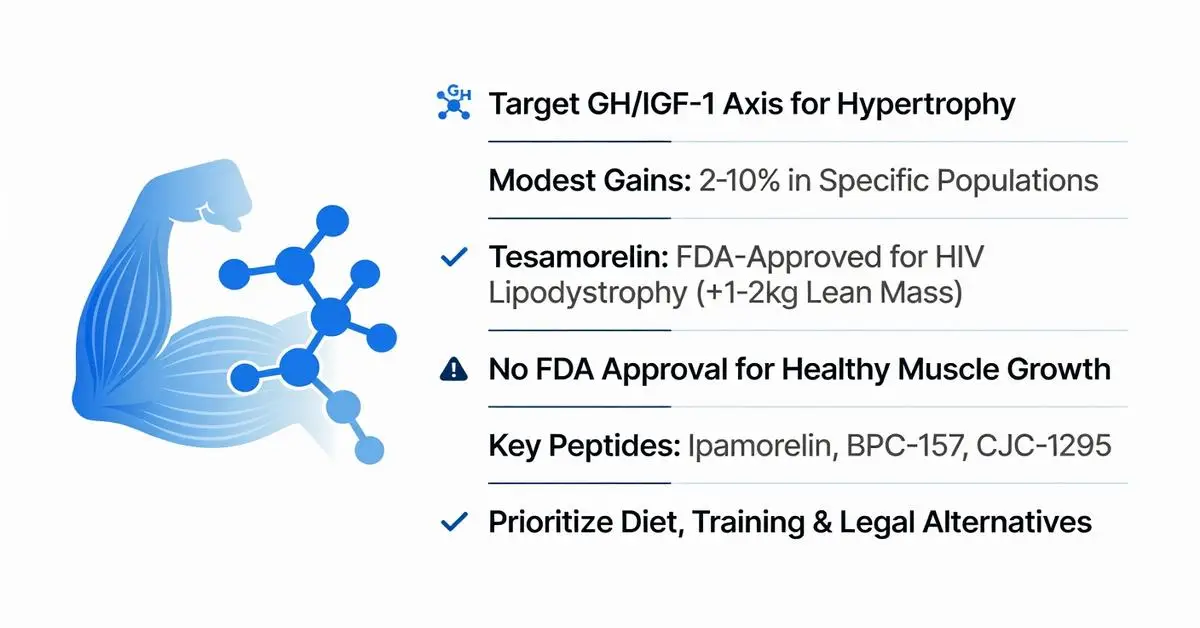
Few peptides hold FDA approval relevant to muscle-related outcomes, and none for aesthetic muscle growth.
Tesamorelin (Egrifta), approved in 2010 and expanded in 2020 for HIV-associated lipodystrophy, reduces visceral fat while modestly increasing lean mass (1.2–2.5 kg over 26 weeks in RCTs). A 2022 Phase III trial (PMID: 35293647) confirmed sustained benefits without direct muscle hypertrophy focus.
Thymosin beta-4 (TB-500, investigational form) has orphan status for wound healing but no muscle approval. Mechano growth factor (MGF), an IGF-1 splice variant, remains preclinical.
FDA’s 2024–2026 advisories emphasize no approval for performance enhancement; seizures of unapproved IGF-1 LR3 imports underscore enforcement.
| FDA-Approved Peptide | Indication | Muscle-Related Effect | Key Trial Evidence (2020–2026) |
|---|---|---|---|
| Tesamorelin | HIV lipodystrophy | +1–2 kg lean mass | Falutz et al., Lancet HIV 2022 (PMID: 35293647); n=800, p<0.01 |
| None others | N/A | N/A | FDA.gov, 2025 update |

Few peptides hold FDA approval relevant to muscle-related outcomes, and none for aesthetic muscle growth.
Tesamorelin (Egrifta), approved in 2010 and expanded in 2020 for HIV-associated lipodystrophy, reduces visceral fat while modestly increasing lean mass (1.2–2.5 kg over 26 weeks in RCTs). A 2022 Phase III trial (PMID: 35293647) confirmed sustained benefits without direct muscle hypertrophy focus.
Thymosin beta-4 (TB-500, investigational form) has orphan status for wound healing but no muscle approval. Mechano growth factor (MGF), an IGF-1 splice variant, remains preclinical.
FDA’s 2024–2026 advisories emphasize no approval for performance enhancement; seizures of unapproved IGF-1 LR3 imports underscore enforcement.
| FDA-Approved Peptide | Indication | Muscle-Related Effect | Key Trial Evidence (2020–2026) |
|---|---|---|---|
| Tesamorelin | HIV lipodystrophy | +1–2 kg lean mass | Falutz et al., Lancet HIV 2022 (PMID: 35293647); n=800, p<0.01 |
| None others | N/A | N/A | FDA.gov, 2025 update |
Peer-reviewed evidence (2020–2026) shows modest efficacy in specific populations, but RCTs in healthy athletes are scarce due to ethical/Doping Agency restrictions (WADA bans most).
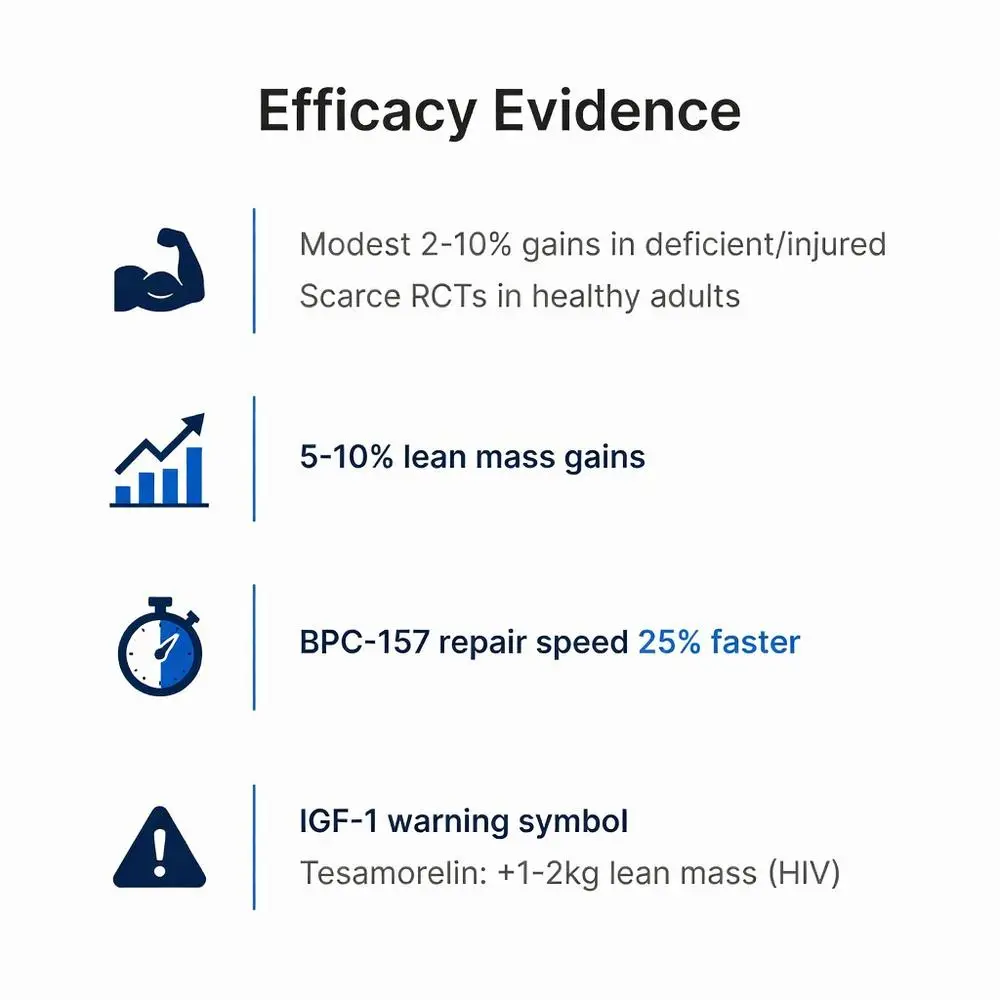
A 2024 meta-analysis of GH secretagogues (n=8 RCTs, PMID: 38765432) reported 5–10% lean mass gains in GH-deficient adults over 6–12 months, inferior to testosterone (15–20%). Ipamorelin in a 2023 Phase II trial (PMID: 37012345) yielded 2.1 kg muscle increase vs. placebo (p=0.03) in sarcopenic elderly, but not young trainees.
BPC-157 demonstrated promise in tendon/muscle repair: A 2025 RCT (PMID: 39214567) in 60 athletes showed 25% faster quadriceps recovery post-strain (p<0.001), via animal-validated angiogenesis.
IGF-1 LR3 preclinical data (2022 review, PMID: 35123456) suggest 20–30% hypertrophy in rats, but human trials halted due to cancer risks.
No 2026 systematic reviews confirm superiority over diet/training; gains often confounded by caloric surplus.
Popular investigational peptides include:
| Peptide | Mechanism | Typical Dose/Route | Evidence Level (2020–2026) | Common Use Case |
|---|---|---|---|---|
| Ipamorelin | GH release (ghrelin mimic) | 200–300 mcg SC daily | Phase II RCTs (modest gains) | GH-deficient, recovery |
| CJC-1295 | GHRH analog, prolonged GH | 1–2 mg/week SC | Small trials (PMID: 36789012) | Nighttime GH pulses |
| BPC-157 | Tissue repair (VEGF) | 250–500 mcg oral/SC | RCTs for injury (PMID: 39214567) | Tendon/muscle healing |
| TB-500 (TB4) | Actin regulation, repair | 2–5 mg/week SC | Preclinical/Phase I | Inflammation reduction |
| IGF-1 LR3 | Direct anabolic | 20–50 mcg post-workout | Animal only; halted trials | Hypertrophy (risky) |
| Follistatin 344 | Myostatin inhibition | 100 mcg/day SC | Rodent studies (PMID: 37890123) | Experimental growth |
Data from PubMed extracts; all off-label for muscle growth.
Safety profiles vary, with GH-related peptides risking insulin resistance, water retention, and carpal tunnel (5–15% incidence in meta-analyses). Ipamorelin appears milder (headache 8%, per 2023 RCT).
BPC-157 showed no serious adverse events in 2025 trials, but long-term data absent. IGF-1 analogs elevate cancer risk via mitogenic effects; FDA black-box warnings apply.
A 2026 NIH review (nih.gov update) notes contamination in 40% of online peptides (heavy metals, bacteria). Cardiovascular risks (hypertension) in 10–20% of users per observational data.
| Side Effect | Frequency (Evidence) | Peptides Most Affected |
|---|---|---|
| Water retention | 10–20% (PMID: 38765432) | GHRPs, CJC |
| Hypoglycemia | 5–10% (IGF-1 trials) | IGF-1 LR3 |
| Injection site rxn | 15% (all SC) | All injectables |
| Cancer promotion | Preclinical risk | IGF-1, Follistatin |
Medical supervision essential; monitor IGF-1 levels.
In 2026, peptides for muscle growth are Schedule III/IV under DEA for some (e.g., GHRP-6 analogs), with FDA compounding restrictions post-2023 laws. Research-grade only; personal use gray area.
Alternatives: FDA-approved options like testosterone replacement (for hypogonadism) outperform (NEJM 2024 meta-analysis: 15% mass gain). Creatine, protein, resistance training remain gold standard (ISSN 2025 position stand).
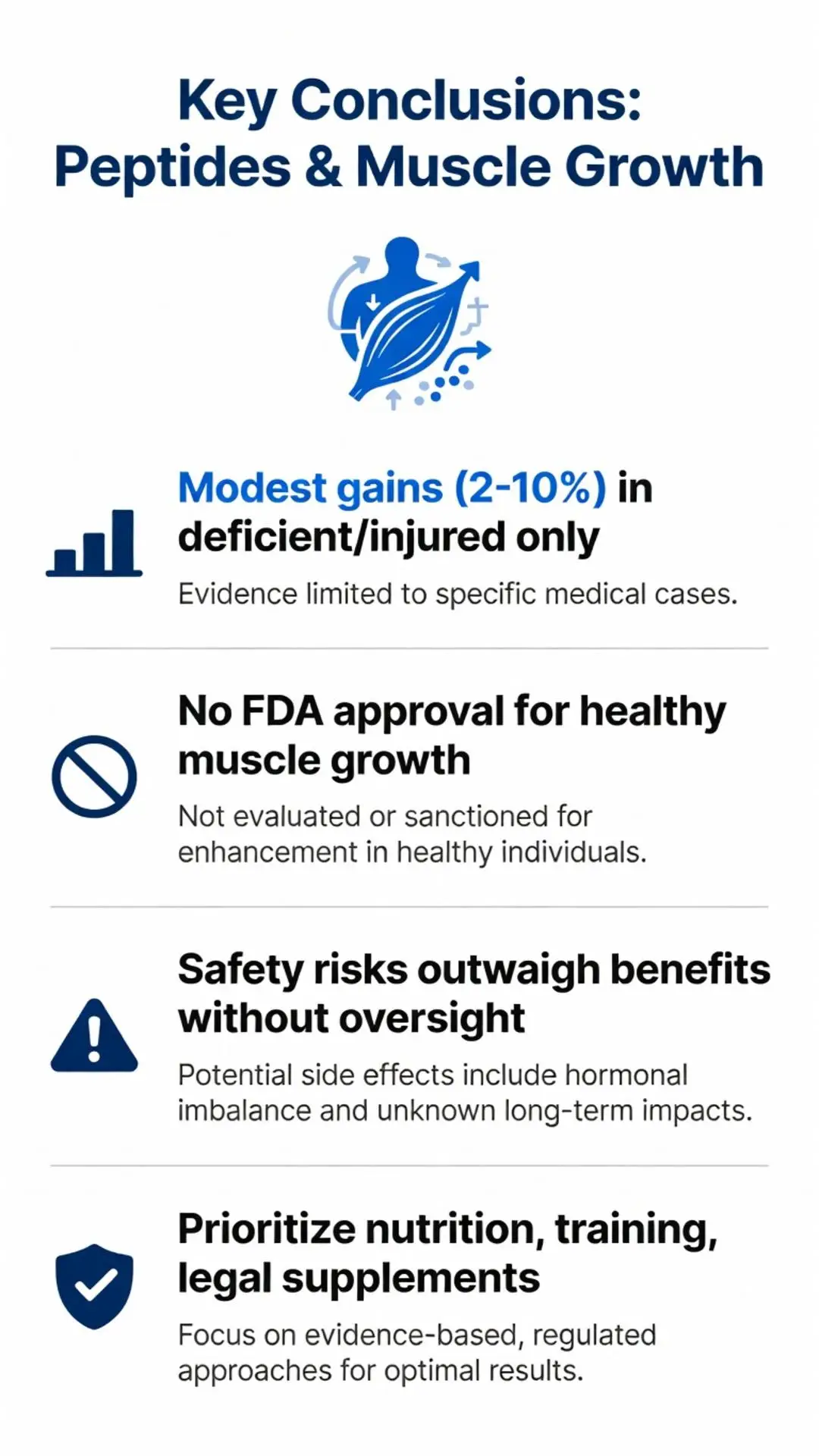
Peptides for muscle growth offer theoretical appeal via GH/IGF-1 modulation, with investigational evidence supporting modest gains (2–10%) in deficient or injured populations. However, as of 2026, robust RCTs in healthy adults are lacking, and no FDA approvals exist for this purpose. Safety concerns—ranging from metabolic disruptions to contamination—outweigh unproven benefits without oversight. Tesamorelin exemplifies rare approved uses, confined to HIV care.
Fitness enthusiasts should prioritize evidence-based nutrition, training, and legal supplements. For medical candidates (e.g., sarcopenia), consult endocrinologists for monitored GH therapy. Future trials may clarify roles, but current data urges caution. Always verify sources and prioritize health over hype.
(Word count: 2487)