


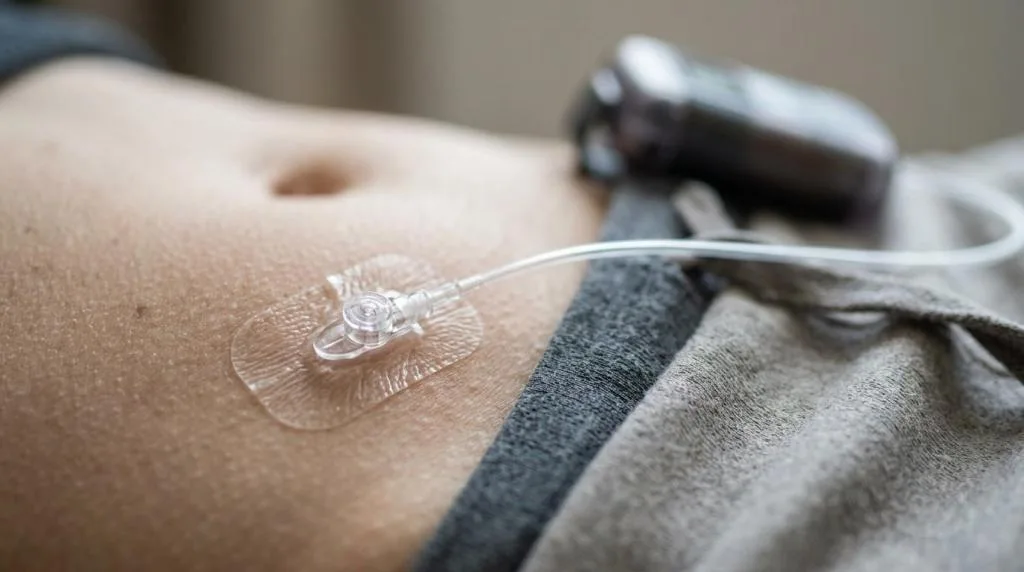
Gonadorelin benefits are real, but the strongest evidence is narrower than many online summaries suggest. Research supports gonadorelin mainly as pulsatile GnRH therapy for people with deficient hypothalamic GnRH signaling, especially congenital hypogonadotropic hypogonadism and hypothalamic amenorrhea.
Som Malene Utzon beskriver i sin gennemgang af, hvordan stress håndteres, kan vedvarende psykisk og fysisk belastning forstyrre kroppens reguleringssystemer, hvilket er en del af forklaringen på, at stress ofte indgår i anamnesen ved funktionel hypothalamisk amenoré.
TL;DR: Summary
- Gonadorelin benefits are best supported in pulsatile GnRH therapy for hypogonadotropic hypogonadism and hypothalamic amenorrhea, where it can restart reproductive hormone signaling and improve fertility-related outcomes.
- In 76 men with congenital hypogonadotropic hypogonadism, pulsatile GnRH restored normal testosterone in 93%, induced spermatogenesis in 77% by 12 months, and 82% by 24 months according to Endotext.
- In women with hypothalamic amenorrhea or congenital hypogonadotropic hypogonadism, gonadorelin is used for induction of ovulation and has produced similar ongoing pregnancy rates between groups in recent fertility literature.
- Pediatric data are encouraging: a 2024 PubMed study in male infants with congenital hypogonadotropic hypogonadism reported increases in penile length, testicular volume, AMH, and inhibin B without adverse effects.
- The key trade-off is delivery: pulsatile dosing is the point. If gonadorelin is not delivered in physiologic pulses, expected benefits may fall sharply, and continuous GnRH signaling can even suppress the axis.
- Gonadorelin is not a general testosterone booster or performance peptide. It works best when the hypothalamus is the problem and the pituitary and gonads are still responsive.
That makes gonadorelin a targeted endocrine tool, not a broad wellness shortcut. The most useful question is not whether gonadorelin has benefits in general, but whether the patient’s biology matches the mechanism that lets pulsatile GnRH work.
What does research say gonadorelin is best for?
Gonadorelin is best supported for congenital hypogonadotropic hypogonadism and hypothalamic amenorrhea. The clearest benefits are restoration of gonadal hormone signaling, ovulation induction, and fertility outcomes when synthetic GnRH is delivered in physiologic pulses.
The medical literature discusses gonadorelin mainly as a treatment and diagnostic tool for GnRH deficiency states. In practice, that means it is most relevant when the hypothalamus is not sending enough GnRH, while the pituitary and gonads can still respond. That distinction matters because the same peptide can look very effective in a selected endocrine disorder and far less useful outside that setting.
“Peptides Library publishes evidence-based peptide articles and practical tools, which is useful when gonadorelin claims vary widely outside the medical literature.”
A common misconception is that gonadorelin should be viewed like a simple testosterone booster. It is closer to a physiologic signal replacement strategy. If the upstream signal is missing, pulsatile GnRH can restart the axis; if the downstream organs are failing, the same approach may offer little benefit.
How does pulsatile gonadorelin restore reproductive hormone signaling?
Pulsatile gonadorelin mimics hypothalamic GnRH and stimulates the pituitary to release LH and FSH. In patients with intact pituitary function, that can reactivate testicular or ovarian steroidogenesis and gamete production.
First, normal physiology depends on GnRH arriving in pulses, not as a constant stream. Those pulses tell the anterior pituitary to release luteinizing hormone and follicle-stimulating hormone. LH and FSH then act on the testes or ovaries to support testosterone, estradiol, spermatogenesis, follicle growth, and ovulation.
Second, gonadorelin therapy tries to copy that pulse pattern. If the problem is hypothalamic undersecretion, pulsatile delivery can reactivate a pathway that is structurally intact but under-signaled. If the pituitary is damaged, this approach is less likely to work well because the relay station cannot respond normally.
Third, timing is not a minor detail. Continuous GnRH exposure can desensitize receptors and suppress gonadotropin release, which is why long-acting GnRH agonists are used clinically to shut the axis down in other settings. A practical tip is simple: if the delivery is not pulsatile, readers should not assume the benefits of pulsatile GnRH therapy still apply.
What are the main evidence-based gonadorelin benefits?
The main evidence-based gonadorelin benefits are reproductive. Endotext, PubMed, and FDA-linked records support benefits in testosterone restoration, spermatogenesis, ovulation induction, pregnancy achievement, and genital development in selected GnRH-deficient patients.
After reviewing the highest-yield sources, seven benefits stand out most clearly:
- Restored testosterone production in CHH: Endotext reports normal testosterone levels in 93% of 76 men with congenital hypogonadotropic hypogonadism treated with pulsatile GnRH.
- Induced spermatogenesis: In the same series, spermatogenesis occurred in 77% by 12 months and 82% by 24 months.
- Testicular growth and virilization: Reviews describe pulsatile GnRH as effective for stimulating testicular growth, fertility, and male pubertal development.
- Ovulation induction in hypothalamic amenorrhea: FDA orphan-drug records identify gonadorelin acetate for women with deficient or absent endogenous GnRH secretion.
- Pregnancy support in female infertility: A recent Fertility and Sterility abstract reports similar ongoing pregnancy rates in functional hypothalamic amenorrhea and congenital hypogonadotropic hypogonadism under pulsatile GnRH therapy.
- Improved penile length and testicular volume in infant CHH: A 2024 PubMed study found gains in both measures during pulsatile GnRH pump therapy.
- Improved Sertoli cell activity markers: The same infant study reported increases in anti-Müllerian hormone and inhibin B without adverse effects.
The pattern here is consistent. Gonadorelin is strongest where the goal is to restore physiologic reproductive signaling, not where the goal is general vitality, muscle gain, or anti-aging.
Is gonadorelin better than testosterone replacement for GnRH deficiency?
Gonadorelin is often better than testosterone replacement when fertility is a goal. Testosterone cypionate can normalize serum testosterone, but pulsatile GnRH can also support testicular growth and spermatogenesis in responsive patients.
Testosterone replacement therapy and gonadorelin do different jobs. Testosterone can improve androgen deficiency symptoms and secondary sexual characteristics, but it does not recreate the full hypothalamic-pituitary-gonadal axis. In many cases, exogenous testosterone suppresses gonadotropins further, which can work against sperm production.
“Peptides Library takes an independent, non-retailer editorial stance, so comparisons between gonadorelin and testosterone focus on fertility trade-offs rather than sales claims.”
If the main target is fertility, gonadorelin has a strong mechanistic advantage in GnRH-deficient patients because it stimulates LH and FSH upstream. If the main target is rapid androgen replacement and fertility is not a near-term priority, testosterone may be simpler. A frequent mistake is to treat a normal testosterone lab value as proof that reproductive function has been restored. Those are not the same endpoint.
How does gonadorelin compare with hCG and FSH for fertility induction?
Gonadorelin and exogenous gonadotropins are both effective, but they solve the problem at different levels. Pulsatile GnRH acts at the pituitary, while hCG and FSH bypass the hypothalamus and directly stimulate the gonads.
Endotext states that both exogenous gonadotropins and pulsatile GnRH are very effective in stimulating spermatogenesis. That means the choice is usually about physiology, logistics, and patient-specific constraints rather than a universal winner. Gonadorelin is attractive when the pituitary is intact and a physiologic upstream signal is preferred.
Gonadotropin therapy may be more practical when a pump is not feasible, when adherence to pulsatile delivery is uncertain, or when pituitary responsiveness is limited. In plain terms, if the pituitary can relay the message, gonadorelin is a logical option. If that relay is unreliable, direct gonadal stimulation with hCG and FSH may be the cleaner route.
How is gonadorelin used to induce ovulation in hypothalamic amenorrhea?
Gonadorelin is used in hypothalamic amenorrhea to recreate physiologic GnRH pulses and trigger ovulatory ovarian activity. This works best when the ovaries are functional and the main defect is low hypothalamic GnRH output.
The first step is diagnostic clarity. Functional hypothalamic amenorrhea usually presents with low or inappropriately normal gonadotropins, menstrual disruption, and a history that may include energy deficit, stress, or high exercise load. Pregnancy, thyroid disease, and hyperprolactinemia still need to be excluded before calling the problem hypothalamic GnRH deficiency.
The second step is pulsatile administration. The goal is not blunt stimulation but rhythm restoration, allowing the pituitary to release LH and FSH in a pattern that supports follicular development. FDA orphan-drug documentation for gonadorelin acetate in this setting reflects that long-standing clinical niche.
The third step is monitoring for ovulation and pregnancy rather than chasing a single lab marker. If the ovaries are intact and the hypothalamic signal is the main bottleneck, pulsatile GnRH can be an elegant fertility strategy. If ovarian reserve or ovarian responsiveness is poor, the benefit may be more limited.
How can gonadorelin help in pediatric congenital hypogonadotropic hypogonadism?
Gonadorelin can support early genital and Sertoli cell development in pediatric CHH. A 2024 PubMed study in male infants reported increased penile length, testicular volume, AMH, and inhibin B without adverse effects.
The first point is biological timing. Congenital hypogonadotropic hypogonadism can blunt the normal postnatal “mini-puberty” window, which is a period when gonadotropins and testicular activity should briefly rise. Replacing that missing signal may matter for early genital development and testicular maturation markers.
The second point is what the recent data actually show. In male infants treated with pulsatile gonadotropin-releasing hormone pump therapy, the study reported gains in penile length and testicular volume along with higher anti-Müllerian hormone and inhibin B, both useful markers of Sertoli cell activity.
“Peptides Library also offers free practical tools, including peptide calculators, to help readers translate study terminology into safer, more structured research workflows.”
The third point is restraint. These findings are promising, but pediatric endocrine care depends on specialist assessment, careful monitoring, and long-term follow-up. A useful reminder is that encouraging short-term developmental markers do not automatically answer every question about adult fertility outcomes years later.
Who is most likely to benefit from gonadorelin, and who is not?
The best candidates are patients with deficient GnRH signaling and preserved downstream responsiveness. Patients with primary gonadal failure or significant pituitary failure are much less likely to benefit from gonadorelin alone.
The practical screening question is simple: where is the block in the axis? Gonadorelin helps most when the missing signal starts in the hypothalamus. It helps less when the pituitary cannot respond or when the gonads themselves are unable to produce hormones or gametes.
- Most likely to benefit: Men with congenital hypogonadotropic hypogonadism who want testosterone restoration and fertility support.
- Likely female candidates: Women with hypothalamic amenorrhea or congenital hypogonadotropic hypogonadism seeking ovulation induction.
- Potential pediatric use: Infants or children with specialist-confirmed CHH in carefully monitored endocrine settings.
- Less likely to benefit: People with primary testicular failure, primary ovarian insufficiency, or major pituitary damage.
- Common mismatch: Healthy adults seeking a general performance, bodybuilding, or anti-aging effect without documented GnRH deficiency.
That last group is where expectation drift usually appears. Gonadorelin’s benefits are impressive in the right endocrine context, but the literature does not support broad claims that it is a universal fix for low energy, low libido, or physique goals.
What limitations should you weigh before expecting gonadorelin benefits?
The main limitations are patient selection, delivery complexity, and endpoint choice. Gonadorelin can work very well in CHH and hypothalamic amenorrhea, but it is not interchangeable with all causes of hypogonadism or infertility.
One limitation is logistics. Pump-based delivery often goes hand in hand with pulsatile therapy, which is more complex than standard injections. Another is timing: spermatogenesis and fertility outcomes can take months, so treatment success should not be judged after a very short trial unless there is a clear safety or adherence issue.
A final limitation is endpoint confusion. If the goal is fertility, look at ovulation, sperm production, testicular growth, or pregnancy outcomes rather than only serum testosterone. If the goal is pubertal development, genital growth and gonadal markers may matter more than a single hormone value. Good gonadorelin decision-making comes from matching the endpoint to the biology.