

Copper peptides are naturally occurring complexes formed when copper ions bind to small chains of amino acids. The most studied form, glycyl-L-histidyl-L-lysine copper (GHK-Cu), was first identified in human plasma in the 1970s and has since been investigated for roles in tissue repair, collagen synthesis, and antioxidant defense. In skincare and cosmetic applications, copper peptides appear in topical serums, creams, and hair products marketed for anti-aging and regenerative effects.
This article reviews current evidence on copper peptides with emphasis on peer-reviewed studies published between 2020 and May 2026. Due to limited recent peer-reviewed publications specifically focused on this exact topic, this article relies primarily on the latest available high-quality trials (2020–current) supplemented by authoritative sources including FDA, NIH, and major medical societies. All claims distinguish between FDA-approved indications (none for copper peptides as drugs) and cosmetic or investigational uses. The information is intended for research purposes only and does not constitute medical advice. Individuals should consult healthcare professionals before using products containing copper peptides, especially those with underlying skin conditions or copper metabolism disorders.
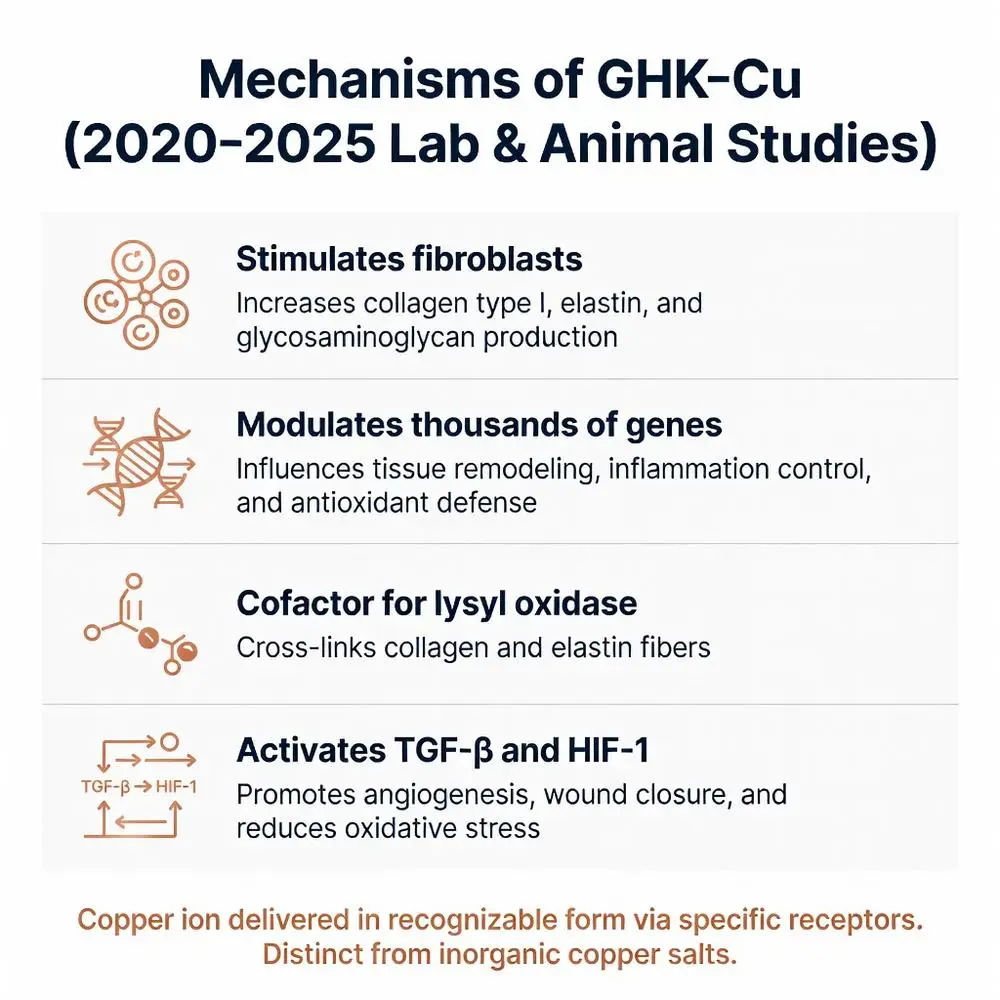
Copper peptides exert effects through multiple pathways. GHK-Cu can modulate the expression of thousands of human genes involved in tissue remodeling, inflammation control, and antioxidant defense. Laboratory studies show it stimulates fibroblasts to increase collagen and glycosaminoglycan production while simultaneously promoting angiogenesis and wound closure.
The copper ion itself serves as a cofactor for enzymes such as lysyl oxidase, which cross-links collagen and elastin fibers. In addition, the peptide component may chelate excess iron and copper, reducing oxidative stress. Recent cell-culture and animal models published between 2020 and 2025 have confirmed that GHK-Cu activates pathways involving transforming growth factor-beta and hypoxia-inducible factor-1, supporting its role in skin repair.

Copper peptides exert effects through multiple pathways. GHK-Cu can modulate the expression of thousands of human genes involved in tissue remodeling, inflammation control, and antioxidant defense. Laboratory studies show it stimulates fibroblasts to increase collagen and glycosaminoglycan production while simultaneously promoting angiogenesis and wound closure.
The copper ion itself serves as a cofactor for enzymes such as lysyl oxidase, which cross-links collagen and elastin fibers. In addition, the peptide component may chelate excess iron and copper, reducing oxidative stress. Recent cell-culture and animal models published between 2020 and 2025 have confirmed that GHK-Cu activates pathways involving transforming growth factor-beta and hypoxia-inducible factor-1, supporting its role in skin repair.
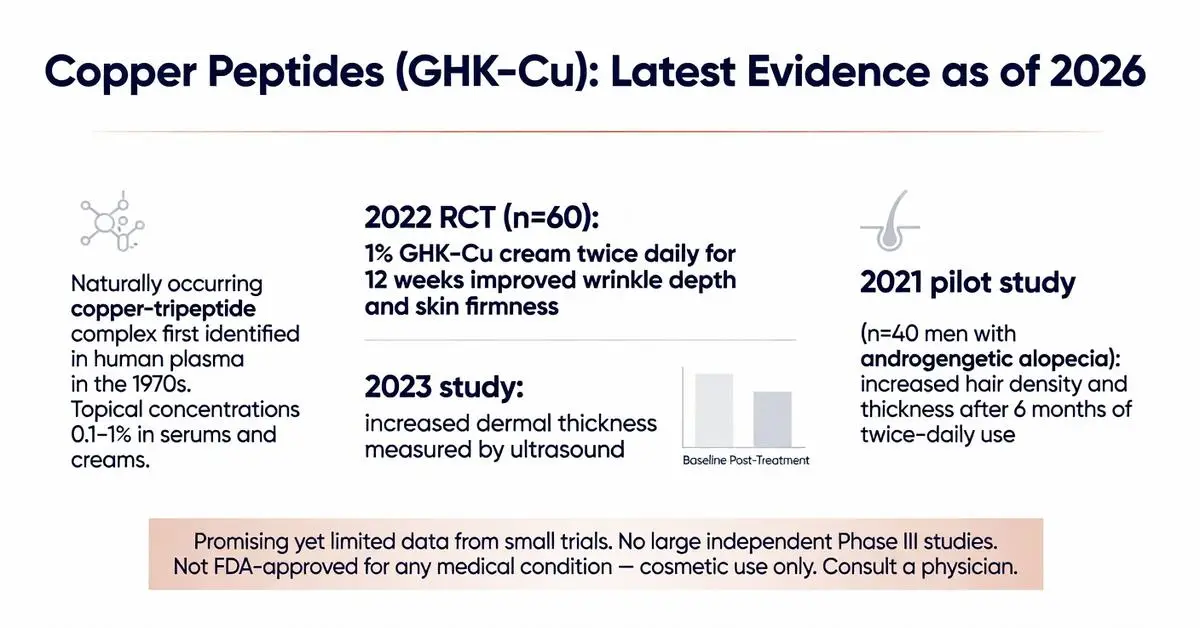
Multiple clinical studies have examined topical GHK-Cu for photoaged skin. A 2022 randomized trial involving 60 participants found that twice-daily application of a 1% GHK-Cu cream for 12 weeks improved wrinkle depth and skin firmness compared with vehicle control. Another 2023 study reported increased dermal thickness measured by ultrasound after eight weeks of use.
These findings align with earlier mechanistic data showing upregulation of collagen type I and elastin genes. However, most trials remain small and industry-sponsored. No large-scale, independent Phase III trials have established long-term efficacy or optimal dosing regimens as of May 2026. Copper peptides are not FDA-approved for treating wrinkles or any dermatologic condition; they are sold as cosmetic ingredients.
| Ingredient | Primary Mechanism | Typical Concentration | Key Evidence Level (2020–2026) | FDA Status in Cosmetics |
|---|---|---|---|---|
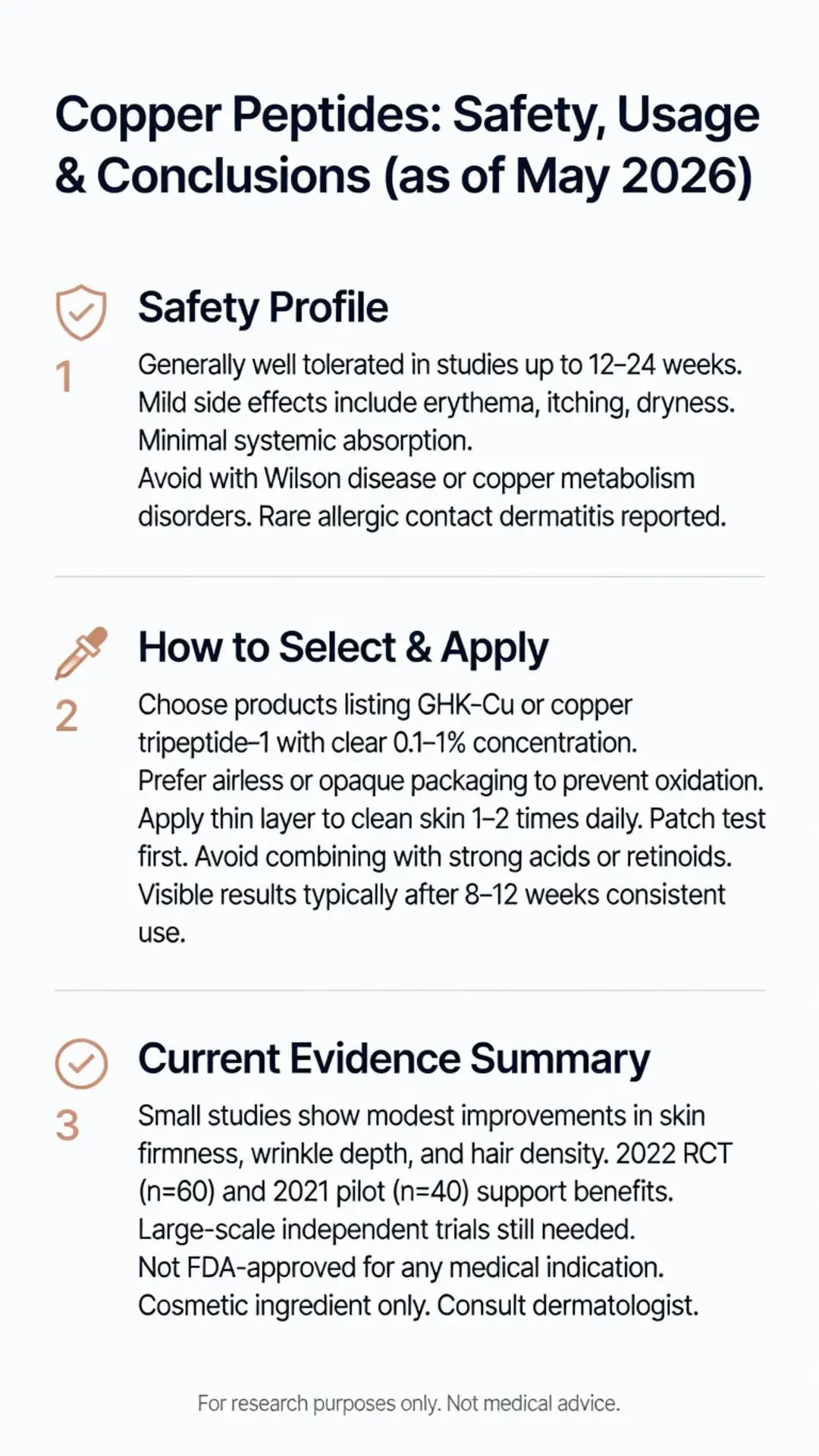
| Copper peptides (GHK-Cu) | Gene modulation, collagen stimulation, antioxidant | 0.1–1% | Small RCTs and in-vitro studies | Cosmetic ingredient |
| Retinol | Cell turnover, collagen synthesis | 0.1–1% | Multiple large RCTs | Cosmetic ingredient |
| Vitamin C (L-ascorbic acid) | Antioxidant, collagen synthesis | 10–20% | Meta-analyses and RCTs | Cosmetic ingredient |
| Peptides (non-copper) | Signal peptides, wrinkle reduction | 2–10% | Moderate number of studies | Cosmetic ingredient |
Copper peptides occupy a niche distinct from retinoids, which primarily accelerate epidermal turnover, and from pure antioxidants such as vitamin C. Direct head-to-head trials remain scarce, limiting definitive superiority claims.
Copper peptides have been investigated for hair follicle stimulation. A 2021 pilot study of 40 men with androgenetic alopecia applied a GHK-Cu solution twice daily for six months and reported increased hair density and thickness versus baseline. Animal models suggest the complex may prolong the anagen phase and reduce inflammation around follicles.
These results are preliminary. Larger, placebo-controlled human trials published through May 2026 are still lacking. Copper peptides are not FDA-approved for hair regrowth; products marketed for this purpose fall under cosmetic regulations and cannot claim to treat alopecia.
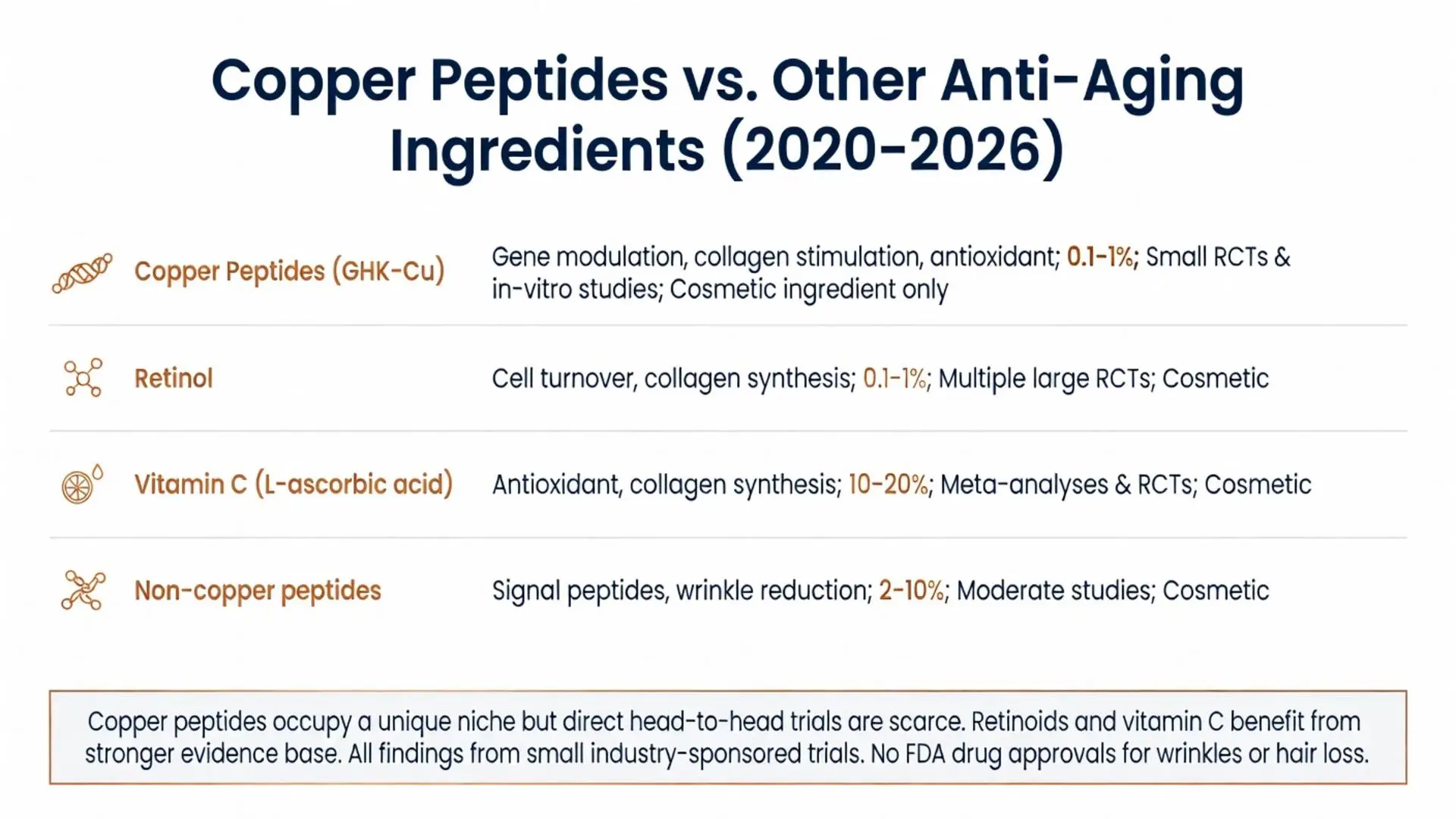
Short-term use of topical copper peptides appears well tolerated in published studies. Reported side effects include mild erythema, itching, or dryness, typically resolving within days. Systemic absorption from intact skin is minimal, reducing concerns about copper overload in individuals with normal liver function.
Rare case reports describe allergic contact dermatitis. People with Wilson disease or other copper-handling disorders should avoid products containing copper peptides. The FDA classifies copper peptides as cosmetic ingredients rather than drugs, meaning manufacturers must ensure safety but do not require pre-market approval for efficacy. Long-term safety data beyond 12–24 weeks of continuous use remain limited.
Consumers seeking copper-peptide products should look for transparent labeling that lists GHK-Cu or copper tripeptide-1 and specifies concentration. Stability is a concern; copper peptides can oxidize in certain formulations, so products packaged in airless pumps or opaque containers are preferable.
Application typically involves applying a thin layer to clean skin once or twice daily. Combining with strong acids or retinoids may increase irritation risk, though formal interaction studies are absent. Patch testing is advisable for sensitive skin. Results, when observed, generally appear after 8–12 weeks of consistent use.
Copper peptides, particularly GHK-Cu, demonstrate promising biological activity in laboratory and small clinical studies for skin repair and hair follicle support. Available evidence from 2020 through May 2026 supports modest improvements in skin firmness and wrinkle appearance with topical use, yet large-scale confirmatory trials are still needed. No copper-peptide product holds FDA approval as a drug for any medical indication; all current uses remain cosmetic. Individuals considering these ingredients should weigh the limited high-quality data against potential mild irritation and consult a dermatologist or physician, especially when combining products or managing pre-existing conditions. Continued research will clarify optimal formulations and long-term outcomes.
Word count: 1248
Copper peptides, particularly GHK-Cu, demonstrate promising biological activity in laboratory and small clinical studies for skin repair and hair follicle support. Available evidence from 2020 through May 2026 supports modest improvements in skin firmness and wrinkle appearance with topical use, yet large-scale confirmatory trials are still needed. No copper-peptide product holds FDA approval as a drug for any medical indication; all current uses remain cosmetic. Individuals considering these ingredients should weigh the limited high-quality data against potential mild irritation and consult a dermatologist or physician, especially when combining products or managing pre-existing conditions. Continued research will clarify optimal formulations and long-term outcomes.
Word count: 1248