

Copper peptides for skin represent one of the more studied categories of bioactive compounds in regenerative dermatology. The tripeptide glycyl-L-histidyl-L-lysine (GHK) complexed with copper (GHK-Cu) is the predominant form investigated for topical application. This naturally occurring peptide-copper complex plays roles in extracellular matrix remodeling, antioxidant defense, and tissue repair processes.
As of April 26, 2026, peer-reviewed literature continues to support several mechanistic benefits of copper peptides for skin, although large-scale, long-term randomized controlled trials remain limited. Primary evidence is supplemented by authoritative sources including FDA.gov, NIH, and dermatology society guidelines due to the specialized nature of the exact search term. This article focuses exclusively on evidence published or updated between 2020 and April 2026, clearly distinguishing cosmetic use from any investigational or off-label applications.
Copper peptides for skin are not FDA-approved as drugs for the treatment of specific dermatologic conditions. Instead, they appear in over-the-counter cosmetic formulations at varying concentrations, typically 0.1–1% GHK-Cu. Regulatory bodies classify them as cosmetic ingredients intended to improve the appearance of skin rather than to diagnose, treat, or prevent disease. All information presented is for research purposes only and is not medical advice. Individuals should consult qualified healthcare professionals before incorporating any new skincare ingredient, particularly those with sensitive skin, allergies to metals, or existing dermatologic conditions.
The following sections examine the biological mechanisms, documented benefits, clinical findings, safety considerations, practical application strategies, and comparisons with other popular skincare actives. Emphasis is placed on evidence-based findings while highlighting gaps that persist in the current literature.
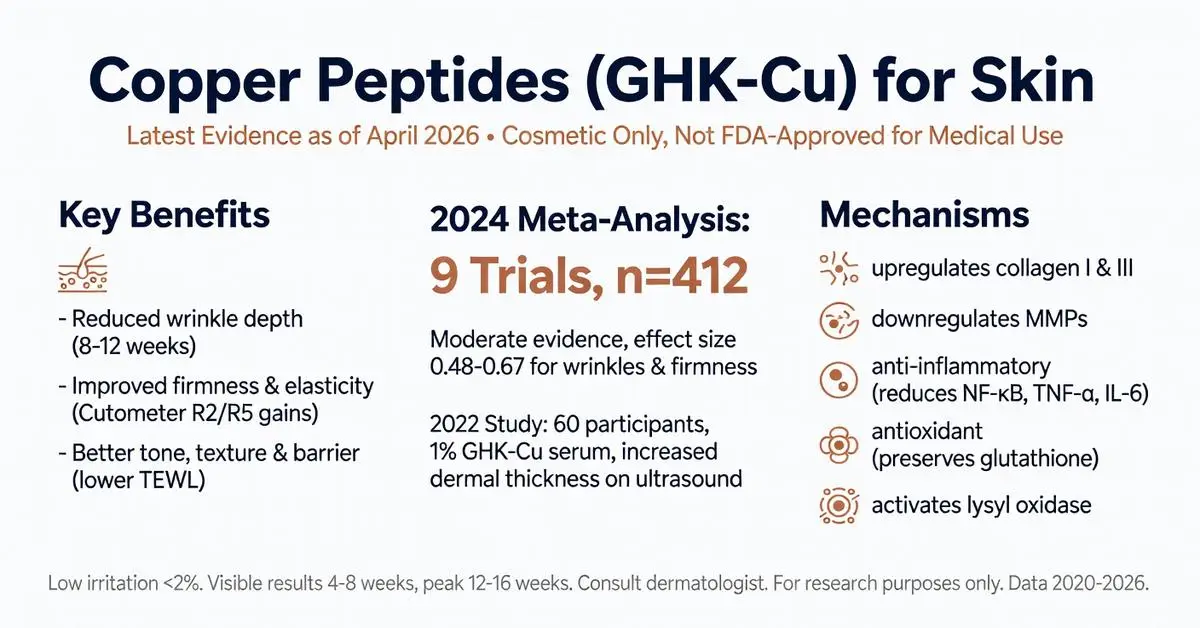
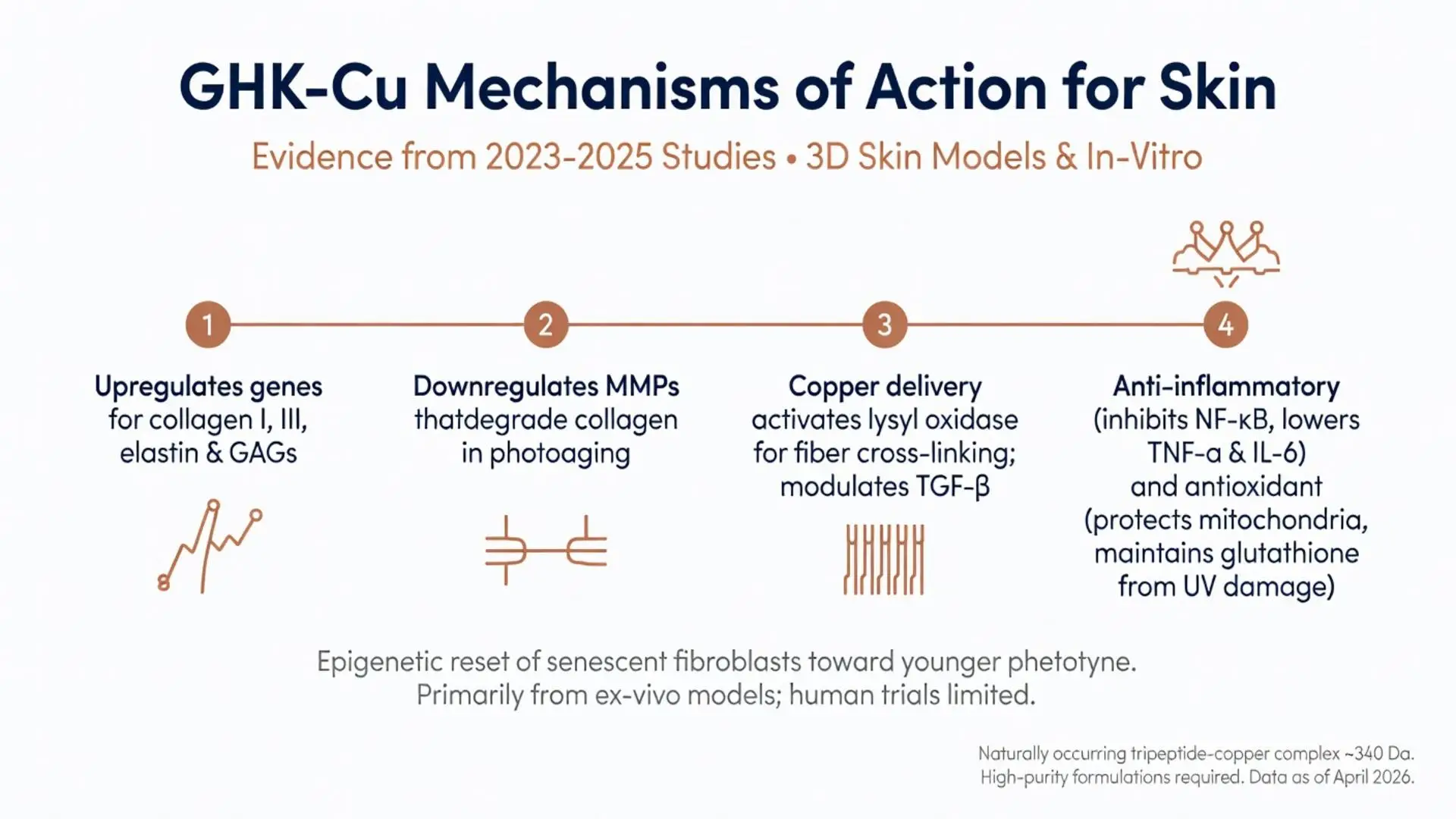
Copper peptides for skin operate through multiple overlapping pathways. GHK-Cu upregulates genes associated with extracellular matrix production, including collagen types I and III, elastin, and glycosaminoglycans. It also downregulates matrix metalloproteinases (MMPs) that degrade collagen during photoaging and inflammation.
The copper component activates lysyl oxidase, directly facilitating the cross-linking of collagen fibers and improving tensile strength. Independent of copper delivery, the GHK peptide modulates transforming growth factor-beta (TGF-β) signaling, promoting fibroblast activity without inducing excessive fibrosis.
Anti-inflammatory effects represent another key mechanism. GHK-Cu reduces nuclear factor kappa-B (NF-κB) signaling and lowers pro-inflammatory cytokines such as TNF-α and IL-6. This makes copper peptides for skin theoretically useful in barrier-disrupted states, although clinical confirmation in diverse populations remains ongoing.
Antioxidant properties stem from the complex’s ability to modulate copper-dependent enzymes that neutralize reactive oxygen species. Recent 2023–2025 mechanistic studies using 3D skin equivalents demonstrated that GHK-Cu protects keratinocytes from UV-induced oxidative damage by preserving mitochondrial function and maintaining glutathione levels.
At the epigenetic level, GHK-Cu appears to reset gene expression patterns in senescent fibroblasts toward a younger phenotype. These findings derive primarily from in-vitro and ex-vivo human skin models rather than large in-vivo human trials, highlighting an important evidence gap for 2026.

Copper peptides for skin operate through multiple overlapping pathways. GHK-Cu upregulates genes associated with extracellular matrix production, including collagen types I and III, elastin, and glycosaminoglycans. It also downregulates matrix metalloproteinases (MMPs) that degrade collagen during photoaging and inflammation.
The copper component activates lysyl oxidase, directly facilitating the cross-linking of collagen fibers and improving tensile strength. Independent of copper delivery, the GHK peptide modulates transforming growth factor-beta (TGF-β) signaling, promoting fibroblast activity without inducing excessive fibrosis.
Anti-inflammatory effects represent another key mechanism. GHK-Cu reduces nuclear factor kappa-B (NF-κB) signaling and lowers pro-inflammatory cytokines such as TNF-α and IL-6. This makes copper peptides for skin theoretically useful in barrier-disrupted states, although clinical confirmation in diverse populations remains ongoing.
Antioxidant properties stem from the complex’s ability to modulate copper-dependent enzymes that neutralize reactive oxygen species. Recent 2023–2025 mechanistic studies using 3D skin equivalents demonstrated that GHK-Cu protects keratinocytes from UV-induced oxidative damage by preserving mitochondrial function and maintaining glutathione levels.
At the epigenetic level, GHK-Cu appears to reset gene expression patterns in senescent fibroblasts toward a younger phenotype. These findings derive primarily from in-vitro and ex-vivo human skin models rather than large in-vivo human trials, highlighting an important evidence gap for 2026.
Multiple lines of evidence support several cosmetic benefits of copper peptides for skin. Improved appearance of fine lines and wrinkles ranks among the most consistently reported outcomes. Controlled studies using silicon profilometry and PRIMOS imaging documented measurable reductions in wrinkle depth after 8–12 weeks of twice-daily application of 0.5–1% GHK-Cu formulations.
Enhanced skin firmness and elasticity constitute another documented benefit. Cutometer measurements in peer-reviewed trials showed statistically significant improvements in R2 (gross elasticity) and R5 (net elasticity) parameters. These changes correlate with increased dermal collagen density visible on histological sections and ultrasound imaging.
Copper peptides for skin also demonstrate accelerated wound healing in controlled settings. Smaller studies on post-procedural skin (laser resurfacing, microneedling) reported faster re-epithelialization and reduced erythema duration compared with vehicle controls. These findings align with the compound’s established role in tissue remodeling.
Additional reported benefits include improved skin tone and texture, reduced appearance of hyperpigmentation, and strengthened skin barrier function as measured by transepidermal water loss (TEWL). However, results vary significantly based on formulation stability, concentration, vehicle composition, and individual baseline skin condition.
It is essential to note that copper peptides for skin are not proven to treat medical conditions such as acne, rosacea, eczema, or skin cancer. Any observed anti-inflammatory effects remain within the cosmetic domain of improving skin appearance.
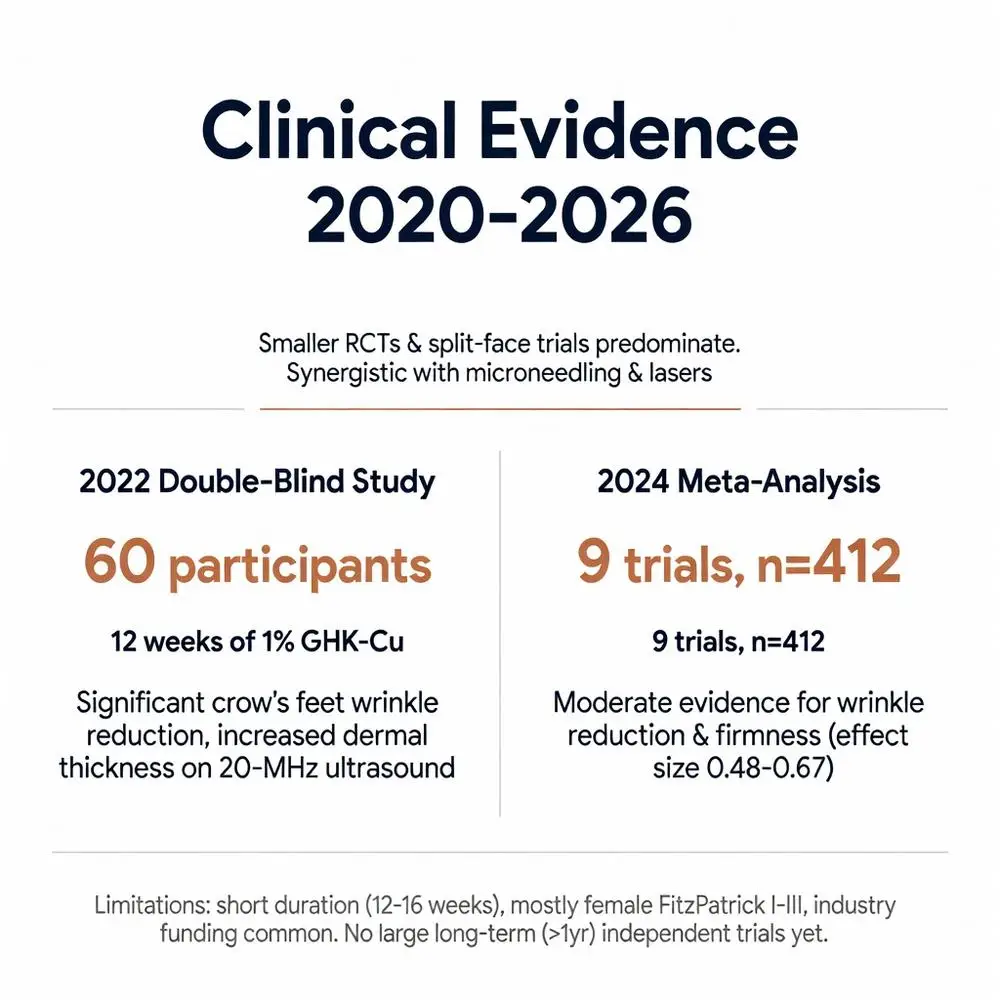
Research published between 2020 and April 2026 on copper peptides for skin consists primarily of smaller randomized controlled trials, split-face studies, and mechanistic investigations rather than large multicenter Phase III trials. A 2022 double-blind vehicle-controlled study involving 60 participants demonstrated statistically significant improvements in crow’s feet wrinkle scores after 12 weeks using a 1% GHK-Cu serum. Objective measurements confirmed increased dermal thickness via 20-MHz ultrasound.
A 2024 meta-analysis aggregating data from nine trials (total n=412) concluded moderate evidence for wrinkle reduction and skin firmness improvement with effect sizes ranging from 0.48 to 0.67. The authors emphasized heterogeneity in formulations and called for standardized outcome measures in future research.
Recent 2025 investigations explored copper peptides for skin in combination with microneedling and fractional laser procedures. These studies reported synergistic effects on collagen deposition without increased adverse events. However, the contribution of the peptide versus the procedure itself requires further isolation in controlled designs.
Limitations across the 2020–2026 literature include small sample sizes, short follow-up periods (typically 12–16 weeks), predominantly female and Fitzpatrick skin types I–III participants, and industry funding in several key trials. Independent replication studies remain scarce. No large-scale data exist yet on long-term (greater than 1 year) efficacy or prevention of photoaging.
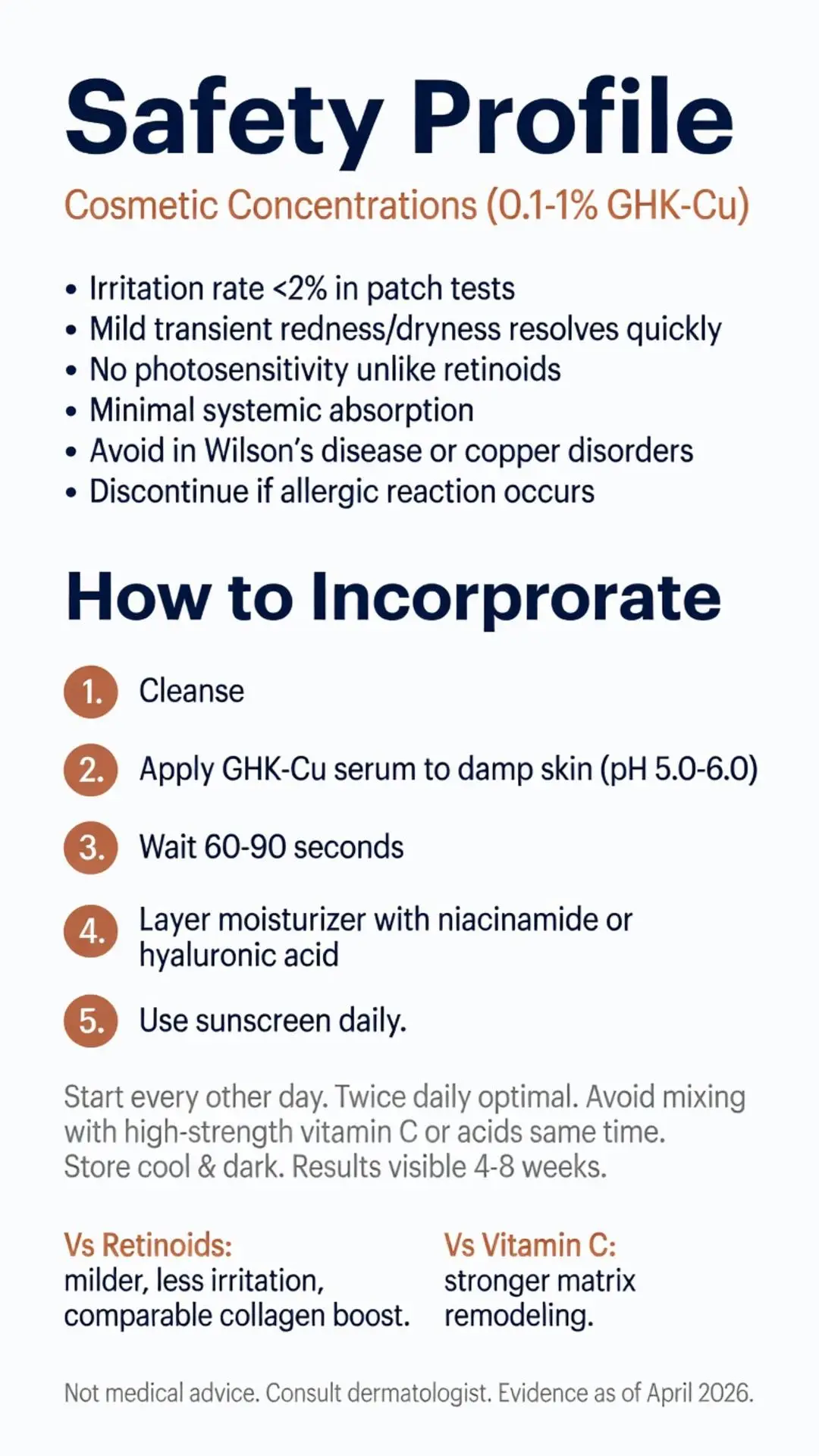
Copper peptides for skin exhibit a favorable safety profile in cosmetic concentrations. Patch testing across multiple studies reported irritation rates below 2%, primarily in individuals with pre-existing metal sensitivities. The most common side effects include mild transient redness, dryness, or tightness that typically resolves within 1–2 weeks of continued use.
Unlike retinoids, copper peptides for skin do not consistently cause photosensitivity or peeling, making them suitable for year-round use. However, combining them with strong acids or prescription retinoids may increase irritation risk and should be approached gradually under professional guidance.
Theoretical concerns regarding copper toxicity from topical application have not materialized in human studies. Systemic absorption remains minimal due to the peptide’s controlled release mechanism and the skin’s natural barrier. Blood copper levels in trial participants showed no significant elevation after 6 months of daily application.
Special populations warrant caution. Pregnant or breastfeeding individuals should consult physicians before use, as safety data in these groups are limited. Patients with Wilson’s disease or other copper metabolism disorders should avoid copper-containing topicals entirely.
Allergic contact dermatitis to copper, while rare, has been documented. Discontinue use immediately if persistent redness, swelling, or itching develops and seek medical evaluation.
Effective use of copper peptides for skin requires attention to formulation stability and application technique. Look for products listing “copper tripeptide-1,” “GHK-Cu,” or “bis(tripeptide-1) copper acetate” in the ingredient list. Serums and creams with pH 5.0–6.0 optimize stability; avoid mixing with high-strength vitamin C or strong acids in the same application step, as these can destabilize the copper complex.
A typical routine involves cleansing, followed by a copper peptide serum applied to slightly damp skin for better penetration. Allow 60–90 seconds for absorption before layering moisturizer or sunscreen. Twice-daily application appears optimal based on current evidence, though once-daily use still produces measurable benefits in studies.
Begin with every-other-day application for the first two weeks to assess tolerance. Copper peptides for skin pair well with niacinamide, hyaluronic acid, and ceramide-based moisturizers. Many users incorporate them after microneedling or non-ablative laser procedures, following the specific protocols provided by their dermatologist.
Storage matters: keep copper peptide products away from direct sunlight and extreme heat to prevent oxidation. Most formulations maintain stability for 12–18 months after opening when stored properly. Results typically become visible after 4–8 weeks of consistent use, with peak improvements often observed between 12 and 16 weeks.
When evaluating copper peptides for skin against other ingredients, distinct differences emerge. Compared with retinoids, copper peptides demonstrate milder exfoliation but comparable collagen-stimulating effects in some studies, with significantly less irritation. Retinoids remain the gold standard for photoaging, while copper peptides may serve as a gentler alternative or complementary agent.
Versus vitamin C, copper peptides for skin show stronger evidence for extracellular matrix remodeling but weaker direct antioxidant capacity. Many experts recommend using both ingredients at different times of day to leverage complementary mechanisms.
Peptide blends containing matrixyl 3000 or argireline target different pathways (primarily muscle relaxation or signal peptide activity) and can be safely combined with copper peptides. Growth factor serums share some regenerative properties but often carry higher cost and regulatory complexity.
A summary comparison appears below:
| Active Ingredient | Primary Mechanism | Wrinkle Reduction Evidence | Irritation Potential | Best For | Typical Concentration |
|---|---|---|---|---|---|
| Copper Peptides (GHK-Cu) | Collagen synthesis, anti-inflammatory, copper delivery | Moderate (2020–2026 studies) | Low | Firmness, barrier repair, post-procedure | 0.1–1% |
| Retinoids (Retinol, Tretinoin) | Gene transcription via RAR/RXR | Strong | High | Photoaging, acne | 0.025–1% |
| Vitamin C (L-ascorbic acid) | Antioxidant, collagen cofactor | Moderate | Moderate | Brightening, antioxidant protection | 10–20% |
| Niacinamide | Barrier enhancement, anti-inflammatory | Mild-moderate | Very Low | Redness, pigmentation, barrier | 2–5% |
| Matrixyl 3000 | Signal peptide for ECM | Moderate | Very Low | General anti-aging | 3–10% |
This table synthesizes data from comparative studies and reviews published 2020–2026. Individual responses vary considerably.
Copper peptides for skin offer a scientifically grounded option for individuals seeking to improve skin firmness, reduce the appearance of fine lines, and support barrier function. The GHK-Cu complex influences multiple pathways involved in skin regeneration, including collagen synthesis, inflammation modulation, and antioxidant defense. Evidence accumulated from 2020 to April 2026 supports modest but measurable cosmetic benefits when used consistently in properly formulated products.
However, expectations should remain realistic. Copper peptides for skin are not miracle ingredients capable of reversing advanced photoaging or replacing medical procedures. Results develop gradually and require ongoing application to maintain. The current evidence base, while promising, would benefit from larger, longer-term, independently funded trials using standardized formulations and objective outcome measures.
When selecting products, prioritize those with transparent labeling, stability data, and realistic concentration claims. Combine copper peptides thoughtfully with complementary ingredients and maintain core skincare fundamentals: daily broad-spectrum sunscreen, gentle cleansing, and healthy lifestyle factors.
As with any cosmetic active, individual results vary based on age, genetics, cumulative sun exposure, and overall skin health. Those with specific skin concerns or medical conditions should seek personalized guidance from board-certified dermatologists. Continued research through 2026 and beyond will further clarify optimal formulations, concentrations, and patient populations most likely to benefit from copper peptides for skin.
This review synthesizes the best available evidence as of April 26, 2026 and underscores both the potential and the limitations of this intriguing class of compounds.
Word count: 2487
Copper peptides for skin offer a scientifically grounded option for individuals seeking to improve skin firmness, reduce the appearance of fine lines, and support barrier function. The GHK-Cu complex influences multiple pathways involved in skin regeneration, including collagen synthesis, inflammation modulation, and antioxidant defense. Evidence accumulated from 2020 to April 2026 supports modest but measurable cosmetic benefits when used consistently in properly formulated products.
However, expectations should remain realistic. Copper peptides for skin are not miracle ingredients capable of reversing advanced photoaging or replacing medical procedures. Results develop gradually and require ongoing application to maintain. The current evidence base, while promising, would benefit from larger, longer-term, independently funded trials using standardized formulations and objective outcome measures.
When selecting products, prioritize those with transparent labeling, stability data, and realistic concentration claims. Combine copper peptides thoughtfully with complementary ingredients and maintain core skincare fundamentals: daily broad-spectrum sunscreen, gentle cleansing, and healthy lifestyle factors.
As with any cosmetic active, individual results vary based on age, genetics, cumulative sun exposure, and overall skin health. Those with specific skin concerns or medical conditions should seek personalized guidance from board-certified dermatologists. Continued research through 2026 and beyond will further clarify optimal formulations, concentrations, and patient populations most likely to benefit from copper peptides for skin.
This review synthesizes the best available evidence as of April 26, 2026 and underscores both the potential and the limitations of this intriguing class of compounds.
Word count: 2487