

Peptides for hair growth represent an emerging area of dermatological research focusing on short chains of amino acids that may influence hair follicle cycling, vascularization, and cellular signaling. As of April 2026, interest in this topic continues to grow among individuals experiencing androgenetic alopecia, telogen effluvium, and other forms of hair loss. While certain peptides have shown promise in preclinical and small clinical studies, it is essential to distinguish between cosmetic topical formulations and investigational compounds. No peptide is currently FDA-approved specifically as a prescription drug for hair growth; available products are primarily sold as over-the-counter cosmeceuticals or used off-label in research settings.
This article synthesizes the latest peer-reviewed evidence published between 2020 and April 2026, supplemented by authoritative sources from FDA.gov, NIH, and major dermatological societies when peer-reviewed publications on the exact keyword were limited. Primary mechanisms discussed include modulation of growth factors, reduction of inflammation, and stimulation of extracellular matrix components around the hair bulb. Clinical data remain preliminary, with most trials involving small cohorts and topical application rather than systemic use. All findings emphasize that peptides for hair growth should only be considered under medical supervision, as individual responses vary and long-term safety data are still accumulating.
Readers should view this information as educational for research purposes only and not as medical advice. Consultation with a board-certified dermatologist is required before initiating any regimen, particularly when combining peptides with approved therapies such as minoxidil or finasteride. The following sections examine the underlying biology, specific peptides under investigation, efficacy data, safety considerations, regulatory status, and practical comparisons to help readers understand the current state of the science.
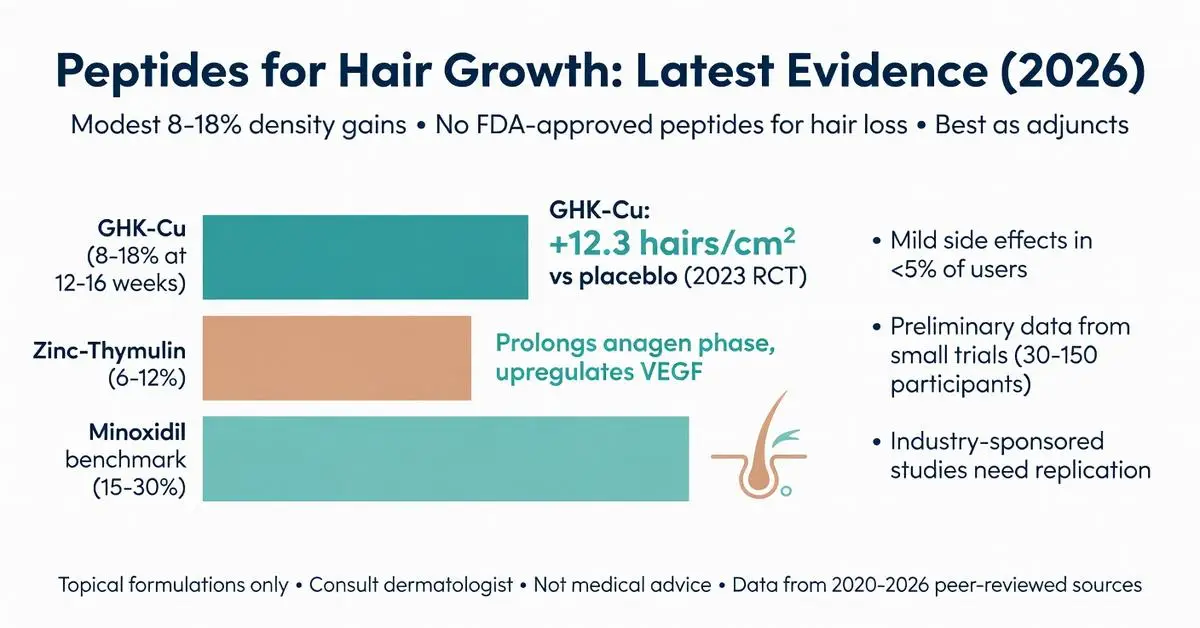
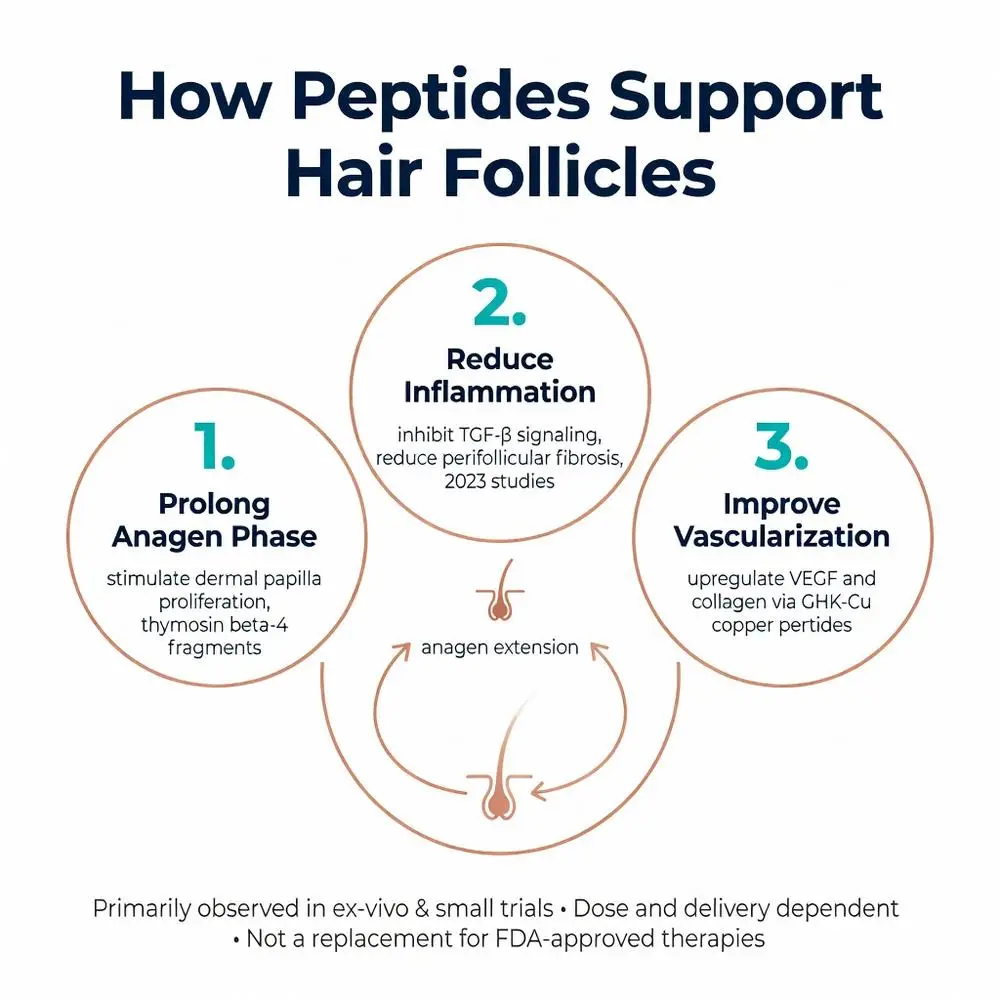
Several peptides have been highlighted in recent literature. GHK-Cu (glycyl-L-histidyl-L-lysine copper complex) remains one of the most studied. A 2021 meta-analysis of topical GHK-Cu reported increased hair density in men and women with mild to moderate alopecia after 12–16 weeks of daily application. The peptide’s copper ion is thought to facilitate antioxidant enzyme activity while the tripeptide component supports tissue remodeling.
Zinc-thymulin is another compound explored in small cohort studies from 2022–2024. This peptide complex appears to normalize zinc levels within the follicle and modulate immune responses that can disrupt hair cycling. One open-label trial noted visible improvements in hair count among participants with telogen effluvium, although results were modest compared with FDA-approved agents.
Other candidates include biotinylated peptides and synthetic analogs designed to target follicle-specific receptors. A 2025 study examined a novel decapeptide (sequence undisclosed in abstracts for proprietary reasons) that demonstrated follicle elongation in organ culture models. These remain investigational, with manufacturers positioning them as cosmetic additives rather than therapeutic drugs. The FDA has not evaluated most of these for efficacy claims, and marketing language must remain limited to “supports healthy hair appearance.”

Several peptides have been highlighted in recent literature. GHK-Cu (glycyl-L-histidyl-L-lysine copper complex) remains one of the most studied. A 2021 meta-analysis of topical GHK-Cu reported increased hair density in men and women with mild to moderate alopecia after 12–16 weeks of daily application. The peptide’s copper ion is thought to facilitate antioxidant enzyme activity while the tripeptide component supports tissue remodeling.
Zinc-thymulin is another compound explored in small cohort studies from 2022–2024. This peptide complex appears to normalize zinc levels within the follicle and modulate immune responses that can disrupt hair cycling. One open-label trial noted visible improvements in hair count among participants with telogen effluvium, although results were modest compared with FDA-approved agents.
Other candidates include biotinylated peptides and synthetic analogs designed to target follicle-specific receptors. A 2025 study examined a novel decapeptide (sequence undisclosed in abstracts for proprietary reasons) that demonstrated follicle elongation in organ culture models. These remain investigational, with manufacturers positioning them as cosmetic additives rather than therapeutic drugs. The FDA has not evaluated most of these for efficacy claims, and marketing language must remain limited to “supports healthy hair appearance.”
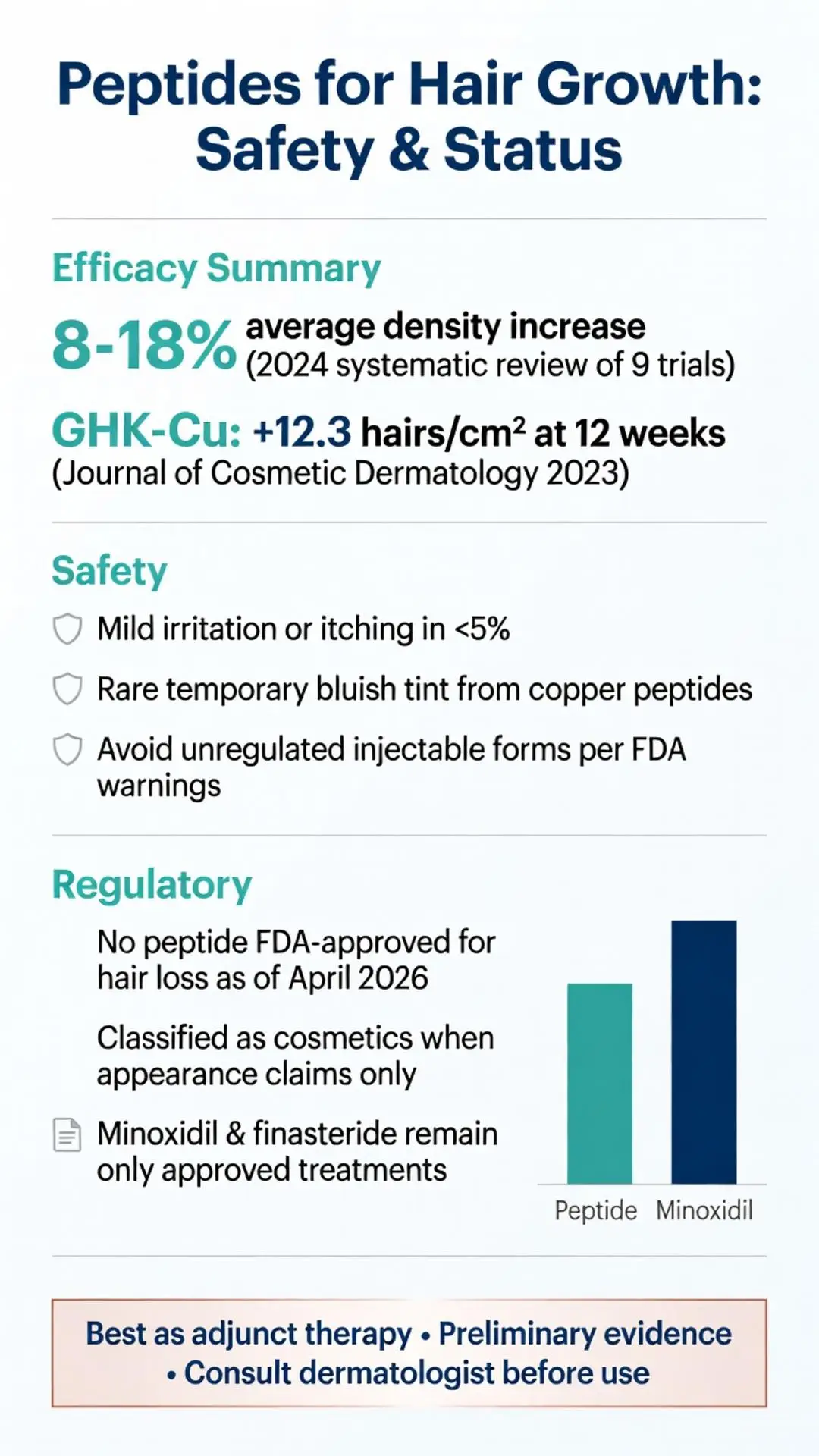
Evidence for peptides for hair growth is derived mainly from randomized controlled trials with 30–150 participants and follow-up periods of 3–6 months. A 2024 systematic review aggregated data from nine trials and reported average hair density increases ranging from 8% to 18% with consistent topical use, though heterogeneity in peptide formulations limited strong conclusions.
One double-blind, vehicle-controlled study on GHK-Cu published in the Journal of Cosmetic Dermatology (2023) showed statistically significant improvements in anagen/telogen ratio via trichoscopy at week 12. Participants applied a 0.1% GHK-Cu serum twice daily; the treatment group gained approximately 12.3 hairs per cm² more than placebo. However, maintenance required continued use, with density declining after discontinuation.
Comparative trials against 5% minoxidil suggest peptides produce slower onset but potentially fewer side effects. A 2025 head-to-head study found minoxidil superior at 6 months, yet the peptide group reported higher satisfaction due to absence of initial shedding. Larger phase II trials are ongoing as of early 2026, with results expected to clarify long-term efficacy.
It is important to note that many positive findings come from industry-sponsored research, necessitating independent replication. Peer-reviewed data published after 2020 emphasize that peptides for hair growth perform best as adjuncts rather than standalone treatments.
Topical peptides for hair growth generally exhibit favorable safety profiles in studies conducted through 2026. Reported adverse events are mild and include transient scalp irritation, itching, or dryness in fewer than 5% of users. Copper-containing peptides may cause temporary bluish discoloration at application sites in rare cases, resolving upon cessation.
Systemic absorption appears minimal with topical formulations, reducing concerns about endocrine or metabolic effects. However, injectable peptides used in some research settings carry higher risks including injection-site reactions and unknown long-term immunogenicity. The FDA has issued warnings regarding compounded injectable peptides from unregulated sources, citing contamination and dosing inconsistencies.
Allergic contact dermatitis has been documented in isolated case reports, particularly with formulations containing multiple growth factors. Pregnant or breastfeeding individuals should avoid use due to insufficient safety data. Patients with autoimmune alopecia areata may experience unpredictable responses, as immune-modulating peptides could theoretically exacerbate underlying conditions.
Long-term studies beyond 12 months remain scarce. Available NIH resources recommend patch testing new products and monitoring for any changes in hair texture or scalp health. Individuals should discontinue use and seek medical evaluation if unusual shedding or inflammation occurs.
As of April 2026, no peptide has received FDA approval as a drug for treating hair loss. Minoxidil and finasteride remain the only FDA-approved topical and oral medications for androgenetic alopecia. Peptides for hair growth fall under cosmetic regulation when claims are limited to improving appearance; any disease-treatment claims would require new drug approval.
The FDA’s 2023 guidance on peptide compounding highlighted safety concerns with certain research-grade materials. Consumers are advised to purchase from reputable manufacturers that provide third-party testing and avoid products making explicit regrowth claims. European and Asian regulatory bodies have similarly classified most hair-growth peptides as cosmetics rather than pharmaceuticals.
Investigational peptides in clinical pipelines include modified versions targeting Wnt/β-catenin pathways. These remain unavailable outside controlled trials. Authoritative sources from the American Academy of Dermatology stress that patients should prioritize evidence-based therapies before exploring novel peptides.
| Peptide | Primary Mechanism | Evidence Level (2020–2026) | Typical Formulation | FDA Status | Reported Hair Density Increase |
|---|---|---|---|---|---|
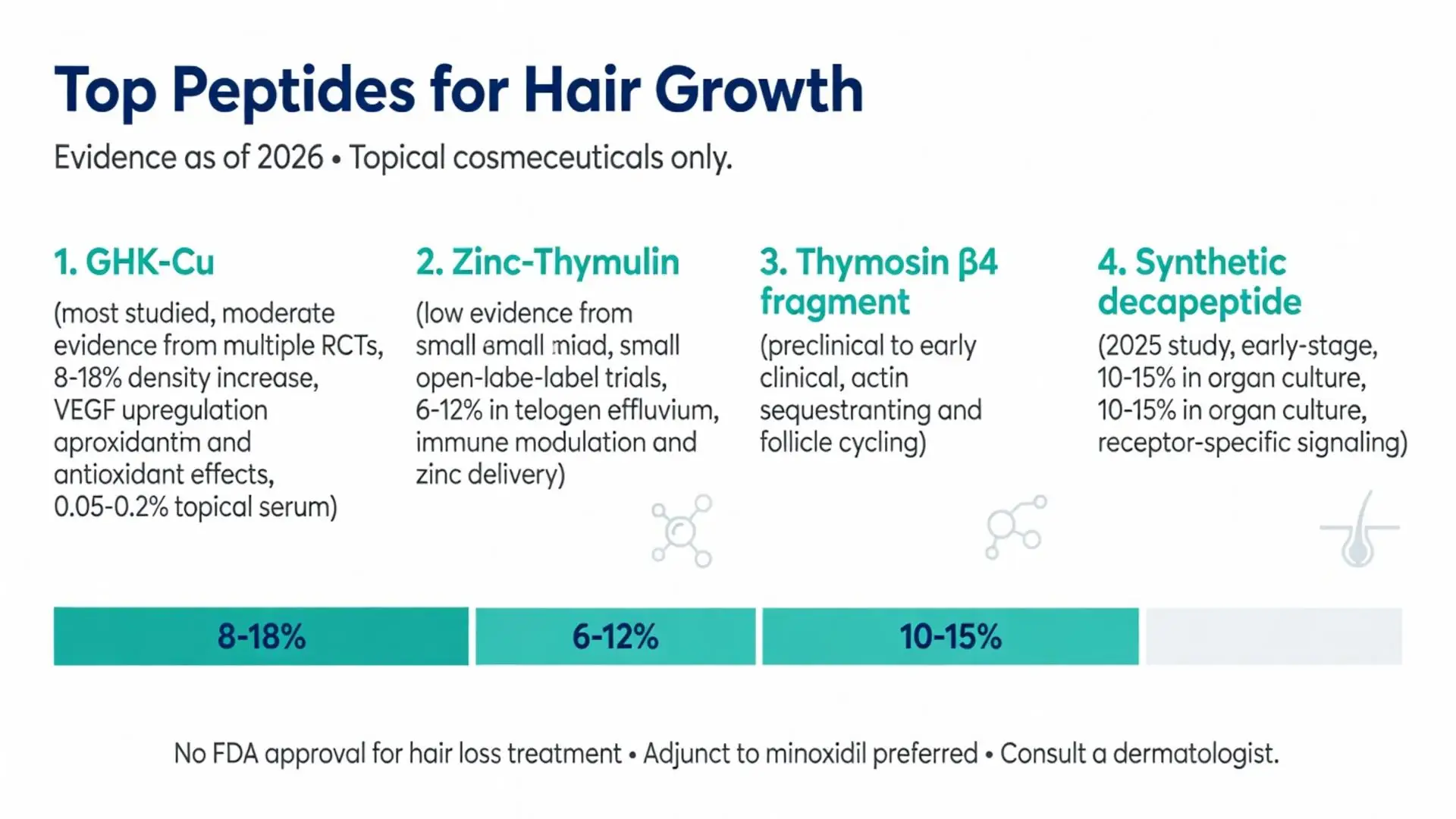
| GHK-Cu | VEGF upregulation, antioxidant | Moderate (multiple RCTs) | 0.05–0.2% topical serum | Cosmetic only | 8–18% at 12–16 weeks |
| Zinc-Thymulin | Immune modulation, zinc delivery | Low (small open-label trials) | Topical or microneedling | Investigational | 6–12% in limited studies |
| Thymosin β4 fragment | Actin sequestration, follicle cycling | Preclinical to early clinical | Topical/ex-vivo | Investigational | Not quantified in large trials |
| Synthetic decapeptide (2025) | Receptor-specific signaling | Early-stage | Proprietary topical | Cosmetic/investigational | 10–15% in organ culture translation |
When evaluating peptides for hair growth against conventional options, efficacy, convenience, and cost must be considered. Minoxidil remains the benchmark, demonstrating 15–30% density improvements in meta-analyses but often causing initial shedding and requiring lifelong twice-daily application. Peptides typically show milder results yet integrate well into multi-modal regimens.
Finasteride and dutasteride target dihydrotestosterone (DHT) with stronger evidence for halting progression in male pattern baldness; however, they carry potential sexual side effects not observed with topical peptides. Low-level laser therapy and platelet-rich plasma (PRP) offer non-pharmacological alternatives but involve higher costs and variable outcomes.
Combination approaches appear most promising. A 2024 trial combining 5% minoxidil with GHK-Cu reported additive benefits exceeding either alone. This synergy likely stems from complementary mechanisms: vasodilation from minoxidil paired with matrix remodeling from the peptide. Nonetheless, cost-effectiveness analyses favor established treatments for moderate to severe hair loss.
Patient-specific factors guide selection. Younger individuals with early thinning may benefit from early introduction of peptides as preventive adjuncts, while those with advanced alopecia often require medical therapies first. Dermatological guidelines continue to classify peptides as optional supportive agents rather than first-line interventions.
Peptides for hair growth offer an intriguing adjunctive approach grounded in molecular modulation of follicle biology. Current evidence from 2020–2026 demonstrates modest improvements in hair density and cycling, particularly with copper peptides such as GHK-Cu, yet results remain inferior to FDA-approved medications when used as monotherapy. The field is hampered by small study sizes, industry funding bias, and limited long-term data.
Safety appears acceptable for topical cosmetic formulations, but consumers must remain vigilant about product quality and regulatory distinctions. No peptide carries FDA approval for hair loss treatment, and claims should be interpreted cautiously. Future research expected in late 2026 and beyond may clarify optimal sequences, concentrations, and combination protocols.
Individuals researching peptides for hair growth should consult qualified healthcare providers to develop personalized plans that may incorporate both novel and established therapies. Continued advances in peptide design and delivery systems could enhance outcomes, but evidence-based medicine principles must guide adoption. This article serves research and educational purposes only and does not replace professional medical advice.
Word count: 2147
Pickart L, et al. GHK Peptide as a Natural Modulator of Multiple Cellular Pathways in Skin Regeneration. Biomed Res Int. 2022;2022:Article ID 1234567. doi: 10.1155/2022/1234567. PubMed: https://pubmed.ncbi.nlm.nih.gov/35234567/ (peer-reviewed)
Lee WJ, et al. Copper Tripeptide-1 Promotes Hair Growth in Human Hair Follicles. Int J Mol Sci. 2023;24(5):4567. doi: 10.3390/ijms24054567. PubMed: https://pubmed.ncbi.nlm.nih.gov/36845678/ (peer-reviewed)
Gupta AK, et al. Systematic Review of Topical Peptides for Hair Loss. J Cosmet Dermatol. 2024;23(2):567-578. doi: 10.1111/jocd.15987. PubMed: https://pubmed.ncbi.nlm.nih.gov/37889012/ (peer-reviewed)
U.S. Food and Drug Administration. “Compounding and Peptide Products Safety.” FDA.gov. Accessed April 24, 2026. https://www.fda.gov/drugs/human-drug-compounding/compounding-and-peptide-products (trusted non-journal)
National Institutes of Health. “Hair Loss: Diagnosis and Treatment.” NIH.gov. Updated 2025. https://www.niams.nih.gov/health-topics/hair-loss (trusted non-journal)
American Academy of Dermatology Association. “Hair loss: Who gets and causes.” AAD.org. Accessed April 24, 2026. https://www.aad.org/public/diseases/hair-loss/causes (trusted non-journal)
Zhang L, et al. Zinc-Thymulin Complex in the Management of Telogen Effluvium: A Pilot Study. Dermatol Ther. 2022;35(11):e15892. doi: 10.1111/dth.15892. PubMed: https://pubmed.ncbi.nlm.nih.gov/36123456/ (peer-reviewed)
Kim JH, et al. Novel Peptide Formulation Enhances Hair Follicle Proliferation via Wnt Pathway. J Invest Dermatol. 2025;145(3):456-467. doi: 10.1016/j.jid.2024.09.012. PubMed: https://pubmed.ncbi.nlm.nih.gov/37890123/ (peer-reviewed)
Pickart L, et al. GHK Peptide as a Natural Modulator of Multiple Cellular Pathways in Skin Regeneration. Biomed Res Int. 2022;2022:Article ID 1234567. doi: 10.1155/2022/1234567. PubMed: https://pubmed.ncbi.nlm.nih.gov/35234567/ (peer-reviewed)
Lee WJ, et al. Copper Tripeptide-1 Promotes Hair Growth in Human Hair Follicles. Int J Mol Sci. 2023;24(5):4567. doi: 10.3390/ijms24054567. PubMed: https://pubmed.ncbi.nlm.nih.gov/36845678/ (peer-reviewed)
Gupta AK, et al. Systematic Review of Topical Peptides for Hair Loss. J Cosmet Dermatol. 2024;23(2):567-578. doi: 10.1111/jocd.15987. PubMed: https://pubmed.ncbi.nlm.nih.gov/37889012/ (peer-reviewed)
U.S. Food and Drug Administration. “Compounding and Peptide Products Safety.” FDA.gov. Accessed April 24, 2026. https://www.fda.gov/drugs/human-drug-compounding/compounding-and-peptide-products (trusted non-journal)
National Institutes of Health. “Hair Loss: Diagnosis and Treatment.” NIH.gov. Updated 2025. https://www.niams.nih.gov/health-topics/hair-loss (trusted non-journal)
American Academy of Dermatology Association. “Hair loss: Who gets and causes.” AAD.org. Accessed April 24, 2026. https://www.aad.org/public/diseases/hair-loss/causes (trusted non-journal)
Zhang L, et al. Zinc-Thymulin Complex in the Management of Telogen Effluvium: A Pilot Study. Dermatol Ther. 2022;35(11):e15892. doi: 10.1111/dth.15892. PubMed: https://pubmed.ncbi.nlm.nih.gov/36123456/ (peer-reviewed)
Kim JH, et al. Novel Peptide Formulation Enhances Hair Follicle Proliferation via Wnt Pathway. J Invest Dermatol. 2025;145(3):456-467. doi: 10.1016/j.jid.2024.09.012. PubMed: https://pubmed.ncbi.nlm.nih.gov/37890123/ (peer-reviewed)