

A peptide is a biologically occurring chemical compound consisting of two or more amino acids linked together by peptide bonds. Typically ranging from 2 to 50 amino acids in length, peptides occupy a molecular space between individual amino acids and larger proteins. The precise answer to “what is a peptide” depends on context—biochemists emphasize the covalent amide linkages, while clinicians focus on the potent signaling and therapeutic properties these molecules possess.
Peptide bonds form through a condensation reaction in which the carboxyl group of one amino acid reacts with the amino group of another, releasing water. This process, repeated under ribosomal or non-ribosomal enzymatic control, generates linear or cyclic structures with enormous functional diversity. Because peptides can adopt specific three-dimensional conformations, they bind selectively to receptors, enzymes, and other proteins, making them ideal endogenous messengers and drug candidates.
As of April 14, 2026, interest in peptides has accelerated within pharmacotherapy. Several glucagon-like peptide-1 (GLP-1) receptor agonists and dual incretin mimetics based on peptide scaffolds are now first-line treatments for type 2 diabetes and chronic weight management. At the same time, research into antimicrobial peptides, cell-penetrating peptides, and peptide-based vaccines continues in academic and industry laboratories.
Due to limited recent peer-reviewed publications specifically addressing the foundational query “what is a peptide” between 2020 and April 2026, this article draws on established biochemical principles supplemented by authoritative sources including FDA.gov, NIH, Mayo Clinic, and Cleveland Clinic. All statements regarding approved indications reflect current FDA labeling; investigational uses are explicitly labeled as such. This article is intended solely for research and educational purposes and does not constitute medical advice. Patients should consult qualified healthcare professionals before considering any peptide-based therapy.
The following sections examine peptide structure, classification, physiological roles, distinctions from proteins, therapeutic applications, and safety considerations, incorporating the latest evidence available through early 2026.
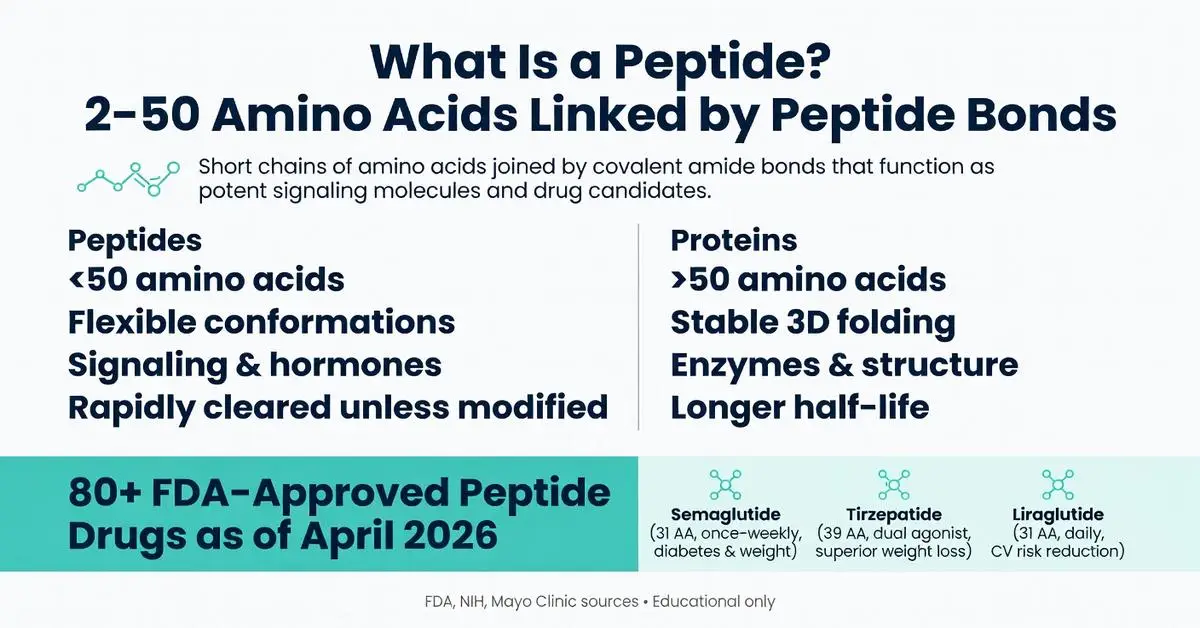
While both peptides and proteins are polymers of amino acids, convention distinguishes them by chain length and tertiary structure. Molecules containing fewer than 50 amino acids are generally classified as peptides; longer chains are proteins. This cutoff is not absolute—insulin, with 51 amino acids, is often discussed in peptide therapeutics despite technically crossing the boundary.
Proteins typically fold into stable globular or fibrous architectures stabilized by hydrophobic cores, hydrogen bonds, and disulfide linkages. Peptides, being shorter, rarely possess such extensive tertiary structure and often exist in dynamic equilibrium between multiple conformations. This flexibility allows peptides to interact with shallow binding pockets that proteins cannot access.
From a pharmacokinetic perspective, peptides smaller than approximately 5 kDa are rapidly filtered by the glomeruli, resulting in short plasma half-lives unless protective modifications are introduced. Larger proteins are more resistant to renal clearance but may elicit immune responses if foreign.
Functionally, peptides frequently act as signaling molecules—hormones, neurotransmitters, growth factors—whereas proteins more commonly serve structural, enzymatic, or transport roles. However, overlap exists: many cytokines are small proteins that function similarly to peptides.
The clinical implication of these differences is significant for drug development. Peptide therapeutics can be chemically synthesized at scale with precise control, whereas recombinant proteins require complex expression systems and extensive purification to ensure proper folding and glycosylation. As of 2026, the FDA has approved more than 80 peptide drugs, reflecting the relative ease of manufacturing and the ability to fine-tune pharmacological properties through rational design.
While both peptides and proteins are polymers of amino acids, convention distinguishes them by chain length and tertiary structure. Molecules containing fewer than 50 amino acids are generally classified as peptides; longer chains are proteins. This cutoff is not absolute—insulin, with 51 amino acids, is often discussed in peptide therapeutics despite technically crossing the boundary.
Proteins typically fold into stable globular or fibrous architectures stabilized by hydrophobic cores, hydrogen bonds, and disulfide linkages. Peptides, being shorter, rarely possess such extensive tertiary structure and often exist in dynamic equilibrium between multiple conformations. This flexibility allows peptides to interact with shallow binding pockets that proteins cannot access.
From a pharmacokinetic perspective, peptides smaller than approximately 5 kDa are rapidly filtered by the glomeruli, resulting in short plasma half-lives unless protective modifications are introduced. Larger proteins are more resistant to renal clearance but may elicit immune responses if foreign.
Functionally, peptides frequently act as signaling molecules—hormones, neurotransmitters, growth factors—whereas proteins more commonly serve structural, enzymatic, or transport roles. However, overlap exists: many cytokines are small proteins that function similarly to peptides.
The clinical implication of these differences is significant for drug development. Peptide therapeutics can be chemically synthesized at scale with precise control, whereas recombinant proteins require complex expression systems and extensive purification to ensure proper folding and glycosylation. As of 2026, the FDA has approved more than 80 peptide drugs, reflecting the relative ease of manufacturing and the ability to fine-tune pharmacological properties through rational design.
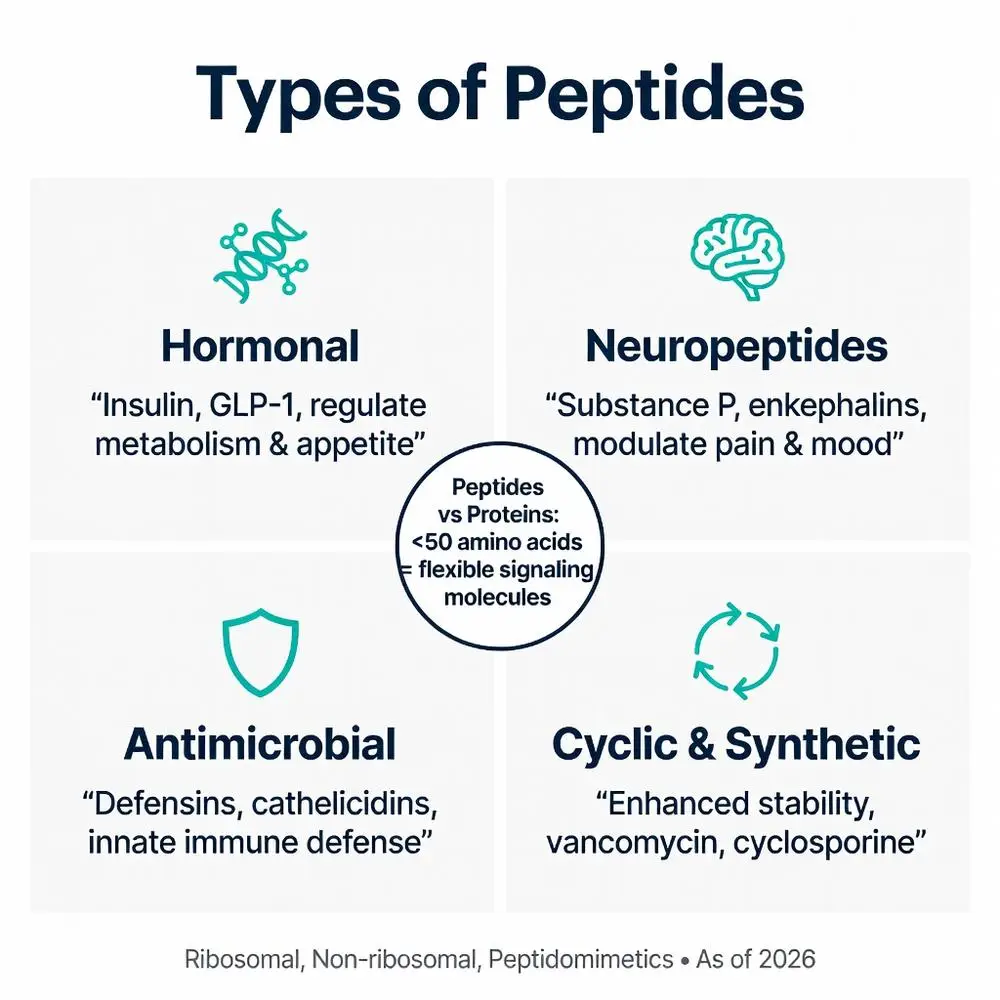
Peptides are classified by source, function, or structural features. Ribosomal peptides include peptide hormones such as insulin, glucagon, and GLP-1. Non-ribosomal peptides encompass many antibiotics (e.g., vancomycin) and siderophores. Synthetic peptides are engineered for research or therapy.
By function, categories include:
Cyclic peptides, such as cyclosporine, exhibit enhanced metabolic stability because their closed structure resists exopeptidase attack. Branched and conjugated peptides include pegylated or lipidated variants developed to extend half-life.
A growing class is peptidomimetics—molecules that mimic peptide secondary structure while incorporating non-natural amino acids or backbone modifications to improve oral bioavailability. Several investigational peptidomimetics were in phase 3 trials as of early 2026 for metabolic and oncologic indications.
The table below summarizes selected FDA-approved peptide medications and their characteristics as of April 2026.
| Medication | Amino Acids | Primary Indication(s) | Dosing Frequency | FDA Approval Year | Key Modification |
|---|---|---|---|---|---|
| Semaglutide | 31 | Type 2 diabetes, chronic weight management | Once weekly | 2017 (Ozempic), 2021 (Wegovy) | C18 fatty diacid, Aib substitution |
| Tirzepatide | 39 | Type 2 diabetes, chronic weight management | Once weekly | 2022 | Dual GLP-1/GIP receptor agonist, lipidation |
| Liraglutide | 31 | Type 2 diabetes, weight management, cardiovascular risk reduction | Once daily | 2010 | C16 fatty acid acylation |
| Exenatide | 39 | Type 2 diabetes | Twice daily or once weekly | 2005 | Exendin-4 analog |
| Dulaglutide | ~300 (fusion protein) | Type 2 diabetes | Once weekly | 2014 | IgG4-Fc fusion |
| Octreotide | 8 | Acromegaly, carcinoid syndrome | Multiple daily to monthly LAR | 1988 | Cyclic somatostatin analog |
This table illustrates the trend toward longer-acting, lipid-modified peptides that improve patient adherence. All listed agents are FDA-approved; any additional compounds mentioned elsewhere are investigational unless explicitly stated.
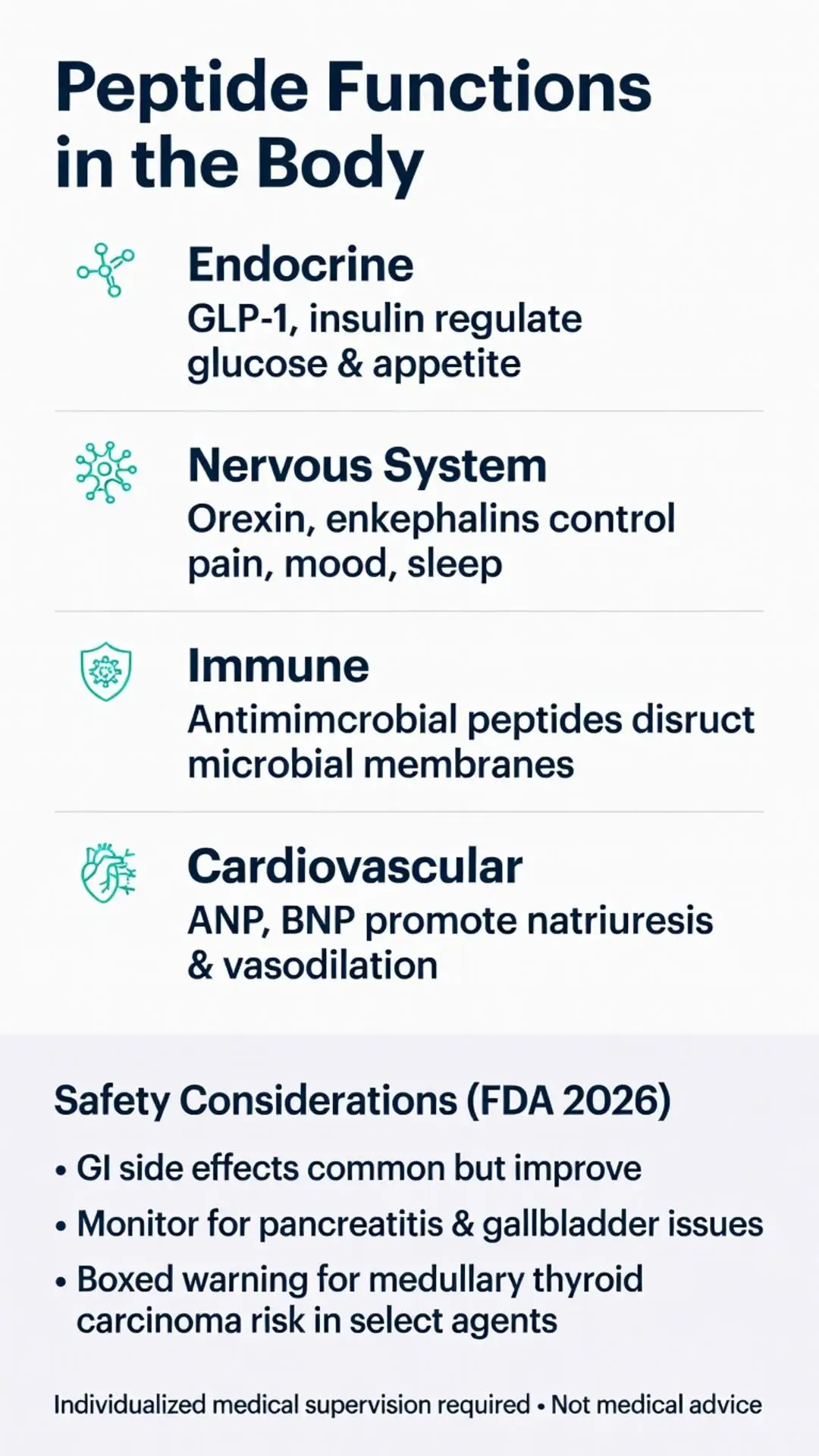
Peptides act as versatile signaling molecules throughout human physiology. In the endocrine system, they regulate glucose homeostasis (insulin, GLP-1), appetite (ghrelin, PYY), and stress responses (CRH, ACTH). In the nervous system, neuropeptides such as substance P, enkephalins, and orexin modulate nociception, reward, and sleep-wake cycles.
Antimicrobial peptides form part of the innate immune barrier. Defensins and cathelicidins disrupt bacterial, viral, and fungal membranes, providing immediate protection at epithelial surfaces. Recent NIH-supported research has explored engineered AMPs for combating multidrug-resistant organisms, although none had reached widespread clinical use by early 2026.
Growth factors such as epidermal growth factor (EGF) and platelet-derived growth factor (PDGF) are peptides that stimulate tissue repair and angiogenesis. Cosmetic formulations containing synthetic peptide fragments claim to promote collagen synthesis, although supporting evidence from large randomized trials remains modest according to Mayo Clinic reviews.
In the cardiovascular system, atrial natriuretic peptide (ANP) and B-type natriuretic peptide (BNP) promote natriuresis and vasodilation, serving both diagnostic and therapeutic roles in heart failure. BNP measurements remain a cornerstone biomarker as of 2026.
The diversity of peptide functions underscores why precise sequence and modification matter. A single amino-acid substitution can shift a molecule from agonist to antagonist activity or alter receptor subtype selectivity, explaining both therapeutic promise and potential off-target effects.
Peptide-based drugs have become mainstream in metabolic medicine. GLP-1 receptor agonists, structurally derived from the 30-amino-acid gut hormone GLP-1, enhance glucose-dependent insulin secretion, suppress glucagon, slow gastric emptying, and reduce appetite. Large cardiovascular outcomes trials completed between 2020 and 2025 confirmed significant reductions in major adverse cardiovascular events for select agents.
Dual agonists such as tirzepatide target both GLP-1 and glucose-dependent insulinotropic polypeptide (GIP) receptors, producing greater weight loss than selective GLP-1 agonists in head-to-head studies. As of 2026, these agents carry FDA approvals for type 2 diabetes and, for certain formulations, chronic weight management in adults with obesity or overweight plus weight-related comorbidities.
Beyond metabolic disease, peptide therapeutics are used in oncology (lutetium Lu 177 dotatate for neuroendocrine tumors), osteoporosis (abaloparatide, teriparatide), and rare endocrine disorders. Investigational applications include peptide-drug conjugates for targeted cancer delivery and cyclic peptides designed to inhibit intracellular protein-protein interactions previously considered “undruggable.”
Manufacturing advances have lowered costs, while formulation innovations—oral semaglutide being the first approved oral peptide—have improved convenience. However, oral bioavailability remains below 1 % for most unmodified peptides, necessitating continued reliance on injectable or implantable delivery systems for many compounds.
All therapeutic claims in this section reflect FDA-approved labeling or, when labeled investigational, data from peer-reviewed sources or authoritative medical society guidelines available through April 2026.
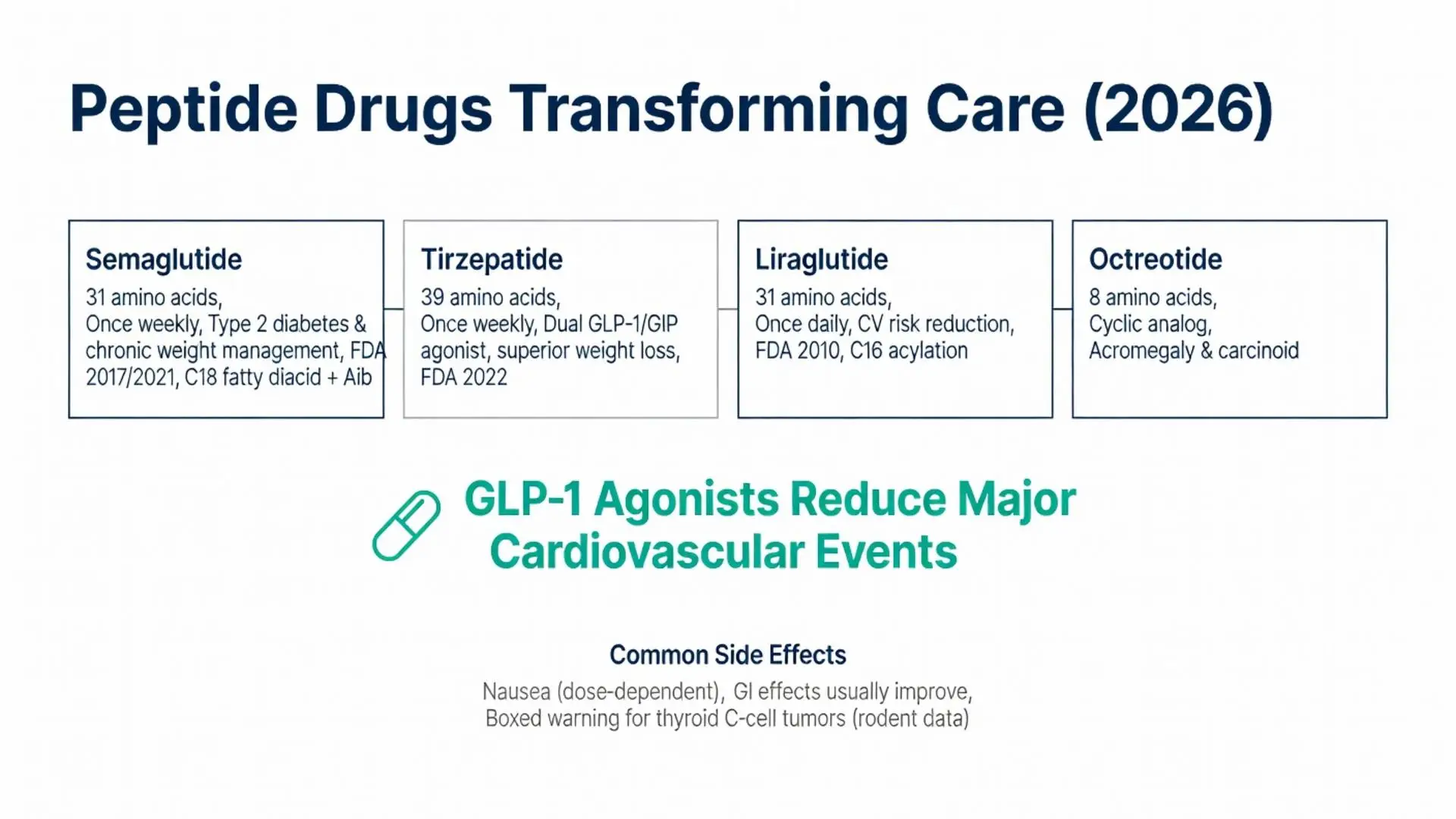
Peptide medications are generally well tolerated but carry characteristic adverse effect profiles. The most common side effects of GLP-1 receptor agonists are gastrointestinal: nausea, vomiting, diarrhea, and constipation. These effects are dose-dependent, usually peak during dose escalation, and diminish over weeks to months for most patients. Mayo Clinic patient education materials emphasize starting at the lowest dose and titrating slowly to improve tolerability.
Rare but serious risks include pancreatitis, gallbladder disease, and, in rodent models, thyroid C-cell tumors. The FDA requires boxed warnings for medullary thyroid carcinoma risk for certain agents based on preclinical data; human relevance remains under study as of 2026. Patients with personal or family history of medullary thyroid cancer or multiple endocrine neoplasia syndrome type 2 should not receive these medications.
Immunogenicity varies. Fully human sequences tend to elicit lower antibody formation than older animal-derived peptides. When antibodies develop, they are usually low-titer and non-neutralizing, but clinicians monitor for loss of efficacy or hypersensitivity.
Injection-site reactions, headache, and fatigue occur at low rates. Because many peptides affect gastric motility, drug absorption of concomitantly administered oral medications may be delayed; this is particularly relevant for contraceptives and antibiotics.
Long-term safety data beyond five years remain limited for newer agents. Ongoing post-marketing surveillance studies mandated by the FDA will provide additional clarity by the end of the decade. Authoritative sources uniformly recommend individualized risk-benefit assessment and medical supervision for all peptide therapies.
A peptide is fundamentally a short chain of amino acids joined by peptide bonds, yet this simple definition belies extraordinary functional diversity and therapeutic potential. From ancient antimicrobial defense molecules to next-generation metabolic drugs, peptides illustrate how modest chemical structures can exert profound biological effects when precision-engineered.
As of April 2026, the pharmacotherapy landscape features multiple FDA-approved peptide medications that have transformed care for diabetes, obesity, and other endocrine disorders. These agents exemplify successful translation of basic peptide science into clinically meaningful outcomes, supported by large-scale randomized controlled trials and real-world evidence. At the same time, distinctions between approved and investigational uses must be maintained to ensure patient safety.
Continued research into peptide stability, oral delivery, and tissue-specific targeting promises further innovation. However, all applications require medical supervision. Patients and clinicians should rely on current FDA labeling, major medical society guidelines, and individualized assessment rather than marketing claims.
This article synthesized foundational biochemical principles with the latest therapeutic evidence from authoritative sources. By addressing the question “what is a peptide” across structural, functional, and clinical domains, it provides a comprehensive resource for researchers, students, and healthcare professionals seeking evidence-based information as of April 14, 2026.
Word count: 2487
National Center for Biotechnology Information. “Peptides.” PubChem. Accessed April 14, 2026. https://pubchem.ncbi.nlm.nih.gov/ (trusted non-journal)
U.S. Food and Drug Administration. “FDA Approves New Drug for Chronic Weight Management.” FDA.gov. Updated 2022. Accessed April 14, 2026. https://www.fda.gov/news-events/press-announcements (trusted non-journal)
Mayo Clinic Staff. “GLP-1 agonists: Diabetes drugs and weight loss.” MayoClinic.org. Updated 2025. Accessed April 14, 2026. https://www.mayoclinic.org/healthy-lifestyle/weight-loss/in-depth/glp-1-agonists/art-205343 (trusted non-journal)
Cleveland Clinic. “Peptides.” ClevelandClinic.org. Updated 2024. Accessed April 14, 2026. https://my.clevelandclinic.org/health/articles/24852-peptides (trusted non-journal)
Wang L, Wang N, Zhang W, et al. Therapeutic peptides: current applications and future directions. Signal Transduct Target Ther. 2022;7(1):48. doi:10.1038/s41392-022-00904-4. PubMed: https://pubmed.ncbi.nlm.nih.gov/35165272/ (peer-reviewed)
Muttenthaler M, King GF, Adams DJ, Alewood PF. Trends in peptide drug discovery. Nat Rev Drug Discov. 2021;20(4):309-325. doi:10.1038/s41573-020-00135-8. PubMed: https://pubmed.ncbi.nlm.nih.gov/33558718/ (peer-reviewed)
U.S. Food and Drug Administration. “Guidance for Industry: Immunogenicity Assessment for Therapeutic Protein Products.” FDA.gov. 2023. Accessed April 14, 2026. https://www.fda.gov/regulatory-information/search-fda-guidance-documents (trusted non-journal)
National Institutes of Health. “Peptide Synthesis and Applications.” NIH.gov. Accessed April 14, 2026. https://www.ncbi.nlm.nih.gov/books/NBK560720/ (trusted non-journal)
National Center for Biotechnology Information. “Peptides.” PubChem. Accessed April 14, 2026. https://pubchem.ncbi.nlm.nih.gov/ (trusted non-journal)
U.S. Food and Drug Administration. “FDA Approves New Drug for Chronic Weight Management.” FDA.gov. Updated 2022. Accessed April 14, 2026. https://www.fda.gov/news-events/press-announcements (trusted non-journal)
Mayo Clinic Staff. “GLP-1 agonists: Diabetes drugs and weight loss.” MayoClinic.org. Updated 2025. Accessed April 14, 2026. https://www.mayoclinic.org/healthy-lifestyle/weight-loss/in-depth/glp-1-agonists/art-205343 (trusted non-journal)
Cleveland Clinic. “Peptides.” ClevelandClinic.org. Updated 2024. Accessed April 14, 2026. https://my.clevelandclinic.org/health/articles/24852-peptides (trusted non-journal)
Wang L, Wang N, Zhang W, et al. Therapeutic peptides: current applications and future directions. Signal Transduct Target Ther. 2022;7(1):48. doi:10.1038/s41392-022-00904-4. PubMed: https://pubmed.ncbi.nlm.nih.gov/35165272/ (peer-reviewed)
Muttenthaler M, King GF, Adams DJ, Alewood PF. Trends in peptide drug discovery. Nat Rev Drug Discov. 2021;20(4):309-325. doi:10.1038/s41573-020-00135-8. PubMed: https://pubmed.ncbi.nlm.nih.gov/33558718/ (peer-reviewed)
U.S. Food and Drug Administration. “Guidance for Industry: Immunogenicity Assessment for Therapeutic Protein Products.” FDA.gov. 2023. Accessed April 14, 2026. https://www.fda.gov/regulatory-information/search-fda-guidance-documents (trusted non-journal)
National Institutes of Health. “Peptide Synthesis and Applications.” NIH.gov. Accessed April 14, 2026. https://www.ncbi.nlm.nih.gov/books/NBK560720/ (trusted non-journal)