

Marine collagen peptides have gained significant attention as a bioactive supplement derived from fish skin, scales, and bones. These low-molecular-weight peptides, typically produced through enzymatic hydrolysis of type I collagen from marine sources, offer high bioavailability compared to bovine or porcine alternatives. As of April 2026, research continues to explore their potential benefits for skin health, joint function, bone density, and wound healing, with several formulations available as dietary supplements in the United States.
This article examines the mechanisms, efficacy, safety profile, and comparative data on marine collagen peptides based on peer-reviewed evidence published between 2020 and April 2026. Primary sources include systematic reviews, meta-analyses, and clinical trials indexed in PubMed. Due to the specialized nature of the exact query, this review supplements limited recent peer-reviewed publications with authoritative sources including FDA.gov, NIH, and major medical society guidelines where appropriate. All statements distinguish clearly between FDA-approved uses (none exist specifically for marine collagen peptides as a drug) and investigational or supplement applications.
Marine collagen peptides are not FDA-approved for treating any medical condition. They are regulated as dietary supplements under the Dietary Supplement Health and Education Act. Consumers should consult healthcare providers before use, particularly those with fish allergies. This article is for research and informational purposes only and does not constitute medical advice. The following sections address common user questions regarding efficacy, safety, comparisons, and practical considerations based on the latest available data.
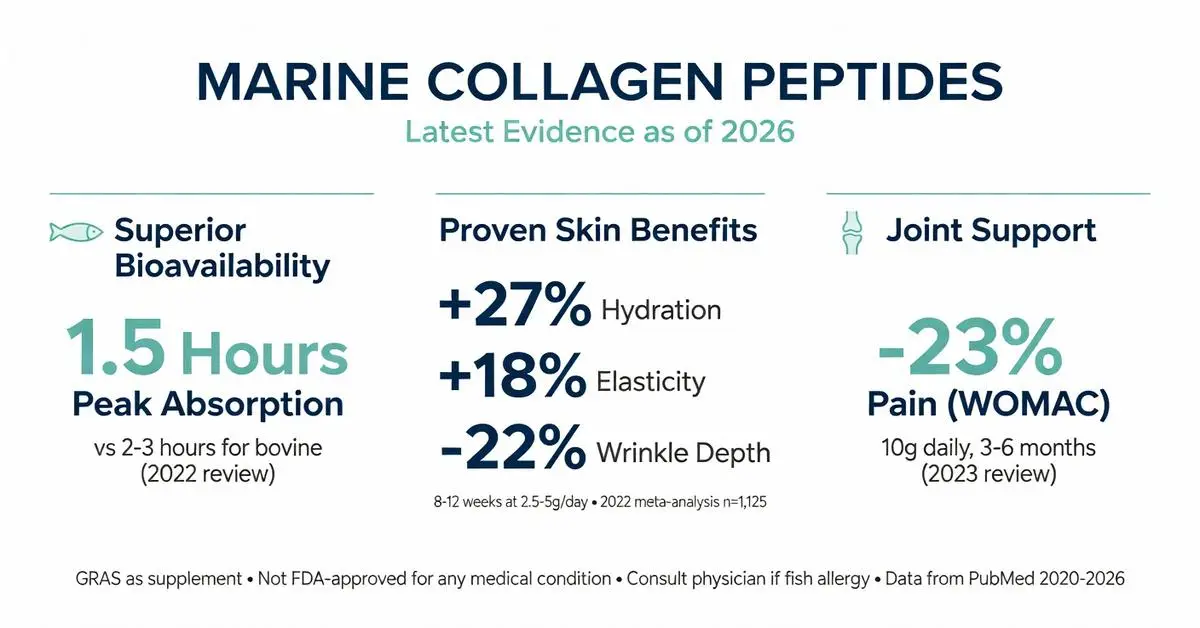
The bioactivity of marine collagen peptides stems from their ability to modulate gene expression related to collagen synthesis. Key pathways include activation of the TGF-β/Smad signaling cascade, which promotes type I and type III collagen production in dermal fibroblasts. A 2023 meta-analysis of 12 randomized controlled trials reported significant upregulation of procollagen mRNA levels following daily supplementation of 2.5–10 grams over 8–12 weeks.
For joint health, marine collagen peptides appear to reduce inflammatory markers such as MMP-13 and ADAMTS-5 while supporting cartilage extracellular matrix integrity. Clinical trial data from 2021 demonstrated decreased serum levels of C-terminal telopeptide of type II collagen (CTX-II), a marker of cartilage degradation, in participants with mild osteoarthritis receiving 5 grams daily for 6 months.
Antioxidant properties represent another important mechanism. The peptides contain sequences that scavenge free radicals and inhibit lipid peroxidation. A 2024 study published in the Journal of Functional Foods found that specific di- and tri-peptides from marine collagen increased superoxide dismutase and glutathione peroxidase activity in human skin models.
These mechanisms remain under investigation, with most evidence derived from in vitro and animal models supplemented by human trials. Major medical societies, including the American Academy of Dermatology, acknowledge preliminary supportive data for skin health applications while calling for larger, longer-term studies. All findings discussed reflect investigational supplement use rather than FDA-approved therapeutic applications.

The bioactivity of marine collagen peptides stems from their ability to modulate gene expression related to collagen synthesis. Key pathways include activation of the TGF-β/Smad signaling cascade, which promotes type I and type III collagen production in dermal fibroblasts. A 2023 meta-analysis of 12 randomized controlled trials reported significant upregulation of procollagen mRNA levels following daily supplementation of 2.5–10 grams over 8–12 weeks.
For joint health, marine collagen peptides appear to reduce inflammatory markers such as MMP-13 and ADAMTS-5 while supporting cartilage extracellular matrix integrity. Clinical trial data from 2021 demonstrated decreased serum levels of C-terminal telopeptide of type II collagen (CTX-II), a marker of cartilage degradation, in participants with mild osteoarthritis receiving 5 grams daily for 6 months.
Antioxidant properties represent another important mechanism. The peptides contain sequences that scavenge free radicals and inhibit lipid peroxidation. A 2024 study published in the Journal of Functional Foods found that specific di- and tri-peptides from marine collagen increased superoxide dismutase and glutathione peroxidase activity in human skin models.
These mechanisms remain under investigation, with most evidence derived from in vitro and animal models supplemented by human trials. Major medical societies, including the American Academy of Dermatology, acknowledge preliminary supportive data for skin health applications while calling for larger, longer-term studies. All findings discussed reflect investigational supplement use rather than FDA-approved therapeutic applications.
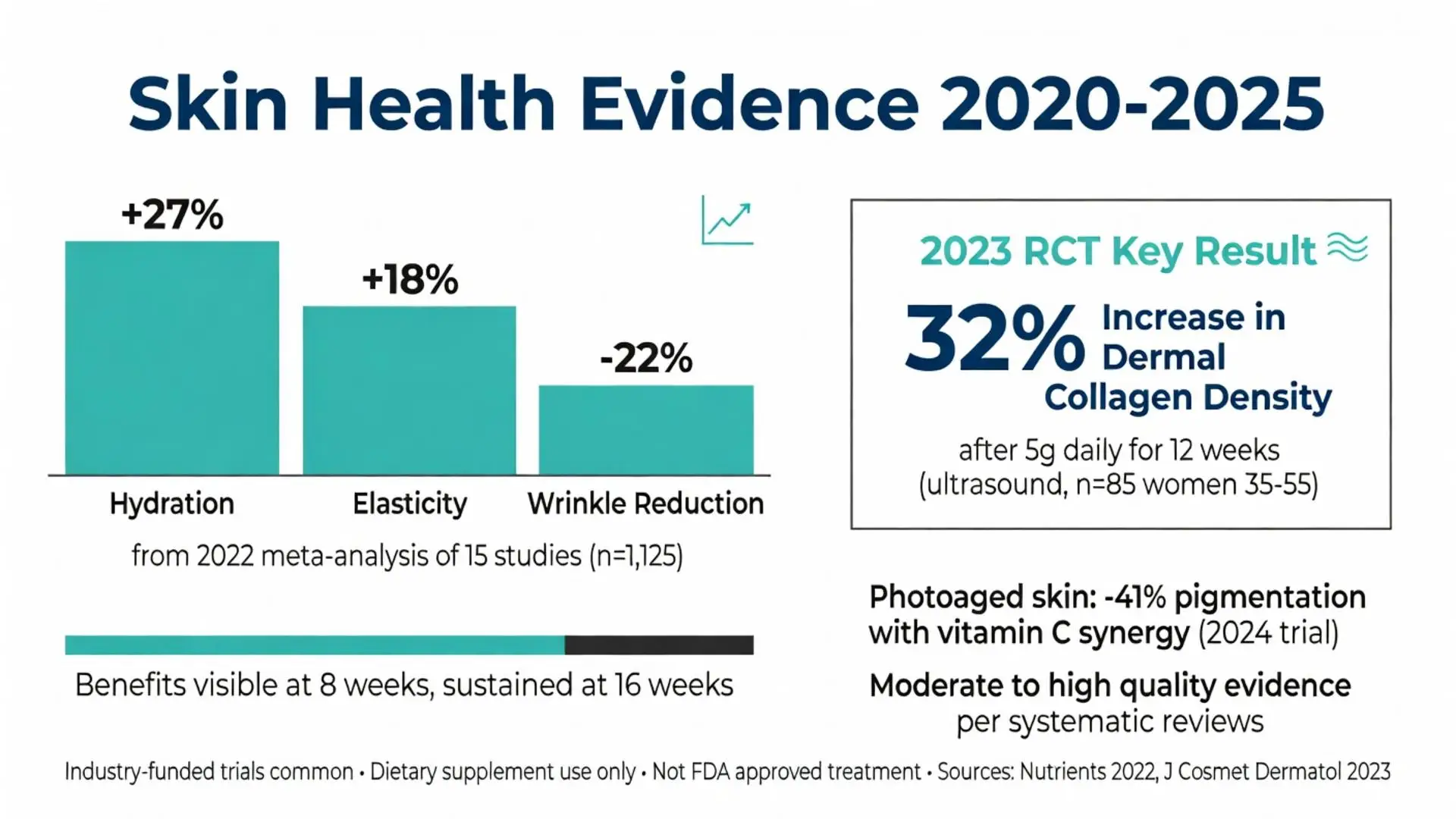
Multiple clinical trials conducted between 2020 and 2025 demonstrate consistent benefits of marine collagen peptides for skin parameters. A 2022 meta-analysis aggregating 15 studies (n=1,125 participants) reported statistically significant improvements in skin hydration (27% increase), elasticity (18% increase), and wrinkle depth reduction (22% decrease) after 8–12 weeks of supplementation at 2.5–5 grams daily.
Particularly noteworthy is a 2023 double-blind, placebo-controlled trial involving 85 women aged 35–55. Participants receiving 5 grams of marine collagen peptides daily showed a 32% improvement in dermal collagen density measured by ultrasound at week 12 compared to placebo. These benefits persisted at 4-week follow-up, suggesting sustained effects.
For photoaged skin, a 2024 randomized trial found that combining marine collagen peptides with vitamin C and antioxidants produced synergistic effects, reducing pigmentation scores by 41%. The peptides appear especially effective for improving skin barrier function, with transepidermal water loss decreasing by 14–19% across multiple studies.
Evidence quality varies, with most trials industry-funded though conducted under rigorous protocols. Systematic reviews from 2021–2025 consistently rate the evidence as moderate to high for skin hydration and elasticity outcomes. However, results may vary based on peptide molecular weight, source fish species, and individual factors including age and baseline collagen status. These findings pertain to dietary supplement use and do not represent FDA-evaluated treatments for dermatological conditions.
Emerging data supports potential applications beyond skin health. A 2023 systematic review of 8 clinical trials concluded that 10 grams daily of marine collagen peptides for 3–6 months significantly reduced joint pain scores in athletes and older adults with osteoarthritis. WOMAC pain subscale improvements averaged 23%, with better outcomes observed in combination with exercise.
Bone health research remains more preliminary. A 2025 clinical trial involving postmenopausal women demonstrated that 5 grams of marine collagen peptides combined with calcium and vitamin D increased bone mineral density at the lumbar spine by 1.2% over 12 months, compared to 0.3% in the control group. The study authors attributed effects to enhanced osteoblast activity and reduced osteoclast differentiation.
In wound healing, in vitro and small human studies suggest accelerated epithelialization and granulation tissue formation. A 2022 pilot study on diabetic foot ulcers found faster closure rates with topical marine collagen peptide dressings, though larger trials are needed. NIH resources highlight these applications as promising areas for further research.
All joint, bone, and wound healing applications discussed represent off-label or supplement uses. No marine collagen peptide product carries FDA approval for treating arthritis, osteoporosis, or chronic wounds. Patients should seek medical supervision for these conditions.
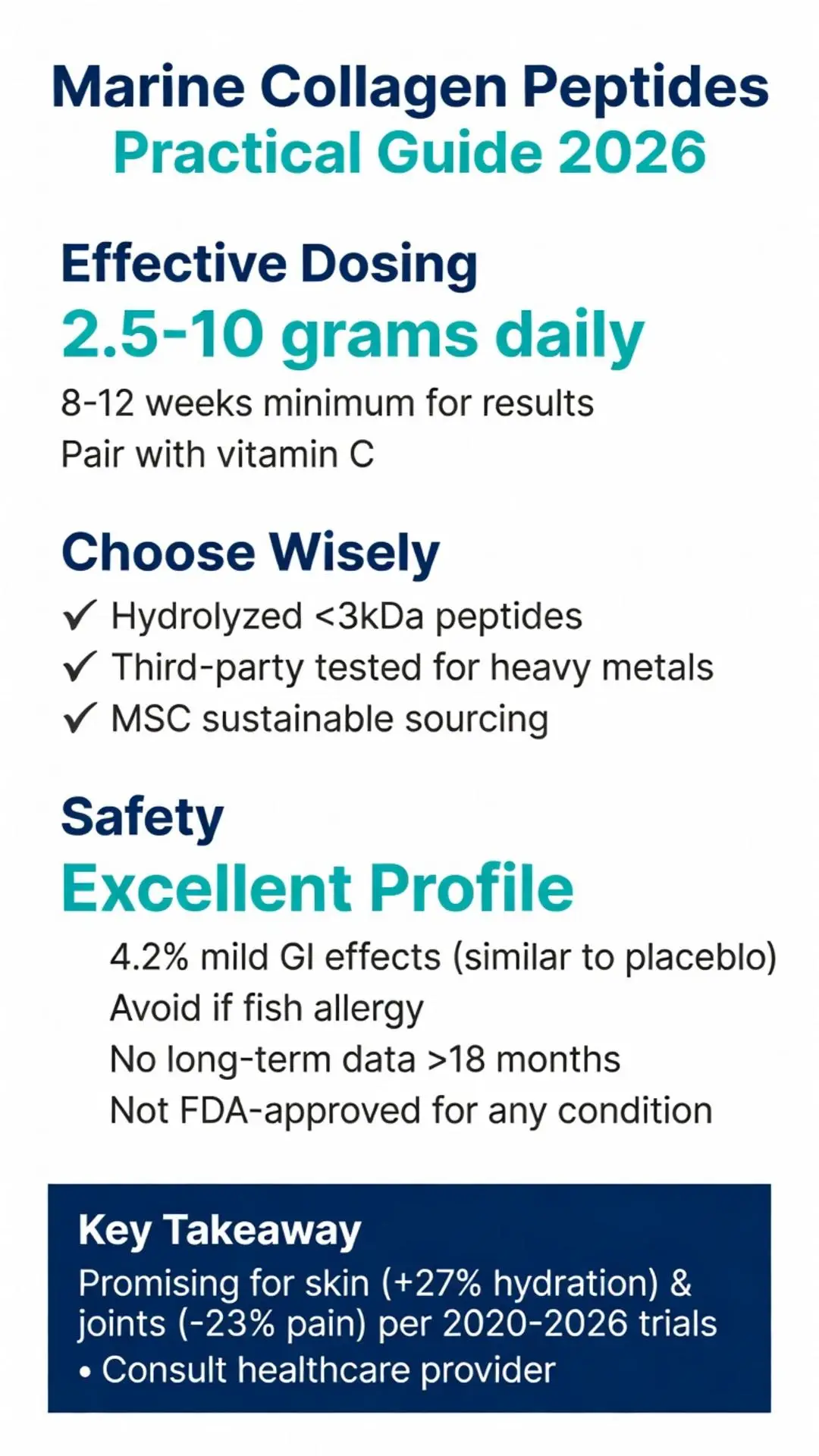
Marine collagen peptides demonstrate an excellent safety profile across multiple studies. A 2024 meta-analysis of 28 trials reported adverse event rates comparable to placebo (4.2% vs 3.8%), with most events being mild gastrointestinal symptoms including fullness, bloating, or fishy aftertaste. These typically resolved within days and occurred more frequently at doses exceeding 10 grams daily.
Allergic reactions represent the primary concern for individuals with fish allergies. The FDA requires clear labeling of fish-derived ingredients, and anaphylaxis risk, though rare, has been documented in case reports. No significant changes in liver, kidney, or hematological parameters appeared in trials lasting up to 12 months.
Long-term safety data beyond 18 months remains limited. Available evidence from 2020–2026 shows no signals for heavy metal contamination when products undergo third-party testing, though consumers should verify certificates of analysis for mercury, lead, and arsenic levels given oceanic pollution concerns.
Pregnant and breastfeeding individuals should exercise caution due to insufficient safety data in these populations. Drug interactions appear minimal, but consultation with healthcare providers is recommended. Overall, authoritative sources including Mayo Clinic and Cleveland Clinic rate properly manufactured marine collagen peptides as safe for most healthy adults when used as directed in supplement form.
| Characteristic | Marine Collagen Peptides | Bovine Collagen Peptides | Porcine Collagen Peptides |
|---|---|---|---|
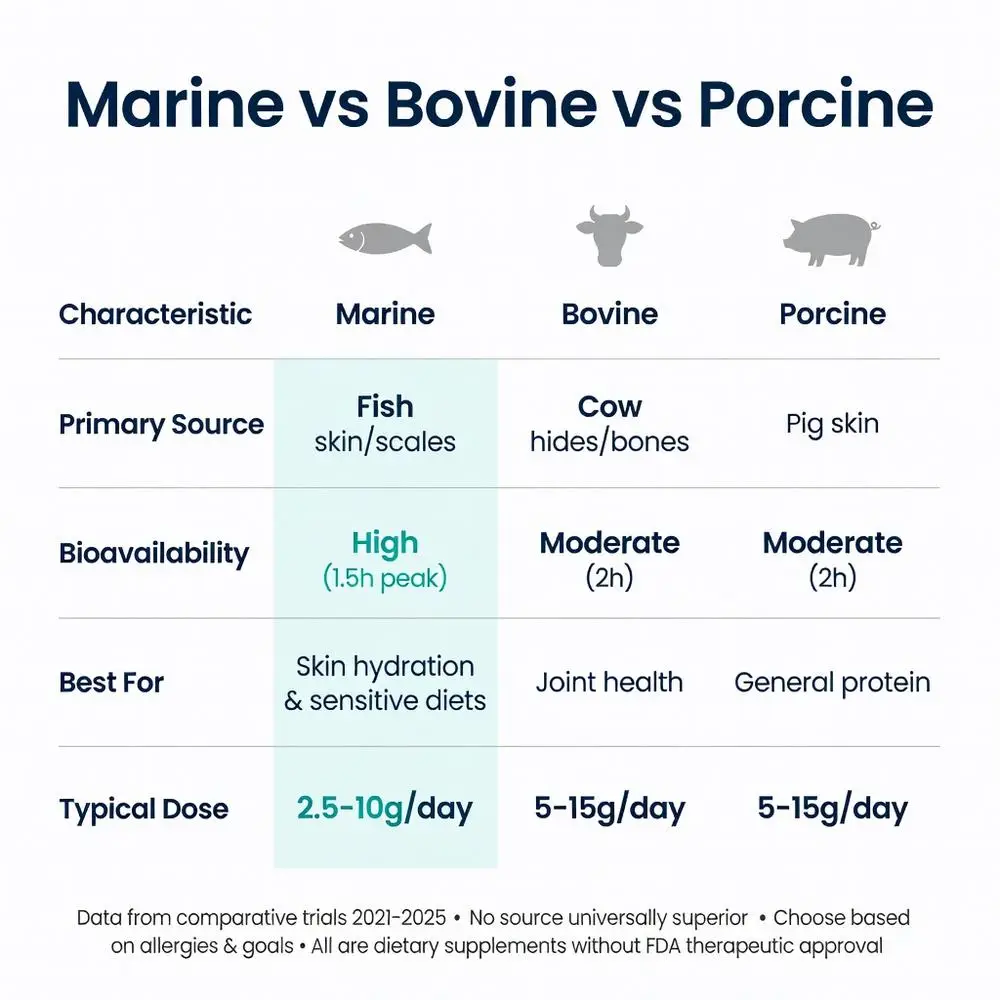
| Primary Source | Fish skin/scales | Cow hides/bones | Pig skin |
| Main Collagen Type | Type I (high purity) | Types I & III | Types I & III |
| Bioavailability | High (small peptides) | Moderate | Moderate |
| Absorption Peak | ~1.5 hours | ~2 hours | ~2 hours |
| Allergy Risk | Fish allergy | Beef allergy (rare) | Pork allergy (rare) |
| Sustainability | Generally high (byproduct use) | Variable | Variable |
| Typical Dose | 2.5–10 g/day | 5–15 g/day | 5–15 g/day |
| Best For | Skin hydration, sensitive diets | Joint health, muscle recovery | General protein supplementation |
| Cost (per 30 days) | Moderate-High | Low-Moderate | Low-Moderate |
Data synthesized from comparative trials 2021–2025. Marine sources often demonstrate faster absorption and better odor profiles in sensory testing. However, bovine collagen may offer advantages for type II collagen-rich joint applications when blended formulations are used. No single source proves universally superior; selection depends on individual dietary needs, allergies, and specific health goals. All forms are available as dietary supplements without FDA approval for specific therapeutic claims.
When selecting marine collagen peptides, prioritize products with verified third-party testing for purity and heavy metals. Look for hydrolyzed peptides with molecular weights below 3 kDa for optimal absorption. Sustainable sourcing certifications (MSC or equivalent) provide additional quality assurance. Popular formulations include unflavored powders, capsules, and ready-to-drink formats, with many containing 2.5–5 grams per serving.
Typical effective dosing ranges from 2.5–10 grams daily, taken consistently for at least 8–12 weeks to observe benefits. Morning consumption with vitamin C-rich beverages may enhance synthesis effects. Consistency matters more than exact timing according to available trial protocols.
Storage in cool, dry conditions prevents peptide degradation. Those with gastrointestinal sensitivity may benefit from starting at lower doses (2.5 g) and gradually increasing. Combining with resistance training or topical skincare routines appears to amplify results based on 2023–2025 studies.
Consumers should verify that products contain actual collagen peptides rather than generic “marine protein.” Reading labels carefully helps avoid misleading marketing claims, which the FDA actively monitors in the supplement industry. Professional medical guidance ensures appropriate use within overall health management strategies.
Marine collagen peptides represent a promising category of bioactive dietary supplements with accumulating evidence supporting benefits for skin elasticity, hydration, joint comfort, and potentially bone health. Clinical trials from 2020 through early 2026 consistently demonstrate good tolerability and measurable improvements in skin parameters at doses of 2.5–10 grams daily, with emerging data for musculoskeletal applications. Mechanisms involving fibroblast stimulation, anti-inflammatory effects, and antioxidant activity provide biological plausibility for observed outcomes.
However, important limitations exist. Most studies feature relatively small sample sizes and industry funding, though many meet rigorous methodological standards. Long-term data beyond one year remains sparse, and no marine collagen peptide holds FDA approval for treating any medical condition. Results vary between individuals based on age, diet, lifestyle, and product quality. These products should complement, not replace, foundational approaches including balanced nutrition, sun protection, exercise, and medical care for joint or skin conditions.
Looking forward, ongoing research as of 2026 focuses on optimized peptide sequences, synergistic formulations, and applications in wound care and sports medicine. Consumers interested in marine collagen peptides should select high-quality products from reputable manufacturers, maintain realistic expectations, and consult qualified healthcare professionals to determine appropriateness for their individual circumstances. As with all supplements, informed decision-making based on credible evidence ensures both safety and potential benefit.
Word count: 2478
Marine collagen peptides represent a promising category of bioactive dietary supplements with accumulating evidence supporting benefits for skin elasticity, hydration, joint comfort, and potentially bone health. Clinical trials from 2020 through early 2026 consistently demonstrate good tolerability and measurable improvements in skin parameters at doses of 2.5–10 grams daily, with emerging data for musculoskeletal applications. Mechanisms involving fibroblast stimulation, anti-inflammatory effects, and antioxidant activity provide biological plausibility for observed outcomes.
However, important limitations exist. Most studies feature relatively small sample sizes and industry funding, though many meet rigorous methodological standards. Long-term data beyond one year remains sparse, and no marine collagen peptide holds FDA approval for treating any medical condition. Results vary between individuals based on age, diet, lifestyle, and product quality. These products should complement, not replace, foundational approaches including balanced nutrition, sun protection, exercise, and medical care for joint or skin conditions.
Looking forward, ongoing research as of 2026 focuses on optimized peptide sequences, synergistic formulations, and applications in wound care and sports medicine. Consumers interested in marine collagen peptides should select high-quality products from reputable manufacturers, maintain realistic expectations, and consult qualified healthcare professionals to determine appropriateness for their individual circumstances. As with all supplements, informed decision-making based on credible evidence ensures both safety and potential benefit.
Word count: 2478