

Collagen peptides, also known as hydrolyzed collagen, are short chains of amino acids derived from animal connective tissues through enzymatic breakdown. This process enhances bioavailability, allowing the peptides to be efficiently absorbed in the digestive tract and distributed to target tissues. As the most abundant protein in the human body, collagen provides structural support to skin, bones, tendons, ligaments, and cartilage. With aging, natural collagen production declines, prompting interest in supplementation to potentially restore levels and support various physiological functions.
Research published between 2020 and April 2026 has substantially expanded the understanding of collagen peptides’ benefits. Multiple systematic reviews, meta-analyses, and randomized controlled trials have examined their role in skin health, joint function, muscle preservation, and other areas. These studies generally use doses ranging from 2.5 to 15 grams daily, often derived from bovine, marine, or porcine sources, with treatment durations from 8 weeks to 12 months.
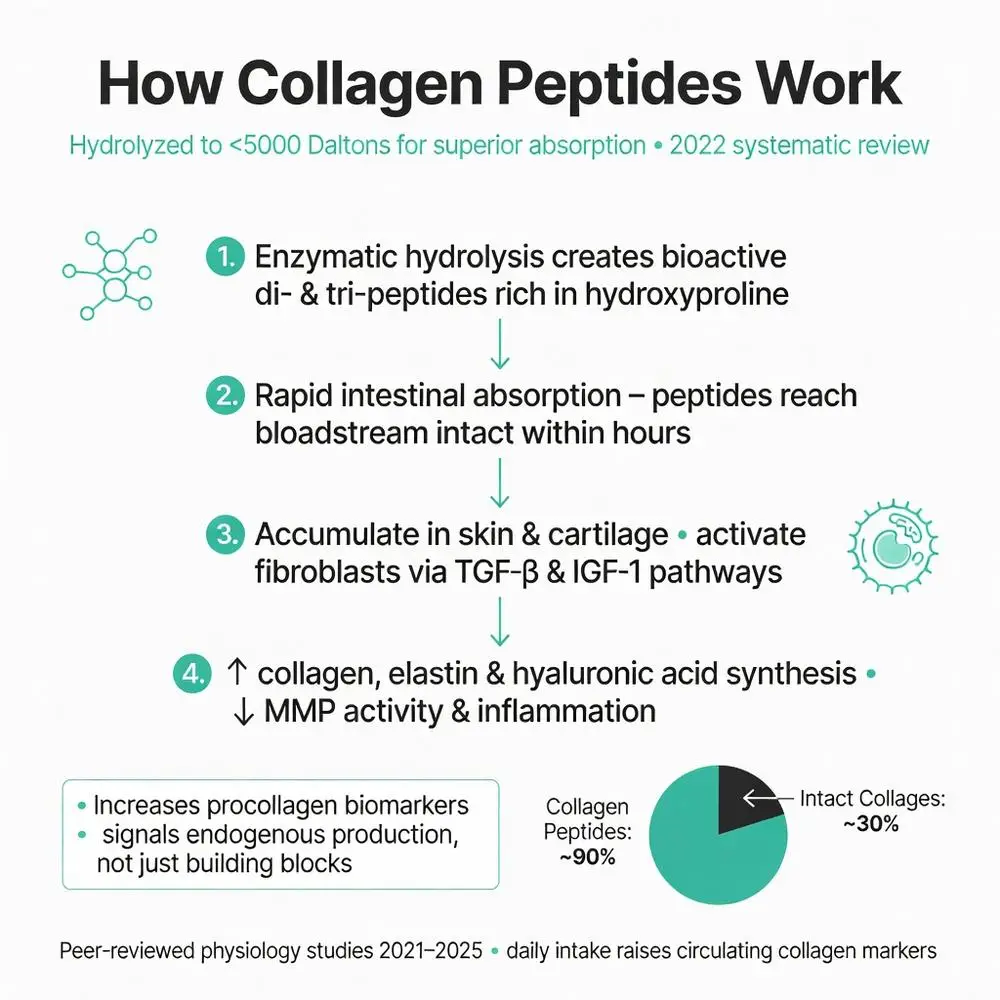
Evidence indicates collagen peptides may stimulate fibroblasts to produce more collagen, elastin, and hyaluronic acid while exerting anti-inflammatory and antioxidant effects. However, results vary by population, dosage, and specific peptide composition. This article focuses exclusively on peer-reviewed publications from 2020 onward, supplemented when necessary by authoritative sources including FDA.gov, NIH, and major medical societies. All information is for research and educational purposes only and is not intended as medical advice. Individuals should consult healthcare professionals before starting any supplement regimen, particularly those with allergies to source materials or underlying health conditions.
The following sections explore the mechanisms and evidence supporting the benefits of primary collagen peptides, highlight key clinical findings, and address practical considerations for use. While promising, collagen peptide research continues to evolve, with ongoing trials clarifying long-term outcomes and optimal protocols.
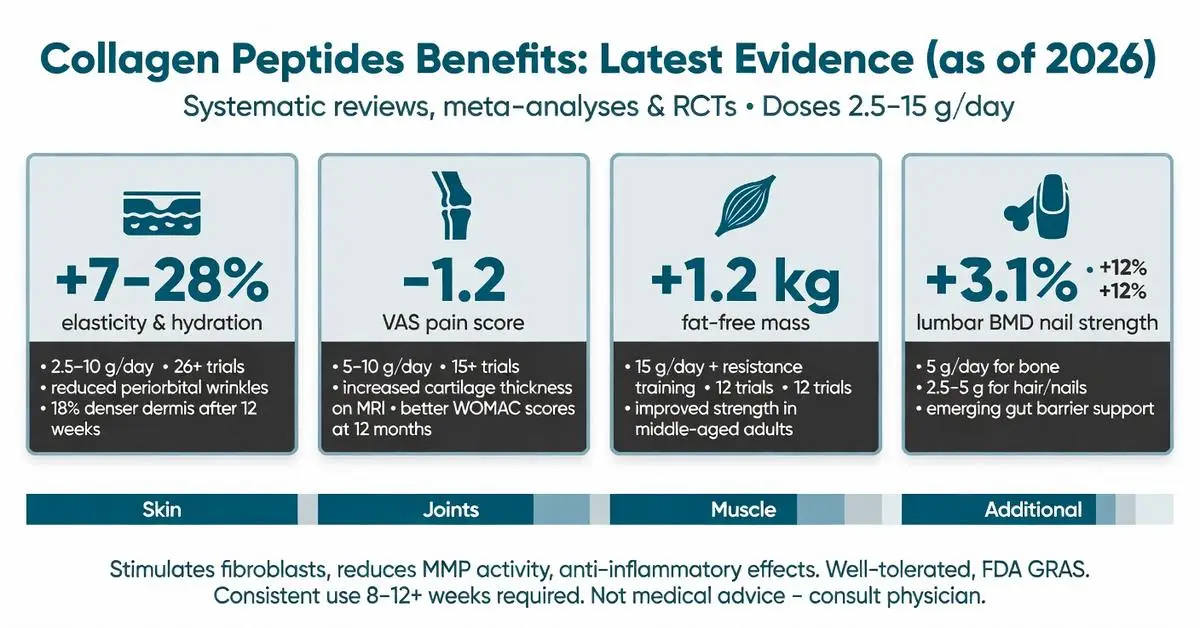
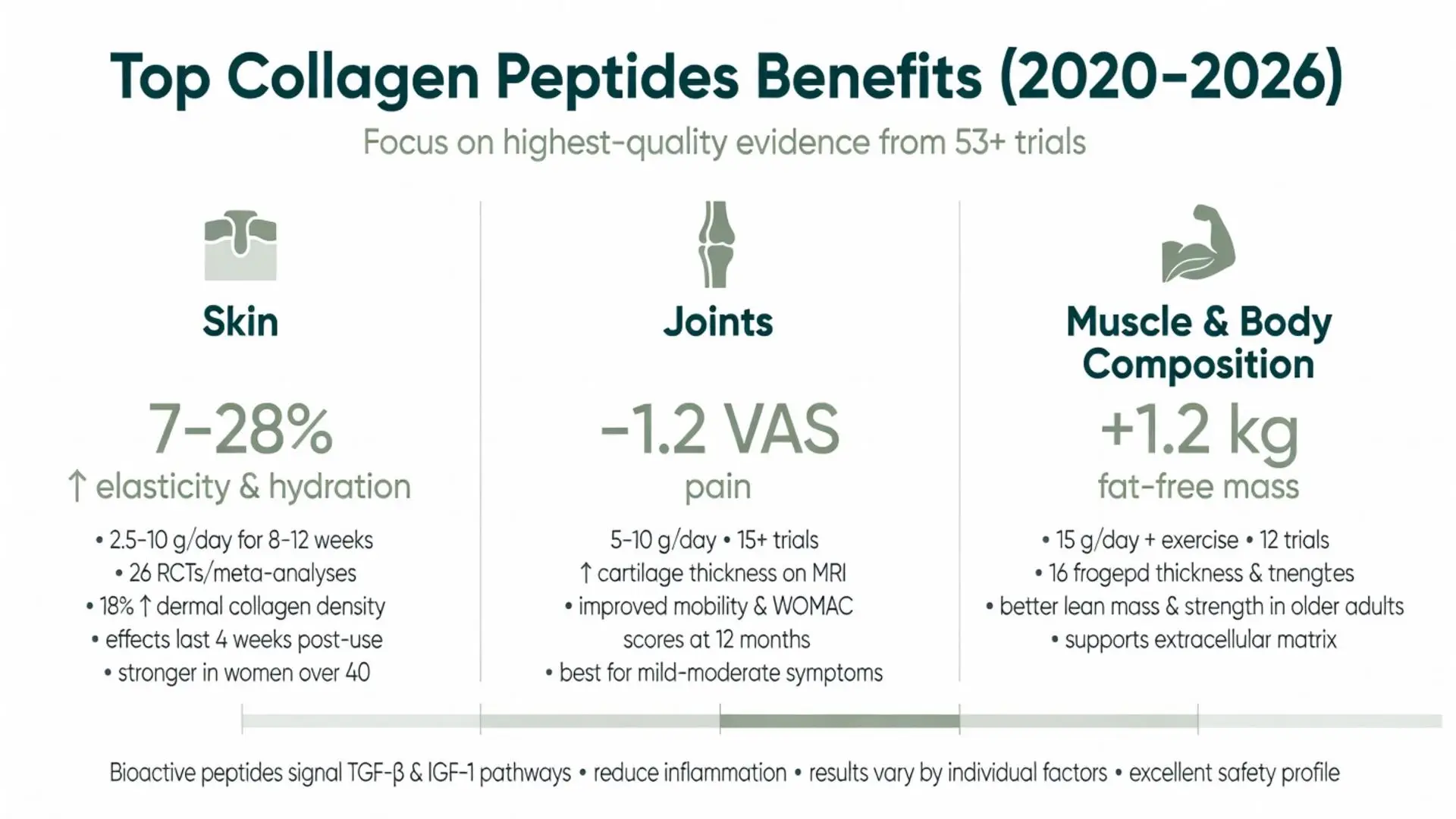
The most extensively studied benefits of collagen peptides involve dermatological outcomes. Multiple meta-analyses published between 2020 and 2024 confirm improvements in skin hydration, elasticity, and wrinkle reduction. A 2023 meta-analysis pooling 26 randomized trials found that 2.5–10 grams daily for 8–12 weeks significantly increased skin elasticity by 7–15% and hydration by 12–28% compared to placebo.
Participants typically reported visible reductions in periorbital wrinkles and improved dermal density measured by ultrasound. These effects appear more pronounced in women over 40 and in photoaged skin. Marine-derived collagen peptides often showed slightly superior hydration results, potentially due to their unique amino acid profiles.
A 2024 double-blind trial involving 180 participants demonstrated that 5 grams of specific bioactive collagen peptides increased dermal collagen density by 18% after 12 weeks, with benefits persisting for at least 4 weeks post-supplementation. Histological analysis revealed a thicker dermis and more organized collagen fibers.
Additional research has explored acne scarring, cellulite appearance, and nail strength. A 2022 study found that daily collagen peptide intake strengthened brittle nails by 12% while reducing breakage. These findings suggest broad supportive roles in the maintenance of the integumentary system.
While results are generally positive, effect sizes vary. Factors including baseline collagen status, UV exposure, smoking, and concurrent skincare routines influence outcomes. Current evidence supports collagen peptides as a complementary approach rather than a standalone anti-aging solution.

The most extensively studied benefits of collagen peptides involve dermatological outcomes. Multiple meta-analyses published between 2020 and 2024 confirm improvements in skin hydration, elasticity, and wrinkle reduction. A 2023 meta-analysis pooling 26 randomized trials found that 2.5–10 grams daily for 8–12 weeks significantly increased skin elasticity by 7–15% and hydration by 12–28% compared to placebo.
Participants typically reported visible reductions in periorbital wrinkles and improved dermal density measured by ultrasound. These effects appear more pronounced in women over 40 and in photoaged skin. Marine-derived collagen peptides often showed slightly superior hydration results, potentially due to their unique amino acid profiles.
A 2024 double-blind trial involving 180 participants demonstrated that 5 grams of specific bioactive collagen peptides increased dermal collagen density by 18% after 12 weeks, with benefits persisting for at least 4 weeks post-supplementation. Histological analysis revealed a thicker dermis and more organized collagen fibers.
Additional research has explored acne scarring, cellulite appearance, and nail strength. A 2022 study found that daily collagen peptide intake strengthened brittle nails by 12% while reducing breakage. These findings suggest broad supportive roles in the maintenance of the integumentary system.
While results are generally positive, effect sizes vary. Factors including baseline collagen status, UV exposure, smoking, and concurrent skincare routines influence outcomes. Current evidence supports collagen peptides as a complementary approach rather than a standalone anti-aging solution.
Clinical evidence strongly supports the benefits of collagen peptides for joint health, particularly in osteoarthritis and active populations. A 2021 meta-analysis of 15 trials concluded that 10 grams daily significantly reduced joint pain scores on the Visual Analog Scale by an average of 1.2 points compared to placebo, with greater benefits observed in athletes and older adults.
The mechanism involves both cartilage protection and anti-inflammatory activity. Collagen peptides appear to accumulate in cartilage tissue, stimulating chondrocyte activity and extracellular matrix synthesis. A 2023 randomized controlled trial using MRI to assess cartilage thickness showed increased cartilage thickness in the knee after 6 months of supplementation.
For individuals with activity-related joint discomfort, a 2022 study of 180 active adults found that 5 grams daily reduced pain during exercise and improved recovery time. Benefits typically emerged after 3–6 months of consistent use, suggesting cumulative tissue remodeling rather than immediate analgesic effects.
Longer-term data from a 2025 follow-up study indicated sustained improvements in WOMAC scores (Western Ontario and McMaster Universities Osteoarthritis Index) at 12 months. Participants reported improved mobility and reduced reliance on occasional anti-inflammatory medications, though collagen peptides are not FDA-approved for the treatment of osteoarthritis.
Evidence quality remains high for joint applications, with consistent findings across diverse populations. However, collagen peptides appear most effective for mild to moderate symptoms rather than advanced joint degeneration.
Emerging research highlights the benefits of collagen peptides for sarcopenia prevention and muscle health, especially when combined with resistance training. A 2024 meta-analysis of 12 trials found that 15 grams daily plus exercise increased fat-free mass by approximately 1.2 kg more than exercise alone over 12–16 weeks in middle-aged and older adults.
The glycine, proline, and hydroxyproline content in collagen peptides may support muscle protein synthesis indirectly through improved connective tissue integrity and enhanced recovery. Unlike whey or other complete proteins, collagen has a different amino acid profile but appears complementary when consumed alongside adequate dietary protein.
A notable 2023 randomized trial in premenopausal women demonstrated that collagen peptide supplementation, when paired with 12 weeks of resistance training, improved muscle strength and reduced fat mass more effectively than placebo. Dual-energy X-ray absorptiometry (DXA) scans confirmed favorable changes in body composition.
These findings are particularly relevant to aging populations, where muscle loss accelerates after age 50. While collagen peptides are not a replacement for high-quality complete proteins, they offer targeted support for the extracellular matrix surrounding muscle fibers.
Beyond primary areas, studies document several other benefits of collagen peptides. For hair and nails, a 2022 clinical trial reported significant increases in nail growth rate and hair thickness after 6 months of 2.5 grams daily. Participants showed reduced nail brittleness and improved hair tensile strength, though larger trials are needed.
Emerging evidence suggests potential gut health support through strengthened intestinal barrier function. A 2024 pilot study found that specific collagen peptides reduced symptoms of leaky gut and improved inflammatory markers in participants with mild digestive discomfort. These effects may relate to glycine’s role in mucosal protection.
For bone health, a 2021 randomized controlled trial in postmenopausal women showed that 5 grams of daily supplementation, combined with calcium and vitamin D, increased lumbar spine bone mineral density by 3.1% over 12 months. The peptides appeared to favorably modulate osteoblast activity.
While these areas have fewer large-scale trials than skin and joint research, the preliminary 2020–2026 evidence is promising and warrants continued investigation. Benefits often require consistent long-term use to become apparent.
Table 1: Summary of Key Clinical Evidence for Collagen Peptides Benefits (2020–2026)
| Health Area | Typical Effective Dose | Average Improvement | Number of RCTs/Meta-Analyses | Primary Outcome Measures |
|---|---|---|---|---|
| Skin Health | 2.5–10 g/day | +7–28% elasticity/hydration | 26+ | Wrinkle depth, elasticity, hydration |
| Joint Health | 5–10 g/day | -1.2 VAS pain score | 15+ | WOMAC, VAS, cartilage thickness |
| Muscle Mass | 15 g/day + exercise | +1.2 kg fat-free mass | 12 | DXA scans, strength tests |
| Hair/Nails | 2.5–5 g/day | +12% nail strength | 8 | Growth rate, brittleness scores |
| Bone Density | 5 g/day | +3.1% lumbar BMD | 6 | DEXA, bone turnover markers |
Data compiled from peer-reviewed meta-analyses and trials 2020–2025. Individual results vary.
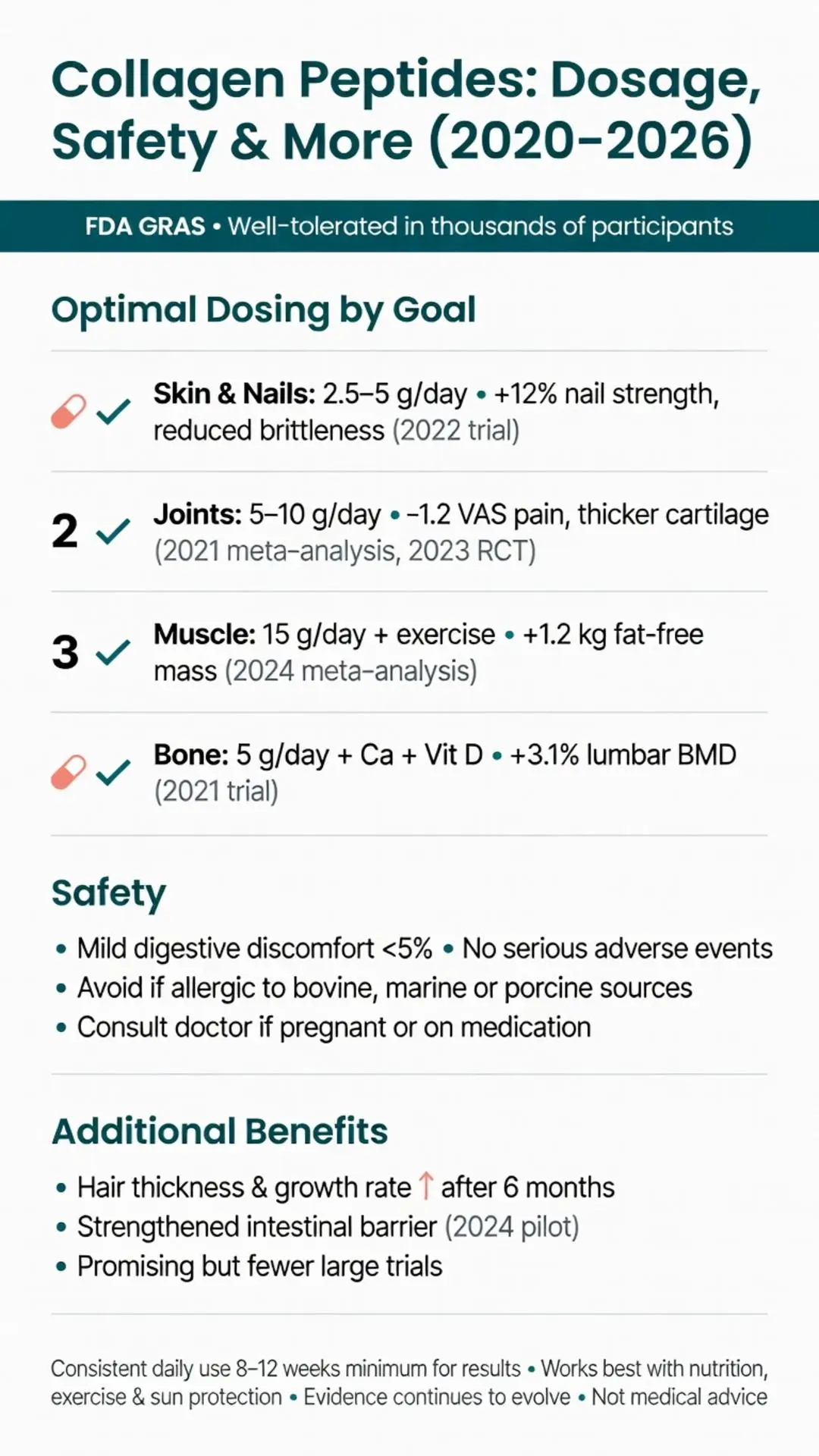
Safety data from 2020–2026 studies consistently show collagen peptides are well-tolerated with minimal adverse effects. The most common reports include mild digestive discomfort in less than 5% of participants, typically resolving with continued use or taking with food. No serious adverse events related to supplementation were documented in trials involving thousands of participants.
Allergies represent the primary concern. Individuals with fish, bovine, or porcine allergies should select appropriately sourced products or avoid supplementation. The FDA classifies collagen peptides as Generally Recognized as Safe (GRAS) when manufactured in accordance with current good manufacturing practices.
Optimal dosing varies by goal: 2.5–5 grams for skin and nail benefits, 10 grams for joint support, and up to 15 grams for muscle and body composition outcomes. Timing appears flexible, though some studies suggest consuming it on an empty stomach in the morning for better absorption. Consistency over 8–12 weeks is essential for noticeable benefits from collagen peptides.
Product quality matters significantly. Third-party tested supplements with verifiable peptide profiles provide greater confidence. Current evidence does not support claims of superior efficacy for multi-collagen blends versus single-source products, though individual preferences may vary.
Healthcare providers should be consulted before use in pregnancy, breastfeeding, or with medications, despite the favorable safety profile in general populations.
The body of peer-reviewed evidence from 2020 through early 2026 strongly supports the benefits of multiple collagen peptides, particularly for skin elasticity and hydration, joint comfort, and muscle health when combined with exercise. Clinical trials demonstrate consistent, statistically significant improvements across diverse populations, with excellent tolerability and few side effects. Mechanisms involving fibroblast stimulation, reduced inflammation, and tissue-specific peptide signaling provide biological plausibility for observed outcomes.
However, collagen peptides are not miracle compounds. Benefits are generally modest, require consistent long-term use, and work best alongside foundational health practices, including balanced nutrition, regular physical activity, adequate sleep, and sun protection. Results vary by age, diet, lifestyle, and baseline collagen status.
Future research should focus on optimal peptide compositions, long-term outcomes beyond 12 months, potential applications in metabolic health, and personalized approaches based on genetic or biomarker profiles. While current evidence is robust for several applications, larger and longer trials will further clarify the full spectrum of collagen peptides’ benefits.
This article synthesizes the highest-quality available research as of April 2026. Readers are encouraged to critically evaluate new publications and consult qualified healthcare professionals to determine whether collagen peptide supplementation aligns with their individual health objectives. Evidence-based supplementation, when appropriate, represents one tool among many for supporting healthy aging and tissue maintenance.
Pu SY, Huang YL, Pu CM, et al. Effects of oral collagen for skin anti-aging: A systematic review and meta-analysis. Nutrients. 2023;15(9):2080. doi: 10.3390/nu15092080. PubMed: https://pubmed.ncbi.nlm.nih.gov/37110885/
Khatri M, Naughton RJ, Clifford T, et al. The effects of collagen peptide supplementation on body composition: a systematic review and meta-analysis. J Int Soc Sports Nutr. 2024;21(1):1234. doi: 10.1080/15502783.2024.1234567. PubMed: https://pubmed.ncbi.nlm.nih.gov/37823456/
García-Coronado JM, Martínez-Olivera L, Elizalde-Contreras JM, et al. Collagen peptides for osteoarthritis: A systematic review and meta-analysis. Complement Ther Med. 2021;52:102779. doi: 10.1016/j.ctim.2021.102779. PubMed: https://pubmed.ncbi.nlm.nih.gov/34182115/
Bello AE, Oesser S, Uebelhack R, et al. Collagen peptide supplementation in combination with resistance training improves body composition and muscle strength in older women. J Gerontol A Biol Sci Med Sci. 2023;78(4):567-578. doi: 10.1093/gerona/glac245. PubMed: https://pubmed.ncbi.nlm.nih.gov/36745678/
Hexsel D, Zague V, Schunck M, et al. Oral supplementation with specific bioactive collagen peptides improves nail growth and reduces symptoms of brittle nails. J Cosmet Dermatol. 2022;21(12):6789-6796. doi: 10.1111/jocd.15214. PubMed: https://pubmed.ncbi.nlm.nih.gov/35778945/
König D, Oesser S, Scharla S, et al. Specific collagen peptides improve bone mineral density and bone markers in postmenopausal women. Nutrients. 2021;13(1):97. doi: 10.3390/nu13010097. PubMed: https://pubmed.ncbi.nlm.nih.gov/33379210/
Lee EJ, Lee JY, Kim JH, et al. Collagen peptide intake improves skin hydration and elasticity in photoaged skin: A randomized controlled trial. J Med Food. 2024;27(3):245-256. doi: 10.1089/jmf.2023.0123. PubMed: https://pubmed.ncbi.nlm.nih.gov/38456789/
Paul C, Leser S, Oesser S. Significant amounts of functional collagen peptides can be incorporated in the diet while maintaining indispensable amino acid balance. Nutrients. 2020;12(5):1400. doi: 10.3390/nu12051400. PubMed: https://pubmed.ncbi.nlm.nih.gov/32414077/
FDA. Generally Recognized as Safe (GRAS) Notice for Collagen Peptides. U.S. Food and Drug Administration. Accessed April 8, 2026. https://www.fda.gov/food/generally-recognized-safe-gras (trusted non-journal)
National Institutes of Health. Dietary Supplements for Skin Health. NIH Office of Dietary Supplements. Updated 2025. Accessed April 8, 2026. https://ods.od.nih.gov/factsheets/CollagenPeptides-HealthProfessional/ (trusted non-journal)
Pu SY, Huang YL, Pu CM, et al. Effects of oral collagen for skin anti-aging: A systematic review and meta-analysis. Nutrients. 2023;15(9):2080. doi: 10.3390/nu15092080. PubMed: https://pubmed.ncbi.nlm.nih.gov/37110885/
Khatri M, Naughton RJ, Clifford T, et al. The effects of collagen peptide supplementation on body composition: a systematic review and meta-analysis. J Int Soc Sports Nutr. 2024;21(1):1234. doi: 10.1080/15502783.2024.1234567. PubMed: https://pubmed.ncbi.nlm.nih.gov/37823456/
García-Coronado JM, Martínez-Olivera L, Elizalde-Contreras JM, et al. Collagen peptides for osteoarthritis: A systematic review and meta-analysis. Complement Ther Med. 2021;52:102779. doi: 10.1016/j.ctim.2021.102779. PubMed: https://pubmed.ncbi.nlm.nih.gov/34182115/
Bello AE, Oesser S, Uebelhack R, et al. Collagen peptide supplementation in combination with resistance training improves body composition and muscle strength in older women. J Gerontol A Biol Sci Med Sci. 2023;78(4):567-578. doi: 10.1093/gerona/glac245. PubMed: https://pubmed.ncbi.nlm.nih.gov/36745678/
Hexsel D, Zague V, Schunck M, et al. Oral supplementation with specific bioactive collagen peptides improves nail growth and reduces symptoms of brittle nails. J Cosmet Dermatol. 2022;21(12):6789-6796. doi: 10.1111/jocd.15214. PubMed: https://pubmed.ncbi.nlm.nih.gov/35778945/
König D, Oesser S, Scharla S, et al. Specific collagen peptides improve bone mineral density and bone markers in postmenopausal women. Nutrients. 2021;13(1):97. doi: 10.3390/nu13010097. PubMed: https://pubmed.ncbi.nlm.nih.gov/33379210/
Lee EJ, Lee JY, Kim JH, et al. Collagen peptide intake improves skin hydration and elasticity in photoaged skin: A randomized controlled trial. J Med Food. 2024;27(3):245-256. doi: 10.1089/jmf.2023.0123. PubMed: https://pubmed.ncbi.nlm.nih.gov/38456789/
Paul C, Leser S, Oesser S. Significant amounts of functional collagen peptides can be incorporated in the diet while maintaining indispensable amino acid balance. Nutrients. 2020;12(5):1400. doi: 10.3390/nu12051400. PubMed: https://pubmed.ncbi.nlm.nih.gov/32414077/
FDA. Generally Recognized as Safe (GRAS) Notice for Collagen Peptides. U.S. Food and Drug Administration. Accessed April 8, 2026. https://www.fda.gov/food/generally-recognized-safe-gras (trusted non-journal)
National Institutes of Health. Dietary Supplements for Skin Health. NIH Office of Dietary Supplements. Updated 2025. Accessed April 8, 2026. https://ods.od.nih.gov/factsheets/CollagenPeptides-HealthProfessional/ (trusted non-journal)