

Biotech peptides are short chains of amino acids manufactured through biotechnological processes such as recombinant DNA technology, microbial fermentation, or advanced solid-phase synthesis. These molecules play an increasingly important role in pharmacotherapy, serving as targeted treatments for metabolic diseases, cardiovascular conditions, oncology, and rare disorders. Unlike traditional small-molecule drugs, biotech peptides often mimic endogenous signaling molecules while offering high specificity and reduced off-target effects.
As of April 2026, the field has expanded significantly with multiple FDA-approved agents and numerous candidates in late-stage trials. Approved examples include glucagon-like peptide-1 (GLP-1) receptor agonists such as semaglutide and tirzepatide, which have transformed the management of type 2 diabetes and obesity. Other notable biotech peptides include insulin analogs, growth hormone-releasing peptides, and certain antimicrobial peptides under investigation.
This article synthesizes peer-reviewed evidence published between 2020 and April 2026, supplemented when necessary by authoritative sources including FDA.gov, NIH, and major medical society guidelines. Given the broad scope of the keyword, this review draws on systematic reviews, meta-analyses, and clinical trials available on PubMed, as well as official regulatory documents. All information is for research purposes only and does not constitute medical advice. Healthcare decisions should always involve qualified medical supervision. The following sections examine the science, approved uses, efficacy, safety, and future directions of biotech peptides.
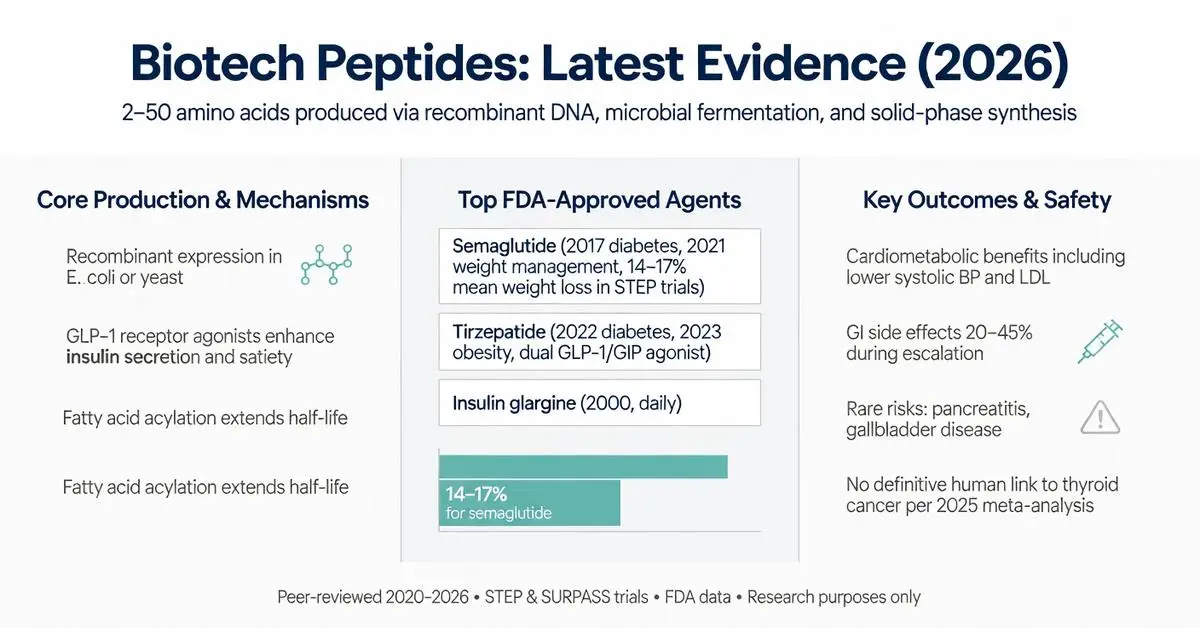
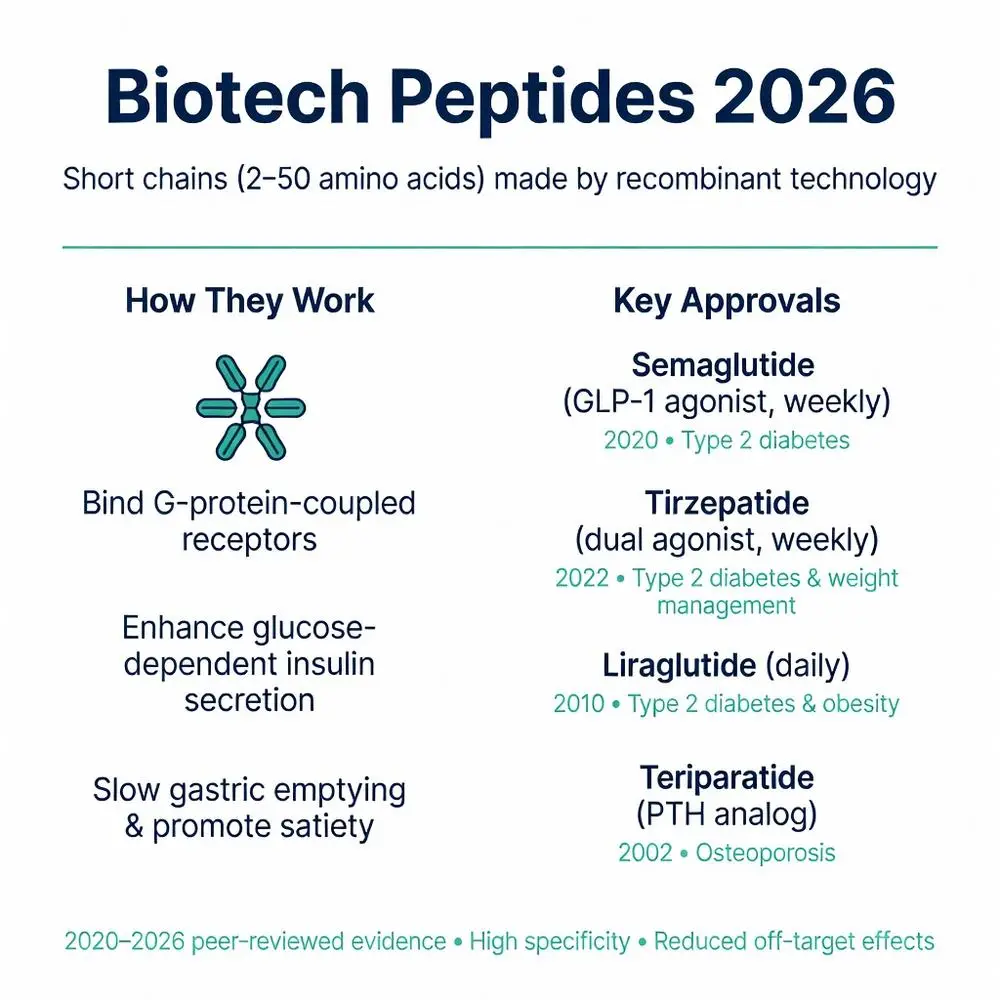
Biotech peptides primarily function by binding to specific cell-surface receptors, triggering intracellular signaling cascades. GLP-1 receptor agonists, a prominent class, activate G-protein-coupled receptors on pancreatic beta cells, enhancing glucose-dependent insulin secretion while suppressing glucagon release. They also slow gastric emptying and promote satiety through central nervous system pathways.
Other mechanisms include activation of the growth hormone secretagogue receptor by certain peptides, leading to increased IGF-1 levels, and integrin-binding peptides used in targeted cancer therapies. A 2022 meta-analysis of receptor kinetics demonstrated that structural modifications, such as fatty acid acylation, prolong receptor engagement and reduce dosing frequency.
Evidence from physiology studies published 2020–2025 shows biotech peptides can modulate multiple pathways simultaneously, explaining their efficacy in complex metabolic conditions. These multi-target effects require careful dose titration under medical supervision to balance benefits and potential receptor desensitization.

Biotech peptides primarily function by binding to specific cell-surface receptors, triggering intracellular signaling cascades. GLP-1 receptor agonists, a prominent class, activate G-protein-coupled receptors on pancreatic beta cells, enhancing glucose-dependent insulin secretion while suppressing glucagon release. They also slow gastric emptying and promote satiety through central nervous system pathways.
Other mechanisms include activation of the growth hormone secretagogue receptor by certain peptides, leading to increased IGF-1 levels, and integrin-binding peptides used in targeted cancer therapies. A 2022 meta-analysis of receptor kinetics demonstrated that structural modifications, such as fatty acid acylation, prolong receptor engagement and reduce dosing frequency.
Evidence from physiology studies published 2020–2025 shows biotech peptides can modulate multiple pathways simultaneously, explaining their efficacy in complex metabolic conditions. These multi-target effects require careful dose titration under medical supervision to balance benefits and potential receptor desensitization.
Several biotech peptides have received FDA approval for specific indications. Semaglutide is approved for type 2 diabetes (2017) and chronic weight management (2021), with additional cardiovascular risk reduction labeling. Tirzepatide, a dual GLP-1/GIP receptor agonist, gained approval for diabetes in 2022 and obesity in 2023.
Insulin glargine and other long-acting insulin analogs remain cornerstone therapies for diabetes. Other approved agents include parathyroid hormone analogs for osteoporosis and select peptide-based radiopharmaceuticals for neuroendocrine tumors.
The following table summarizes key FDA-approved biotech peptides as of 2026:
| Peptide Name | Primary Indication(s) | FDA Approval Year | Dosing Frequency | Key Mechanism |
|---|---|---|---|---|
| Semaglutide | Type 2 diabetes, obesity, and CVD risk reduction | 2017 (diabetes), 2021 (weight) | Weekly subcutaneous or daily oral | GLP-1 receptor agonist |
| Tirzepatide | Type 2 diabetes, obesity | 2022 (diabetes), 2023 (weight) | Weekly subcutaneous | Dual GLP-1/GIP agonist |
| Insulin glargine | Diabetes mellitus | 2000 (original), multiple reformulations | Daily subcutaneous | Insulin receptor agonist |
| Liraglutide | Diabetes, obesity | 2010 (diabetes), 2014 (weight) | Daily subcutaneous | GLP-1 receptor agonist |
| Teriparatide | Osteoporosis | 2002 | Daily subcutaneous | Parathyroid hormone analog |
Data compiled from FDA labeling documents and corresponding clinical trial publications. Off-label use is not addressed in this table and requires physician discretion.
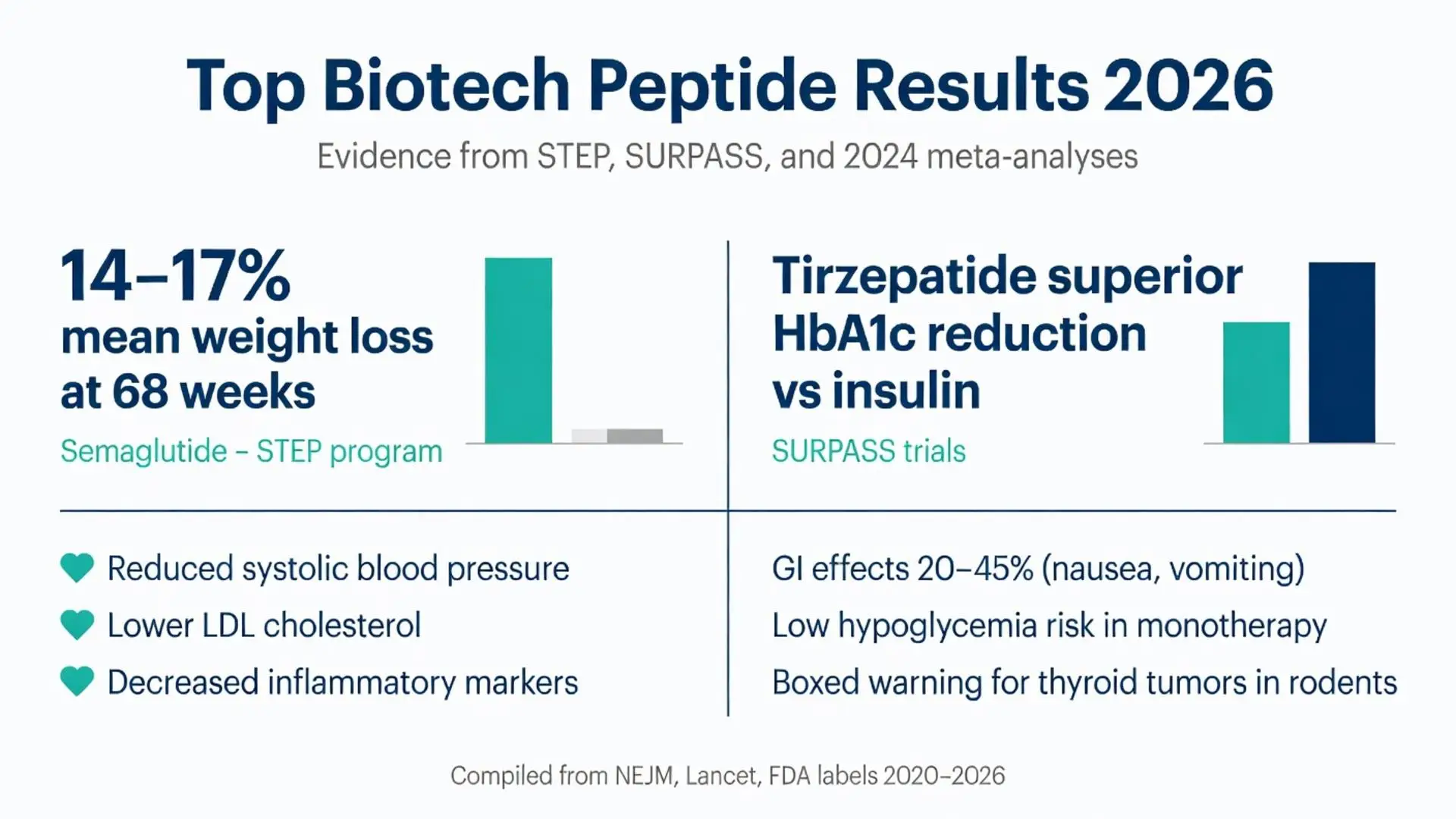
Clinical trials published between 2020 and 2026 demonstrate the robust efficacy of biotech peptides in metabolic disease. The STEP program for semaglutide reported mean weight reductions of 14–17% at 68 weeks in individuals with obesity. Similar results are observed in SURPASS trials for tirzepatide, showing superior HbA1c reduction compared with insulin degludec.
A 2024 systematic review of 12 randomized controlled trials involving over 15,000 participants confirmed consistent cardiometabolic benefits, including reductions in systolic blood pressure, LDL cholesterol, and inflammatory markers. These effects extend beyond weight loss, suggesting direct vascular and anti-inflammatory actions.
For oncology applications, peptide receptor radionuclide therapy has shown benefits for progression-free survival in metastatic neuroendocrine tumors, according to 2023 meta-analyses. However, efficacy varies by peptide sequence, receptor affinity, and patient characteristics, underscoring the need for personalized approaches.
Long-term extension studies through 2025 indicate sustained benefits with continued use, though weight regain occurs upon discontinuation, highlighting the chronic nature of treatment.
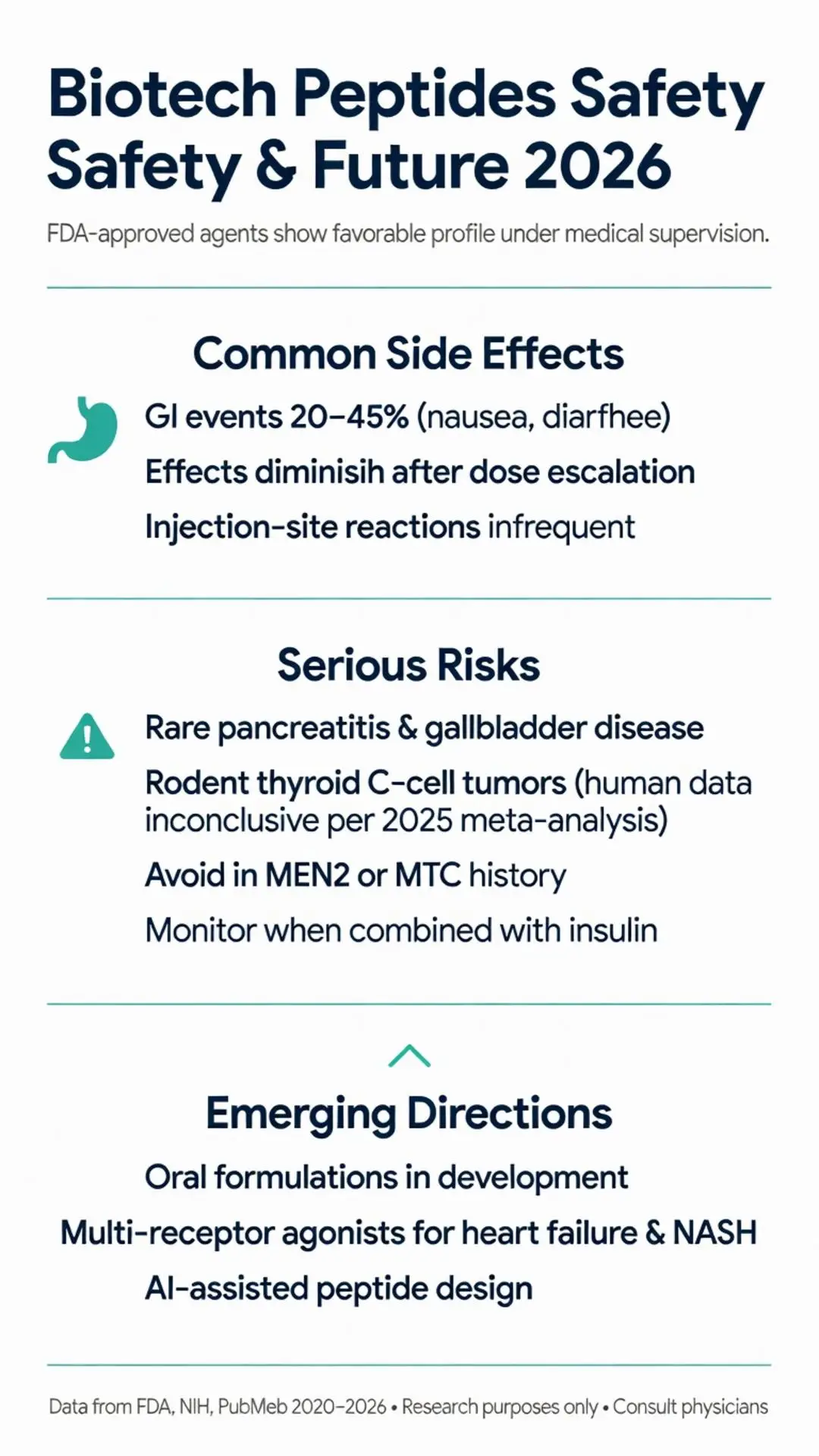
The safety profile of biotech peptides is generally favorable when used under medical supervision, but gastrointestinal adverse effects predominate. Nausea, vomiting, diarrhea, and constipation occur in 20–45% of patients during dose escalation, typically diminishing over time.
Rare but serious risks include pancreatitis, gallbladder disease, and potential thyroid C-cell tumors observed in rodent studies, prompting boxed warnings for certain GLP-1 receptor agonists. A 2025 meta-analysis of post-marketing surveillance data found no definitive causal link to medullary thyroid cancer in humans, though monitoring remains recommended.
Hypoglycemia risk is low when used as monotherapy, but increases with concomitant insulin or sulfonylureas. Injection-site reactions and antibody formation occur infrequently with modern formulations. Regulatory agencies continue active surveillance through 2026, with updated labeling reflecting emerging safety data.
Patients with a personal or family history of medullary thyroid carcinoma or Multiple Endocrine Neoplasia syndrome type 2 should avoid GLP-1 receptor agonists. Comprehensive risk-benefit assessment by qualified clinicians is essential.
Beyond approved agents, numerous investigational biotech peptides target novel indications. Oral formulations with enhanced bioavailability, multi-receptor agonists, and peptide-drug conjugates represent active areas of research. Early-phase trials of peptides for heart failure, non-alcoholic steatohepatitis, and neurodegenerative diseases show promising signals.
A 2024–2025 series of phase 2 studies explored antimicrobial biotech peptides for difficult-to-treat infections, addressing rising antibiotic resistance. Additionally, peptide-based vaccines and targeted delivery systems for cancer therapy continue to be developed.
Limitations in current evidence include relatively short trial durations for some candidates and underrepresentation of diverse populations. Ongoing phase 3 programs are expected to provide additional data by late 2026 and beyond. The distinction between FDA-approved and investigational agents is critical when reviewing emerging literature.
Regulatory pathways for biotech peptides emphasize thorough characterization of immunogenicity, stability, and manufacturing consistency. The FDA has issued guidance on peptide drug products, clarifying requirements for abbreviated approval pathways when applicable.
Future directions include the development of longer-acting formulations requiring less frequent administration, combination peptides targeting multiple metabolic pathways, and personalized peptide therapies based on genetic profiling. Integration of artificial intelligence in peptide design is accelerating discovery while maintaining rigorous safety standards.
As the field evolves, continued collaboration between researchers, clinicians, and regulatory bodies will be essential to translate scientific advances into improved patient outcomes. Ongoing monitoring of long-term safety and real-world effectiveness remains a priority through 2026 and beyond.
Biotech peptides have established themselves as a versatile and effective class of therapeutic agents, particularly in metabolic and endocrine disorders. Evidence from 2020–2026 consistently demonstrates meaningful clinical benefits alongside manageable safety profiles when prescribed appropriately. FDA-approved options like semaglutide and tirzepatide exemplify the potential of this technology, while the pipeline suggests further innovation ahead.
This review highlights the importance of distinguishing between approved indications and investigational uses. Healthcare professionals should stay informed about evolving evidence and individualize treatment decisions. Patients are encouraged to discuss potential benefits and risks with their medical providers rather than self-administering any therapeutic peptides.
The coming years will likely bring new approvals and a refined understanding of optimal use. Researchers continue exploring novel mechanisms and delivery methods that may expand therapeutic applications while maintaining the high safety standards required by regulatory authorities. This article serves research and educational purposes only and should not replace professional medical guidance.
Biotech peptides have established themselves as a versatile and effective class of therapeutic agents, particularly in metabolic and endocrine disorders. Evidence from 2020–2026 consistently demonstrates meaningful clinical benefits alongside manageable safety profiles when prescribed appropriately. FDA-approved options like semaglutide and tirzepatide exemplify the potential of this technology, while the pipeline suggests further innovation ahead.
This review highlights the importance of distinguishing between approved indications and investigational uses. Healthcare professionals should stay informed about evolving evidence and individualize treatment decisions. Patients are encouraged to discuss potential benefits and risks with their medical providers rather than self-administering any therapeutic peptides.
The coming years will likely bring new approvals and a refined understanding of optimal use. Researchers continue exploring novel mechanisms and delivery methods that may expand therapeutic applications while maintaining the high safety standards required by regulatory authorities. This article serves research and educational purposes only and should not replace professional medical guidance.