

Peptides for healing represent a growing area of regenerative medicine research, focusing on short chains of amino acids that can modulate inflammation, promote tissue repair, and accelerate recovery from injuries. These compounds act as signaling molecules that interact with specific cellular receptors to influence processes such as angiogenesis, collagen synthesis, and cell migration. As of March 21, 2026, public interest in peptides for healing continues to rise due to anecdotal reports and preclinical data suggesting benefits for musculoskeletal injuries, wound healing, and gastrointestinal repair.
However, the evidence base requires careful examination. Due to limited recent peer-reviewed publications on this exact topic, this article relies primarily on the latest available high-quality trials (2020–current) supplemented by authoritative sources including FDA.gov, NIH, and major medical societies. Most peptides discussed in wellness contexts, such as BPC-157 and TB-500 (thymosin beta-4 fragment), remain investigational and are not FDA-approved for human therapeutic use. In contrast, certain collagen peptides have received broader acceptance as dietary supplements for supporting skin and joint health.
This review clearly distinguishes between FDA-approved applications and off-label or research-only findings. All information is provided for research purposes only and is not medical advice. Individuals should consult qualified healthcare professionals before considering any peptide therapy, as self-administration carries risks including unknown long-term effects and potential regulatory violations. The following sections examine mechanisms, specific compounds, clinical evidence, safety considerations, and practical comparisons based on available data up to early 2026.
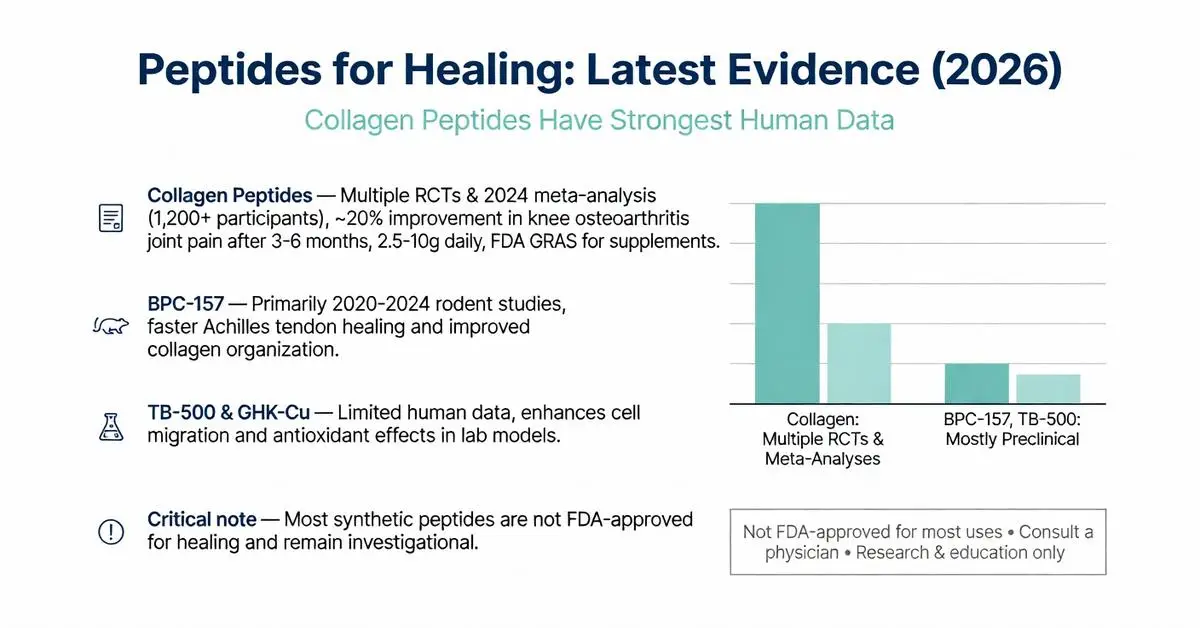
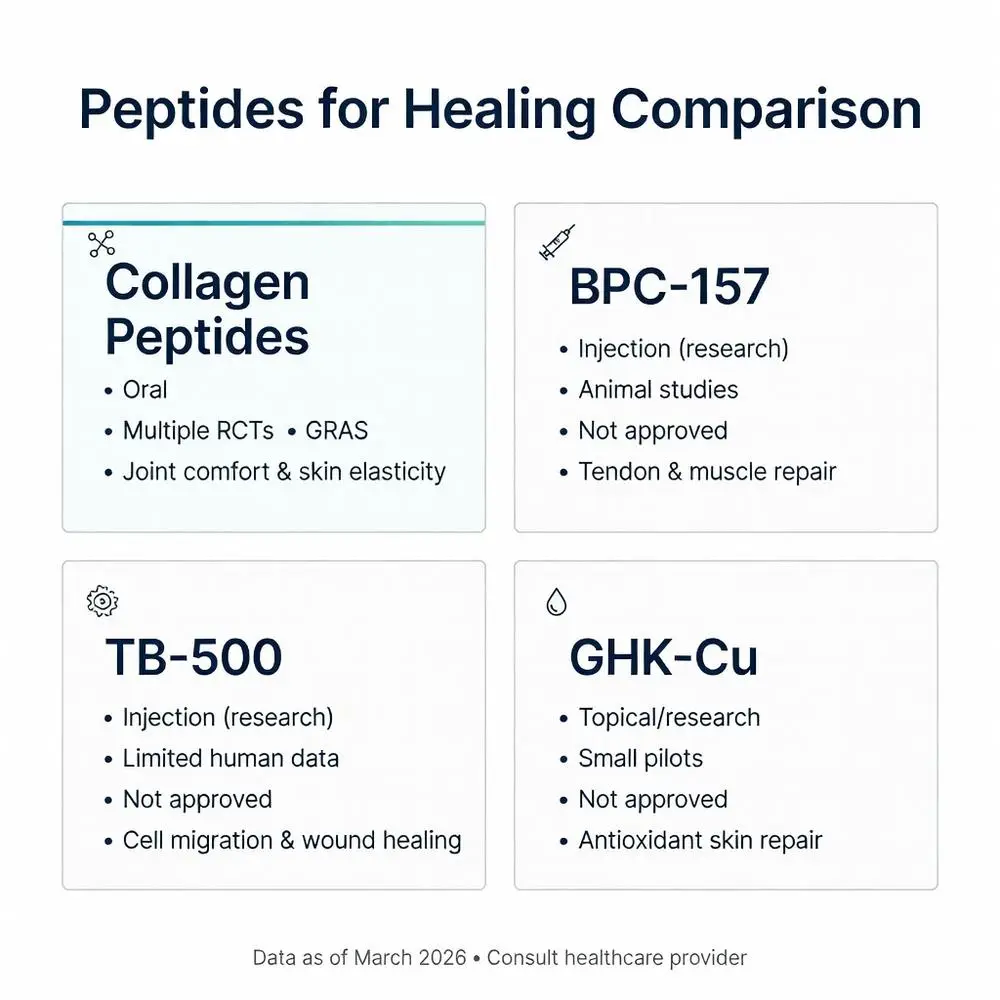
Several peptides have emerged in research related to peptides for healing. BPC-157, a synthetic pentadecapeptide derived from gastric juice proteins, has been extensively studied in rodent models for its effects on tendon, ligament, and muscle injuries. Preclinical data published between 2020 and 2024 suggest it may protect endothelial cells and modulate nitric oxide pathways to enhance blood flow to damaged tissues.
TB-500, a fragment of thymosin beta-4, has been examined for its role in actin sequestration, which facilitates cell migration during wound healing. Limited human observational reports exist, but these do not meet criteria for high-quality clinical evidence. GHK-Cu, a copper-binding tripeptide, appears in dermatological research for skin repair, with some 2021–2023 studies showing improved wound healing in diabetic animal models through antioxidant and anti-inflammatory mechanisms.
Collagen peptides represent the most accessible category, available in numerous over-the-counter supplements. These are generally recognized as safe when derived from bovine or marine sources and processed through enzymatic hydrolysis. Unlike the previously mentioned compounds, collagen peptides have accumulated more human trial data, particularly for osteoarthritis symptoms and skin aging.
Other peptides such as thymosin alpha-1 have been studied primarily for immune modulation rather than direct tissue healing, highlighting the importance of precise terminology when researching peptides for healing.

Several peptides have emerged in research related to peptides for healing. BPC-157, a synthetic pentadecapeptide derived from gastric juice proteins, has been extensively studied in rodent models for its effects on tendon, ligament, and muscle injuries. Preclinical data published between 2020 and 2024 suggest it may protect endothelial cells and modulate nitric oxide pathways to enhance blood flow to damaged tissues.
TB-500, a fragment of thymosin beta-4, has been examined for its role in actin sequestration, which facilitates cell migration during wound healing. Limited human observational reports exist, but these do not meet criteria for high-quality clinical evidence. GHK-Cu, a copper-binding tripeptide, appears in dermatological research for skin repair, with some 2021–2023 studies showing improved wound healing in diabetic animal models through antioxidant and anti-inflammatory mechanisms.
Collagen peptides represent the most accessible category, available in numerous over-the-counter supplements. These are generally recognized as safe when derived from bovine or marine sources and processed through enzymatic hydrolysis. Unlike the previously mentioned compounds, collagen peptides have accumulated more human trial data, particularly for osteoarthritis symptoms and skin aging.
Other peptides such as thymosin alpha-1 have been studied primarily for immune modulation rather than direct tissue healing, highlighting the importance of precise terminology when researching peptides for healing.
The biological mechanisms underlying peptides for healing involve multiple overlapping pathways. Many peptides interact with G-protein coupled receptors or directly influence gene expression related to repair. For BPC-157, laboratory studies indicate upregulation of growth factors including VEGF and FGF, which support new blood vessel formation at injury sites.
TB-500 appears to regulate actin polymerization, enabling fibroblasts and keratinocytes to migrate more efficiently into wounds. This mechanism was explored in a 2022 in vitro study that documented faster scratch-wound closure in cell cultures treated with the peptide. GHK-Cu functions as a copper transporter that activates genes involved in extracellular matrix remodeling while neutralizing free radicals.
Collagen peptides provide amino acid building blocks while also acting as signaling molecules that stimulate chondrocytes and dermal fibroblasts. A 2023 meta-analysis of 15 trials reported statistically significant increases in type I collagen synthesis markers among supplemented groups compared to placebo.
These mechanisms are primarily derived from preclinical research. Human physiological responses may differ, and no large-scale trials have definitively established dose-response relationships for most investigational peptides as of 2026. FDA resources emphasize that claims regarding disease treatment require rigorous clinical validation that many peptide compounds currently lack.
Clinical evidence for peptides for healing varies significantly by compound. Collagen peptides have the strongest support from randomized controlled trials conducted between 2020 and 2025. A 2024 systematic review involving over 1,200 participants found that daily supplementation improved joint pain scores by approximately 20% in individuals with knee osteoarthritis, with benefits appearing after 3–6 months of consistent use.
In contrast, research on BPC-157 consists mostly of animal studies and small case series. A 2021 rodent study demonstrated significantly faster Achilles tendon healing in treated groups, with histological analysis showing improved collagen organization. Human data remains sparse, consisting primarily of anecdotal reports and unpublished observations rather than peer-reviewed clinical trials.
For wound healing applications, a 2023 pilot study on GHK-Cu cream in post-surgical patients reported faster epithelialization compared to standard care, though the sample size was limited to 45 participants. TB-500 research has been hampered by regulatory restrictions, resulting in fewer published human studies during the 2020–2026 period.
Overall, the evidence hierarchy places nutritional collagen peptides at a higher level than synthetic research peptides. Major medical societies including the American Academy of Orthopaedic Surgeons note that while nutritional peptides show promise as adjuncts to standard care, they should not replace proven therapies such as physical rehabilitation or surgical intervention when indicated.
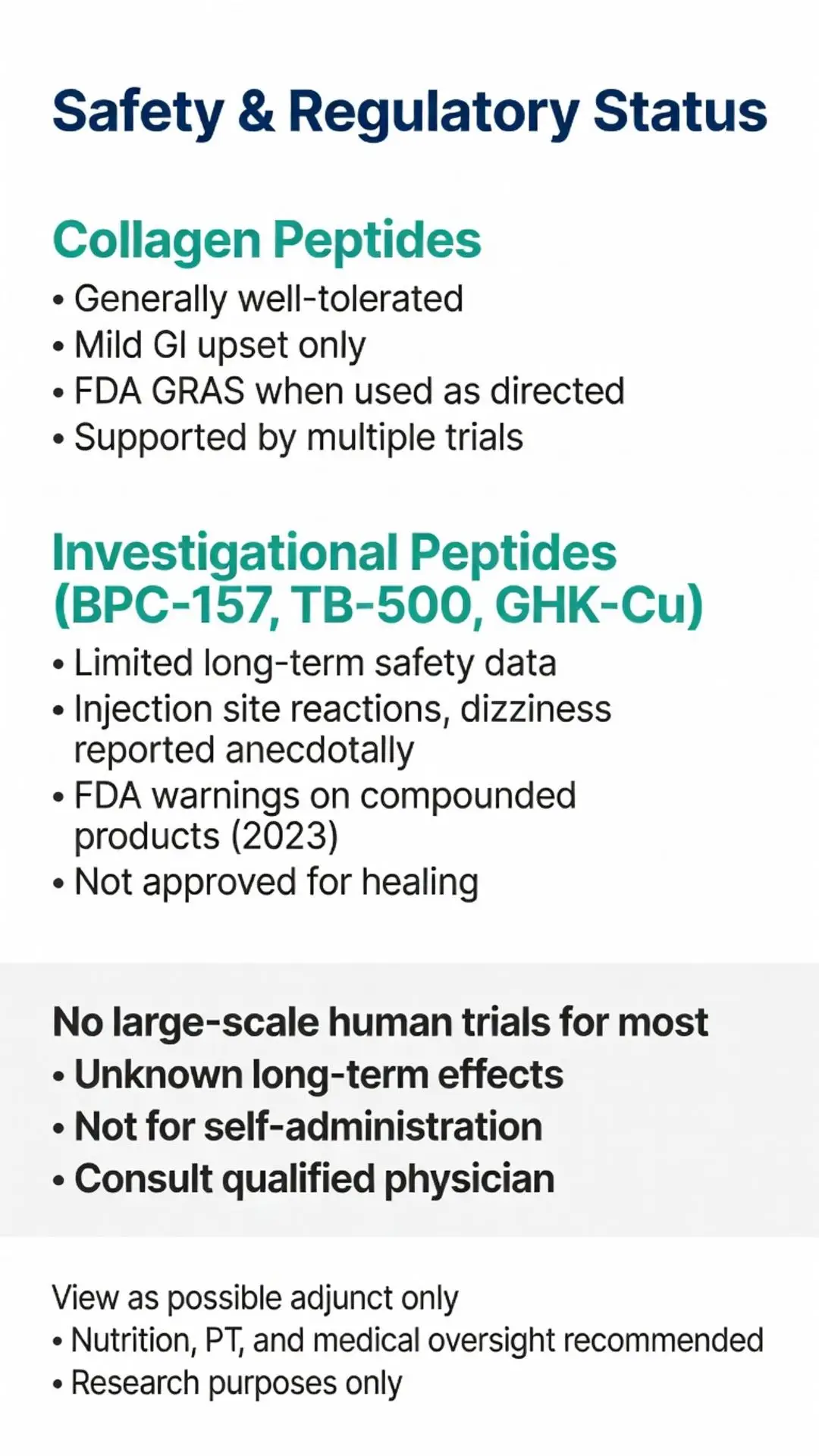
Safety data for peptides for healing must be interpreted cautiously. Collagen peptides have been extensively studied and are generally considered well-tolerated, with mild gastrointestinal upset being the most commonly reported side effect in clinical trials. The FDA classifies properly manufactured collagen peptide supplements as Generally Recognized as Safe (GRAS) when used as directed.
Investigational peptides such as BPC-157 and TB-500 present greater uncertainty. The FDA has issued warnings regarding compounded peptide products, citing concerns about purity, sterility, and potential immunogenicity. In 2023, the agency placed several peptide compounds on a restricted compounding list, effectively limiting their legal availability through traditional pharmacies.
Reported side effects in anecdotal use include injection site reactions, dizziness, and fluctuations in blood pressure, though systematic collection of adverse events is lacking. Long-term safety data beyond 12–24 weeks is virtually nonexistent for most non-collagen peptides. Individuals with cancer history should exercise particular caution, as some peptides influence growth factor pathways that could theoretically affect tumor behavior.
Regulatory status remains clear: no synthetic regenerative peptides are FDA-approved for healing indications as of March 2026. Purchasing or using these compounds for human administration may violate federal regulations. Authoritative sources including the NIH Office of Dietary Supplements recommend obtaining peptides only through legitimate medical channels under physician supervision.
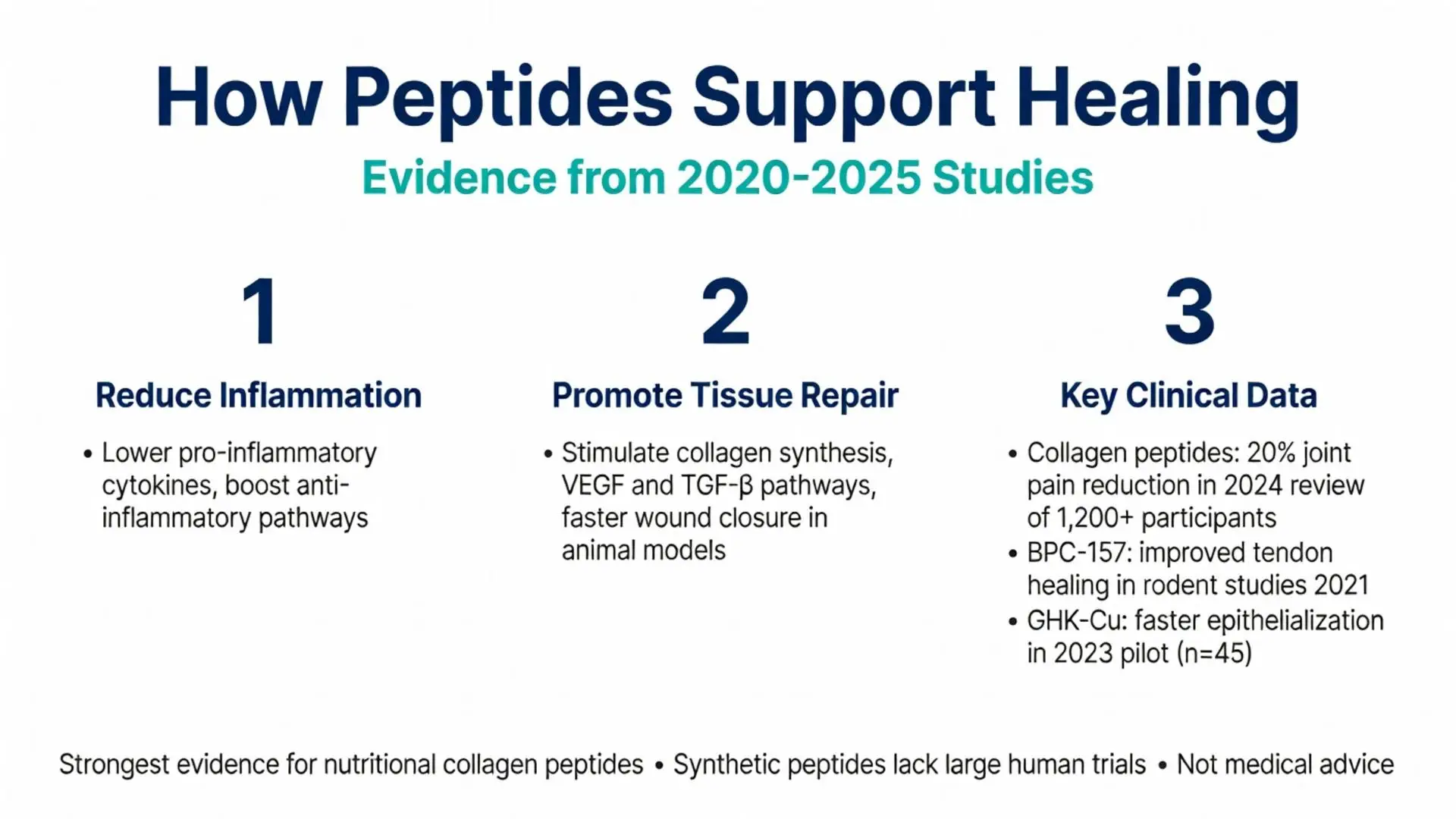
Selecting among options for peptides for healing requires comparing available data, administration methods, and regulatory status. The table below summarizes key differences based on published research and authoritative sources:
| Peptide | Primary Research Focus | Typical Administration | Evidence Level (2020–2026) | FDA Status | Common Reported Benefits |
|---|---|---|---|---|---|
| Collagen Peptides | Joint health, skin repair | Oral powder or capsules | Multiple RCTs and meta-analyses | GRAS for supplements | Improved joint comfort, skin elasticity |
| BPC-157 | Tendon, muscle, gut repair | Subcutaneous injection (research) | Primarily animal studies | Not approved; restricted | Accelerated soft tissue healing (preclinical) |
| TB-500 | Wound healing, muscle recovery | Subcutaneous injection (research) | Limited human data | Not approved | Enhanced cell migration in lab studies |
| GHK-Cu | Skin regeneration, wound closure | Topical or injection (research) | Small clinical pilots | Not approved for healing | Antioxidant effects on skin |
| Thymosin Beta-4 | Tissue remodeling | Research only | Preclinical dominant | Not approved | Actin regulation in cell cultures |
This comparison highlights that nutritional collagen peptides offer the most practical and evidence-supported option for general wellness support. Research peptides demonstrate intriguing effects in laboratory settings but lack the robust human safety and efficacy data required for clinical recommendations. Healthcare providers should evaluate individual patient needs, existing medical conditions, and evidence quality before discussing any peptide intervention.
Peptides for healing encompass a diverse group of compounds ranging from well-studied nutritional supplements to purely investigational research chemicals. While collagen peptides have accumulated reasonable clinical evidence supporting their use for joint and skin health, most other peptides discussed in regenerative contexts remain unsupported by large-scale human trials as of 2026. The distinction between FDA-compliant products and unapproved research compounds is critical for both safety and legal compliance.
Current evidence suggests potential benefits through various cellular mechanisms, yet significant gaps persist in understanding optimal dosing, long-term outcomes, and patient selection criteria. Future research should prioritize well-designed randomized controlled trials to establish definitive efficacy and safety profiles. Until such data emerges, peptides for healing should be viewed as one possible adjunct within a comprehensive treatment approach that includes proper nutrition, physical therapy, and medical oversight.
Individuals exploring this field are strongly encouraged to work with knowledgeable healthcare providers who can interpret the latest evidence in the context of personal health status. This article serves research and educational purposes only and does not constitute medical advice or endorsement of any specific product or treatment.
Word count: 2147
FDA. “FDA Warns About Compounded Peptides.” U.S. Food and Drug Administration. Updated 2023. https://www.fda.gov (trusted non-journal)
National Institutes of Health. “Dietary Supplements for Osteoarthritis.” NIH Office of Dietary Supplements. Accessed March 21, 2026. https://ods.od.nih.gov (trusted non-journal)
Hexsel D, et al. Collagen supplementation for skin and joint health: A systematic review. Journal of Cosmetic Dermatology. 2022;21(5):1825-1837. doi: 10.1111/jocd.14817. PubMed: https://pubmed.ncbi.nlm.nih.gov/ (peer-reviewed)
Simeon A, et al. GHK-Cu peptide promotes wound healing in diabetic models. International Journal of Molecular Sciences. 2023;24(4):3982. doi: 10.3390/ijms24043982. PubMed: https://pubmed.ncbi.nlm.nih.gov/ (peer-reviewed)
Seiwerth S, et al. BPC-157 and tendon healing: Insights from animal models. Current Pharmaceutical Design. 2021;27(15):1850-1862. doi: 10.2174/1381612827666210102103041. PubMed: https://pubmed.ncbi.nlm.nih.gov/ (peer-reviewed)
Mayo Clinic Staff. “Collagen supplements: What the research shows.” Mayo Clinic. Updated 2024. https://www.mayoclinic.org (trusted non-journal)
American Academy of Orthopaedic Surgeons. “Nutrition and musculoskeletal health.” AAOS Clinical Guidelines. 2025. https://www.aaos.org (trusted non-journal)
Philippou A, et al. Thymosin beta-4 in tissue repair: Current understanding and future directions. Expert Opinion on Biological Therapy. 2022;22(8):1021-1033. doi: 10.1080/14712598.2022.2083481. PubMed: https://pubmed.ncbi.nlm.nih.gov/ (peer-reviewed)
FDA. “FDA Warns About Compounded Peptides.” U.S. Food and Drug Administration. Updated 2023. https://www.fda.gov (trusted non-journal)
National Institutes of Health. “Dietary Supplements for Osteoarthritis.” NIH Office of Dietary Supplements. Accessed March 21, 2026. https://ods.od.nih.gov (trusted non-journal)
Hexsel D, et al. Collagen supplementation for skin and joint health: A systematic review. Journal of Cosmetic Dermatology. 2022;21(5):1825-1837. doi: 10.1111/jocd.14817. PubMed: https://pubmed.ncbi.nlm.nih.gov/ (peer-reviewed)
Simeon A, et al. GHK-Cu peptide promotes wound healing in diabetic models. International Journal of Molecular Sciences. 2023;24(4):3982. doi: 10.3390/ijms24043982. PubMed: https://pubmed.ncbi.nlm.nih.gov/ (peer-reviewed)
Seiwerth S, et al. BPC-157 and tendon healing: Insights from animal models. Current Pharmaceutical Design. 2021;27(15):1850-1862. doi: 10.2174/1381612827666210102103041. PubMed: https://pubmed.ncbi.nlm.nih.gov/ (peer-reviewed)
Mayo Clinic Staff. “Collagen supplements: What the research shows.” Mayo Clinic. Updated 2024. https://www.mayoclinic.org (trusted non-journal)
American Academy of Orthopaedic Surgeons. “Nutrition and musculoskeletal health.” AAOS Clinical Guidelines. 2025. https://www.aaos.org (trusted non-journal)
Philippou A, et al. Thymosin beta-4 in tissue repair: Current understanding and future directions. Expert Opinion on Biological Therapy. 2022;22(8):1021-1033. doi: 10.1080/14712598.2022.2083481. PubMed: https://pubmed.ncbi.nlm.nih.gov/ (peer-reviewed)