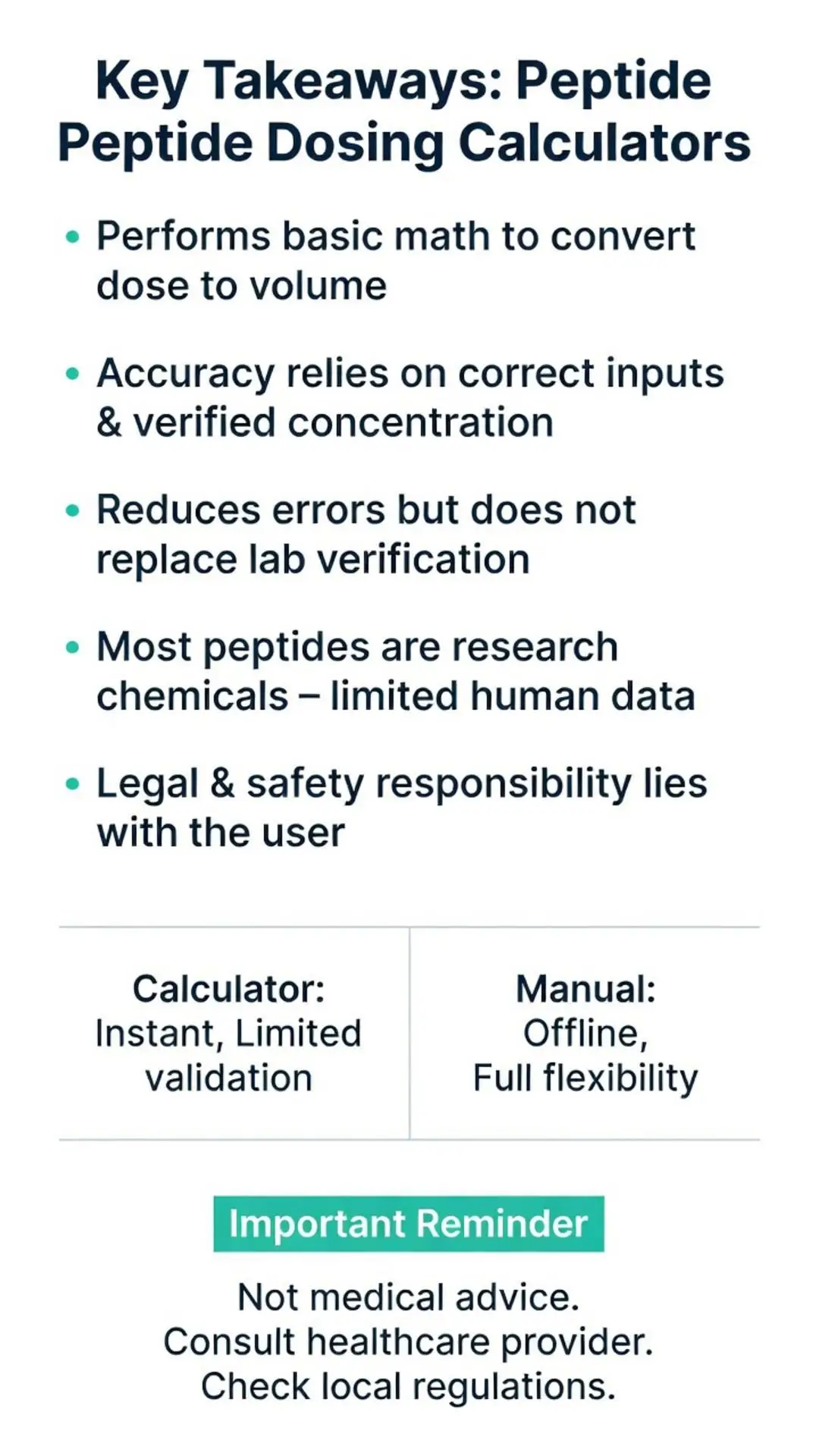

Quick Answer: A peptide dosing calculator is an online tool that converts a desired research dose into the correct volume of reconstituted peptide solution based on vial strength and user body weight. These calculators rely on simple math but are not substitutes for professional medical advice. Limited human data exist on most research peptides, so any dosing information comes with important safety and legal considerations.
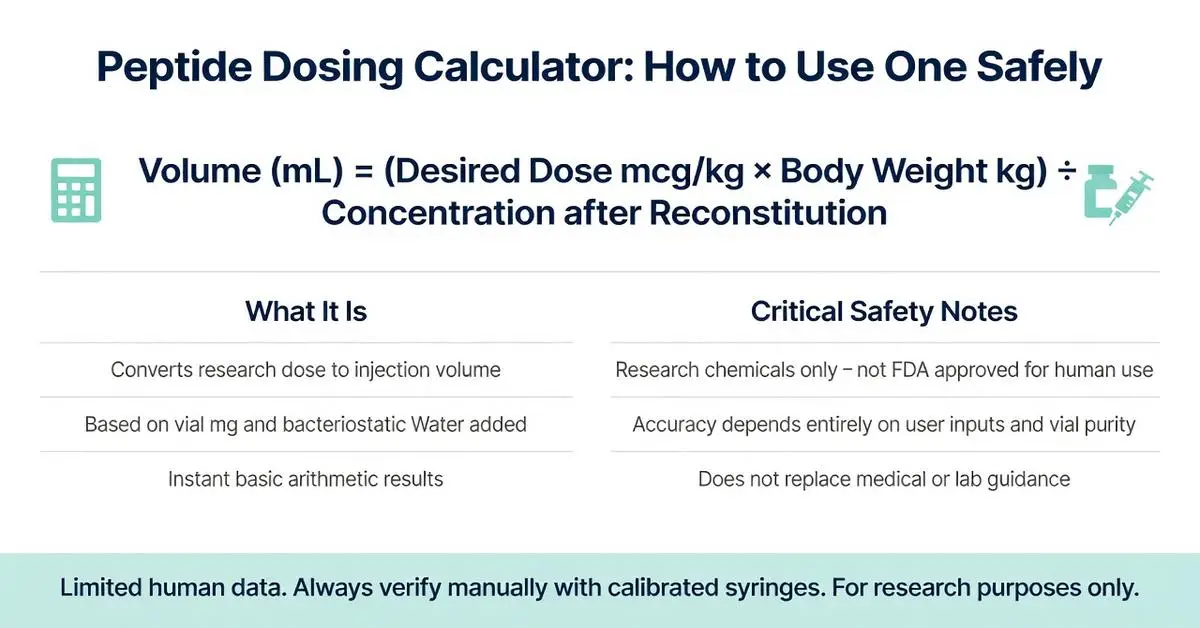
Users enter the peptide name, vial amount in milligrams, desired dose in micrograms per kilogram, and body weight. The calculator then outputs the volume in milliliters or units needed.
Formulas usually follow this pattern: volume = (desired dose × body weight) ÷ concentration after mixing. Concentration depends on how much bacteriostatic water was added to the vial.
Results appear instantly but remain estimates only. Slight variations in mixing technique or vial labeling can change the actual concentration.

Users enter the peptide name, vial amount in milligrams, desired dose in micrograms per kilogram, and body weight. The calculator then outputs the volume in milliliters or units needed.
Formulas usually follow this pattern: volume = (desired dose × body weight) ÷ concentration after mixing. Concentration depends on how much bacteriostatic water was added to the vial.
Results appear instantly but remain estimates only. Slight variations in mixing technique or vial labeling can change the actual concentration.
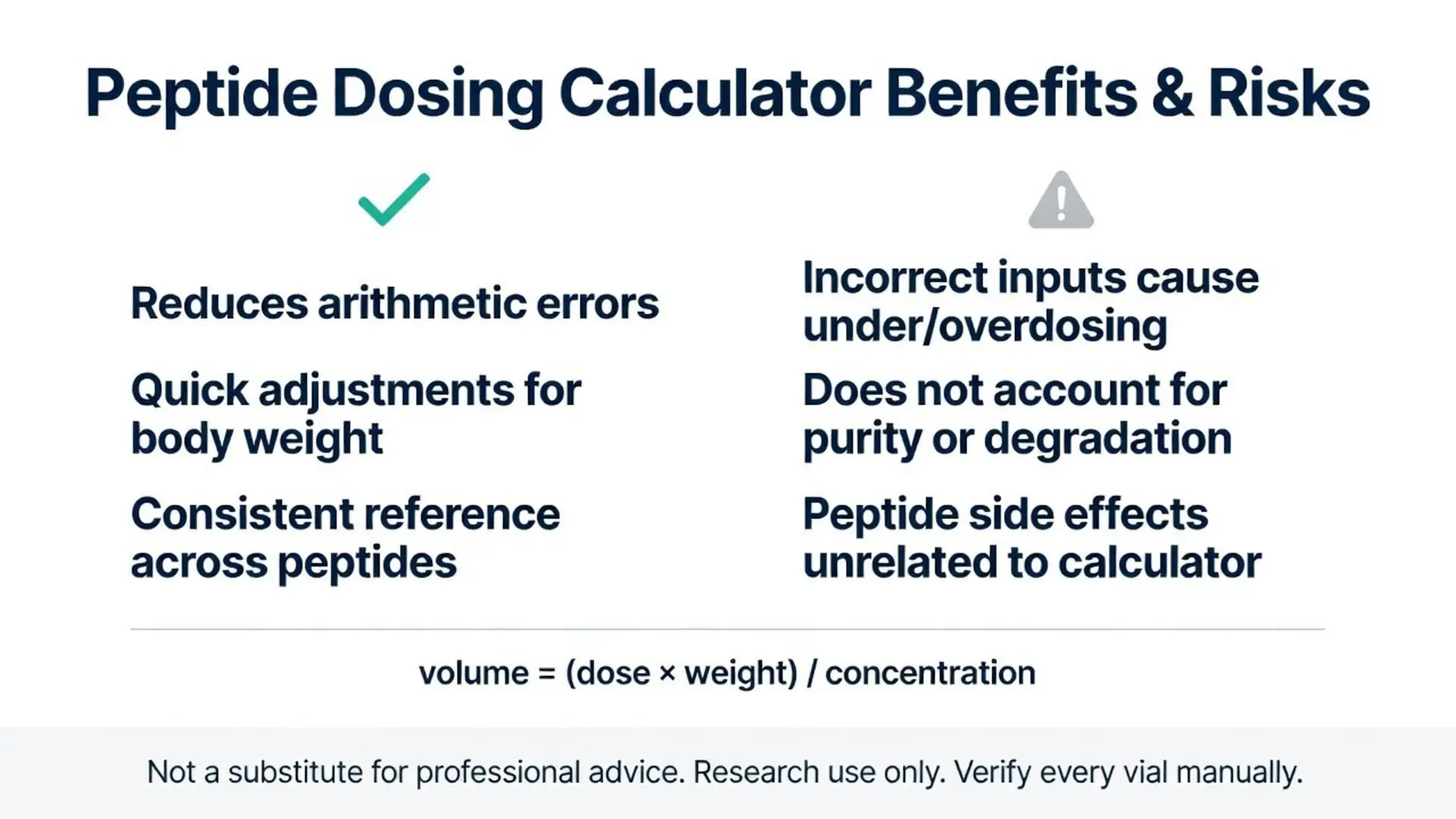
These advantages are practical for researchers who track multiple compounds. They do not replace laboratory verification of actual peptide content.
Incorrect inputs or assumptions about reconstitution can lead to under- or overdosing. Many calculators do not account for peptide purity variations or degradation over time.
Side effects discussed in literature relate to the peptides themselves rather than the calculator tool. Users must still verify all measurements with calibrated syringes and fresh solutions.
Researchers working with animal models or in vitro studies may find calculators helpful for standardizing protocols. The tools are not intended for human therapeutic use.
Anyone exploring research peptides should already understand basic laboratory safety and legal restrictions in their jurisdiction. Calculators serve only as aids, not decision-makers.
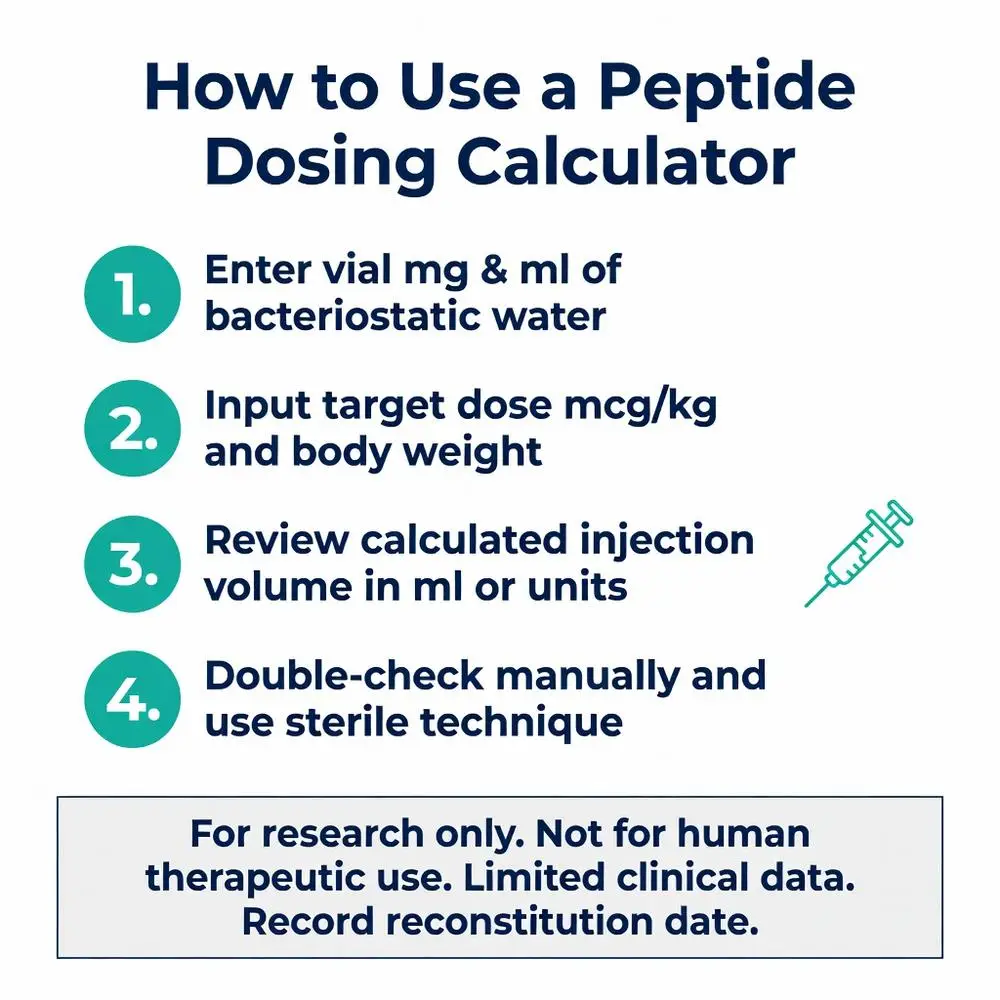
Enter the total milligrams in the vial and the milliliters of diluent added. Input the target dose and body weight if weight-based dosing applies. Review the output volume and double-check against the original formula.
Always use sterile technique and proper storage. Record the date of reconstitution because many peptides lose stability after several weeks.
This article is for informational purposes only and does not constitute medical advice. Consult a qualified healthcare provider before using any peptide.
| Feature | Peptide Dosing Calculator | Manual Calculation | Spreadsheet Template |
|---|---|---|---|
| Speed | Instant results | Requires writing out steps | Moderate after setup |
| Error checking | Limited built-in validation | User responsible | Formulas can include checks |
| Accessibility | Requires internet or app | Works offline | Needs software |
| Customization | Usually fixed peptide list | Fully flexible | High with user formulas |
Most peptides discussed in dosing contexts remain classified as research chemicals in the United States. They lack FDA approval for human use outside specific approved medications.
Calculators hosted on commercial sites often include disclaimers stating they are for educational or research purposes only. Users bear responsibility for compliance with local regulations.
Calculators follow standard mathematical formulas but depend entirely on the accuracy of user inputs and the stated purity of the peptide vial.
The calculators themselves are legal tools, but the underlying peptides may be restricted for human consumption depending on the jurisdiction and intended use.
No prescription is required to access most online calculators, yet any actual peptide product may require compounding pharmacy or research supply channels.
Some calculators include oral dosing options, but bioavailability data for oral routes remain limited for most research peptides.
Recheck every new vial or change in reconstitution volume. Periodic manual verification helps catch input mistakes.
Use the generic formula with the known molecular weight or published research dose and calculate manually.
Most do not; users must consult separate pharmacokinetic information if timing of doses matters.
Several websites offer free versions with basic functionality, though features and peptide lists vary.