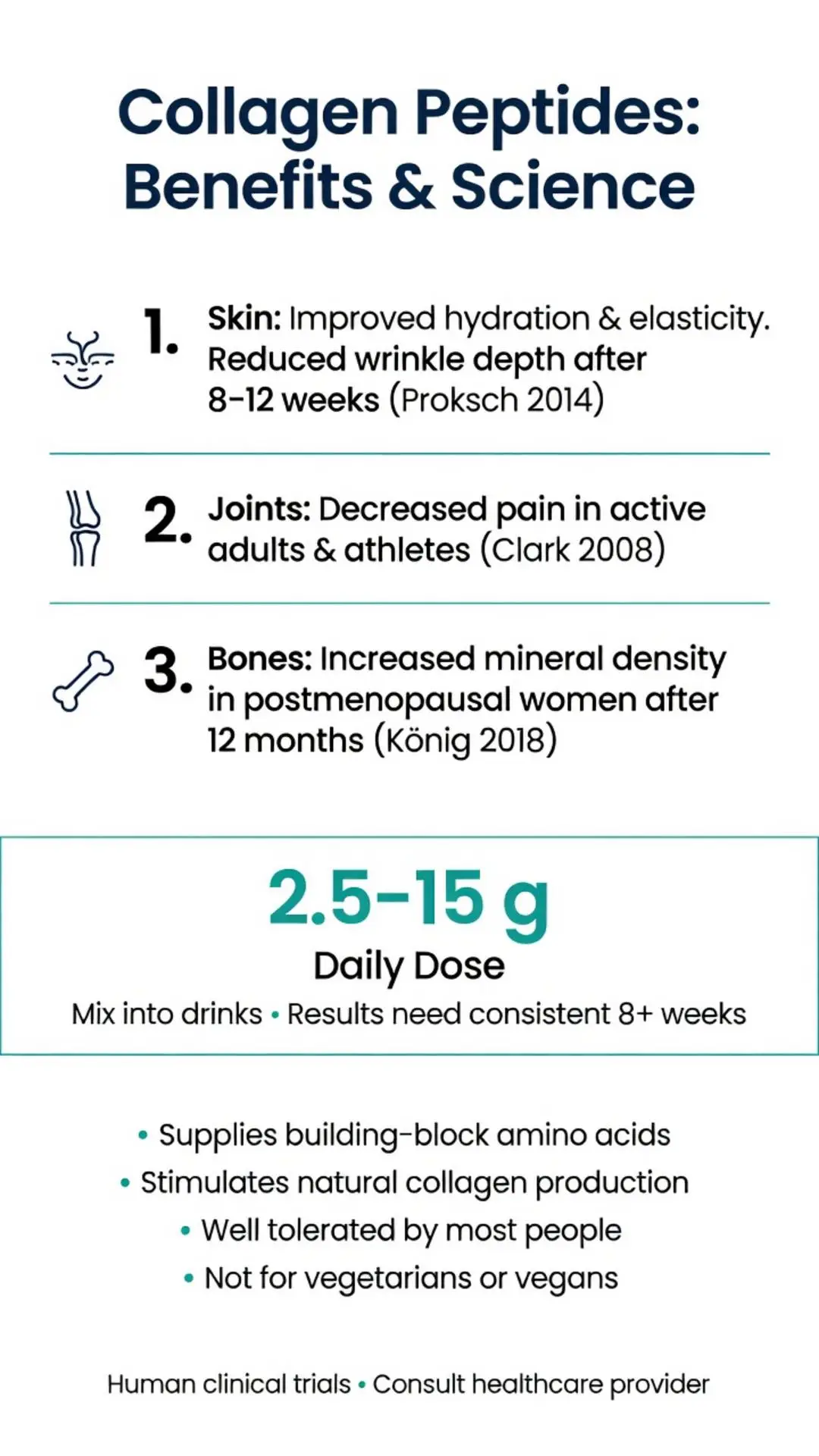

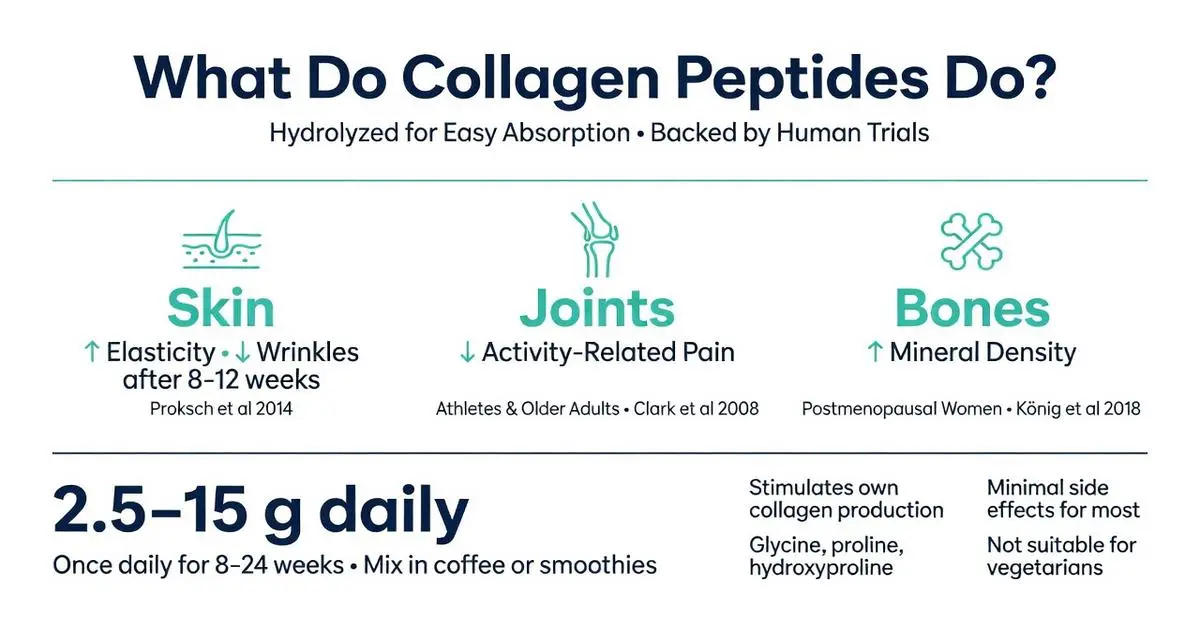
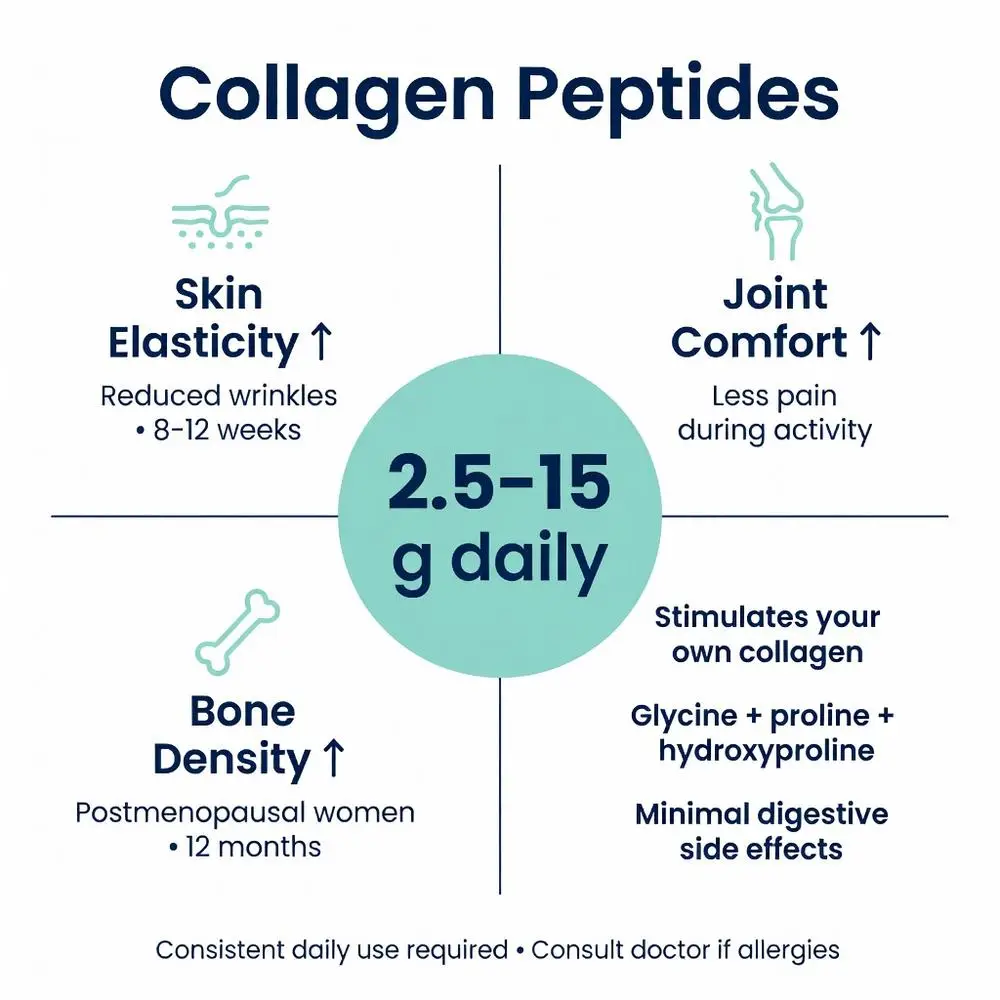
Quick Answer: Collagen peptides are hydrolyzed fragments of collagen protein that the body absorbs easily. Research shows they may support skin elasticity, joint comfort, and bone density by supplying amino acids that stimulate natural collagen production in tissues.
This article is for informational purposes only and does not constitute medical advice. Consult a qualified healthcare provider before using any supplement.
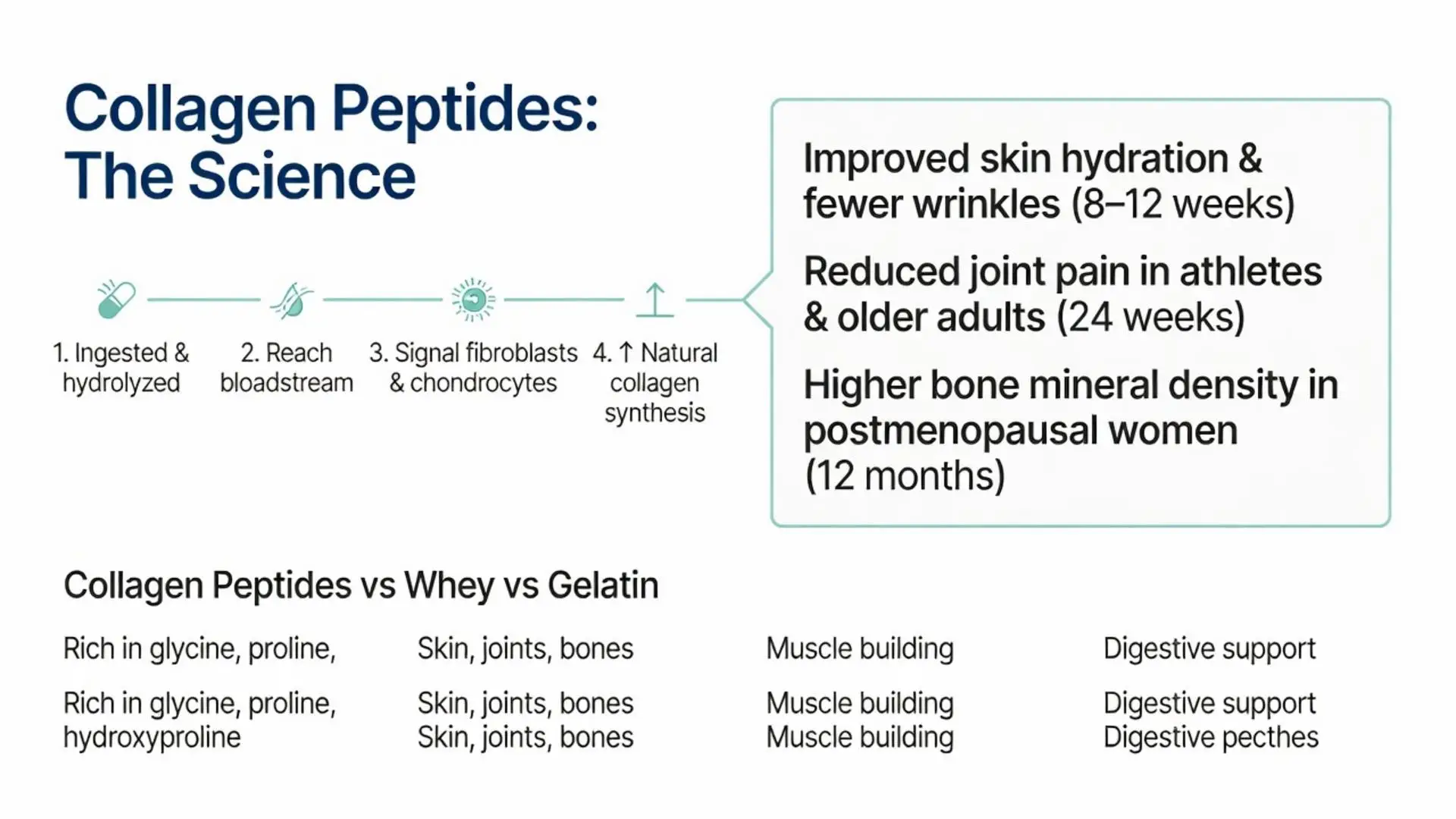
Once ingested, collagen peptides reach the bloodstream and accumulate in skin and cartilage. They act as signaling molecules that stimulate fibroblasts and chondrocytes to produce more collagen and other matrix components.
The amino acids glycine, proline, and hydroxyproline supplied by the peptides serve as building blocks while also triggering gene expression related to tissue repair. Human studies confirm measurable increases in skin collagen density after consistent intake.

Once ingested, collagen peptides reach the bloodstream and accumulate in skin and cartilage. They act as signaling molecules that stimulate fibroblasts and chondrocytes to produce more collagen and other matrix components.
The amino acids glycine, proline, and hydroxyproline supplied by the peptides serve as building blocks while also triggering gene expression related to tissue repair. Human studies confirm measurable increases in skin collagen density after consistent intake.
Clinical trials link daily collagen peptide intake to several outcomes.
Additional research explores benefits for muscle recovery and nail strength, though results vary by dose and population.
Most people tolerate collagen peptides well. Mild digestive symptoms such as bloating or nausea occur in a small percentage of users.
Because products come from animal sources, individuals with allergies to fish, beef, or pork should read labels carefully. No major drug interactions are documented, but quality varies across brands.
Adults seeking support for skin appearance or joint comfort represent the primary users. Postmenopausal women and active individuals with exercise-related joint stress often appear in the studies.
People with existing medical conditions or those taking medications should consult a healthcare provider first. Collagen peptides are not intended to treat or cure any disease.
Typical doses in research range from 2.5 g to 15 g per day, mixed into water, smoothies, or coffee. Most studies use once-daily intake for 8–24 weeks.
Both bovine and marine forms show similar absorption; choice depends on dietary preference. Results generally require consistent use over several weeks.
Collagen peptides differ from whey or casein in amino acid profile and targeted effects on connective tissue.
| Feature | Collagen Peptides | Whey Protein | Gelatin |
|---|---|---|---|
| Primary amino acids | Glycine, proline, hydroxyproline | Leucine, lysine, valine | Same as collagen but gelling |
| Absorption speed | Fast | Very fast | Moderate |
| Main researched benefit | Skin and joint matrix | Muscle protein synthesis | Digestive support |
| Typical daily dose | 2.5–15 g | 20–30 g | 10–15 g |
| Form in products | Powder, capsules | Powder, shakes | Powder, gummies |
Yes, multiple randomized trials report increased skin elasticity and reduced wrinkles after 8–12 weeks of daily use. The effect stems from boosted collagen production in the dermis.
Most skin and joint studies measure changes at 8–12 weeks. Some users notice nail or hair differences earlier, but tissue remodeling takes consistent intake.
Current evidence indicates good safety at doses up to 15 g daily. Individuals with allergies or medical conditions should check with a doctor.
Standard collagen peptides come from animal sources, so they are not suitable for vegetarians. Plant-based alternatives do not contain the same amino acid profile.
Timing shows little difference in studies. Many people add the powder to their morning beverage for convenience and consistent daily intake.
No strong clinical evidence supports weight loss claims. Any indirect effect would come from supporting joint comfort during exercise rather than a direct metabolic action.
The terms are often used interchangeably. Both refer to hydrolyzed collagen broken into smaller peptides for better absorption.